
Plants that grow in rock crevices are called chasmophytes. That's the precise ecological term, and it comes from the Greek 'chasma' meaning a cleft or gap. You'll also see the adjective form, chasmophytic, used to describe the type of vegetation or plant community that colonizes the cracks and fissures of rock faces. A broader related term, lithophyte, covers all plants adapted to rocky or stony substrates, but chasmophyte is the specific word for crevice-dwellers in particular.
Plants That Grow in Rock Crevices Are Called What

Dr. Marcus Weatherby
11 May 2026
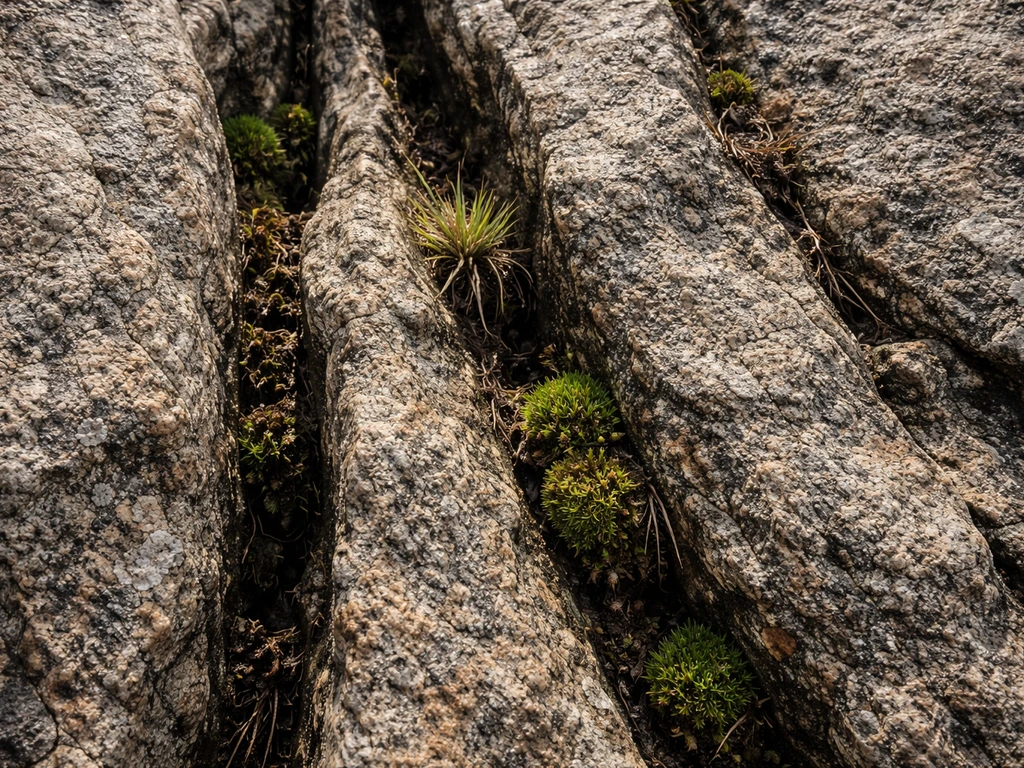
The ecological term: chasmophyte (and its relatives)
Chasmophyte is the term you'll find in ecological glossaries, botanical surveys, and European habitat classification systems like Annex I habitat type 8220, which formally describes 'siliceous rocky slopes with chasmophytic vegetation. The JNCC SAC habitat profile for H8220 defines it as siliceous rocky slopes with chasmophytic vegetation and notes how it relates to calcareous variants and regional species enrichment H8220 as “Siliceous rocky slopes with chasmophytic vegetation”. ' It's used by conservation bodies to identify plant communities that have specifically adapted to life inside rock crevices rather than just on open rocky ground.
Within the broader lithophyte category, botanists distinguish between two main growth strategies. Epilithic (or epipetric) plants grow on rock surfaces, clinging to or sprawling across exposed stone. Chasmophytes (sometimes called endolithic plants in certain contexts) go deeper, rooting into cracks, fissures, and narrow crevices where a completely different set of conditions applies. When you're trying to identify or grow these plants, that distinction matters a lot, because the habitat inside a crevice is genuinely unlike the surface of a rock.
How to identify plants living in rock crevices
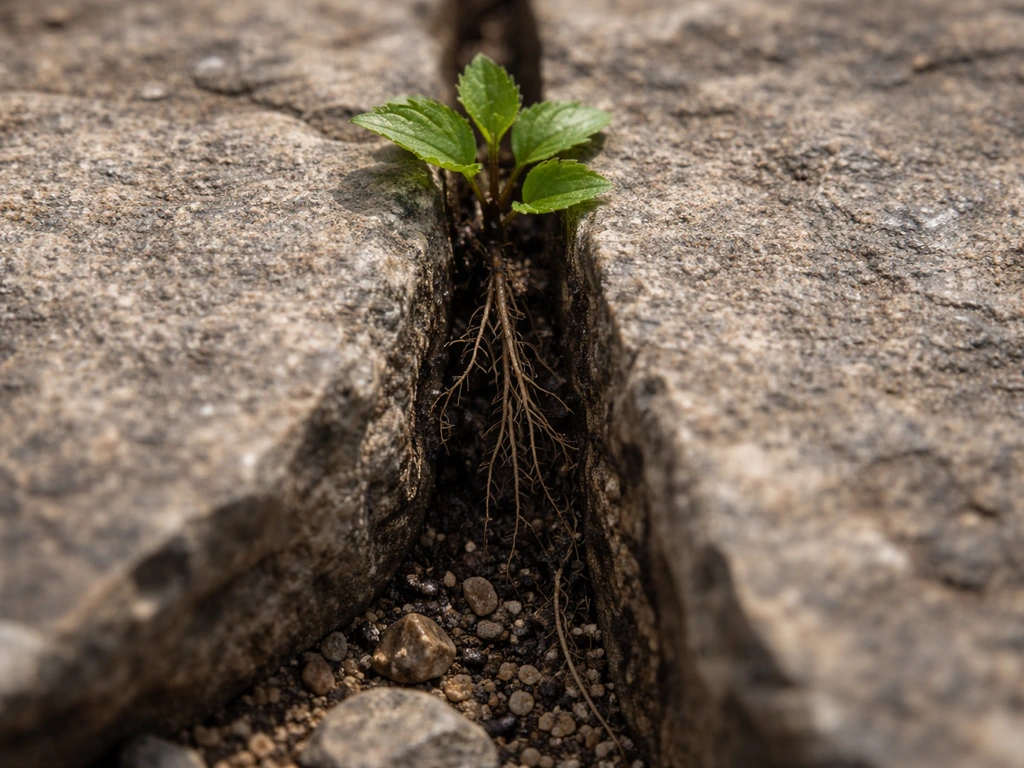
The most reliable way to recognize a true chasmophyte in the field is to look at where the roots are anchored, not just where the leaves sit. If the plant is rooted into a crack, fissure, or joint in the rock rather than in adjacent soil or a ledge of accumulated debris, you're looking at a chasmophytic plant. The foliage often emerges at an angle, projecting horizontally or downward from a vertical rock face, because the roots are locked into the rock and the plant has to grow outward to find light.
Key habitat clues to look for in the field:
- Roots visibly penetrating a crack or fissure rather than sitting in surface soil
- Rosette or cushion growth forms that hug the rock face tightly, reducing wind exposure
- Leaves that are often fleshy, leathery, or covered in fine hairs (all signs of drought adaptation)
- Plants positioned on vertical or near-vertical rock surfaces where no soil bed could accumulate
- Presence of limited organic material: thin films of moss, lichen, or mineral dust inside the crack
- Isolated individual plants or small clusters rather than dense ground-cover colonies
In terms of plant families, saxifrages (Saxifraga spp.), stonecrops (Sedum spp.), and many ferns, particularly spleenworts (Asplenium spp.), are among the most commonly encountered true chasmophytes. These groups have independently evolved the compact root systems, desiccation tolerance, and low nutrient requirements that crevice life demands.
What conditions inside a rock crevice actually look like
A rock crevice is one of the more extreme plant habitats on earth, and understanding why helps you replicate it accurately. The conditions are highly specific and often counterintuitive if you're used to thinking about good growing conditions in conventional terms.
| Condition | What it looks like in a crevice | Why plants cope with it |
|---|---|---|
| Soil depth | Minimal: often just mineral dust, rock fragments, and a thin accumulation of organic matter from decaying plant material or wind-deposited debris | Plants have compact, deep-penetrating root systems that anchor in rock rather than spreading wide |
| Moisture | Highly variable: the rock mass itself retains and slowly releases moisture; crevices channel rainfall but dry rapidly at the surface | Chasmophytes have extreme drought tolerance and can rehydrate quickly after rain |
| Nutrients | Very low: primary sources are windblown dust, rainwater minerals, and slow decomposition of trapped organic debris | Plants are adapted to oligotrophic (nutrient-poor) conditions; high nutrients actually damage many species |
| Light | Ranges from full exposure on south-facing cliff faces to deep shade in north-facing narrow crevices | Different chasmophyte species are specialized for different light levels; many tolerate high UV exposure |
| Temperature | Extremes: rocks heat rapidly in sun and cool fast at night; frost penetrates crevices in winter | Many chasmophytes are frost-hardy and heat-tolerant; freeze-thaw cycles can actually help crack open new habitat |
| Drainage | Excellent: gravity and the rock matrix prevent waterlogging in most crevice orientations | Root rot is rare in natural crevices; standing moisture is the main killer when these plants are grown in pots |
The interior of a rock crevice is also relatively stable in one important way: the surrounding rock mass buffers against the most extreme temperature swings. This thermal mass is one reason chasmophytes can survive in climates that would otherwise seem too harsh for any vascular plant.
Where these plants actually grow: region by region
Chasmophytic vegetation turns up on every continent and across a wide range of climates. The unifying factor isn't temperature or rainfall, it's the presence of exposed rock with cracks deep enough to hold roots and trap some organic material.
Alpine and subalpine zones
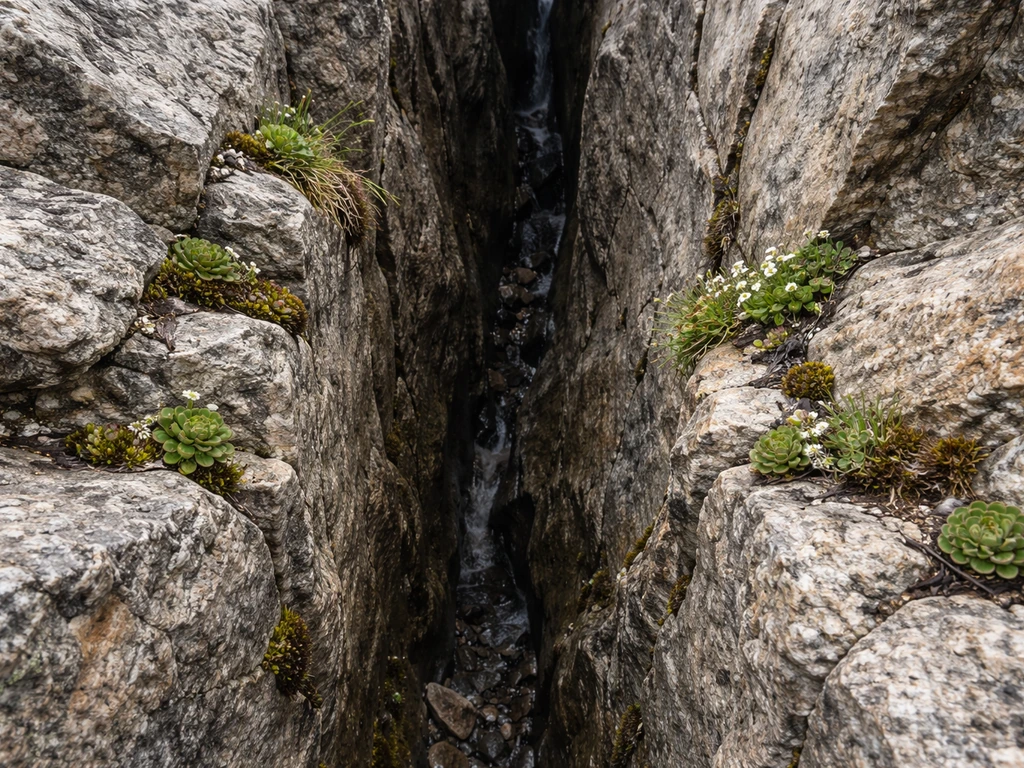
This is the habitat most people associate with chasmophytes. In mountain ranges like the Alps, Rockies, Andes, and Himalayas, exposed cliff faces and rocky outcrops above the treeline are colonized by specialized saxifrages, sedums, and cushion plants. The growing season is short, temperatures are extreme, and soils are essentially nonexistent, but the crevices provide just enough stability and moisture retention to support permanent plant communities. Species like Saxifraga oppositifolia (purple saxifrage) are textbook chasmophytes, pushing into north-facing crevices in zones where almost nothing else can survive.
Arid and semi-arid rocky regions
Desert and dryland landscapes with rocky outcrops, canyon walls, and escarpments support their own set of chasmophytes. In the American Southwest, plants like cliff ferns and various small cacti exploit crevices in sandstone and granite canyon walls. In the Mediterranean and Middle East, Sempervivum and small Dianthus species are common in rocky limestone crevices. Common choices include saxifrages, stonecrops, and certain ferns that colonize cracks and crevices in stone walls. The crevice here acts as a moisture trap, capturing the limited rainfall and protecting roots from the desiccating effect of direct sun on bare rock surface.
Coastal and oceanic rocky habitats
Sea cliffs and coastal rock faces host chasmophytes adapted to salt spray, wind, and high humidity. Sea campion (Silene uniflora), thrift (Armeria maritima), and various rock-loving ferns appear in crevices along Atlantic, Pacific, and Mediterranean coastlines. The constant moisture from sea air means drought is less of a stressor here, but wind and salt tolerance become critical. These coastal chasmophytes are worth noting as a distinct ecological group because their growing needs differ meaningfully from their alpine counterparts.
Temperate and boreal rock outcrops
In forested temperate zones, exposed bedrock outcrops, glacially scoured rock pavements, and cliff faces along river gorges all support chasmophytic communities. Spleenwort ferns (Asplenium trichomanes, Asplenium ruta-muraria) are classic temperate chasmophytes, appearing in the mortar joints and narrow cracks of old stone and natural rock across Europe and North America. These species prefer calcareous substrates and shade, which makes them useful indicators of the local rock chemistry.
Growing chasmophytes at home: replicating crevice conditions
The biggest mistake people make when trying to grow chasmophytic plants is treating them like standard garden perennials. They don't want rich soil, frequent watering, or fertilizer. What they want is a narrow, well-drained gap with a lean, gritty medium and good airflow. Penn State Extension notes that good drainage is key for crevice gardens and for plants grown in rock-crack or crevice conditions a narrow, well-drained gap. The good news is that this is genuinely achievable in a home garden.
Building a crevice garden
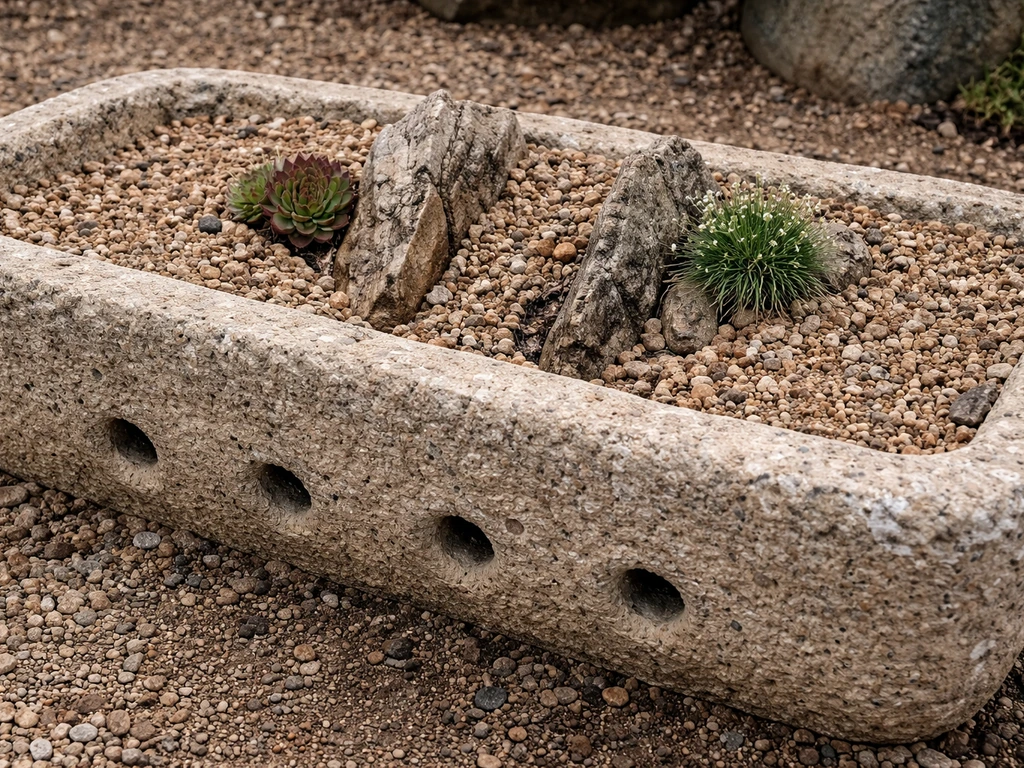
A crevice garden is exactly what it sounds like: rocks placed with deliberate narrow gaps between them, oriented so the gaps run vertically or at a slight angle. Some chasmophytes are also plants that can grow in rocks and water, as long as the crevice holds moisture without staying soggy. The goal is to create the same drainage, root anchoring, and moisture dynamics you'd find in a natural rock face. Use flat stones like sandstone, limestone flags, or slate, and tilt them slightly backward (about 10 to 15 degrees from vertical) so rain channels into the crevice rather than running off the face.
- Choose a site with at least 6 hours of direct sun for alpine chasmophytes, or partial shade for fern-based crevice plantings
- Build with flat-sided stones placed on edge, leaving gaps of 2 to 4 cm between them
- Fill crevices with a lean mix: roughly 70% coarse grit or granite chips and 30% low-nutrient compost or loam
- Plant by inserting bare-root plants or small plugs directly into the crevice, pressing roots in firmly
- Water in thoroughly once, then let the natural rainfall take over for most species
- Avoid any fertilizer for the first two years; low nutrients encourage the tight, compact growth that defines healthy chasmophytes
Tufa rock is worth a mention here. It's a highly porous calcium carbonate stone that can be drilled or carved to create artificial crevices and is widely used in specialist alpine and crevice gardens. Plants can be pushed directly into holes drilled in tufa, and the stone wicks moisture to roots while maintaining fast drainage at the surface. It's particularly good for saxifrages and small sedums.
Container and trough planting
Old stone troughs or hypertufa containers work well for chasmophytes when drainage holes are generously sized and the planting medium is very lean. Layer the bottom third with broken crocks or coarse gravel, fill the rest with a gritty mix, and position small flat stones to create artificial crevices within the trough. This approach is particularly useful for species that need sharp drainage year-round and can't tolerate wet winters in open ground.
Chasmophytes vs wall plants vs alpine garden species: clearing up the confusion
These categories overlap but aren't identical, and understanding the difference helps you match the right plant to the right spot.
| Plant type | Where they root | Key habitat | Examples | Main need |
|---|---|---|---|---|
| Chasmophyte (true crevice plant) | Inside natural rock fissures and cracks | Natural cliff faces, rocky outcrops, mountain rock | Saxifraga oppositifolia, Asplenium trichomanes, Sedum acre | Lean medium, sharp drainage, anchored roots in narrow gap |
| Wall crack plant | Mortar joints or gaps in stone/brick walls | Old stone walls, mortared structures, built environments | Asplenium ruta-muraria, Cymbalaria muralis, Polypodium vulgare | Calcium-rich substrate (from lime mortar), vertical drainage, shade |
| Alpine garden plant | Shallow soil in rock garden beds | Cultivated alpine beds, scree gardens | Aubrieta, Alyssum, Phlox subulata | Well-drained gritty soil, full sun, not necessarily crevice-rooted |
| Epilithic/surface rock plant | On rock surface, not inside crevice | Exposed flat rock surfaces, rock pavements | Many mosses, lichens, some sedums | Surface grip, minimal soil, moisture from condensation and rain |
Plants found in stone walls are closely related ecologically to true chasmophytes and are sometimes grouped together in the broader chasmophytic category, especially when the wall is built from natural stone without cement. The main practical difference is that wall plants often tolerate calcareous, alkaline conditions from lime mortar, while alpine cliff chasmophytes may prefer acidic substrates. This distinction also relates to plants that grow well in stones more generally or those that colonize river rock and stone walls, where the substrate chemistry and moisture regime shift the species mix considerably.
Why your crevice plants aren't taking: quick troubleshooting
If you've tried to establish chasmophytes and they're struggling or dying, the cause is almost always one of a small set of fixable problems.
- Too much moisture retention: If the crevice or container holds water for more than a day after heavy rain, roots will rot. Add more grit to the mix, improve the drainage angle of the rocks, or increase the size of drainage holes.
- Soil that's too rich: Fertile compost or added fertilizer causes chasmophytes to produce lush, soft growth that's susceptible to fungal disease and winter damage. Strip back to a lean, low-organic mix.
- Insufficient light for the species: Sun-loving alpine chasmophytes placed in shade will slowly decline. Check the natural habitat of your specific species before siting it.
- Roots not anchored in the crevice: If the plant is sitting on top of the gap rather than rooted inside it, it loses the thermal buffering and moisture access that makes crevice life possible. Push roots in firmly and pack the gap with gritty material around them.
- Wrong substrate chemistry: Calcareous species (those from limestone habitats) placed in acidic grit, or acid-loving species placed near lime mortar, will show yellowing and poor growth. Match the substrate pH to the plant's native rock type.
- Overwatering during establishment: Water in thoroughly once when planting, then leave it. Most chasmophytes establish better with minimal intervention and can find moisture through the rock mass.
- Planting at the wrong time: Early spring or early autumn planting gives roots time to establish before temperature extremes. Summer planting into hot, dry crevices often fails because the plant can't build root contact before it desiccates.
One thing worth remembering: chasmophytes are genuinely slow-establishing plants. Don't write off a plant that looks stalled for the first season. Once roots find purchase in the rock or gritty medium, growth accelerates noticeably in year two. Patience and restraint with watering and feeding are the two most important practical skills for growing these plants well.
FAQ
How can I tell if a crevice garden setup is staying too wet for chasmophytes?
Not usually. Many true chasmophytes fail when the crevice stays wet because their roots need fast drainage and constant airflow. If you water, do it deeply but infrequently, and only when the gritty mix or the crevice interior has nearly dried.
What’s the easiest field check to distinguish a true chasmophyte from plants merely growing on rock surfaces?
Look for root attachment into a crack or joint, not just leaf placement. A chasmophyte typically has visible anchoring roots in the stone gap, while epilithic plants usually remain on the surface or in accumulated grit on top of the rock.
Can I grow chasmophytes in a crevice garden using store-bought potting soil?
Yes, but match the substrate chemistry. Several classic temperate chasmophytes, like spleenworts, are indicators of local rock chemistry, often preferring specific calcareous or shaded conditions. If you use a random potting mix or a mismatched stone type, the plant may stall even if drainage is good.
My chasmophyte looks stuck. Should I fertilize or water more?
They are often slow to establish, and the visible above-ground parts can take 6 to 18 months to show improvement. A common mistake is “rescuing” the plant with extra water or fertilizer during that period, which can rot new roots before they fully anchor.
What’s the best container or bed approach if I live in a region with rainy winters?
Choose at least one approach based on your climate. In wet winters, hypertufa or a trough with oversized drainage and lean media is usually safer than open ground. In arid climates, you can rely more on creating a moisture-trapping crevice, but still avoid stagnant moisture within the gap.
Does the type of rock I use for artificial crevices affect which chasmophytes will thrive?
The stone type changes the available nutrients and pH, which affects which species you can keep. Use tufa for many saxifrages and small sedums, but if you want spleenwort-type plants in temperate shade, consider limestone or other substrates that replicate local chemistry rather than always choosing slate or generic gravel.
How deep should I plant chasmophytes inside a rock crack or crevice?
They generally should not be planted too deep into a crevice where soil-like material traps moisture. Instead, place the plant so roots can spread into the gap and gritty medium while the surface stays aerated. A shallow planting depth with a narrow, well-drained gap often outperforms deep, packed media.
Can I use the same care plan for coastal chasmophytes and alpine crevice plants?
Yes. Coastal chasmophytes are selected for wind and salt spray tolerance, so transferring them to inland alpine conditions (or vice versa) can cause long-term decline even if drainage is perfect. If you’re unsure, treat coastal species as “different needs” rather than the same crevice concept.
Are plants that grow in rocks and water (near-water crevice types) the same as dry crevice chasmophytes?
You can, but you need a drainage plan that prevents winter saturation. Give them sharp drainage, lean medium, and good airflow, and consider using a container with generous drainage holes if your ground stays damp. In wet conditions, “more water” is the quickest way to kill newly rooted plants.