Plants that grow naturally in a place are called native plants. New plants that grow from seeds are called native seedlings and are part of natural regeneration. The formal definition, used by the USDA and the U. S.
Plants That Grow Naturally Are Called Native Plants
Dr. Marcus Weatherby
12 May 2026
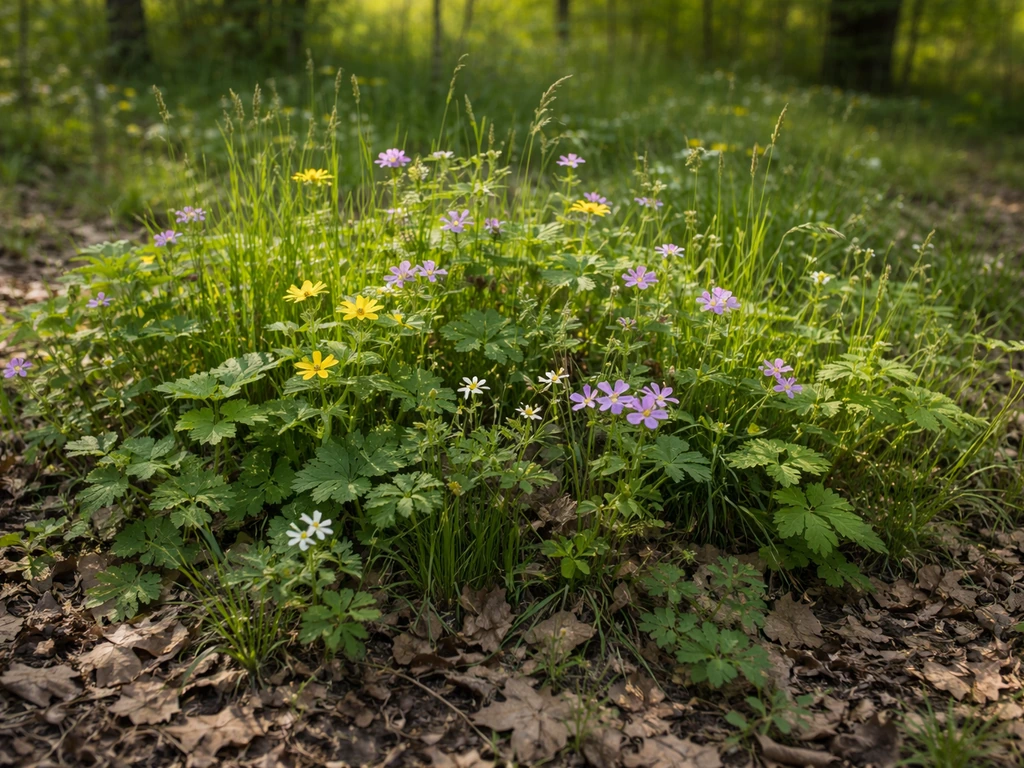
Forest Service, is that a native plant is one that evolved and occurs naturally in a particular region, ecosystem, and habitat without any direct or indirect human introduction. For the United States, that generally means plants present before European settlement.
If you have heard the terms "wild plants," "wildflowers," or "indigenous plants" used the same way, they often point to the same idea, but they are not perfectly interchangeable, and that distinction matters when you are trying to figure out what truly belongs in a specific place.
The exact term and what it really means
"Native plant" is the standard term used by federal agencies, ecologists, and land managers. The clearest working definition comes from the Federal Native Plant Conservation Committee: a native plant occurs naturally in a particular region, state, ecosystem, and habitat without direct or indirect human actions. Three things stand out in that definition. First, it is place-specific, not species-wide. A plant can be native to the Pacific Northwest and introduced (non-native) in the Southeast. Second, it includes habitat, not just geography. A species native to Pacific Northwest coastal forests is not automatically native to the high desert of eastern Oregon, even though both are in the same state. Third, it explicitly excludes human introduction, whether intentional planting or accidental seed spread.
You will also encounter the phrase "wild plant" or "wildflower," which simply means a plant growing outside of cultivation. Wild does not mean native. A dandelion growing through a sidewalk crack is wild. It is not native to North America. That single distinction clears up a lot of confusion, and it is worth keeping front of mind every time you see something growing without obvious human help.
Native vs wild vs naturalized vs invasive: clearing up the mix-ups
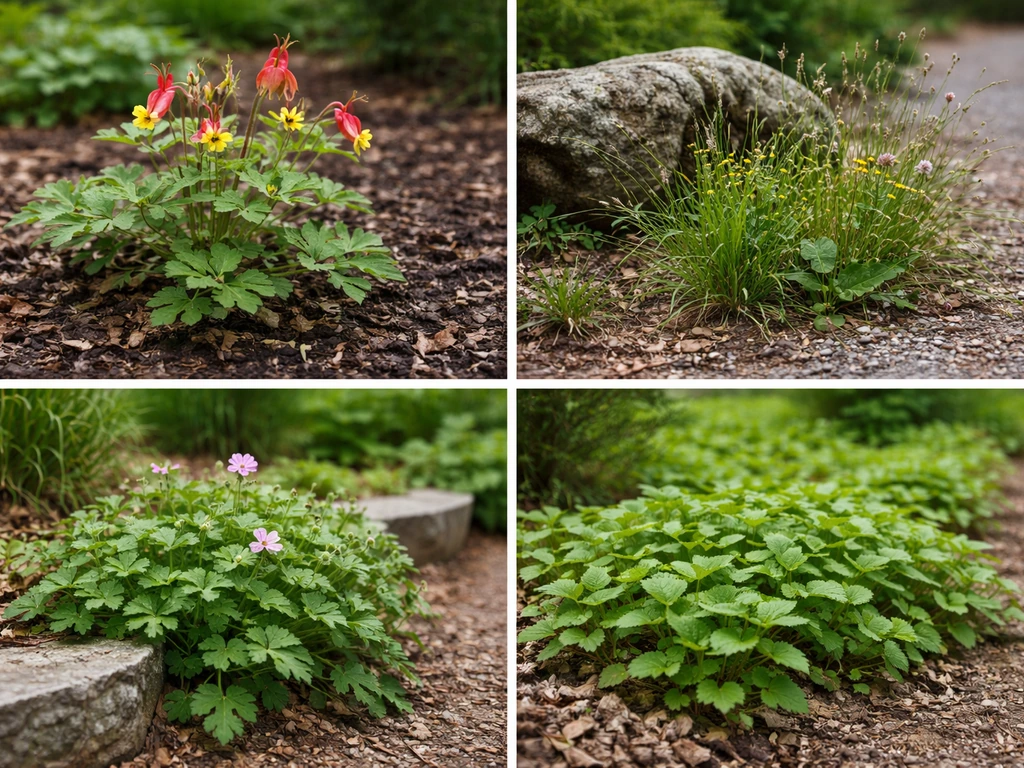
These four terms get tangled constantly, even in casual field guides. Here is how they actually line up.
| Term | What it means | Arrived via humans? | Causes documented harm? |
|---|---|---|---|
| Native | Evolved and occurs naturally in the specific region, ecosystem, and habitat | No | No (typically supports the ecosystem) |
| Wild | Growing outside of cultivation | Sometimes | Sometimes |
| Naturalized | Non-native but sustains itself outside cultivation without ongoing human help | Yes | Not necessarily |
| Invasive | Non-native and causes economic, environmental, or human/animal/plant health harm | Yes | Yes (by definition) |
The naturalized category trips people up the most. A naturalized plant has established a self-sustaining population in the wild, but it is still exotic. As the National Park Service puts it plainly: a naturalized exotic has not "become" native. It got there because of human activity at some point in the past, even if that was centuries ago, and it has no evolutionary history with the local ecosystem. The blank" rel="noopener noreferrer">USDA notes that dandelion is an example of a plant listed as both native and introduced depending on the specific regional situation, which shows just how granular this gets.
Invasive is a step beyond naturalized. To be classified as invasive, the species must be both non-native to the ecosystem and cause measurable harm, whether to the environment, the economy, or human, animal, or plant health. US Forest Service guidance also defines invasive species as nonnative to the area where they are found and capable of causing environmental, economic, or human harm [the invasive label requires being non-native to the ecosystem and causing measurable harm](https://www. fs.
usda. gov/learn/plants-animals). Non-native alone is not enough to earn the invasive label. Purple loosestrife, for example, was introduced as an ornamental plant and is now considered invasive in wetlands across North America because it outcompetes native vegetation and degrades habitat quality.
A plant can be non-native and naturalized for decades without being classified invasive if it is not causing documented harm, though the line can shift as populations grow.
It is also worth knowing that invasive species often get their initial foothold in disturbed areas, things like roadsides, grazed pastures, and old homesteads, before spreading into more intact natural communities. If you are evaluating a plant growing in a disturbed edge habitat, that context matters for interpreting what you are looking at.
How to tell if a plant is native to your exact area
The key word is "exact." Native status is not a broad geographic label. It is tied to a specific place, a specific ecosystem type, and in some cases a specific habitat within that ecosystem. A plant native to coastal sage scrub in Southern California may have no native history in the adjacent inland chaparral a few miles away. Here is how to approach it practically.
Start with the region, then drill down to habitat
Begin by identifying your broad region (state or province), then narrow to your ecosystem type, and then to the specific habitat conditions at your site. The U.S. Forest Service definition explicitly frames native status in terms of region, ecosystem, and habitat, and the FHWA definition adds state-level specificity. This layered approach matters because a plant's nativity is confirmed at all three levels, not just one. Eastern white pine is native to the northeastern United States, but it is not native to every habitat in New England. It belongs in well-drained, often sandy or rocky forest soils, not in the red maple swamps a few hundred meters away.
Weigh the evidence carefully
Apparent natural occurrence is not automatic proof of native status. The FHWA guidance makes this point directly: you need to balance evidence of natural occurrence against evidence of introduction. A plant that has been persisting and spreading for fifty years in a location does not become native because of that persistence, especially if its introduction history traces back to human activity. This is where checking databases (covered below) becomes essential rather than optional.
Using climate, season, soil, and habitat to understand what grows naturally
Native plants are the result of long evolutionary pressure from local conditions, so the environmental parameters at a site are your best clues for what could grow there naturally. Climate, season, soil chemistry, moisture regime, and community context all shape which species belong.
- Climate zone: Temperature extremes, frost dates, and precipitation patterns determine which species can survive and reproduce without human intervention. Arctic natives tolerate freeze-thaw cycles and permafrost that would kill temperate woodland species outright.
- Seasonal timing: Many native plants are cued to local photoperiod and temperature cycles for germination, flowering, and dormancy. A plant out of sync with local seasonal rhythms is a red flag that it may not be native.
- Soil type and chemistry: pH, drainage, organic matter content, and mineral composition all filter which species naturally establish. Plants native to serpentine soils, for example, are often found nowhere else because those soils are so chemically distinct.
- Moisture and hydrology: The U.S. Army Corps of Engineers uses wetland indicator status categories (OBL, FACW, FAC, FACU, UPL) to predict where plants occur naturally based on probability of presence in wetland conditions. Moisture regime is one of the most reliable habitat-level filters.
- Community context: Native species evolved alongside other local species, including pollinators, seed dispersers, soil microbes, and neighboring plants. A species that has no ecological relationships in a community, no insects that feed on it, no birds that disperse its seeds, is likely not native to it.
Thinking in these layers is how you move from "this plant is growing here" to "this plant grows naturally here." They are not the same statement.
Where to check reliable nativity information

There are a handful of genuinely authoritative databases worth knowing. Use more than one, because native status can vary by sub-region and even individual databases sometimes flag conflicting records.
- USDA PLANTS Database: The primary federal reference for plant nativity status in the United States. Search by species and filter to your state. The database includes a nativity field and flags whether a species is native, introduced, or both in a given state. Read the help documentation to understand exactly what the status labels mean, since the categories are more nuanced than a simple native/non-native binary.
- iNaturalist Checklists and Establishment Means: iNaturalist uses place-based checklists that assign "establishment means" (native, introduced, or endemic) to each taxon for a specific place. You can check down to county-level places in many regions. Important caveat: these checklists are community-maintained and can be updated by users with the right permissions, so treat them as a strong lead and confirm with a second source.
- iNaturalist Atlas: Shows occurrence observations mapped against checklist-based establishment means. Useful for seeing where a species has been observed and whether it is flagged as native or introduced within those places.
- NPS NPSpecies: The National Park Service species inventory system uses category labels including "Non-native" for species present due to deliberate or accidental human activity and "Historical" for documented historical occurrence. Useful if your site is near or within a national park unit.
- State native plant societies and herbarium databases: Most states have a native plant society with regional checklists, and many university herbaria maintain georeferenced specimen records that show historical native occurrence at the county level. These are often more granular than federal databases for local confirmation.
- National Wetland Plant List (NWPL): For wetland and riparian sites, the NWPL maintained by the U.S. Army Corps of Engineers provides wetland indicator status by region and is the standard reference for hydrophytic vegetation determination.
A practical confirmation workflow: look the species up in USDA PLANTS first to get the state-level nativity call, then cross-reference with iNaturalist's checklist for the county or nearest place to see if it is flagged native at finer resolution, and finish with a state herbarium or native plant society checklist for local confirmation. If all three agree, you are on solid ground. If they conflict, dig into why, usually it means the species has patchy or debated native status in that sub-region.
What "grows naturally" looks like across different regions
The concept of native plants clicks faster when you see it applied across contrasting environments. Here are a few examples that illustrate how the environmental conditions and the native flora are inseparable.
Arctic tundra
In arctic and alpine tundra, the plants that grow naturally are low-growing, slow-maturing, and cold-adapted. Species like Arctic willow (Salix arctica), cottongrass (Eriophorum spp.), and various sedges and mosses evolved under conditions of short growing seasons, extreme temperature swings, and shallow, often waterlogged soils over permafrost. Nothing about their presence is accidental. These plants are native here because they have been shaped by these conditions over thousands of years. A species that cannot survive a hard freeze in June simply does not belong to this ecosystem's native flora.
Desert
In the Sonoran Desert, plants that grow naturally include saguaro cactus (Carnegiea gigantea), palo verde (Parkinsonia spp.), and creosote bush (Larrea tridentata). Each is the product of millions of years adapting to low rainfall, high temperatures, and alkaline, low-organic desert soils. The saguaro's range is tightly constrained by its inability to survive sustained hard freezes, which is why it does not grow naturally in the Mojave despite being only a few hundred miles away. That kind of precision is what native status captures.
Temperate rainforest
In the Pacific Northwest's temperate rainforests, the native flora includes Sitka spruce (Picea sitchensis), western red cedar (Thuja plicata), sword fern (Polystichum munitum), and oxalis (Oxalis oregana). These species are native to this specific combination of high precipitation, mild temperatures, acidic soils rich in organic matter, and low light understory conditions. Introduce a dry-adapted shrub into this system and it will not establish naturally, because the conditions do not match its evolutionary history.
Prairie
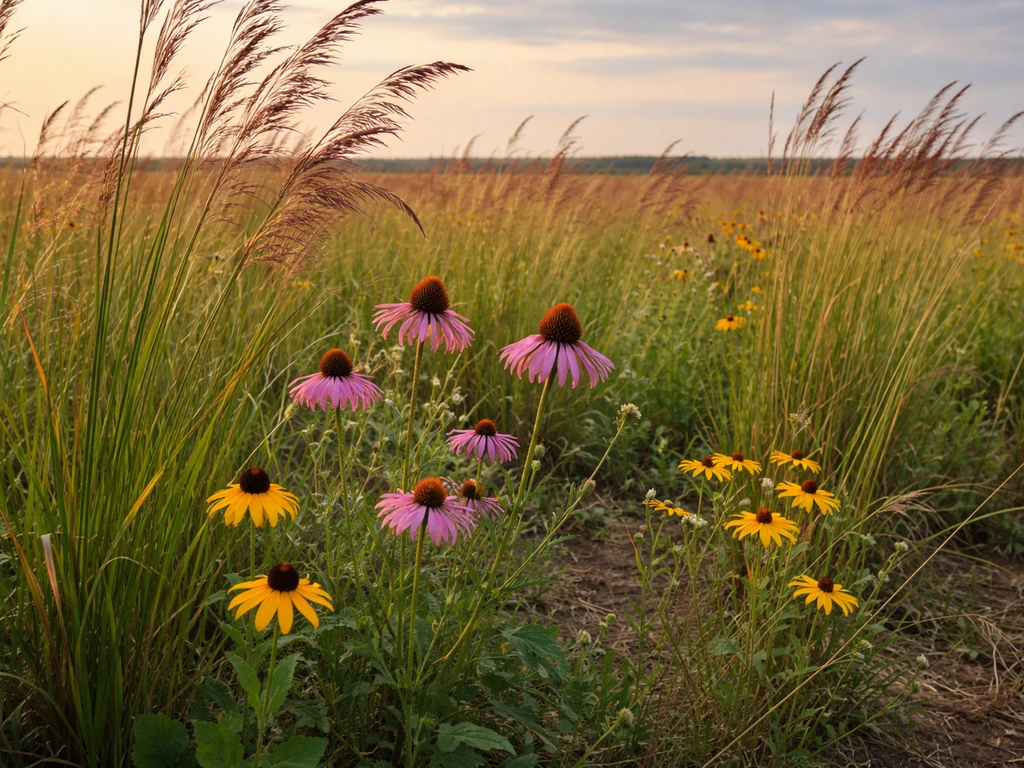
Tallgrass prairie natives like big bluestem (Andropogon gerardii), black-eyed Susan (Rudbeckia hirta), and purple coneflower (Echinacea purpurea) are the result of deep, fertile soils, seasonal drought cycles, periodic fire, and grazing pressure. In ecology, the first plants to grow after a fire are called early successional species. These plants grow naturally here because the disturbance regime, the climate seasonality, and the soil conditions shaped them.
This is also a good context for noting that fire-adapted species and early successional plants (species that are among the first to grow back after a fire) have their own native stories tied to disturbance ecology. What plants grow after a fire depends on local conditions and which species are adapted to that disturbance regime.
Wetlands
In freshwater wetlands, native species like cattail (Typha latifolia), blue flag iris (Iris versicolor), and various sedges occupy positions determined by hydrology and soil saturation. The Army Corps wetland indicator categories mentioned earlier (OBL species found almost exclusively in wetlands, down to UPL species rarely found there) are a direct expression of where these plants grow naturally. When purple loosestrife invades these same wetlands, it is ecologically significant precisely because it is non-native: it has no co-evolved relationships with the wetland community and can alter the structure and species composition of habitats that took thousands of years to develop. This also connects to how plants growing on dead and decaying matter (saprophytes and decomposers) and plants that colonize after disturbance each represent specialized "grows naturally" relationships with specific ecological conditions.
The practical takeaway
Native plants is the term you are looking for. But the concept only becomes useful when you tie it to a specific place, a specific habitat type, and the environmental conditions at that site. Wild does not mean native. Naturalized does not mean native. And a plant that has been thriving somewhere for decades is not native just because it has stuck around. Use USDA PLANTS, iNaturalist checklists, and your state's native plant resources together to confirm nativity at the level that actually matters: your specific region, ecosystem, and habitat. That combination of the right term plus the right verification approach is what turns a concept question into something you can act on.
FAQ
If a plant is growing in the wild and reproducing, is it always a native plant?
Not necessarily. A plant can be “naturalized” (it persists and spreads in the wild) yet still be exotic, meaning it lacks evolutionary history with the local ecosystem. So “no longer cultivated” does not automatically mean “native.”
Can a plant be native to my state but not native to my specific neighborhood?
Yes. A species can be native to one county or habitat type and introduced or of disputed nativity in a neighboring area, so confirm at the same resolution as your planting site (region, ecosystem type, and local habitat conditions).
If I buy “native” plants from a nursery, are they guaranteed to be native to my area?
Check the local provenance record if available, because “native” in nursery trade often refers to species identity, not where it was originally collected. For restoration, local eco-provenance matters, and using seed from far outside the region can reduce establishment and ecological fit.
What’s the difference between a wild plant and a native plant?
No. “Wild” means growing outside cultivation, it does not describe origin. Dandelions and many escaped ornamentals are wild but not native, so you need origin information, not just growth status.
Why can a non-native plant be naturalized but not classified as invasive?
“Invasive” requires both non-native status and measurable harm. A non-native plant can be naturalized and spreading without being labeled invasive if impacts are not documented (and the label can change as new evidence emerges).
A species has been around in my area for decades, how do I know it’s not just an old introduction?
Don’t rely on persistence alone. If evidence points to introduction history (intentional planting, escaped ornamentals, or long-distance seed spread), long-term survival does not make it native.
What should I do if USDA PLANTS and iNaturalist disagree about whether a plant is native where I live?
Use multiple sources and compare what level each uses (state, county, ecoregion, or habitat). Conflicts often happen with patchy distributions, recent introductions, or contested sub-regional records, so investigate the reason rather than picking one entry.
If I find a “mystery plant” growing along a road, does the disturbed area change how I should interpret nativity?
Edge habitats can complicate field ID. Disturbed areas like roadsides and grazed pastures often serve as entry points for non-natives, so assess the surrounding community context, not only the plant you see.
Can habitat boundaries (like wetland vs. upland) affect whether a plant is native?
Yes, especially near habitat boundaries. A species might be native to a nearby wetland or dry woodland type but fail to be native in the adjacent habitat even if it is only a short distance away.
What are the practical next steps after I confirm a plant is native to my region and habitat type?
For restoration, prioritize plants that are verified native to your site’s region and habitat type, then match ecological conditions (soil drainage, moisture regime, sun exposure, seasonality). Native status alone does not guarantee success if the microhabitat conditions don’t match.