Plants grow in every environment on Earth except permanent ice and bare rock with zero soil, from arctic tundra to tropical rainforest floors, from sand dunes to peat bogs. The real question is not whether plants can survive somewhere, but which specific combination of climate, light, water, and soil makes a place work for a particular plant. Once you understand those four drivers, you can look at any spot, whether it is a shaded backyard corner, a windswept coastal bluff, or a cracked urban sidewalk planter, and immediately narrow down what will actually thrive there. The same physical spot can be a completely different growing environment depending on the time of year and the local microclimate, and name three places where plants grow as a quick starting point: forests, grasslands, and wetlands.
Places Where Plants Grow: Habitats by Climate, Light, Soil
The four things that determine where any plant can grow
Before diving into specific habitats, it helps to internalize the four variables that control plant distribution everywhere. Every environment type discussed below is really just a particular combination of these same factors.
- Climate (temperature range): How cold does it get in winter? How hot in summer? The USDA Plant Hardiness Zone Map organizes this around the average annual extreme minimum winter temperature, grouped into 10-degree Fahrenheit zones with finer 5-degree a/b subdivisions. A complementary metric, heat zones, counts days per year when temperatures hit 86°F (30°C) or above. Together, these two numbers bracket the temperature envelope a plant needs to survive.
- Light (sun vs. shade): Full sun means roughly six or more hours of direct sun daily. Shade plants may need as little as one to two hours, or only bright indirect light. Forest understories, north-facing slopes, and structures block light; open fields, south-facing slopes, and coasts deliver maximum light.
- Water (wet vs. dry): This covers both total precipitation and how quickly the soil drains. A desert with 8 inches of annual rain is very different from a wetland that sits waterlogged all year, even if both have struggling plants.
- Soil and substrate: Texture (sand, silt, clay, or loam), organic matter content, pH, compaction, and nutrient levels all control whether roots can penetrate, access water, and extract nutrients. Soil pH directly affects nutrient availability by changing nutrient solubility, so a plant in the wrong pH range may starve even in fertile ground.
- Space and competition: Canopy height, root zone depth, and neighboring plants all filter which species actually establish once the other four conditions are met.
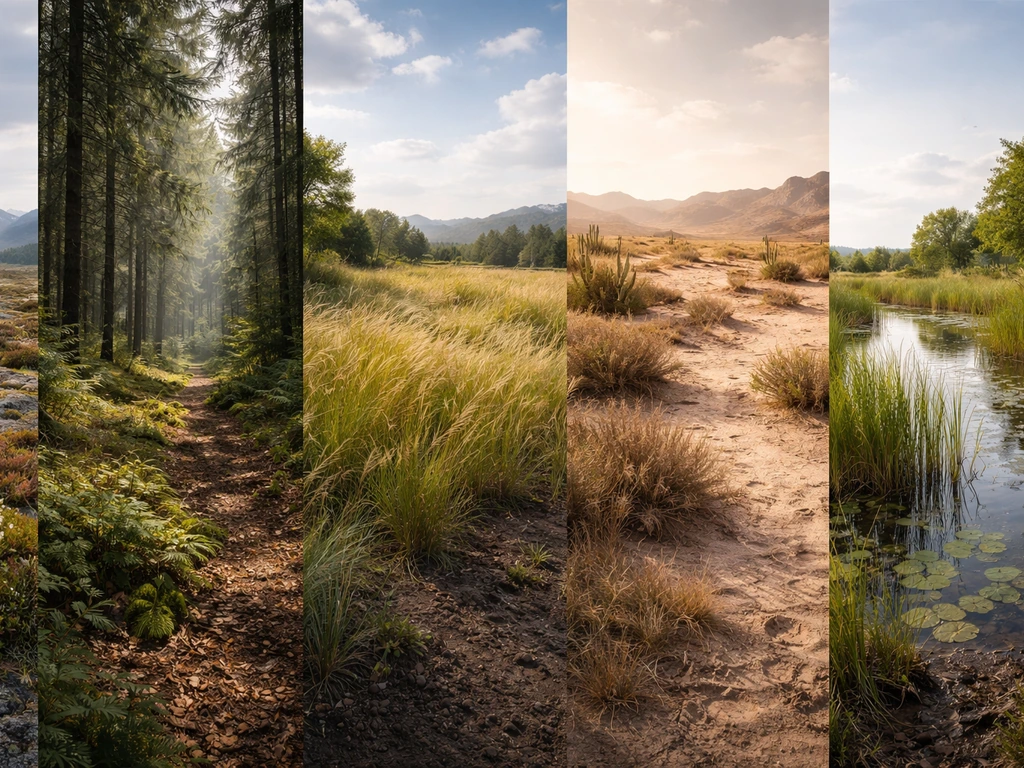
The main places where plants grow, by environment type
Think of these as the world's major plant addresses. A “place where plants grow” is often called a habitat, and it helps explain why different plant communities form in different conditions. Each one is defined by a characteristic combination of the four drivers above, and each hosts a distinct group of plants adapted to those specific conditions.
Arctic tundra
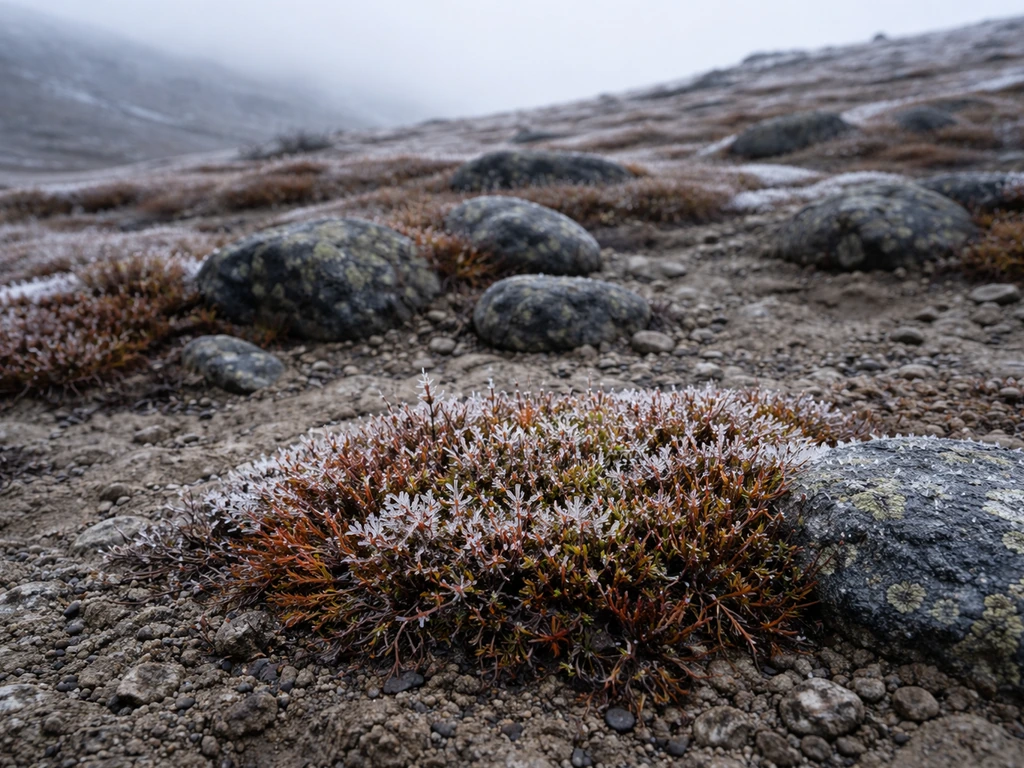
Tundra is defined by extreme cold, a short frost-free window sometimes measured in weeks, and a permafrost layer that prevents deep root growth. Plants here, mosses, sedges, dwarf shrubs, and cushion plants, stay low to avoid wind desiccation, complete their reproduction fast, and tolerate freezing at almost any time of year. Light is not the limiting factor in summer (tundra can get near-continuous daylight), but temperature and available soil depth are.
Forests: canopy, understory, and forest floor
Forests are layered growing environments. The canopy captures the majority of direct light, making the understory a low-light, high-humidity zone where shade-tolerant species dominate, ferns, woodland wildflowers, shade-loving shrubs. The forest floor may receive as little as 1 to 2 percent of full sunlight on a cloudy day under a dense canopy. Temperate deciduous forests offer a spring light window before canopy leaf-out, which is why spring ephemerals like trout lily and bloodroot complete their entire above-ground life cycle in about six weeks. Tropical rainforest floors are permanently dim, permanently warm, and permanently humid, creating conditions for a completely different plant community.
Grasslands and savannas
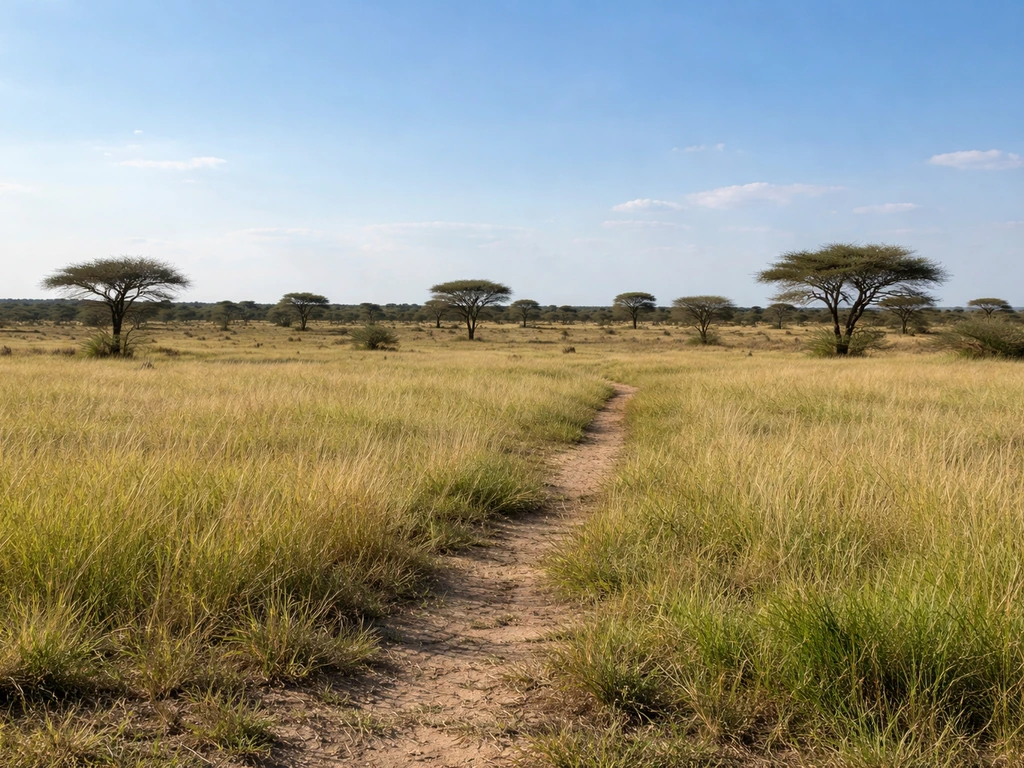
Grasslands occupy the zone between too dry for forest and too wet for desert. They get high light exposure, moderate to low annual rainfall, and periodic drought or fire that prevents woody plants from dominating. Prairie grasses and wildflowers put enormous energy into deep root systems, sometimes reaching 6 to 15 feet down to access moisture. If you have a sunny, well-drained site in a mid-continental climate, grassland-adapted plants are often a better fit than anything from a nursery catalog that evolved in a forest.
Deserts
Deserts are defined by water scarcity, not necessarily heat. Cold deserts like the Great Basin get most of their precipitation as snow, while hot deserts like the Sonoran are defined by extreme summer heat and low humidity. Desert plants are specialists at water storage, deep tap roots, highly reduced leaf surfaces, or opportunistic rapid growth during brief wet periods. The soil is often coarse, alkaline, and low in organic matter.
Wetlands and marshes
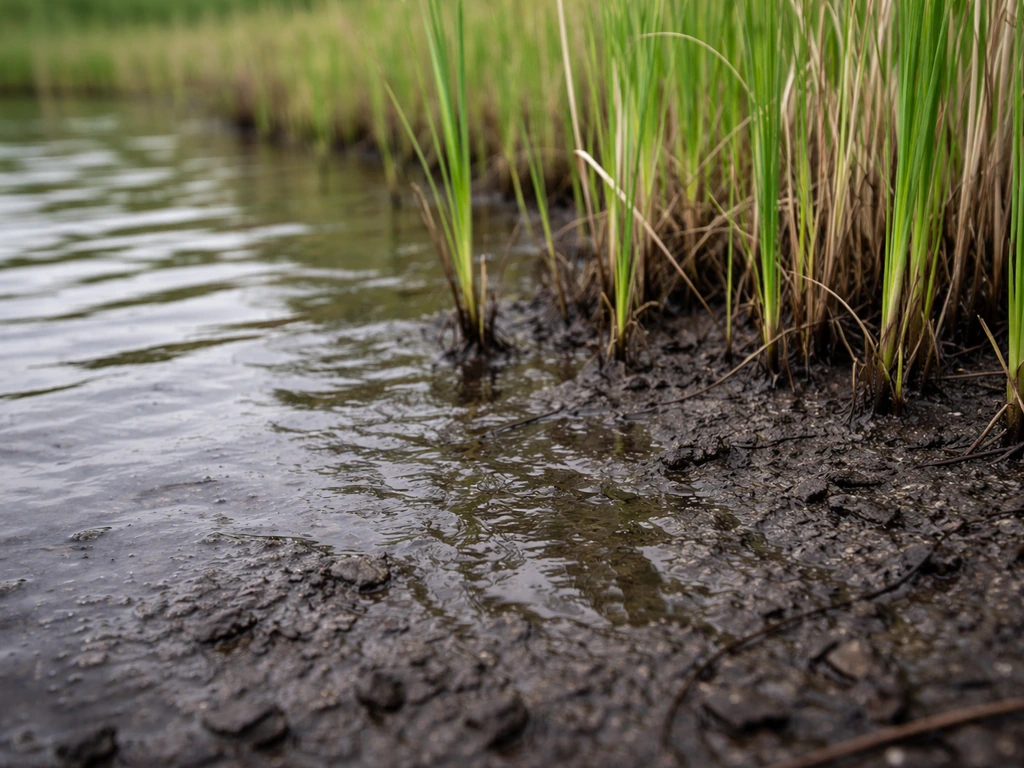
Wetlands include marshes, swamps, bogs, and riparian edges, and all of them have one thing in common: soil oxygen levels are low because water fills the pore spaces that roots need for gas exchange. Plants that thrive here have evolved specialized root structures (aerenchyma tissue that carries oxygen down to submerged roots) or keep their root zone above the permanent water table.
Peat bogs are a particularly extreme case: the water is highly acidic and nutrient-poor, so only a narrow group of acid-tolerant, nutrient-efficient plants like sphagnum moss, pitcher plants, and bog rosemary can establish. Peat bogs are described as having typical raw sphagnum peat pH ranges of [about 3. 5 to 4. 1](https://www.
sciencedirect. com/topics/agricultural-and-biological-sciences/peat-bog), which supports the idea of very acidic peat conditions. Peat bogs are an extreme wetland case, showing how waterlogged, low-oxygen soil limits which terrestrial plants can grow there.
Mountains and high elevations
Elevation changes the climate faster than any horizontal distance. As you go up a mountain, temperature drops roughly 3.5°F per 1,000 feet of elevation gain, growing seasons shorten, UV intensity increases, winds strengthen, and soils become thin and rocky. Alpine meadows above treeline are functionally similar to tundra: short seasons, high light, cold nights year-round, and very shallow soils. Valley floors at the base of mountains can be colder than mid-slope positions because of cold-air drainage, where dense cold air flows downhill at night and pools in low spots. This means the hardiest plants are sometimes needed at the valley bottom, not the summit.
Coastal zones
Coasts moderate temperature extremes (oceans buffer cold snaps and heat waves), increase humidity, raise wind exposure, and deliver salt spray that most inland plants cannot tolerate. Sandy or rocky substrates with fast drainage are typical. Plants adapted here tolerate salt, drought, and wind while taking advantage of the mild thermal climate. Coastal fog belts can also support plants that need cool, moist summers that would not otherwise occur inland at the same latitude.
How seasons and microclimates change where plants can grow
The same physical spot can be a completely different growing environment depending on the time of year and the local microclimate. Two facts drive almost all of this: temperature changes with time, and small landscape features create temperature and moisture differences that no regional map captures.
Seasonal windows
For most temperate and continental climates, the practical growing season is defined by the frost-free window between the average last spring freeze date and the average first fall freeze date (32°F or below). The National Weather Service publishes these dates for thousands of stations. In mid-continent locations, this window might be 140 to 160 days. In maritime climates it can exceed 300 days. In high-altitude locations it can be fewer than 60 days. Knowing your local frost dates is the most immediately useful piece of information for deciding what can grow where you are right now.
Beyond frost dates, heat accumulation during the season matters too. Growing Degree Days (GDD) measure how much heat builds up above the temperature threshold at which a given plant grows. Each species has its own base threshold. A plant that needs 1,500 GDD to flower will not bloom in a cool, short-season location even if it survives the winter, because the season simply does not accumulate enough warmth.
Microclimates: the places within the place
Microclimates are the reason two spots 50 feet apart can grow completely different plants. A south-facing slope or wall receives more direct radiation and is often a full hardiness zone warmer than a north-facing exposure nearby. Urban areas create heat islands where pavement and buildings retain warmth, extending the frost-free season and sometimes shifting a location into a warmer hardiness category. The USDA acknowledges that local microclimates can be too small to show up on any published zone map.
A cold-air basin at the bottom of a valley can be colder than the surrounding hillsides, even though it sits at lower elevation where the zone map might predict a warmer climate. Sheltered spots, walled courtyards, the south side of a building, a slope above a drainage basin, all of these create distinct growing environments worth scouting before you plant anything.
| Microclimate type | Typical effect | What it favors |
|---|---|---|
| South-facing wall or slope | Warmer and drier, more sun hours | Drought-tolerant, heat-loving, slightly tender plants |
| North-facing slope or shade structure | Cooler, more even moisture, lower light | Shade-tolerant, cool-season, or woodland plants |
| Valley floor / cold-air basin | Colder overnight temps, frost pocket risk | Hardy cold-tolerant species; avoid frost-sensitive plants |
| Urban heat island | Warmer winters, earlier spring, later fall | Plants rated one zone warmer than the regional map shows |
| Coastal fog belt | Cool summers, mild winters, persistent humidity | Fog-tolerant plants; rhododendrons, ferns, cool-season crops |
| Elevated ridge or hilltop | More wind, faster drying, higher light | Wind-tolerant, drought-adapted, full-sun plants |
Soil and substrate: the ground-level details of where plants thrive
Knowing the climate and light of a place gets you halfway there. Soil finishes the picture. The same plant that thrives in loamy garden soil may rot in clay or starve in sand, even under identical weather. Here is how the main substrate types shape plant communities.
| Substrate type | Key characteristics | Plants naturally adapted here | Main challenge |
|---|---|---|---|
| Coarse sand | Fast-draining, low water-holding capacity, low nutrients | Beach grasses, succulents, drought-adapted natives, many Mediterranean herbs | Drought stress; nutrients leach quickly |
| Loam | Balanced sand/silt/clay mix, good drainage and water retention, higher fertility | Widest range of plants; most garden vegetables and perennials | Compaction if worked wet; needs organic matter maintenance |
| Clay | Slow-draining, high water-holding capacity, nutrient-rich but poorly aerated when wet | Willows, sedges, plants tolerating wet feet; many prairie species | Waterlogging; compaction restricts roots; slow to warm in spring |
| Rocky / thin soil | Shallow, fast-draining, low organic matter, low water retention | Alpine plants, sedums, certain ferns, dry-habitat natives | Drought; physical root barrier from rock; low nutrients |
| Peat / peat bog | Highly acidic (pH 3.5-5), nutrient-poor, high water retention | Sphagnum moss, sundews, pitcher plants, blueberries, bog rosemary | Very limited nutrient availability; extreme pH excludes most plants |
| Nutrient-poor (any texture) | Low N/P/K regardless of texture; often sandy or highly leached | Native wildflowers, legumes, plants with mycorrhizal associations | Fertilizer-sensitive plants may actually fail; natives often outcompete |
Soil pH deserves special attention because it is invisible and often overlooked. Soil pH directly controls nutrient solubility: phosphorus becomes nearly unavailable below pH 5 or above pH 7.5, iron and manganese become toxic in very acid soils, and calcium and magnesium become scarce in overly acid conditions. A plant growing in the right climate and light but in the wrong pH range will look sick even in otherwise decent soil.
Soil compaction is another hidden barrier. Compacted soil has fewer large pores, reducing both drainage and the oxygen supply to roots. Roots in low-oxygen conditions cannot properly absorb water or nutrients, and growth stalls. Compaction is common under driveways, on frequently walked-on garden edges, or in urban planters with degraded growing media. It looks identical to drought stress from above ground.
How to figure out what grows where you are right now
Here is the practical sequence I use when evaluating any new location, whether a garden bed, a restoration site, or a region I am researching for the first time.
- Find your USDA hardiness zone. Go to the USDA Plant Hardiness Zone Map website, enter your zip code, and note your zone and subzone. Remember this is based on a 30-year average of extreme minimum winter temperatures from 1991 to 2020, not the absolute coldest night ever recorded. It tells you what cold stress a plant must survive, not what will make it grow well.
- Note your heat zone. Check if you are in a high-heat-day area (many days above 86°F) or a cool-summer area. A plant may survive your winters but fail to produce fruit or flowers without enough summer heat accumulation.
- Get your local frost dates. Your nearest National Weather Service office or cooperative extension service publishes average last spring frost and first fall frost dates. These define your practical growing window this season.
- Observe your specific microclimate. Stand in the spot you want to plant and watch it through a full day. Count actual sun hours. Note whether it is a low spot where frost settles or an elevated, sheltered position. Check if a building wall or fence changes the light or wind exposure. These details override the regional zone map for that specific location.
- Test or assess your soil. A basic soil test from your cooperative extension service (typically under $20) will give you pH, organic matter, and major nutrient levels. At minimum, do a jar test (shake soil in water and let it settle) to estimate your rough sand/silt/clay ratio, and press a handful to check for obvious compaction.
- Match plant needs to what you found. Look up candidate plants using their hardiness zone range, heat zone preferences, light requirements, water needs, and preferred soil pH and texture. A plant that fits all five criteria for your location is a genuine match, not just a zone-compatible guess.
Why plants fail in the wrong place, and how to troubleshoot it
Most plant failures come down to a mismatch between one of the four core drivers and what the plant actually needs. The tricky part is that several different problems produce identical symptoms above ground.
Temperature extremes
Cold damage is the most obvious: a plant rated for zone 8 planted in zone 6 will die in a normal winter. But the USDA cautions that even zone-appropriate plants can suffer when a midwinter warm spell is followed by a sharp cold snap, because plants come out of dormancy prematurely and then get damaged by cold they would have handled fine in December. Heat stress is the less-discussed mirror problem: cool-season crops like lettuce bolt and turn bitter in summer heat zones where temperatures regularly exceed 86°F, and some alpine plants simply cannot survive summer in a low-elevation garden regardless of whether winters are cold enough.
Water problems: too dry or too wet
Drought stress and waterlogging look similar: wilting, yellowing, root death, and eventual plant collapse. Waterlogging kills roots through oxygen deprivation, not water itself. If a plant wilts in soil that feels wet, waterlogging is the likely cause, not drought. Check whether the soil drains within 24 to 48 hours after heavy rain. If it does not, the site is not appropriate for most non-wetland plants without drainage improvement. Sandy soils cause the opposite problem: coarse sands have very low available water-holding capacity, so plants may need irrigation even after rain.
Low light
Placing a full-sun plant in shade produces stretched, weak growth, poor flowering, and high disease susceptibility over time. Count actual sun hours in the specific spot at the right time of year, not the sunniest day of summer. A spot that gets four hours of sun in July may get two in September. Shade under deciduous trees shifts seasonally: spring-blooming woodland plants are adapted to exploit the light window before leaf-out.
Soil pH and nutrient mismatch
Yellowing between the veins on new leaves often signals iron or manganese deficiency caused by high soil pH, not a lack of those nutrients in the soil. Applying fertilizer will not fix a pH problem. Acid-loving plants like blueberries, azaleas, and rhododendrons consistently underperform in neutral to alkaline soils because phosphorus and micronutrients become chemically locked up. A soil test is the only reliable way to diagnose this.
Compaction and poor structure
Compacted soil reduces large pores and saturated drainage, creating waterlogging risk even in climates that seem too dry for that problem. Roots in compacted ground cannot expand, and restricted roots mean restricted top growth regardless of how good the weather is. If plants are consistently stunted in a particular spot and there is no obvious climate or pest explanation, dig down six inches and check: can you push a screwdriver in easily? If not, compaction is a likely factor.
Your practical next steps: finding plants that actually fit your place
Once you have assessed your location using the steps above, you have enough information to run a purposeful plant search rather than hoping something from a catalog survives.
- Write down your four key facts: hardiness zone (with subzone), average last spring and first fall frost dates, dominant light condition (hours of sun), and basic soil texture and pH if tested. These are your search filters.
- Use those filters to search plant databases. Look specifically for plants whose hardiness zone range includes yours, whose water and light needs match your site, and whose preferred soil pH aligns with what you measured or estimated. If a plant checks all four boxes, it belongs on your shortlist.
- Add a microclimate adjustment. If you have a confirmed cold-air basin, cold-pocket, or frost-prone low spot, drop your effective zone by half a zone and look for hardier options. If you have a sheltered south-facing wall in an urban area, you may be able to trial plants rated one zone warmer than your official zone.
- Prioritize natives and locally adapted plants. Plants that naturally grow in environments similar to yours will almost always outperform exotics that merely tolerate your conditions. Native plants are the most direct answer to 'what grows here,' because they evolved here.
- Start a location journal. Record what you plant, where, the date, and what happens. One season of observation in a specific spot teaches you more about its real microclimate than any map.
- Explore related substrate and habitat topics. If you want to go deeper, understanding the upper layer of earth in which plants grow, or examining the specific places where plants cannot grow, will sharpen your ability to make fast, accurate decisions about any new site you encounter.
The bottom line is that every place where plants grow is really just a combination of numbers: a temperature range, a light level, a water budget, and a soil profile. That soil profile determines the upper layer of Earth where roots can access water, oxygen, and nutrients. Learn those numbers for your specific location and you can figure out, with confidence, exactly which plants belong there and when to put them in the ground. For a kid-focused starting point, see places where plants grow kindergarten as a friendly way to spot real-world growing spots.
FAQ
If a plant is hardy in my climate, why can it still fail to grow (or not bloom)?
Start with your frost-free period and only then move to heat needs. A plant can survive winter but still fail if it requires more Growing Degree Days than your season provides, so check whether it will actually flower or mature by comparing its GDD requirement (or “days to maturity”) with your local season length.
How do I measure light correctly for places where plants grow, especially near trees and buildings?
Yes, but count sun and shade at the times the plant will be active, not just during peak summer. Deciduous tree shade changes across spring, summer, and fall, and a spot that feels sunny all day may still be too dim in spring when woodland plants need that short light window.
What’s the difference between drought stress and waterlogging stress, and how can I tell quickly?
Soil texture is not the same thing as drainage. Compacted soil can hold water and create low-oxygen conditions even if the area looks dry at the surface, while very sandy soil drains fast and can be dry even right after rain, so the practical test is whether water drains within about 24 to 48 hours after heavy watering.
Can I save a waterlogged site by adjusting watering, or do I need drainage work?
In many cases, you can’t fully fix waterlogging by “watering less,” because the root problem is oxygen. If the site stays wet for more than a day or two after rain, you usually need drainage improvement, raised beds, or choosing wetland-appropriate plants instead of trying to force non-wetland species.
Why do plants sometimes do worse (or better) in my yard than the zone map predicts?
Microclimates often make USDA hardiness zones misleading for specific gardens. Use nearby evidence (what survives in your exact yard or block, frost patterns in low spots, wind exposure on corners) and treat zone maps as a starting guess, then confirm with observations like where cold air settles.
My leaves look chlorotic, is that always a fertilizer problem?
Soil pH problems can look like nutrient deficiency, but fertilizer usually will not solve the chemistry. For example, yellowing between leaf veins can point to iron or manganese issues tied to pH, so take a soil test before adding nutrients, and adjust pH when needed (often by amending over time, not with a single application).
How do I know if compaction is limiting growth in places where plants grow?
Compaction can limit roots even when surface moisture and light seem fine. If you can’t easily push a screwdriver into the soil at around 6 inches (or it resists strongly), plan on aeration, loosening with appropriate methods, and improving organic matter carefully rather than only adding compost on top.
Do peat bog plants require more than just waterlogged soil?
Yes, especially for acid-tolerant plants and nutrient-poor bog specialists. If your goal is something like sphagnum moss or pitcher plants, you will need the right combination of acidity and poor fertility, not just wetness, because high nutrient availability and different pH can shift the site to different plant communities.
What about “midwinter warm spell then cold snap” damage, how does that affect which places plants grow well?
Long winter warm spells can break dormancy and then damage plants when a hard cold snap returns. If you get freeze-thaw cycles, choose varieties with better tolerance for midwinter temperature swings and consider protection strategies like mulching and wind shielding, not only relying on the plant’s general hardiness rating.
If my plant survives the first year, does that mean it’s in the right light for the long term?
Not always. Some plants are adapted to high light and drought-like conditions, while others are adapted to shade, humidity, and consistent moisture. A plant placed in full sun where it should be shaded can stretch, flower poorly, and become disease-prone over time, even if it survives the first season.