
C4 plants grow where it is hot, bright, and seasonally dry. That means tropical and subtropical grasslands, savannas, open scrublands, and desert margins across Africa, Australia, South Asia, and the Americas are their strongholds. They also push into warm-temperate regions with dry summers. If you are standing somewhere with blazing sun, temperatures regularly above 30°C (86°F), and a dry season that stresses most other plants, there is a very good chance the dominant grasses and many of the weedy broadleaf plants around you are running C4 photosynthesis.
Where Do C4 Plants Grow? Climates, Habitats, and Next Steps

Dr. Marcus Weatherby
29 Apr 2026
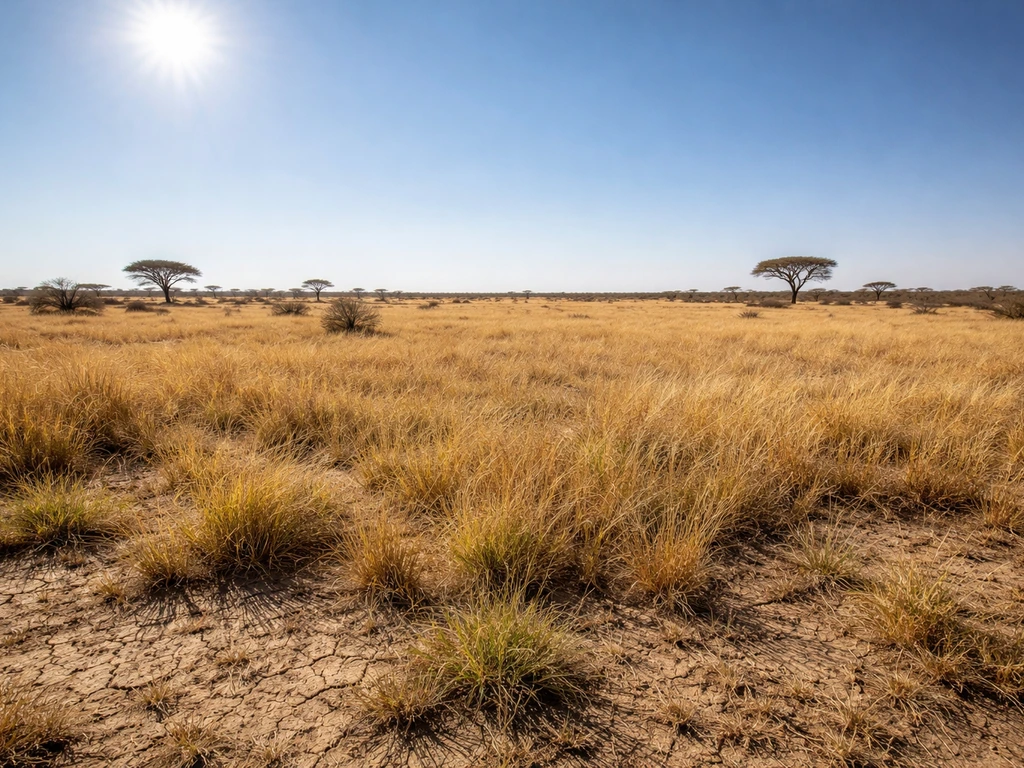
Why C4 plants prefer certain environments

To understand where C4 plants grow, you need a quick picture of what C4 photosynthesis actually does differently. In a standard C3 plant, CO2 is fixed directly by the enzyme Rubisco, which has a frustrating habit of grabbing oxygen instead of CO2 when temperatures rise and CO2 concentrations inside the leaf fall. That mistaken reaction, called photorespiration, wastes energy and slows growth. C4 plants solve this with a two-stage system: mesophyll cells first capture CO2 using a different enzyme called PEP carboxylase, converting it into 4-carbon acids. Those acids shuttle into specialized bundle-sheath cells that form a tight ring around the leaf's vascular tissue (a structure called Kranz anatomy), where CO2 is released at high concentrations right next to Rubisco. In C4 plants, PEP carboxylase fixes CO2 in mesophyll cells and the CO2 is concentrated in bundle-sheath cells, often raising CO2 near Rubisco by about tenfold compared with C3 plants CO2 is released at high concentrations right next to Rubisco. That CO2 pump essentially drowns out the oxygen competition and nearly eliminates photorespiration.
The payoff is enormous under hot, high-light conditions. When a C3 plant closes its stomata to avoid drought stress, CO2 inside the leaf drops and photorespiration surges. A C4 plant keeps photosynthesizing efficiently even with partially closed stomata because PEP carboxylase still scavenges the low internal CO2. This is why C4 plants dominate exactly the environments where heat and water stress push C3 plants toward inefficiency: open tropical grasslands, semiarid savannas, and disturbed sunny habitats. Shade them out, cool them down, or keep them wet year-round and the C4 advantage largely disappears.
Global regions where C4 plants are most common
C4 species make up only around 3% of all land-plant species, but they punch well above their weight in productivity, contributing a disproportionately large share of terrestrial primary production. C4 photosynthesis is present in about 7,500 species of flowering plants, which is roughly 3% of estimated land plant species C4 species make up only around 3% of all land-plant species. That is because they dominate the warm, high-productivity grassland and savanna biomes that cover enormous areas of the planet. Their geographic distribution tracks closely with warm-climate grass lineages that evolved in those conditions, and the C4 pathway reinforces that competitive advantage in more arid settings.
| Region | Dominant C4 habitat | Approximate climate range |
|---|---|---|
| Sub-Saharan Africa | Tropical savanna, Sahel grassland | Mean annual temp >20°C, strong dry season |
| South and Southeast Asia | Tropical grassland, monsoon savanna | Hot summers, seasonal drought |
| Northern Australia | Tropical/subtropical savanna | High temps, pronounced dry season |
| Central and South America | Cerrado, Llanos, Pampas | Warm to hot, seasonally dry |
| Great Plains, North America | Warm-season tallgrass/shortgrass prairie | Hot summers, semi-arid |
| Mediterranean/Middle East margins | Arid grassland, desert edge | Hot dry summers, low rainfall |
| Southern Africa | Bushveld, Karoo margins | Hot, seasonally dry, open terrain |
Cool, wet, or heavily shaded regions tell a different story. Temperate rainforests, boreal zones, alpine meadows, and heavily irrigated agricultural land are dominated by C3 plants. If you travel to the Scottish Highlands, the Pacific Northwest, or a cloud forest in the Andes, you will find almost no native C4 plants. The climate simply does not give C4 its edge there.
Habitats: savannas, grasslands, and arid open areas
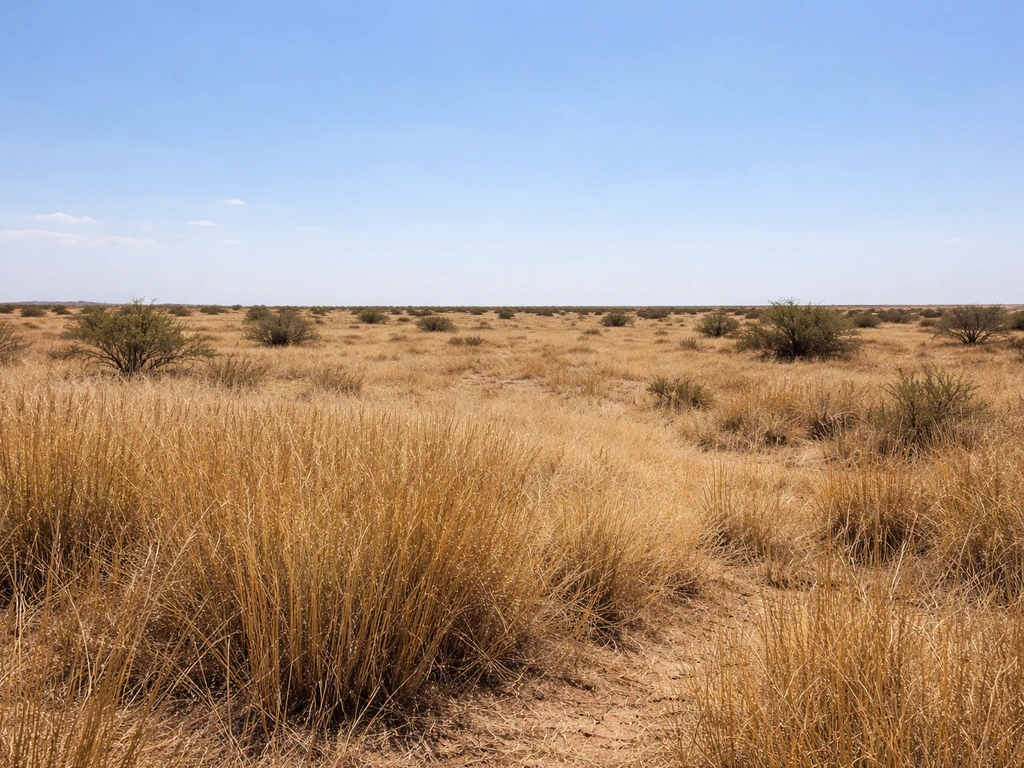
The clearest sign you are in C4 territory is a hot, open grassland or savanna with a defined dry season. These C4 plants are endemic plants are those which grow in places that match those hot, bright, seasonal-dry conditions hot, open grassland or savanna with a defined dry season. Rubber plants that prefer brighter, warmer conditions are most likely to be found in these kinds of tropical to subtropical regions with seasonal dryness hot, open grassland or savanna with a defined dry season. African savannas like the Serengeti are textbook examples: the dominant grasses (Rhodes grass, buffelgrass, red oat grass, and dozens of others) are almost entirely C4. The same applies to the Brazilian Cerrado, the Australian tropical savanna belt, and India's Deccan Plateau grasslands. In all of these places, the combination of intense solar radiation, high temperatures for most of the year, and a dry season lasting several months creates exactly the conditions where C4 grasses outcompete C3 species.
Semi-arid desert margins and disturbed open ground also favor C4 plants. Roadsides, overgrazed pastures, and abandoned agricultural fields in warm climates fill up fast with C4 weeds like crabgrass, goosegrass, and pigweed. These are opportunistic C4 species that thrive in high-disturbance, high-sun environments. If you have ever struggled with summer weeds in a warm-climate garden, you have firsthand experience with C4 ecology.
Where C4 plants are notably scarce: shaded forest understories, wetlands and riparian margins with year-round moisture, cool-season grasslands above roughly 2,000 meters elevation, and any habitat where mean growing-season temperatures stay consistently below around 15 to 18°C. Those environments belong to C3 plants, and sometimes to specialist groups like insectivorous plants and other specialists adapted to low-nutrient or waterlogged conditions. (see also where insectivorous plants grow). If you are wondering where do sensitive plants grow, look for the cooler, shadier, wetter habitats that tend to favor C3 growth instead of C4 dominance. Those environments belong to C3 plants, and sometimes to specialist groups like insectivorous plants and other specialists adapted to low-nutrient or waterlogged conditions.
Climate checklist: heat, light, drought, and seasonality
Use this checklist when assessing whether a location is likely to support C4 plant dominance. Decorative plants often grow best in the same warm, bright, seasonally dry conditions where C4 species dominate Use this checklist when assessing whether a location is likely to support C4 plant dominance.. You do not need to tick every box, but the more that apply, the more C4-friendly the site is.
- Mean summer (growing season) temperatures above roughly 25 to 30°C (77 to 86°F): this is where photorespiration hits C3 plants hardest and the C4 advantage is greatest
- High solar radiation: C4 plants are sun-obligate. Light saturation points for C4 species are much higher than for C3 plants, so full, unobstructed sun for most of the day is key
- A distinct dry season of at least 3 to 5 months, or erratic rainfall that produces recurring drought stress: this is where C4 water-use efficiency pays off
- Annual rainfall roughly in the 300 to 1,500 mm range with strong seasonality: extreme desert (very low total rain) or perennial wet tropics (no dry season) both reduce C4 dominance
- Frost-free or frost-limited growing seasons: hard freezes suppress C4 plants, which is why warm-season C4 grasses go dormant in winter while cool-season C3 grasses keep growing
- Continental or monsoon climate patterns with hot summers and cool/dry winters tend to select strongly for C4 grasses and forbs
A practical shortcut: look at the native grass flora. If the dominant warm-season grasses in your area are species like big bluestem, switchgrass, bahiagrass, bermudagrass, or sorghum relatives, you are in C4 grassland territory. If the natural vegetation is dominated by fescues, bluegrasses, or brome species that green up in cool weather, you are in C3 territory.
Soil and nutrient conditions that favor C4 plants
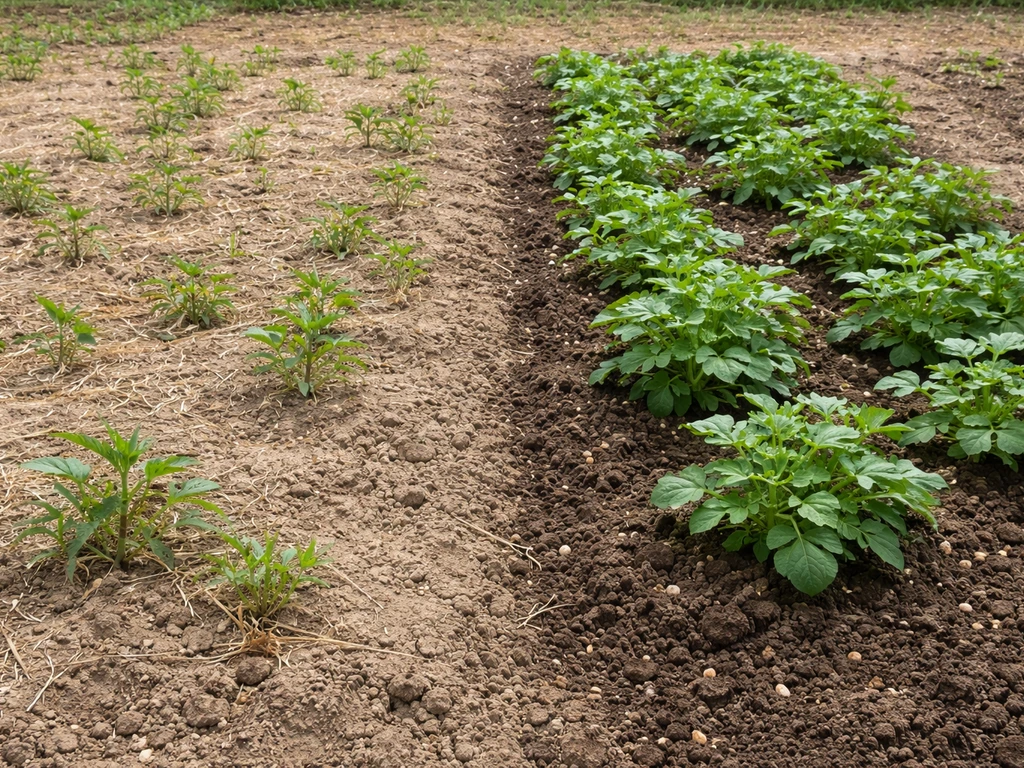
C4 plants have a well-documented advantage on low-nitrogen soils. The C4 CO2-concentrating mechanism means C4 plants can operate Rubisco at high efficiency with less total enzyme (Rubisco is nitrogen-expensive to build). So on nutrient-poor, lateritic, or sandy soils typical of tropical savannas, C4 grasses outperform C3 species that need more leaf nitrogen to support their higher Rubisco loads. African savanna soils are often deeply weathered and nutrient-depleted, and that suits C4 grasses perfectly.
On high-fertility soils with good moisture, the gap narrows. Heavily fertilized, irrigated agricultural land in warm climates can support high-yielding C3 crops like rice and wheat alongside C4 crops like maize and sorghum, because fertilizer removes the nitrogen constraint and irrigation removes the drought constraint. In wild systems, though, low soil fertility and recurrent fire (which recycles nutrients unevenly and keeps woody plants in check) together create the conditions where C4 grasslands persist across huge landscape areas.
Soil texture matters too. Well-drained sandy or loamy soils that dry out between rain events favor C4 species more than heavy clay soils that retain water and stay moist. Compacted, disturbed soils in sunny positions (think roadside verges, bare agricultural margins) are classic C4 weed habitats precisely because they dry quickly and heat up intensely.
How to figure out where C4 plants will grow near you
The most direct approach is to combine climate data with a biome map and then confirm with local flora lists. Here is how to do it in practice.
- Check your mean monthly temperatures for June through August (Northern Hemisphere) or December through February (Southern Hemisphere). If growing-season highs are routinely above 30°C and rarely drop below 20°C at night during summer, you are in C4-friendly territory.
- Look at rainfall seasonality, not just annual totals. Pull up a climate diagram (Walter climate diagram) for your nearest weather station. A clear dry season where rainfall drops below potential evapotranspiration for several months is the key flag.
- Use a global biome or ecoregion map (WWF ecoregions are freely available) to identify whether your area falls in tropical/subtropical grassland, savanna, shrubland, or desert biome categories. These are the C4 strongholds.
- Search your regional or national herbarium database for the grass species in your area, then check whether the dominant species are classified as warm-season (C4) or cool-season (C3) grasses. Extension services in the US, Australia, and South Africa often list this explicitly for pasture management.
- Observe local weed pressure in summer. Crabgrass (Digitaria spp.), goosegrass (Eleusine indica), barnyard grass (Echinochloa crus-galli), and purslane (Portulaca oleracea) are all C4 plants. If these are your biggest summer weed problems, C4 conditions are clearly present.
- For gardeners or farmers: adjust irrigation and soil fertility inputs to see how they shift the balance. Reducing summer water and keeping soil lean tends to favor C4 weeds and grasses; heavy irrigation and fertilizer in warm climates can suppress them by enabling competitive C3 species.
Microhabitat matters at the site scale too. Even within a landscape that generally supports C4 plants, shaded spots under trees or along seasonal stream banks may support C3 plants because light and moisture conditions override the regional climate signal. C4 dominance is always strongest in open, unshaded positions on freely draining soil.
Examples of C4 plants and crops to recognize
Recognizing C4 species helps you read the landscape. The group is dominated by grasses and sedges, with a smaller but significant number of broadleaf flowering plants. C4 photosynthesis has evolved independently dozens of times, so C4 plants do not all look alike, but they share a preference for hot, open conditions.
| C4 plant or group | Type | Typical habitat |
|---|---|---|
| Maize (Zea mays) | Crop grass | Warm-season cultivation, tropical origin |
| Sugarcane (Saccharum officinarum) | Crop grass | Tropical/subtropical, high-light, frost-free |
| Sorghum (Sorghum bicolor) | Crop/wild grass | Semi-arid tropics, drought-tolerant |
| Millet (Pennisetum, Panicum spp.) | Crop grass | Arid/semi-arid tropics and subtropics |
| Bermudagrass (Cynodon dactylon) | Warm-season turf/pasture | Tropical/warm-temperate, disturbed open ground |
| Switchgrass (Panicum virgatum) | Native prairie grass | North American Great Plains, warm-season |
| Big bluestem (Andropogon gerardii) | Native prairie grass | Tallgrass prairie, hot-summer continental |
| Crabgrass (Digitaria spp.) | Weed grass | Disturbed, warm, sunny, well-drained soils |
| Purslane (Portulaca oleracea) | Broadleaf C4 weed | Hot sunny disturbed ground, drought tolerant |
| Pigweed/Amaranth (Amaranthus spp.) | Broadleaf C4 weed/crop | Warm disturbed ground, wide global distribution |
| Buffelgrass (Cenchrus ciliaris) | Invasive pasture grass | Arid/semi-arid open land, Africa, Australia, SW USA |
| Rhodes grass (Chloris gayana) | Tropical pasture grass | African savanna and subtropical pasture |
Notice that most of these plants share a few field clues: they thrive in summer heat, they go dormant or slow down noticeably in cool seasons, and they are almost always found in open, unshaded positions. If you see a dense stand of tall grass thriving in midsummer heat where other plants look stressed, there is a strong chance you are looking at a C4 species. That intuition, backed up by a quick check of a regional grass guide, is often all you need to make a reliable call in the field.
C4 plant distribution connects to broader questions about which plant types match which environments. If you are also exploring how other specialist groups map onto specific climates and habitats, similar environmental logic applies: the habitat conditions that exclude C4 plants (cool, shaded, waterlogged, or nutrient-extreme) are often exactly where other ecological specialists like tropical broadleaf species, flowering plant communities, or century plants fill different ecological niches. If you are wondering where do century plants grow, look for hot, sunny spots with well-drained soils and limited summer moisture.
FAQ
Are C4 plants only grasses, or can broadleaf plants use C4 photosynthesis too?
C4 species are dominated by grasses and sedges, but there are also C4 broadleaf flowering plants. They are less common, and in the field you often spot them as warm-season plants that thrive in midsummer sun, then noticeably slow or go dormant as temperatures drop.
Can C4 plants grow in deserts where temperatures are hot but nights can be cold?
Yes, C4 plants can still grow in deserts as long as the growing season is hot enough and there is bright, open sun for much of the year. Large day-night temperature swings mainly matter if they reduce the effective warm-season period, shifting dominance back toward C3.
Why might a place that seems hot and sunny still have mostly C3 plants?
Regional climate is only the starting point. Heavy shade, year-round moisture near streams, consistently cool mean temperatures, or soils that stay wet longer can override the heat-and-light signal, favoring C3 plants even in otherwise warm regions.
Do C4 plants always dominate in warm climates, or are there exceptions?
They are most dominant in open, seasonally dry habitats, not everywhere warm. In warm areas with reliable water and strong fertility, or under frequent irrigation and high nitrogen availability, C3 crops and some native C3 species can compete well, narrowing the C4 advantage.
How do I tell C4 versus C3 plants at the seasonal level?
Look for a warm-season growth peak. C4 plants typically perform best in midsummer heat and may slow down sharply in cool periods, while many C3 grasses green up more strongly in cooler weather.
Do wetlands, marshes, and riparian edges always lack C4 plants?
They strongly disfavor C4 dominance because conditions stay wet and light can be reduced by canopy or tall vegetation. You may find occasional C4 species in sunny, well-drained pockets, but continuous wet soils generally push communities toward C3.
Are C4 weeds in gardens the same as native C4 plants in savannas?
Not always. Many common lawn and crop weeds in warm climates are C4 opportunists, but your local weed flora depends on regional introduction history and native species pools. Still, the ecological pattern is similar, they prefer disturbed, sun-exposed, drying conditions.
Does elevation automatically rule out C4 plants?
Not strictly. Elevation matters mainly because it changes temperature and growing-season length. Around higher altitudes where mean growing-season temperatures stay cool for much of the year, C3 dominance typically increases, but patchy sunny, warm microsites can still host some C4 species.
How much does soil nitrogen affect where C4 plants grow?
C4 plants tend to perform better under low nitrogen because their CO2 concentrating mechanism lets them use Rubisco efficiently with less total Rubisco investment. On high-nitrogen, well-watered sites, the C4 edge often shrinks, so dominance becomes less reliable than climate and moisture cues.
If I want to predict C4 dominance, should I rely more on climate data or on what grows there?
Use climate and habitat as the screening tool, then confirm with local vegetation. In practice, a quick scan of the native warm-season grass flora is often the fastest confirmation because it integrates local soils, disturbance, and microclimate effects.
Can microclimates within one property change whether C4 or C3 dominates?
Yes. A yard or farm can have both. Open, freely draining sunny patches usually favor C4 species, while shaded spots under trees, along north-facing walls, or in wetter depressions often support C3 plants even if the broader region is C4-prone.
Do fire and grazing influence C4 versus C3 plant patterns?
They often do. Recurrent fire can suppress woody plants and recycle nutrients in ways that maintain open grassland conditions, which tends to support C4 grasses. Overgrazing and soil disturbance can also create sun-exposed, drying microsites where C4 weeds and opportunists establish quickly.