
Potatoes, dahlias, Jerusalem artichokes (sunchokes), tuberous begonias, and hardy cyclamen are among the most common plants that grow from tubers. Each one stores energy in a swollen underground stem (not a root, not a bulb) and sprouts new growth from buds called eyes. If you can spot those eyes and match the plant to your climate and planting window, you are already most of the way to a successful grow.
Plants That Grow From Tubers: Examples and How to Grow Them

Dr. Marcus Weatherby
1 May 2026
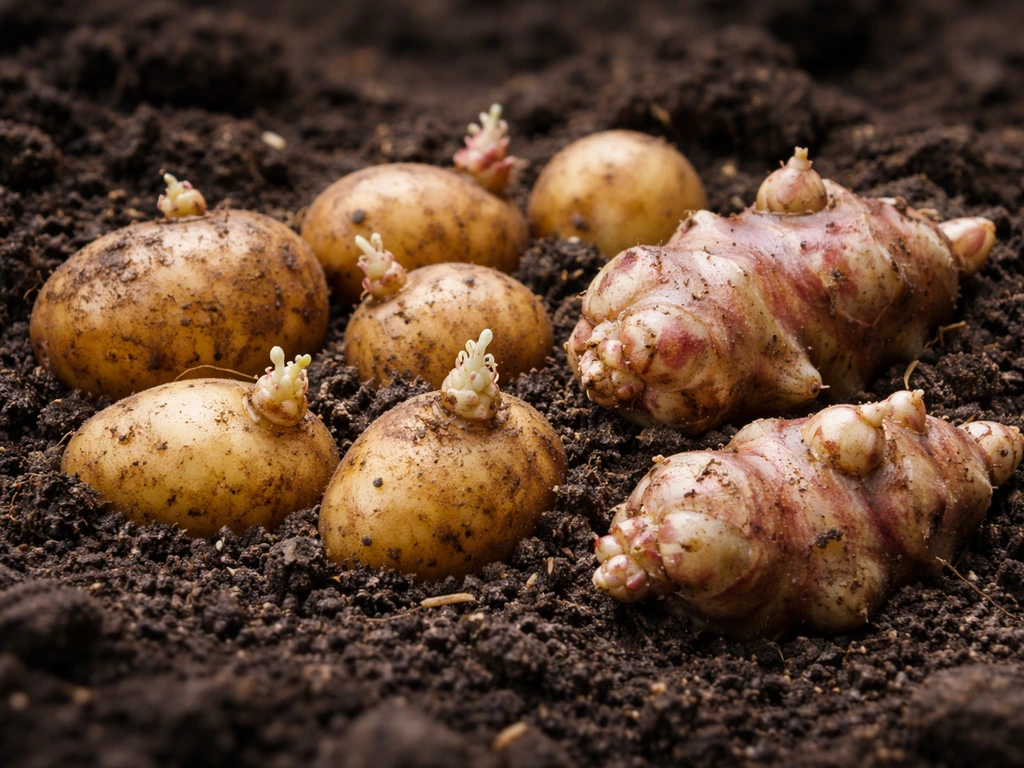
Common tuber-growing plants at a glance
Here is a quick rundown of the most widely grown tuber plants, what they produce, and the basic environment they come from. These are true tubers, meaning swollen stem tissue packed with starch or water that the plant uses to survive drought or dormancy.
| Plant | Tuber Type | What It Produces | Native/Preferred Climate |
|---|---|---|---|
| Potato (Solanum tuberosum) | Stem tuber | Edible starchy tubers | Cool temperate, Andean highlands |
| Dahlia (Dahlia spp.) | Tuberous roots (often called tubers) | Ornamental flowers | Warm temperate, Mexican highlands |
| Jerusalem artichoke / Sunchoke (Helianthus tuberosus) | Stem tuber | Edible nutty tubers | Eastern North America, temperate |
| Tuberous begonia (Begonia tuberhybrida) | Stem tuber | Ornamental flowers | Moist, cool-summer environments |
| Hardy cyclamen (Cyclamen hederifolium, C. coum) | Flattened stem tuber (corm-like) | Ornamental flowers and foliage | Mediterranean woodlands |
A quick note on dahlias: botanists sometimes classify their underground parts as tuberous roots rather than true stem tubers, but horticulturally they are grouped with tubers and handled the same way. The practical growing advice is identical.
Tuber vs bulb vs rhizome: how to recognize what you actually have
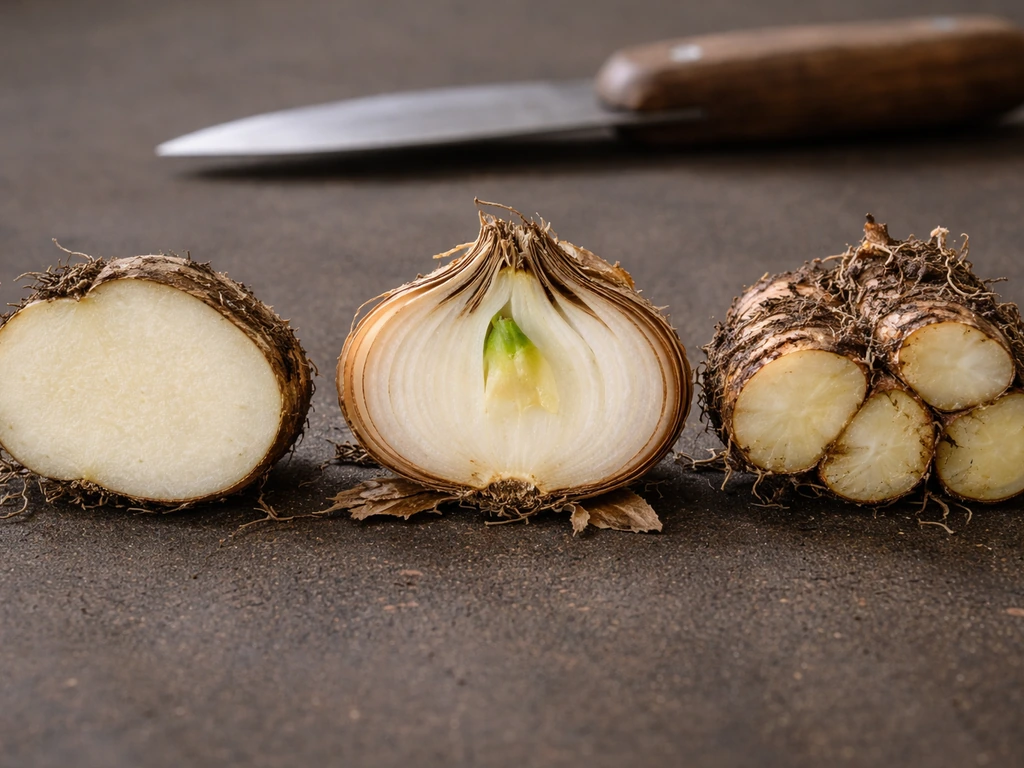
This is where a lot of gardeners get tripped up. A tuber is a swollen stem (or root) with no papery outer tunic, no basal plate, and no layered scales inside. If you cut one open, it looks like a dense, starchy vegetable all the way through. Bulbs, by contrast, have a distinct basal plate at the bottom where roots emerge, fleshy scale-like layers inside, and usually a dry papery skin (tunic) on the outside.
Think of an onion or a tulip. A corm (like a crocus) also has a basal plate and a tunic but is solid inside rather than layered. If you want more corm examples to look for at planting time, crocus and gladiolus are two of the most familiar corm (like a crocus).
The single most reliable field test for a tuber is to look for eyes. Those small indentations or bumps are growth buds, and every tuber plant has them. A potato with no eyes will not sprout. A dahlia clump where no visible eye (bud) is attached to the neck of the tuber will not produce a plant. No eyes, no plant: that rule alone will save you from planting dead material.
Rhizomes are horizontal underground stems that spread laterally, often just below the soil surface. They can look superficially like a thick tuber but they grow sideways, not as compact storage lumps. Ginger and iris are classic rhizome examples. If you want to dig deeper into that category, rhizome plants follow a completely different growth habit and spread pattern than tubers do. Stolons are another variation, sending runners along or just above the soil rather than storing reserves in a compact organ. Some plants can also propagate using stolons, producing new growth from runners instead of storing energy in a compact tuber.
- Tuber: no tunic, no basal plate, eyes/buds visible on surface, solid starchy interior (potato, dahlia, sunchoke)
- Bulb: papery tunic outside, basal plate at base, layered scales inside (tulip, daffodil, garlic)
- Corm: papery tunic outside, basal plate at base, solid inside with no layers (crocus, gladiolus)
- Rhizome: horizontal underground stem, grows laterally, often with visible nodes (ginger, iris, bermuda grass)
Which tuber plants grow where: mapping climate and season
Where you live determines not just which tuber plants will survive but when to plant them and whether you need to dig and store them each year. Here is how the main species break down by climate and seasonal window.
Cool climates and temperate zones (zones 3–6)
Potatoes are the flagship cool-season tuber crop. They prefer soil temperatures between about 45°F and 65°F for establishment and can handle light frost after planting. In most temperate zones, that means getting seed pieces in the ground roughly 14 to 21 days before your last frost date. In Maryland, that window runs from about March 15 to May 1 depending on your exact location. In northern states and Alaska, it shifts later. The plant's Andean highland origin tells you everything: it evolved for cool nights, moderate rainfall, and a relatively short growing season.
Jerusalem artichokes thrive in temperate North America because that is where they are native. Plant tubers in spring at about 4 inches deep. They are vigorous to the point of being aggressive in good soil and will reliably produce even in marginal conditions, though planting them later in the season does reduce yield. They can be left in the ground and harvested well into cool fall and even early winter in many zones.
Tuberous begonias and dahlias are cold-sensitive. In zones 3 through roughly 6, you treat them as tender perennials: plant in spring once frost danger has passed and the soil has reached at least 60°F, then dig and store before the first hard freeze in fall. Tuberous begonias can be started indoors 7 to 8 weeks before the last frost date (around April 1 for many Alaska locations) so they are ready to go out when conditions are right. After the first light frost damages the foliage, dig the tubers, let them dry, and store them cool and dry through winter.
Mediterranean and mild-winter climates (zones 7–10)
Hardy cyclamen are well suited to Mediterranean woodland conditions and mild-winter gardens. Cyclamen hederifolium blooms in autumn and C. coum flowers from late winter into spring. The tubers go dormant in summer and need drier, well-drained conditions during that dormant period, which mirrors their native Mediterranean summers. In consistently mild climates (zones 7 and warmer), cyclamen tubers can stay in the ground year-round as long as drainage is excellent.
Dahlias, originally from Mexican highlands, thrive in warm temperate and mild climates. In zones 8 to 10, dahlias are often left in the ground over winter with minimal protection. In zones 6 and below, they must be lifted after frost kills the foliage. Dahlias need at least 120 days in the ground to produce mature tubers worth storing, so timing your planting to allow that window before the first autumn frost is important.
Warm and subtropical climates (zones 9–11)
Potatoes can be grown in subtropical climates but need careful timing to catch cooler temperatures. In Florida and similar climates, gardeners plant in late winter (January to February) or in fall to avoid the brutal summer heat, which inhibits tuber formation. Jerusalem artichokes, while adaptable, perform best with at least some cool-season period to trigger proper dormancy and robust tuber production.
How to grow tuber plants: the basics that actually matter
The non-negotiables for almost every tuber plant are the same: loose well-drained soil, correct planting depth and orientation, and disciplined watering. Get those three right and most tuber plants will handle the rest themselves.
Soil and drainage
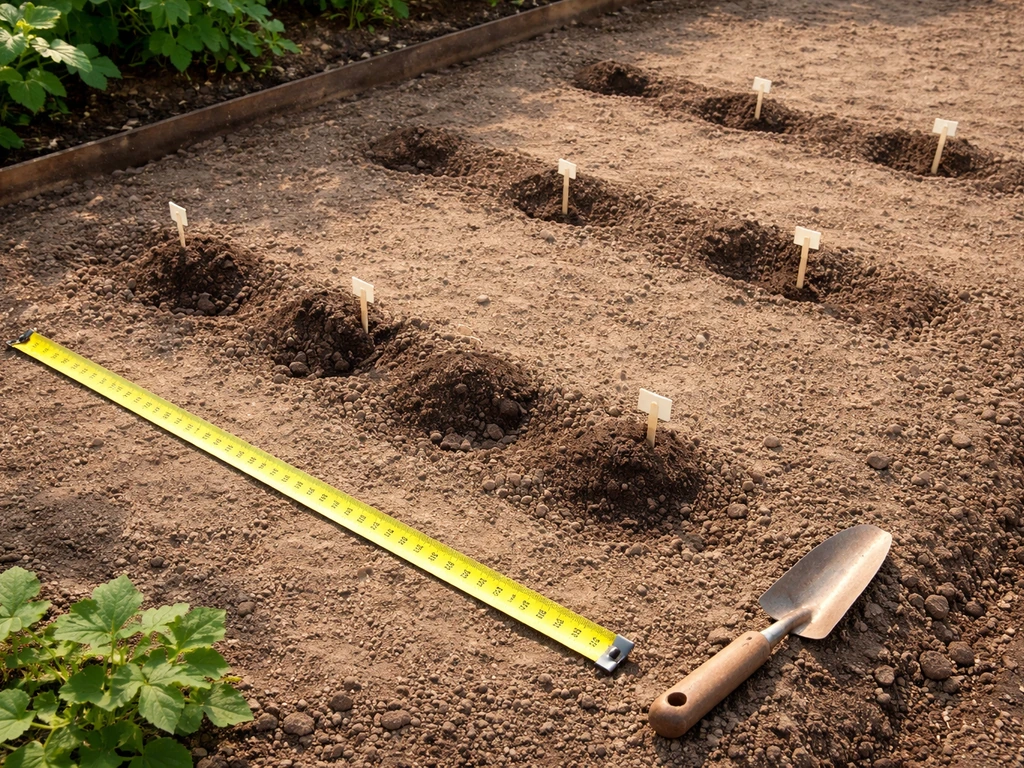
Tubers rot in waterlogged soil. This is the single biggest failure point across all the species covered here. Loose, well-drained, slightly sandy or loamy soil gives tubers the oxygen they need and prevents the standing water conditions that invite rot bacteria and fungal pathogens. For cyclamen especially, excellent drainage is non-negotiable: standing water near the tuber can kill the plant outright. For potatoes, deep loose soil also allows tubers to expand without deformity. Amend clay soils with compost or coarse sand before planting.
Planting depth, orientation, and spacing
Depth and orientation vary meaningfully between species, so do not treat them all the same.
| Plant | Planting Depth | Orientation | Spacing |
|---|---|---|---|
| Potato | 3–4 inches | Eyes facing up | 12 inches apart in rows |
| Dahlia | 4–6 inches | Eyes/crown facing up | 18–24 inches apart |
| Jerusalem artichoke | ~4 inches | Eyes facing up | 12–18 inches apart |
| Tuberous begonia | Just at soil surface, concave side up | Concave/indented side up | ~12 inches apart |
| Hardy cyclamen | About 1 inch deep (shallowly) | Flat top side up, roots from base/sides | 6–12 inches apart |
For tuberous begonias and cyclamen, orientation is critical. Begonias have a concave, bowl-shaped depression on top: that indented side faces up, and sprouts emerge from it. Cyclamen have a flatter top surface and grow roots from the bottom and sides. Planting them upside down is one of the most common beginner mistakes and usually results in no growth at all.
Watering approach
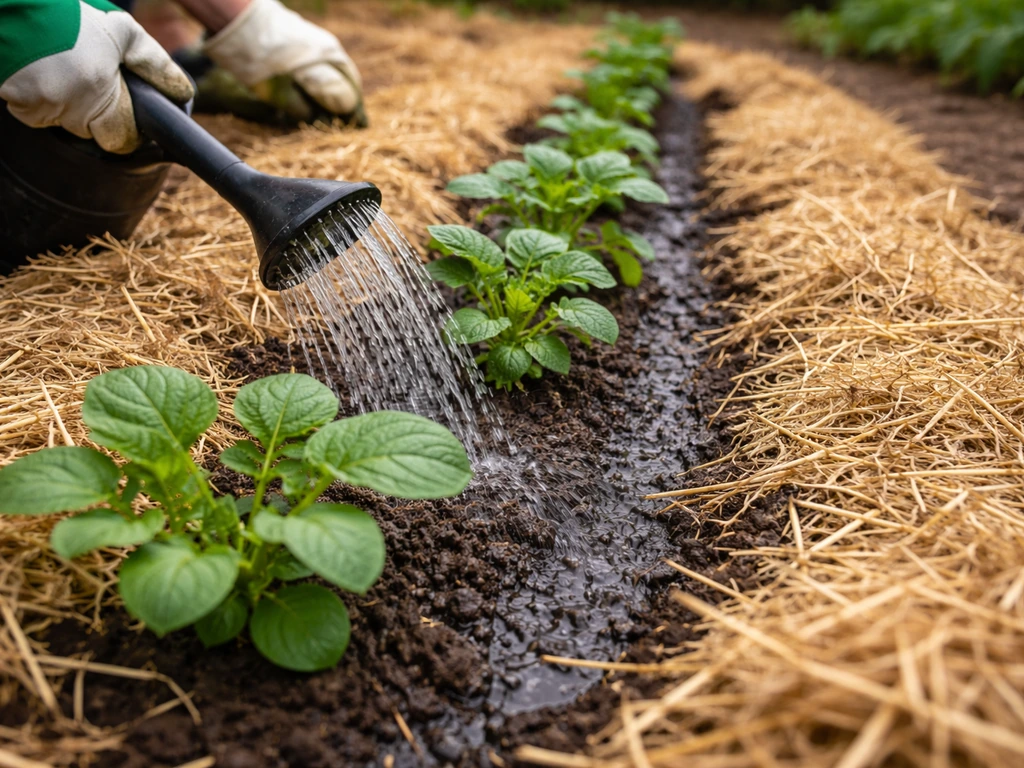
For potatoes, water thoroughly once or twice a week rather than lightly and frequently. The goal is deep soil moisture, not surface dampness. Mulching with 2 to 3 inches of straw or shredded leaves helps stabilize soil temperature and retain moisture between waterings, which is especially useful in variable spring weather. For cyclamen, the opposite approach applies during summer dormancy: hold back water almost entirely and let the soil dry out around the tuber.
Timing by plant
- Potatoes: plant 14–21 days before last frost; harvest new potatoes 7–8 weeks after planting, or wait for full maturity and skin set
- Dahlias: plant outdoors after last frost when soil is consistently warm; allow at least 120 days before first fall frost for tuber maturity
- Jerusalem artichokes: plant in early spring as soon as soil can be worked; harvest from fall into winter
- Tuberous begonias: start indoors 7–8 weeks before last frost; harden off 7–10 days before moving outdoors; plant out after frost danger has passed and soil is above 60°F
- Hardy cyclamen: plant or transplant in late summer to early fall; summer dormancy requires dry conditions
Where to find tubers and how to pick good stock
For potatoes, always buy certified seed potatoes rather than using grocery store potatoes. Certified seed potatoes carry state-issued blue tags or certificates verifying they are disease-screened. Grocery store potatoes may have been treated with sprout inhibitors and are far more likely to carry latent diseases like late blight into your soil. Each seed piece must have at least one viable eye (growth bud) to produce a plant. Pieces without eyes will simply rot in the ground.
For Jerusalem artichokes, you have more flexibility. You can source tubers from mail-order seed companies or even from a grocery store or farmers market, as long as the buds (eyes) on the tubers are intact and the flesh feels firm. Soft, shriveled, or moldy tubers should be skipped. Grocery store sunchokes vary in quality but work fine for planting if they look fresh.
For dahlias and tuberous begonias, purchase from reputable garden suppliers or specialist growers, especially if you are buying for a specific variety. Inspect tubers before buying: dahlia tubers should feel firm and leathery, not soft or shrunken, and you should be able to see at least one eye at the neck (the point where the tuber connects to the crown). Tuberous begonias should feel solid and show no signs of shriveling or mold on the surface.
For hardy cyclamen, buy from specialist nurseries that sell container-grown plants or fresh tubers rather than dried tubers packaged in bulk. Dried packaged cyclamen tubers have notoriously low establishment rates because they are often too desiccated by the time they reach the consumer.
When things go wrong: diagnosing and fixing common tuber problems
Rot before or after planting
Rot is by far the most common tuber failure and it almost always traces back to one of three causes: waterlogged soil, damaged planting material, or disease brought in on infected stock. If potatoes are rotting in the ground, the culprits are often late blight (Phytophthora infestans) or soft rot bacteria that move in after blight weakens the tissue. Late blight tuber infection is most likely when soil temperatures are below 65°F and wet conditions persist. Using certified disease-free seed potatoes and practicing crop rotation (do not plant potatoes or tomatoes in the same spot year after year) dramatically reduces this risk.
For cyclamen and begonias, rot is almost always a drainage issue. If you see a tuber turning soft and dark, move it to drier ground or a container with fast-draining mix immediately. Standing water near the tuber is lethal. When storing dahlia and begonia tubers over winter, cure them in a cool dry location and pack them in barely damp (not wet) vermiculite or peat to prevent both desiccation and rot.
Poor or no sprouting
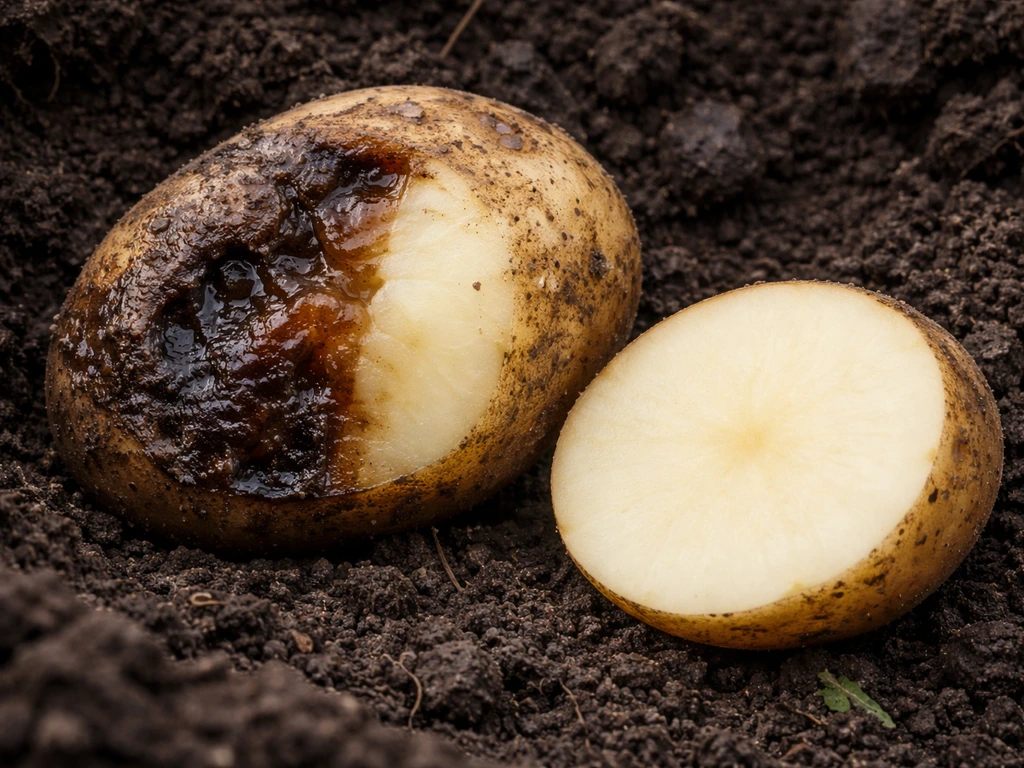
If tubers are in the ground but nothing is emerging, the most likely causes are cold or wet soil, incorrect orientation, or planting material with no viable eyes. Potatoes planted into soil colder than about 40°F will just sit there and often rot. Begonias planted concave-side down will rarely sprout. Check orientation first. If that is correct, give the soil time to warm and avoid the urge to overwater while waiting.
For dahlias that fail to emerge, dig carefully and check whether the tuber is firm (it just needs more time or warmth) or soft and collapsed (it has rotted). A firm tuber with no sprout in mid-spring likely just needs warmer temperatures. Soil too hot and dry at planting time (above about 95°F) can also delay or prevent sprouting for potatoes.
Pest damage
Slugs are a major threat to young tuber-plant shoots and to stored tubers left near damp conditions. The diagnostic sign is slime trails on the soil surface or on damaged plant material. Remove mulch temporarily if slug pressure is high, and use physical barriers or iron phosphate bait around plants. Wireworms (larvae of click beetles) tunnel into potato tubers and leave characteristic entry holes. They are worst in soils that were recently under grass or sod, so avoid planting potatoes immediately after turning over a lawn area.
Timing mistakes
Planting tubers too early into cold, wet soil invites rot before the plant can establish. Planting too late in warm climates means potato plants hit summer heat before tubers can size up properly. In cold climates, leaving tender tubers like dahlias and begonias in the ground after a hard freeze destroys them completely. Mark your first and last frost dates, count backward from them for each species, and treat those dates as hard boundaries rather than suggestions.
Storage failures
Potatoes intended for seed storage should be held at around 40°F after a two-week curing period. Table stock stores well at 40°F; chipping potatoes need slightly warmer storage around 50°F. Transitioning storage temperature too quickly or storing in a space that fluctuates widely encourages rot and sprouting. If rot potential is already high due to late blight exposure or frost damage during harvest, reduce or skip the standard curing step and move the tubers directly to cool storage to slow decay.
Dahlia and begonia tubers in storage should never be bone dry (they will shrivel) or damp (they will rot). The goal is just-barely-moist packing material and a steady cool temperature around 40 to 50°F. Check stored tubers every few weeks and remove any that are softening before they infect their neighbors.
FAQ
Can I plant a whole tuber, or do I need to cut it into pieces for all tuber plants?
Most tubers work best when planted intact, but potatoes often benefit from cutting into seed pieces if you let the cut surfaces dry (a short wound-dry period) before planting. For dahlias and tuberous begonias, cutting is higher risk for rot, especially in damp soil, so inspect for existing eyes and plant whole clumps or properly prepared pieces only if you are confident the variety can tolerate division.
What’s the difference between “eyes” and other bumps or rough spots on tubers?
Eyes are growth buds, usually small indentations or raised points aligned with the tuber’s growing end (for example, the neck area on dahlias). If a spot looks like damage, mold, or a bruised scar without a distinct bud-like point, it is less likely to sprout, and you should treat that tuber section as suspect.
How can I tell if a tuber is still viable when it looks a bit shriveled but not moldy?
Firmness is the best quick check. Slight surface wrinkling can be survivable for some species, but a tuber that feels hollow, rubbery, or collapses when gently pressed is usually not viable. For borderline cases, keep it in cool, dry storage and check for early eye swelling before planting, discard anything that develops soft spots.
Do tubers need fertilizer right away, or should I wait until shoots appear?
A common approach is to avoid heavy feeding at planting because weak roots and cool, wet conditions increase rot risk. Use a light incorporation of compost at planting, then shift to a balanced fertilizer once shoots establish. For potatoes specifically, too much nitrogen early often drives leafy growth and delays tuber bulking.
What planting depth should I use if I can’t find guidance for my exact tuber variety?
If you cannot confirm for that species, start shallow enough to avoid water pooling over the tuber, then adjust after checking drainage. As a rule of thumb, deep planting increases sprout delay and rot risk in heavy soils. If your soil stays wet after watering, reduce depth and mound slightly to keep the tuber above standing moisture.
Should I soak tubers before planting to help them sprout faster?
For potatoes, a short pre-planting chitting phase (cool light exposure) helps more than soaking. Soaking tubers for long periods can raise rot risk in cool, damp ground, especially for cyclamen and begonias. If you do soak at all, keep it very brief and dry them thoroughly before planting.
What should I do if I planted correctly, but growth is slow instead of zero?
Slow sprouting is often temperature-related, not necessarily dead tubers. Wait until the soil warms and watch for the first signs of emergence, avoid frequent light watering, and keep soil evenly moist but not wet. If no shoots appear after a reasonable window for the species, then re-check orientation and tuber viability rather than continuing to overwater.
How do I store tubers safely between seasons if I have limited space or inconsistent temperatures?
Aim for stable, cool conditions and consistent dryness. Use barely damp packing material (barely moist vermiculite or peat for dahlias and begonias) and ventilate storage if possible to reduce condensation. If temperatures swing widely, check more often, remove any tubers that soften, and keep stored tubers separated to prevent spread.
Are there tuber plants in the article that can spread aggressively and become invasive?
Jerusalem artichoke is the main one to plan for, it spreads via underground tubers and can become difficult to control if it escapes beds. If you have limited space, consider containment (deep barriers) or regular harvest discipline, and avoid planting where it can connect to natural waterways or unmanaged areas.
What pests and diseases should I watch for first on tuber plants?
Early rot or collapse points to wet soil or infected stock, soft dark tuber tissue is a drainage red flag. For surface damage on emerging shoots, slugs are a frequent culprit, look for slime trails. For potatoes, watch for characteristic entry holes from wireworms in the tuber and avoid planting right after turning over lawn sod.
Why do cyclamen and tuberous begonias fail more often than potatoes or sunchokes?
Cyclamen and tuberous begonias are less forgiving because orientation and dormancy moisture rules are strict. Upside-down planting is a common cause of no growth, and during cyclamen summer dormancy, even small amounts of persistent moisture near the tuber can cause rot. Potatoes and artichokes are generally easier to recover because they tolerate a wider range of conditions once established.