Plants that grow in saline soil are known as halophytes. That's the standard ecological and botanical term, and it applies whether those plants are rooted in salt-crusted desert flats, coastal marshes, or seaside dunes. If you've seen glasswort pushing up through white-encrusted mud or cordgrass standing ankle-deep in tidal water, you've seen halophytes in action.
Plant Grow in Saline Soil Are Known As: Halophytes

Dr. Marcus Weatherby
13 May 2026
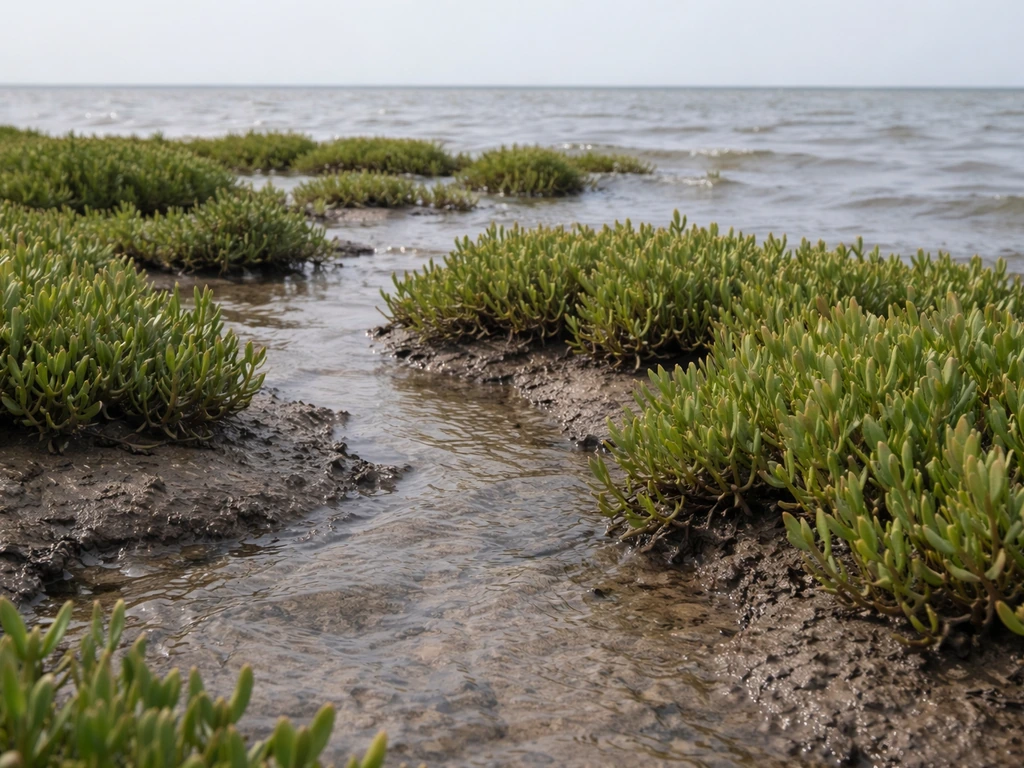
The correct term: halophyte
A halophyte is any plant that completes its life cycle in soils or environments with high salinity. The threshold used most often in plant ecology is around 200 mM NaCl, which is roughly equivalent to a soil electrical conductivity (EC) of about 20 dS/m. That's extremely salty, well beyond the tolerance of most garden plants. Utah State University Extension notes that salinity values [above about 2 dS/m begin to cause problems for salt-sensitive plants](https://extension.
usu. edu/yardandgarden/research/solutions-to-soil-problems-i-high-salinity-soluble-salts) and levels above about 4 dS/m are problems for many garden and landscape plants. What makes a halophyte special isn't just surviving a few salty conditions, it's being able to grow, reproduce, and finish its full life cycle under those conditions. That distinction matters, because plenty of plants can handle a brief salt splash but not sustained high-salinity soil.
Ecologists sometimes split halophytes into two groups. Facultative halophytes can tolerate high salinity but don't need it; they'll grow just as well in non-saline soils. Obligate or true halophytes, on the other hand, tend to complete their life cycles specifically in saline conditions. In the field, most of the plants you'll encounter in salt marshes and coastal flats are obligate or strongly facultative halophytes.
What about plants growing in saline water?
Halophyte is still the right term when plants are rooted in or directly contact saline water, whether that contact happens through waterlogged saline roots or through salt spray hitting leaves and stems. For aquatic situations where the plant is mostly or fully submerged in saline water, ecologists sometimes use the subcategory hydro-halophyte, but this is a more specialized label within the halophyte category, not a replacement for it.
Mangroves, for example, are classic halophytes that grow with their roots in saline tidal water. Spartina alterniflora (smooth cordgrass) grows in the intertidal zone with roots regularly flooded by saltwater. Both are halophytes. The broader coastal context, including plants in brackish conditions, shares a lot of overlap with halophyte ecology, which is worth exploring if you're working through that specific habitat zone.
What salt tolerance actually means for these plants
Halophytes don't just passively endure salt. They've evolved specific physiological strategies to handle what would be toxic to most plants. Three main mechanisms show up across halophyte species:
- Salt exclusion: roots block sodium and chloride ions from entering the plant in the first place
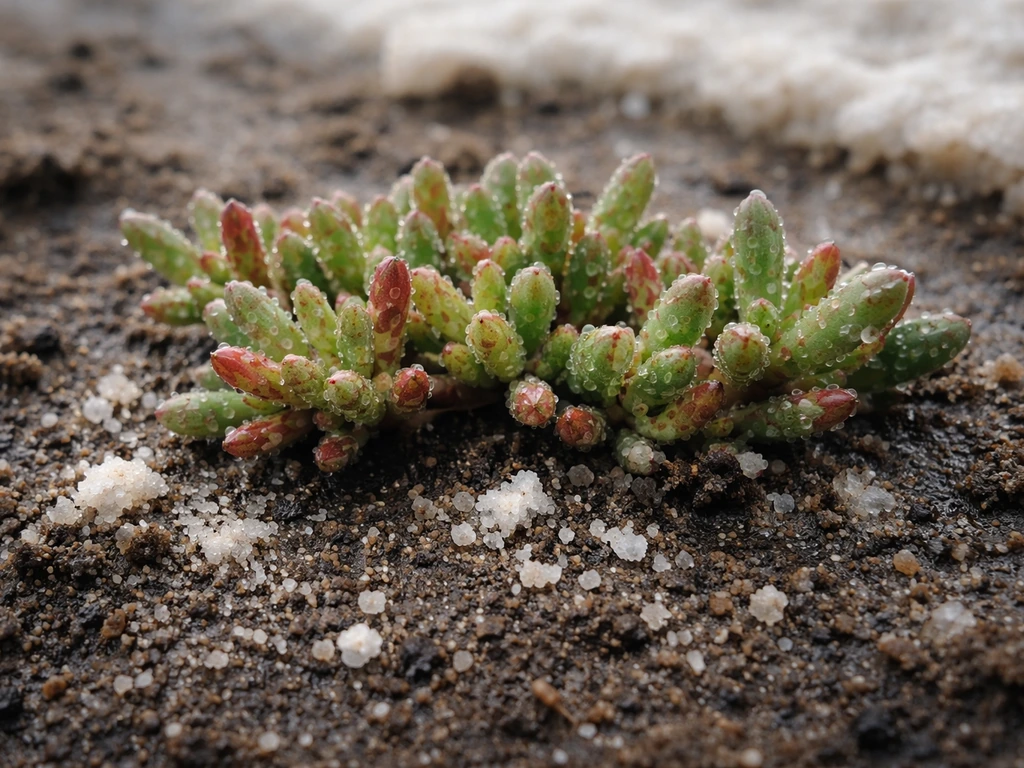
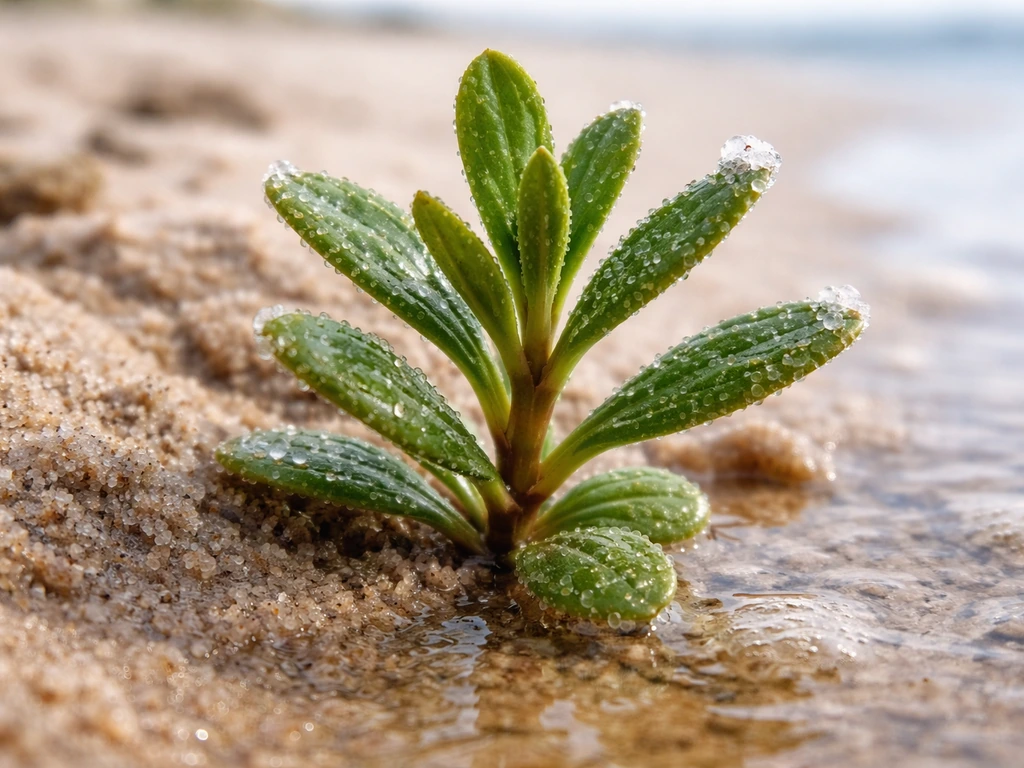
- Salt excretion: specialized structures like salt glands or salt bladders actively push excess salt out through leaves (you can sometimes see salt crystals on the leaf surface)
- Dilution via succulence: plants accumulate water in their tissues, diluting salt concentrations to manageable levels
The practical upshot of all this is that halophytes can maintain normal water uptake and cell function even when the surrounding soil solution has an osmotic pull that would cause "chemical drought" in a regular plant. That phrase, chemical drought, is a useful way to think about it. A plant in very salty soil can be sitting in wet ground and still die of effective water stress, because the salt prevents water from moving into the roots. Halophytes have evolved past that barrier.
Where halophytes actually live
If you want to see halophytes in the wild, coastal environments are your best starting point. Salt marshes are the classic habitat: low-lying coastal wetlands that flood and drain with the tides, leaving behind salt-enriched soils. In the polyhaline (very salty) zones of Atlantic coast salt marshes, you'll find Spartina alterniflora dominating the low marsh, with Distichlis spicata (saltgrass), Spartina patens, and Salicornia species (glasswort) filling in the upper marsh and salt flat edges. Sea lavender (Limonium carolinianum) adds a bit of purple to the mid-marsh in late summer.
Beyond the coast, halophytes also show up in interior salt flats, alkali basins in the Great Basin, and salt-affected agricultural soils across arid regions. Distichlis spicata, for instance, grows from Pacific coast salt marshes all the way into inland saline basins. The common thread is the soil or water chemistry, not the geography. Coastal areas do concentrate halophyte diversity, but the salt-tolerant plant niche extends wherever geology or climate creates saline conditions.
Mangrove forests represent another major halophyte habitat type, dominant in tropical and subtropical intertidal zones worldwide. These are woody halophytes with elaborate root adaptations for both salinity and waterlogging, and they illustrate just how structurally diverse halophytes can be. Sand-dwelling halophytes and plants in brackish water transition zones round out the picture, as saline environments blend into these adjacent habitat types. Plants that grow in sand are called halophytes in saline or salt-affected habitats Sand-dwelling halophytes.
How to tell if salinity is actually your problem
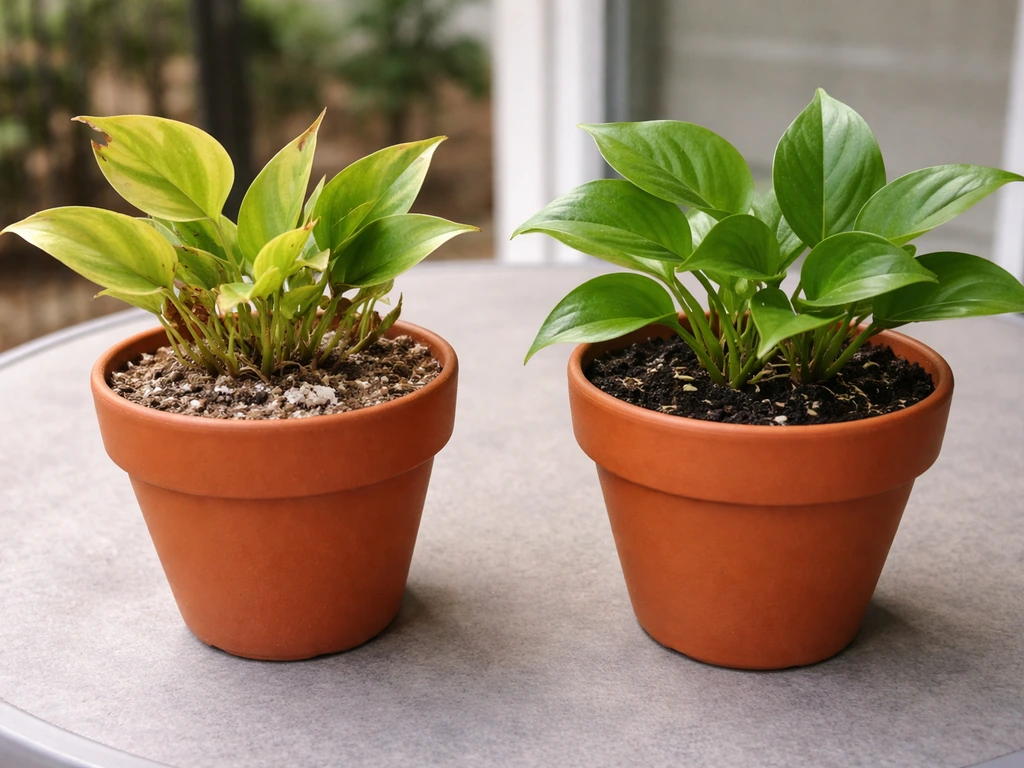
Salinity damage in plants looks a lot like drought stress or nutrient deficiency, which causes a lot of confusion. Wilting, scorched leaf margins, stunted growth, and general poor vigor can all point toward salinity, but they can also mean poor drainage, compaction, or boron toxicity. The only reliable way to confirm salinity is a soil test measuring electrical conductivity (EC), reported in dS/m.
| EC Range (dS/m) | Salinity Level | Plant Impact |
|---|---|---|
| 0–2 | Non-saline | No effect on most plants |
| 2–4 | Slightly saline | Salt-sensitive plants begin to show stress |
| 4–8 | Moderately saline | Problems for many garden and landscape plants |
| 8–16 | Highly saline | Only salt-tolerant plants perform well |
| 16+ | Extremely saline | Halophyte territory; most cultivated plants fail |
Beyond the soil test, a few field clues can help. White or grayish salt crust on the soil surface, especially after dry periods, is a strong visual indicator of soluble salt accumulation. If symptoms are worst near the soil surface and improve deeper down, or if they follow irrigation patterns, salinity is more likely than a nutrient issue. If drainage is good but symptoms persist, that also points toward a salt problem rather than waterlogging. One important distinction: high salinity (soluble salts) is different from sodicity (high sodium relative to calcium and magnesium). Both need soil testing to separate, and they require different management approaches.
Practical next steps for salty conditions
Test first, then decide
Get a soil EC test before doing anything else. Most cooperative extension labs and many commercial soil testing services offer this. Knowing your actual EC in dS/m tells you exactly which plant tolerance category you're working within, which makes plant selection much more targeted.
Reduce salinity if you can
If your EC is in a manageable range and you have access to clean (low-salinity) water, leaching is the most practical short-term fix. Applying around 6 inches of clean water through the soil profile removes roughly half the soluble salts from the top foot of soil. Repeating this process progressively lowers the salt load. This works best in well-drained soils. In poorly drained soils, leaching without drainage improvement just redistributes the problem. Also check your irrigation water source: if the water itself has elevated EC or a high sodium adsorption ratio (SAR), you may be adding to the problem every time you irrigate.
Choose plants that match your salinity class
If you can't fully reduce salinity, or you're working with a naturally saline habitat like a coastal site or salt flat, plant selection is your most effective tool. Match plants to your measured EC range rather than guessing. Many university extension services publish salt-tolerance lists for garden and landscape plants, organized by EC threshold. For highly saline sites or true coastal salt marsh conditions, look specifically for documented halophytes native to your region.
In the eastern US, species like Spartina alterniflora, Spartina patens, Distichlis spicata, Salicornia species, and Limonium carolinianum are well-documented for their salt marsh performance. Regional native plant lists from organizations like VIMS or state cooperative extensions often include habitat-specific tolerance information that's more reliable than general ornamental plant guides.
Match the habitat, not just the salt level
Salinity rarely acts alone. In coastal habitats, it comes paired with tidal flooding, wind exposure, and sandy or mucky soils. In interior saline sites, it's often combined with drought and high pH. When selecting halophytes or salt-tolerant plants for a real location, check that the plant is adapted to the full set of conditions, not just the salt. A plant native to a tidal salt marsh may not perform well in a dry inland saline flat even if both sites have high EC, because the moisture regime is completely different. Climate zone, seasonal flooding pattern, and soil texture all need to factor into the choice alongside salinity level.
The bottom line: halophyte is the term you're looking for, and understanding what it actually means gives you a practical framework for identifying saline habitats, diagnosing salt problems, and choosing plants that are genuinely built for those conditions rather than just marginally tolerant of them.
FAQ
Does “halophyte” mean any plant that survives salt, or only plants that can complete their life cycle in salty conditions?
The term is typically reserved for plants that can complete their life cycle under high salinity, meaning they can grow and reproduce, not just briefly tolerate salt stress. Some plants may look “alive” in salty soil for a short time but still fail to set seed or regrow, which is a practical difference when you are evaluating a site.
Can a plant be a halophyte even if it only grows near salt during part of the year?
Yes, if the plant’s overall life cycle timing matches the saline conditions it needs to finish growth and reproduction. For example, if salinity is seasonal but high enough during key growth stages, a plant may still be considered halophytic in practice. However, for classification, you would still want evidence that it can complete development during the saline window rather than merely persist.
Are halophytes the same as salt-tolerant garden plants?
Not exactly. Many ornamental “salt-tolerant” plants can survive or slow decline in salty settings, but they may not be able to complete their full life cycle at the same salinity levels. Halophytes are defined by life-cycle performance, so a true halophyte list is more reliable for extreme or persistent salinity than general landscaping claims.
Is it possible to have saline soil without visible salt crust on the surface?
Yes. Salt crust is strongest when evaporation concentrates salts at the surface, such as after dry spells. If soil stays consistently wet, or if salts move deeper due to irrigation and rainfall, you may not see crust even though EC is high. That is why an EC test is the most dependable confirmation.
How do I tell whether my problem is salinity versus poor drainage or nutrient deficiency?
Salinity more often shows symptoms that correlate with EC patterns, such as worse performance near the surface and seasonal ties to evaporation, while poor drainage tends to cause stress that aligns with waterlogging. Nutrient deficiency can mimic salt injury, especially under high pH or compacted conditions. A soil EC test, plus basic soil testing for nutrients and pH, helps separate these causes instead of relying on symptoms alone.
What is the difference between salinity and sodicity, and why does it matter for choosing plants?
Salinity refers to total soluble salts, while sodicity refers to a high proportion of sodium relative to calcium and magnesium. A soil can be high in salts, high in sodicity, or both, and the plant response and management differ. If sodicity is present, fixing structure and water infiltration may matter as much as salt reduction, and salt leaching alone may not solve the underlying issue.
If I leach salts to reduce EC, will it always solve the problem long-term?
Leaching can lower salts temporarily, but it can be undone if the water source or the groundwater recharges salt, or if evaporation repeatedly brings salts back to the root zone. Long-term improvement usually requires either ongoing management to keep salts from accumulating, better drainage, and/or using irrigation water with low EC. If you keep adding salty irrigation water, EC can rebound quickly.
How much should I worry about the quality of irrigation water, not just the soil EC?
You should test irrigation water too. Even if your soil is moderate, water with high EC or high sodium adsorption ratio (SAR) can raise salts and sodium risk over time. Using clean water is central to leaching success, and poor water quality can turn repeated irrigation into an ongoing source of salts.
Which matters more for plant success, EC level or soil moisture regime?
Both matter, but moisture regime often controls whether a plant can actually extract water under saline conditions. Two sites with similar EC can still produce very different stress if one floods regularly and the other dries between events. For halophytes, tidal flooding, groundwater contact, and seasonal drying can determine which species truly performs.
Is “hydro-halophyte” a separate type of plant I should search for when planning a saline planting?
It is a specialized subcategory mainly used when plants are mostly submerged or rooted in saline aquatic settings. For typical coastal marsh or salt flat plantings, “halophyte” is usually sufficient as the selection framework. You would use hydro-halophyte search terms mainly when you are designing for submerged or near-submerged conditions.
What practical EC target range should I use when selecting plants?
Use your measured EC in dS/m and match it to documented tolerance thresholds from reputable extension or regional native plant resources. Avoid guessing based on “salty feel” or general salt tolerance claims, because tolerance varies widely among species and by salinity profile depth. Re-test after amendments or leaching to confirm you actually moved into the tolerance range.
If I plant halophytes in a saline site, do I still need to manage other stressors like pH or boron?
Yes. Salinity symptoms can overlap with nutrient problems such as boron toxicity, and saline sites often come with high pH or other constraints. Planting alone may fail if an additional limiting factor is severe. If plants underperform even after EC is addressed, check pH and key nutrient or trace element issues, and review drainage and compaction.
Can I use halophytes in inland salt-affected areas that are not coastal?
Yes, inland saline basins and alkali areas can support halophytes, but you must match the plant to the local moisture and salinity pattern. A species adapted to tidal flooding may not thrive in a dry basin with intermittent saline pulses even if EC is high. Look for regionally documented species and confirm they are adapted to your seasonal flooding or drought pattern.