Woody plants are trees, shrubs, and woody vines that build a permanent framework of wood-reinforced stems above ground, adding to it every growing season. Unlike herbaceous plants that die back to the ground each year, woody plants keep their structure year-round and grow taller, wider, and more massive over time.
What Are Woody Plants and How Do They Grow

Dr. Marcus Weatherby
1 May 2026
Whether one will thrive in your location comes down to a handful of matchable conditions: your winter minimum temperature, the light and moisture your site provides, your soil's drainage and pH, and the timing of when you plant. Get those right for the species you're working with, and you're most of the way there. If you also want species that can establish in unconventional substrates, consider plants that can grow on wood as a related option.
What woody plants actually are (and how they differ from herbaceous plants)
The defining difference is the stem. Herbaceous plants have vascular tissue but no persistent woody stems above ground. When the growing season ends, the above-ground parts die. Woody plants are the opposite: they maintain a living, lignified structure season after season. That structure is built from secondary xylem, the same tissue we call wood, and it accumulates year after year through a process called secondary growth.
Woody plants fall into three broad categories. Trees typically have a single dominant trunk and reach heights that shrubs don't. Shrubs are multi-stemmed and generally lower-growing but still form a persistent woody framework. Woody vines (like wisteria or Virginia creeper) grow the same way structurally but use other plants or structures for support. All three share the same growth engine: the vascular cambium, a thin layer of cells just under the bark that keeps producing new wood inward and new phloem outward every growing season.
This distinction matters practically. A herbaceous perennial like a coneflower can be replaced easily if conditions go wrong, because it regenerates from roots each year. A woody plant takes years to establish and years more to reach maturity. Getting the site and species match right from the start matters much more.
How woody plants grow: stems, roots, and seasonal cycles
Every woody plant starts with primary growth: the shoot tip extends upward and roots extend outward. That's the same growth pattern you see in annuals. What's different is secondary growth, where the vascular cambium adds layers of wood to increase girth. A stem that was pencil-thin in year one becomes finger-thick in year three and wrist-thick in year ten. A second tissue layer, the cork cambium, produces the protective outer bark. Together these two cambium layers are the reason a tree trunk can survive decades of mechanical stress, temperature swings, and pest pressure.
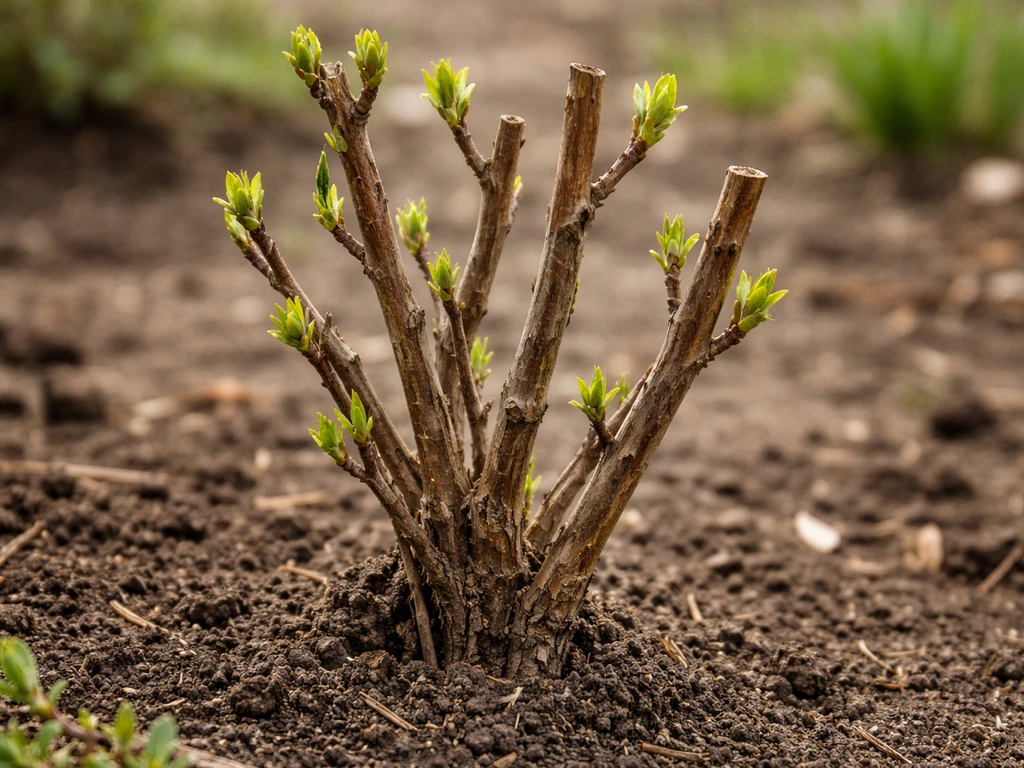
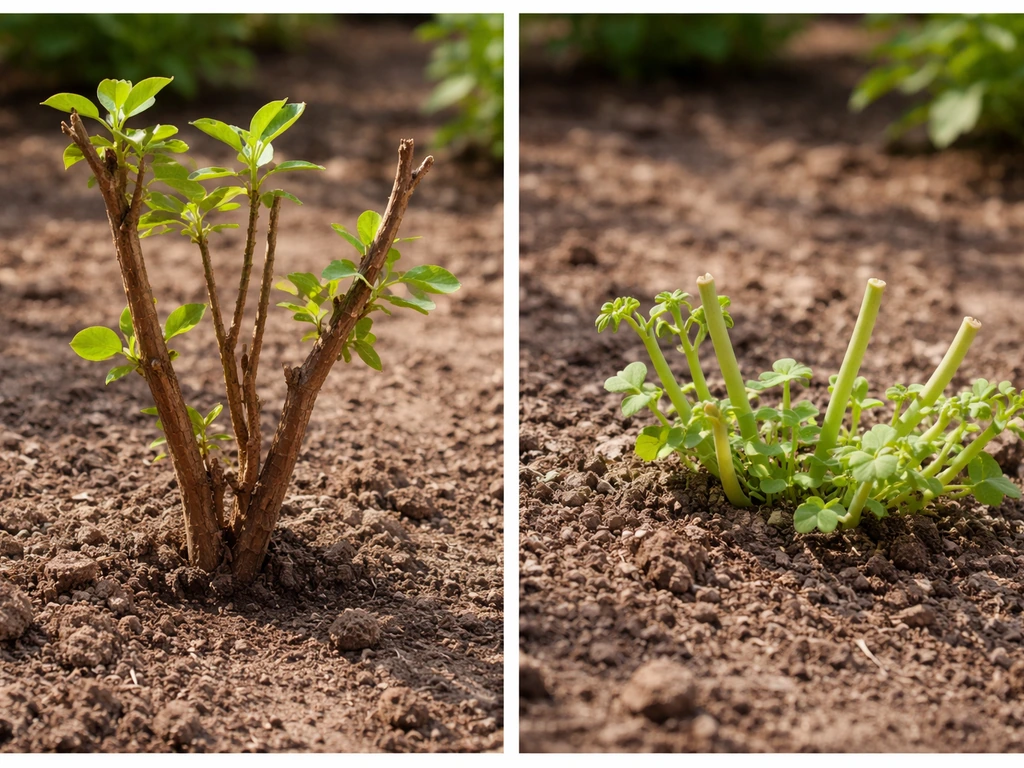
Branching in woody plants is controlled partly by a phenomenon called apical dominance. The terminal bud at the tip of a shoot produces auxin, a hormone that suppresses the lateral buds lower on the stem. When you prune the tip off, auxin levels drop and those side buds push out into new branches. This is why a topped tree suddenly sprouts a flush of vigorous lateral shoots, and why selective pruning is such a powerful tool for shaping woody plant architecture.
Below ground, a woody plant's root system grows outward much faster than most people expect. Tree roots can extend roughly 18 inches per year in good conditions. After five or ten years, roots may reach well beyond the canopy edge. This wide lateral spread is what makes woody plants so resilient once established, but it also means the soil conditions well away from the trunk matter enormously.
Deciduous woody plants cycle through dormancy each year. As days shorten and temperatures drop in autumn, hormonal signals (particularly abscisic acid) push the plant into bud dormancy. Growth stops, cambial activity shuts down, and the plant coasts on stored carbohydrates through winter. In spring, warming temperatures and lengthening days reverse the process: buds swell, the vascular cambium reactivates, and a new flush of primary and secondary growth begins. Evergreen woody plants follow a similar cambial rhythm, just without the dramatic leaf drop.
Climate and environmental needs: matching species to your location
Winter hardiness zones
The most practical starting point for figuring out what woody plants will grow in your location is the USDA Plant Hardiness Zone Map. If you are wondering what plant can grow in wolvendom, start by checking the USDA Plant Hardiness Zone for your local winter lows and match the woody species to that zone USDA Plant Hardiness Zone Map.
Zones are based on the average annual extreme minimum winter temperature, divided into 10°F bands from Zone 1 (the coldest) to Zone 13 (the warmest). A Japanese maple rated to Zone 5 will survive winter lows down to about -20°F. Plant it in Zone 4, and a hard winter will kill it back to the roots or outright. Checking zone compatibility is the first filter to apply before anything else.
Worth knowing: hardiness zones only capture cold survival. They say nothing about summer heat, drought tolerance, or humidity. A plant rated hardy to your zone can still fail if your summers are far hotter or drier than the species evolved to handle. For woody plants that sit on the edge of a zone, microclimate matters: a south-facing slope warms earlier and holds heat longer, while a low frost pocket can see temperatures 5°F colder than nearby flat ground.
Light requirements
Most woody plants want full sun, which in practice means 6 or more hours of direct light per day. Part shade covers roughly 2 to 5 hours of direct sun, or all-day dappled light under open tree canopy. Full shade means under 2 hours of direct sun. Understory shrubs like native viburnums, serviceberry, and many rhododendrons handle part shade well. Fruit trees, oaks, and most conifers need full sun to grow vigorously and resist disease. Matching light accurately is often the single biggest factor people get wrong when a woody plant stalls or declines.
Water and seasonal timing
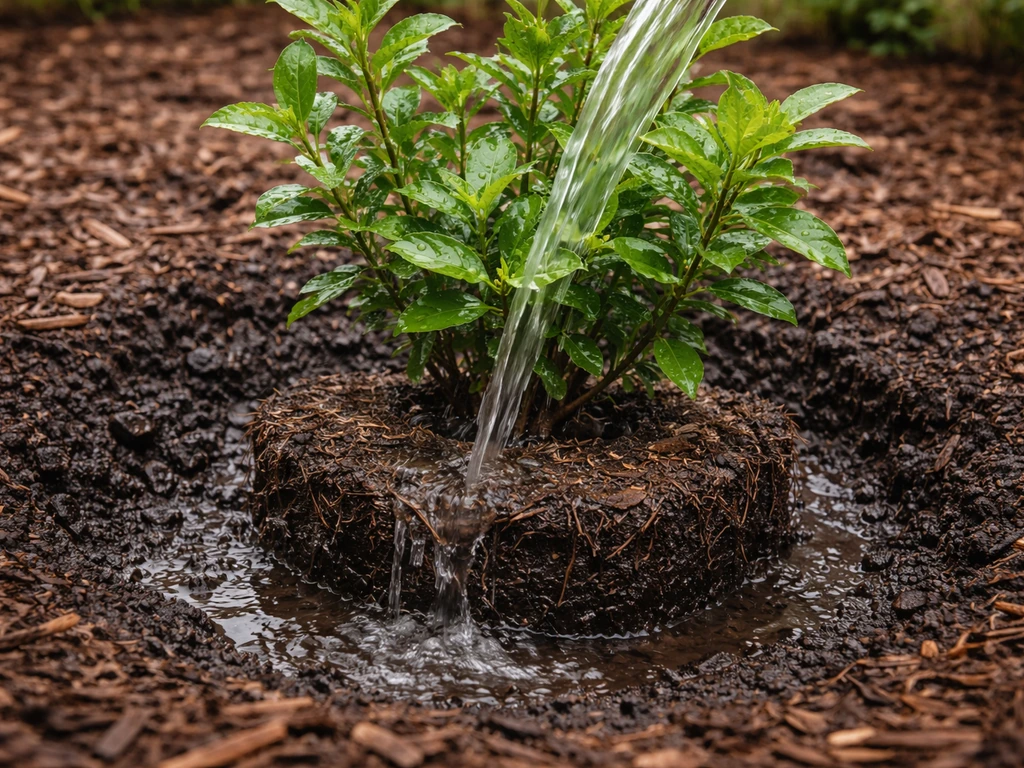
Newly planted woody plants are far more water-dependent than established ones. As a starting guide, water newly planted shrubs with roughly one quarter to one third of the original container volume at each watering. Trees need more, scaled to their root ball size. The goal is keeping the root zone consistently moist but never waterlogged during the first one to two growing seasons while the plant is building new roots into surrounding soil. After that, most species in appropriate climates become largely self-sufficient. Full establishment can take up to five years for larger trees.
Soil and site conditions: drainage, texture, nutrients, and pH
Drainage and aeration
Roots need oxygen as much as water. Saturated soil cuts off oxygen supply to root cells, and prolonged waterlogging causes root death within days for many woody species. Wet conditions also create ideal environments for root rot pathogens. Clay soils and compacted soils are the most common culprits because water drains slowly and air pores fill completely. Before planting any woody plant, do a simple drainage test: dig a hole about 12 inches deep, fill it with water, and check how long it takes to drain. If it's still sitting after several hours, you have a drainage problem that needs addressing before planting.
Over-irrigation in clay soils is actually more damaging than underwatering, because the compacted soil holds water around roots for extended periods. If your site has heavy clay, choose species known to tolerate wet or poorly drained conditions, or raise the planting area to improve drainage. Compaction from foot traffic or vehicle weight reduces pore space and restricts root growth; aerating compacted areas before planting makes a real difference.
Soil pH and nutrients
Soil pH controls nutrient availability more than almost any other single factor. The two most common nutritional problems in woody plants are nitrogen deficiency (pale, slow-growing plants) and iron deficiency (yellowing between leaf veins, called iron chlorosis). Iron chlorosis is almost always a pH problem rather than a true iron shortage in the soil: once pH climbs above 7.0, iron becomes chemically unavailable to roots even when it's physically present in the soil. High pH can also lock out manganese with similar symptoms.
Some woody plants are very specific about pH. Rhododendrons and azaleas need a soil pH between 4.5 and 6.0, with many performing best below 5.5. In the Midwest and much of the Plains where native soils run 6.5 to 7.5, these plants struggle chronically with chlorosis unless the soil is actively acidified. Conversely, planting alkaline-adapted species into highly acidic soils creates the opposite problem. Knowing your soil's pH and the target range for your chosen species is non-negotiable for long-term success.
| Species Group | Preferred pH Range | Common Problem at Wrong pH |
|---|---|---|
| Azalea / Rhododendron | 4.5 – 6.0 | Iron/manganese chlorosis above 7.0 |
| Blueberry (woody shrub) | 4.5 – 5.5 | Poor fruiting and chlorosis in neutral soils |
| Most deciduous trees (oak, maple) | 5.5 – 7.0 | Nutrient lockout at extremes |
| Junipers / arborvitae | 6.0 – 8.0 | Acidic soils can cause poor growth |
| Lilac | 6.5 – 7.5 | Yellowing and slow growth in acid soils |
For fertilization, woody plants are commonly deficient in nitrogen and iron, but overfertilizing, especially with high-nitrogen products, can burn roots and push excessive soft growth that is more vulnerable to cold and disease. A soil test every few years is the most efficient way to know what's actually needed rather than guessing.
Propagation and establishment: seeds, cuttings, and transplants
How you start a woody plant affects how long it takes to establish, how true-to-type it grows, and how much work is involved. The three main options each have different trade-offs.
Seeds
Growing woody plants from seed is the slowest route, often taking years before a plant reaches a useful size. It's the right approach for native species revegetation projects and for rare or unusual species where other propagation material isn't available. Most woody plant seeds have dormancy requirements: cold stratification (weeks to months of moist cold), scarification (abrading the seed coat), or both. Getting germination wrong is the most common failure point. That said, seed-grown plants often develop better root systems because they've never been constrained by a container.
Hardwood cuttings
Hardwood cuttings are one of the most reliable propagation methods for deciduous shrubs and many trees. Cuttings are taken from mid-autumn through late winter while the plant is fully dormant and wood is fully mature. A cutting taken right after leaf drop in fall, stored properly, and planted before temperatures warm in early spring has a very high success rate for species like forsythia, dogwood, willow, and many viburnums. Wounding the base of the cutting (scraping the bark to expose a strip of cambium) stimulates adventitious root formation. Rooting hormone powder or gel applied to the wound improves strike rates on harder-to-root species.
Transplanting nursery stock
Buying a container or balled-and-burlapped plant from a nursery is the fastest route to an established woody plant in the landscape. The critical variable is planting depth. One of the most common and damaging errors is burying the root flare, the point where the trunk widens at the base as it meets the root system. Burying the flare too deeply causes symptoms that look like disease or stress: wilting, chlorosis, stunted growth, dieback, early fall color, and in severe cases eventual whole-plant failure. The hole should be no deeper than the height of the root ball measured from the flare to the bottom. Plant at or slightly above grade, not below it.
Practical steps and troubleshooting
Step-by-step for planting a woody plant today
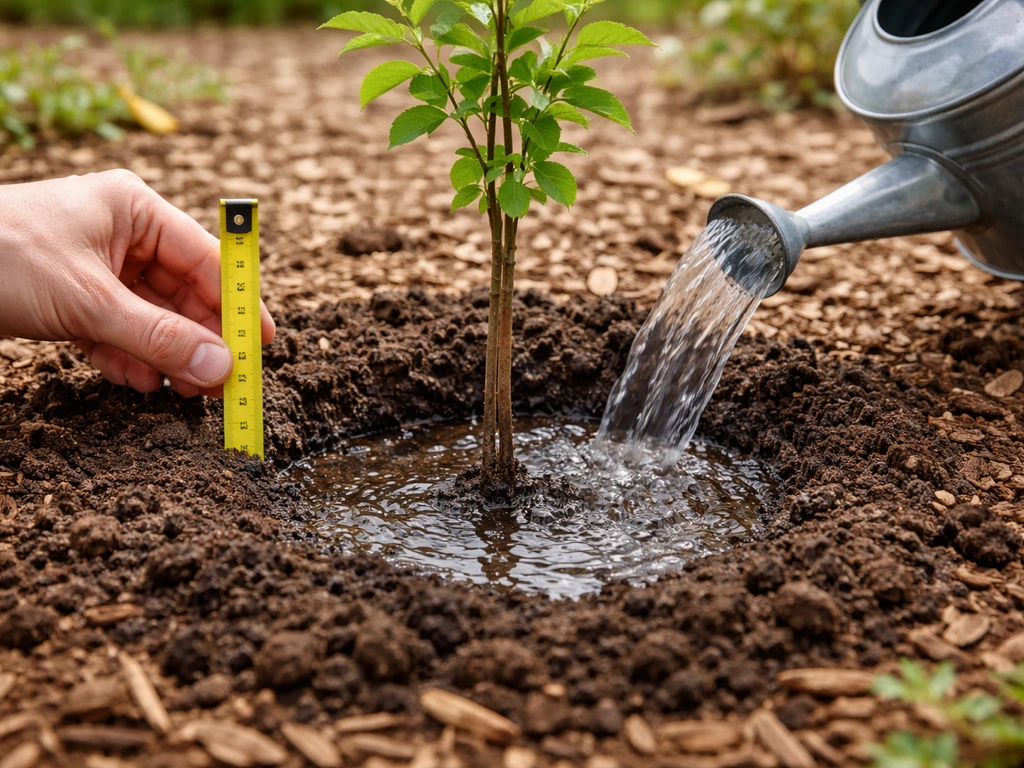
- Check your USDA hardiness zone and confirm the species you're planting is rated for your zone's minimum winter temperatures.
- Assess your site: count actual hours of direct sun, do a drainage test, and get a soil pH test if you haven't had one in the last few years.
- Match your species to those site conditions before buying anything. Light, drainage, and pH are not adjustable after planting without significant work.
- Dig the planting hole as wide as possible (2 to 3 times the root ball width) but only as deep as the root ball from flare to bottom. The root flare must sit at or slightly above the surrounding grade.
- Backfill with native soil, not amended mixes, which can create drainage discontinuities at the interface between backfill and surrounding soil.
- Water in thoroughly at planting, then follow up with roughly one quarter to one third of the original container volume per watering event during the first growing season, adjusting based on rainfall and soil type.
- Apply a 2 to 4 inch ring of mulch over the root zone, keeping it pulled back a few inches from the trunk to avoid bark rot.
- Expand your watering radius as the root system grows outward, roughly 18 inches per year, to keep pace with root spread.
Troubleshooting common problems
| Symptom | Most Likely Cause | What to Do |
|---|---|---|
| Yellowing between leaf veins (iron chlorosis) | Soil pH above 7.0 locking out iron | Test and acidify soil; address compaction and drainage issues |
| Wilting despite adequate water | Root flare buried too deep, or root rot from waterlogged soil | Expose root flare; improve drainage; check for root rot |
| Dieback of branch tips | Too-deep planting, freeze damage, or compacted/poorly drained soil | Confirm root flare depth; prune dead wood back to healthy tissue |
| No new growth after first season | Poor establishment due to drought stress or wrong site conditions | Check light levels, water consistently, reassess species-site match |
| Sudden leaf drop in summer | Excess water / waterlogged soil causing oxygen deficiency at roots | Reduce irrigation; improve drainage; check for root rot pathogens |
| Slow growth year after year | Wrong pH, nutrient deficiency, compaction, or deep shade | Get a soil test; aerate compacted soil; prune competing canopy if possible |
If you have a woody plant that was buried too deeply when planted, the correction is straightforward: remove soil from above the root collar until the flare is visible, and if the plant is small enough, dig it up and replant at the correct depth. Doing this sooner rather than later significantly improves recovery odds.
One thing worth keeping in mind as you work through all this: woody plants are long-term investments in a way that most other garden plants aren't. Getting the species-to-site match right, planting at the correct depth, and being consistent with water during the first two growing seasons accounts for the vast majority of successful establishment. The biology does the rest. Understanding how the stem and root system actually grow, and how seasonal dormancy fits into that cycle, helps you read what a plant is telling you when something goes wrong and know when to intervene.
If you're also exploring how plants grow in unusual substrates like bark or driftwood, some woody species are well-suited to those environments too, since their root systems are adapted to anchor in coarse, well-drained materials. If you are working with plants that can grow in test tubes, you can apply these same substrate and root-zone requirements to keep growth stable plants grow in unusual substrates.
The same principles of oxygen availability, pH, and moisture apply regardless of whether the rooting medium is native soil or something more unconventional. Some plants are specifically suited to survive by rooting into crevices of driftwood, making them ideal for water-themed or naturalistic setups plants that can grow on driftwood. You can apply these same principles when choosing plants that can grow in wine bottles, including drainage and the amount of light the bottle gets.
Those same basics are what determine which plants that can grow in cups will actually thrive in a limited root space oxygen availability, pH, and moisture.
FAQ
Do woody plants grow in winter, or do they stop completely?
Because woody plants keep living stems and wood year-round, they often look “inactive” even when they are still alive. Deciduous woody plants pause cambial activity during winter dormancy, so leaf drop is normal, but persistent shoot dieback or peeling bark that exposes dead tissue is not. If you see no green cambium under the bark in spring, it is more likely winterkill than normal dormancy.
How can I tell if a plant is truly woody or just herbaceous but perennial?
“Woody” in garden context usually refers to persistent above-ground stems, but some plants are semi-woody or have rhizome-based regrowth. A good check is whether the plant’s main stems remain alive through winter (lignified and not just re-sprouting from the base). If it re-comes only from crowns or roots each year, it behaves more like an herbaceous perennial.
If a woody plant matches my USDA zone, why can it still die?
Hardiness zones filter cold survival, but they do not predict moisture conditions. A plant can be zone-hardy yet fail in wet winters if roots stay oxygen-starved, especially in clay with poor drainage. When choosing species, pair zone fit with a drainage test and, if needed, plan raised mounds or species known to tolerate periodically wet ground.
What’s the most common lighting mistake when growing woody plants?
Full sun is about 6 or more hours of direct light, but the most common mistake is assuming “bright shade” equals full sun. If a woody plant stalls, looks sparse, or drops leaves while still receiving irrigation, re-check actual hours of direct sun during the season it is actively growing. Sun exposure can also shift with nearby structures or tree canopy growth.
My soil drains slowly, what should I change before planting woody plants?
If your drainage test shows slow draining, don’t just water less. Wet, compacted soil deprives roots of oxygen, so the fix is structural, like loosening compacted layers, avoiding foot traffic over the root zone, adding organic matter only if it will not create a water-holding layer, or raising the planting area. Choosing a species tolerant of wet feet is a backup plan, not a substitute for bad drainage if the site stays saturated.
How do I know whether I’m overwatering or underwatering a newly planted shrub or tree?
Aim for moisture consistency rather than a fixed schedule. A practical approach is to water deeply enough that the root zone stays evenly moist for a short period, then allow surface soil to partially dry before the next watering. For most newly planted woody plants, you should adjust frequency based on heat and mulch depth, because mulch can slow evaporation and make “same schedule” watering cause waterlogging.
Can I prune woody plants anytime, or is there a best time to shape them?
Yes, but timing matters. Light pruning to remove dead or crossing branches is usually fine in early spring for many woody plants, but “topping” or heavy cuts can trigger vigorous lateral shoots that are weakly attached. If you must reshape, prune selectively and avoid removing too much canopy at once, especially before winter in cold climates.
What should I do if my nursery woody plant was buried too deeply?
Burying the root flare causes chronic stress because roots end up in soil where oxygen and temperature conditions are wrong for the collar area. Symptoms can mimic multiple problems, including chlorosis and dieback, which is why the depth correction should be the first diagnostic step. If the plant is small enough, replanting quickly is often more reliable than trying to “grow it out” of the depth error.
How often should I re-test soil pH for acid-loving woody plants?
Soil pH swings can happen if you repeatedly apply acidic or alkaline amendments without monitoring. If you are in an edge zone region for species like azaleas and rhododendrons, test pH after amendments and again after a season or two, because irrigation water can also shift pH over time. Long-term success depends on maintaining the target range, not just reaching it once.
If I remove the leader to encourage branching, how do I prevent a messy multi-stem shape?
Some woody plants tolerate pruning and training better than others. For example, species with strong apical dominance often respond dramatically when the leader is removed, creating multiple competing shoots that later require selection and thinning. If your goal is a single-stem tree form, keep the leader and remove competing shoots early while they are small.