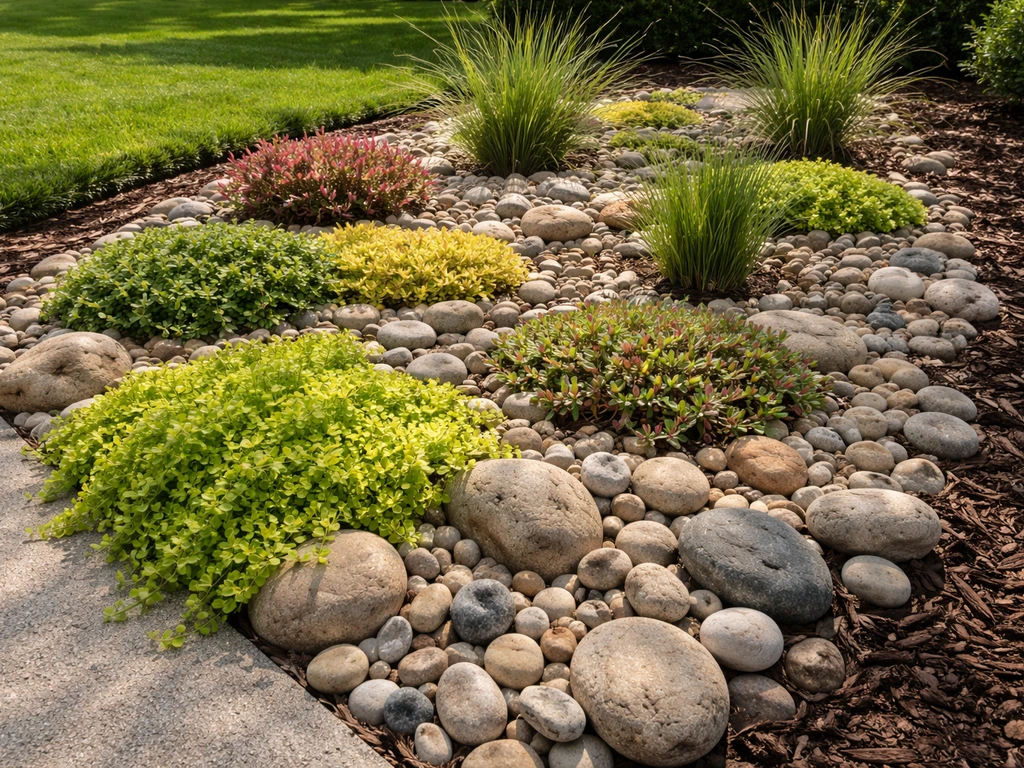
Plenty of plants grow successfully in river rock, but the ones that thrive depend almost entirely on what's underneath those rocks, not the rocks themselves. Creeping thyme, sedum, blue oat grass, dwarf ornamental grasses, native sedges, lavender, yarrow, and low-growing conifers all do well when river rock is used as a top-dressing over properly amended soil. Where rock is the primary substrate with almost no soil beneath it, you're limited to pioneer plants like woolly thyme, some sedums, and drought-adapted creepers that can push roots into thin mineral substrate. Knowing which situation you're dealing with changes everything about which plants you choose and how you plant them.
What Plants Grow in River Rock: Quick Picks and Setup Guide

Dr. Marcus Weatherby
23 May 2026
Why river rock is hard for plants (and when it actually works)
River rock creates two competing problems: it drains very fast and it holds almost no moisture near the root zone. Water moves through rounded gravel almost instantly, which means roots sitting in a pure rock bed can dry out within hours of irrigation in hot weather. At the same time, if the native soil beneath the rock is dense clay, water can pool just below the rock layer and suffocate roots from below. That trapped moisture is actually worse than dry conditions for most rock-garden candidates.
The good news is that river rock works extremely well as a mulch layer over correctly prepared soil. Gravel mulch reduces evaporation from the soil surface at roughly the same rate as wood chip mulch, which means plants underneath a 2 to 3 inch river rock layer stay moister at the root zone than bare ground. River rock also keeps soil surface temperatures cooler than pavement or dark bark mulch in summer, which matters a lot in USDA zones 7 and above. The challenge only becomes severe when someone lays rock directly on compacted or clay-heavy native ground without amending, or when they expect plants to root into pure gravel with no real soil at all.
A quick way to know what you're working with: dig a 12-inch hole in your proposed planting area, fill it with water, and watch the clock. If it drains in under an hour, your drainage is fine and your main job is building organic matter. If it's still sitting there after 3 to 4 hours, you have a drainage problem that river rock on top will not fix.
Utah State University Extension notes that raised beds or berms can lift parts of the root system above poorly drained native soil, helping prevent prolonged saturation raised berms can lift parts of the root system above poorly drained native soil to prevent prolonged saturation.
In that case, consider a raised berm to lift the root zone above the slow-draining layer, or install a simple French drain to redirect water away from the planting area before you add any rock.
Planting setup: soil depth, substrate vs top-dressing, and sun/shade
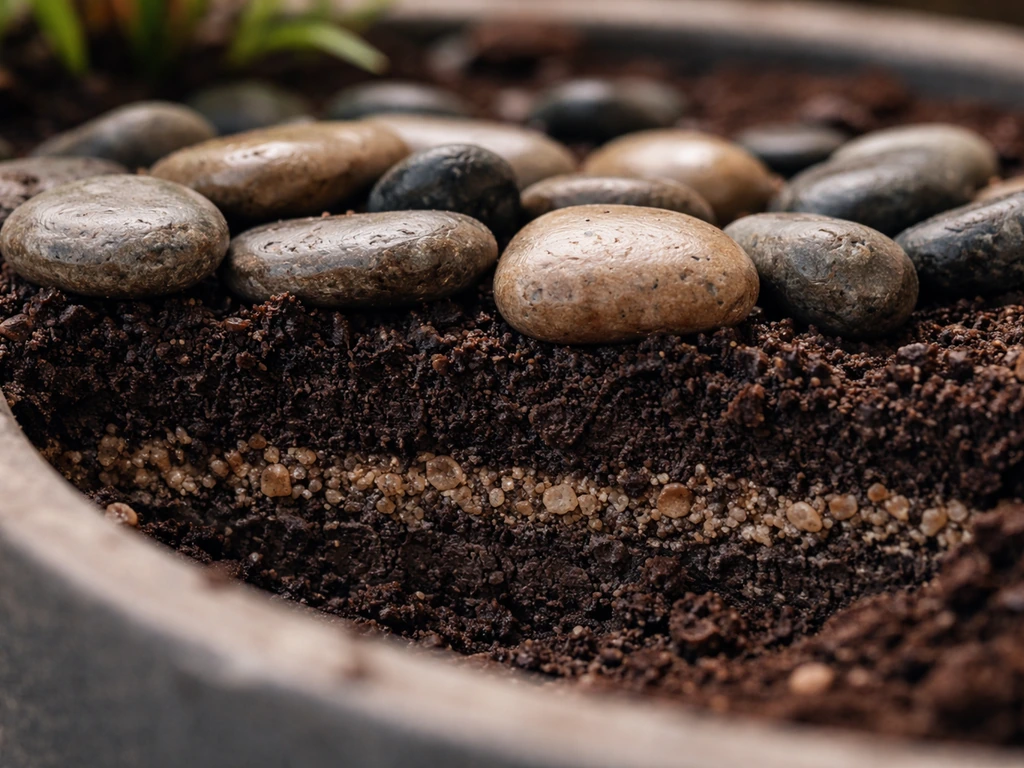
The single most important distinction in river rock planting is whether your rocks are a top-dressing over real soil or the actual growing medium. These are two completely different situations that need different approaches.
River rock as a top-dressing (the setup that works best)
This is the version most home gardeners are working with: river rock sits on top as a decorative mulch layer, and plants root down into prepared soil beneath. Here, you have real flexibility in plant choice. Aim for at least 8 to 12 inches of workable soil beneath the rock layer. The rock layer itself should be 2 to 3 inches deep for weed suppression and moisture retention without blocking oxygen exchange. You plant through the rock by pulling it back, digging your hole into the soil, backfilling with amended soil around the root ball, then pulling the river rock back up around the stem.
River rock as the primary substrate (thin or no soil beneath)
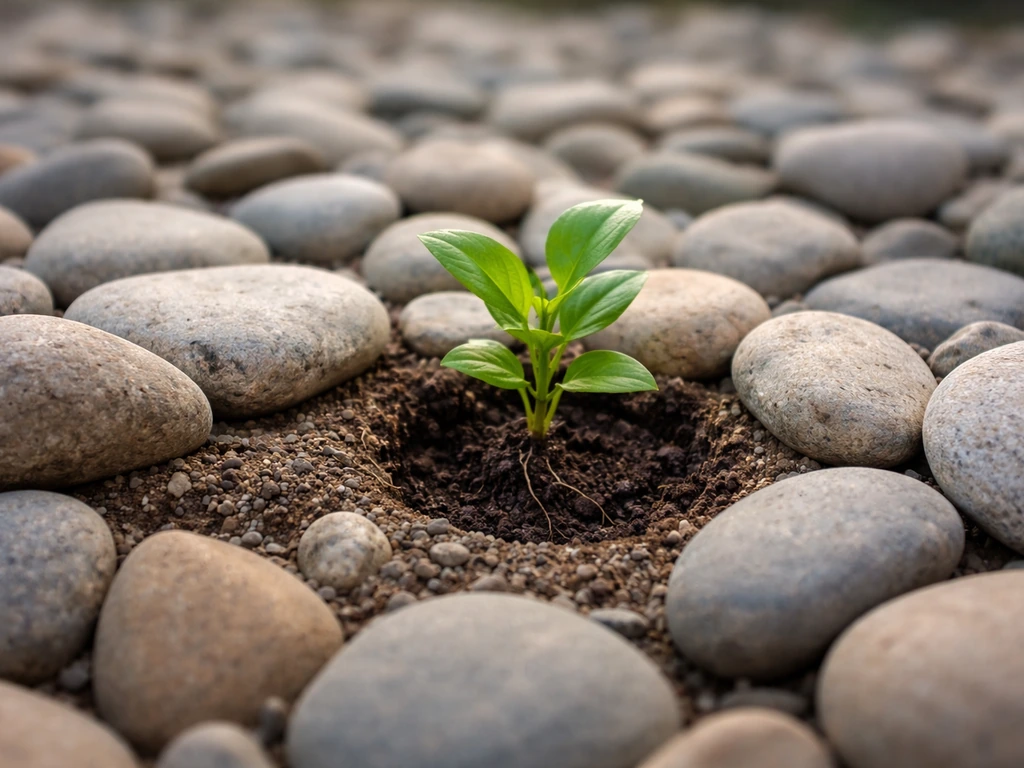
Dry riverbeds, gravel pathways, and rock beds laid directly on compacted fill often have very little usable soil. In these cases, you're looking for plants that naturally colonize rocky or mineral substrate: some sedums, woolly thyme, creeping phlox, and certain native alpines. Plants that grow in those tiny pockets of gritty soil and stone are called rock crevice plants plants that grow in rock crevices are called. Even these tough plants benefit from pockets of amended soil dropped into gaps between rocks. Think of it as planting into microbeds within the rock field rather than expecting plants to root freely through pure gravel.
Sun and shade matter enormously in rock beds because river rock acts as a radiant heat collector in full sun. South and west-facing beds with no shade can reach surface temperatures that stress even drought-tolerant plants. In those exposures, stick to plants rated for hot, dry conditions: sedums, lavender, ice plant, and native prairie species. In part-shade to full-shade rock beds, moisture stress is far lower, and you can expand to ferns, sedges, hostas, and shade-tolerant groundcovers.
Best plant types for river rock
Across all climate zones and conditions, four plant categories consistently perform well in river rock settings. Here's how each works and what to look for within each group.
Groundcovers
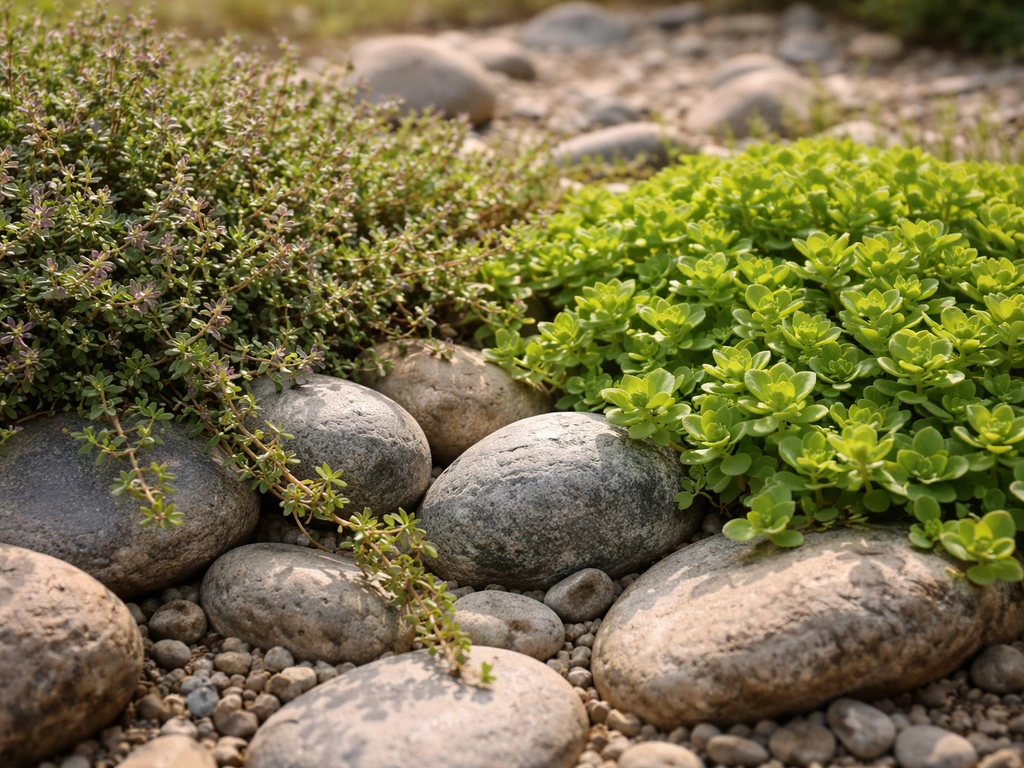
Low-growing, spreading groundcovers are the workhorses of river rock beds. Creeping thyme (Thymus serpyllum) tolerates thin substrate, full sun, and drought once established, and it actually self-seeds into gravel gaps over time. Woolly thyme (Thymus pseudolanuginosus) handles even harsher, drier conditions and stays almost flat. Creeping phlox (Phlox subulata) works in sunny, well-drained rock beds in zones 3 to 9 and carpets rock edges beautifully in spring. Ice plant (Delosperma cooperi) is a go-to in zones 5 to 11 for hot, dry, full-sun rock beds. For part shade, sweet woodruff (Galium odoratum) and ajuga spread steadily through rock mulch without needing much intervention.
Succulents and sedums
Sedums are almost purpose-built for river rock environments. In practice, that means selecting plants that can handle both dry rock and occasional water without rotting or wilting Sedums are almost purpose-built for river rock environments.. Sedum acre (goldmoss stonecrop) colonizes thin rocky soil and needs almost nothing once it's in. Sedum rupestre 'Angelina' provides bright color, drapes over rock edges, and tolerates full sun and neglect. Sempervivums (hens and chicks) root into tiny pockets of gritty soil between rocks, which is essentially their natural alpine habitat. In warmer zones (8 and above), agave and yucca make bold anchors in gravel beds and require almost no supplemental water after establishment.
Grasses and sedges
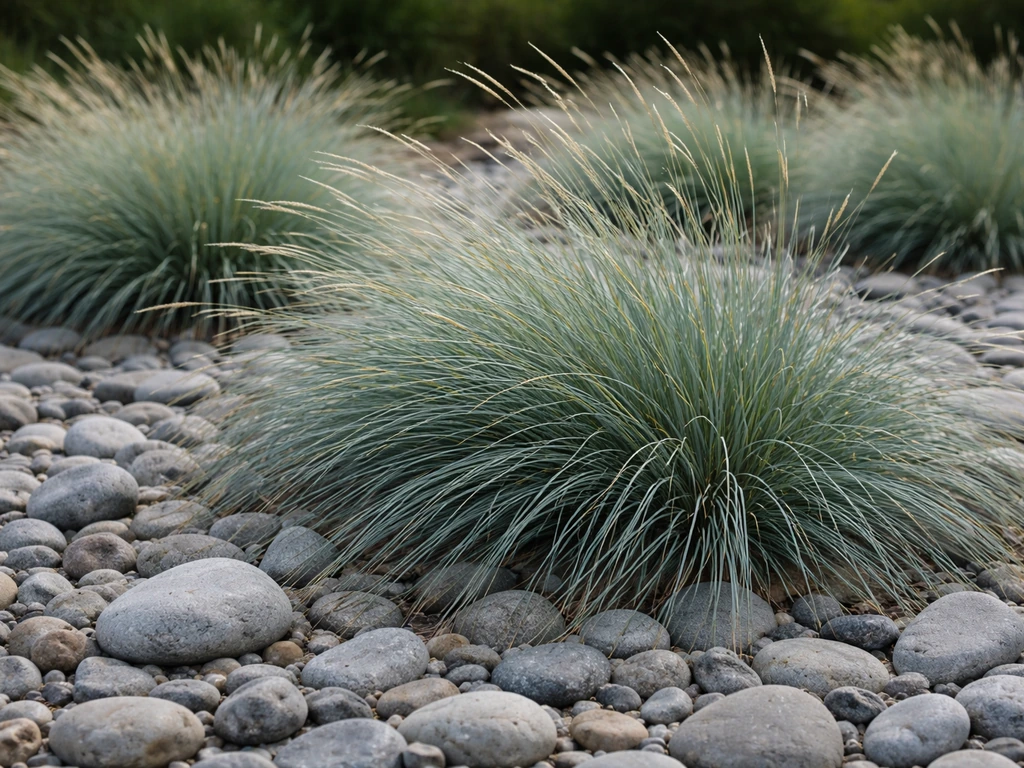
Ornamental grasses add movement and vertical interest and generally tolerate the well-drained, lower-fertility conditions that come with river rock. Blue oat grass (Helictotrichon sempervirens) is a standout for sunny gravel beds in zones 4 to 9. Blue fescue (Festuca glauca) stays compact and handles poor, dry soil well. For shadier, moister rock edges near water features or irrigated areas, Pennsylvania sedge (Carex pensylvanica) and Berkeley sedge (Carex divulsa) fill in densely without needing much attention. Native prairie dropseed (Sporobolus heterolepis) thrives in gravel mulch in zones 3 to 8 and is one of the better-performing natives in this type of planting.
Shrubs and sub-shrubs
Low-growing shrubs give structure to river rock beds and can anchor larger gravel areas. Lavender (Lavandula angustifolia) thrives in fast-draining, full-sun gravel beds in zones 5 to 8 and actually performs better in lean, gravelly soil than in rich amended beds. Russian sage (Perovskia atriplicifolia) is similarly well-suited to dry rock environments. Dwarf mugo pine and creeping juniper handle full sun and poor soil and look appropriate in naturalistic rock settings. For low-water rock gardens in the Southwest, native shrubs like Apache plume (Fallugia paradoxa) and four-wing saltbush (Atriplex canescens) are native to stony, dry ground and require minimal intervention once established.
Plant picks by condition: what to use where
| Condition | Top Plant Picks | Notes |
|---|---|---|
| Dry, full-sun rock bed | Sedum 'Angelina', creeping thyme, lavender, blue oat grass, ice plant, Russian sage | Prioritize plants rated for zones drier than yours; amend soil with grit, not rich compost |
| Part shade to full shade with rock mulch | Ajuga, sweet woodruff, Pennsylvania sedge, ferns, hostas, creeping Jenny | Moisture stress is lower; weed pressure may be higher—landscape fabric optional here |
| Edges of water features or irrigated areas | Berkeley sedge, blue flag iris, creeping phlox, woolly thyme, dwarf fountain grass | Roots can access more moisture; avoid succulents near constant irrigation |
| Dry riverbed or gravel pathway (minimal soil) | Woolly thyme, Sedum acre, sempervivums, creeping phlox, alpine plants | Create soil pockets between rocks; do not rely on rock substrate alone |
| High heat, Southwest or Zone 8+ | Agave, yucca, Apache plume, desert marigold, four-wing saltbush, penstemon | Native plants are almost always the best choice in extreme heat/low rainfall zones |
How to prep river rock for planting
Preparation before the rocks go down makes or breaks results. If you're starting a new bed, do the soil work first, before placing any river rock.
- Test drainage first: dig the 12-inch hole test described earlier. If drainage is slow, either build a raised berm (6 to 12 inches of amended soil mounded above grade) or install a perforated drain pipe at the base of the bed before filling with soil.
- Remove existing vegetation and loosen the soil to at least 10 to 12 inches depth using a fork or tiller. Breaking up compacted layers is essential—organic matter cannot improve infiltration in sealed soil.
- Add 3 to 4 inches of compost and mix it in. Organic matter improves both drainage in clay soils and water retention in sandy soils—it's useful regardless of your starting point. For succulent and sedum plantings, mix in coarse sand or pea gravel (about 25% by volume) rather than compost alone.
- Decide on weed control: landscape fabric is best used under purely decorative rock pathways where nothing is planted. For beds with living plants, fabric eventually tears, restricts root expansion, and causes more maintenance problems than it solves. Instead, rely on a thick (2 to 3 inch) river rock layer plus dense plant coverage over time.
- Space plants generously at first. Groundcovers and grasses that look sparse at planting fill in over one to two growing seasons. Creeping thyme, for example, spreads 12 to 18 inches across within two years in good conditions.
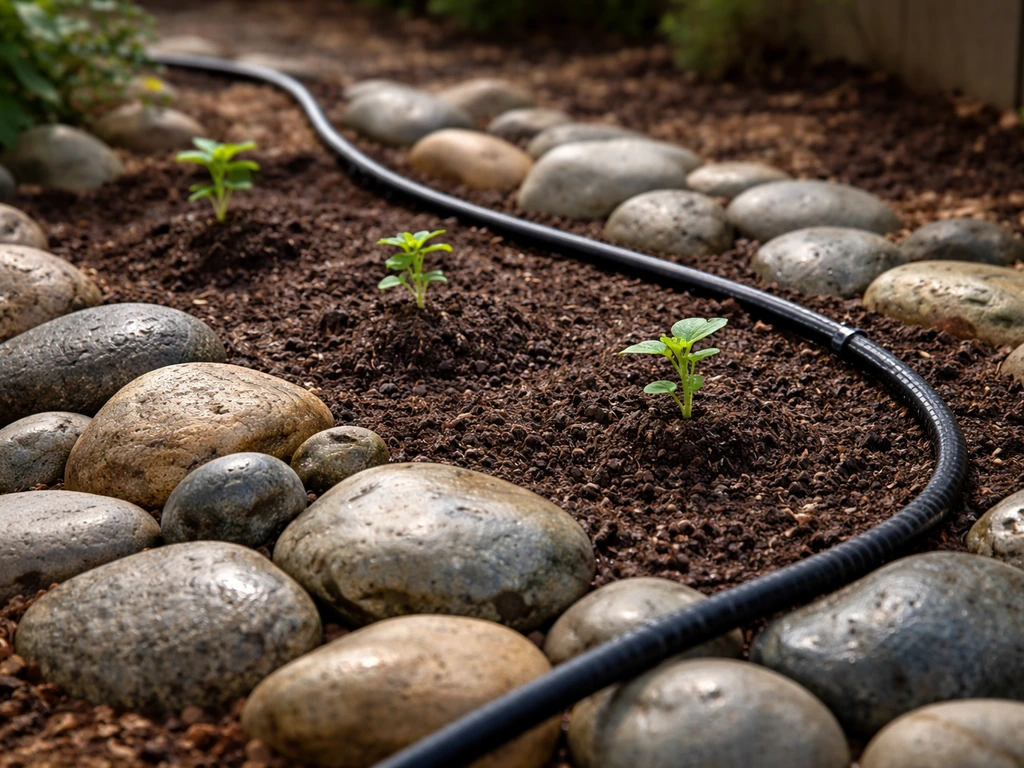
- Lay your drip irrigation lines before placing river rock. Subsurface or surface drip emitters at the root zone are far more efficient than overhead spray in gravel beds, and burying them under rock makes maintenance simpler.
- Place river rock last, 2 to 3 inches deep, pulling it back at each planting hole and replacing it around stems after planting. Keep rock a few inches away from woody plant stems to prevent rot.
Watering and maintenance: establishment vs the long run
The first season
The establishment period, typically the first 4 to 12 weeks depending on plant size and summer heat, is the most critical window. Even drought-tolerant plants need consistent moisture to develop their root systems in the first season. Water deeply two to three times per week in hot weather, less in cool or overcast conditions. Deep, infrequent watering encourages roots to grow down into soil rather than staying shallow near the surface. In river rock beds, surface evaporation is lower than bare ground, so you can often stretch intervals slightly compared to a mulched bed, but don't rely on that buffer in high heat.
After the first year
Once plants are established, most rock-garden candidates need far less attention. Lavender, sedums, ornamental grasses, and native drought-tolerant species can often survive on natural rainfall alone in zones that receive more than 15 inches per year, though a deep watering every two to three weeks during dry summer periods extends flowering and keeps plants looking their best. Avoid overwatering established succulents and sedums: these are more commonly killed by excess moisture in gravel beds than by drought.
Annual maintenance in a river rock bed is minimal compared to a mulched border. Rake out debris each spring, top-dress with a thin layer of fresh compost around plant crowns before adding any additional rock, and divide clumping grasses and groundcovers every three to four years when they start to thin in the center. Weeds are mostly a first-year problem: once groundcovers close the canopy between rocks, weed pressure drops dramatically.
Matching plants to your climate zone and planting season
The most common mistake in river rock planting is choosing plants based on appearance rather than native climate range. A plant that thrives in a Pacific Northwest gravel bed in zone 8b will struggle or die in an Arizona zone 9b rock garden, even though both look like 'gravel bed plants.' Start with your USDA hardiness zone and your average annual rainfall as the two non-negotiables, then work from there.
- Zones 3 to 5 (cold climates, short seasons): Focus on hardy sedums like Sedum acre and S. spurium, creeping phlox, blue fescue, prairie dropseed, and native wildflowers like prairie smoke (Geum triflorum). Plant in late spring after last frost for best establishment.
- Zones 6 to 7 (mid-Atlantic, Pacific Northwest, mountain West): The widest plant palette applies here. Lavender, creeping thyme, ornamental grasses, Russian sage, dwarf conifers, and most sedums all perform well. Spring and early fall are the best planting windows.
- Zones 8 to 9 (Southeast, lower Southwest, coastal California): Heat tolerance and drought resistance become more critical. Prioritize native species local to your specific region. Ice plant, agave, penstemon, desert marigold, and native grasses like muhly grass (Muhlenbergia capillaris) are strong performers. Plant in fall or early spring to avoid establishing plants in peak summer heat.
- Zones 10 to 11 (subtropical, desert Southwest): Native plant selection is essential. Consult a local native plant society for species that naturally grow in rocky, well-drained desert soils. Avoid importing temperate rock garden plants from seed catalogs: they are unlikely to survive.
Rainfall pattern matters as much as temperature zone. A zone 7 plant in the Pacific Northwest gets 40 to 60 inches of rain per year; a zone 7 plant in central Oklahoma might get 30 to 35 inches with hot, dry summers. The same hardiness zone rating covers both situations, but the plants that succeed are quite different. Check your area's average annual precipitation and summer drought period, then choose accordingly. Native plants from your specific region are almost always the safest and most successful starting point for river rock beds, because they evolved in conditions very similar to what your bed will provide.
If you're working with rocks in settings beyond a flat garden bed, the same principles apply in different configurations: plants that grow in stone walls deal with even shallower substrate and more extreme drainage, while plants rooted into actual stream-adjacent rock and water edges have a completely different moisture profile. Many plants grow well in stone walls and rock borders because they can handle shallow substrate and fast drainage plants that grow in stone walls.
Understanding what separates those environments from a standard river rock mulch bed helps you translate plant lists from other sources into what will actually work for your specific setup. [Membranes or landscape fabric are most useful under pathways, gravel, or around low-maintenance borders](https://www. idealhome. co.
uk/garden/garden-advice/mulch-vs-membrane-weed-solutions), rather than as a universal substitute for matching the right plants to your soil and site conditions.
FAQ
Can I grow plants in river rock without digging up the existing soil?
Yes, but only if you treat the rock as mulch (not the growing medium). When you plant through river rock into soil, a 2 to 3 inch rock layer will not stop roots from reaching prepared ground, as long as you keep at least 8 to 12 inches of workable soil beneath.
How do I water sedums and other drought plants in a river rock bed without overdoing it?
For established succulents, sedums, and hens-and-chicks, the safest rule is to water deeply only when the root-zone has dried back, then avoid frequent light watering. If you see mushy stems, blackened crowns, or a foul smell, cut back immediately and let the bed dry between waterings.
What should I do differently for river rock plants in scorching summer sun?
If the bed is full sun and south or west-facing, increase irrigation during the first season and watch for midday wilting that persists into evening. A practical trigger is to check the soil under a lifted section of rock, if it is dry 2 to 3 inches down during hot spells, water, otherwise wait.
Do I need landscape fabric under river rock to stop weeds?
Most weeds come from wind-blown seed and existing seed banks in the soil below. Before adding rock, remove established weeds, then use a landscape fabric only as a support layer beneath soil, not directly under the plants, because fabric can interfere with proper drainage and root oxygen.
Will settling or compacted soil under river rock affect plant success?
Avoid putting river rock on top of uncompacted, loose fill if it is going to settle unevenly, because plants can end up in pockets that are too wet or too dry. If your ground is rough or compacted, rebuild the planting area first, then place rock at a consistent 2 to 3 inch depth.
What plants work if there is barely any soil under the river rock?
In true “rock-only” situations where there is almost no soil, many common garden plants will fail, even if they tolerate drought. Use rock crevice style planting (micro-pockets of amended soil between stones) and choose naturally mineral-tolerant plants like woolly thyme, creeping phlox, and select sedums.
Can I use the same river rock plant list for both shade and full sun areas?
You can, but select plants that match the bed’s drainage and light, then expect slower growth for many sun plants in shade. Also, river rock still radiates heat, so deep shade reduces evaporation only modestly if the bed is surrounded by hardscape.
Should I fertilize plants growing in river rock?
Yes. In river rock beds, over-fertilizing often causes softer growth that is more prone to rot in well-drained but moisture-variable setups. Use a light top-dress of compost around crowns, then avoid high-nitrogen feeding for sedums and lavender, which prefer leaner conditions.
When should I prune plants in a river rock bed, especially in cold climates?
If you do winter pruning, do it conservatively, because many groundcovers and sedum types need some structure going into dormancy. As a rule, remove dead stems in early spring, and avoid heavy pruning right before cold snaps unless your plant is visibly unhealthy.
How can I make it easier to plant through river rock and do maintenance later?
Heavier stones can be harder to pull back cleanly, especially if the rock layer has shifted. For easiest long-term maintenance, use a consistent rock size, keep the layer at 2 to 3 inches, and plant with enough spacing that you can access crowns for weeding.