
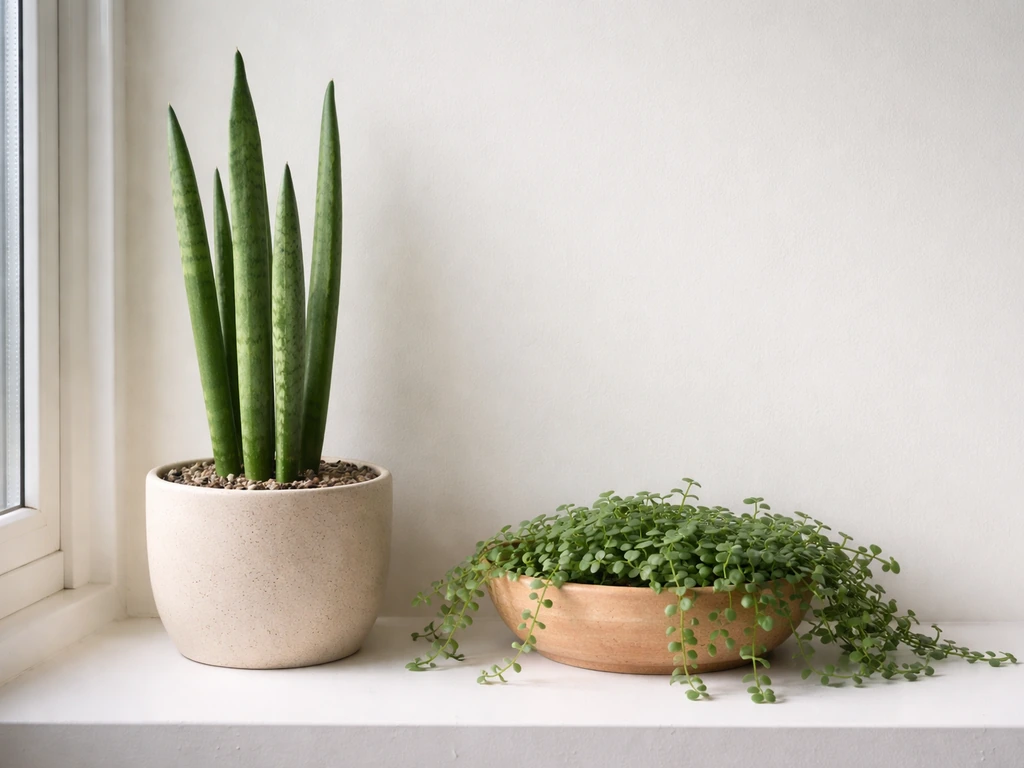
Plants that grow above the ground in an upright or vertical direction are called erect or upright plants, and their overall form is described by the term "plant habit." In everyday botany and field identification, "erect" means the stems grow mostly straight up, while "ascending" means they start at an angle but curve upward. Plants that grow along or parallel to the ground, by contrast, are called prostrate, decumbent, or procumbent plants, and when they spread to cover soil in a dense mat, they are called groundcovers. Those are the core terms, and understanding them makes it much easier to choose plants that will actually perform in your specific environment.
Plants That Grow Above the Ground Are Called What

Dr. Marcus Weatherby
22 May 2026
What "plant habit" actually means
"Plant habit" refers to a plant's general appearance: its overall form, size, shape, and orientation. Think of it as the posture of the plant. Is it standing tall, sprawling sideways, hugging the ground, or something in between? Habit is one of the first things a field botanist records because it tells you a lot about how the plant functions in its environment, how much light it captures, how it moves across a landscape, and what kind of work it can do in a garden or restoration site.
Habit terms run along a gradient from fully vertical to completely flat on the ground. That gradient matters because a lot of confusion comes from plants that are "mostly upright except at the tips" or "mostly on the ground but with tips curving upward. Botany-oriented habit-growth-form lists commonly include terms that distinguish upright versus near-ground forms, such as erect, leaning, decumbent, procumbent, and prostrate mostly upright except at the tips. " Once you know the vocabulary, those in-between cases become much easier to describe and identify.
The correct terms for above-ground upright growth
The primary term for plants that grow above the ground in an upright direction is erect. In botanical keys, "erect" means stems are growing vertically, essentially straight up. A closely related term is ascending, which describes a plant that starts out at more of a slant or even near-horizontal at the base but then curves upward and grows mostly vertical from there. Both erect and ascending plants are what most people picture when they think of a "normal" plant: a tree, a shrub, a tall grass, a sunflower. Their main growth axis points toward the sky.
You will also see the phrase "upright habit" used in horticultural and Extension literature. It means essentially the same thing as erect, though it is slightly less strict. A plant with an upright habit might lean a little or have arching branches, but its primary orientation is above the ground rather than along it. Trees, most shrubs, and many perennial forbs fall into this category.
The correct terms for plants that grow along the ground

This is where the vocabulary gets more specific, and it is worth knowing the distinctions because they actually affect how a plant behaves in the landscape.
| Term | What it means | Roots at nodes? | Tips direction |
|---|---|---|---|
| Prostrate | Stems lie flat along the ground for most of their length | Sometimes | Remain flat or close to flat |
| Decumbent | Stems lie along the ground but tips curve upward | Sometimes | Ascending at the tips |
| Procumbent | Stems grow along the ground without rooting at nodes | No (typically) | Remain along ground |
| Creeping / trailing | Stems spread horizontally along or near the ground, often rooting | Yes, at nodes | Along the ground or slightly upward |
| Groundcover | Low-growing, spreading plants that form a dense mat over soil | Often yes | Low, dense canopy close to ground |
In practical terms, prostrate and procumbent plants look similar from a distance, but the difference shows up at the nodes: procumbent stems do not root where they touch the soil, while creeping or stoloniferous stems do. Decumbent is the term for that classic in-between situation where stems sprawl along the ground but the plant still looks somewhat upright because the tips are reaching toward the light. A widely cited botanical usage distinguishes procumbent from decumbent by growth behavior: procumbent stems grow along the ground (without taking root), while decumbent stems trail along the ground but the tips ascend procumbent vs decumbent (tips ascending). You see this a lot in plants growing on open slopes or disturbed ground where competition for light is still real but the soil surface offers structural support.
Groundcover is the landscape and horticultural term used when the functional result of near-ground spreading growth is dense soil coverage. Extension sources commonly describe groundcovers as "spreading, low-growing plants used to cover an area of ground," and they can be creeping, clump-forming, trailing, or prostrate in form. The unifying feature is that their growth habit keeps them close to the soil surface and they spread laterally rather than vertically.
How groundcovers spread (and why it matters)
Groundcovers spread in a few distinct ways, and knowing which mechanism a plant uses helps you predict how quickly it will cover ground and how well it will hold soil.
- Stolons: above-ground horizontal stems that root at nodes when they contact soil. Strawberry is a classic example.
- Rhizomes: underground creeping stems that send up new shoots at intervals. Many grasses and ferns spread this way.
- Tip layering: a stem arches over and roots where the tip touches the soil. Common in some brambles and trailing shrubs.
- Offsets / clump expansion: the plant spreads by producing new rosettes or shoots at its base, slowly widening the clump.
This is worth knowing for a concrete reason: if you need erosion control on a steep slope, you want a vigorous spreader with a dense root system, ideally one that uses rhizomes or stolons. A clump-former might look fine but will leave gaps between plants for years. If you are filling a small, contained bed, a clump-former or slow-spreading stoloniferous plant is much easier to keep in bounds.
How to quickly tell upright from ground-hugging plants in the field
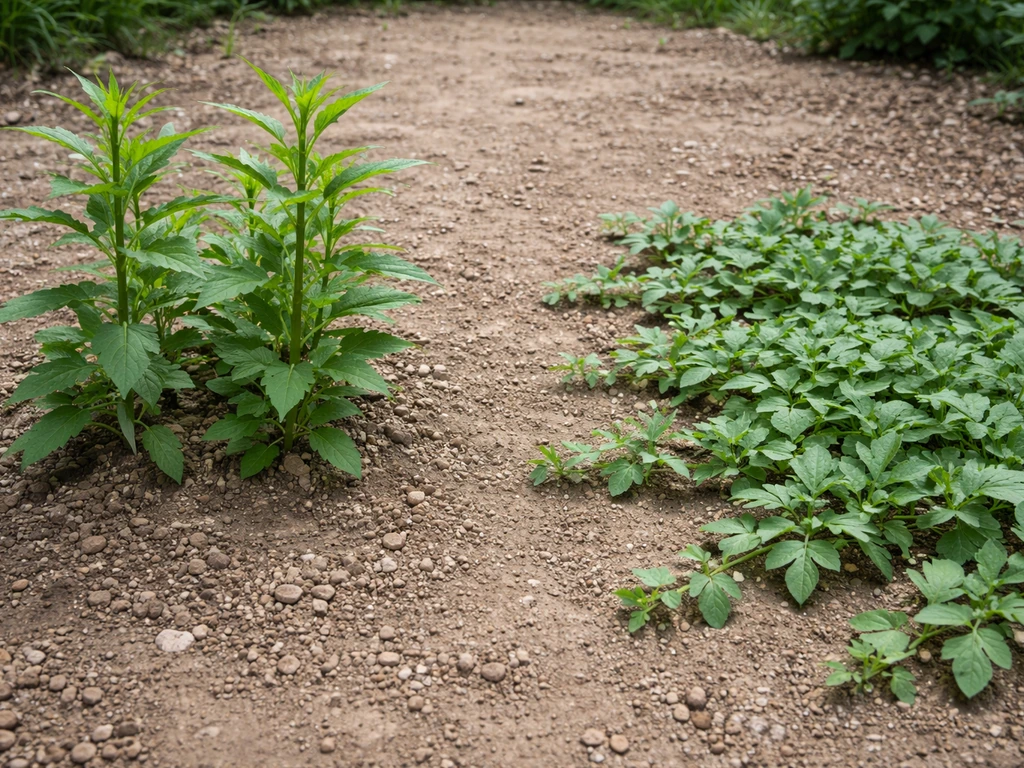
You do not need a botany degree to identify plant habit. These four quick checks work in the field, in a nursery, or even from a photo.
- Look at stem orientation. Are the main stems growing vertically, or do they run horizontally for most of their length? If stems are mostly vertical, the plant is erect or ascending. If stems run along the ground for more than half their length, it is prostrate, decumbent, or procumbent.
- Check the tips. On a decumbent plant, the stems lie flat but the growing tips curve upward toward the light. On a truly prostrate plant, even the tips stay close to the ground. This tip direction is the clearest single cue.
- Look for rooting at nodes. Lift a trailing stem gently. If you see small roots emerging where the stem touches the soil, the plant is creeping or stoloniferous. No roots at the nodes means procumbent.
- Ask what it is doing in the landscape. Is the plant forming a dense, low mat covering bare soil? That is groundcover function, regardless of the exact botanical term. Is it providing vertical structure above knee height? That is upright habit.
The most common confusion point is the ascending or decumbent plant that looks almost upright from a distance but has sprawling bases. Get low and look at the base of the plant, not just the tips. A shrub that looks erect from across the garden might have stems that sprawl along the ground for the first 20 to 30 centimeters before turning upward. That is technically ascending or decumbent, not fully erect.
It is also worth noting that some climbing plants, like vines that grow up tall trees to reach sunlight, look "above-ground" in the sense of reaching high into a canopy, but their growth habit is actually described separately as scandent or climbing rather than erect. In many cases, these are not strictly erect plants, because their habit is adapted for reaching light rather than standing upright in the classic sense vines that grow up tall trees to reach sunlight. And tall grasses that grow around trees are often described as bunch grasses or tufted plants, with their own habit descriptors. These bunch grasses and tufted plants can form tall clumps around trees and other plants bunch grasses or tufted plants. The upright vs ground-hugging framework is specifically about the orientation of the primary stems, not just how high a plant ends up.
Matching growth habit to your location, climate, and soil
Growth habit is not just terminology. It is one of the most practical filters you can use when choosing plants for a specific site. Here is how to connect the terms to real-world conditions.
Slopes and erosion-prone ground
On slopes, you want spreading groundcovers with vigorous growth habits and extensive root systems. The plant habit needs to be low enough that stems lie close to the soil surface (prostrate, creeping, or decumbent), and the spreading mechanism should be stolons or rhizomes so bare soil gets covered quickly. Loose sandy soils on steep grades especially benefit from rhizomatous spreaders that knit the soil together below the surface. Do not put a clump-forming upright plant on a steep, dry slope and expect it to hold the ground between individual plants.
Shaded woodland floors
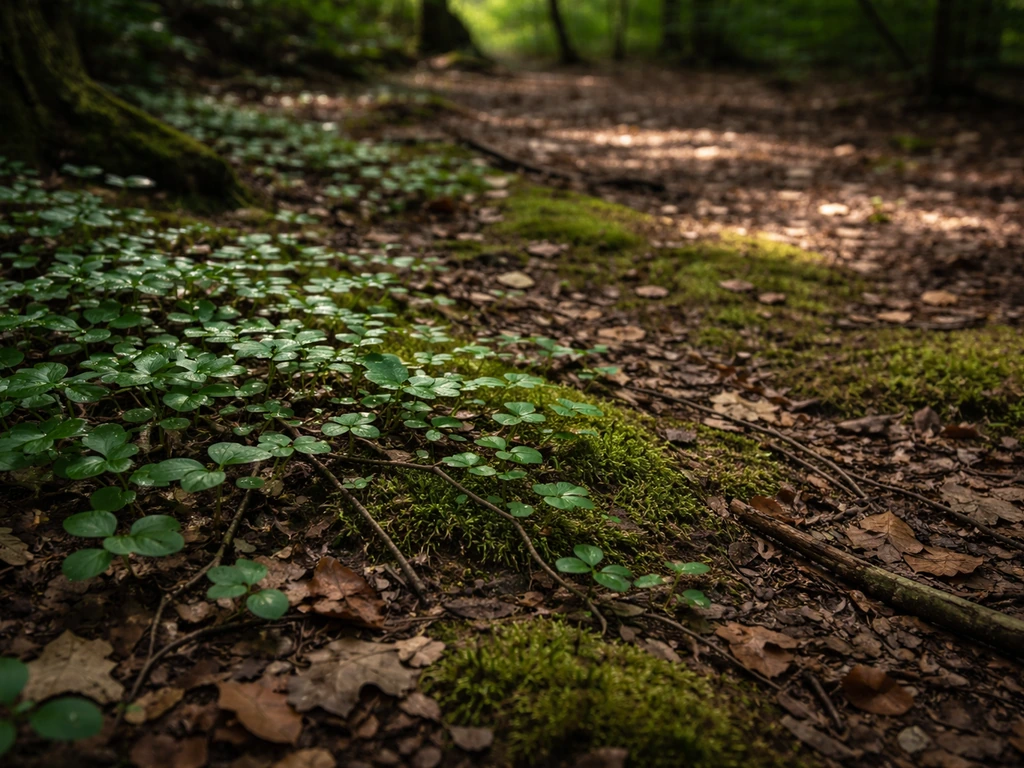
In low-light conditions under a forest canopy, most truly erect plants struggle because there is not enough light to fuel vertical growth. This is why so many woodland floor plants have a prostrate or near-ground habit: they are intercepting the diffuse, scattered light that reaches the ground. When selecting plants for a shaded garden bed or the understory of a woodland garden, prioritize plants described as prostrate, creeping, or low-spreading. Their habitat tells you their habit, and vice versa.
Open sun, exposed sites, and high-altitude zones
In exposed, wind-swept, or high-altitude environments, you often see naturally prostrate or decumbent growth forms even in species whose relatives grow upright at lower elevations. Plants that grow in these mountain-like, high-altitude conditions are often described as prostrate or decumbent, depending on how their stems grow high-altitude environments. Wind physically suppresses erect growth, and plants that hug the ground avoid the worst of it. If you are gardening in an exposed coastal site, a mountain garden, or a region with severe winters, selecting plants described as prostrate or decumbent is not just an aesthetic choice. It reflects what actually survives in those conditions naturally.
Foot traffic areas and functional "floors"
If the area will receive regular foot traffic, growth habit matters but so does tolerance. A dense, low-growing plant (prostrate or creeping habit) that cannot tolerate compaction will still fail. Extension guidance is direct on this: plants used as a floor surface need to be dense, low-growing, and tolerant of foot traffic specifically. Not all groundcovers qualify. Check both the growth habit (low and spreading) and the traffic tolerance before you plant.
Seasonal timing and establishment
Growth habit also affects establishment timing. Stoloniferous and rhizomatous groundcovers typically spread fastest when soil is warm and moist, which usually means spring or early fall planting in temperate zones. Clump-forming upright plants often establish better with consistent moisture during their first growing season regardless of time of year. If you are planting a slope for erosion control, timing the planting before a rainy season gives spreading groundcovers a head start on coverage before the first heavy rains arrive.
A quick reference: habit terms side by side

| Habit term | General orientation | Typical landscape use | Best matched to |
|---|---|---|---|
| Erect / upright | Vertical, stems grow skyward | Height, structure, screening | Open sun, fertile soils, most temperate climates |
| Ascending | Angled at base, curves upward | Mid-layer planting, informal borders | Edges, disturbed ground, transitional zones |
| Decumbent | Lies flat but tips ascend | Slopes, informal cover, rock gardens | Exposed sites, slopes, poor soils |
| Prostrate | Flat along the ground throughout | Ground coverage, low-profile areas | Exposed, windy, or alpine sites; dry soils |
| Procumbent | Along the ground, no rooting at nodes | Ornamental spillover, low fill | Contained beds, rock gardens |
| Creeping / stoloniferous | Trails and roots at nodes | Erosion control, lawn alternative | Slopes, moist soils, shaded woodland floors |
| Groundcover (functional) | Low, dense, spreading mat | Soil cover, weed suppression, erosion control | Any site needing dense low coverage |
The bottom line is that knowing whether a plant is erect, ascending, prostrate, decumbent, or creeping tells you far more than just what it looks like. It tells you what the plant is designed by its ecology to do, where it naturally thrives, and how well it will match the conditions you are working with. Start with habitat and growth habit together, and you will spend a lot less time replacing plants that were never suited to the site in the first place.
FAQ
If a plant looks tall, does that automatically mean it is an erect plant?
Not necessarily. “Erect” and “upright habit” describe where the main stems orient, but a plant can end up tall due to branching, leaf arrangement, or flowering while still having a partly ground-hugging base (often closer to ascending or decumbent). To classify it correctly, look at the stem pattern at the base and mid-stem, not just the top height.
How can I tell the difference between creeping (or stoloniferous) and prostrate plants that do not fill gaps?
Yes, and the reason is the root behavior at contact points. Creeping or stoloniferous stems typically root where they touch the soil, so they can fill gaps and knit the surface. In contrast, some “sprawling” plants may lay along the ground but not root at nodes, which slows patching of bare soil.
Is every low-growing plant considered a groundcover?
A common mistake is treating “groundcover” as a synonym for any low plant. In practice, groundcover implies a spreading function that creates dense lateral coverage. A low clumping perennial can look like a groundcover, but if it does not spread to form continuous cover, it may not meet the landscape goal (like quick erosion control).
Plant tags use words like “spreading” and “upright,” how do I map those to erect versus prostrate types?
For horticulture, many labels and plant descriptions use “upright,” “spreading,” or “trailing,” which can overlap with botanical categories. A quick field check is to observe whether new growth stays mostly vertical from the base (erect/upright) or whether stems originate near the ground and curve upward (ascending/decumbent) or spread laterally along the soil (prostrate/creeping).
How do I distinguish ascending from decumbent when a plant is only ground-hugging at first?
Yes. Deciding between ascending and decumbent can be tricky when plants are mostly upright except at the base. A useful check is the basal angle and where the plant makes most of its vertical progress. If it begins near horizontal and clearly turns upward after a sloping run, you are usually closer to decumbent, while a consistently slanted base that rapidly becomes vertical is often closer to ascending.
A vine climbs high, is it an erect plant because it grows above the ground?
Climbing and scandent plants may reach above the ground but do not rely on upright self-support in the classic sense. If the stems need a support structure to grow vertically, the correct descriptor is usually climbing, not erect, even if the plant reaches high into the canopy.
Can a plant still be a good erosion-control option if its groundcover is seasonal?
This is where “plant habit” helps, but you also need to consider persistence and growth rate. Some species spread fast by rhizomes or stolons yet die back in winter, leaving exposed soil part of the year, which matters for erosion control. If your site has seasonal bare periods, choose plants that maintain cover during the risk season or use a temporary cover strategy.
What should I check if I want a groundcover for foot traffic but the soil gets compacted?
In compacted areas, the limiting factor is often root health and oxygen availability, not just height and spread. Even a vigorous prostrate or creeping plant can fail if it is not tolerant of compaction. Before planting, verify traffic tolerance specifically, then consider adding topsoil, improving drainage, or using lighter-footfall zones where possible.
When is the best time to plant groundcovers that spread by stolons or rhizomes versus clumping plants?
Yes, timing affects establishment for spreaders. Stoloniferous and rhizomatous plants usually spread best when conditions support active growth (commonly warm and moist), so spring or early fall often works in temperate regions. Clump-forming types often care more about consistent moisture during the first growing season than the calendar month alone.
How do I know whether a “groundcover” will actually cover the soil quickly and stay where I want it?
Look for whether the plant’s lateral spread strategy produces continuous cover. If bare soil persists for long periods, it is not behaving like a true groundcover for your goal. For maintenance planning, note that rhizomes or stolons can also expand beyond the intended boundary, so consider edge containment (raised borders, barriers) or choose clump-formers when staying within a defined bed matters.