Endemic plants are those which grow in one specific place and nowhere else on Earth. That place might be a single island, a mountain range, a country, or even a particular habitat type like a cedar glade or a serpentine rock outcrop. The key word is restricted: a plant can be native to a region without being endemic to it, but an endemic plant is always confined to its defined area, naturally, without any human help moving it around.
Endemic Plants Are Those Which Grow In a Specific Place
Dr. Marcus Weatherby
7 May 2026
What endemic actually means (the real definition)
In plant ecology, endemic means a taxon whose entire natural geographic distribution is confined to a single defined area. That area can be large or small, a continent, a country, a single island, or even one habitat patch, but the plant is found nowhere else in the wild. The UN-REDD Programme puts it plainly: an endemic species occurs only in a certain strictly limited geographical region. That 'strictly limited' part is what separates endemic from the much looser term 'native.'
The scale of endemism matters a lot in practice. A plant can be endemic to an entire country (like a species found only in Zimbabwe), endemic to a specific island (like many Hawaiian plants), or endemic to a single mountain summit. The Hawaiian silversword (Argyroxiphium sandwicense) is a perfect illustration: it is endemic to Hawaii, and within that, the two subspecies are each tied to specific volcanoes, Mauna Kea and Haleakala. That is endemism stacked inside endemism.
Endemic species tend to cluster in what ecologists call biodiversity hotspots: areas that combine a high number of endemic vascular plants with significant habitat loss. When you see a region flagged as a biodiversity hotspot, expect a dense concentration of plants that exist nowhere else.
Endemic vs native vs introduced vs invasive (and why it matters)
These four terms get conflated constantly, even by people who should know better. Here is how they actually differ in meaning and why the distinction is practically important.
| Term | What it means | Key distinction |
|---|---|---|
| Native (Indigenous) | Evolved in the region or arrived there without human help | Can occur across many regions; not restricted to one place |
| Endemic | Native AND restricted to one specific area only | Subset of native; the plant exists nowhere else naturally |
| Introduced | Brought into a region by human activity, intentionally or not | Not part of the natural range; includes naturalized plants |
| Invasive | An introduced species causing ecological or economic harm | Judgement-based; not all introduced species become invasive |
The confusion between native and endemic trips up students and gardeners alike. A pink lady's slipper orchid (Cypripedium acaule) is native across a wide swath of eastern North America, but it is not endemic to any part of it because it spans many regions. By contrast, the silversword is both native to Hawaii and endemic to it. Every endemic plant is native to its area, but most native plants are not endemic. The Wikipedia article on native species sums it up neatly: a native species in a location is not necessarily endemic to that location.
The introduced versus naturalized distinction is also worth keeping straight. A plant that has been growing in a region for centuries without human maintenance might look native, but if humans originally brought it there, it is still introduced. Some authorities set a cutoff date to decide whether a long-naturalized introduced plant gets treated as part of the flora. The IUCN Red List uses an 'origin' coding system that separates native, reintroduced, introduced, vagrant, and uncertain populations specifically to handle this gray zone.
How to verify whether a plant is truly endemic
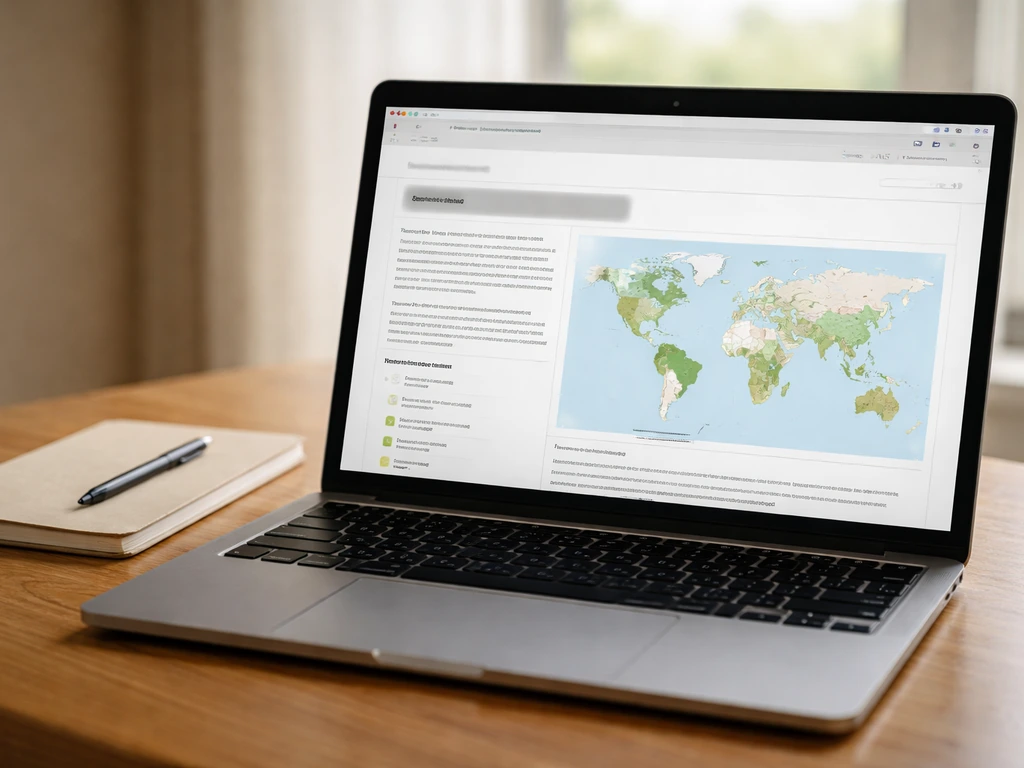
The best approach combines a few authoritative sources rather than relying on any single one. Here is a practical workflow.
- Start with Plants of the World Online (POWO) from Kew Science. Search the plant's scientific name and look at the 'Native Range' map and distribution summary. POWO uses the World Checklist of Vascular Plants (WCVP) as its backbone, and the same data feeds into GBIF and Catalogue of Life, so it is widely cross-referenced.
- Cross-check on GBIF. Run an occurrence search for the species and apply geographic filters. Look at the establishmentMeans field in the records: GBIF's Darwin Core vocabulary uses terms like NATIVE, INTRODUCED, NATURALISED, and INVASIVE. Filter to native-only records and see whether all occurrences fall within one area. Be aware that data publishers do not always fill this field correctly, so combine it with map inspection.
- Check the IUCN Red List entry if the species is listed. The range map and supporting information distinguish native populations from introduced ones, which matters when a plant has been deliberately planted outside its natural range.
- For regional verification, use local floras and conservation databases. Flora of Zimbabwe has a dedicated endemic plants page. The BC Ministry of Environment tags species as 'Endemic' or 'Probable Endemic' to British Columbia. NatureServe tracks jurisdictional endemism across North America and applies a strict criterion: if a plant has expanded to another jurisdiction without human help, it stops qualifying as endemic.
- For Hawaiian plants, iNaturalist and Bishop Museum's Plants of Hawaiʻi both flag endemic status explicitly. iNaturalist's 'Establishment Means' system includes an 'Endemic to a Place' designation specifically for narrow-range taxa.
One practical caution: GBIF occurrence data has geospatial quality issues. Records can have coordinate errors, mismatched political boundaries, or outdated taxonomy. GBIF's own training materials flag this and recommend data-quality filtering before drawing any conclusions about whether a plant truly occurs only within your target area. Always cross-reference a map-based occurrence check with a range description from POWO or a regional flora.
Real examples of endemic plants and where they actually grow
Concrete examples make the concept click. Here are some well-documented ones across different geographic scales and habitat types. Rubber plants, for example, are native to parts of Southeast Asia, where they grow naturally in the wild Here are some well-documented ones.
- Hawaiian silversword (Argyroxiphium sandwicense): Endemic to Hawaii, with the Mauna Kea subspecies restricted to the high alpine zone of that volcano and the Haleakala subspecies confined to the crater of Haleakala on Maui. These plants grow in volcanic cinder at elevations above 2,100 meters, in conditions that most plants cannot tolerate.
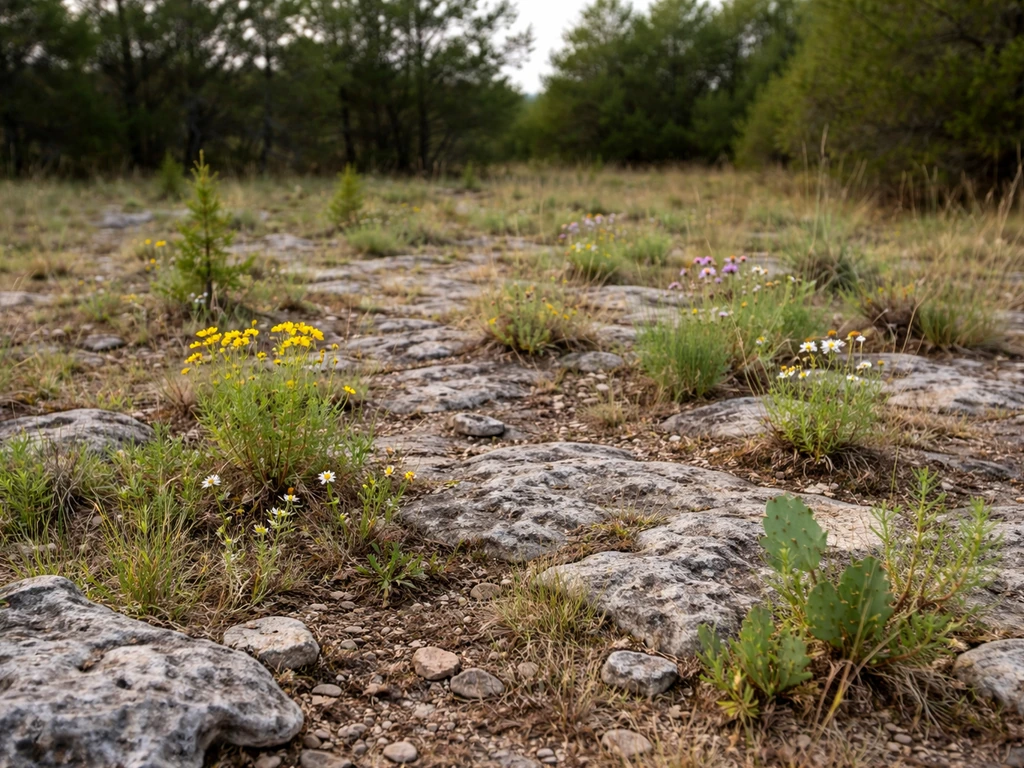
- Cedar glade endemics in Tennessee: Several plant species are endemic to cedar glade habitats, the thin-soiled limestone outcrops found in the Central Basin around Stones River. These plants evolved to handle the extreme heat, drought, and shallow alkaline soils of glades and simply do not occur elsewhere.
- Serpentine rock outcrop endemics in the Klamath-Siskiyou region: The ultramafic (serpentine) soils of northern California and southern Oregon host dozens of edaphic endemics, plants adapted to the toxic chemistry of serpentine that cannot compete on normal soils nearby.
- Delphinium variegatum subspecies: Some subspecies of this larkspur are endemic to specific California Channel Islands (such as San Clemente Island), while a related subspecies is widespread on the mainland. This shows how endemism can occur at the subspecies level within a single species.
- Zimbabwe's endemic flora: A published flora enumeration found around 232 species endemic or near-endemic to Zimbabwe, a useful reminder that continental African countries can still host significant numbers of restricted-range plants.
Edge cases and tricky situations worth knowing
Habitat endemism vs regional endemism
A plant can be endemic to a habitat type rather than to a political or geographic boundary. The cedar glade plants above are a good example: the relevant 'place' is the glade habitat itself, which patches across several counties in Tennessee. You might find the same species at geographically separate glade sites, but only in that specific habitat. Habitat endemism and regional endemism are both real, and the difference matters when you are trying to understand why a plant is rare or why it needs conservation attention.
When the range turns out to be bigger than assumed
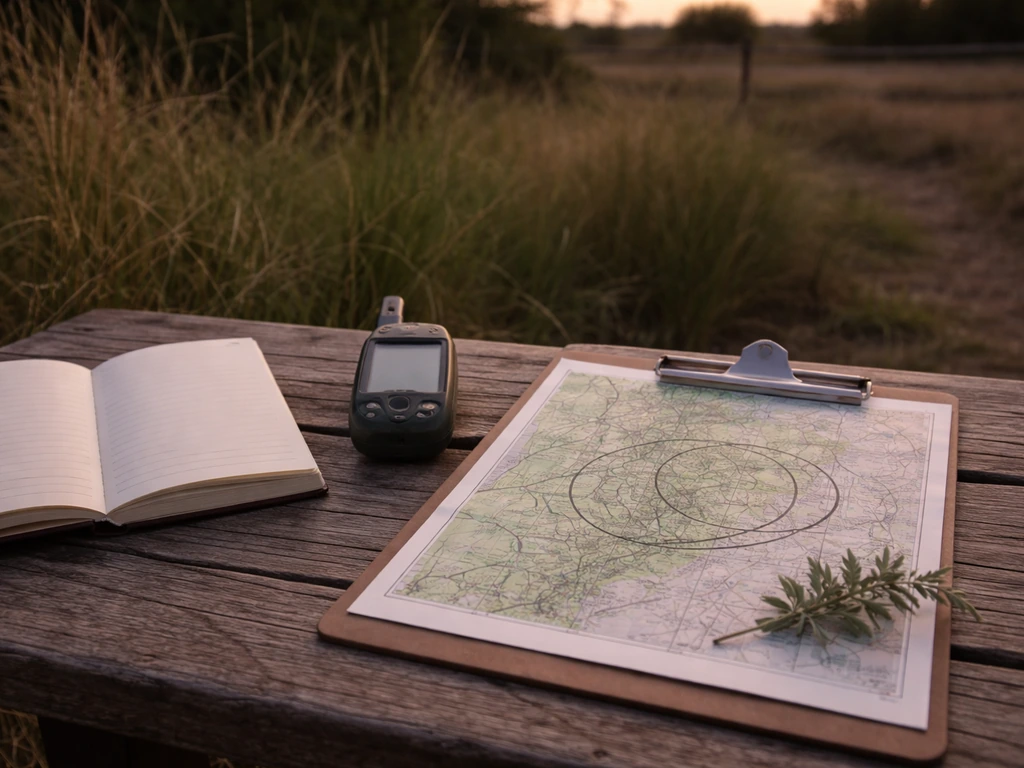
Endemic status can get revised. The NPS notes this directly for plants at Point Reyes National Seashore: a species considered endemic to Point Reyes might later be found at another site by a sharp-eyed botanist, which changes its status. This is not unusual in plant science. Populations of rare plants get discovered in new locations as survey coverage improves, and GBIF's growing database of georeferenced occurrence records accelerates this process. If you are relying on older literature, always verify against current POWO or regional flora data. Kew’s Plants of the World Online (WCVP) is a continuously updated global consensus checklist for vascular plant names, and it became a default taxonomic backbone of World Flora Online verify against current POWO.
Jurisdictional endemism and boundary effects
When conservation databases label something 'endemic to British Columbia' or 'endemic to California,' they are using political boundaries as the unit of endemism. NatureServe is explicit that a species should not be recorded as endemic to a jurisdiction if it has naturally expanded across the border, even by a small amount. This boundary-sensitivity creates practical headaches in tools like iNaturalist, where the place hierarchy (nested counties, states, and countries) can shift a plant's endemic classification depending on which geographic unit you are querying.
Introduced populations muddying the map
Some plants have been deliberately cultivated or introduced outside their native range, and occurrence databases pick up those records. If you see GBIF occurrences for a supposedly narrow-range endemic scattered across a continent, check the establishmentMeans field. You will often find those outlier records are tagged as introduced or naturalized. The IUCN's system of origin coding (native, reintroduced, introduced, vagrant) exists precisely to handle this, and POWO's range maps are curated to show natural range only.
How to find endemic plants for your location or climate zone
If you are a student doing a project, a gardener curious about what is truly original to your landscape, or just someone who wants to know what plants belong to your piece of the planet, here is how to find out. You can also look at where decorative plants grow by checking their natural range and whether records suggest they are truly confined to that area.
- Go to Plants of the World Online (powo.science.kew.org) and use the distribution filters. You can search by TDWG region (the geographic units POWO uses) to pull up species whose native range is restricted to your region. This is the most authoritative starting point for any climate zone or geographic area.
- Use GBIF (gbif.org) and filter by country or region, then narrow to establishment means = native and look for species with very few occurrence records concentrated in a tight area. Small EOO (Extent of Occurrence) and AOO (Area of Occupancy) values, the IUCN's range-restriction metrics, are signals of potentially endemic taxa.
- Look for a regional flora or checklist. Many countries and states publish these, and they often flag endemic status explicitly. Zimbabwe's Flora, Hawaii's Bishop Museum database, and BC's provincial conservation lists are examples. Search for '[your region] endemic plant list' plus the name of any regional botanic garden or conservation authority.
- Use iNaturalist's Explore function: search your location, filter to plants, and apply the 'endemic' filter under Establishment Means. This will show taxa that iNaturalist considers native and restricted to the place you have selected. Keep the place-hierarchy caveat in mind: narrow your search to the most specific area first.
- For climate-zone-level searches, think in terms of habitat and soil type as well as geography. Serpentine soils, coastal headlands, high alpine zones, and isolated wetlands are all environments that generate endemic plants because of their physical isolation or unusual chemistry. If your local area has any of those features, it very likely has endemic species associated with them.
The same logic that explains where endemic plants grow also explains the patterns you see across other plant groups. Plants with strongly restricted natural ranges, whether they are insectivorous species tied to specific bog conditions, tropical forest understory plants, or the C4 grasses of particular savanna climates, all reflect how powerfully habitat, geography, and evolutionary history shape plant distributions. Flowering plants grow wherever their habitat conditions, climate, and geography allow them, and some species are confined to very specific regions where flowering plants grow. Century plants are native to specific parts of Mexico and the southern United States, so you can look up your local climate and native range to find where they grow naturally. Tropical plants grow naturally wherever the climate stays warm and humid, such as in tropical rainforests, cloud forests, and tropical forest understories where do tropical plants grow. To learn where C4 plants grow, look at warm, sunny habitats and grassland or savanna conditions where they can thrive C4 grasses of particular savanna climates. Insectivorous plants are a good example of how habitat and geography set strict limits on where they grow. Endemism is just the most extreme expression of that pattern: the place and the plant have become inseparable.
FAQ
If a plant is found only in my country, is it automatically endemic?
Not necessarily. Endemic means the plant is confined to a defined area in the wild, but “only in your country” can still be native to regions that extend into neighboring countries. Check whether its natural range crosses political borders, and use curated range maps (for example POWO) rather than relying on local checklists alone.
How do I tell whether a “narrow-range” plant is truly endemic or just under-sampled?
Look for recency and survey coverage. A plant may look endemic because it has not been recorded elsewhere yet. If older literature shows a small range but newer records add sites, the endemic designation may need revision. Cross-check recent occurrences and status updates in POWO or regional floras.
Does endemic include plants moved by people but now living in the wild?
Endemism is about natural distribution. If humans introduced the plant outside its native area, even if it later persists without ongoing cultivation, it is still not endemic in the strict sense. Use “origin” or “establishment” fields in databases to separate native from introduced or naturalized records.
Can a species be endemic at one place scale but not at another?
Yes. Endemism depends on the defined area. A plant may be endemic to an island, while its subspecies are endemic to particular volcanoes, or it may be endemic to a habitat type that spans multiple counties. The same organism can have multiple valid endemism descriptions depending on the unit you define.
What’s the most common data mistake when mapping endemics?
Treating raw coordinates as truth without quality checks. GBIF records can include coordinate errors, georeferencing mismatches, or outdated taxonomy. Filter by data quality, then verify with a range description in POWO or a regional flora before concluding the plant occurs nowhere else.
Why do some databases disagree on whether a plant is endemic to a specific jurisdiction?
Because they may use political boundaries as the unit of endemism, and boundaries can change classifications if a plant naturally extends across them. NatureServe and similar systems recommend not labeling a species as endemic to a jurisdiction if it naturally expanded across the border, even slightly.
If a plant occurs in multiple patches of the same habitat, is it still endemic to that habitat?
Often yes. Habitat endemism is based on the ecological “place” (the habitat type and conditions), not the physical continuity of land. If the species is tied to that habitat wherever it occurs, it can be habitat-endemic even when sites are geographically separated.
How should I respond if my field guide calls a plant “rare” but not “endemic”?
Those labels measure different things. “Rare” usually refers to population size, local abundance, or conservation status, while “endemic” describes geographic restriction. A plant can be rare without being endemic, and an endemic plant can be rare or relatively secure depending on habitat stability.
Are plant subspecies or varieties considered endemic too?
They can be. Infraspecific taxa, like subspecies, may have smaller natural ranges than the species as a whole, such as the silversword example where subspecies are tied to specific volcanoes. If you are writing or labeling, decide whether you need endemism for the species level or the infraspecies level.
What should I do before using an endemic claim in a school or conservation project?
State the endemism unit clearly (island, habitat type, mountain summit, political region) and verify against at least two sources: a curated range map and a taxonomy-aware occurrence check. Also note if the designation might change due to new survey records, especially for older claims based on limited historical data.