
Five plants that reliably grow new plants from a single leaf are: African violet (Saintpaulia), jade plant (Crassula ovata), snake plant (Sansevieria trifasciata), Kalanchoe (including the classic Bryophyllum-type species), and begonia. Each one uses a slightly different technique, from petiole cuttings to leaf sections to leaf-margin plantlets, but all five are proven, repeatable, and doable at home today with basic materials.
5 examples of plants that grow from leaves with steps

Dr. Marcus Weatherby
25 Apr 2026
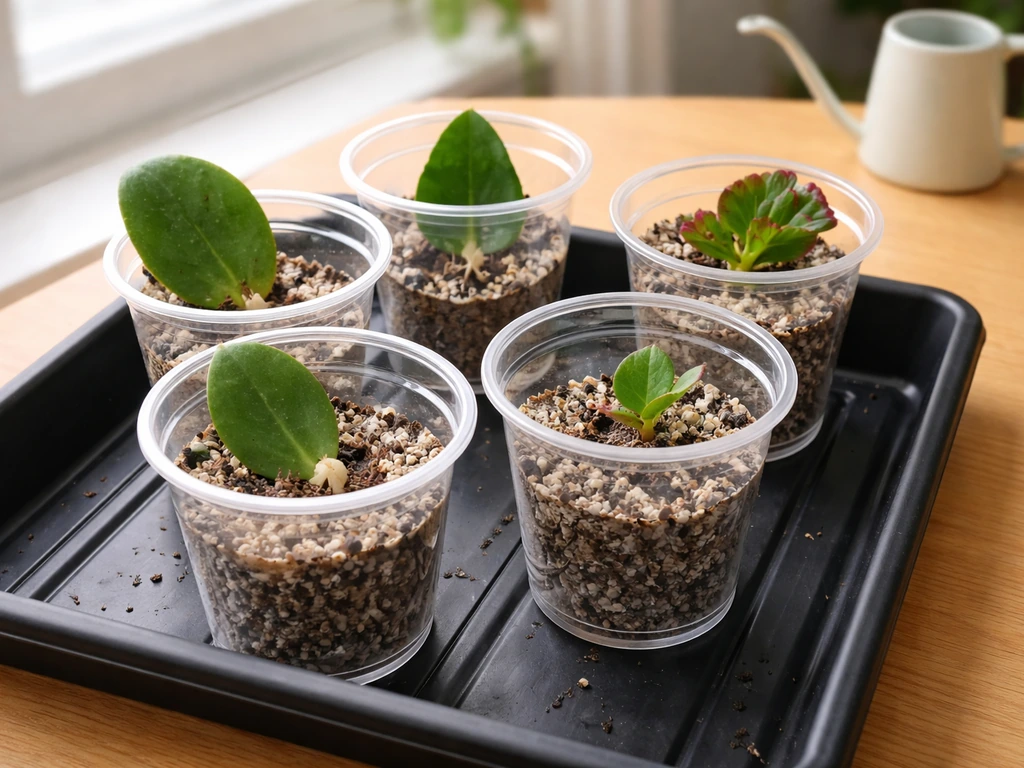
What 'growing from leaves' actually means
When people search for plants that grow from leaves, they usually mean one of two things. The first is leaf-cutting propagation: you detach a leaf (or a piece of one), place it in a growing medium, and wait for the wound tissue to form roots and eventually push out tiny new plantlets. The second is plantlet formation, where a plant like Bryophyllum (a Kalanchoe relative) spontaneously produces tiny ready-to-grow plantlets along its leaf margins, already equipped with roots or root initials, that drop off and establish themselves. Both count as 'growing from leaves,' but they work differently and the success rate varies.
For most gardeners and students, the practical question is about leaf-cutting propagation: can you take a leaf off this plant and grow a new one from it? The answer is yes for a surprisingly short list of species. Most plants cannot do this at all. The five examples below are the ones that work consistently across climates and skill levels, and they each have strong ecological reasons for being so good at it.
The 5 plants, and exactly how to propagate each one
1. African violet (Saintpaulia ionantha)
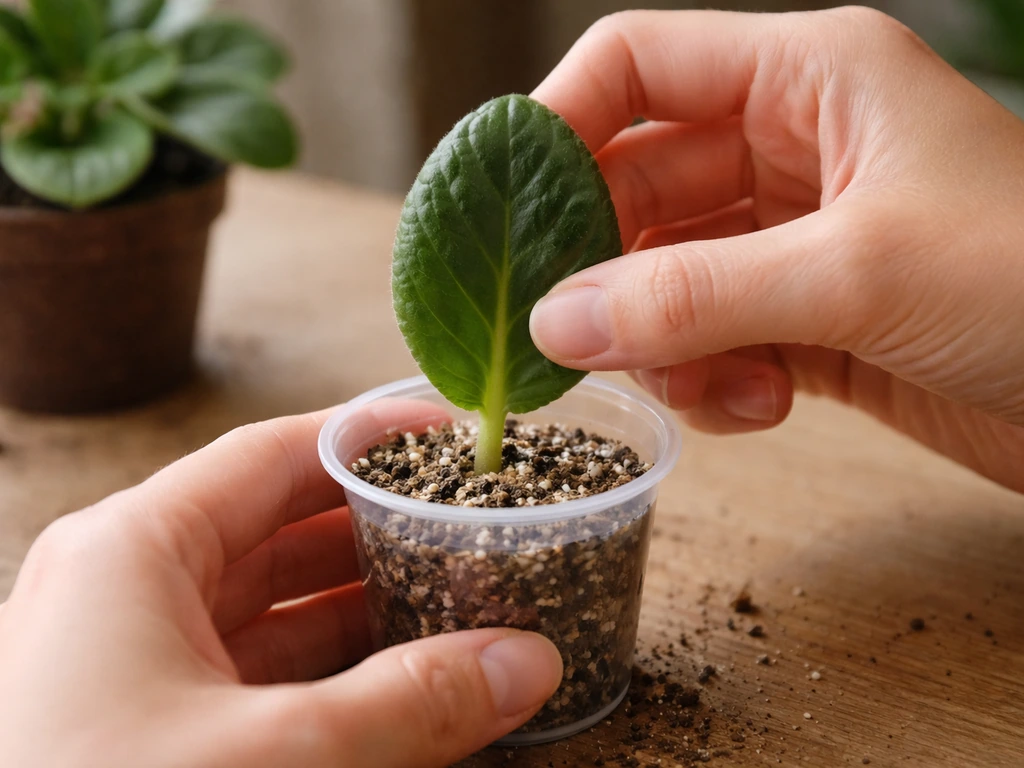
African violets are native to the humid montane forests of Tanzania and Kenya, where they grow on shaded rock faces and stream banks. That cool, moist, indirect-light environment translates directly into what a leaf cutting needs. The good news: African violet leaf cuttings will root any time of year indoors, so there's no waiting for a season.
To propagate, select a firm, healthy leaf from the outer ring of the plant. Cut it off cleanly with a sharp knife, leaving a petiole (the stem) about 1 to 1.5 inches long. You do not need rooting hormone: the African Violet Society of America confirms it isn't necessary. Insert the petiole into moist potting mix at a 45-degree angle, just deep enough to hold the leaf upright. Enclose the pot in a clear plastic bag or cover it with a humidity dome. Tiny plantlets will form at the base of the petiole, right where the stem was cut, typically within 8 to 12 weeks. After another few months of growth, they can be separated and potted individually. Total time from leaf to transplantable plant: roughly 6 to 9 months.
2. Jade plant (Crassula ovata)
Jade plant is native to the Eastern Cape of South Africa, where it grows in rocky, semi-arid scrubland with dry winters and warm, moderately wet summers. It's a succulent, so its leaves are water-storing tissue, which is exactly why they can survive long enough to grow roots before they dry out.
Pull or cut a healthy, plump leaf cleanly from the stem, making sure you get a clean break at the base without tearing. This is the most important step: a torn leaf base rarely roots. Lay the leaf on a dry surface and leave it for 24 to 48 hours until the cut end forms a dry callus. Then set it on top of (not buried in) a well-draining cactus mix or a 50/50 perlite-potting soil blend. Do not water immediately. Within 2 to 3 weeks, tiny pink roots will emerge from the callus end, followed by a miniature rosette of new leaves. Mist lightly only once the roots appear. Unlike African violets, jade leaf cuttings do not need a humidity dome; in fact, enclosing them speeds rot.
3. Snake plant (Sansevieria trifasciata / Dracaena trifasciata)
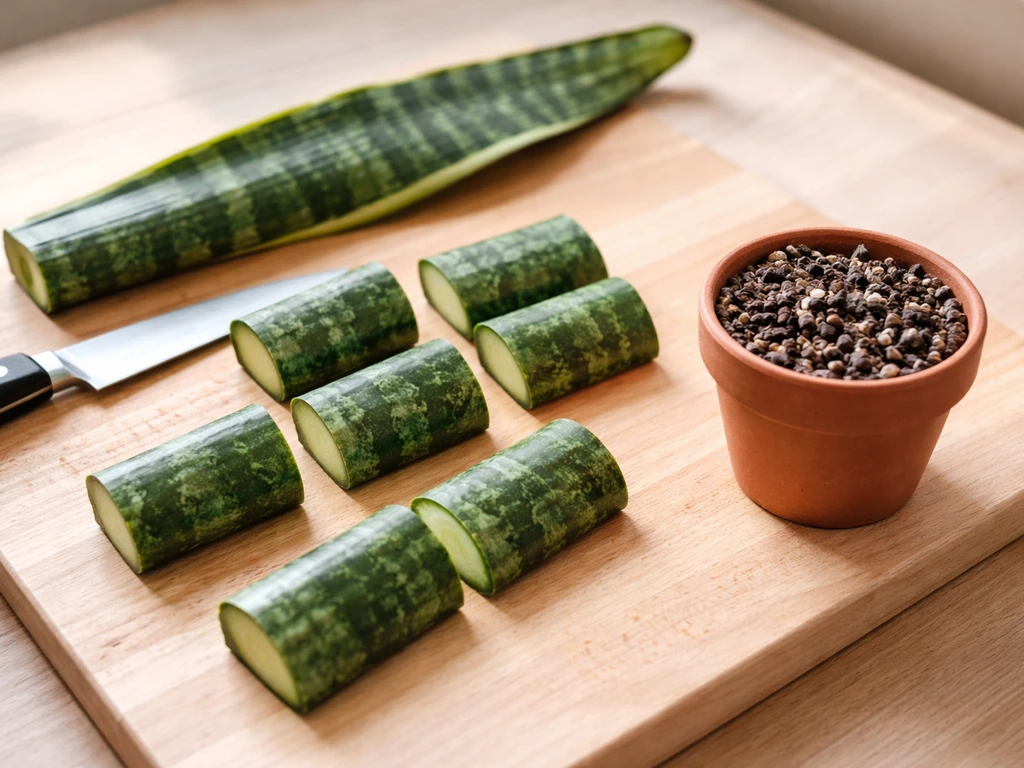
Snake plant is native to tropical West Africa, from Nigeria to the Congo, growing in rocky, dry habitats and open woodland edges. It handles drought, low light, and neglect because its leaf tissue is dense and slow to desiccate. That same toughness makes leaf sections surprisingly reliable propagators.
Cut a healthy leaf into sections about 3 to 4 inches long using a clean, sharp blade. Keep track of which end is 'up': snake plant sections must be planted the same direction they grew, or they won't root. Let the cut sections sit overnight so cut ends can callus. Then push the bottom third of each section into barely moist sand or perlite-heavy mix. Roots typically form in 4 to 6 weeks. One important note: if you're propagating a variegated snake plant (the yellow-edged variety), leaf sections will revert to plain green in the offspring. To keep variegation, you need division, not leaf cuttings. But for green varieties, leaf sections work reliably.
4. Kalanchoe / Bryophyllum
Kalanchoe blossfeldiana (and the closely related Bryophyllum species like Bryophyllum daigremontianum) are native to Madagascar and tropical Africa. The Bryophyllum types are famous for blank" rel="noopener noreferrer">producing ready-made plantlets along their leaf margins: tiny, fully formed baby plants that drop off and root themselves in the soil below. This is the clearest example of a plant that literally grows new plants from its leaves without any cutting technique required.
For standard Kalanchoe blossfeldiana, leaf-cutting propagation also works. Take a healthy, mature leaf with its short petiole, allow the cut end to callus for a day or two in a warm dry spot, then insert it shallowly into a well-draining succulent mix. Keep the medium barely moist and provide bright indirect light. Roots form in 2 to 4 weeks. For Bryophyllum-type kalanchoes, you can simply pin a leaf flat to damp soil or set it on the surface, and the plantlets already forming on the leaf margins will root into the medium on their own. Kalanchoe is hardy outdoors only in USDA zones 10 to 11 (think southern Florida, coastal Southern California, Hawaii), so everywhere else it's a year-round indoor or container plant.
One important safety note: all Kalanchoe species contain bufadienolide compounds that are toxic to dogs and cats, causing gastrointestinal distress. Keep propagation trays well out of reach of pets.
5. Begonia
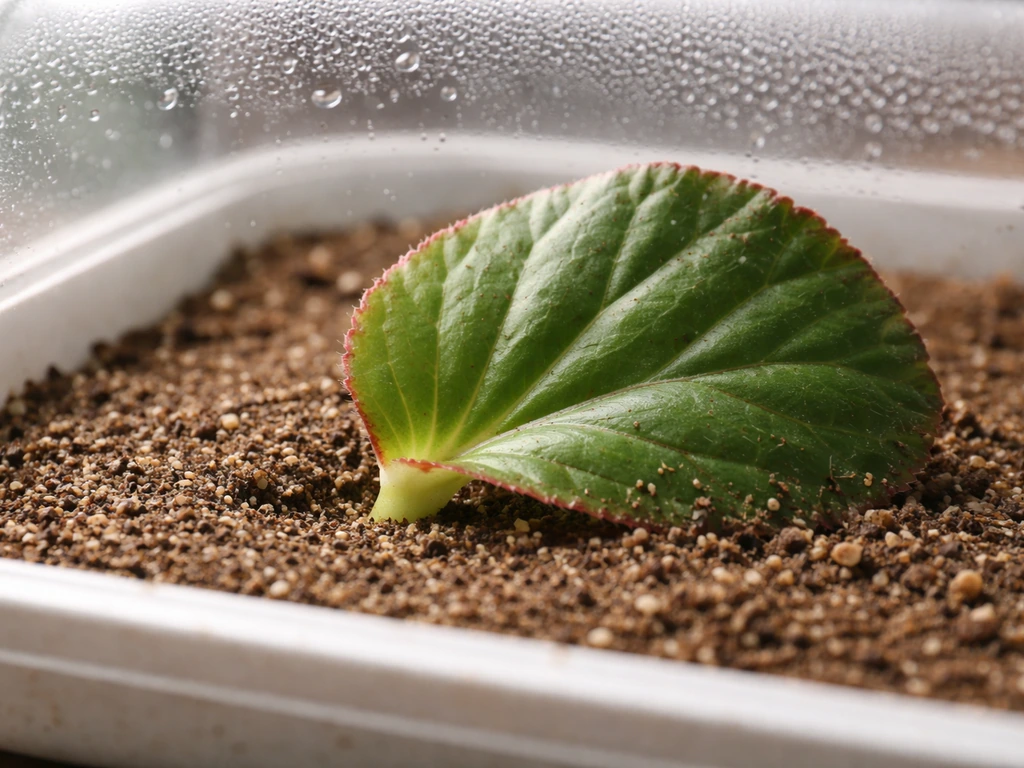
Begonias are a massive genus native to tropical and subtropical regions worldwide, from humid cloud forests to shaded forest floors in Central and South America, Africa, and Southeast Asia. Many species, particularly rex begonias and cane begonias, propagate readily from leaves or leaf wedges.
The standard method is the leaf-wedge or leaf-petiole cutting. For a petiole cutting, take a whole leaf with 1 to 2 inches of stem, dip the petiole base in IBA/NAA rooting hormone (optional but it does speed things up), and insert it into moist potting medium at a 45-degree angle. Cover with a humidity dome or clear plastic to maintain high moisture around the leaf. For the leaf-wedge method, cut a leaf blade into wedge sections, each containing a major vein. Lay or prop the wedges cut-side-down into the medium. New plants form at each cut point where vein tissue contacts the soil. Keep humidity high throughout: begonias do not tolerate the dry-callus phase that succulents need. Roots form in 3 to 6 weeks; visible plantlets typically follow within 8 to 12 weeks.
How to set up your leaf cuttings for success
The biggest variable across all five plants is moisture management. Succulents (jade, snake plant, Kalanchoe) want a dry callus phase followed by minimal watering until roots appear. Non-succulents (African violet, begonia) need consistently moist medium and high ambient humidity from day one. Getting this distinction wrong is the single most common reason leaf cuttings fail.
| Plant | Medium | Humidity need | Callus first? | Rooting time |
|---|---|---|---|---|
| African violet | Moist potting mix | High (cover with dome) | No | 8-12 weeks |
| Jade plant | Dry cactus/perlite mix | Low (open air) | Yes, 24-48 hrs | 2-3 weeks for roots |
| Snake plant | Sandy/perlite-heavy mix | Low to moderate | Yes, overnight | 4-6 weeks |
| Kalanchoe | Well-draining succulent mix | Low (open air) | Yes, 1-2 days | 2-4 weeks |
| Begonia | Moist potting mix | High (cover with dome) | No | 3-6 weeks |
For temperature, aim for 70 to 75°F (21 to 24°C) in the growing medium. Cooler conditions slow root initiation significantly. Bright indirect light works for all five: direct sun scorches unrooted cuttings before they have any way to compensate for water loss. For humidity domes, a clear plastic bag propped up off the leaf surface (so it doesn't touch and cause rot) or a clear plastic container inverted over the pot works perfectly. Aim for 70 to 90% relative humidity inside the enclosure for African violets and begonias.
When leaf cuttings fail: what's going wrong and how to fix it
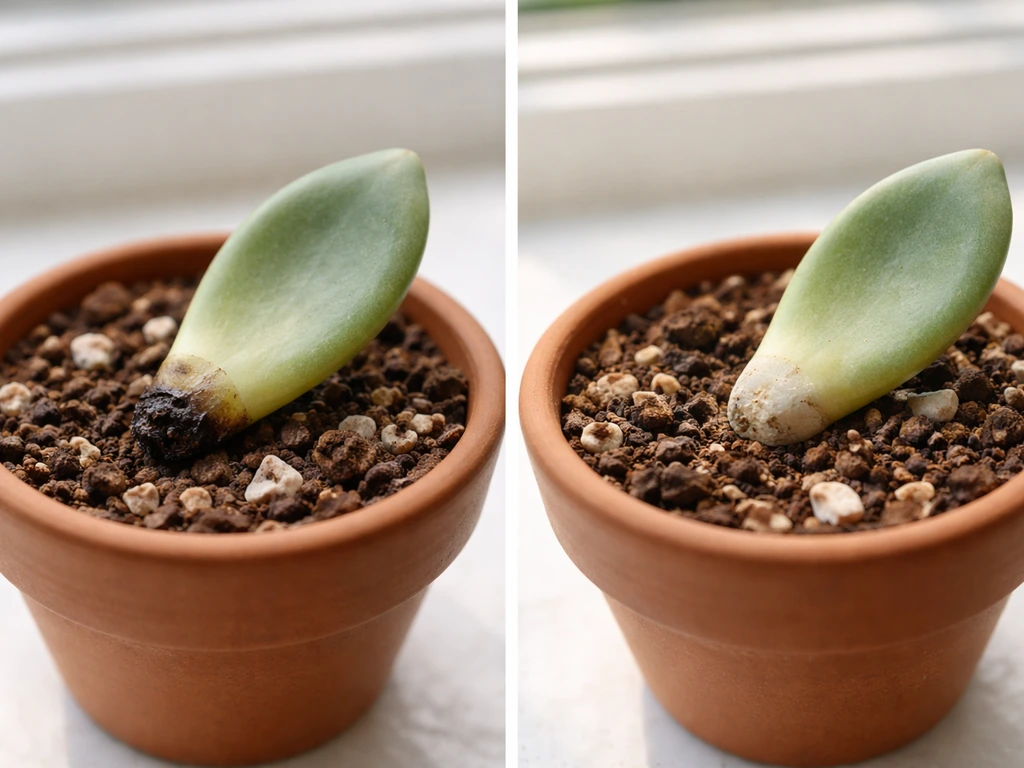
The leaf is rotting
Rot is almost always caused by one of two things: too much water in the medium, or a fungal pathogen entering through the cut. For succulents, make sure you did the dry callus step and that the medium is barely damp, not wet. For African violets and begonias, make sure the humidity dome isn't creating condensation that sits directly on the leaf tissue. If you're getting repeated rot, let the medium dry out slightly between misting cycles, and consider a light dusting of powdered sulfur or a dilute fungicide on the cut end before inserting.
The leaf is shriveling or drying out
This is the opposite problem. With African violets and begonias especially, the leaf has no roots yet and cannot draw water up. If it's drying and shriveling, your humidity dome isn't sealing well enough. Re-enclose it more tightly. For succulents, a little shriveling early on is normal: the leaf is using stored water to fuel root growth. As long as it isn't collapsing entirely, leave it alone.
No roots after many weeks
Check medium temperature first. If the room is below 65°F, root initiation stalls. Move the tray to a warmer spot or use a seedling heat mat set to 70 to 75°F. Also check that the cutting has actual contact with the medium: an air gap between the petiole end and the soil is a frequent culprit, especially with begonias. If you used rooting hormone, make sure you didn't over-apply it. Penn State Extension notes that excessive hormone concentration actually slows root development, so a light dip is all you need.
The leaf looks fine but nothing sprouts
Patience is the main answer here, but also check that you started with a mature leaf, not a very young one. Young, soft leaves from the center of a plant often don't have enough stored energy to root. Pick firm, fully developed leaves from the middle-to-outer ring of the plant. And accept that not every leaf will work: a 60 to 70% success rate is considered good even by experienced propagators.
Climate windows and natural habitat fit
Understanding where each of these plants naturally grows helps you set the right conditions, whether you're propagating indoors or trying to do it outdoors in a climate where they actually thrive.
- African violet: native to shaded, humid montane forest edges in Tanzania and Kenya, at elevations of 3,000 to 7,000 feet. Outdoors year-round only in mild, frost-free, high-humidity climates. Indoors, propagation works any month of the year since it doesn't depend on seasonal light cues.
- Jade plant: native to rocky, semi-arid scrubland in South Africa's Eastern Cape. Hardy outdoors in USDA zones 10 to 12. Best propagation window outdoors is spring through early summer when temperatures are warm but not extreme. Indoors, spring and summer give a slight edge because of longer daylight.
- Snake plant: native to open woodland and rocky habitats in tropical West Africa. Tolerates a wide range of conditions but roots best in warmth (above 65°F consistently). Outdoors in zones 9 to 11; everywhere else, an indoor-year-round plant with best results in late spring to summer propagation.
- Kalanchoe/Bryophyllum: native to Madagascar and parts of tropical Africa, adapted to seasonal dry periods. Hardy outdoors only in zones 10 to 11. Bryophyllum-type species naturalize readily in tropical climates and are considered invasive in some subtropical regions (Hawaii, parts of Australia, Florida). Indoors, propagate any time but spring is easiest.
- Begonia: native to tropical and subtropical forest understories across multiple continents. Outdoors year-round only in zones 10 to 12 (humid tropics). In temperate zones, begonias are summer-season outdoor plants or year-round indoor plants; leaf propagation works best in spring and early summer when growth is most active.
Realistic expectations and a few safety notes
Leaf propagation is slower than stem cutting propagation for most species. Plan for a minimum of 2 to 3 months before you have a plantlet worth potting up, and 6 to 9 months before you have a plant that looks like a proper specimen (African violets especially run on this longer timeline). Don't pull leaves out of the medium to check on roots: you'll disrupt early root growth and often kill the cutting. Instead, wait for visible new growth above the soil surface as your cue that rooting succeeded.
Not every leaf will produce a new plant, and that's normal. Start more cuttings than you think you need. If you're doing this for a class or project and need reliable results, African violet and jade plant have the best success rates for beginners. You can also explore additional plants that grow from leaves beyond these five, with more species and methods to try which plant grow from leaf. If you want a wider list, here are 10 examples of plants that grow from leaves, beyond the five most common picks. If you want more detail on this, see which plant varieties grow from leaves in different environments growing from leaves. Begonia leaf-wedge cuttings can be less predictable without good humidity control.
On safety: Kalanchoe (including Bryophyllum species) contains cardiac glycoside-type toxins called bufadienolides. These are toxic to dogs, cats, and other pets, causing vomiting, diarrhea, and in large doses more serious effects. Keep all Kalanchoe leaf cuttings and propagation trays away from animals. The other four plants on this list (African violet, jade, snake plant, begonia) have their own mild concerns: jade plant sap can cause mild GI upset in pets, and begonia tubers are the most toxic part of that plant. Handle cuttings with clean hands and keep propagation setups out of reach of children and pets as a general rule.
If you want to go deeper on any of these plants, there's a lot more to explore: the full list of plants which grow from leaves extends well beyond these five, and some species like Bryophyllum have fascinating ecological backstories around how their leaf-margin plantlet strategy works in the wild. If you want to go deeper on any of these plants, there's a lot more to explore: the full list of names of plants which grow from leaves extends well beyond these five, and some species like Bryophyllum have fascinating ecological backstories around how their leaf-margin plantlet strategy works in the wild. The five examples here are your most reliable starting point, covering the full range from succulent to tropical herbaceous, so you can match the propagation method to your climate and conditions.
FAQ
Do I need rooting hormone for leaf cuttings from these plants?
Usually no for African violet, and it can even slow rooting if overused (especially for begonias and other tender leaves). Use rooting hormone only when the plant’s method calls for it (begonia petiole cuttings), and apply a light dip to the cut end, not a heavy coating.
How do I know the leaf cutting has rooted if I cannot check the roots?
Use above-soil signals instead of digging. For most of these plants, success shows up as new growth at the base (African violet plantlets, jade rosette, snake plant new shoots) or new leaf and rooted plantlets forming from wedge cuts (begonias). If nothing changes after the typical window, don’t keep the cutting in the same conditions longer, adjust moisture and warmth.
What medium should I use for each plant to prevent rot?
African violet and begonia want a moisture-retaining potting mix plus high humidity. Jade, snake plant, and Kalanchoe need a gritty, fast-draining mix and a dry callus phase. A common mistake is using a rich, water-holding mix for succulents, which keeps tissue too wet and triggers rot.
Can I propagate these plants in water instead of soil or sand?
African violets are commonly rooted in mix rather than water because submerged leaves and petioles tend to rot. Jade, snake plant, and Kalanchoe often do poorly in plain water because they still need a callus and careful moisture control. If you try water, expect lower success and quicker decay, especially without a very clean setup and frequent changes.
Why do my leaves shrivel but never produce new plants?
For non-succulents (African violet, begonia), shriveling usually means the humidity enclosure is leaking or not sealing, so the leaf is losing moisture before roots form. For succulents, some early shriveling is normal because the leaf is supplying energy, but if the cutting collapses completely, the callus phase or watering level was off.
Should I separate new plantlets as soon as they appear?
Wait until the plantlets have a few roots and some leaf growth, not just a tiny bump. For African violet, separating too early can break fragile roots and cause collapse. For Kalanchoe/Bryophyllum-type plantlets, allow them to establish briefly in their current medium before potting up.
What temperature and light conditions work best, and what should I avoid?
Aim for warm rooting in the 70 to 75°F (21 to 24°C) range and use bright indirect light. Avoid direct sun, especially right after cutting, because unrooted tissue cannot replace water lost through transpiration. Cooler conditions are a frequent reason for stalled rooting.
Can I propagate variegated snake plant (yellow-edged) from leaf sections?
Variegated snake plant leaf sections usually revert to green in the offspring. If keeping variegation matters, use division or another method rather than leaf-section propagation.
Are there pet-safety issues with all five plants?
No. Kalanchoe (including Bryophyllum) is the biggest concern because it contains toxic bufadienolides and can cause serious illness if pets ingest leaves. Begonia is also risky since the tuberous parts are especially toxic. Jade and snake plant are generally milder, but keep all trays out of reach and supervise any pets that chew plants.
How many cuttings should I start to get at least one successful plant?
Because even skilled propagators get mixed results, start with a buffer. If you’re aiming for a reliable project outcome, begin with more than your target number, and treat lower initial results as normal since not every leaf has enough stored energy or the right wound healing conditions.