
Some plants can grow an entirely new individual from a single leaf. Not a seed, not a cutting with a stem, just a leaf. This is called leaf propagation, and it works because certain species carry dormant meristematic tissue in their leaves, meaning they have cells that can be triggered to produce roots, shoots, and eventually a whole new plant. Not every plant can do this. In fact, most cannot. The confusion usually comes from mixing up "a leaf that survives in water" with "a leaf that actually generates a new plant." This guide untangles that, gives you real examples, and walks you through how to do it successfully today.
Plants Which Grow From Leaves: True Leaf Propagation Guide

Dr. Marcus Weatherby
17 Apr 2026
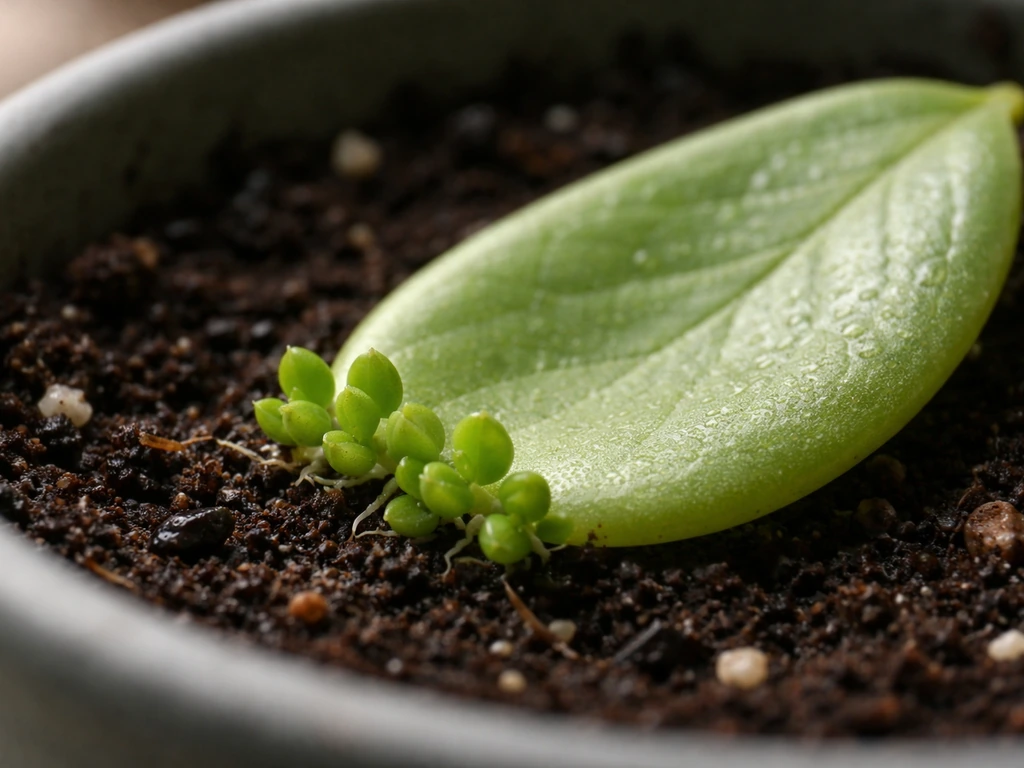
What is actually happening when a leaf grows into a new plant
When a leaf genuinely produces a new plant, what you are watching is vegetative reproduction, a form of asexual reproduction where new growth emerges from non-seed plant tissue. The mechanism depends on adventitious bud formation. Adventitious buds are buds that form in locations where you would not normally expect them, like on a leaf surface, a leaf margin, or from the cut end of a leaf petiole (the stalk connecting the leaf blade to the main stem). These buds form because certain cells in the leaf retain the genetic and hormonal instructions to regenerate. Once triggered by the right conditions, including wound signals, humidity, warmth, and the right hormone balance, those cells divide and differentiate into roots and then shoots.
In species like Bryophyllum (Kalanchoe), the process is especially dramatic. The leaf margins have specialized notches called crenulations, and inside those notches sit dormant meristem-like structures that are essentially pre-formed plantlets waiting for the right cue. In Kalanchoe daigremontiana (mother of thousands), those plantlets can develop while the leaf is still attached to the parent plant, then drop to the ground and root on their own. Plant hormones, especially cytokinins, regulate when and how aggressively these plantlets develop.
In a Journal of Experimental Botany study of Bryophyllum (Kalanchoë) marnierianum, cytokinin was reported to inhibit epiphyllous plantlet development in whole-leaf conditions cytokinins regulate when and how aggressively these plantlets develop. Day length and whether the leaf is detached also influence the process.
In begonias and African violets, the mechanism is slightly different: adventitious buds form from wounds made at main leaf veins or from the base of the leaf petiole after it is inserted into a rooting medium. Multiple plantlets can form from a single leaf piece.
It is worth clarifying one thing upfront: this is not apomixis. Apomixis is asexual reproduction through a seed without fertilization, a completely separate process. Leaf propagation is strictly vegetative, meaning no seed or embryo is involved at all.
True leaf-propagators vs. leaves that just sit there
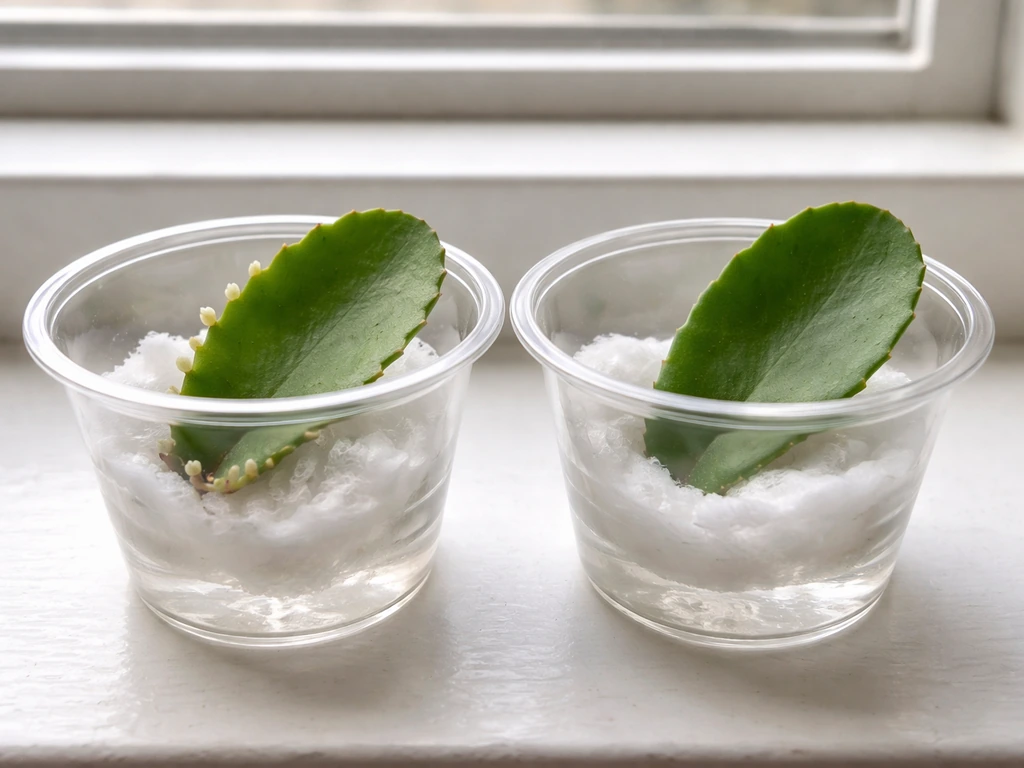
This is the most important distinction to get right before you start. A true leaf-propagating plant produces adventitious buds from leaf tissue that then develop into a complete new plant with roots and shoots. A leaf that merely survives in water, or even grows some roots, but never produces a shoot or new crown, is not a true leaf propagator in any useful sense. You will get roots but no plant.
Roses are a classic example of the confusion. You can stick a rose leaf in soil and it might stay alive for weeks, but it will not produce a new rose plant. The same is true for most common flowering plants: their leaves simply do not carry the meristematic programming to regenerate a full plant. On the other side, plants like succulents (especially Echeveria and Sedum), begonias, African violets, Kalanchoe species, Sansevieria (snake plant), and Streptocarpus are proven, reliable leaf propagators.
| Plant | True Leaf Propagator? | Method | Notes |
|---|---|---|---|
| Kalanchoe / Bryophyllum | Yes | Leaf margin plantlets, detached leaf | Plantlets form in crenulations; can propagate even on the parent plant |
| African violet (Saintpaulia) | Yes | Leaf + petiole cutting | Plantlets emerge from petiole base in rooting medium |
| Begonia (many species) | Yes | Leaf or leaf section cutting | Plantlets emerge from cut veins and petiole base |
| Echeveria / Sedum (succulents) | Yes | Detached leaf laid on medium | Leaf dries, then produces rosette and roots at base |
| Streptocarpus | Yes | Leaf section cutting | Sections placed vertically in medium; buds form at vein cuts |
| Sansevieria (snake plant) | Yes | Leaf section cutting | Roots and shoots form; note variegated forms may revert |
| Rose | No | N/A | Leaf may root weakly but produces no new shoot or plant |
| Tomato | No | N/A | Leaf survives briefly but cannot regenerate a full plant |
| Fern | No (from leaf) | Spores only | Ferns reproduce from spores, not leaf cuttings |
Plants that genuinely grow from leaves: real examples
If you want a reliable starting list, 10 examples of plants that grow from leaves is a useful reference, but here are the most practical ones to know, with context for why each one works.
Kalanchoe (Bryophyllum species)
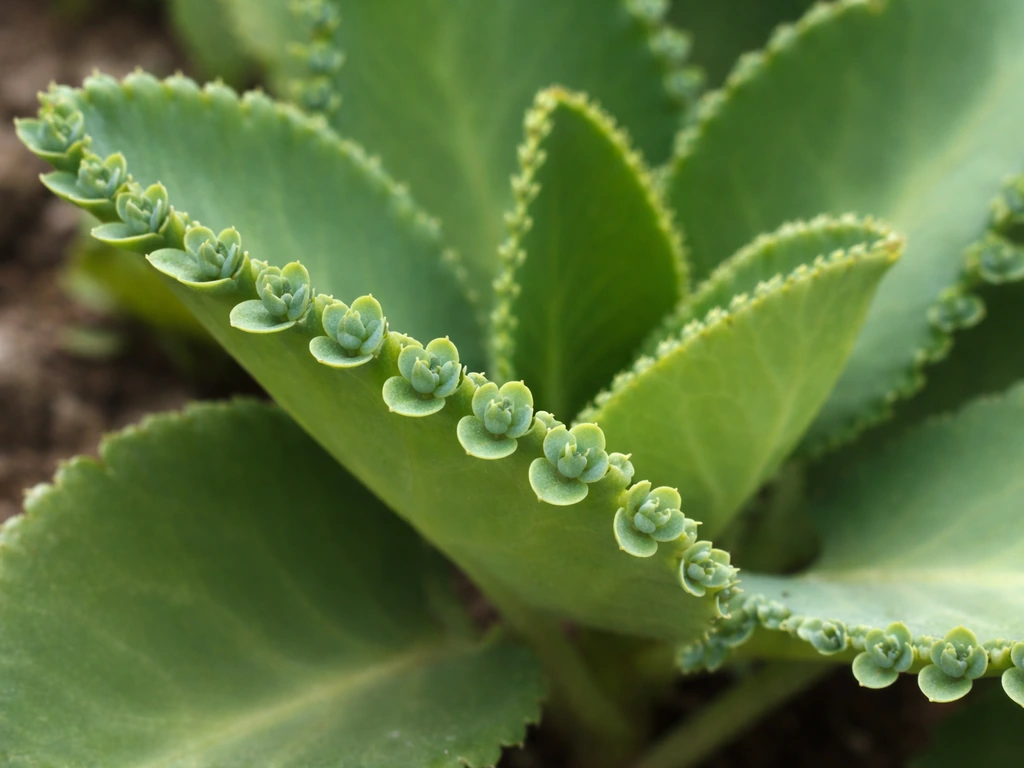
Kalanchoe daigremontiana and Kalanchoe pinnata are probably the most famous leaf-propagating plants in existence. Their leaf margins are lined with tiny notches, and inside each notch a plantlet can form while the leaf is still on the plant. These plantlets eventually fall off, land in soil, and grow into new plants without any human involvement. Detach a leaf from either species, lay it on moist soil in indirect light, and you will see plantlets form along the edges within a few weeks. These plants are native to Madagascar and thrive in warm, semi-arid to seasonally dry tropical conditions, which tells you something important about the propagation conditions they prefer: warmth, good drainage, and intermittent moisture rather than constant wetness.
African violet (Saintpaulia)
African violets are the classic beginner leaf-propagation plant for good reason. Select a healthy, mature leaf, cut it with a sharp, clean knife, and keep the petiole intact at around 3 to 5 cm. Select a healthy, mature leaf, cut it with a sharp, clean knife, and keep the petiole intact at around 3 to 5 cm [Insert the petiole into moist rooting medium at roughly a 45-degree angle so the leaf blade sits above the surface. ](https://www.
pubs. ext. vt. edu/content/dam/pubsextvt_edu/spes/spes-698/SPES-698.
pdf). Insert the petiole into moist rooting medium at roughly a 45-degree angle so the leaf blade sits above the surface. Plantlets develop from the petiole base within 4 to 8 weeks. Native to the humid montane forests of Tanzania and Kenya, blank" rel="noopener noreferrer">African violets thrive in stable warmth (18 to 24°C), indirect bright light, and consistently moist but never waterlogged growing medium.
Begonia
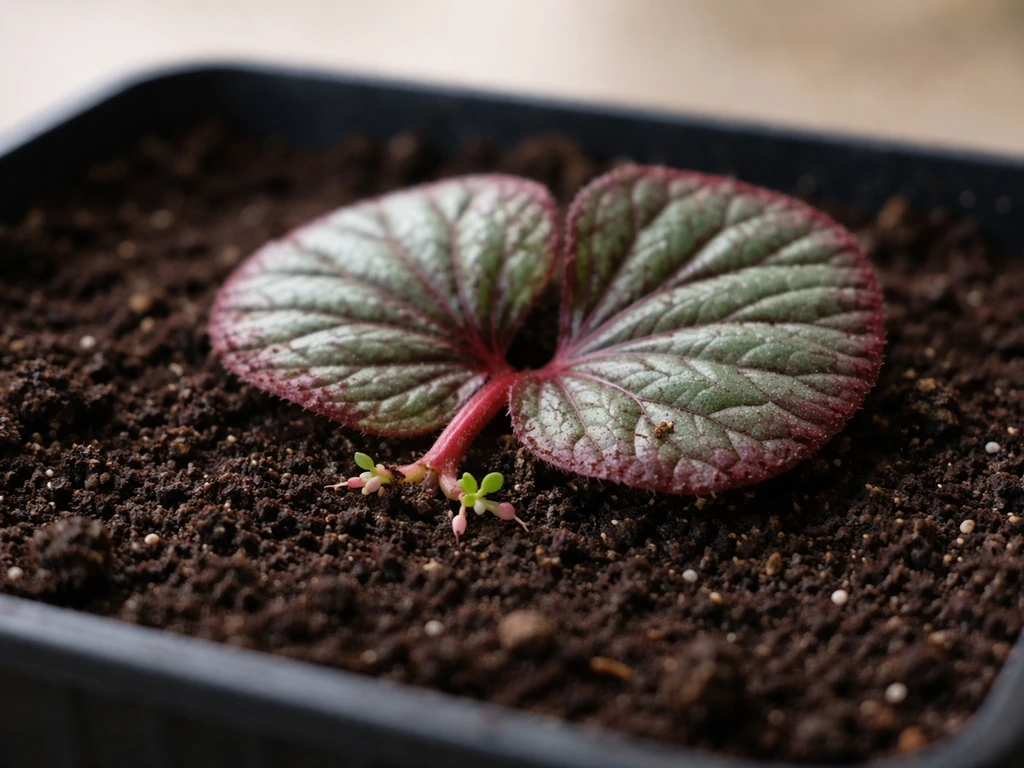
Many begonia species, especially rex begonias and rhizomatous types, propagate readily from leaves. You can use a whole leaf with petiole, or cut the leaf into sections and lay them on the medium with the cut veins in contact with the surface. Adventitious buds develop from the exposed vein ends and petiole base. Begonias are native to tropical and subtropical regions worldwide, often growing on forest floors or in humid, sheltered environments with filtered light. That environmental background explains why they need high ambient humidity and protection from direct sun during propagation.
Echeveria, Sedum, and other succulents
Many succulent rosette plants, especially Echeveria and Sedum species, propagate from individual leaves laid directly on the surface of a dry-ish, well-draining medium. The leaf base, where it was attached to the stem, is the critical point: the connection must stay intact (do not tear the base) because that is where the new rosette and roots form. These plants come from seasonally dry environments in Mexico, the Canary Islands, and similar climates with warm days, cool nights, and sharply draining rocky or sandy soils.
Streptocarpus
Streptocarpus (Cape primrose) is not as widely known as African violets but is equally capable. Leaf sections are cut into strips and inserted vertically (cut side down) into rooting medium. Buds and roots form from the cut vein ends at the base of each section. Native to highland forest edges and rocky outcrops in southern Africa, Streptocarpus does well in humid, cool-to-intermediate conditions with bright indirect light.
Sansevieria (snake plant)
Sansevieria leaves can be cut into sections of around 5 to 8 cm and inserted upright into moist medium. Roots and eventually new shoots develop from the base of each section. One important caveat: variegated forms of Sansevieria will revert to plain green when propagated this way because the variegation is chimeric (a genetic mosaic), so if you want to preserve the pattern you need to divide the rhizome instead. Sansevierias are native to arid and semi-arid regions of West Africa, so they tolerate drier conditions than most other leaf propagators.
What these plants and techniques are called
The general term for growing a new plant from a leaf is leaf propagation or leaf cutting propagation. The broader category is vegetative propagation or vegetative reproduction, which covers any asexual method of producing new plants from non-seed tissue, including stem cuttings, division, layering, and leaf cuttings. When a leaf naturally produces plantlets on its own surface (as in Kalanchoe), the botanically specific term is epiphyllous plantlet development. The small stem that connects a leaf blade to the main plant stem is called the petiole, and in many leaf propagation techniques, keeping the petiole intact is essential to success.
If you are looking for a categorized breakdown, the list of names of plants which grow from leaves covers additional species across different families and habitats. And if you are just starting to explore which plant grow from leaf, it helps to focus first on the families where this trait is most consistent: Crassulaceae (succulents and Kalanchoe), Gesneriaceae (African violets, Streptocarpus), and Begoniaceae.
How to spot a leaf that can actually propagate
Not every leaf from a leaf-propagating plant will work. Here is what to look for when selecting a leaf to propagate from in real life:
- Choose a mature, fully developed leaf, not too young (still growing and soft) and not too old (yellowing or damaged). Middle-aged leaves on the plant are the most reliable.
- The leaf should be firm, plump, and free from spots, rot, or pest damage. In succulents, the leaf should feel full of water, not shriveled.
- For species like African violet or begonia, a healthy petiole is essential. It should be green and firm, not brown or mushy at the base.
- For Kalanchoe species, look for leaves with well-defined crenulations (notched edges) where plantlet development is already visible or where the notches are clearly developed.
- Avoid leaves from stressed, underwatered, or recently repotted plants. A plant under stress is less likely to produce viable propagation material.
- In succulents, the cleanest sign of a propagable leaf is one that detaches cleanly from the stem with the full base intact, no tearing. If the base is damaged, that leaf will not produce a new rosette.
For a focused look at just the most recognizable species, reading about 5 examples of plants that grow from leaves can help you build a visual reference for what healthy propagation candidates look like in each family.
How to propagate from leaves today: step by step
The materials you need are minimal: a clean, sharp knife or scissors, a rooting medium (more on this below), a small container with drainage, and something to maintain humidity such as a clear plastic bag or a propagation dome. Here is the process, broken down by plant type.
For African violets and Streptocarpus (petiole or section method)
- Select a healthy, mature leaf and cut it from the plant with a clean knife, keeping 3 to 5 cm of petiole attached.
- Optional: trim very large leaf blades in half horizontally to reduce moisture loss and make handling easier.
- Fill a small pot with moist rooting medium (a mix of perlite and peat, or a commercial seed-starting mix works well). The medium should be damp but not soggy.
- Make a small hole in the medium with a pencil or stick and insert the petiole at about a 45-degree angle. The leaf blade should sit above the medium surface, not be buried.
- Cover loosely with a clear plastic bag or humidity dome. This keeps humidity high without sealing out all airflow.
- Place in bright indirect light at 18 to 24°C. Check every few days, misting lightly if the medium dries out, and briefly air the covering daily to prevent disease buildup.
- Plantlets should appear at the petiole base within 4 to 10 weeks. Once they have two or three small leaves of their own, separate them carefully and pot individually.
For begonias (whole leaf or vein cutting method)
- Remove a healthy, mature leaf. You can use the whole leaf with petiole, or cut the leaf into sections ensuring each piece contains a main vein.
- For whole-leaf propagation, insert the petiole into moist medium as with African violets.
- For leaf sections, lay each piece flat on moist medium with the cut vein ends in contact with the surface. Pin down gently with a small wire or toothpick if needed.
- Cover with a humidity dome and place in warm, bright indirect light.
- Adventitious buds will form at vein cuts and petiole bases within 3 to 8 weeks. Keep the cover on until you see clear new growth.
- Once plantlets have several leaves, remove the original leaf piece and pot the new plants individually.
For succulents like Echeveria and Sedum
- Gently twist and pull a leaf from the stem so that the full base detaches cleanly. Do not cut, as this usually damages the base.
- Let the leaf sit on a dry surface in indirect light for 2 to 4 days until the wound at the base calluses (dries and forms a thin skin). This step prevents rot.
- Lay the callused leaf on top of (not buried in) a dry, gritty, well-draining succulent mix. Do not water yet.
- Place in bright indirect light with good airflow. Warm temperatures (20 to 28°C) accelerate the process.
- Within 1 to 3 weeks, small pink or white roots will appear at the base, followed by a tiny rosette. Mist very lightly once roots appear.
- Once the original leaf shrivels and the new rosette has 4 to 5 leaves, pot it up in a small container with succulent mix.
For Kalanchoe
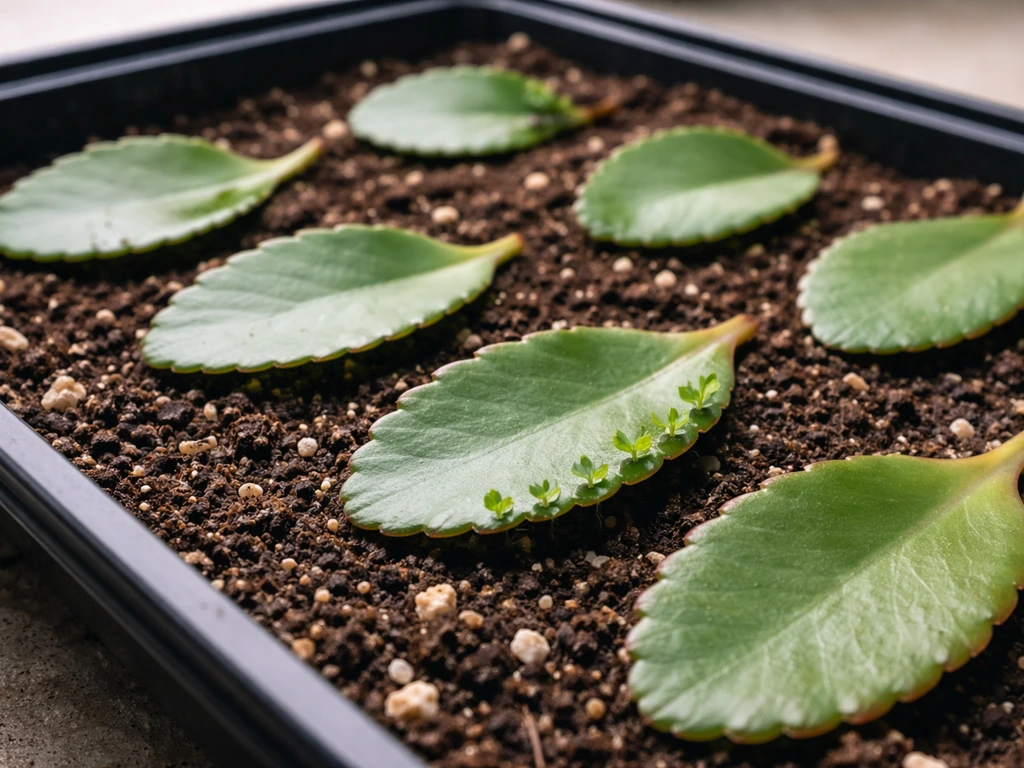
- Detach a healthy leaf from the plant. For K. daigremontiana, plantlets may already be visible along the margins.
- Lay the leaf on or barely press it into moist, well-draining medium. No need to bury deeply.
- Keep in warm (20 to 28°C), bright indirect light. Maintain moderate humidity but ensure good drainage.
- Plantlets will develop or continue developing along the leaf margins. Once they have small root systems, detach them and pot individually.
- The parent leaf will eventually wither. Remove it once the plantlets are established.
Climate, season, and soil: when and where leaf propagation works best
Leaf propagation is not equally reliable all year, and matching the environmental conditions to the plant's native habitat makes a measurable difference. The general principle is that leaf propagation works best when conditions mirror a warm, humid growing season, which is why spring and early summer are the most productive windows in temperate climates. This aligns with rising temperatures, longer days, and increasing ambient humidity, all of which accelerate adventitious bud formation and root development.
For tropical and subtropical species (African violets, begonias, Streptocarpus), the ideal propagation environment stays consistently warm (18 to 25°C), with high relative humidity (above 70%), and indirect or diffused light. These are essentially humid tropical understory conditions. In practice, a humidity dome or enclosed propagator replicates this well enough. High-humidity propagation, especially in summer, has been shown to speed rooting significantly for rapid-rooting tropical species because the water vapor-saturated atmosphere around the cutting reduces transpiration stress on the leaf.
For succulents and Kalanchoe species, the native climate is warm, seasonally dry, and sunny, which means propagation works best with warm temperatures, good airflow, and a dry-ish open-air setup rather than a sealed dome. The letting-the-leaf-callus step before contact with soil directly reflects the plant's adaptation to dry conditions where a fresh wound would rot quickly without drying first.
Regarding soil and medium: the rooting substrate should match the plant's habitat. For tropical species, a moisture-retentive but aerated mix works best, typically equal parts perlite and peat or coir. For succulents and Kalanchoe, use a gritty, fast-draining mix with at least 50% perlite or coarse sand. Avoid standard potting soil alone for propagation because it tends to compact and stay too wet, which promotes rot rather than rooting. Substrate temperature also matters: bottom heat from a heat mat set to around 21 to 24°C accelerates root formation in all species, especially in cooler months.
One environmental note specific to needle-leaved plants and conifers: these are a completely different story. Needle-like leaves are found in plants that grow on cold, high-altitude, or water-stressed environments, and those leaf structures are specialized for survival rather than vegetative reproduction. Conifers and similar needle-leaved species do not propagate from leaves the way the plants described above do.
In summary: if you are in the northern hemisphere right now in mid-April, you are entering one of the best windows of the year to start leaf cuttings. Temperatures are rising, light levels are increasing, and humidity tends to be more stable than in winter. Set up your propagation tray, select your healthiest leaves, and give the process 4 to 10 weeks depending on species. The plants that truly grow from leaves are genuinely good at it, and once you have matched the conditions to the plant's ecological background, success rates are high even for a first attempt.
FAQ
How can I tell if a leaf is going to form a whole plant, or just roots that never develop further?
Look for signs of adventitious growth at the leaf base, petiole end, or exposed vein cut surfaces (tiny green bumps or new tissue). If weeks pass with only root tips but no shoot or crown, that leaf is failing to switch from root-only regeneration to bud formation, which means you should remove it to prevent ongoing rot and fungus spread.
Do I need to keep the original leaf attached for it to work, or should I remove it?
It depends on the species. Kalanchoe plantlets often develop while the leaf remains attached, but for most indoor leaf-propagation methods you detach the leaf and then keep the petiole end intact and inserted or positioned correctly. Detaching early can be fine if the propagation method matches the plant, but tearing off the leaf base or petiole end usually drops success rates.
What humidity level is actually “too high” for leaf propagation?
High humidity helps tropical leaf propagators, but sealed, constantly saturated conditions can cause bacterial or fungal rot, especially for thin-leaved plants. If you use a dome or bag, vent briefly a few times per week and ensure airflow around the leaf surface, while still keeping the medium moist-not-wet where appropriate.
Should I water the leaf itself or only the rooting medium?
In most setups, water the medium, not the leaf blade. Wetting the blade repeatedly increases rot risk and can discourage adventitious bud formation by keeping tissues overly saturated. For succulent-type leaves, avoid misting the leaf surface, and keep the base in contact with a dry-ish, breathable mix so it can callus before rooting.
Why do some leaves turn mushy or black before they root?
Mushiness typically comes from a wet, compact medium, damaged leaf tissue, or a leaf section that did not callus (common with succulents) before contact with moisture. Use a gritty mix, keep cuts clean, allow appropriate drying time for callus where the plant’s native habitat is dry, and remove any contaminated pieces immediately.
Can I propagate from any leaf on a plant, including young or old leaves?
For many genera, mature, healthy leaves give better results than very young or senescing leaves. Young leaves may not contain enough viable meristematic potential, while older leaves can be too depleted and are more prone to collapse. If you are unsure, choose a firm, disease-free leaf with intact margins and no blemishes.
How long should I wait before I decide it’s not working?
Most successful attempts show visible change within about 4 to 8 weeks, but timing varies by species. If a plant is supposed to form buds and it has not produced any new tissue by the later end of the typical window (up to 10 weeks for many indoor cases), the leaf is likely failing and you should adjust conditions or switch to a fresh leaf from the same plant.
Does leaf propagation work the same in winter as in summer?
No. Success rates generally drop in colder, drier seasons because adventitious bud formation slows and mediums stay wet longer. If you must propagate off-season, use bottom heat around the recommended range and use humidity control for tropical types, but still avoid overly wet media that can counteract the temperature benefit.
What medium is safest if I do not know which family my plant belongs to?
If you are uncertain, start with a breathable, fast-draining mix rather than standard potting soil. A blend with high aeration (for example, a large fraction of perlite) reduces rot risk across many leaf-propagators, then you can fine-tune: increase moisture retention for tropical species and keep it drier for succulent or Kalanchoe-type methods.
How do I preserve variegation if I am propagating variegated Sansevieria by leaf pieces?
Leaf-piece propagation commonly reverts variegated forms because the pattern is controlled by a genetic mosaic. To keep the variegation, divide the rhizome instead of using leaf sections, so each resulting clump carries the correct mix of chimeric tissues.
Is it better to use rooting hormone for leaf propagation?
Often it is not necessary, and for some succulent-style leaves it can be counterproductive if it increases moisture retention at the cut surface. If you choose to experiment, apply sparingly to the cut end only, and prioritize the correct medium and humidity first, since those factors usually determine whether buds and shoots form.
Why do my roots form but the leaf never develops a shoot or crown?
Root-only outcomes usually mean bud formation conditions were not met. Common causes include leaf tissue being too damaged, the wrong humidity or temperature for that plant type, leaf base or petiole end not positioned correctly, or an overly wet medium that promotes rooting while suppressing adventitious bud development. Re-check the leaf placement and match the environment to the plant’s native pattern (humid understory versus dry, gritty conditions).