
Plants that grow from stems include some of the easiest and most rewarding propagation subjects you can work with: rosemary, pothos, willow, strawberry, mint, blackberry, and dozens more. These plants either root readily from a detached stem cutting, spread naturally by sending out horizontal stems that root at their nodes, or can be coaxed into rooting while still attached to the parent plant through a technique called layering. The mechanism behind all of it is adventitious root formation, where stem tissue that would not normally produce roots does exactly that under the right conditions.
Plants That Grow From Stems: Examples and Care Tips

Dr. Marcus Weatherby
23 Apr 2026
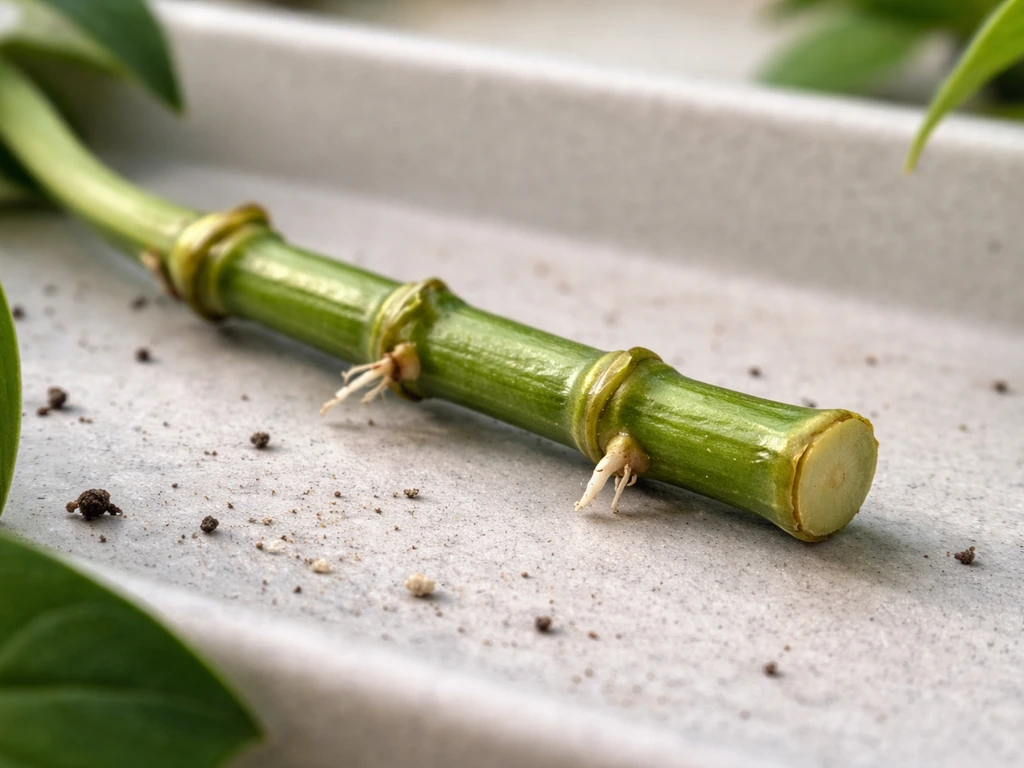
What 'growing from stems' actually means
The phrase covers two related but distinct things in real botany and gardening practice. The first is vegetative propagation from stem cuttings: you take a piece of stem, remove it from the parent plant, and give it conditions that encourage it to produce adventitious roots. Adventitious roots are roots that form from non-root tissue, in this case from stem cells that get triggered by wounding, darkness, moisture, and sometimes rooting hormone. Once a cutting forms roots, it becomes a fully independent plant that is genetically identical to the parent.
The second meaning is natural stem-based spread. Some plants produce stolons or runners, which are horizontal stems that creep along or just below the soil surface, touch down at nodes, and form roots and new shoots without any human intervention. Strawberries are the textbook example, but the list is much longer. Cane-forming plants like blackberries and raspberries can also arch their long canes down to the ground and root at the tip, a process called tip layering. These are all variations on the same fundamental biology: stem tissue forming roots when it contacts moist soil or humid air.
Quick examples you can try right now
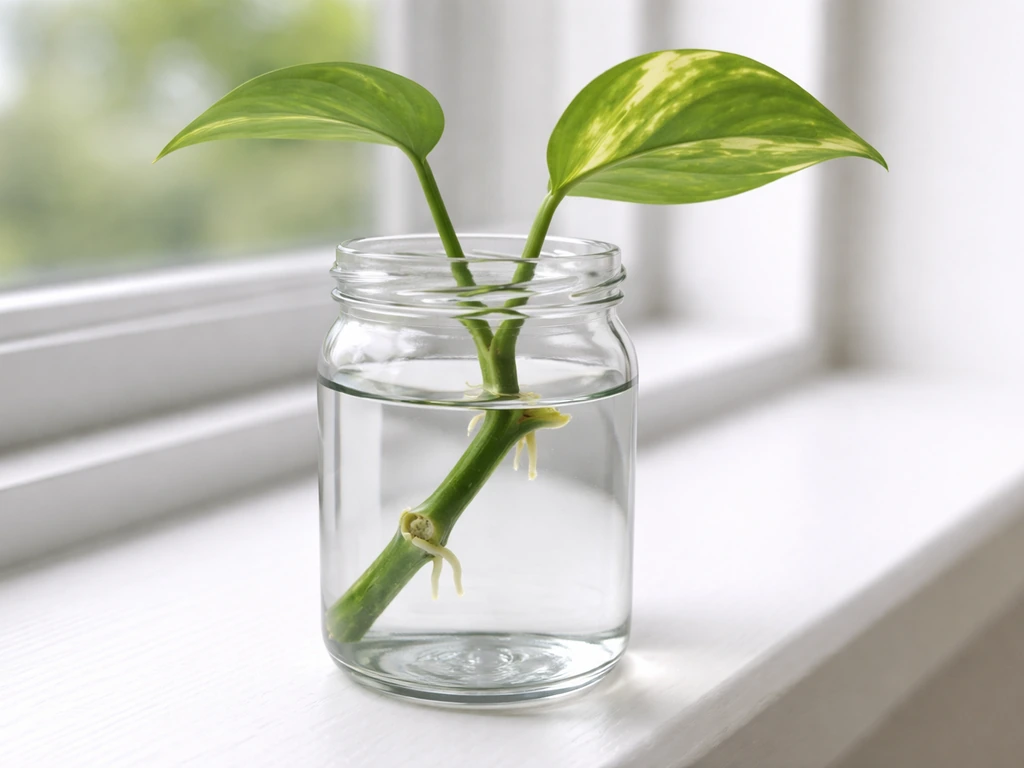
These are plants widely recognized as reliable stem-cutting propagators. If you have access to one of these plants, you can take a cutting today and have a rooted plant within a few weeks to a couple of months.
- Pothos (Epipremnum aureum): one of the easiest houseplant cuttings you can take. A single node submerged in water will root in one to two weeks.
- Rosemary (Salvia rosmarinus): softwood tip cuttings taken in late spring root reliably in a well-drained, gritty medium. Common in Mediterranean gardens and dry climates.
- Basil (Ocimum basilicum): stem cuttings root in water within a week in warm conditions. A warm-season annual herb grown globally in temperate to tropical zones.
- Coleus (Plectranthus scutellarioides): a fast-rooting tropical perennial grown as an annual in cooler climates. Cuttings root in water or moist soil in seven to fourteen days.
- Willow (Salix spp.): almost any piece of fresh willow stem will root if stuck in moist soil. Willows naturally colonize riverbanks and wetlands through broken stems deposited by floods.
- Lavender (Lavandula spp.): semi-hardwood cuttings taken in late summer root well in sandy, low-fertility soil. A Mediterranean and dry-summer climate specialist.
- Jade plant (Crassula ovata): succulent stem cuttings need to callous for a day or two before potting. Native to arid coastal scrub in South Africa.
- Geranium/Pelargonium (Pelargonium spp.): stem cuttings root quickly in summer, and letting the cut end dry briefly before planting reduces rot.
Plants that spread by stems on their own: runners, creepers, and canes
These plants do the work without any cutting required. Their stems root naturally as part of their growth strategy, which in the wild helps them colonize open ground, recover from disturbance, or compete aggressively for space.
- Strawberry (Fragaria x ananassa and wild species): produces above-ground stolons called runners that root at every other node. Wild strawberries colonize disturbed meadows and forest edges across temperate zones this way.
- Mint (Mentha spp.): spreads via both surface runners and shallow underground stems (rhizomes). Aggressive colonizer of moist, disturbed ground in temperate regions worldwide.
- Creeping Jenny (Lysimachia nummularia): low-growing perennial with stems that root at nearly every node they touch. Common in moist temperate European and North American habitats.
- Blackberry and Raspberry (Rubus spp.): long arching canes naturally root at the tip when they touch moist soil, a process called tip layering. Native to temperate woodland edges and disturbed roadsides.
- Spider plant (Chlorophytum comosum): produces hanging stolons tipped with plantlets that root easily when placed on moist soil. Native to tropical and southern African understory habitats.
- English ivy (Hedera helix): creeping stems root at nodes wherever they contact soil or a moist surface. Extremely adaptable, found from cool temperate forests to Mediterranean scrub.
- Bermuda grass (Cynodon dactylon): spreads by both above-ground stolons and below-ground rhizomes. A warm-season grass native to arid and semi-arid African and Asian grasslands, now cosmopolitan.
- Trumpet vine (Campsis radicans): stems root where they contact soil and can spread aggressively in warm temperate and subtropical climates in the eastern United States.
Where these plants grow: climate, season, and soil conditions
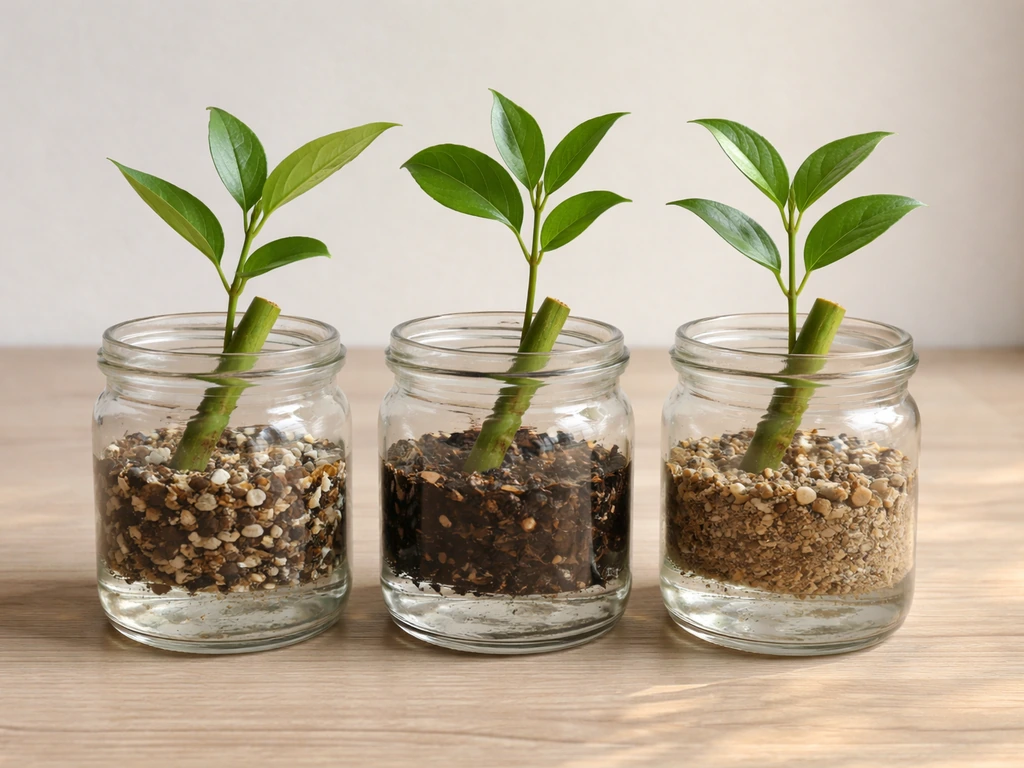
The conditions that make stems root successfully in the wild are also the ones you want to replicate when propagating. Here is a working comparison of the major examples by climate zone, best season for stem propagation, and the soil or substrate conditions that support rooting.
| Plant | Climate Zone | Best Season for Stem Propagation | Soil/Substrate Conditions |
|---|---|---|---|
| Pothos | Tropical/subtropical; grown as indoor houseplant globally | Any time of year indoors; spring to summer outdoors | Water or moist, well-drained potting mix; indirect light |
| Rosemary | Mediterranean, dry-summer temperate (USDA zones 7-11) | Late spring to early summer (softwood); late summer (semi-hardwood) | Gritty, low-fertility, fast-draining soil; full sun; low moisture |
| Mint | Cool to warm temperate; moist riparian and disturbed areas | Spring through early fall | Consistently moist, moderately fertile soil; partial to full sun |
| Strawberry | Cool to warm temperate (zones 3-10 depending on species) | Late summer runners root naturally; division in early spring | Loamy, well-drained, slightly acidic soil; full sun |
| Willow | Temperate riparian zones, wetlands, and streambanks | Early spring (dormant hardwood) or growing season | Moist to wet soil; tolerates waterlogging; full sun |
| Lavender | Mediterranean, dry temperate, well-drained uplands (zones 5-9) | Late summer semi-hardwood cuttings | Sandy or gravelly, alkaline to neutral, very well-drained; full sun |
| Blackberry/Raspberry | Temperate woodland edges, disturbed land (zones 4-9) | Tip layering in late summer; hardwood cuttings in winter | Moist, loamy, slightly acidic; full sun to partial shade |
| Jade plant | Arid coastal scrub, semi-arid (zones 10-12 outdoors; houseplant elsewhere) | Spring to summer | Very well-drained, low-moisture substrate; bright light; let cutting callous first |
| English ivy | Cool to warm temperate, shaded woodland (zones 4-9) | Spring through summer | Moist, humus-rich soil; tolerates shade; consistent moisture helps rooting |
| Spider plant | Tropical/subtropical understorey (zones 9-11 outdoors; houseplant globally) | Spring to summer | Moist, well-drained potting mix; indirect light; high ambient humidity |
How to propagate from stems: a practical step-by-step method
The method below covers the two most practical techniques: standard stem cuttings and simple layering. UGA Cooperative Extension for home gardeners also advises that stem cuttings should include at least two nodes, with the lower node beneath the soil surface where roots form, and it recommends maintaining high humidity during rooting blank" rel="noopener noreferrer">include at least two nodes, with the lower node under the soil surface for rooting. For stem cuttings, UNH Extension advises dipping the cut end in rooting hormone (optional) and ensuring at least one node is beneath the soil surface to help roots form at the node, and notes that most cuttings (except succulents) need high humidity blank" rel="noopener noreferrer">for stem cuttings, rooting hormone and having a node under the soil. Air layering is a useful variant for woody plants that are hard to root from detached cuttings, like some figs and magnolias, and works on the same principle but is done while the stem is still attached to the parent.
Stem cuttings
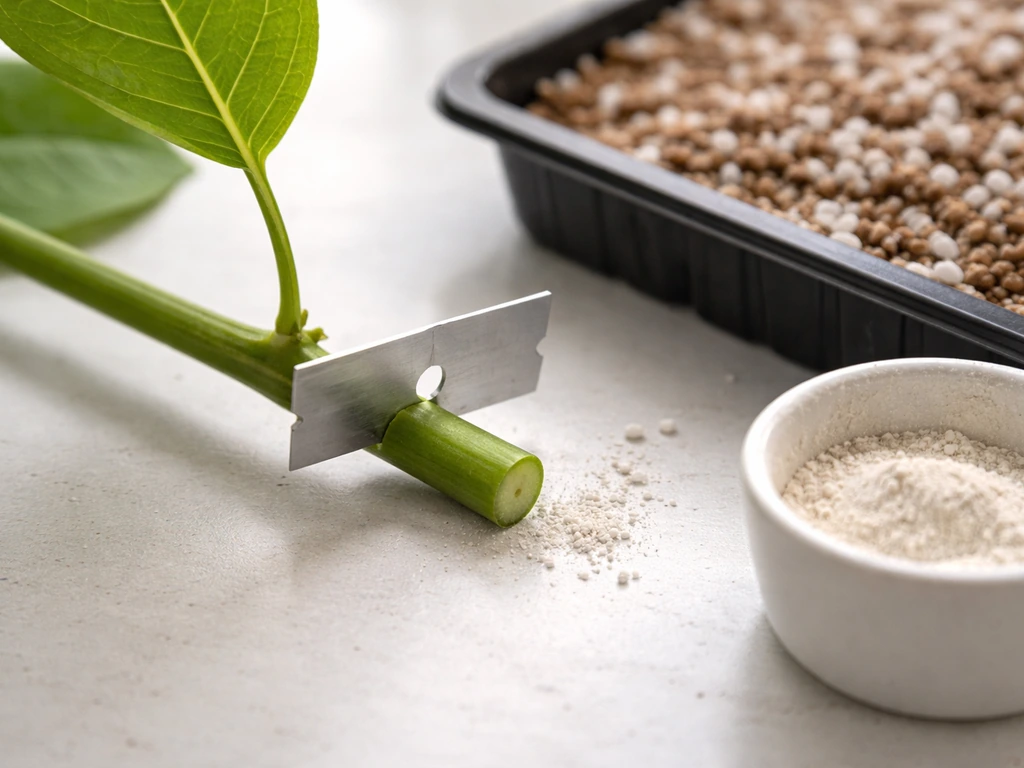
- Take a cutting 10 to 15 cm (4 to 6 inches) long from a healthy, non-flowering stem. Make the cut just below a node (the point where a leaf attaches) using a clean, sharp blade.
- Remove all leaves from the bottom half of the cutting, leaving two to four leaves at the top. Too many leaves increases moisture loss before roots form.
- For woody or slow-rooting species, dip the cut end in powdered or gel rooting hormone (indole-3-butyric acid is the active ingredient in most commercial products). For fast-rooting plants like pothos or basil, this step is optional.
- Insert the cutting into a moist rooting medium. A 50/50 mix of perlite and peat or coco coir works well for most species. Succulents need a much drier, grittier mix and a day or two of drying (callousing) the cut end first.
- Maintain high humidity around the cutting by covering it loosely with a clear plastic bag or placing it in a propagation tray with a humidity dome. Roots form fastest when humidity stays above 70 percent.
- Place the cutting in bright indirect light. Direct sun will desiccate cuttings before they root. Temperature should stay between 18 and 24 degrees Celsius (65 to 75 degrees Fahrenheit) for most species.
- Check for rooting after two to four weeks by gently tugging the cutting. Resistance means roots are forming. For most soft-stemmed plants, full rooting takes two to six weeks. Woody plants can take eight to twelve weeks or longer.
- Once rooted, gradually acclimate the new plant to lower humidity over five to seven days before moving it to its final growing conditions.
Simple layering and tip layering
- For simple layering (good for climbing or trailing shrubs like forsythia, rhododendron, and climbing roses): select a long, flexible stem and bend it down to the soil without detaching it from the parent plant.
- About 30 cm (12 inches) from the stem tip, wound the underside of the stem lightly by scraping away a small section of bark or making a shallow angled cut. This wound site is where roots will form.
- Dust the wound with rooting hormone, then pin the wounded section down into a shallow depression in the soil using a bent wire or stake. Cover with 5 to 10 cm (2 to 4 inches) of moist, fertile soil and weigh it down with a stone if needed.
- Keep the soil moist. Roots typically develop within four to eight weeks for most shrubs, but some species take a full growing season.
- Once rooted, sever the stem close to the parent plant and allow the new plant to establish for two to four weeks before transplanting.
- For tip layering (blackberries and raspberries): in late summer, simply push the tip of an arching cane several centimetres into moist soil and leave it. It will root on its own over autumn. Sever from the parent in early spring.
Why your cuttings might not be rooting, and how to fix it
Rooting failures almost always come down to one of a handful of issues. Understanding which one is affecting your cutting makes it easy to correct.
| Problem | Likely Cause | Fix |
|---|---|---|
| Cutting wilts and collapses quickly | Too many leaves losing moisture faster than the stem can compensate | Remove more leaves; increase humidity; take cutting in the morning when the plant is most turgid |
| Stem rots at the base | Overwatering or poor drainage in the rooting medium; fungal infection | Use a well-drained medium; reduce watering frequency; ensure the rooting container has drainage holes; use clean tools |
| No roots after 6+ weeks | Wrong cutting type for the season (e.g., hardwood when softwood is needed), or cutting taken from a flowering stem | Take cuttings from actively growing, non-flowering vegetative shoots; match cutting type to season |
| Roots form but plant dies after potting up | Transplant shock from too-rapid humidity reduction | Harden off the new plant gradually over 7 to 10 days before moving to final conditions |
| Succulent cutting rots immediately | Cut end was not calloused before inserting into medium, or medium is too wet | Let the cut end dry and form a callous for 24 to 48 hours before planting; use very dry, gritty substrate |
| Runner or stolon fails to root naturally | Soil too dry, no contact with moist soil, or stolon lifted off ground | Pin stolon node firmly to moist soil; water the contact area consistently until roots form |
Choosing the right plant and method for your location
The most important variables are your climate zone, the season you are working in right now, and whether you want a plant that spreads on its own or one you propagate intentionally. Use this checklist to narrow down your next step.
- Identify your climate zone first. Are you in a cool temperate, warm temperate, Mediterranean, tropical, or arid environment? This immediately rules out some plants and opens up others. Lavender wants dry heat and alkaline soil; mint wants cool moisture; pothos wants tropical warmth indoors or out.
- Match your timing to the cutting type. Right now in late April (spring in the Northern Hemisphere), softwood cuttings of herbs like rosemary, basil, and lavender are ideal. In the Southern Hemisphere, late April is autumn, making semi-hardwood and hardwood cuttings of woody species like lavender and rosemary the better choice.
- Decide whether you want a spreading groundcover or a contained specimen. If you want natural spread, choose stoloniferous plants like mint, creeping Jenny, or strawberry. If you want controlled propagation, stem cuttings from pothos, geranium, or jade plant give you more predictable results.
- Check your soil drainage before planting any rooted cutting. Fast-draining sandy or gritty soil suits rosemary, lavender, and jade plant. Moisture-retentive loam suits mint, strawberry, and willow. Matching the plant to your native soil type dramatically improves survival.
- If you are working indoors or in a controlled greenhouse, season matters less. Pothos, coleus, spider plant, and most tropical houseplant cuttings can be taken year-round as long as temperatures stay above 18 degrees Celsius.
- For larger woody plants that resist detached cuttings, try simple layering or air layering rather than cutting. These techniques are especially useful for established shrubs like climbing roses, forsythia, and magnolias, where you want to reproduce a specific specimen without risking a cutting failure.
If you want to go deeper on specific quantities and species combinations, there are practical focused lists covering 5 examples, 10 examples, and 20 examples of plants that grow from stems, which can help you build a shortlist matched to a specific garden size or habitat project. If you want more options, see these 10 examples of plants that grow from stems to find picks suited to your space. There is also a useful parallel topic on plants that grow from shoots, which overlaps with stem propagation in some species but covers a distinct set of mechanisms worth understanding separately. For a quick shortlist before you pick a technique, check 5 examples of plants that grow from stems that match common garden conditions. Examples of plants that grow from shoots can help you compare sprouting patterns with stem-based propagation.
FAQ
Do plants that grow from stems always root easily from a cutting, or are some tougher?
Not all of them root readily from detached cuttings. Some plants root better when the stem is semi-ripe or when you take the cutting earlier in the growing season. For tougher species, layering (including tip layering) often succeeds where standard cuttings fail because the stem stays attached and keeps receiving water and sugars.
How do I tell whether my plant will spread by natural rooting runners, stolons, or cane tips?
Watch where new growth appears. Stolons form along or just under the soil surface, nodes take root where they touch, and new shoots pop up along the line. Cane-formers like blackberry and raspberry root at the tip when the cane arches down, so you will see new plants begin at the lowest contact points rather than along the middle of the stem.
What’s the best time to propagate from stems if I live in a place with mild winters?
In mild-winter areas, propagation windows can shift earlier because stems are active for longer. A practical rule is to propagate when new growth is present but not overly soft, and to avoid periods with cold snaps or heavy rain that keep the substrate waterlogged and promote rot.
Should I use rooting hormone for stem cuttings, and does it change the success rate?
Rooting hormone can improve results, especially for plants that are slower or less reliable. It is most useful for woody or semi-hardwood cuttings, where wounding alone may not trigger roots fast enough. Follow label directions for concentration and keep the cut surface clean so the hormone contacts the right tissue.
What’s a common mistake that causes stem cuttings to fail even when the plant is a “good example”?
Overwatering and poor aeration. If the medium stays saturated, cuttings can rot before adventitious roots form. Use a well-draining mix, keep moisture consistent but not muddy, and ensure the cutting is not sitting in standing water.
How long should I wait before I conclude a stem cutting has failed?
Timing varies by species and season. Many easy stem propagators root within a few weeks, but slower woody plants can take close to a couple of months. Check gently for resistance or small root growth, and avoid repeated pulling that can damage new root tips.
Can I propagate the same stem from multiple cuttings without harming the parent plant too much?
Yes, but do it conservatively. Remove only a portion of healthy stems, avoid stripping too much from one section, and keep plenty of foliage on remaining growth. If you take many cuttings from a single plant, expect slower recovery and reduced vigor.
What’s the difference between layering and air layering when I don’t want to detach cuttings yet?
Layering usually involves bending or mounding soil so part of the stem contacts moist substrate while still attached, then cutting it off after rooting. Air layering is used when you cannot bring the stem to the soil, you instead wrap a section to keep it moist and dark, roots form within the wrap, and you remove the rooted segment later.
Can I propagate stem-spreading plants in pots, not just in the ground?
Often yes. For stolon or runner types, you can guide the horizontal stems to touch the rim or surface of a separate pot filled with the rooting medium. For tip-rooting types, you can mound or anchor the tip so it contacts moist substrate, then separate once roots develop.
Will stem propagation create plants that are identical to the parent, and will they keep the same traits?
For vegetative stem propagation, the new plant is genetically the same as the parent, so traits like leaf shape, growth habit, and flowering timing usually match. The main difference you may notice is not genetics, but environment, since light level and pot size can change how vigorously it grows after rooting.
How do I choose between standard cuttings and layering for a specific plant?
Choose standard cuttings for easy, fast-rooting stem types when you want multiple new plants quickly. Choose layering when the plant roots slowly from detached cuttings, when you want a higher success rate, or when you are working with woody or awkwardly shaped stems that are hard to keep consistently moist in a container.