
Plants that grow from stems include some of the most widely distributed species on the planet, from tropical pothos vines to temperate blackberry canes spreading across hedgerows. There are exactly 10 solid examples worth knowing here, each with a distinct stem trait you can spot and act on right now: coleus, willow, blackberry, strawberry, mint, spider plant, pothos, rosemary, forsythia, and African violet. Some of these root from detached stem cuttings you stick in soil or water.
10 Examples of Plants That Grow From Stems

Dr. Marcus Weatherby
19 Apr 2026
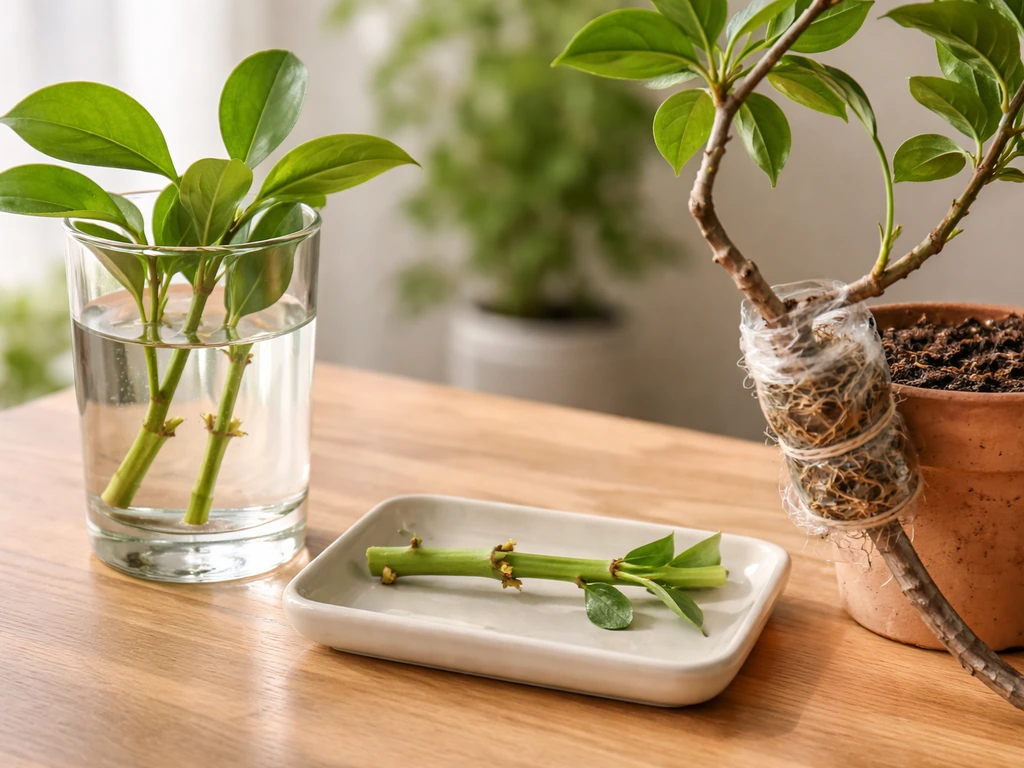
Others spread by runners that creep along the ground and root at the tip without you doing anything. A few can be layered, meaning you root a stem while it's still attached to the parent plant. The method matters, but so does knowing which plant does what and where it actually grows in the wild.
What 'grow from stems' actually means
The phrase covers three distinct things that gardeners sometimes blur together. The first is stem cutting propagation: you detach a segment of stem, usually with at least one node and a few leaves, and encourage it to grow roots on its own. The second is layering: you root a stem while it's still attached to the parent plant, then sever it once roots form. The third is natural stem spreading, where plants produce specialized stems like runners or stolons that travel horizontally and root at the tip to form a new plant without any human intervention.
The key biological difference is attachment. With a cutting, the severed stem has to generate entirely new roots from scratch using its stored energy and whatever moisture the propagation medium provides. With layering, the stem stays connected to the parent's water and nutrient supply while it roots, which is why layering tends to have a higher success rate for woody plants. Runners are a natural version of layering but with purpose-built stems designed for the job.
Strawberry runners are a textbook example: a slender stem originates in a leaf axil, grows horizontally along the ground, and produces a new plantlet at the tip. That tip roots where it touches soil, and the runner eventually withers, leaving behind a fully independent plant.
Wood maturity also shapes what kind of cutting works. blank" rel="noopener noreferrer">Softwood cuttings come from the current season's new, flexible growth and root fast but wilt quickly. Semi-hardwood cuttings are taken from partially matured stems later in the growing season. Hardwood cuttings from fully dormant, mature wood are slower to root but more tolerant of drying out. Knowing which type your target plant produces tells you when to take the cutting and how to handle it.
10 plants that grow from stems, and what stem trait does the work
1. Coleus (Plectranthus scutellarioides)
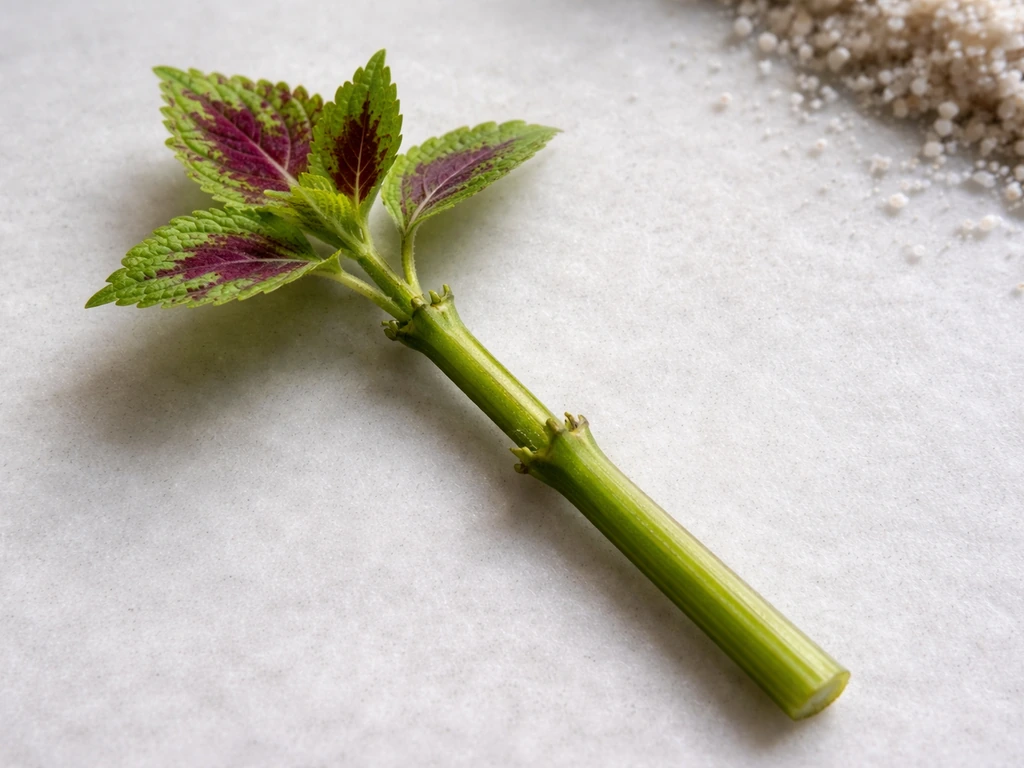
Coleus roots from softwood stem tip cuttings faster than almost any other plant you'll try. The stem tip, meaning the top 3 to 4 inches including at least two nodes, is the unit that does the work. Cut just below a node, strip the lower leaves, and the exposed node surface is where roots emerge. Coleus is native to tropical Southeast Asia and thrives in warm, humid conditions with indirect light and moist, well-draining soil.
In the wild it grows in forest understories and disturbed forest edges where temperatures stay above 50°F year-round. In temperate climates it's grown as an annual or brought indoors over winter. Take cuttings in late spring through summer when stems are actively growing. Root them in water or a perlite-heavy mix and keep humidity high.
Roots appear in 7 to 14 days.
2. Willow (Salix spp.)
Willows are arguably the easiest woody plant to propagate from hardwood stem cuttings. The entire stem is loaded with rooting hormones naturally, so a dormant cutting pushed into moist soil in early spring will often root with no treatment at all. Willows are native to temperate and boreal zones across the Northern Hemisphere, typically colonizing riverbanks, floodplains, and wetland margins where soils are consistently moist to wet. They handle heavy clay and tolerate seasonal flooding that would kill most trees.
In the wild, broken branches that fall into streambanks root spontaneously, which tells you exactly what the plant is designed to do. Take pencil-thick hardwood cuttings 8 to 12 inches long during winter dormancy. Plant them upright with two-thirds of the cutting below soil in moist ground. USDA FEIS also notes that willow cuttings can be planted very deep to increase rooting surface and moisture access [Plant them upright with two-thirds of the cutting below soil in moist ground.
](https://www. fs. usda. gov/database/feis/plants/tree/sallut/all.
html). No rooting hormone needed.
3. Blackberry (Rubus spp.)
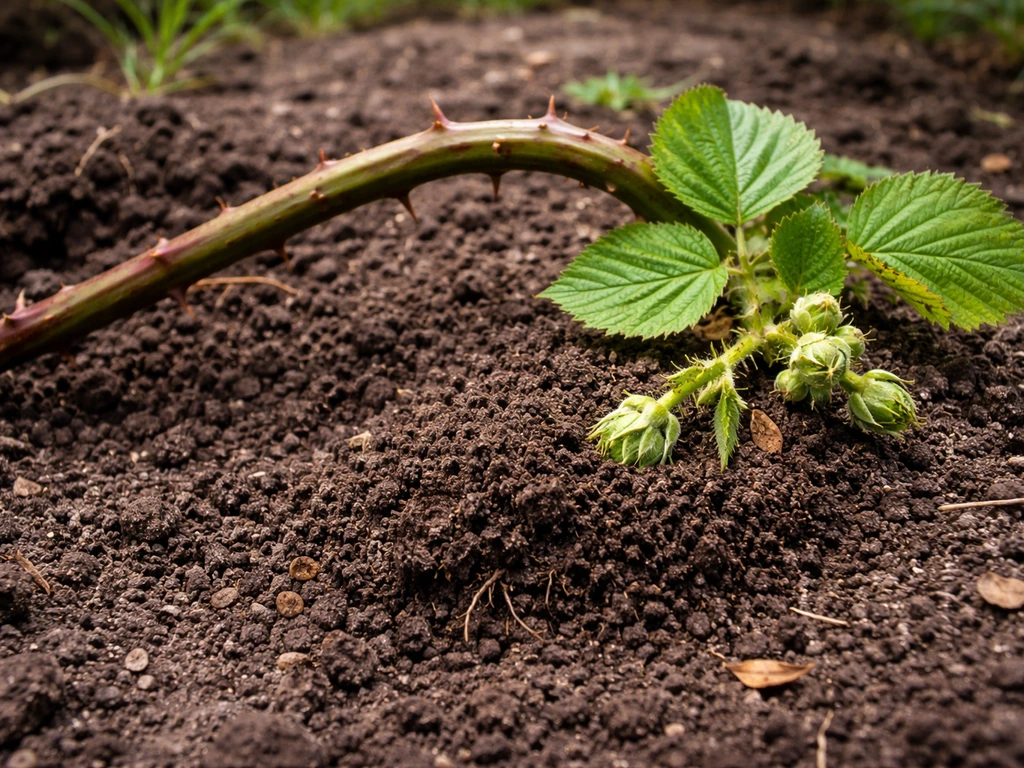
Blackberries spread naturally through blank" rel="noopener noreferrer">tip layering, one of the clearest examples of natural stem-based growth in temperate landscapes. These plants that grow from shoots are also a great category to explore because the results are often easy to visualize and propagate. In mid-summer, blackberry canes may arch and touch the ground, where the tip can root and form a new plant mid-summer canes arch and touch the ground.
When a cane arches over and the tip touches the ground, it roots on its own and forms a new plant. This is how blackberry thickets colonize field edges, forest clearings, and disturbed roadsides across temperate North America, Europe, and Asia. They prefer full sun to partial shade, tolerate a wide pH range (5. 5 to 7.
0), and establish readily in loamy to clay soils with decent drainage. To propagate intentionally, bury the tip of a long, flexible cane 3 to 4 inches deep in late summer while it's still attached to the parent. By the following spring, it will have rooted and can be cut free. Stem tip cuttings also work if taken in early summer from new green growth.
4. Strawberry (Fragaria × ananassa and wild species)
Strawberries are the classic runner plant. The runner is a slender, specialized stem that originates in a leaf axil and grows horizontally along the ground. At intervals along the runner, and especially at the tip, daughter plantlets form and root where they contact moist soil. Wild strawberries (Fragaria virginiana, F.
vesca) use this same mechanism to colonize open meadows, forest edges, and disturbed ground across temperate and subarctic zones. They tolerate a wide range of soils but prefer slightly acidic, well-drained loam in full to partial sun. Cultivated strawberries produce runners most actively in late spring through early summer. Let runners contact soil, pin them lightly if needed, and they'll root within two to three weeks.
Sever the runner once the plantlet has at least three leaves and a visible root cluster.
5. Mint (Mentha spp.)
Mint spreads aggressively via both underground rhizomes and above-ground stolons, and it roots from stem cuttings so readily that a sprig dropped in a glass of water will have visible roots within a week. The nodes along the stem are densely pre-programmed for root production. Mint is native to moist, temperate habitats across Europe, Asia, and North America, typically found along streambanks, wet meadows, and moist woodland edges.
It prefers full sun to partial shade and consistently moist soil, tolerating periodic waterlogging. In temperate climates it's active from early spring through late autumn. Take stem cuttings 4 to 6 inches long at any point during the growing season, root in water or moist potting mix, and transplant once roots reach half an inch. In the right moist habitat it spreads faster than most gardeners want.
6. Spider Plant (Chlorophytum comosum)
Spider plants produce long, arching stolons (effectively runners) that terminate in small plantlets, each a miniature version of the parent complete with a proto-root structure. This is the stem trait to look for: the stolon hangs from the parent, and the plantlet at the tip has small white root nubs visible even before it contacts soil.
In the wild, spider plants are native to tropical and southern Africa, growing in open woodland understories and rocky slopes in subtropical to tropical climates with distinct wet and dry seasons. They handle a wide range of soils as long as drainage is adequate and tolerate low light better than most.
To propagate, either pin the plantlet tip to moist soil while still attached and sever after rooting (layering), or snip the plantlet off and root it in water or damp potting mix. Either works within two to four weeks.
7. Pothos (Epipremnum aureum)
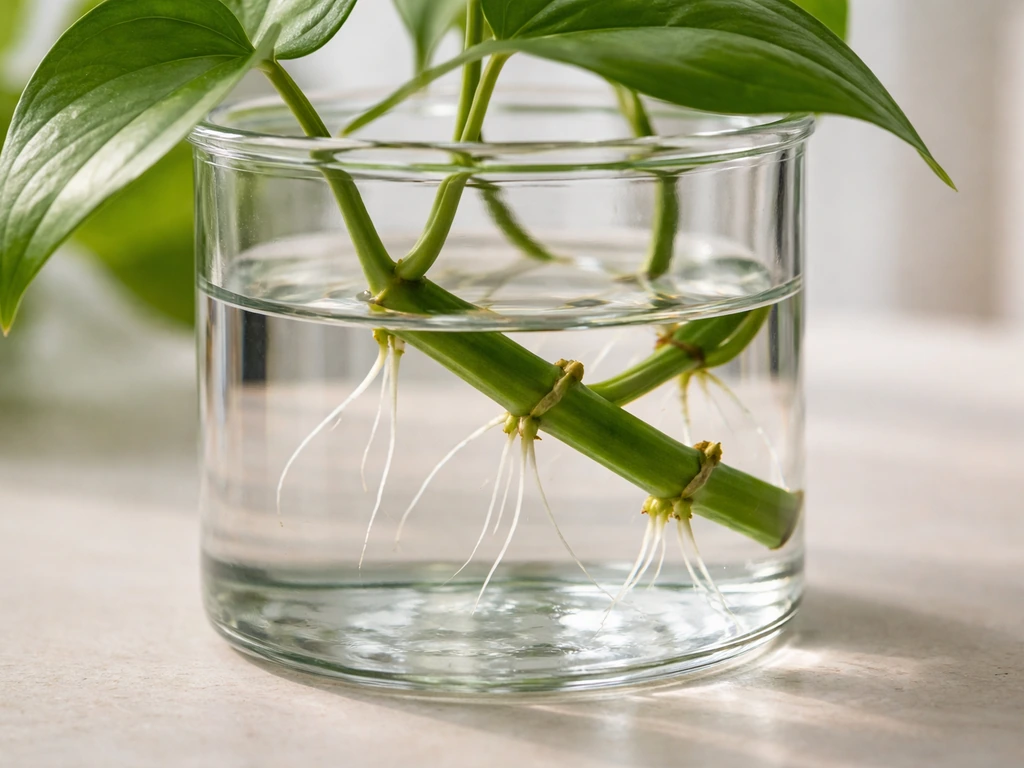
Pothos is one of the most forgiving stem-cutting plants available. Every node on the vine has the capacity to generate roots, and the aerial roots already visible at nodes in mature vines tell you the stem is ready.
Cut a 4 to 6 inch section with at least one node and one leaf, remove any leaves that would sit below the waterline or soil surface, and roots appear in one to two weeks in water or two to three weeks in moist potting mix. Pothos is native to the Solomon Islands but has naturalized across tropical and subtropical regions worldwide, growing as a ground cover and climber in humid forest environments.
It thrives in indirect light and tolerates poor, rocky, or degraded soils as long as moisture is available. In temperate zones it grows as a houseplant year-round; outdoors it's viable only in USDA zones 10 to 12.
8. Rosemary (Salvia rosmarinus)
Rosemary roots from semi-hardwood stem cuttings, and the specific stem trait to target is the current season's growth that has just started to firm up, typically in mid to late summer. Softwood tips from spring are too soft and prone to rot. Fully hardened older wood from the base of the plant roots poorly. That transitional semi-hardwood zone, roughly 4 to 6 inches of stem that bends without snapping, is the sweet spot.
Rosemary is native to the Mediterranean basin, where it grows on dry, rocky hillsides and coastal scrublands in well-drained alkaline to neutral soils under intense sun. It's highly drought-tolerant once established and strongly dislikes waterlogged roots. Take semi-hardwood cuttings in late summer, strip the lower inch of leaves, dip in rooting hormone, and place in a free-draining mix of perlite and coarse sand. Rooting takes three to six weeks.
9. Forsythia (Forsythia spp.)
Forsythia is a reliable hardwood cutting candidate and also layers naturally when long, flexible canes bend to the ground. The stem trait here is the dense node spacing along canes, each node being a potential rooting point. Forsythia is native to eastern Asia, particularly China and Korea, growing on rocky slopes, stream margins, and open woodland edges in temperate climates with cold winters and warm summers.
It tolerates a wide range of soils, including clay, but prefers full sun for maximum flowering and growth vigor. For hardwood cuttings, take 6 to 8 inch sections of pencil-thick dormant wood in late autumn or winter and store them upright in slightly moist sand or sawdust until spring, then plant outdoors.
Alternatively, in late summer, bend a flexible cane to the ground, wound the underside lightly, bury that section a few inches deep while the cane stays attached, and it will root within six to eight weeks.
10. African Violet (Saintpaulia ionantha)
African violets root from leaf-petiole cuttings, which is a slight variation on standard stem cutting propagation: the petiole (leaf stalk) is the stem segment doing the work, and roots form from the cut end of the petiole, with new plantlets emerging from the base of that rooted petiole. The petiole is a short, fleshy stem, and the mechanism is the same as nodal rooting in other plants.
African violets are native to humid, shaded cliff faces and moist rock outcrops in the Eastern Arc Mountains of Tanzania and Kenya, growing in well-draining but consistently moist conditions with no direct sun. They are strictly tropical in origin, thriving in temperatures of 65 to 80°F with high ambient humidity. To propagate, cut a healthy leaf with about 1.
5 inches of petiole, insert it at a 45-degree angle into moist, well-draining potting mix, maintain high humidity with a loose plastic cover, and tiny plantlets emerge at the petiole base in three to five weeks.
Where each plant thrives: a quick environmental reference
| Plant | Climate Zone | Preferred Habitat / Soil | Light | Key Moisture Need |
|---|---|---|---|---|
| Coleus | Tropical / subtropical | Forest understory, moist well-drained loam | Indirect / partial shade | Consistently moist |
| Willow | Temperate / boreal | Riverbanks, floodplains, wet clay | Full sun | Wet to waterlogged |
| Blackberry | Temperate | Forest edges, disturbed ground, loam to clay | Full sun to partial shade | Moderate |
| Strawberry | Temperate / subarctic | Meadows, forest edges, well-drained loam | Full sun to partial shade | Moderate, well-drained |
| Mint | Temperate | Streambanks, wet meadows, moist loam | Full sun to partial shade | Consistently moist |
| Spider Plant | Subtropical / tropical | Open woodland, rocky slopes, well-drained | Low to indirect light | Moderate, good drainage |
| Pothos | Tropical / subtropical | Humid forests, poor or rocky soil | Indirect / low light | Moderate to humid |
| Rosemary | Mediterranean / semi-arid | Dry rocky hillsides, alkaline sandy soil | Full sun | Low (drought-tolerant) |
| Forsythia | Temperate | Rocky slopes, stream margins, clay to loam | Full sun | Moderate |
| African Violet | Tropical montane | Moist cliff faces, rocky outcrops, humus-rich | Bright indirect | Consistently moist, no waterlogging |
How to propagate each one: step-by-step
The propagation method you use should match the plant's natural stem behavior. Here's what to actually do for each of the 10 examples.
- Coleus: Take a 3 to 4 inch softwood tip cutting just below a node. Strip lower leaves. Root in water or moist perlite at 65 to 75°F with indirect light. Roots in 7 to 14 days.
- Willow: Cut pencil-thick dormant stems 8 to 12 inches long in late winter. Push two-thirds into moist, heavy soil near a water source. No rooting hormone needed. Roots in 2 to 4 weeks.
- Blackberry: Bend a long, flexible cane tip to the ground in late summer. Bury the tip 3 to 4 inches deep. Leave attached until spring. Sever and transplant once new growth confirms rooting.
- Strawberry: Identify runners extending from the base. Pin the tip plantlet to moist soil with a wire pin or small stone. Sever after 2 to 3 weeks once 3 or more true leaves develop.
- Mint: Cut a 4 to 6 inch stem section with several nodes. Root in a glass of water in a bright window. Transplant to moist soil once roots reach half an inch, around 1 to 2 weeks.
- Spider Plant: Either pin the stolon tip to a separate pot of moist soil while still attached and sever after roots form (2 to 4 weeks), or cut the plantlet and root it directly in moist potting mix.
- Pothos: Cut a 4 to 6 inch stem section with at least one node. Remove leaves below the waterline. Root in water or moist potting mix in indirect light at 65 to 85°F. Roots in 1 to 3 weeks.
- Rosemary: Take 4 to 6 inch semi-hardwood cuttings in late summer. Strip lower leaves, dip cut end in rooting hormone, insert into a 50/50 perlite and coarse sand mix. Keep barely moist in a warm location. Roots in 3 to 6 weeks.
- Forsythia: Take 6 to 8 inch hardwood cuttings in late autumn. Store in moist sand over winter. Plant outdoors in early spring. Alternatively, use simple layering in late summer on flexible canes.
- African Violet: Cut a healthy leaf with 1.5 inches of petiole. Insert at 45 degrees into moist, well-draining mix. Cover loosely with clear plastic to hold humidity. Plantlets emerge at the petiole base in 3 to 5 weeks.
Best time of year to try each method
Timing your propagation attempt to match the plant's natural growth rhythm makes a measurable difference. The wood maturity categories from stem-cutting guides map directly onto seasonal windows: softwood in spring, semi-hardwood in mid to late summer, hardwood in late autumn through winter. Here's how that breaks down across the 10 examples.
| Plant | Best Season to Propagate | Method | Notes |
|---|---|---|---|
| Coleus | Late spring to summer | Softwood cutting | Avoid cold months; needs warm temps above 60°F |
| Willow | Late winter to early spring | Hardwood cutting | Plant immediately as ground thaws |
| Blackberry | Late summer (tip layer) or early summer (cutting) | Tip layering or softwood cutting | Tip layer success highest in August |
| Strawberry | Late spring to early summer | Runner (natural) | Runners most active post-flowering |
| Mint | Spring through early autumn | Softwood cutting or stolon | Avoid mid-winter unless growing indoors |
| Spider Plant | Spring to summer | Stolon / plantlet | Plantlets form after plant matures |
| Pothos | Any season (indoors) | Softwood cutting | Year-round viable as houseplant |
| Rosemary | Mid to late summer | Semi-hardwood cutting | Wait until new spring growth firms up |
| Forsythia | Late autumn to winter (hardwood) or late summer (layering) | Hardwood cutting or simple layering | Spring planting of stored cuttings most reliable |
| African Violet | Any season (indoors) | Leaf-petiole cutting | Avoid temperature extremes below 60°F |
When stem cuttings won't root: what's actually going wrong
Stem propagation failures usually come down to a handful of repeating causes. Identifying the right one quickly saves you from repeating the same failed attempt. Here are the most common problems and what to check first.
- Wrong wood maturity: Softwood cuttings taken too late in the season are partially hardened and root slowly or not at all. Semi-hardwood cuttings taken too early are still soft and collapse from moisture loss. Match the cutting type to the season.
- No node on the cutting: Roots emerge from nodes, not from random stem tissue. If your cutting has no visible node or leaf bud, it won't root regardless of how long you wait. Always cut just below a node.
- Too wet or too dry: Cuttings sitting in waterlogged soil rot at the base before roots form. Cuttings in overly dry medium desiccate before roots develop. The medium should feel like a wrung-out sponge: moist but not dripping.
- Temperature too low: Most stem cuttings need soil temperatures of at least 65°F to initiate root development. Cold soil (below 55°F) stalls the process even if the cutting looks healthy. Bottom heat from a heat mat helps in cool conditions.
- Too much or too little light: High light on a leafy softwood cutting accelerates wilting before roots can support water uptake. Direct sun on cuttings is almost always fatal. Bright indirect light is the right default.
- Cutting taken from stressed or diseased plant: Stems from a parent plant under drought stress, pest pressure, or disease carry those problems into the cutting. Always take cuttings from actively growing, healthy stems.
- Runners not rooting at the tip: If a runner tip is sitting on dry or compacted soil, it won't establish. The tip needs consistent moisture contact. Lightly scratch the soil surface, pin the tip firmly, and water it in.
- Layered stem drying out mid-process: If you layer a stem but don't maintain consistent moisture in the buried section, rooting stalls. Check buried layers weekly and water the area if the soil dries more than an inch down.
Choosing the right stem-rooting plant for your climate, soil, and season
The fastest way to pick from this list is to match the plant's native habitat to your conditions rather than fight your environment. If you're in a temperate zone with cold winters and reliable moisture, willow, blackberry, strawberry, mint, and forsythia are all naturally suited to your conditions and will root readily outdoors during the appropriate seasonal windows. These five examples show how different plants use stem cutting, layering, or runner-like growth to take root successfully 5 examples of plants that grow from stems. If your climate is dry and Mediterranean, rosemary is the natural choice and will struggle far less than moisture-loving mint or willow ever would in your soil.
For indoor propagation in any climate, coleus, pothos, and African violet are your year-round options. All three tolerate the lower light and controlled temperatures of indoor environments, and none require a dormant period to trigger rooting. Spider plant sits in the middle: it's a tropical plant that works indoors year-round but can also be used outdoors in subtropical and tropical climates.
Soil drainage is the other major filter. Rosemary and pothos both root from stems, but rosemary dies in waterlogged soil while pothos tolerates moisture-retentive mixes. If your ground stays wet, willow, mint, and spider plant handle that better. If your soil is dry and rocky, rosemary and forsythia are your best bets among this group.
For anyone who wants to go deeper on this subject, there are related explorations worth following: a broader look at plants that grow from stems examples covers the full conceptual range, while a more expansive list of 20 examples of plants that grow from stems adds useful variety if you're trying to find options suited to a specific niche climate. On the opposite end, 5 examples of plants that grow from stems is a useful distilled reference if you're just starting out and want the most essential examples without the full list. And if runners and stolon-based spreading specifically interest you, plants that grow from shoots examples covers that natural-spread mechanism in more depth.
Start with one plant from this list that matches your climate, cut at the right time for the wood maturity the plant offers, keep the medium moist but not wet, and give it indirect light and warmth. That combination solves the vast majority of stem-rooting failures before they happen.
FAQ
How do I tell whether a stem cutting will root from a node or only from the cut end?
Look for visible nodes along the stem and treat each node as a potential rooting zone. For many of the plants in this list, roots emerge from where the node was exposed (for example coleus, pothos, mint). If a plant has a pre-existing node structure, like pothos with aerial roots at nodes, you can get faster results by placing those nodes in contact with moisture rather than relying on the plain cut surface.
Can I propagate all 10 of these plants using the same method (cutting in water)?
Not reliably. Some plants root readily in water (coleus, mint, pothos, spider plant), but others are much more likely to fail in waterlogged conditions unless you use a well-aerated mix (rosemary especially). For woody species like willows and forsythia, cuttings are better handled as dormant hardwood cuttings planted outdoors or stored until spring, instead of kept in water.
What’s the fastest way to reduce rot when roots are not forming yet?
Use a medium that is moist but oxygen-rich. If you are rooting in water, change it regularly and avoid submerging too many leaves (keep leaves above the waterline). If you are rooting in soil or perlite, do not keep it soggy, use free-draining mixes, and ensure warmth and indirect light so the cutting can produce roots before it loses too much vigor.
How long should I wait before assuming a cutting has failed?
Timing depends on stem maturity and the plant. Coleus often shows roots in 7 to 14 days, while rosemary can take 3 to 6 weeks. A practical check is to gently tug after the expected window, or look for swelling at nodes. If there are no node changes and the cutting is still green past the typical timeframe, it is often worth redoing the cut with a fresh node section and better drainage.
Do I need rooting hormone for every plant in the list?
No. Some are naturally efficient, for example willows can root from dormant hardwood cuttings with no treatment, and many healthy node-rich cuttings like pothos can root easily without it. Use hormone when the plant is harder to root or when you are working with semi-hardwood or transitional tissue, such as rosemary, where hormone can improve consistency.
When is the best time to propagate indoors versus outdoors?
Indoors works year-round for coleus, pothos, and African violet because they do not require a dormant rooting trigger. Outdoors is more reliable when the plant matches your season, such as willow, blackberry, strawberry, mint, and forsythia during their active or appropriate seasonal windows. If your indoor temperatures are cool, it can slow rooting for tropical plants and extend timelines.
Can I layer any plant from this list, or only the ones that are known to layer?
Layering is easiest for plants that naturally bend and root at contact points, such as blackberry and forsythia. Others can be layered, but success is not guaranteed and can be slower. A safer approach is to match the method to what the plant already does, for example pin spider plant plantlets to soil for layering-like rooting.
How should I prepare cuttings to avoid trapping moisture on leaves?
Remove leaves that would sit submerged or remain in damp contact with the medium. For nodal rooting plants, you want nodes exposed to moisture without leaf tissue rotting around them. As a rule, keep only a few top leaves and strip lower foliage so the base can breathe and root.
What spacing or depth should I use for layered or buried cane sections?
For blackberry tip layering, bury the tip section a few inches deep while it remains attached, then sever after it has rooted. For willow and forsythia dormant hardwood cuttings, plant depth is typically enough to cover a large portion of the cutting (willow often uses about two-thirds below soil). Consistency matters, shallow burial can dry out the rooting zone, and overly deep planting can reduce oxygen.
Why do some cuttings root but the new plantlets fail after potting up?
The most common issue is transplant shock from low humidity or suddenly dry soil. When plantlets first form, keep the medium lightly moist and maintain stable warmth and indirect light. For moisture-sensitive plants like rosemary, do not keep conditions waterlogged during establishment, instead move gradually toward drier, well-aerated conditions.