
Quite a few plants can genuinely grow from a single leaf: succulents like echeveria, sedum, and haworthia, houseplants like African violet, rex begonia, snake plant (Sansevieria), jade plant, and peperomia, and outdoor perennials like bryophyllum (Kalanchoe daigremontiana). These plants share one key trait: their leaf tissue contains enough totipotent cells at the petiole base or along the midvein to regenerate both roots and shoots without needing a stem node.
Which Plant Grow From Leaf: Easy Propagation Guide

Dr. Marcus Weatherby
27 Apr 2026
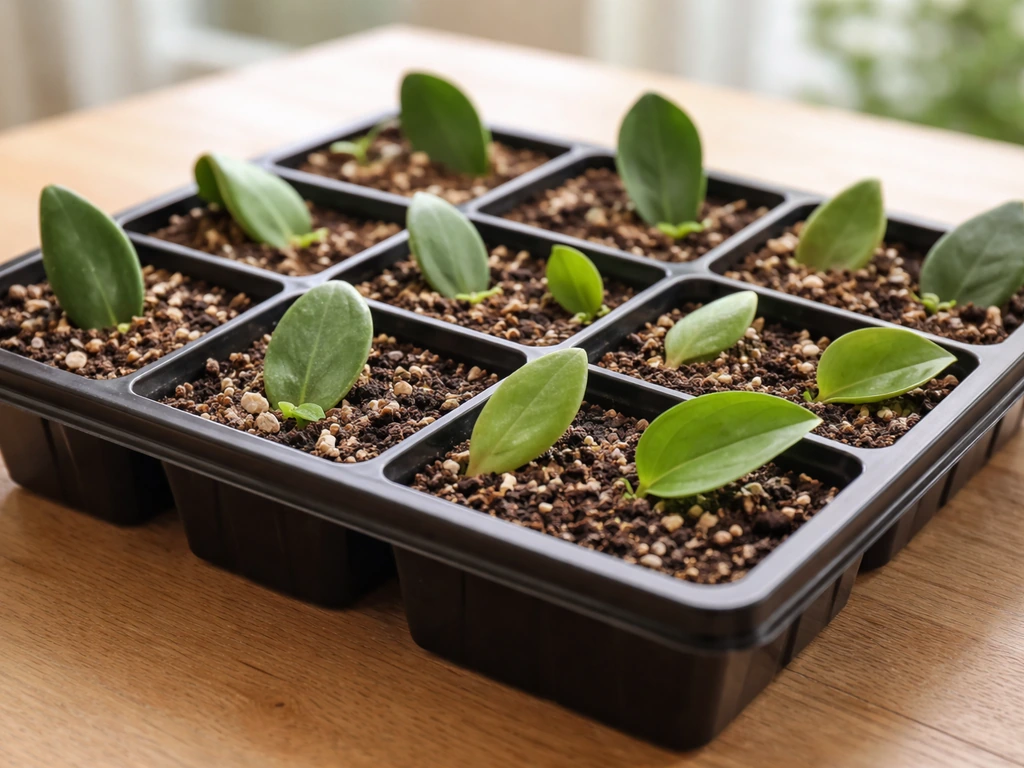
What 'grows from a leaf' really means
True leaf propagation means that a detached leaf, or a piece of one, produces new roots and shoots entirely from its own tissue, with no stem, bud, or node attached. That's the distinction that trips most people up. A lot of what gets called a 'leaf cutting' online actually includes a short stem segment with an axillary bud tucked in at the base. That bud does the work, not the leaf. Strip the bud out and nothing happens.
In genuine leaf propagation, regeneration usually starts at the base of the petiole (the stalk connecting leaf to stem) or along the major veins of the leaf blade. The new plant pushes out from there. The original leaf typically disintegrates after the plantlet establishes, which is completely normal. If the parent leaf breaks down after a few weeks and tiny plantlets are appearing at its base, you're on track. If it rots before anything forms and there's no new growth anywhere, that's a failure.
One category worth separating out is the leaf-bud cutting. This method includes the leaf blade, its petiole, and a short piece of stem with a bud. It works for plants like camellias and rhododendrons that won't regenerate from leaf tissue alone. It's a legitimate technique, but it's not true leaf propagation. If you try a pure leaf cutting on a plant that actually needs a bud, you'll wait forever and get nothing.
Which plants reliably propagate from a leaf
The clearest way to organize these is by plant group, because each group has slightly different mechanics and success rates in the real world.
Succulents
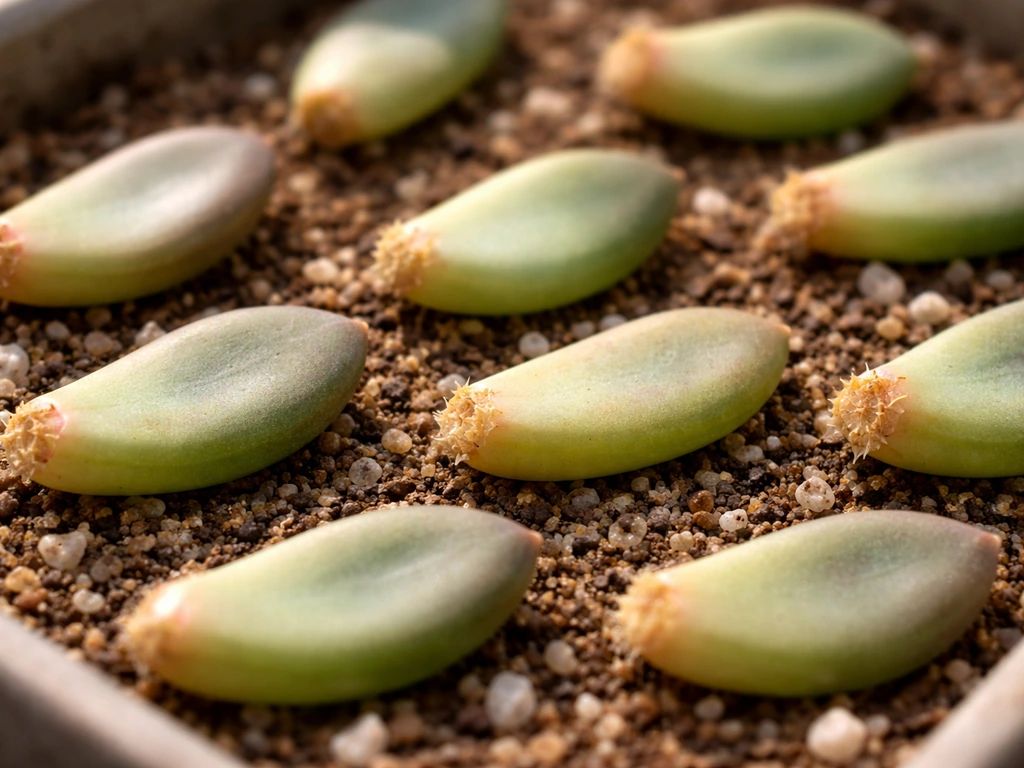
This is the group most people start with, and for good reason. Echeveria, sedum, graptopetalum, pachyphytum, and crassula species all propagate readily from individual leaves twisted cleanly off the stem. The key word is cleanly: you need the full leaf base intact, including the slight widening where it attached to the stem. A leaf snapped off partway rarely roots. Aloe and agave are commonly attempted but rarely succeed from leaf cuttings alone; they need offsets or stem divisions. Haworthia works but is slower than echeveria.
Houseplants
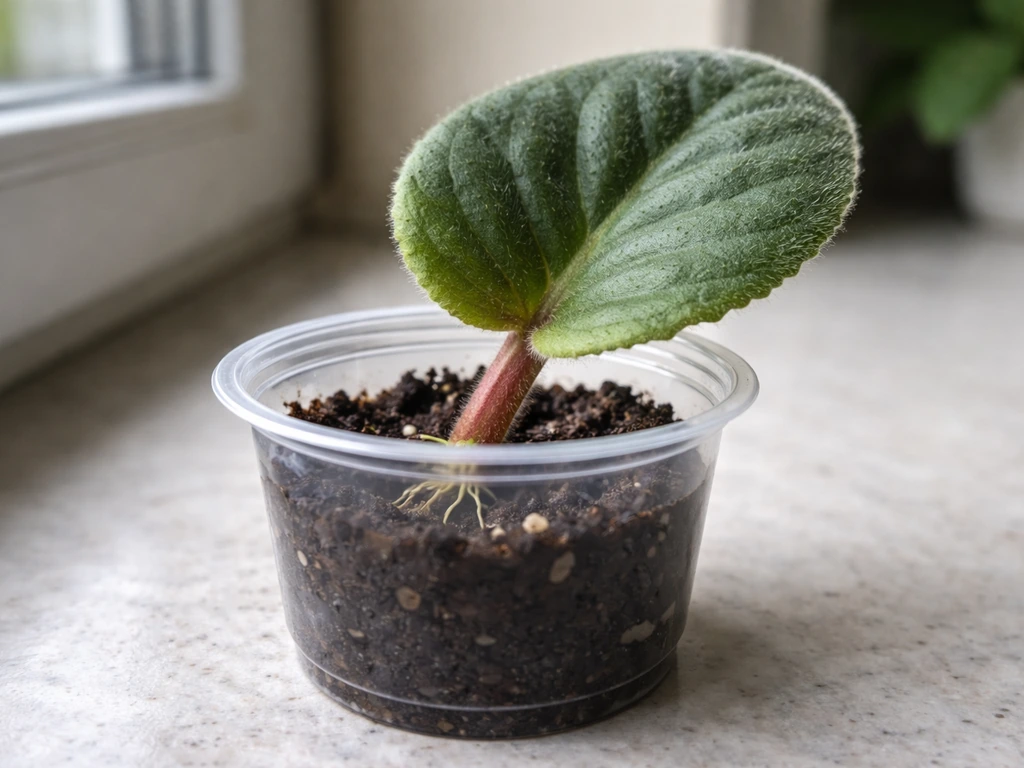
African violet (Saintpaulia) is the classic beginner leaf cutting plant. You cut the leaf with about 1. 5 to 2 inches of petiole, insert it into rooting medium, and plantlets form at the petiole base in about 6 to 8 weeks. Rex begonias work differently: you can either use the whole leaf laid flat with the underside down and the main veins nicked, or cut the leaf into wedge-shaped sections, each containing a portion of main vein.
Plantlets sprout from the vein ends in roughly 3 to 5 weeks for initial root formation, though a full flowering plant from an African violet cutting takes closer to 6 to 9 months. Snake plant (Sansevieria trifasciata) propagates from leaf sections cut horizontally into 2 to 3 inch segments, though variegated forms will revert to plain green this way. Peperomia and jade plant (Crassula ovata) both root from leaf cuttings placed in moist mix, though jade is slower.
Outdoor and habitat plants
Bryophyllum (including Kalanchoe daigremontiana and K. pinnata) is one of the most remarkable examples in this group. These plants produce [tiny plantlets directly on the leaf margins while the leaf is still attached](https://pmc. ncbi.
nlm. nih. gov/articles/PMC2000513/) to the parent plant. These are the same kinds of new plants that can grow from the leaves of bryophyllum plantlets directly on the leaf margins.
In tropical and subtropical climates, fallen leaves with their margin plantlets root into soil with almost no intervention. In Bryophyllum, regeneration after leaf excision occurs from primordia located near the leaf margin, which explains why margin plantlets readily root into soil [fallen leaves with their margin plantlets root into soil](https://pmc. ncbi. nlm.
nih. gov/articles/PMC2423663/). This makes bryophyllum one of the most studied examples of natural vegetative propagation from leaf tissue. In humid, warm climates (USDA zones 10 to 12), they can spread aggressively as a result.
| Plant | Leaf Type Used | Regeneration Site | Approximate Rooting Time | Best Climate/Zone |
|---|---|---|---|---|
| Echeveria / Sedum | Whole leaf, full base intact | Leaf base | 2–4 weeks | Zones 9–11 (dry, temperate) |
| African Violet | Leaf + petiole (1.5–2 in) | Petiole base | 6–8 weeks | Indoor, humid tropics / zones 11–12 |
| Rex Begonia | Whole leaf (nicked veins) or wedge | Major vein ends | 3–5 weeks initial | Indoor, humid subtropical |
| Snake Plant | Horizontal leaf sections (2–3 in) | Cut base of section | 4–8 weeks | Zones 10–12, indoor |
| Bryophyllum / Kalanchoe | Whole leaf (plantlets on margins) | Leaf margin | Immediate in warm soil | Zones 10–12 (tropical/subtropical) |
| Peperomia | Whole leaf + short petiole | Petiole base | 4–6 weeks | Indoor, warm humid climates |
| Jade Plant | Whole leaf | Leaf base | 4–8 weeks | Zones 10–12, dry climates |
When to propagate: timing by season and climate
For indoor plants like African violets, begonias, and snake plants, timing is less about calendar season and more about the plant's active growth phase. Spring and early summer are the sweet spot almost everywhere because day length is increasing, temperatures are rising, and the parent plant is pushing energy into new growth. Leaf tissue taken from an actively growing plant regenerates far more reliably than a leaf pulled from a plant in its rest phase.
For outdoor succulents in Mediterranean and semi-arid climates (California coastal ranges, the Mediterranean basin, South Africa's Western Cape), late spring to early summer is ideal. Soil temperatures in the 65 to 75°F range accelerate rooting. Attempting leaf propagation in late autumn or winter in these climates usually means slow or failed rooting as the plants slow down.
In humid tropical and subtropical zones (zones 10 to 12), bryophyllum and tropical begonias can be propagated year-round because temperatures stay consistently warm and humidity stays high. This is also the climate where leaf propagation feels almost effortless: drop a healthy leaf on moist soil in partial shade and it frequently roots without any intervention. In temperate climates, you're essentially recreating those conditions artificially with plastic covers, heat mats, and misting.
A useful general rule: propagate when the parent plant is in active growth, daytime temperatures are between 65 and 80°F (18 to 27°C), and you can maintain high relative humidity (ideally 75 to 85%) around the cutting for the first few weeks.
How to propagate from a leaf: step by step
What you need
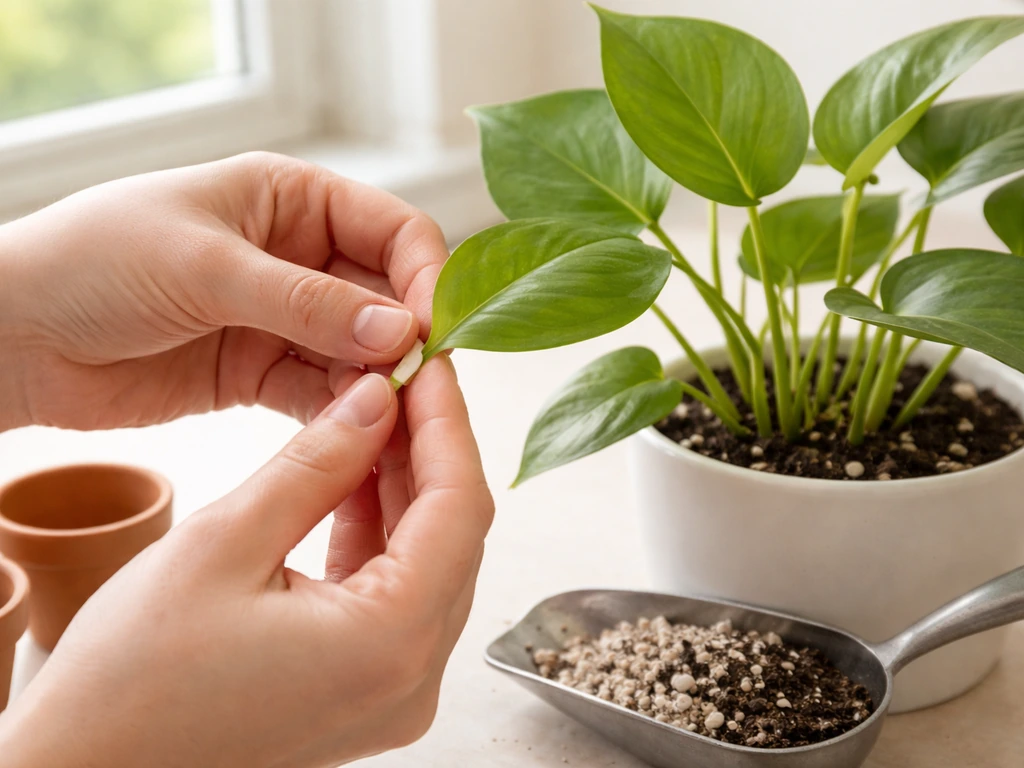
- Healthy, mature (not old and yellowing) leaves from an actively growing plant
- Rooting medium: a 50/50 mix of perlite and peat, or pure coarse perlite for succulents
- Small pots, trays, or plug cells (2–3 inch diameter for most leaf cuttings)
- Clear plastic bag or humidity dome
- Optional: rooting hormone powder or gel (speeds rooting in begonias and African violets)
- A sharp, clean blade or scissors
Soil method (most reliable for most plants)
- Select a healthy, fully developed leaf. For succulents, grip the leaf close to the stem and twist gently sideways until it detaches cleanly with the full base. For African violet or begonia, cut the petiole to leave about 1.5 to 2 inches of stalk.
- Let the cutting callous for 1 to 2 hours (succulents) to 30 minutes (soft-leaved plants like African violet) in open air. This reduces rot risk at the cut surface.
- Optional: dip the base or petiole cut end in rooting hormone powder, then tap off excess.
- For petiole cuttings (African violet, peperomia, jade): insert the petiole into moistened rooting medium at a 45-degree angle so the leaf blade sits just above the medium surface. Bury no more than half the petiole length.
- For flat leaf cuttings (rex begonia): lay the leaf face-up on moist medium, nick the major veins with a sharp blade at 1 to 1.5 inch intervals, and pin the leaf flat so the underside is in full contact with the medium. Alternatively, cut into wedge sections, each with a main vein, and insert the vein end vertically so the midvein is just barely covered.
- For succulent leaves: lay them flat on dry-to-barely-moist gritty mix. Do not bury them. Leave in bright indirect light and mist very lightly every few days.
- Cover with a clear plastic bag or humidity dome. Leave a small gap or vent daily for 10 to 15 minutes to prevent stagnant moisture buildup.
- Place in bright indirect light. Direct sun through plastic will overheat and burn the cuttings. Target 65 to 78°F (18 to 26°C). A heat mat set to 70°F under the tray speeds rooting significantly.
- Check for roots by gently tugging after 3 to 4 weeks. Resistance means roots have formed. For succulents, look for tiny pink or green rosette buds appearing at the leaf base after 2 to 4 weeks.
Water method (for begonias, with caution)
Some begonia growers root petiole cuttings in small jars of water, leaving the petiole tip submerged and the leaf blade above the rim. Roots form in 2 to 3 weeks. The catch is that fleshy begonia petioles are genuinely more prone to rotting in water than in a well-aerated medium. If you go this route, use clean water, change it every few days, keep the jar in bright indirect light, and transfer to soil as soon as roots reach about half an inch. Don't wait until the roots are long and tangled or transplanting becomes stressful for the new plant.
Why leaf cuttings fail and how to fix it
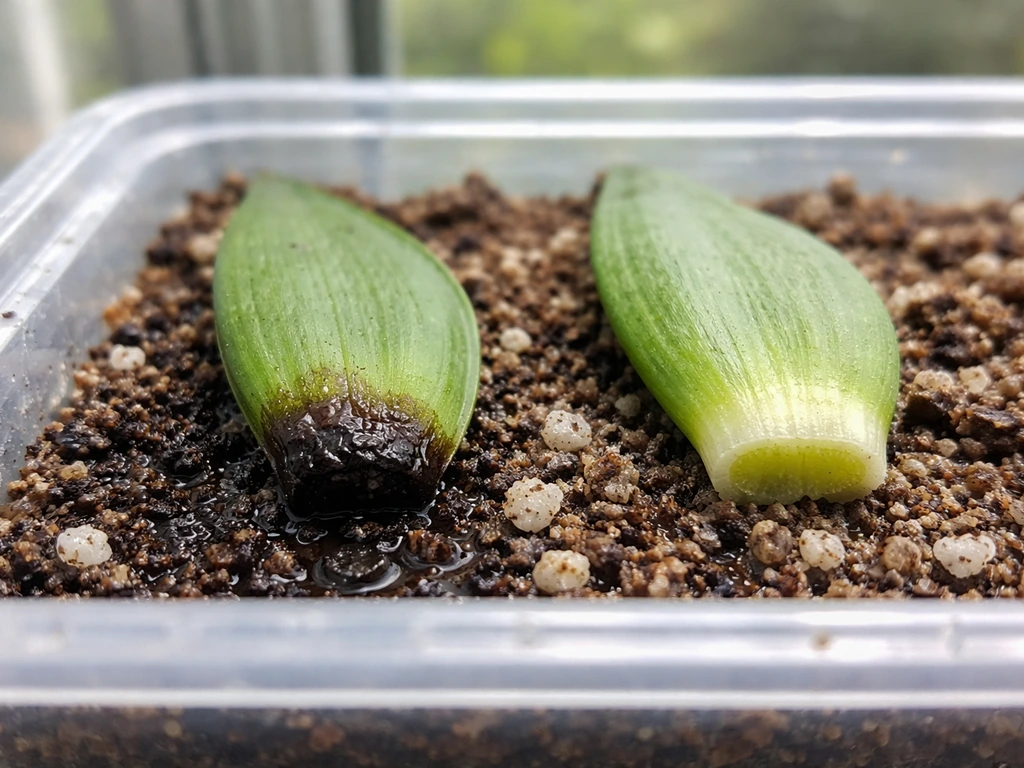
Most failures come down to four causes: wrong plant, wrong leaf part, too much moisture, or wrong light. Here's how to diagnose which one is happening.
| Problem | Likely Cause | Fix |
|---|---|---|
| Leaf rots within 1–2 weeks, no roots | Too deep in medium, overwatering, or high humidity with no airflow | Reinsert shallower, improve drainage, vent humidity dome daily |
| No roots after 8+ weeks | Incorrect plant type (needs bud/node), leaf too old or damaged, or temperature too low | Confirm plant truly propagates from leaf; take a fresher leaf; raise temperature to 68–75°F |
| Roots form but no shoots appear | Normal for some plants (shoots follow roots by weeks); or leaf placed upside down | Wait longer; ensure leaf orientation is correct (base/petiole end in medium) |
| Fungal growth on leaf surface | Stagnant humidity, excess moisture on leaf blade | Remove affected cutting; increase airflow; reduce misting frequency |
| Leaf shrivels and dries without rooting | Medium too dry, insufficient humidity, or succulent leaf base was damaged | Mist medium lightly; increase humidity for non-succulents; take a new undamaged leaf |
| Parent leaf breaks down but no plantlets visible | May be normal decomposition (especially succulents); or leaf base was incomplete | Check for tiny rosette buds at base; if none after 6 weeks, the leaf base was likely damaged at harvest |
One point worth emphasizing: the original leaf breaking down over time is normal and expected, as documented for many leaf cutting types. The leaf is essentially fueling the new plantlet and then decomposing once its job is done. What you don't want is black, slimy rot spreading rapidly from the cut end upward within the first week or two, which signals bacterial or fungal rot from excess moisture, not normal decomposition.
A frequently overlooked failure mode is taking a leaf from the wrong plant or using a leaf-bud cutting method when you think you're doing a pure leaf cutting. If you've tried succulents and houseplants known to work and are still getting consistent failures, double-check that the plant you're using is actually on the confirmed list. Many common garden plants (roses, tomatoes, peppers, most trees) will not root from a leaf alone, regardless of conditions.
Matching leaf-propagating plants to your location
The plants that propagate most easily from leaves are mostly native to or adapted for specific climate types, and understanding that helps you pick the right species for where you actually are.
Dry, temperate, and Mediterranean climates (USDA zones 8–10)
This is ideal territory for succulent leaf propagation outdoors. Echeveria, sedum, graptopetalum, and crassula all evolved in seasonally dry habitats (the mountains of Mexico and South Africa's Western Cape) where well-drained, low-nutrient soils are the norm. A south or west-facing bed with sandy or gravelly, low-organic soil and full to partial sun gives these plants the right signals to root and establish. Propagate in spring when nighttime temperatures are reliably above 55°F. Avoid clay-heavy soils: they hold too much moisture and rot leaf cuttings quickly.
Humid subtropical and tropical climates (zones 10–12)
Begonias, African violets (in their natural forest-floor habitat in the Eastern Arc mountains of Tanzania), and bryophyllum all thrive here. The combination of warmth, consistent humidity, and indirect light (under forest canopy or shade cloth) means you can propagate outdoors in a shaded spot rather than replicating a greenhouse environment indoors. Bryophyllum in particular becomes almost a weed in these conditions; plantlets from fallen leaves will colonize moist soil along paths and in garden beds. In frost-free subtropical gardens, rex begonias can be treated as perennials and propagated from leaves throughout the year.
Temperate climates with cold winters (zones 5–8)
In most of the continental US, UK, and Central Europe, leaf propagation from the plants above is essentially an indoor activity or a warm-season greenhouse project. The window for outdoor propagation is short (roughly May to August in zones 6 to 7). Indoors, African violets and snake plants are the most forgiving year-round because they're already adapted to stable, low-light indoor conditions. If you have a south-facing windowsill that stays above 65°F in winter, you can propagate African violets continuously. For succulents indoors in these climates, a grow light set to 14 to 16 hours per day in a cool spare room compensates well for low winter light.
If you're building out knowledge of specific species in this space, the broader family of plants which grow from leaves covers a wider range of examples beyond the core propagation favorites. For classroom or student use, looking at named examples in groups of 5 or 10 plants that grow from leaves gives a useful framework for understanding the range of families involved.
If you want more concrete ideas, see these 10 examples of plants that grow from leaves as a helpful comparison point for what actually regrows. Bryophyllum in particular bridges the gap between leaf propagation as a garden skill and as a natural ecological process, worth exploring in depth on its own. For more on other examples, see plants which grow from leaves found in plants that grow on.
FAQ
Can any plant grow from a leaf if I keep it moist enough?
No. Only plants with enough totipotent leaf tissue (or specific leaf-bud mechanisms) can regenerate from a leaf base or leaf veins. Common plants like roses, tomatoes, peppers, and most trees usually need a stem node, bud, or other structure, so extra humidity will not fix the underlying limitation.
What counts as a true “leaf cutting,” and how do I check I did it correctly?
A true leaf cutting uses the leaf tissue to start new roots and shoots, with no bud or node included. If the detached piece includes a short stem segment, an axillary bud, or a clear growing point, you have a leaf-bud cutting instead. One practical test, if you are unsure, is to inspect the underside at the leaf base, if there is a visible bud tucked where the leaf meets stem, do not assume it is a pure leaf propagation.
Should I bury the whole leaf or only part of it in the rooting mix?
For most true leaf cuttings, the leaf blade should stay above the surface, while the petiole base (or nicked main veins) contacts the mix so roots can form from that contact point. If you bury the entire leaf, it stays too wet and increases the chance of rot before any roots can form.
Why do my leaf cuttings look fine for a week, then turn black and mushy?
That pattern usually indicates rot from excess moisture rather than normal leaf disintegration. Stop the process by reducing saturation (use a faster-draining medium, water less, and increase airflow), remove any instantly blackened tissue, and avoid leaving the cut surface submerged in standing water unless the specific plant and method are known to tolerate it.
Can I propagate from an old, fallen leaf instead of a fresh leaf?
Sometimes, but success drops. Many species need actively growing leaf tissue, so a leaf that is already dried, damaged, or in decline often fails. If you use a fallen leaf, start with ones that still feel firm and green, not brittle or obviously decomposing, and keep conditions warm and humid enough for regrowth.
How long should I wait before I conclude the cutting failed?
Typical timelines vary by plant and method. African violet often shows plantlets in about 6 to 8 weeks, rex begonia initial rooting can appear in 3 to 5 weeks, while some succulents may take longer than expected. If there is no root or vein-based swelling, no growth at the petiole base, and rot signs appear, it is reasonable to discard earlier rather than waiting indefinitely.
Is leaf propagation better in water or in soil?
It depends on the plant. For succulents, a moist, well-aerated medium with good drainage is usually safer than standing water. For begonias, some growers root petioles in clean water, but fleshy petioles rot more easily in water than in aerated media, so water requires frequent changes and quick transfer to soil once roots reach roughly half an inch.
How humid should it be, and do I need a plastic bag or dome?
High humidity helps most leaf cuttings during the first few weeks, a commonly useful target is about 75 to 85% relative humidity with temperatures around 65 to 80°F. You can use a clear bag or dome, but you still need airflow, if you never vent, condensation can keep the leaf base wet and accelerate rot.
What light conditions are best for leaf cuttings?
Aim for bright indirect light for most indoor leaf cuttings. Direct harsh sun can overheat the mix and dry leaf tissues unevenly, while too little light can delay or stop regeneration. For winter indoor propagation, a grow light on a 14 to 16 hour schedule can improve consistency in low-light climates.
Do variegated snake plant leaf sections grow into variegated plants?
Usually not. When Sansevieria is propagated from leaf sections, variegated types tend to revert toward plain green growth over time. If you want to preserve a specific variegation pattern, you may need an alternative propagation route such as offsets rather than leaf-segment propagation.
Why is my parent leaf disintegrating, is that always good?
Gradual breakdown is normal and expected, it often means the leaf is supplying nutrients to the developing plantlet. The warning sign is rapid black, slimy rot spreading early from the cut end. If the leaf simply shrivels or turns papery while plantlets form at the base or veins, that is a good sign.
Can I use fertilizer during leaf propagation?
Generally avoid feeding immediately. Most leaf cuttings already rely on the parent leaf for energy while roots and early shoots form. Once a small plantlet has established and shows active growth, you can start very light feeding, but only after the new roots are functioning well in the medium.
What is the best medium to use for most leaf cuttings?
Use a loose, fast-draining mix that still holds some moisture, because leaf propagation needs consistent humidity but does not tolerate waterlogged conditions. A good rule is that the medium should be moist enough to support contact at the petiole base or veins, then dry slightly between waterings to prevent rot.