
Two plants that do not grow from seeds are ferns and cultivated bananas. In class 5, children learn that ferns and cultivated bananas are examples of plants that grow without seeds plants that grow without seeds class 5. Ferns reproduce by releasing spores from the undersides of their fronds, while the edible bananas most of us know (like the Cavendish variety at every grocery store) are sterile, seedless, and only multiply through underground corms and suckers. Neither one produces a viable seed that can be planted to start a new individual. That's the direct answer, but understanding why these two plants work this way, and what to do if you want to grow them, is genuinely useful, so let's go deeper.
Name Two Plants That Do Not Grow From Seeds

Dr. Marcus Weatherby
30 Apr 2026
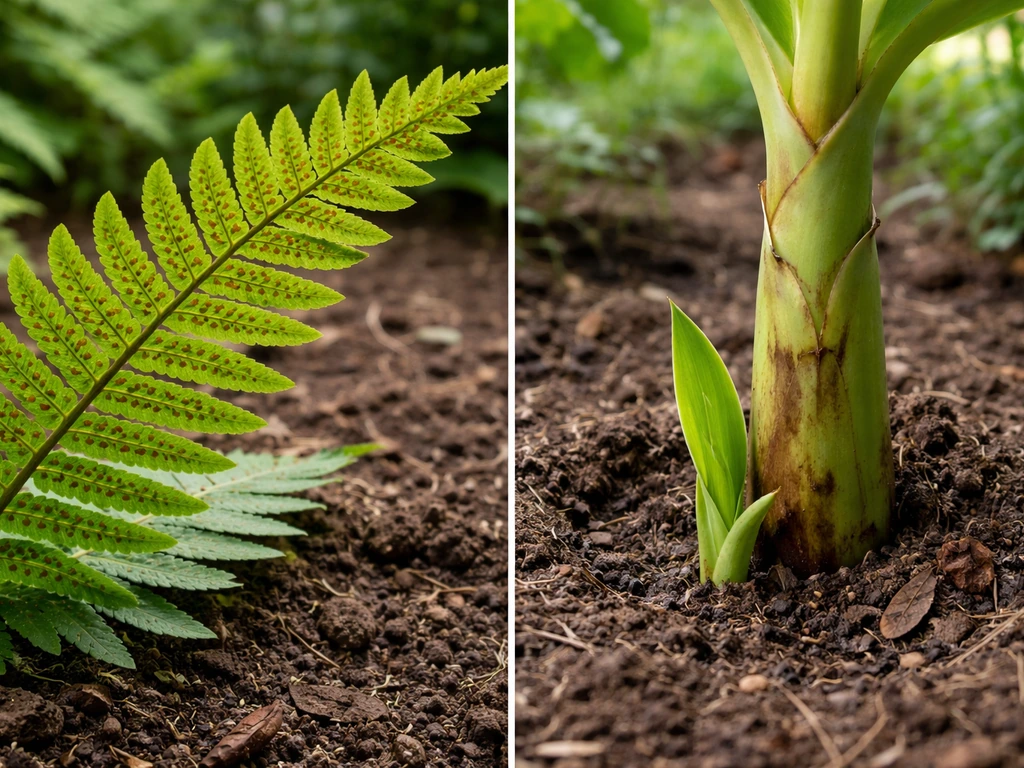
Plants that reproduce without seeds
Not all plants follow the flower-to-fruit-to-seed pathway. There are two main non-seed reproduction strategies worth knowing. The first is spore-based reproduction, used by ferns and other seedless vascular plants. Instead of forming seeds, these plants release microscopic spores that, under the right conditions, germinate into a tiny intermediate structure (called a prothallus) that eventually produces the next generation of plants. The second strategy is vegetative reproduction, where a plant generates new individuals from modified stems, underground structures, or root offshoots rather than from any seed at all. This category includes runners, rhizomes, tubers, bulbs, corms, offsets, and cuttings. Cultivated bananas fall squarely into this camp. Both strategies are entirely natural and, in many ecosystems, far more reliable than seed production.
It's worth noting that some plants grow without soil at all, and others can reproduce without drainage or in extremely water-limited environments, but non-seed reproduction is its own distinct category. Some plants that live on tree branches with little or no true roots, like many epiphytes, are another interesting case to consider which plants have no roots and grow on tree branches. Some seedless plants can even be grown without soil, depending on the conditions they need grow without soil. The unifying thread here is that no viable seed is involved at any stage.
The two examples: ferns and cultivated bananas
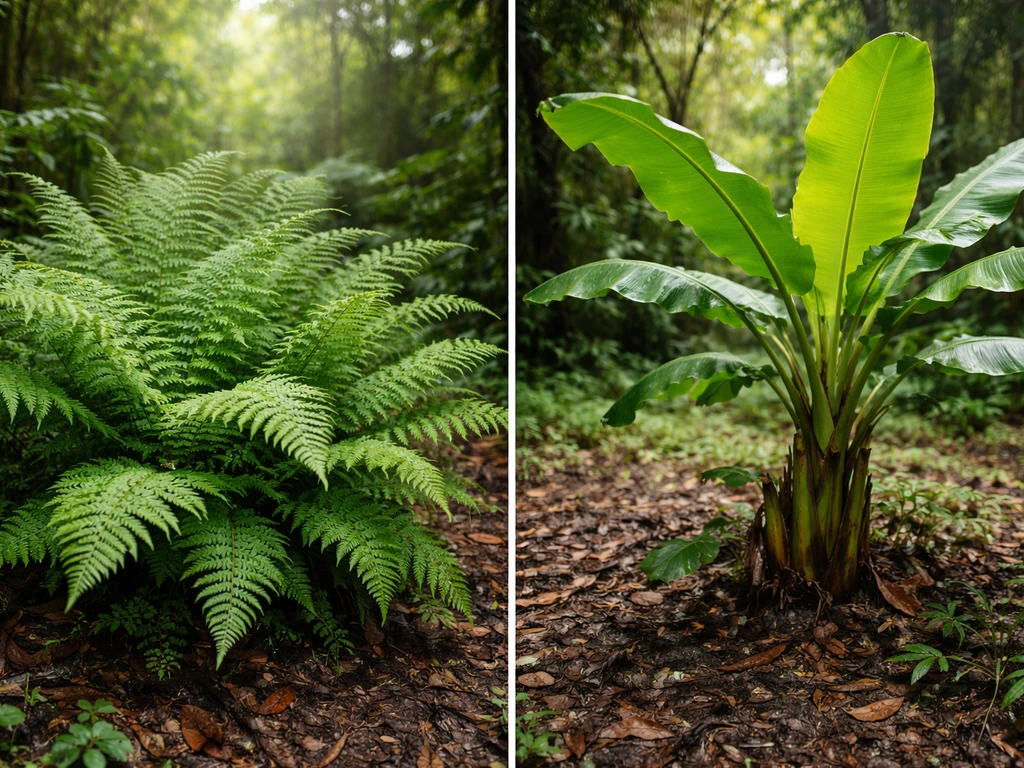
Ferns (Dryopteris, Nephrolepis, and many others)
Ferns are one of the oldest plant groups on Earth, and they were reproducing just fine long before flowering plants and seeds ever appeared. Walk into a humid forest understory and you'll find them carpeting the ground or clinging to mossy rocks. If you flip over a healthy frond, you'll see clusters of small dots or patches on the underside. Those are sori, structures that contain sporangia, which in turn hold thousands of spores. There are no seeds here, no fruit, no flower. Just spores. This is how ferns have reproduced for hundreds of millions of years.
Cultivated bananas (Musa cultivars, e.g., Cavendish)
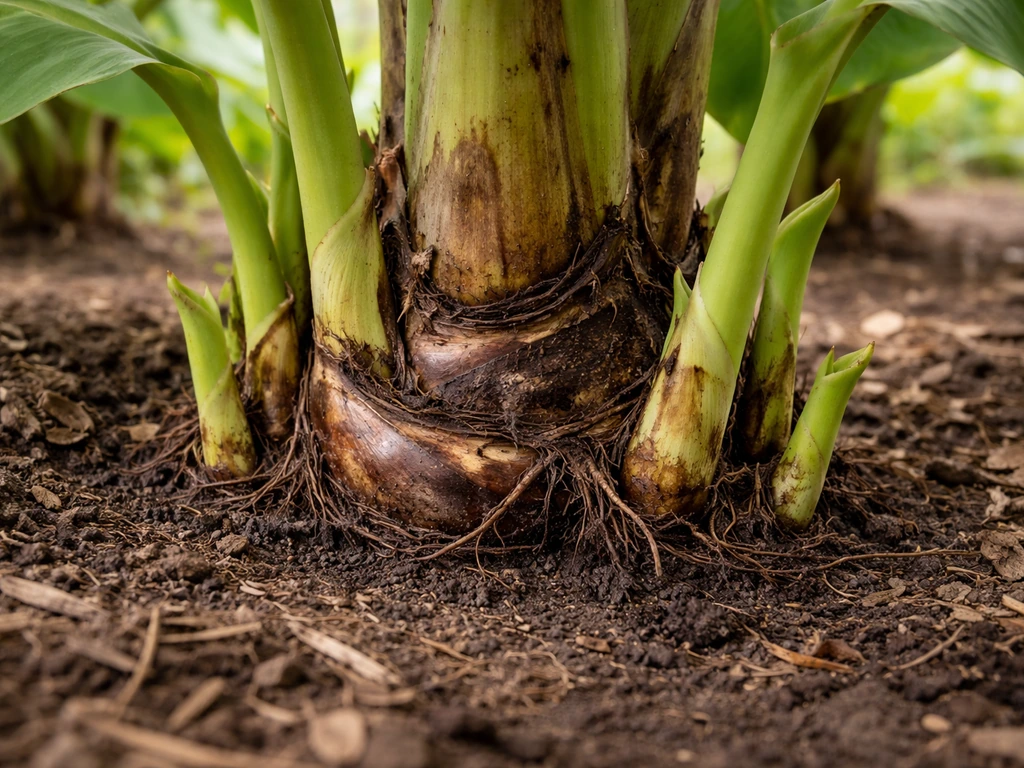
The cultivated edible banana is a genuinely fascinating case. Wild Musa species do produce seeds, sometimes hard, gritty ones that take up much of the fruit's interior. But the bananas humans have selected for eating over centuries are triploid hybrids, meaning they have an odd number of chromosome sets and are effectively sterile. Kew Science describes commercial banana cultivars as parthenocarpic and seedless, dependent entirely on vegetative propagation via corms. The soft, starchy fruit we eat develops without fertilization, and those tiny pale specks in the center are vestigial, non-viable remnants of what were once seeds. New plants don't come from those specks. They come from the underground corm and the suckers that shoot up around the base of the parent plant.
How each plant actually reproduces
Fern reproduction: the spore cycle
The fern you see growing in a garden or forest is called the sporophyte, the spore-producing generation. Mature fronds develop sori on their undersides, and when conditions are right, those sori release spores into the air. If a spore lands on a suitably moist, shaded substrate, it germinates into a tiny, flat, heart-shaped structure called a prothallus, which is the gametophyte generation. The prothallus produces both eggs and sperm. Critically, water is required at this stage because the sperm must swim to reach the eggs. Once fertilization happens, a new sporophyte begins to grow from that prothallus. The entire cycle depends on consistent moisture, which is why you almost always find ferns in wet, humid habitats.
Banana reproduction: suckers and corms
Cultivated banana plants grow from a large underground corm, a dense, starchy base structure (sometimes loosely called a rhizome in casual usage). As the main plant matures, it sends up shoots called suckers or pups from the base of the corm. These suckers are genetically identical to the parent plant, which is both the strength and the vulnerability of commercial banana cultivation. Every Cavendish banana on the planet is a clone. Propagation in practice means cutting away a healthy sucker with a portion of the corm attached, then planting it. No seed is ever involved, and trying to grow one from those vestigial interior flecks won't work.
How to tell if a plant doesn't reproduce by seeds
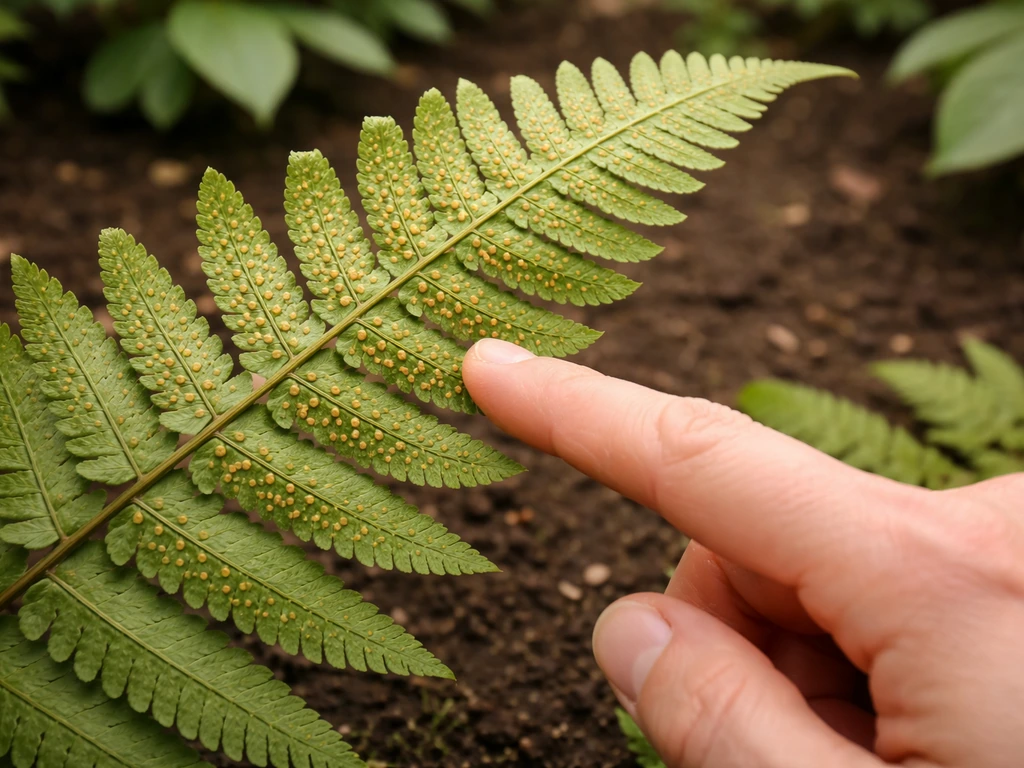
You don't need a lab to figure this out. Here's what to look for in the field or garden.
- Check for flowers and fruits: seed-producing plants form flowers that develop into some kind of seed-bearing structure, whether that's a pod, berry, cone, or capsule. If a plant never flowers, seed reproduction is off the table.
- Flip the fronds: for ferns specifically, look for sori on the underside of fronds. Those dots or patches are the spore-bearing structures. No sori, no flowers, no seeds, confirmed fern.
- Look at the base: for vegetatively reproducing plants like bananas, watch for new shoots emerging from the soil around the parent plant's base. Suckers emerging from a corm-based plant are a strong signal that vegetative propagation is the primary strategy.
- Check the fruit interior: with bananas, slice one open and look at those tiny pale specks in the center. They won't be hard or viable. In wild bananas, by contrast, you'll find obvious, large, hard seeds.
- No seed pods ever: if you observe a plant through its full annual cycle and no seed pods, cones, or seed-bearing fruits ever appear, you're likely looking at a seedless or vegetatively reproducing species.
Where these plants actually grow
Ferns: humid, shaded understories worldwide
Ferns thrive wherever moisture is consistent and direct sun is limited. You'll find them in temperate forest understories, the shaded banks of streams, damp ravines, and rainforest floors across nearly every continent except Antarctica. Because their reproductive cycle requires liquid water for sperm to travel during the gametophyte stage, any habitat that dries out seasonally can disrupt reproduction. The most fern-rich zones tend to be humid temperate forests (think the Pacific Northwest, Appalachia, the British Isles, or New Zealand) and tropical rainforest zones where moisture is year-round. Some species like Nephrolepis have adapted to subtropical and even semi-arid conditions, but they still prefer shade and reliable soil moisture.
Cultivated bananas: warm, frost-free tropical and subtropical zones
Edible Musa cultivars are native to tropical Southeast Asia and are now grown commercially throughout the tropics and subtropics, roughly between 30 degrees north and south latitude. They need frost-free conditions, warm temperatures year-round (ideally above 60°F / 15°C), and plenty of water. If you want plants which need less water to grow, focus on drought-tolerant options and avoid species that require consistently moist conditions like these banana cultivars. In cooler climates, bananas are sometimes grown as ornamentals that die back to the ground each winter, with the corm surviving underground if the frost isn't too severe. The key point for habitat fit is that vegetative propagation via suckers is easiest and most reliable during active growing periods when temperatures are warm and growth is vigorous.
| Feature | Ferns | Cultivated Bananas |
|---|---|---|
| Reproduction method | Spores (via sori on frond undersides) | Vegetative (suckers from corm/rhizome) |
| Seeds produced? | No | No (sterile/parthenocarpic cultivars) |
| Key structure | Sori containing sporangia | Underground corm, lateral suckers |
| Ideal climate | Humid temperate to tropical, shaded | Warm tropical to subtropical, frost-free |
| Moisture needs | High (sperm require water to swim) | High (but via irrigation, not reproductive) |
| Propagation method | Spores on moist medium or division | Remove and plant suckers with corm piece |
How to grow or source them without seeds
Growing ferns from spores or division
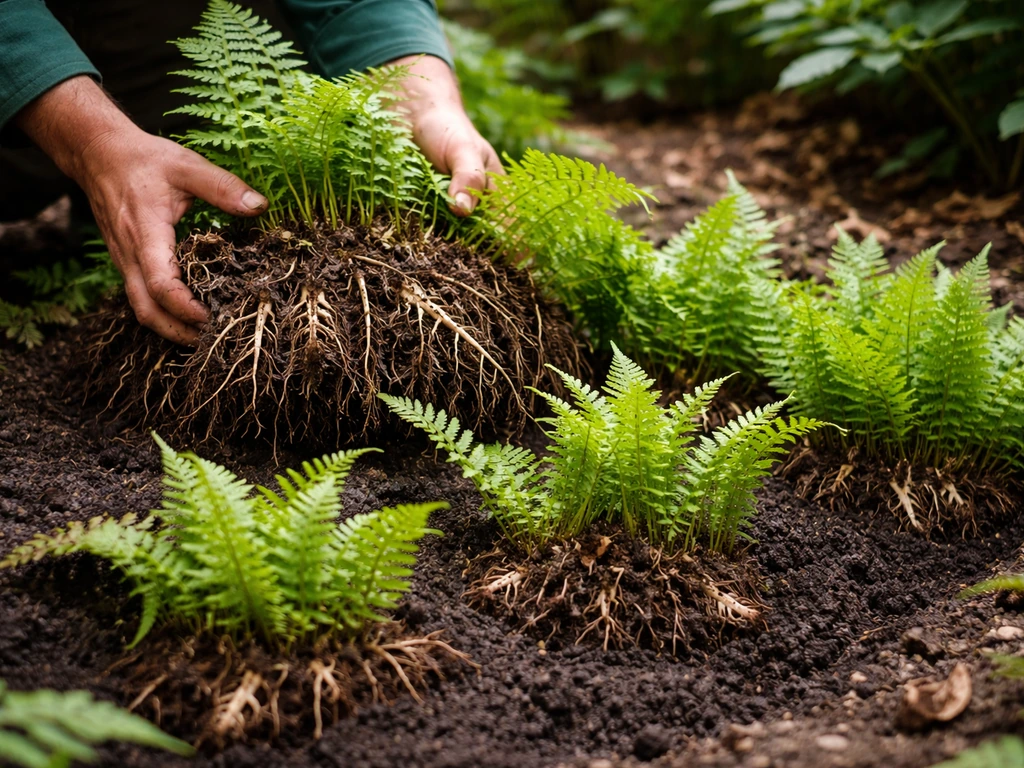
The easiest way to get more ferns is division. Dig up a mature clump, separate it into sections, each with healthy rhizome and fronds, and replant them in a shaded spot with moist, humus-rich soil. This works reliably for most garden fern species and is the method most nurseries use. If you want to try spore propagation, collect spores by placing a mature frond, sori side down, onto a sheet of paper and waiting a day or two. The spores will dust off. Sprinkle them onto a tray of moist, sterile peat-based or coir-based mix, cover with plastic to maintain humidity, and place in indirect light. Keep the medium consistently moist because, as mentioned above, the reproductive stage needs water for fertilization. Germination can take weeks to months depending on species and temperature. This is a slower but deeply satisfying process if you're patient.
Growing cultivated bananas from suckers
If you're in a tropical or subtropical region and want to grow edible bananas, your best source is a sucker from an existing plant. Look for a sucker that has grown at least 30 to 45 cm (about 12 to 18 inches) tall with a narrow, sword-like leaf shape rather than broad leaves (narrow sword suckers are more vigorous). Cut it away from the parent corm with a sharp spade, making sure you take a good chunk of the corm base with it. Plant it at roughly the same depth it was growing, in full sun with well-drained but moisture-retentive soil. If you're wondering what plants can grow without drainage, you may need species adapted to consistently wet conditions rather than typical garden mixes well-drained but moisture-retentive soil. In warm climates, this is best done at the start of the warm season when growth is accelerating. If you don't have access to a banana plant locally, many tropical nurseries and specialist fruit growers sell bare corm pieces or potted suckers. Tissue-cultured plantlets are also available commercially and are completely seed-free by definition.
A quick note on the broader picture
Ferns and seedless bananas are just two examples of a much wider phenomenon. There are entire plant groups, including mosses, liverworts, and horsetails, that also reproduce without seeds, and the world of vegetative reproduction extends to plants like strawberries (runners), potatoes (tubers), and garlic (bulbs). If you're exploring plants that push the boundaries of conventional reproduction, it's worth looking into which plants can grow without soil entirely, since some seedless non-vascular plants blur that boundary too. The core takeaway is that seed production is just one strategy, and for ferns and cultivated bananas, it's simply not the strategy they use.
FAQ
Can I plant banana “seed” flecks from store-bought fruit and grow banana plants?
For cultivated edible bananas like Cavendish, those pale interior specks are vestigial and non-viable, so planting them will not produce a new plant. The reliable approach is vegetative propagation using a sucker or a corm piece from an existing cultivar.
Do all ferns produce spores, and do they always reproduce without seeds?
Yes, ferns reproduce via spores rather than forming true seeds, but individual fern species differ in how quickly spores mature and how hard they are to germinate. If you are trying to grow new ferns, fresh sori and consistent humidity matter more than just sprinkling spores on any soil.
What conditions do ferns need for spore germination to actually work?
Spores require persistent moisture, indirect light, and a clean, moisture-retentive medium (sterile peat or coir mix works well). If the surface dries for even a short period during the early stages, germination commonly stalls.
How long does it take to grow a fern from spores compared with dividing a fern?
Division typically gives you established growth quickly because you are transplanting an already formed portion of the plant. Spore propagation is slower, often taking weeks to months for germination and additional time before the new sporophyte is large enough to handle.
Is it possible for a fern or banana to “make seeds” if conditions are perfect?
For the specific examples in the article, no viable seeds are the expected outcome, but you can still see structures that look reproductive. Fern sori can be abundant in bad timing conditions, yet moisture at the prothallus stage is still required for fertilization, and seedless banana cultivars are effectively sterile by design.
Why do ferns look like they are spreading in a garden even though they do not make seeds?
You may be seeing vegetative spread plus spore fallout. Many garden ferns expand by rhizomes and also release spores that land nearby. Dense clumps usually come from rhizome growth rather than from seeds.
What is the biggest mistake people make when propagating bananas?
Using the wrong planting material or planting at the wrong time. Seedless bananas must be propagated from a sucker or corm piece, and success is highest when temperatures are warm and growth is active, since cold or waterlogged conditions can slow root establishment.
Can cultivated bananas survive cold weather, and does cold affect propagation from suckers?
They are frost sensitive, but some growers treat them as die-back perennials where the corm survives mild-to-moderate cold. Propagation from suckers is best timed for warm weather, because cool temperatures delay rooting and increase rot risk.
If I want plants that do not grow from seeds but still need less fuss, what should I choose?
In general, vegetative propagation can be more straightforward than spore culture. For the examples here, dividing ferns and taking banana suckers from healthy stock are usually simpler than trying to germinate spores or any non-viable banana interior flecks.