Can plants actually grow without soil?
Yes, absolutely. Plenty of plants grow perfectly well without a single grain of traditional soil, and some of them do it better that way. The catch is that soil itself is not what plants need. What they actually need is water, dissolved nutrients, oxygen at the roots, and physical support. Soil is just one way to deliver all of those things at once. When you replace soil with a different delivery system, plants often do not even notice the difference. That is the entire premise behind hydroponics, aeroponics, and water culture, and it is also why certain plants evolved to live on bare rock, in open water, or hanging off tree branches with no ground contact at all.
Plants that grow without soil, and what they actually use instead
The plants most people think of first are the easy indoor classics: pothos, mint, basil, lettuce, spinach, tomatoes, strawberries, and orchids. All of them can be grown successfully without soil. But the 'without soil' part always comes with a substitute. Here is what actually replaces soil in each major approach.
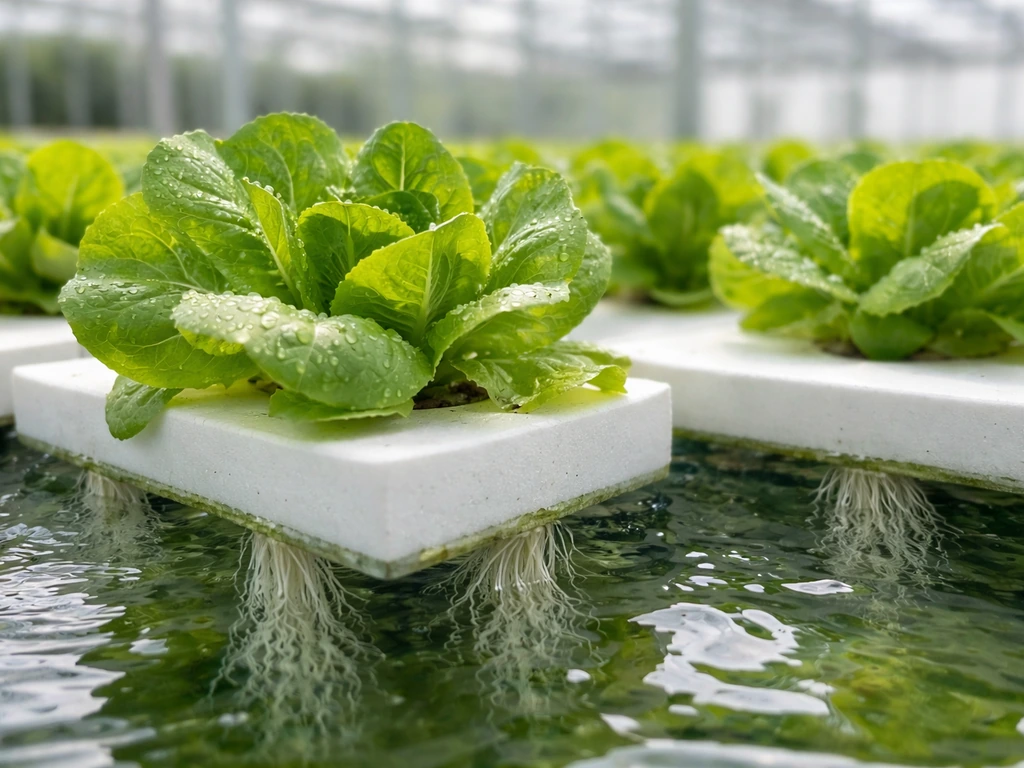
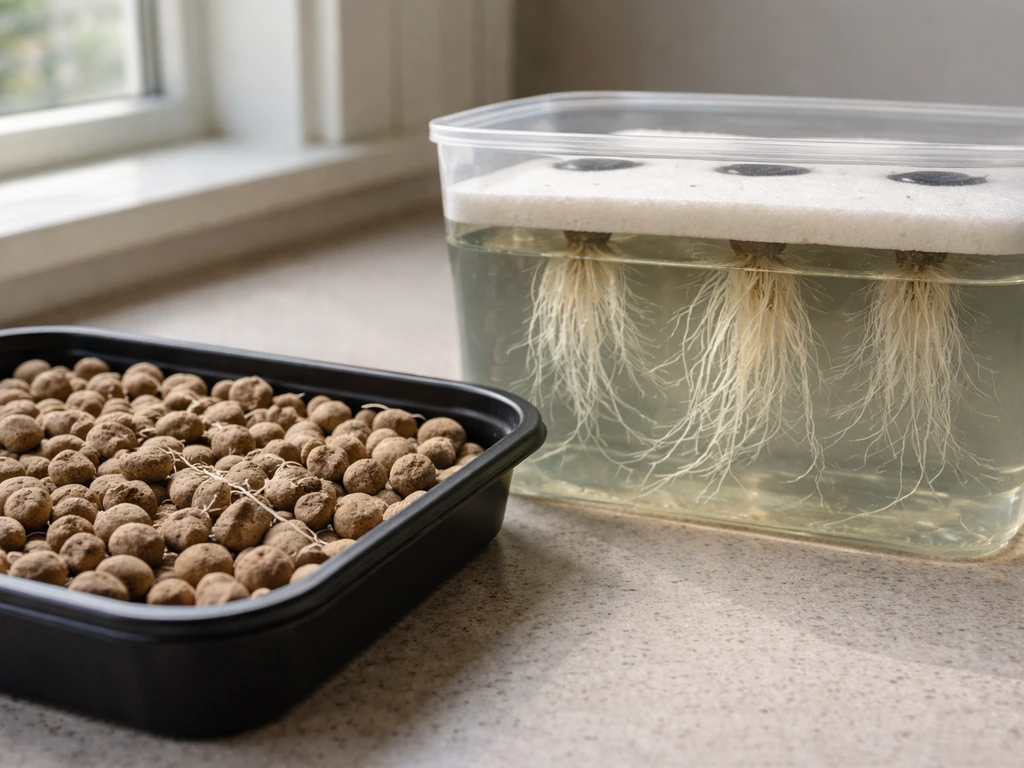
- Hydroponics: roots sit in or are regularly flooded by a liquid nutrient solution. Oklahoma State University Extension describes this as moistening roots with a solution that contains all the required mineral elements, with an air pump and air stone supplying dissolved oxygen so roots do not suffocate.
- Deep water culture: roots hang directly into an oxygenated reservoir. Dissolved oxygen needs to stay above 6 ppm for healthy nutrient uptake, with an optimal target around 8 ppm according to Cornell Cooperative Extension.
- Aeroponics: roots are suspended in air and misted with nutrient solution on a timed cycle. No medium at all, just mist.
- Inert media (perlite, clay pebbles, rockwool, coconut coir): these anchor the plant physically while nutrient solution is delivered separately. They hold no nutrients themselves, which gives you full control.
- Water propagation: cuttings of pothos, coleus, willow, or mint root and grow in plain water, especially when changed regularly.
Lettuce is probably the most well-documented example. UF/IFAS research puts its ideal hydroponic conditions at an electrical conductivity of 1.4 to 1.8 mS/cm and a pH of 6.0 to 7.0. It grows fast, it heads up cleanly, and it is genuinely one of the easiest crops to start with if you want to test a no-soil setup at home. Herbs like basil and cilantro follow closely. Tomatoes and peppers work too, though they need stronger nutrient solutions and more structural support since they are heavier plants.
Outside of controlled systems, nature has its own no-soil growers. Aquatic plants like water hyacinth and duckweed float on open water and pull everything they need directly from it. Mosses and lichens colonize bare rock with no true soil at all. Bromeliads and many ferns collect water and leaf debris in their own structure. These are not experimental edge cases. They are plants that evolved for exactly this kind of environment.
What 'plants with no roots' actually means
This one trips people up because there are really two different things being described. The first is plants that have no roots in the ground, meaning they grow on surfaces, in water, or in mid-air rather than in soil. The second is plants that have no true roots at all, in the botanical sense. Both exist, but they are very different.
Most no-soil plants still have roots. Orchids are a perfect example. plants that grow on tree branches like epiphytic orchids and bromeliads use roots to grip bark and absorb moisture from rain and humidity, not to extract nutrients from ground soil. Their roots are real and functional, just not buried. In hydroponics, roots hang in water or dangle in air. Still real roots, just in a different environment.
True rootless plants are rarer. Bladderwort (Utricularia) is an aquatic carnivore with no real roots. Wolffia, the world's smallest flowering plant, is a tiny floating disc with no roots or leaves. Some liverworts and mosses absorb water and nutrients through their entire surface rather than through a root system. These are fascinating ecological examples, but they are not the plants most people can work with practically. If you want to grow food or herbs without soil, you almost certainly still need roots. What you do not need is ground.
It is also worth connecting this to how some plants reproduce. plants that grow without seeds like ferns, mosses, and certain succulents often propagate through spores or vegetative cuttings, and many of these are the same species that tolerate or even prefer no-soil conditions. The overlap is not a coincidence: plants built for unconventional reproduction tend to be built for unconventional growing conditions too.
A simple experiment you can actually run
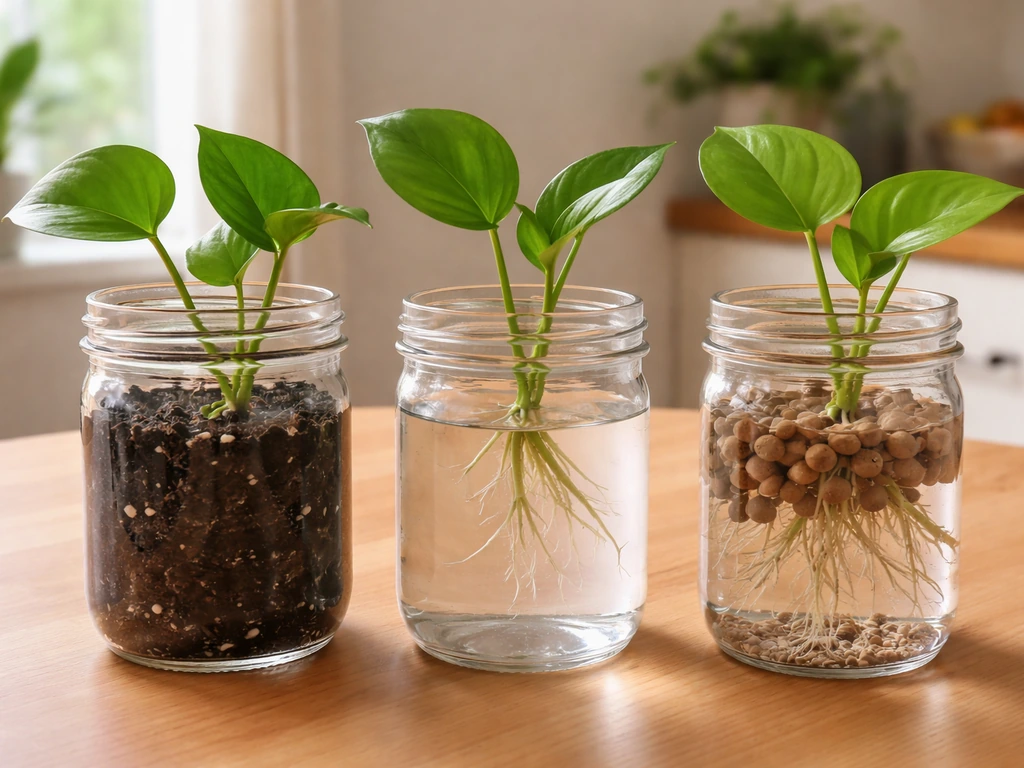
If you want to test no-soil growth directly, here is a straightforward setup that works at home or in a classroom. The goal is to compare growth in soil, plain water, and a basic nutrient solution side by side.
- Take three cuttings of the same plant (pothos or mint work best because they root fast and reliably).
- Place one cutting in a small pot with potting soil, watered normally.
- Place one cutting in a jar of plain tap water, changing the water every three to four days.
- Place one cutting in a jar of diluted liquid fertilizer solution, mixed to label directions, pH adjusted to around 5.5 to 6.0 using pH drops available at aquarium stores.
- Keep all three in the same light and temperature conditions, ideally 65 to 75°F.
- After two weeks, note root length, leaf count, and overall vigor in each jar.
- Your hypothesis: the nutrient solution cutting should outperform plain water, and both should show measurable growth versus soil during the first few weeks when roots are still establishing.
The reason pH matters in step four is not arbitrary. Oklahoma State University Extension recommends keeping hydroponic solution pH between 5. OSU Extension also advises keeping the root environment between about 6 and 6.5 pH between 5.0 and 6.0. 0 and 6.0, with the root zone environment closer to 6.0 to 6.5. Outside that window, nutrients lock out even when they are physically present in the water. This is one of the most common reasons a no-soil experiment fails and the plant looks starved even in a perfectly good nutrient solution.
Water temperature matters too. The same research points to around 72 to 75°F as the optimal range for most hydroponic crops. Cooler water holds more dissolved oxygen, but slows root activity. Warmer water speeds growth but loses oxygen faster and can promote root rot. Staying in that 72 to 75°F window is a practical middle ground that most kitchen or classroom setups can hit without special equipment.
No-soil methods compared
| Method | How roots are supported | Best plant types | Complexity | Key requirement |
|---|
| Hydroponics (nutrient film / flood-drain) | Inert media or bare tray | Lettuce, herbs, strawberries | Low to medium | pH 5.0–6.5, EC matched to crop |
| Deep water culture | Hanging into reservoir | Lettuce, basil, kale | Low | Dissolved oxygen above 6 ppm |
| Aeroponics | Suspended in air chamber | Lettuce, potatoes, cannabis | High | Reliable mist timing, sterile nozzles |
| Water propagation | Jar or vessel of water | Pothos, mint, coleus, willow | Very low | Regular water changes, indirect light |
| Inert media (perlite, clay pebbles) | Physical anchor only | Tomatoes, peppers, cucumbers | Medium | Regular nutrient feeding, drainage |
If you are choosing between these, start with deep water culture or simple water propagation. Both require minimal equipment and give you visible roots so you can actually watch what is happening. Move to inert media systems once you are comfortable managing nutrients and pH, because those systems are more forgiving if something goes wrong. Aeroponics is genuinely effective but it is the hardest to troubleshoot if a pump or nozzle fails, and a few dry hours can kill a root system fast.
What plants cannot grow without soil, and why
Not every plant does well in a no-soil setup, and some will fail outright. Deep-rooted trees like oaks, walnuts, and most conifers are essentially impractical candidates. They develop massive root systems that anchor deep and wide, and they rely on complex soil ecosystems including mycorrhizal fungi that are almost impossible to replicate in a hydroponic reservoir. You can technically germinate an oak seedling in a nutrient solution, but it will not thrive long-term without the full soil environment it evolved for.
Similarly, plants adapted to very specific soil chemistry, like acid-loving blueberries or bog plants like sundews and pitcher plants, are difficult to manage in standard hydroponic systems because their nutrient needs are unusual and tightly tied to soil pH and organic matter interactions. Blueberries want a pH around 4.5 to 5.5 and rely on specific mycorrhizal associations. Carnivorous plants actually do better in low-nutrient environments that mimic the nutrient-poor bogs they evolved in, meaning standard hydroponic nutrient solutions can burn them.
Root vegetables like carrots, parsnips, and beets can be grown hydroponically but require very specific depth and support in the growing medium for the edible root to form properly. They are not ideal beginners' choices. Similarly, large vining crops like pumpkins and squash can work in hydroponics but demand high nutrient levels, significant space, and structural support that makes them impractical outside commercial operations.
The non-negotiables are always the same regardless of method: light, water, dissolved nutrients, oxygen at the root zone, and appropriate temperature. Soil just happens to be the default package that delivers most of these automatically in natural environments. When you remove soil, you take on the job of delivering each one deliberately. That is not hard for most crops, but for plants with highly specialized ecological relationships, replacing what soil provides can be extremely difficult.
Matching plant choice to your actual conditions
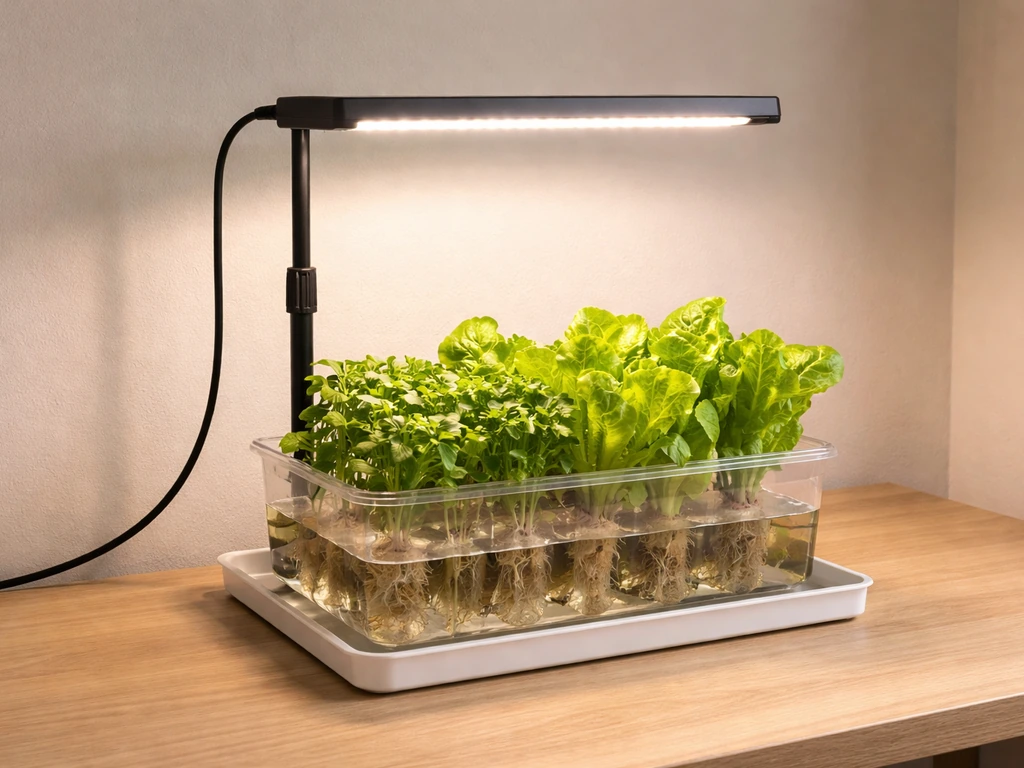
The best no-soil plant for you depends on where you are and what setup you can maintain. In warm climates or heated indoor spaces, lettuce, basil, mint, and spinach are nearly foolproof in water culture or basic hydroponics. In cooler seasonal windows, you can extend your growing season indoors with a simple nutrient solution setup because you are no longer dependent on outdoor soil temperature. This is actually one of the biggest practical advantages of no-soil growing: you decouple plant growth from ground conditions and run on your own schedule.
If your space is limited and drainage is a concern, it is worth knowing that plants that grow without drainage often overlap with the same tolerant, adaptable species that handle hydroponic and water-culture setups well. Pothos and peace lilies, for example, tolerate waterlogged conditions far better than most plants, which is exactly why they perform so reliably in water propagation.
Dry climates and water-conscious growers should also know that no-soil systems are often more water-efficient than soil gardening, not less. A recirculating hydroponic system reuses the same nutrient solution rather than letting water drain through and evaporate from soil. If you are already interested in plants that need very little water to grow, you might find that combining drought-adapted species with an efficient aeroponics or recirculating water culture system gives you the best of both worlds: low water use and no soil required.
One last connection worth making: some of the most resilient no-soil performers are plants that already reproduce and spread without conventional means. plants that do not grow from seeds, like spider plants, strawberry runners, and certain succulents, propagate through cuttings or offsets, which means they already have a track record of establishing without the full soil seedbed that seed germination usually needs. If you are running a classroom experiment or just starting out, these are the safest bets.