Halophytes are plants that grow in high-salinity conditions: saline soils, salt marshes, coastal flats soaked by seawater, and inland salt flats or playas where evaporation concentrates dissolved minerals. Bryophytes grow in habitats that are relatively moist, often where water is retained on the surface or in sheltered microclimates. These are not just plants that tolerate a bit of salt in garden soil. True halophytes complete their full life cycle where salinity would kill most other vegetation, and they do it through specialized adaptations like salt-secreting glands, ion compartmentalization in leaf cells, and osmotic adjustment that keeps water moving into the plant even when the surrounding soil solution is more concentrated than the plant's own tissues.
Halophytes Are Plants That Grow in High-Salinity Soils

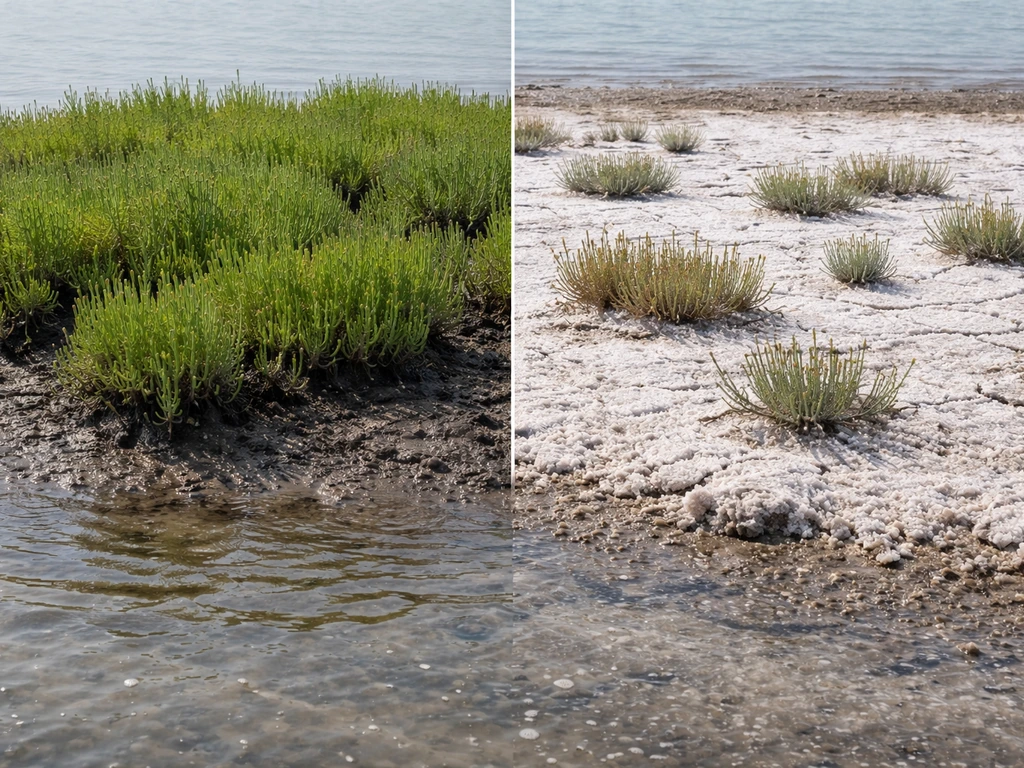
Where halophytes actually grow
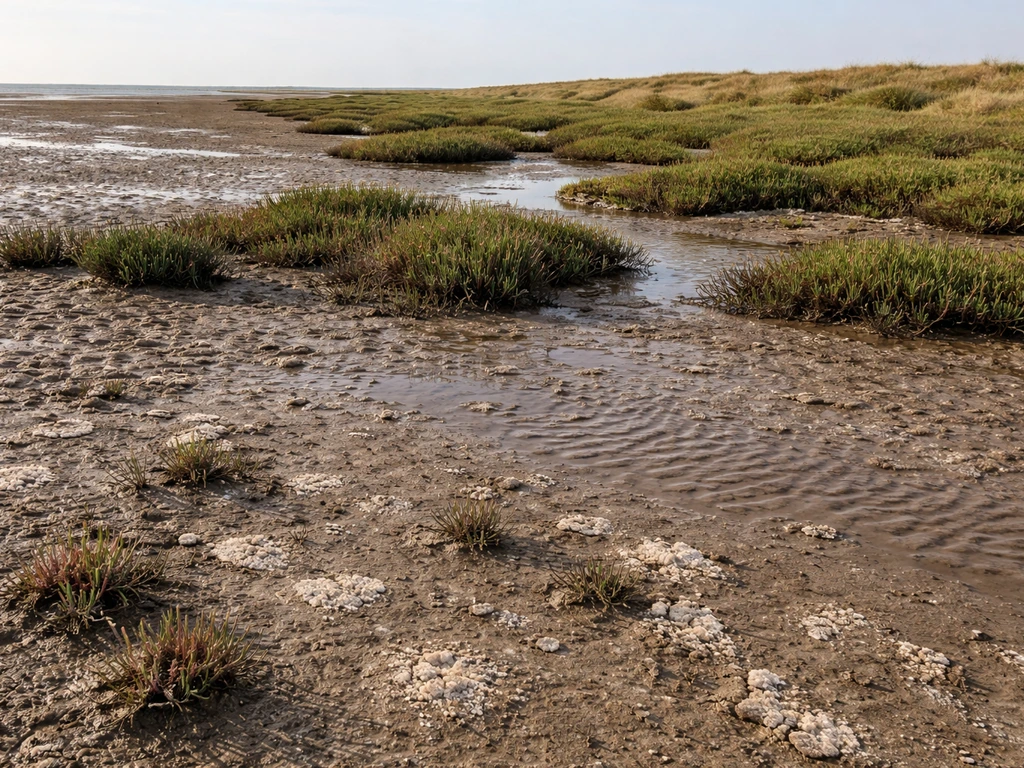
The short version: anywhere salt accumulates consistently enough to exclude most competition. In practice, that breaks down into a handful of distinct habitat types, each with its own salinity source and dynamics.
Coastal salt marshes and tidal flats
This is the habitat most people picture. Seawater floods low-lying coastal areas on a tidal schedule, leaving salt behind as water drains or evaporates. Spartina species (cordgrasses) are textbook examples here. They colonize the lower marsh zones that flood daily and have evolved to pump excess sodium chloride out through specialized leaf glands. If you walk a mid-Atlantic or Gulf Coast marsh, you are essentially walking through a halophyte community from the waterline to the upper marsh edge, with species changing as elevation and flood frequency shift.
Inland salt flats, playas, and dry lake beds
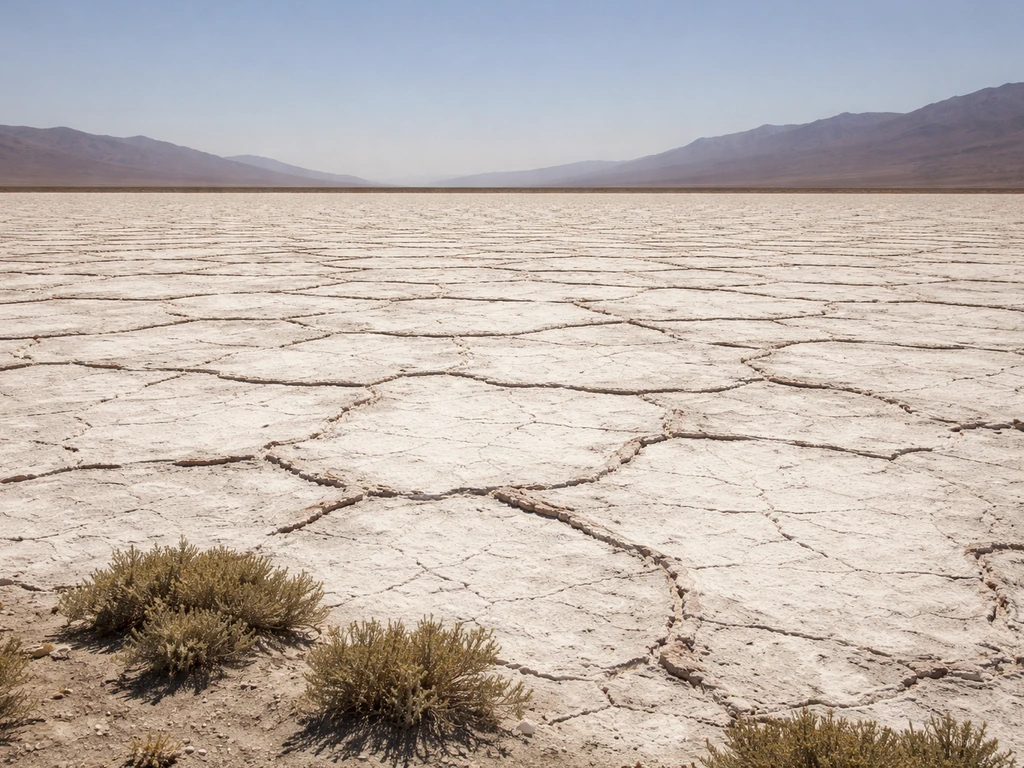
Halophytes are not exclusively coastal. Across the Great Basin, the arid West, and similar dryland regions worldwide, you find inland halophytes growing on playas, alkali flats, and the margins of seasonal lakes. Species like Atriplex lentiformis (big saltbush) and blank" rel="noopener noreferrer">Suaeda calceoliformis grow on salt flats, dry lake beds, and even road edges where winter road salt has raised soil salinity. The salt source here is not the ocean but rather ancient marine deposits, evaporite geology, or simple mineral concentration in closed drainage basins where water has nowhere to go except up through evaporation. Atriplex subspicata is another good example: it appears on coastal New England shores and on alkaline, saline inland soils in western North America, showing just how wide the halophyte niche actually is.
Brackish and saline wetlands
Between full seawater and fresh water sits a wide range of brackish conditions, and many halophytes occupy exactly this zone. Estuarine wetlands, backwater sloughs, and salt-influenced riverine marshes all host halophytic vegetation. Salinity here fluctuates seasonally: high in late summer when evaporation peaks and freshwater input drops, lower after heavy rain events. Halophytes in these habitats have to handle both the salt load and the waterlogged, low-oxygen conditions that come with wetland soils.
What 'salty' actually means in soil and water
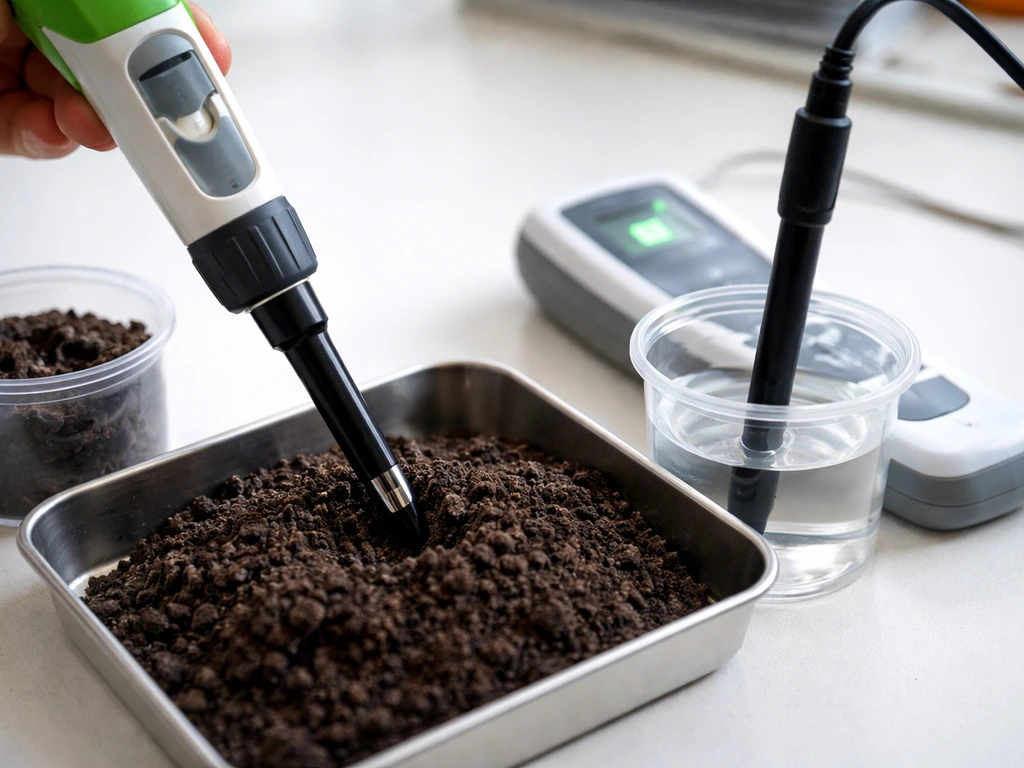
When ecologists and soil scientists say a soil is saline, they are not being vague. There is a specific threshold: a soil is classified as saline when its electrical conductivity of the saturated paste extract (written as ECe) reaches 4 dS/m or higher. The unit dS/m (decisiemens per meter) is the same as the older mmhos/cm you will see in older references, so 4 dS/m = 4 mmhos/cm. Below that threshold, most crops and garden plants can manage. Above it, you are in halophyte territory.
It helps to know that 'salty soil' is not all the same thing. There are two main categories to understand: saline soils and sodic soils. Saline soils have high concentrations of dissolved salts (mostly chlorides and sulfates of sodium, calcium, and magnesium), measured by EC. Sodic soils have a different problem: sodium ions dominate the soil's exchange sites, which degrades soil structure and raises pH, even if total dissolved salts are not extreme. Sodicity is measured by the sodium adsorption ratio (SAR) or exchangeable sodium percentage (ESP). A soil is considered sodic when SAR exceeds about 13 or ESP exceeds 15. Saline-sodic soils have both problems at once: EC above 4 dS/m and elevated SAR. Many inland halophyte habitats, like alkali flats and playas, are saline-sodic rather than purely saline.
| Soil/water type | EC threshold | SAR/ESP indicator | Typical halophyte habitat |
|---|---|---|---|
| Saline | ECe ≥ 4 dS/m | SAR < 13, ESP < 15 | Salt marsh, coastal flat, irrigated saline fields |
| Sodic | ECe < 4 dS/m | SAR ≥ 13 or ESP ≥ 15 | Alkali flats, high-pH inland basins |
| Saline-sodic | ECe ≥ 4 dS/m | SAR ≥ 13 or ESP ≥ 15 | Inland playas, evaporite basins, some tidal flats |
| Brackish water influence | EC 1–30+ dS/m (water) | Variable | Estuaries, brackish marshes, tidal rivers |
For water salinity, the same EC framework applies. If irrigation water or standing water has an EC above 4 dS/m and an SAR above 12, it is considered saline-sodic by most extension guidelines. Seawater runs around 45–55 dS/m for reference, which is why only true obligate halophytes like Spartina or mangroves survive in regularly inundated coastal zones.
Beyond salt: the other conditions halophytes deal with
Salt gets all the attention, but a site that supports halophytes usually has several other stressors stacked on top. Understanding these helps you recognize halophyte habitat and match plants correctly.
- Waterlogging and low oxygen: Coastal marshes and many inland saline wetlands have saturated soils for extended periods. Halophytes in these zones have aerenchyma tissue (air channels) in roots and stems to move oxygen down to submerged roots. This is an adaptation shared with other wetland plants, but halophytes manage it under the added stress of high salinity.
- Periodic flooding and drawdown: Tidal marshes flood and drain on a daily or monthly cycle. Inland playas may flood seasonally and then dry completely. Halophytes are adapted to this fluctuation. When selecting plants, matching flood frequency and duration to species tolerance is as important as matching the salinity level.
- Drought and evaporative concentration: In arid and semi-arid inland salt flat habitats, soil salinity is not constant. Dry periods concentrate salts further as water evaporates, sometimes pushing ECe well above 10 or even 20 dS/m in surface layers. Halophytes in these environments are often also drought-tolerant, sharing some traits with xerophytes, though the stressor driving their adaptations is salt accumulation rather than water scarcity alone.
- Osmotic stress: High salt concentrations in soil water make it harder for plants to pull water in through roots. Halophytes counter this by accumulating compatible solutes (organic molecules that raise their own internal osmotic potential) so water still moves in their direction. This is fundamentally different from what a non-adapted plant can do.
- Ion toxicity: Excess sodium and chloride ions inside plant tissues are directly toxic. Halophytes manage this through exclusion at the root, sequestration in vacuoles, or excretion through glands. Different species use different combinations of these strategies.
How to check if your site matches halophyte conditions
If you are trying to figure out whether a specific site is genuinely halophyte habitat (or suitable for planting halophytes), a combination of visual clues and simple testing will get you most of the way there.
Visual indicators to look for first
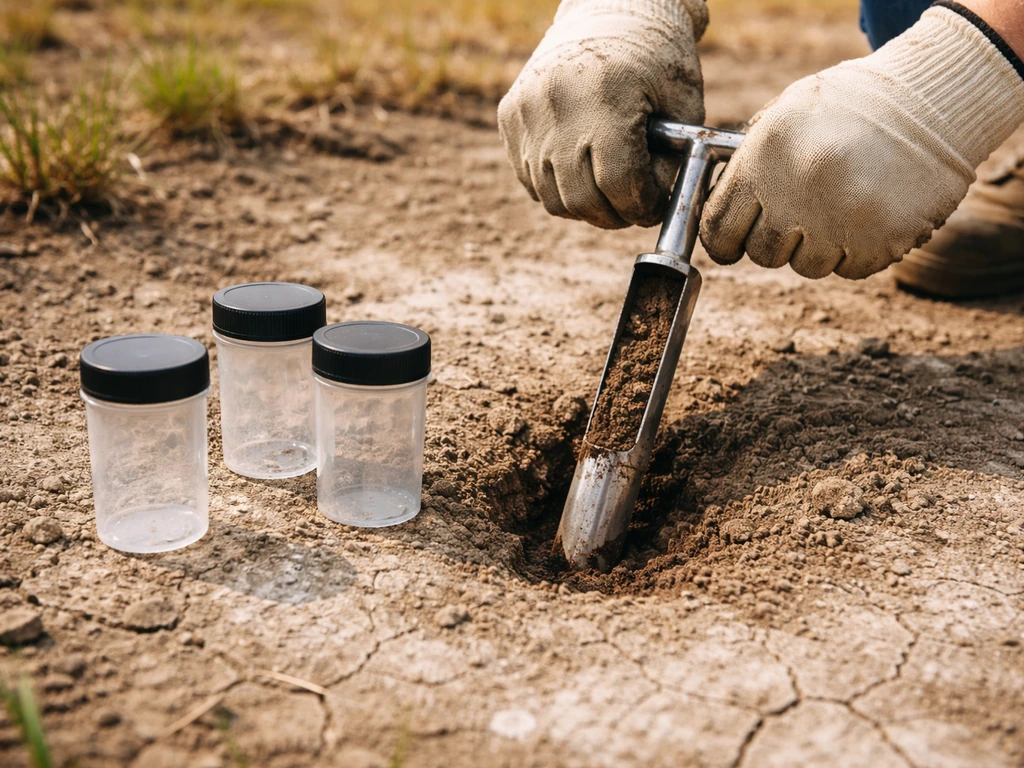
- White salt crusts on bare soil surface, especially visible after dry spells
- Sparse or absent vegetation with patches of bare, often cracked soil
- Reddish or orange soil tones sometimes associated with salt-affected areas
- Existing halophyte indicator species: if Spartina, Salicornia (glasswort), Atriplex, or Suaeda are already there, salinity is present
- Standing water that leaves mineral deposits on nearby vegetation or rocks after drying
Visual symptoms are useful for spotting obvious problems, but as extension soil specialists consistently point out, a soil test is the only reliable way to get an accurate diagnosis. Do not rely on visuals alone if you are making planting decisions.
Soil and water testing steps
- Collect a representative soil sample from the root zone depth (typically the top 6–12 inches) following your state extension lab's instructions for sample size and container type.
- Request EC (electrical conductivity) and pH as a minimum. Ask for SAR or ESP testing if you suspect sodic conditions (heavy clay, puffy soil structure, high pH above 8.5).
- Send to a certified soil testing laboratory. University extension labs in most states offer this service for around $15–30 per sample. Results will report ECe in dS/m.
- Interpret results: ECe below 2 dS/m is low salinity; 2–4 dS/m is moderate (sensitive plants affected); above 4 dS/m is saline (halophyte territory starts here); above 8–16 dS/m is only manageable for strongly salt-tolerant halophytes.
- For water testing (irrigation water, standing water, or tidal influence): test EC and SAR through a water quality lab. EC above 4 dS/m with SAR above 12 indicates saline-sodic water that will affect soil over time.
- For field screening without a lab, handheld EC meters give a rough directional reading. Note that field probes measure bulk soil EC, not the saturated extract (ECe), so values are not directly comparable to lab thresholds. Use field readings for relative comparison across a site, not absolute salinity classification.
Choosing and sourcing halophytes for your habitat and region
Once you know your site's salinity level, flooding regime, and region, plant selection becomes much more targeted. The key is matching three things at once: salinity tolerance class, flood tolerance, and regional provenance. Using locally sourced seed or plants collected from the same watershed or ecoregion consistently produces better establishment results in restoration and revegetation projects.
By habitat type
| Habitat type | Salinity range (ECe) | Example halophyte genera | Key co-conditions |
|---|---|---|---|
| Coastal salt marsh (tidal) | 5–30+ dS/m (varies by zone) | Spartina, Salicornia, Distichlis, Juncus | Daily/weekly flooding, anaerobic soils, high humidity |
| Brackish estuary/wetland | 2–15 dS/m (fluctuating) | Schoenoplectus, Bolboschoenus, Phragmites, Scirpus | Seasonal salinity swings, waterlogging |
| Inland salt flat / playa | 4–20+ dS/m (surface peaks in dry season) | Atriplex, Suaeda, Sarcobatus, Allenrolfea | Periodic flooding then extreme drying, sodic often |
| Saline seep / irrigated saline area | 4–10 dS/m | Atriplex, Puccinellia, Distichlis | Subsurface water movement, variable flooding |
| Alkali/sodic flat | Variable EC, high SAR | Frankenia, Sarcobatus, Suaeda | High pH, poor structure, low oxygen |
Where to find plants and seed
For restoration or revegetation work, provenance matters a lot. Restoration seed suppliers such as Ernst Conservation Seeds and native wetland plant nurseries like Wetland Plants Inc specialize in habitat-matched material, including salt marsh and saline wetland species. They source seed from within target watersheds and ecosystems, which is the model to follow especially for coastal marsh work. The USDA NRCS Plant Materials Program publishes technical notes specifically for saline and sodic soil conditions (look for Technical Note 09: Plants for Saline to Sodic Soil Conditions) and maintains a searchable plant guide database that lets you filter by region, habitat, and salinity tolerance. The PLANTS Database is also freely available and searchable by wetland indicator status and state range, which helps you cross-check whether a halophyte is native to your region before sourcing it.
For student or educational use, the NRCS PLANTS Database combined with your state's native plant society records is usually enough to build a solid candidate list. Start with the genera already documented in your region's salt-affected habitats, confirm salinity tolerance class, then check whether local restoration nurseries carry the species. If they do not, NRCS plant materials centers sometimes have seed available directly for conservation-oriented projects.
Halophytes compared to other stress-adapted plant groups
It is worth briefly placing halophytes in context with other plant groups organized by extreme growing conditions, since the categories overlap in ways that cause confusion. Xerophytes are plants adapted to water scarcity, found in deserts and dry mountains. Because they are adapted to dry conditions, xerophytes typically grow in deserts, arid regions, and other places where moisture is limited Xerophytes are plants adapted to water scarcity. Some xerophytes grow in inland salt flats and have incidentally developed modest salt tolerance, but they are not halophytes unless salinity is the primary selective pressure they are adapted to. Phreatophytes are deep-rooted plants that access groundwater, and some (like saltcedar) grow in saline groundwater zones, again creating overlap. Bryophytes occupy moist, shaded habitats and are generally sensitive to salt, placing them at the opposite end of the salinity tolerance spectrum from halophytes. What distinguishes a true halophyte is not just surviving salt but having a suite of specialized biochemical and structural adaptations that allow growth and reproduction where EC routinely exceeds 4 dS/m. Bryophytes, by contrast, tend to grow in damp, moisture-rich microhabitats where they can absorb water directly from the air or from the surface where do bryophytes grow.
The line between 'salt-tolerant garden plant' and 'halophyte' is genuinely blurry at the margins. Some researchers define halophytes as plants that complete their life cycle at salinities above 200 mM NaCl (roughly equivalent to about 20 dS/m) while others use lower thresholds. For practical habitat identification purposes, the 4 dS/m ECe threshold for saline soil classification is the most useful working boundary to keep in mind.
FAQ
If a plant survives in salty soil, does that automatically make it a halophyte?
They are defined more by where they can complete their entire life cycle than by whether they merely survive brief salt exposure. A plant that grows for a while in salty garden soil but fails to flower, set seed, or regenerate under sustained high EC is not behaving like a true halophyte.
Are inland “salt flats” usually saline, or can they be saline-sodic too?
Not always. Many inland sites with “salty” water or crusts are saline-sodic, meaning structure can be degraded by sodium even if salt levels seem moderate. That distinction matters because successful establishment depends on both EC (salts) and SAR/ESP (sodium effects).
Is coastal marsh salinity constant through the year?
Usually, but not universally. Coastal marsh salinity can drop after large freshwater pulses (storms, snowmelt, heavy rain), and it can rise again as water retreats and evaporates. For planting, that means you should match not only salinity level but also the timing and duration of flooding.
Why do EC values sometimes differ between reports or soil tests?
It can. EC thresholds (like 4 dS/m for saline-soil classification) are commonly used for saturated paste extracts, but the measurement method and sampling depth affect comparability. If you can, use the lab’s specified method (ECe) and collect samples that reflect the root zone.
Besides salt, what other conditions can limit halophyte survival?
Halophytes typically grow best when salinity stress is predictable, but they still need enough oxygen and water movement to support roots. Waterlogged, low-oxygen conditions are common in wetlands, so drainage, microtopography, and pore-water movement can be as limiting as salt concentration.
Can plants labeled salt tolerant for gardens handle road-salt impacts as well as true halophytes?
You should not assume “roadside salt” means halophytes will persist long-term. Winter de-icing salt can create seasonal spikes in EC and also includes mixtures beyond sodium chloride. Some plants tolerate the peaks temporarily, but long-term dominance still depends on whether salinity stays consistently high enough.
Does provenance matter if the site’s salinity matches the plant’s tolerance?
If the aim is restoration, use plants from the same region and similar habitat dynamics, even if EC targets are met. Provenance can strongly affect germination timing, growth form under flooding stress, and survival during the local seasonal salinity cycle.
How should I choose halophytes if my site has both salt and periodic flooding?
Use the plant’s habitat class together with your site’s salinity and flooding regime, not just the EC number. A species that tolerates high EC may still fail if it cannot handle your water depth, inundation frequency, or wet-dry timing in the growing season.
What’s the practical next step if I suspect halophyte habitat but my visuals are unclear?
The best “first cut” is to screen with a lab soil test (for ECe and, when relevant, SAR or ESP) and then confirm with a small trial if you are close to thresholds or dealing with saline-sodic soils. Relying on visible salt crusts or plant appearance alone can mislead because other stressors can create similar symptoms.
How can I evaluate whether my irrigation water is in the right salinity range for halophytes?
If the water source and standing-water chemistry are unknown, salinity management can be unpredictable. Measure the electrical conductivity and, when possible, SAR for irrigation or standing water, and recognize that seawater is far higher in EC than typical freshwater, so mixing regimes can shift stress intensity quickly.
If definitions use different salt thresholds, how do I decide which one to use?
Yes, some research uses different NaCl-based thresholds for defining halophytes, but those thresholds can be hard to apply directly without converting to EC and without knowing the soil-water chemistry. For practical identification, the ECe working boundary (4 dS/m) and saline-sodic metrics (SAR/ESP) are usually the most actionable.
What goes wrong when people pick a halophyte for EC but ignore sodium effects?
Salt tolerance does not automatically mean tolerance to salt plus sodium-driven soil structure problems. In saline-sodic or sodic conditions, plants may struggle because infiltration and rooting conditions degrade, so amendments or site preparation (if appropriate to your goals) may be needed alongside selecting a tolerant species.