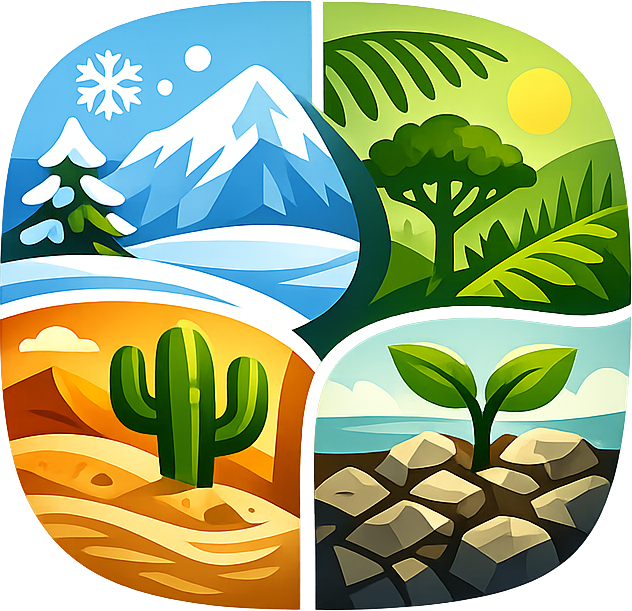
Plants that grow on land are called terrestrial plants. That's the term you'll see in ecology, botany, and any field guide organized by habitat. "Terrestrial" simply means "of the land," and it covers everything from a spruce tree on an alpine slope to a cactus in the Sonoran Desert to the dandelion pushing through a sidewalk crack. If it roots in soil, rock, or other land-based substrate rather than in open water, it qualifies as a terrestrial plant.
The Plants That Grow on Land Are Called Terrestrial Plants
Dr. Marcus Weatherby
11 May 2026
Terrestrial vs. aquatic plants: what actually separates them
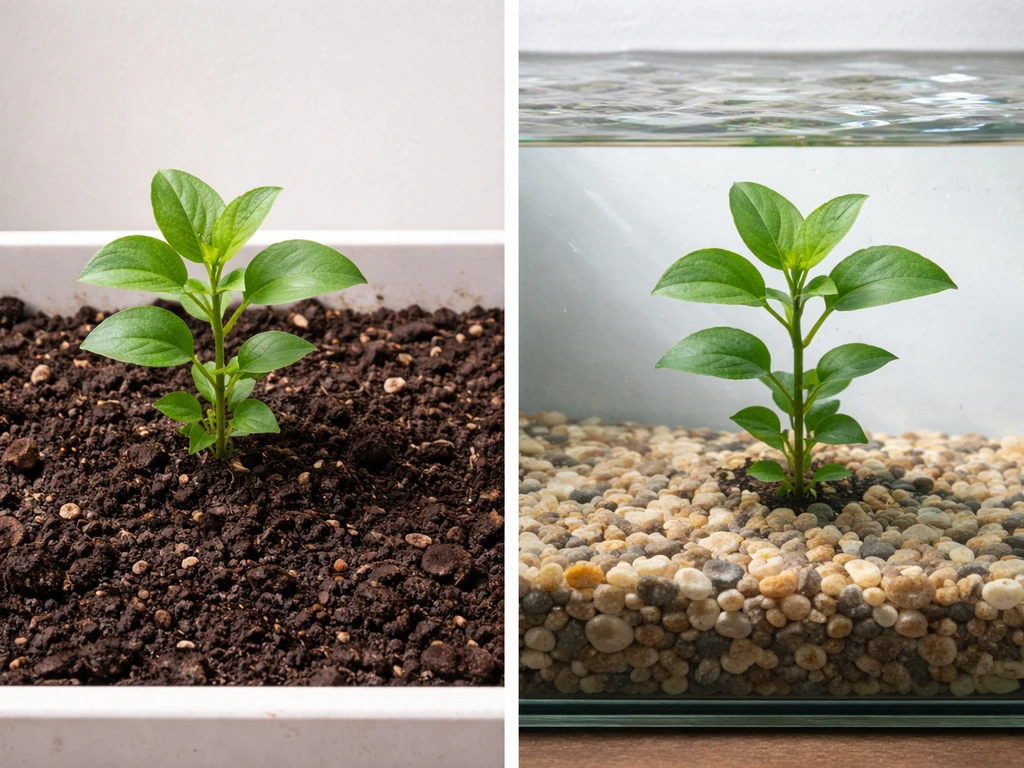
The simplest split is where the roots anchor. Terrestrial plants root into land-based soil or substrate and get moisture from rainfall, groundwater, or irrigation. Aquatic plants (also called hydrophytes or macrophytes) are adapted to live in water or in soils that are frequently saturated, like swamps and marshes. Some aquatic plants are fully submerged, like hydrilla; others float on the surface, like duckweed. The line can blur a little at the edges: semiaquatic plants tolerate temporary flooding but are still considered closer to the terrestrial side. Here's a quick side-by-side:
| Feature | Terrestrial Plants | Aquatic Plants (Hydrophytes) |
|---|---|---|
| Where they root | Soil, rock, or land-based substrate | Water or frequently saturated/hydric soils |
| Water source | Rain, groundwater, irrigation | Standing water or permanently wet soil |
| Oxygen to roots | Drawn from air in soil pores | Adapted to oxygen-poor, waterlogged conditions |
| Common habitats | Forests, grasslands, deserts, tundra | Ponds, lakes, swamps, marshes, littoral zones |
| Example species | Oak, saguaro, switchgrass, moss | Hydrilla, duckweed, cattail, water lily |
One memory trick that works well: if you need to wade or boat to reach it, it's probably aquatic. If you can walk up and dig it out of the ground, it's terrestrial.
What "growing on land" actually means in plant ecology
In ecology, "terrestrial habitat" refers to any land-based environment, and it's an enormous category. A boreal forest in Canada, a chaparral hillside in Southern California, an Arctic tundra flat, and a Midwest tallgrass prairie are all terrestrial habitats. What they share is that plants there rely on soil for anchorage and nutrient uptake, and they deal with the atmosphere directly, exchanging gases through leaves exposed to open air.
What separates one terrestrial habitat from another is climate, soil type, and seasonal moisture patterns. A desert terrestrial plant has completely different adaptations than a rainforest terrestrial plant, even though both are technically "growing on land." This is why, when you're trying to find plants suited to your location, the starting point is always climate zone and soil conditions rather than just the land-versus-water distinction. That said, knowing a plant is terrestrial tells you immediately that it needs some form of well-drained or at least land-based rooting medium, not a pond or bog.
It's also worth noting that "growing on land" doesn't always mean rooted in the ground. Some terrestrial plants grow on rocks (lithophytes) or even on other plants (epiphytes), drawing nutrients from air and debris rather than traditional soil. These are still terrestrial because they're not living in water. If you've come across the related idea of plants that grow in air, those epiphytes are a fascinating subset of the terrestrial plant world.
Examples of terrestrial plant types worth knowing
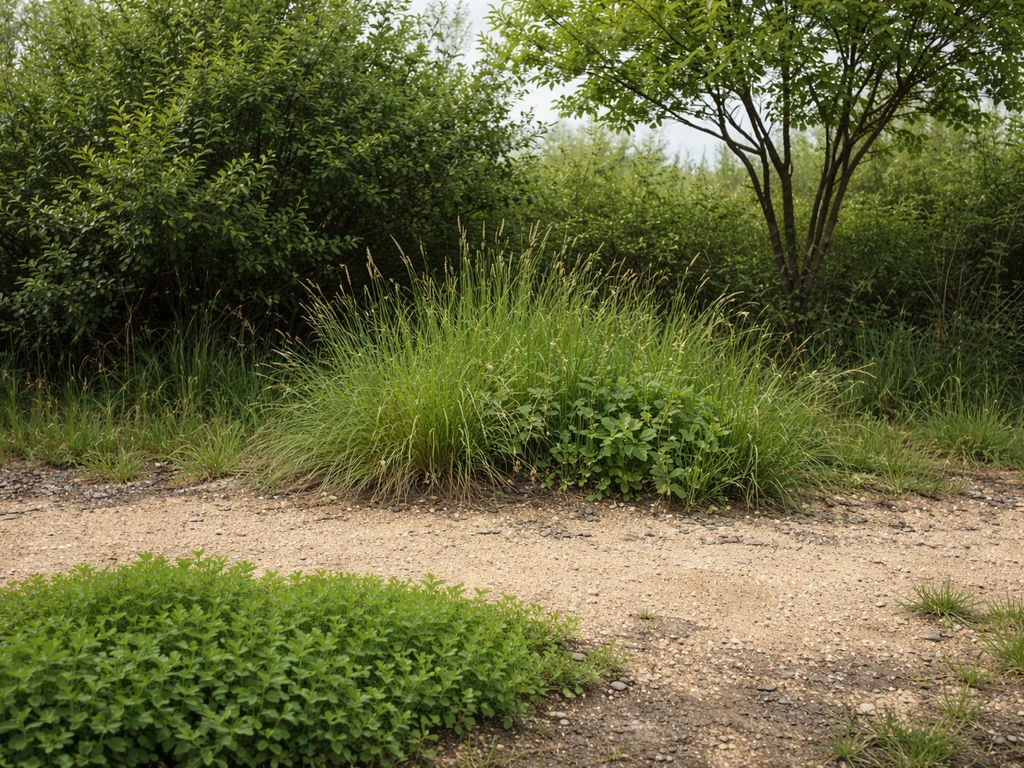
"Terrestrial plants" is a huge umbrella, so here are the main groups you'll encounter when researching what grows where:
- Trees and shrubs: woody terrestrial plants that form the structural canopy of forests, savannas, and shrublands. Think oak, pine, mesquite, and chaparral species like manzanita.
- Grasses and sedges: low-growing terrestrial plants that dominate prairies, steppes, meadows, and alpine zones. Switchgrass, big bluestem, and blue grama are classic examples.
- Forbs: broad-leaved, non-woody terrestrial plants like wildflowers and herbs. Coneflowers, lupines, and goldenrod fall here.
- Ferns and mosses: non-flowering terrestrial plants common in moist, shaded environments like forest floors and rocky outcroppings.
- Desert succulents: terrestrial plants adapted to arid land, storing water in thick tissues. Cacti and agaves are the well-known examples.
- Tundra plants: low-lying terrestrial specialists like sedges, dwarf shrubs, and lichens that survive frozen soils and short growing seasons.
Notice that all of these root in some form of land substrate. None of them require standing water to survive. This is the defining thread. If you're exploring what distinguishes plants that grow on dry land specifically, that gets into a more detailed subset of terrestrial ecology focused on arid and semi-arid habitats.
If you want concrete examples of plants that grow naturally on land, look for species adapted to your local arid or semi-arid conditions what distinguishes plants that grow on dry land. And if you're curious about plants that show up somewhere they weren't intended to be, that's a different ecological conversation entirely. Plants that grow where they are not wanted are called invasive species, which is an issue of ecology and management rather than just habitat type.
How to find terrestrial plants that actually grow where you live
Knowing the term "terrestrial plant" is a useful foundation, but the practical next step is narrowing down which terrestrial plants fit your specific climate, soil, and habitat. Here's a straightforward process: The University of Washington’s Native Plant Finder is a database that helps you find native plants by ZIP code.
- Find your USDA Plant Hardiness Zone. This is the standard starting point for any terrestrial plant search in North America. You can look it up by ZIP code on the USDA Plant Hardiness Zone Map. Your zone tells you the average annual minimum winter temperature, which filters out plants that simply won't survive your winters.
- Check your soil type and pH. Terrestrial plants are highly sensitive to whether your soil drains well, holds moisture, or has a particular acidity level. A basic soil test (available through most county extension offices) will tell you your pH and texture. University extension services, like Utah State's or the University of Maryland's resources, walk you through what to test and how to interpret results.
- Search native plant databases filtered by habitat. Tools like the USDA's native plant databases or regional databases from organizations like the Native Plant Society of Texas let you search by soil moisture (dry, mesic, wet) and habitat type (prairie, forest, desert). This is where knowing your plant is "terrestrial" becomes actionable: you can filter by land-based habitat conditions.
- Use a ZIP-code native plant finder. The University of Washington's Native Plant Finder lets you search by zip code and filter by plant type, giving you a list of terrestrial species that naturally occur in ecosystems like yours.
- Match habitat descriptions to your yard or region. Look at categories like "forest openings," "prairies," or "rocky slopes" in plant databases. These describe the specific terrestrial habitats where each species naturally thrives.
The big takeaway is that "terrestrial plant" tells you the category, but climate zone, soil moisture, and local habitat tell you which terrestrial plants will actually succeed in a specific place. A switchgrass native to a Midwest prairie and a saguaro cactus native to the Sonoran Desert are both terrestrial plants, but they need completely different conditions to thrive. Start with the term, then let climate and soil do the filtering.
The quick reference: remembering the term
If you need a simple anchor for the vocabulary: "terra" is Latin for earth or land, so terrestrial plants are, literally, earth plants. Aquatic comes from "aqua," meaning water. Hydrophyte means "water plant" (hydro = water, phyte = plant). So when you see the term terrestrial plant in a field guide, a plant ecology database, or a gardening resource, it means exactly what it sounds like: a plant that lives on and in the land. That covers the overwhelming majority of plant life you'll encounter on this planet, from your backyard vegetable garden to old-growth rainforests to windswept Arctic heaths.
FAQ
If a plant grows near a pond, does it still count as a terrestrial plant?
Not always. A plant can be terrestrial even if it grows on rocks or another plant (like epiphytes). The key requirement is that it is not living in standing water, it relies on land-based exposure to air and land substrate (rock, bark, or soil) for support and nutrient acquisition.
What about plants that survive seasonal flooding on land?
If it regularly sits in standing water for most of its life, it is more accurately treated as an aquatic plant. If it only experiences occasional flooding or wet seasons but is not adapted to live submerged or continuously saturated, it is usually considered closer to the terrestrial side (often described as semiaquatic).
Are terrestrial plants the same thing as desert plants?
Yes. Terrestrial is a habitat category, while “dryland” is a more specific subset focused on arid and semi-arid conditions. A desert plant is terrestrial, but not every terrestrial plant is adapted to low rainfall, high heat, or drought-based moisture cycles.
How can I tell terrestrial plants apart from aquatic plants in the field?
Look at where it anchors and what it depends on. Terrestrial plants have structures adapted for air exposure and nutrient uptake through soil or other land substrate, whereas aquatic plants are adapted for life in water or frequently saturated conditions, often with different leaf, root, and tissue features.
Can a plant be both terrestrial and aquatic depending on the situation?
Yes, some plants transition during different life stages, for example seedlings establishing on land but later spreading into wetter areas. In these cases, you typically classify by the plant’s overall adaptation and most of its normal growing conditions, not just where it happens to be at one moment.
Does terrestrial mean the plant is adapted to dry conditions?
No. Being “terrestrial” does not automatically mean the plant is drought-tolerant. Many terrestrial plants, like those in rainforests or temperate forests, need consistently moist soils, even though they still grow on land-based substrate.
If a plant is growing in soil, does that always mean it is terrestrial?
It’s safer to avoid assuming based on where you see it. Sidewalk cracks and garden beds might suggest drought, but the plant could still be adapted to relatively wet soil if that’s how the site behaves seasonally. Use climate and soil moisture patterns, not just the surface setting.
What are the most common mistakes people make when identifying terrestrial plants?
Common mistakes include classifying by “near water” rather than by whether it lives in water or saturated soils, and confusing “terrestrial habitat” (a broad land environment) with a narrower habitat type like dryland or wetland. Terrestrial plants are defined by land-based living, not by any single climate.
If I’m choosing terrestrial plants for a garden, what should I check first?
Terrestrial habitat types differ because climate, soil chemistry, and seasonal moisture determine what grows there. When choosing plants for a specific location, match to those local conditions, especially drainage and seasonal wetness, rather than using “terrestrial” as the only filter.
Are there different kinds of terrestrial plants beyond just trees and shrubs?
Avoid overgeneralizing from the name. “Terrestrial” is broad and includes many growth forms such as trees, shrubs, grasses, mosses, and some lichens (in many contexts). A plant may look very different from other terrestrial plants, but it still fits if it is adapted to live without relying on standing water.