
Plants that grow along the ground are blank" rel="noopener noreferrer">low-growing, spreading species that hug the soil surface rather than reaching upward. They include creeping perennials like thyme and ajuga, vining groundcovers like ivy and vinca, mat-forming mosses and sedums, prostrate shrubs like creeping juniper, and rosette plants like clover. Which one actually works for your situation depends on your light, moisture, soil type, and climate. The good news is that there's a reliable ground-hugging plant for nearly every condition, and once established, most of them take care of themselves.
Which Plant Grow Along the Ground: Best Groundcovers
Dr. Marcus Weatherby
30 Apr 2026
What "grows along the ground" actually means
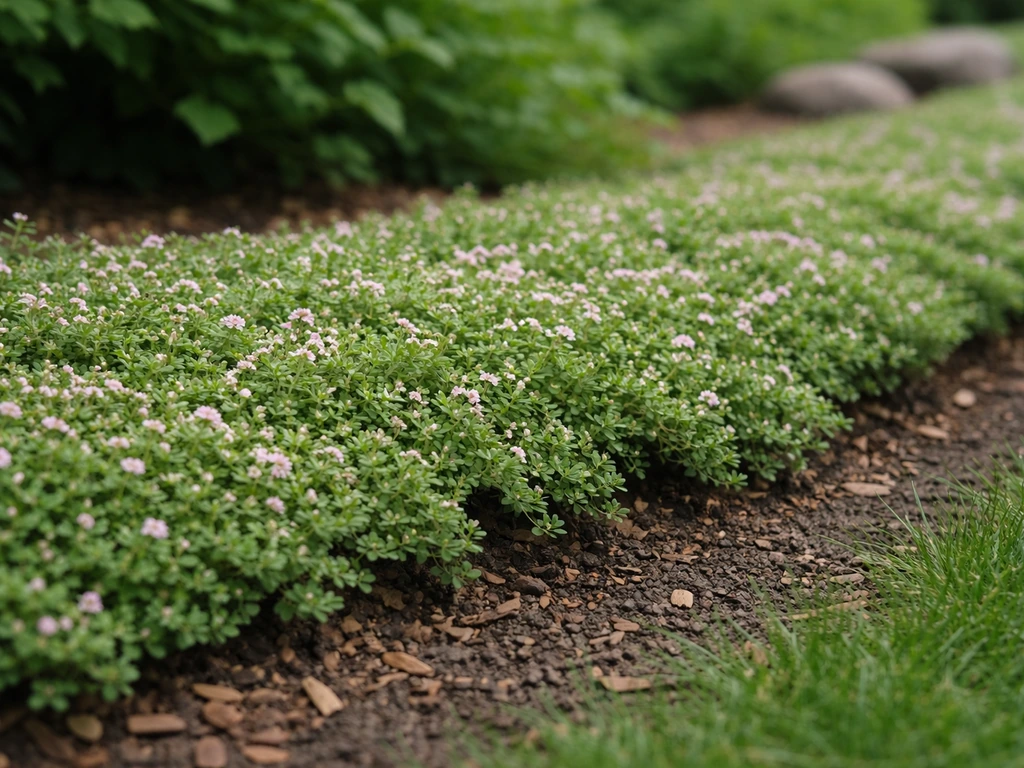
The term gets used loosely, so it helps to know what you're actually looking at. Virginia Tech defines a groundcover as any low-growing plant species that stays at or under 3 feet tall and spreads to form a relatively dense layer of vegetation. The LSU AgCenter narrows that further, describing true groundcovers as plants with a creeping or prostrate growth habit that typically stay under 2 feet. The key feature isn't just height but the habit of spreading horizontally across the soil surface.
In practice, this covers several very different plant types. Creeping perennials (like thyme, ajuga, and creeping phlox) send out runners or spread by root division. Vining groundcovers (like vinca, ivy, and pachysandra) trail along the ground and root at nodes. Mosses and liverworts form dense, cushiony mats directly on soil, rock, or bark. Prostrate shrubs like creeping juniper or bearberry grow woody stems that run horizontally rather than upward. Rosette-forming plants like clover or creeping jenny spread outward from a central crown. All of these qualify as "plants that grow along the ground," and each one suits different conditions. For more ideas, browse plants that grow along the ground examples to match different light and soil conditions.
It's worth distinguishing these from plants that grow underground (bulbs, tubers, root vegetables) or plants whose roots are in the ground but whose structure grows upward. This article focuses specifically on the ground-surface layer: plants whose leaves, stems, and spread stay close to or on the soil.
Pick your plant by light first
Light is the single most important filter. Get this wrong and your groundcover will struggle no matter how well you plant it.
Full sun (6+ hours of direct sun daily)
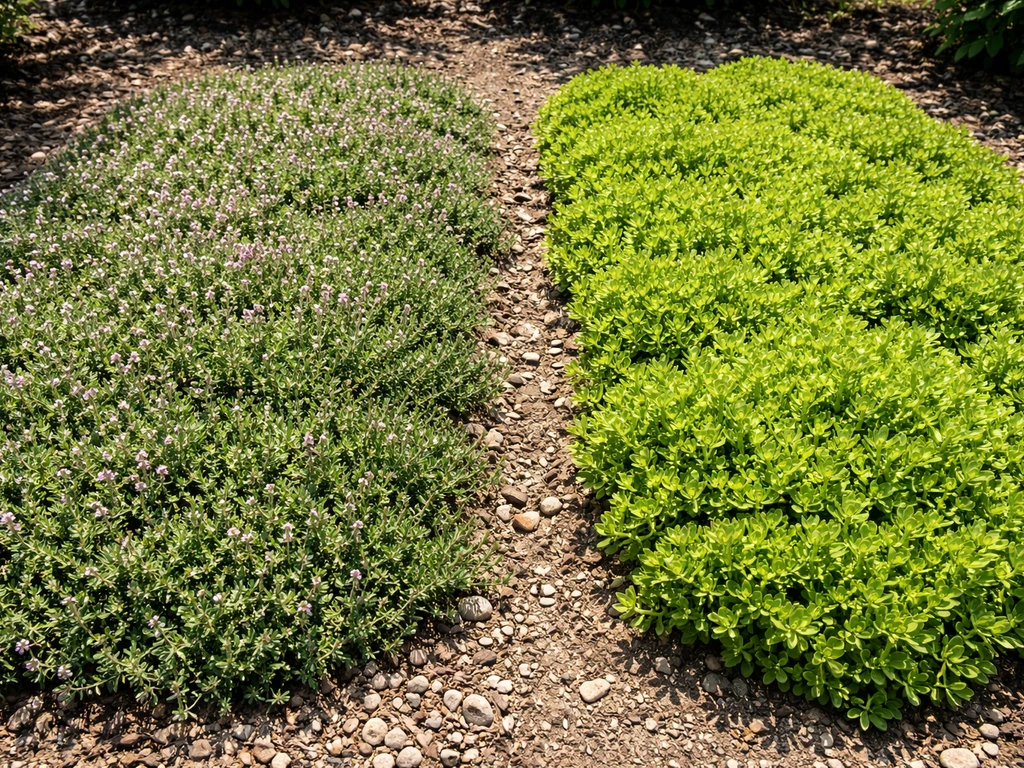
In full sun, you have the widest selection and the fastest coverage. Creeping thyme is one of the most dependable options: it tolerates foot traffic, stays under 3 inches tall, and produces tiny flowers in late spring. Sedum (stonecrop varieties like Sedum acre or Sedum spurium) thrives in hot, dry, sunny spots and spreads steadily. Creeping phlox produces a carpet of color in spring and stays evergreen in most climates. Clover, both white clover and microclover, works well in lawns or open patches and fixes nitrogen in the soil. Blue star creeper does well in mild, sunny climates and tolerates light foot traffic.
Partial shade (3 to 6 hours of sun)
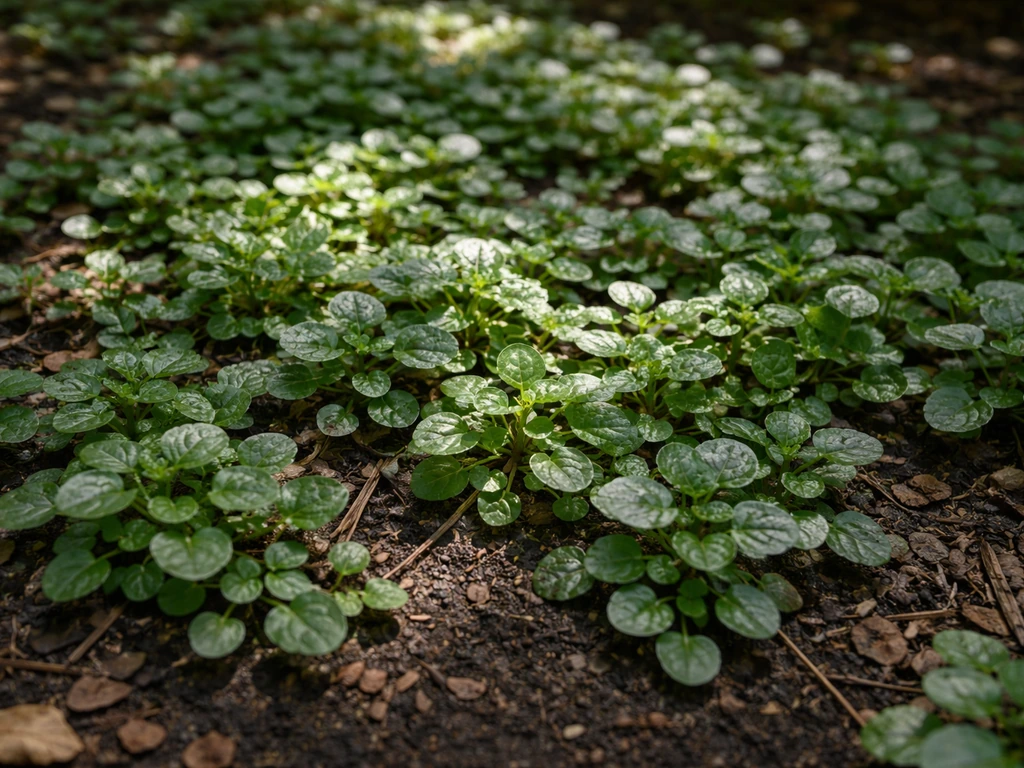
Partial shade opens up ajuga (bugleweed), one of the most reliable spreading groundcovers for mixed-light areas. It spreads by stolons, stays under 6 inches, and produces upright flower spikes in spring. Vinca minor (periwinkle) handles part shade well and produces purple-blue flowers in spring. Pachysandra is a classic choice under trees where grass struggles. Creeping jenny (Lysimachia nummularia) spreads quickly in part shade and has a bright lime-green form that lights up shaded spots.
Deep shade (under 3 hours of direct sun)
Deep shade is where most lawn grasses give up and groundcovers really earn their keep. Moss grows naturally in deeply shaded, moist areas and requires no planting at all in the right conditions. Wild ginger (Asarum canadense) is a native option that spreads slowly but forms a dense mat in woodland shade. Epimedium (barrenwort) is nearly indestructible once established, tolerates dry shade, and spreads steadily. Liriope (lilyturf) handles heavy shade, acts almost like a grass, and stays evergreen in warmer climates.
Pick your plant by moisture and soil
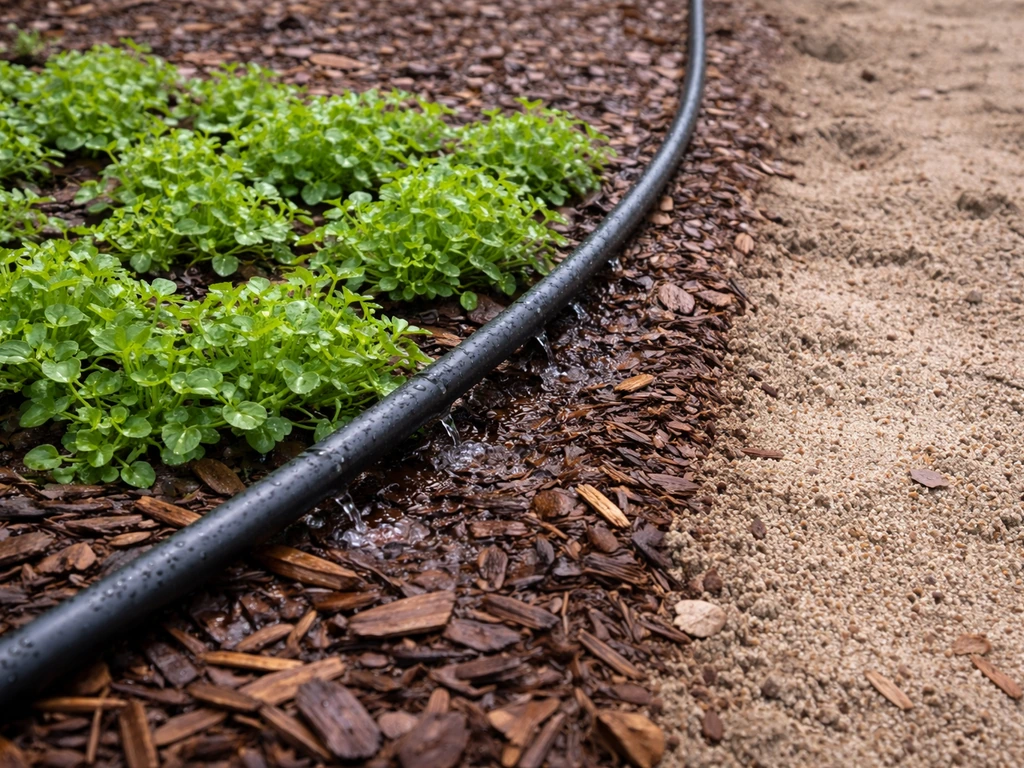
Once you've matched for light, narrow it down by moisture and soil texture. These two factors determine whether a plant survives its first summer or dies back and opens the door to weeds.
| Condition | Best groundcover options | What to avoid |
|---|---|---|
| Dry, sandy, or rocky soil | Creeping thyme, sedum, bearberry (Arctostaphylos uva-ursi), creeping juniper, ice plant (mild climates) | Vinca, pachysandra, wild ginger — these need consistent moisture |
| Average, well-drained soil | Ajuga, creeping phlox, clover, blue star creeper, creeping jenny | Most options work here — focus on light instead |
| Moist or clay-heavy soil | Creeping jenny, liriope, sweet woodruff, native violets, moss | Sedum, thyme, creeping juniper — these rot in wet conditions |
| Wet or poorly drained soil | Moss, native sedges (Carex species), creeping buttercup, Joe Pye weed edges | Almost all traditional groundcovers — use sedges or moisture-tolerant natives instead |
| Compacted or rocky soil | Sedum, creeping thyme, bearberry, creeping juniper | Pachysandra and ajuga prefer loose, amended soil |
Sandy or gravelly soils drain fast, so anything you plant there needs to tolerate drought between rain events. Sedum and creeping thyme are the most field-proven options for this. On the other end, clay soils stay wet and can suffocate roots. Native sedges, sweet woodruff, and creeping jenny handle clay far better than most ornamental groundcovers. If your soil is compacted (common under trees or in high-traffic areas), work in some compost before planting and choose tough, drought-adapted species.
Climate and season: does it stay green year-round or go dormant?
Whether you're in a cool northern climate or a warm southern one changes everything about which ground-level plants actually persist and cover well.
Cool climates (USDA zones 3 to 6)
In cold regions, evergreen groundcovers are worth prioritizing because they hold the soil and suppress weeds even when snow isn't on the ground. Creeping phlox, pachysandra, and vinca minor all hold their leaves through winter in zones 4 and above. Bearberry is native to northern forests and barrens, handles cold well, and produces red berries in fall and winter. Ajuga goes semi-evergreen in colder zones but bounces back reliably in spring. Native mosses are naturally cold-adapted and thrive in zones 3 to 5 where they grow wild in boreal forests and rocky outcrops.
Warm climates (USDA zones 7 to 11)
In warm climates, you get more options but also more weed pressure because the ground rarely freezes to reset the playing field. Liriope is nearly everywhere in zones 6 to 10 because it's genuinely tough. Asian jasmine (Trachelospermum asiaticum) forms a dense, low mat and is widely used in the Southeast and Southwest. Dymondia (silver carpet) works in dry, warm regions like coastal California. Ice plant covers sandy, sunny slopes in mild coastal climates. Mimosa pudica and other tropical creepers spread naturally in warm, humid regions but can become invasive, so check local status before planting.
Seasonal vs. year-round coverage
Some groundcovers go fully dormant in winter, leaving bare soil exposed for several months. If weed suppression or erosion control is your goal, you need something that holds coverage year-round, or you need to layer a dormant groundcover with a mulch that bridges the gap. Clover, for example, dies back in cold winters but germinates and fills in quickly in spring. Sedum often looks rough in mid-winter but fills back in by late spring. For true year-round coverage in cold climates, pachysandra, vinca, and creeping juniper are the most reliable.
Fast, reliable picks for common situations
Here's where the research meets the real world. If you're standing in front of a problem area right now and need a quick answer, this section is for you.
| Situation | Best plant picks | Why it works |
|---|---|---|
| Sunny slope or erosion-prone bank | Creeping juniper, bearberry, creeping phlox, crown vetch (use cautiously, can spread aggressively) | Deep or spreading roots hold soil; low profile resists wind damage |
| Bare spot under a tree (dry shade) | Epimedium, pachysandra, liriope, wild ginger | Tolerates root competition and low moisture common under established trees |
| Between pavers or stepping stones | Creeping thyme, blue star creeper, moss, Corsican mint | Handles foot traffic; low enough not to trip over |
| Along a shaded path edge | Ajuga, sweet woodruff, creeping jenny | Spreads neatly along edges; defined growth habit |
| Large bare lawn area to cover fast | White clover, creeping red fescue, vinca minor | Quick spreading; germinates or establishes within one season |
| Wet or boggy area | Native Carex sedges, creeping buttercup, moss | Naturally adapted to standing water or saturated soil |
| Hot, dry, rocky garden | Sedum acre, creeping thyme, ice plant, woolly thyme | Succulent or aromatic; drought-adapted by nature |
A note on crown vetch and some ivy varieties: they spread fast, which is why they show up on erosion-control lists, but they can overtake native plant communities in adjacent wild areas. If you're near a natural area, woodland edge, or stream corridor, choose native alternatives like bearberry or native sedges instead.
How to get ground-level plants established and keep them going
The RHS and Clemson Extension both make the same point: weed control is critical until your groundcover closes in and forms a dense canopy. Colorado State University Extension advises that for groundcovers the goal is sufficient density to inhibit weed emergence, and to control existing weeds before planting. That's the window where most people lose ground (literally) to weeds. Here's how to manage that gap.
Preparing the ground

Clear existing weeds thoroughly before planting. For perennial weeds like bindweed or thistle, you need to get the roots, not just cut the tops. Work the soil lightly to loosen the top 4 to 6 inches, amend with compost if the soil is compacted or poor, and rake level. For slopes, lay erosion fabric or use a mulch layer immediately after planting to hold soil in place while roots establish.
Spacing and planting
Plant spacing depends on how fast you want coverage and your budget. Close spacing (6 to 8 inches apart) fills in within one season for fast spreaders like ajuga or vinca. Standard spacing (12 to 18 inches) takes one to two full growing seasons to close in but requires fewer plants. Fill the gaps between plants with 2 to 3 inches of mulch. That mulch layer is doing the weed suppression work until your groundcover takes over. Don't skip it.
Watering during establishment
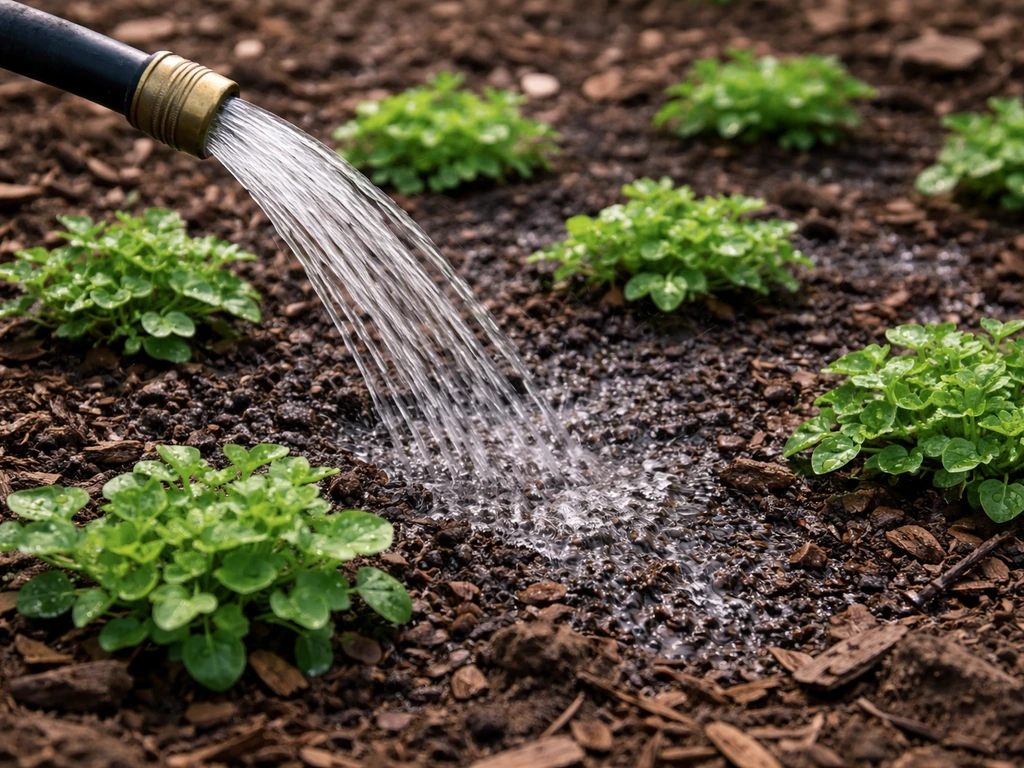
Most groundcovers need consistent moisture for their first growing season, even drought-tolerant ones like thyme or sedum. Water deeply every few days for the first 6 to 8 weeks, then taper off as roots establish. After the first full season, the majority of established groundcovers need little to no supplemental irrigation, which is one of the main reasons to choose them over lawn grass.
Ongoing maintenance
Once established, most groundcovers are genuinely low-maintenance. Pull or spot-treat weeds that push through in year one. Edge the planting area once or twice a year to keep aggressive spreaders like vinca or ajuga from encroaching on lawn or garden beds. Some groundcovers benefit from a light trim or mow at the end of winter (creeping thyme, liriope) to remove dead material and encourage fresh growth. Fertilizing is rarely necessary and can actually push weedy growth if overdone.
How to identify ground-level plants you find growing wild
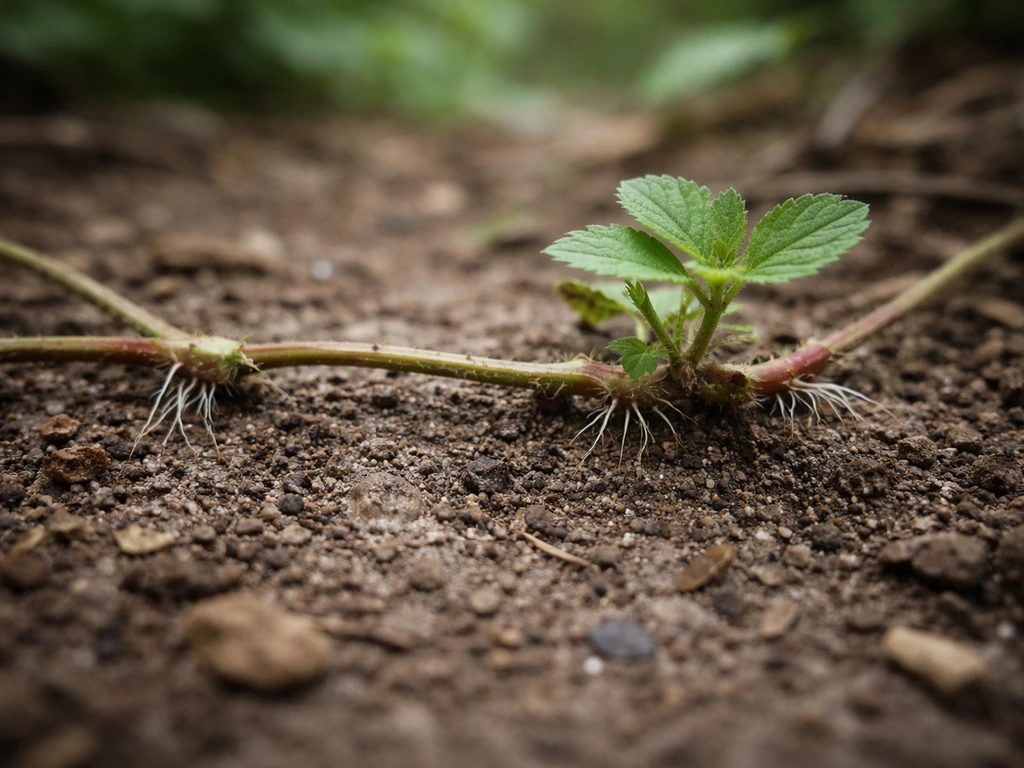
If you're trying to identify something already growing along the ground in a natural area, a forest edge, or your own yard, a few quick observations will narrow it down fast.
- Check the stem: does it root where it touches the ground (creeping/stoloniferous), or does it radiate outward from a central crown (rosette/clumping)? Rooting-at-nodes is a key marker of true creeping plants.
- Look at the leaf arrangement: opposite leaves (one on each side of the stem) vs. alternate leaves (staggered). Many common creeping plants like vinca, ajuga, and wild ginger have opposite leaves.
- Check for woody vs. soft stems. Prostrate shrubs like bearberry or creeping juniper have woody, bark-covered stems. Herbaceous groundcovers like thyme or clover have soft green stems that die back in winter.
- Note the habitat: mossy, moist, shaded areas point toward moss, wild ginger, or violets. Dry, sunny, rocky ground points toward sedum, thyme, or clover. Wet edges suggest sedges or creeping buttercup.
- Smell it. Creeping thyme, Corsican mint, and wild ginger all have distinctive scents when leaves are lightly crushed. This is often the fastest field ID shortcut.
- Use a plant ID app (iNaturalist or PlantNet work well) and photograph the stem, leaves, underside of leaves, and overall growth habit — not just the flower. Ground-level plants are often easier to ID from growth habit than from flowers alone.
Ground-level plants found growing naturally in a given spot are often telling you something important: they're adapted to exactly those conditions. A patch of moss on a shaded, compacted slope is a sign that moss will keep thriving there. A clump of wild violets under a tree is a cue that shade-tolerant, moist-soil plants belong in that spot. Reading what's already growing is one of the most reliable ways to figure out what to plant next.
If you want to go deeper on specific plant types, it's worth understanding the difference between plants that grow along the surface versus those that grow underground (like bulbs and tubers) or what these creeping and prostrate plants are actually called in botanical and ecological terms. In botany, plants that grow along the ground are often called creepers when they spread horizontally across the soil surface creeping and prostrate plants. Plants that grow underground are called bulbs and tubers, and the name helps you understand how they spread and survive. The vocabulary matters when you're searching for the right plant for a specific habitat or trying to identify something you've found in the field.
FAQ
Can I mow or trim groundcovers the same way I would a lawn?
Yes, but only in the first year (or after big replanting). In sunny, well-drained areas, you can mow a new thyme or sedum bed lightly to keep weeds down, but stop once plants start flowering and do not scalp. For established groundcovers, mowing at too low a height can remove crowns and slow spread, especially for ajuga and vinca.
Will these plants spread into my lawn or pathways, and how do I control the boundary?
If the groundcover is spreading by runners or rooting at nodes (common in vinca, ivy-like groundcovers, and pachysandra), you can accidentally create “new plants” beyond your intended area. Use an edging barrier (metal or thick plastic) at planting time if you want a strict boundary, and plan for occasional trimming along the edge.
How long does it usually take for groundcovers to fully cover and block weeds?
Not always. Some groundcovers form dense mats (moss, sedum, ajuga), while others fill slowly (wild ginger) or go dormant seasonally (clover, some sedums). If weed suppression is your goal, pick plants that stay partially covered through the time you have weeds, and keep mulch in place until the canopy is continuous.
Why do groundcovers sometimes die even when they’re the right type for my light?
Check for “crown depth” and water habits. Many creepers die when planted too deeply, because the crown stays wet and can rot in clay soils. Plant so the crown or growth point sits at or slightly above the surrounding soil level, then water deeply but less often after the first 6 to 8 weeks.
How much mulch should I use around groundcovers, and can mulch smother them?
Yes, especially if you are in part shade to shade or have fast weeds. Vary the mulch thickness to match your soil and plant: use a thin layer (about 1 to 2 inches) for small plants like ajuga so crowns can access air, and avoid burying trailing stems or moss.
Do groundcovers need fertilizer to fill in faster?
You usually should not fertilize heavily. Many groundcovers, especially sedums and thyme, perform best with little to moderate fertility. Overfertilizing can encourage weed growth and leggy growth, and in lawns it can also blur the boundary between turf and the groundcover.
What’s the safest way to remove weeds without harming the groundcover?
In most cases, you should weed by hand or with spot treatment, but not during every growth phase. Avoid broad, non-selective herbicides right after planting because they can damage young crowns. If you must spot-treat, use a targeted approach and protect the groundcover with a physical barrier or careful application.
Is it better to buy plugs, mats, or divisions for faster groundcover on a bare area?
Not necessarily, and the answer depends on the species and the substrate. Moss and sedum are often sold or established as small pieces or mats, but many spreading plants root from cuttings or divisions. If you’re trying to cover a slope quickly, plugs may take longer than mats, so match your purchase type to your time horizon.
How do I handle fallen leaves and debris on top of groundcovers?
Not for every situation. Some ground-hugging plants need a bit of airflow and a consistent moisture rhythm, and heavy leaf litter can trap moisture against crowns. In general, keep the area clear during the first season, then add only light seasonal cleanup once plants are established and actively growing.
Are any groundcovers known to become invasive near natural areas, and what should I do if I’m close to a woodland or stream?
Yes, certain creeping or prostrate types can become invasive in specific regions, even if they are sold widely. If your property borders a natural area, verify local invasive status before planting, and favor native slow-to-moderate spreaders like bearberry or native sedges when appropriate.