Yes, a wide range of plants genuinely grow underground, and not just their roots. The underground parts we're talking about are specialized storage structures: tubers, bulbs, corms, rhizomes, and true roots that swell into something edible and functional. These structures do the heavy lifting for the plant, storing energy so it can push up new growth season after season. If you're trying to figure out which plants actually do this and how to grow them where you live, this guide gives you the full picture.
What Plants Grow Underground: Types, Examples, and How to Grow Them

Dr. Marcus Weatherby
21 Apr 2026
What actually counts as growing underground
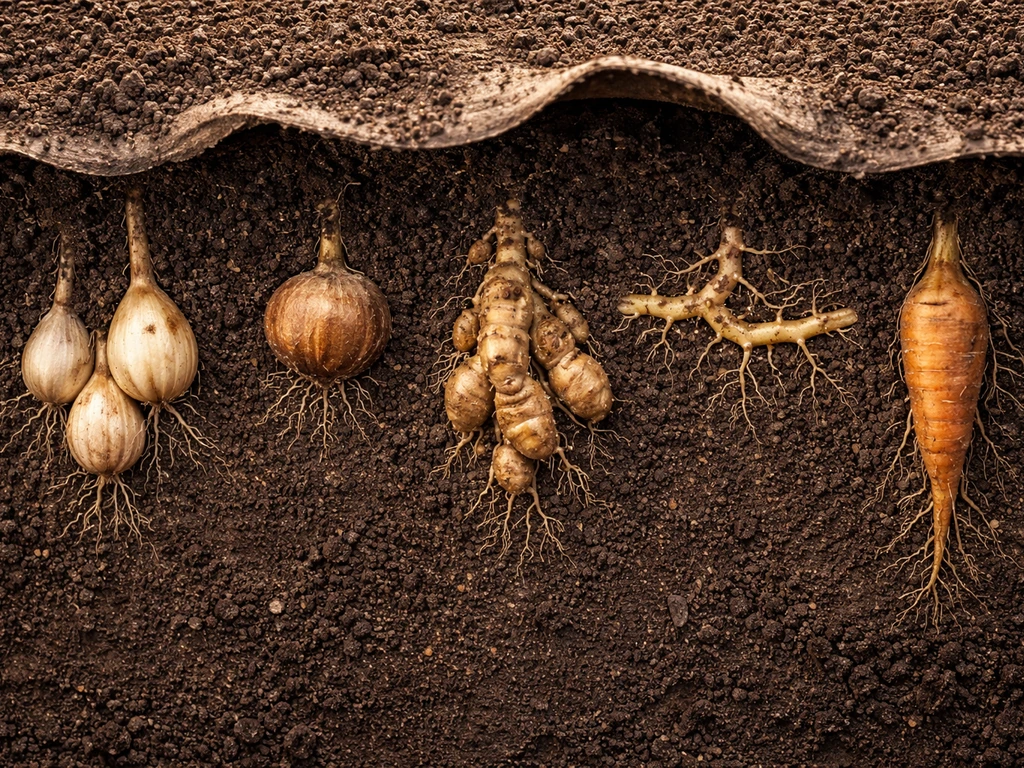
It helps to be precise here, because the phrase 'grows underground' can mean a few different things. Some plants store nearly everything useful below the soil surface: their energy reserves, their dormant buds, and the structures that will eventually generate next season's shoots. Other plants just have roots underground while everything else happens above. Those are not the same thing.
What we're really talking about are plants with modified underground stems or enlarged storage roots. These are organs the plant uses to survive drought, cold, or dormancy and then regenerate. The leaves and flowers come up above ground, but the core of the plant's biology is happening below the soil line. That distinction matters for how you plant them, how deep you go, and what conditions they actually need.
It's also worth noting the difference between plants that grow underground and plants that grow in the ground or along the ground, which are separate categories covered elsewhere on this site. If you are comparing these to plants that spread outward instead of storing food strictly underground, plants that grow along the ground are the adjacent category worth checking plants that grow in the ground or along the ground. If you want additional plants to compare, see plants that grow along the ground examples as a related option for shore-line and spreading groundcover types. If you need specific, easy comparisons, look at these plants that grow along the ground examples as a related option. We're focused specifically on plants whose key structures are subterranean by design.
The five main types of underground plant structures
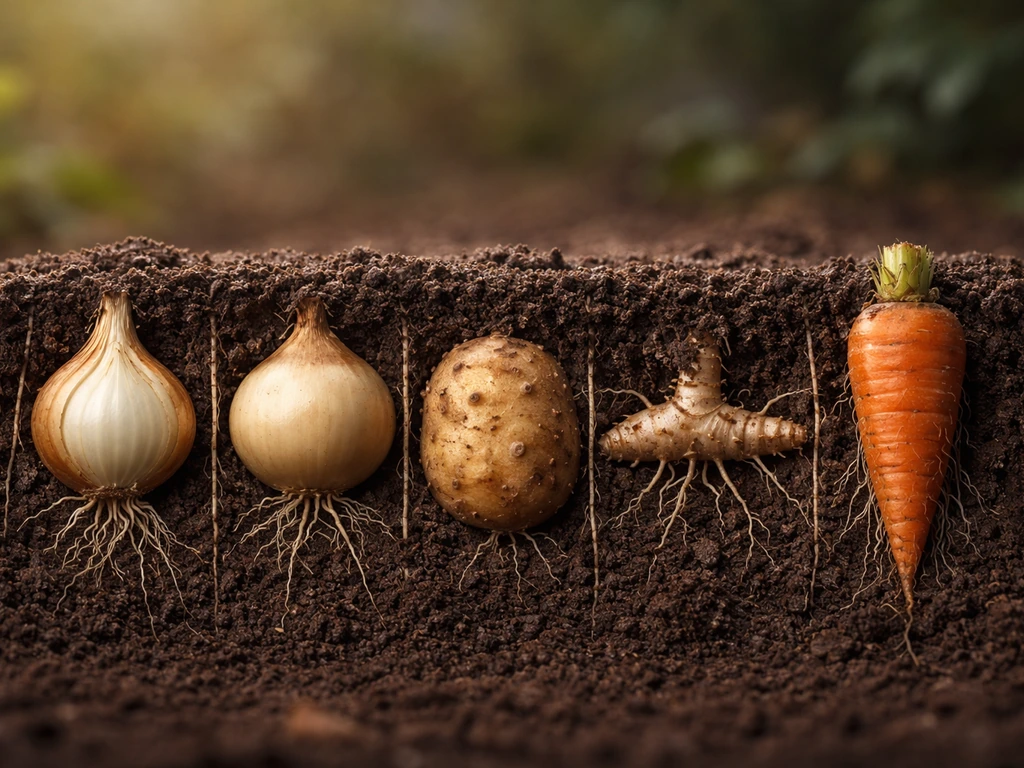
University extension systems tend to use the word 'bulb' as a catch-all in gardening, but there are actually five distinct types. Each one has different anatomy, different planting depth requirements, and different climate tolerances. Here's how to tell them apart.
| Type | What it actually is | Classic examples | Typical depth |
|---|---|---|---|
| True bulb | Compressed underground stem surrounded by fleshy or scaly leaf bases | Tulip, daffodil, onion, garlic | 2–8 inches depending on size |
| Corm | Compressed stem with reduced scaly leaves (solid, not layered) | Crocus, gladiolus, taro | 2–4 inches |
| Tuber | Enlarged portion of an underground stem, with growth buds (eyes) | Potato, Jerusalem artichoke | 3–4 inches |
| Rhizome | Specialized stem that grows horizontally below or at the soil surface | Ginger, iris, turmeric, canna | At or just below surface |
| Storage root | True root that enlarges to store energy | Sweet potato, carrot, cassava | Grows as deep as soil allows |
The key distinction between a tuber and a storage root is worth remembering. A potato is a tuber: it's a modified stem, and those little 'eyes' are actually buds. A sweet potato is a storage root: genetically and structurally it's a root, not a stem. Both grow underground, but they behave differently in the soil and need different handling.
Rhizomes are the wildcard of this group. Iris rhizomes, for example, grow just below or even at the soil surface, not deep underground. Planting them too deep is one of the most common mistakes gardeners make with iris, and it leads to poor flowering. Ginger rhizomes can actually grow upward as the plant develops, which sometimes requires mounding additional soil around the base.
Common examples you can actually grow
Here's a practical rundown of specific plants, what part stays underground, and what you need to know about each one.
Potatoes (tubers)
Potatoes are the most familiar underground grower for most people. You plant seed potato pieces with the eye side facing up in a 3 to 4 inch deep trench, then cover with just 2 to 3 inches of soil. University of Minnesota Extension also recommends planting seed potato pieces about 3, 5 inches deep and spacing them 10, 12 inches apart, while managing the crop as developing tubers require hilling 3 to 4 inch deep trench. Spacing is 9 to 12 inches apart depending on piece size. As the season progresses, you hill more soil up around the stems to give the developing tubers more room and keep them from greening in sunlight. In Minnesota and similar northern climates, the planting window opens when soil has thawed and dried out enough to work, typically late April through mid-May.
Sweet potatoes (storage roots)
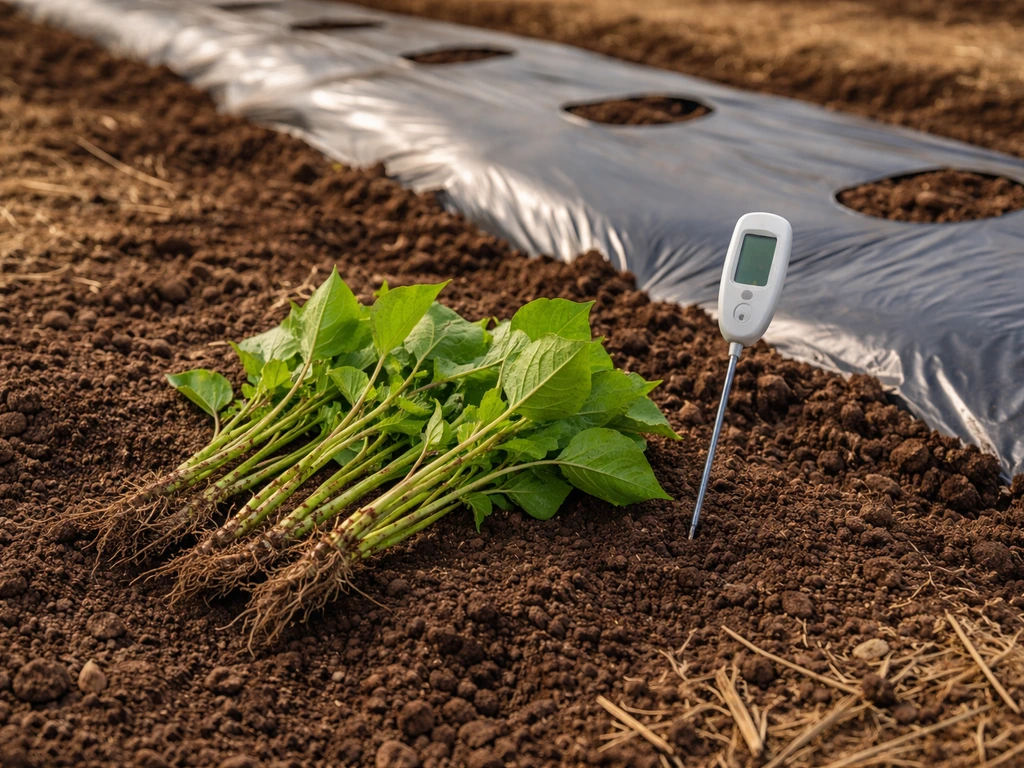
Sweet potatoes need warm soil: don't plant them until the soil temperature at planting depth has reached at least 65°F. In practice that means late May to early June in most temperate climates. They're planted from slips (rooted cuttings), not from the tuber directly. Light or sandy soils are ideal because the roots expand more easily, but you can grow them in heavier soils if you amend well and plant in raised ridges, which also helps warm the soil faster and improves drainage. They tolerate a pH range of 5.0 to 7.5.
Ginger (rhizome)
Ginger only grows actively when soil temperature stays above 68°F, which means it's a warm-season crop in temperate zones and essentially a year-round grower in humid tropical climates. Plant the rhizomes with the buds pointing upward, just a couple of inches below the surface. Because ginger rhizomes spread horizontally and can push upward as they expand, adding soil to the base of the plant during the growing season is part of the routine. In cooler climates, ginger does well in containers that can be brought indoors before first frost.
Tulips and daffodils (true bulbs)
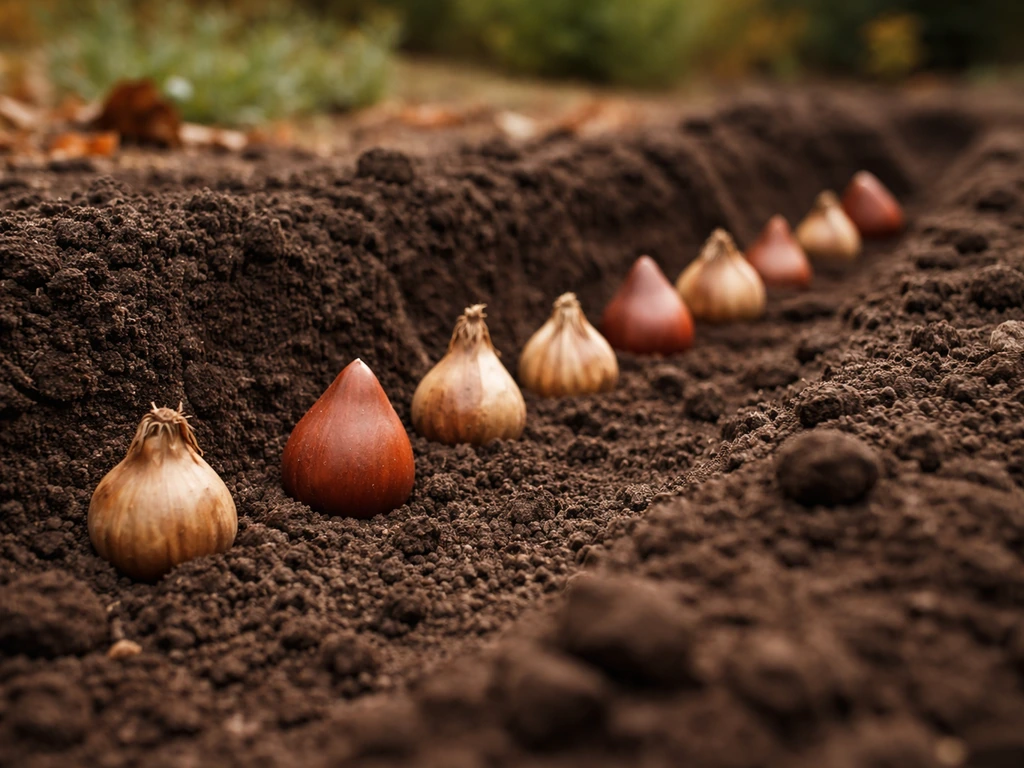
Spring-flowering bulbs like tulips and daffodils are planted in fall because they require a cold dormancy period to trigger spring growth. The rule of thumb is to plant them about two to three times as deep as the bulb is wide. After they bloom, wait six to eight weeks until the leaves turn yellow before digging them, if you need to move or store them. This gives the bulb time to rebuild its energy reserves.
Gladiolus and dahlias (corm and tuber)
These are tender, meaning they don't survive hard freezes in the ground. Gladiolus (a corm) and dahlias (tuberous roots) are planted in spring after frost risk has passed for summer blooms. In frost-prone regions, they're dug up in fall, dried, and stored indoors over winter. In zones 8 and warmer, they can often stay in the ground year-round.
Iris (rhizome)
Bearded iris rhizomes should be planted at or just barely below the soil surface, not buried deeply. A common mistake is planting them too deep, which prevents flowering. The best time to plant or divide bearded iris is late summer to early fall, giving them time to establish roots before winter.
Matching plants to your climate, season, and habitat
Underground-growing plants are distributed across nearly every climate zone, but the type of underground structure a plant uses is often directly connected to the environmental pressures of its native habitat. Bulbs and corms tend to dominate in climates with pronounced dry seasons or cold winters, where the plant needs to go completely dormant. Rhizomes are more common in moister, more stable environments where the plant can spread laterally without full dormancy. If you are looking for which plant grow along the ground, rhizome-forming plants are a great place to start because they spread just below or at the soil surface Rhizomes are more common in moister, more stable environments where the plant can spread laterally without full dormancy.. Tubers and storage roots show up across a wide range of climates because they're efficient at storing energy quickly during short growing windows.
| Climate zone / Habitat | Best-fit underground plants | Notes |
|---|---|---|
| Cold-winter temperate (USDA zones 3–6) | Hardy bulbs (tulip, daffodil, garlic), potatoes, Jerusalem artichoke | Hardy bulbs need cold to bloom; potatoes need frost-free soil |
| Mild-winter / Mediterranean (zones 7–9) | Iris, gladiolus, dahlias, sweet potato | Tender bulbs can often overwinter in ground in zone 8+ |
| Humid subtropical / tropical (zones 9–12) | Ginger, turmeric, taro, cassava, sweet potato | Rhizomes thrive; year-round growing possible |
| Semi-arid / dry summer climates | Alliums (onion, garlic), crocuses, native camas | Dry-season dormancy suits bulbs and corms naturally |
| Short-season northern / boreal | Potatoes, Jerusalem artichoke, native wild onion | Focus on fast-maturing varieties; soil warmth is the limiting factor |
Season timing is just as important as zone. In temperate climates, the underground storage organ essentially determines your planting calendar: spring-blooming bulbs go in fall, warm-season crops like sweet potato and ginger go in late spring, and cool-season crops like potatoes go in early to mid-spring. Getting the soil temperature right matters more than the calendar date, especially for tropical rhizomes like ginger that simply won't grow in cold soil.
Soil and site conditions that actually matter
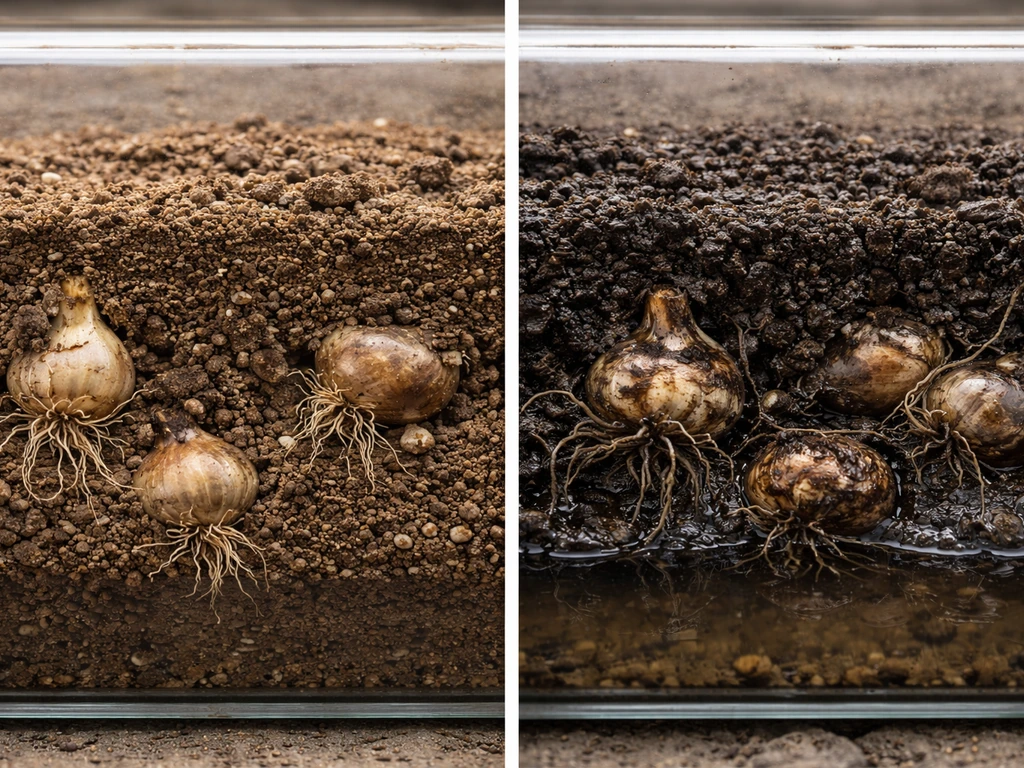
The single most common reason underground storage structures fail is poor drainage. Bulbs, corms, tubers, and rhizomes sitting in waterlogged soil will rot. Every category here prefers soil that drains freely after rain but retains some moisture. If your soil stays wet for more than a day or two after heavy rain, you have a drainage problem that needs fixing before you plant anything underground.
- Drainage: All underground storage structures need well-draining soil. Raised beds or ridged rows are standard solutions for heavy clay soils.
- Texture: Loose, friable soil lets tubers and storage roots expand without deformity. Compacted or rocky soil produces misshapen results.
- Depth: Give yourself at least 8 to 12 inches of workable soil for tubers and storage roots. Bulbs and corms need less, but the looser the soil below them, the better the root development.
- Moisture: Consistent moisture during active growth, then drier conditions as the plant goes dormant or approaches harvest. Overwatering during dormancy is a fast route to rot.
- pH: Most underground crops prefer a slightly acidic to neutral range, roughly 5.5 to 7.0. Sweet potatoes are more tolerant, handling down to 5.0.
- Organic matter: Compost improves drainage in clay and moisture retention in sandy soil, making it valuable in almost every situation. Avoid fresh manure directly on bulbs or tubers.
One practical note on handling: avoid cutting, bruising, or skinning the storage structure when planting. Cuts and abrasions create entry points for rot and disease. If you do need to cut seed potatoes, let the cut surfaces dry and callous over for a day or two before planting.
How to get started planting right now
Today is April 21, 2026. Depending on where you are, your planting window for underground crops is either already open or opening very soon. Here's a practical breakdown by what you can do right now.
- Check your soil temperature with a basic probe thermometer. Stick it 4 inches down and check in the morning. Above 45°F: potatoes are a go in most temperate zones. Above 65°F: sweet potato slips can go in. Above 68°F: ginger rhizomes are ready.
- Pick one beginner-friendly crop per category. Potatoes are the easiest tuber to start with: forgiving, widely available, and fast-feedback. Garlic (a true bulb) is the easiest bulb if you're in the northern hemisphere and planted in fall. For spring planting right now, potatoes and onion sets are your best entry points.
- Prepare your bed. Loosen the soil at least 10 to 12 inches deep for tubers and roots, remove rocks and debris, and mix in a few inches of compost. If drainage is marginal, build a raised row or bed.
- Plant at the right depth. Use the structure type as your guide: iris rhizomes go at the surface, potato tubers go 3 to 4 inches down, larger bulbs like tulips go 6 to 8 inches. When in doubt, shallower is safer than too deep for most rhizomes and corms.
- Space appropriately. Potatoes need 9 to 12 inches between pieces. Onion sets can go 4 to 6 inches apart. Ginger rhizomes do well 8 to 10 inches apart with room to spread laterally.
- Mark and record. Underground crops are invisible until harvest or sprouting. Use stakes or a simple map of your bed so you know what's where and when to expect emergence.
If you're brand new to this, start with potatoes or onion sets. Both are inexpensive, widely available at garden centers right now in spring, and give you clear visual feedback when they emerge. They also tolerate beginner-level soil prep better than more sensitive crops like ginger or dahlias.
How to identify what's already growing underground
If you're investigating your own garden, a natural area, or a field site and want to figure out what kind of underground structure you're dealing with, there's a logical process for working it out.
Start above ground. The leaf shape, stem structure, and flowering pattern give you strong clues. Grass-like leaves emerging in early spring often indicate a bulb or corm (think wild onion, crocus, or camas). For a few easy plants that grow along the ground, look for low, spreading types like certain ground-cover bulbs and rhizomes plants that grow along the ground examples. Broad, tropical-looking leaves with no obvious stem at ground level suggest a rhizome like ginger or canna. Compound leaves on a low-growing plant in a disturbed site could indicate a potato relative.
Then go below. Dig carefully with a hand trowel around the base of the plant rather than straight down, so you don't cut through the structure. What you find tells you the type: layered and onion-like means true bulb; solid and rounded with a papery skin means corm; elongated, horizontal, and jointed means rhizome; lumpy with visible buds or eyes means tuber; tapered and fleshy with no obvious buds means storage root.
For native or wild plants, cross-reference what you find with the native species typical of your habitat type and climate zone. A wet meadow in the Pacific Northwest will have different underground flora than a dry prairie in Kansas or a subtropical hammock in Florida. Climate zone, soil moisture, and native plant distributions are the best filters for narrowing down what you're looking at, which is the core logic this site is built around.
One field tip: if the underground structure smells strongly of sulfur or onion when cut, you're almost certainly dealing with an allium (wild onion, wild garlic, or a relative). That's a reliable sensory ID that holds up across most allium species worldwide. For everything else, the combination of above-ground morphology and structure shape underground gets you most of the way there before you need to go deeper into species identification.
FAQ
If a plant grows underground, does that mean it’s always a bulb or a tuber?
Not always. If the plant’s main edible part is a swollen root (sweet potato, some types of beets and carrots, though those are typically not “storage organs” in the same way), cutting and planting behavior differs from true underground stems like potatoes. A quick rule: potato tubers have “eyes” that are buds on the storage organ, while storage roots usually do not have discrete bud-eyes.
How deep should I plant underground-growing plants?
Yes, but depth needs depend on the organ type. Planting spring bulbs too deep wastes energy and can delay flowering, while iris rhizomes planted deep can suppress blooms. When you’re unsure, use the “organ-specific depth” approach rather than a one-size-fits-all burying depth.
What soil problem most often makes underground plants fail?
Use drainage speed as the deciding factor. If your soil stays waterlogged for more than a day or two after heavy rain, rot risk rises for bulbs, corms, tubers, and rhizomes. In that case, switch to raised ridges, add coarse amendments, or grow in containers to control water movement.
Does spacing matter for underground crops, or can I plant them closer?
Don’t assume “bigger is better.” For tubers like potatoes, spacing helps airflow and reduces disease pressure as foliage thickens. For bulbs and corms, crowding can reduce size and flowering because the underground structure has less room to rebuild reserves.
Is it okay to cut potatoes (or other underground storage organs) before planting?
It can, but timing matters. Cutting seed tubers is fine if you allow cut surfaces to callous over for a day or two to reduce rot entry. Cutting when the weather is very wet or cool increases problems, so plan around forecast and soil moisture rather than just calendar date.
Why do my rhizomes sometimes rot or fail to grow when planted?
Some rhizomes can be planted very shallow or even barely covered, but other “bulb-like” materials require deeper burial. Ginger rhizomes typically go only a couple inches below the surface, and they may expand upward over time, which is why periodic mounding around the base is part of maintenance.
Can I grow sweet potatoes from the tuber I bought at the store?
Yes, especially if you treat a storage root like a tuber. Storage roots like sweet potato are grown from slips, not planted directly as the tuber in the same way seed potatoes are. If you plant a sweet potato tuber whole, results are usually unpredictable compared with using rooted slips.
Do I need to plant all underground plants in the same season?
Cold dormancy requirements control the calendar. Spring-flowering bulbs rely on a cold period to trigger spring growth, so planting them in fall works best for their cycle. For tender corms and tubers, the issue is opposite, they need warm conditions and often must be lifted and stored where freezes are hard.
When should I dig up and store underground crops for winter?
In many cases, yes for tender storage organs. Gladiolus corms and dahlias (tuberous roots) are commonly dug, dried, and stored indoors in frost-prone areas because they do not tolerate hard freezes in-ground. If you have mild winters, you may be able to leave them, but your microclimate and drainage still decide survival.
Can I transplant or dig up bulbs right after they finish blooming?
Watch for above-ground clues that match the growth cycle. After spring bulbs bloom, leaves need time to yellow before you move or lift them, because the underground organ is rebuilding reserves. Digging too early often leads to smaller bulbs and weaker flowering the next season.
Should I fertilize underground-growing plants differently than regular garden plants?
It depends on what “underground” means for your plant. If it’s a true storage organ, fertilizer and watering need to support foliage development for reserve building. Over-fertilizing late in the season can keep growth going too long, while inconsistent watering can encourage rot, especially in heavy soils.
How can I identify an unknown underground plant I found in a yard or field?
Yes, and it’s a useful diagnostic. Onion and garlic-like sulfur or onion odor when you cut the underground organ strongly suggests an allium relative. This can prevent misidentification and helps you choose handling, spacing, and soil conditions that fit alliums.