Almost every place on Earth supports some form of plant life once you identify and address the single biggest limiting factor. The real question is never just "can plants grow here?" but rather "what specifically is stopping them?" Whether it's a frozen subsoil that never thaws, waterlogged clay that drowns roots, salt-caked soil that pulls moisture out of plant cells, or a canopy so dense that seedlings never see usable light, there is nearly always one bottleneck. Find it, and you either fix it or match the site to a plant that already handles it.
Places Where Plants Cannot Grow: How to Diagnose and Fix
Dr. Marcus Weatherby
29 Apr 2026
The misconception: "nothing can grow here"
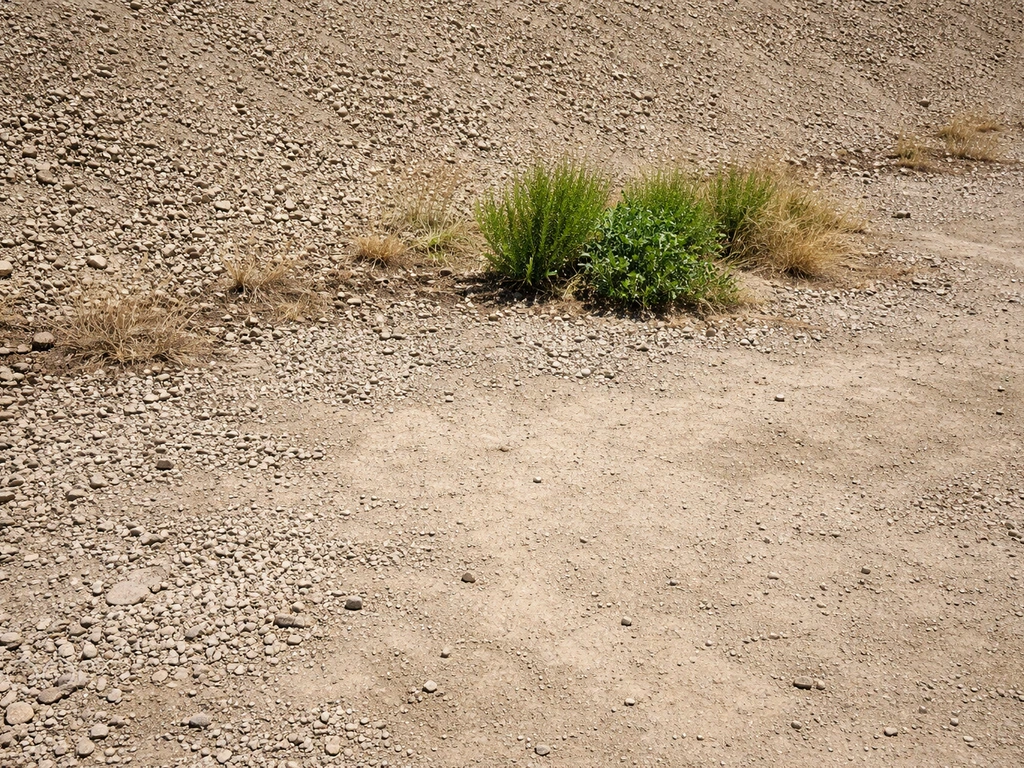
When people say a place is "too harsh for plants," they usually mean it's too harsh for the plants they've tried. That's a meaningful distinction. A sun-baked gravel slope that kills every ornamental you plant might be thriving habitat for drought-adapted natives. A shaded alley that refuses to grow grass might be perfectly suited to a shade-tolerant fern or a woodland groundcover. The mistake is assuming that plant failure in a location means all plants fail there.
The underlying principle here is something agronomists call Liebig's law of the minimum: plant growth is controlled not by the total resources available, but by whichever essential resource is scarcest. If your soil is waterlogged, adding fertilizer won't help. If your site gets two hours of light a day, irrigation won't compensate. Every other condition can be perfect, but the one limiting factor sets the ceiling on what can survive. Identifying that single factor is the whole game.
True no-plant zones do exist: the interior of active lava flows, the surface of ice sheets, the hypersaline surface of some evaporation pans, and the deepest permafrost where no liquid water ever forms. Common examples of places where plants grow include grasslands, forests, and wetlands. But these are genuinely extreme. For most problem spots that gardeners, students, and land managers encounter, the "uninhabitable" label is premature. The sibling question of where plants do grow is really the flip side of this same diagnostic exercise.
Temperature extremes: when heat or cold shuts growth down
Cold is the most widely recognized growth limiter, and it operates in ways more nuanced than a simple "below freezing" rule. Frost damage depends on the minimum temperature reached, how long the cold lasts, the time of year (a late spring frost hitting actively growing tissue is far more damaging than the same temperature in dormant winter), and the plant's own hydration and acclimation state. A plant that hardened off through gradual autumn cooling can survive temperatures that would kill the same species in a surprise early freeze. Microclimate matters enormously here too: a dip in the terrain, a frost pocket near a fence line, or a raised bed that loses heat faster than surrounding ground can create temperature differences of several degrees from a nearby weather station reading.
On the heat side, what kills plants is usually a combination of lethal cell temperatures and the inability to acquire enough water to cool leaf surfaces through transpiration. In regions where summer soil temperatures stay above about 35°C (95°F) at root depth, even heat-tolerant species struggle. Growing degree days (GDDs) give you a more useful lens than calendar dates: they track accumulated heat units above a base temperature across the growing season. If your location doesn't accumulate enough GDDs before cold returns, crops and many perennials simply can't complete their development cycle. That's why maize grows across the U.S. corn belt but not in high-elevation valleys with short summers, even if individual summer days are warm.
Permafrost is the clearest temperature-driven barrier. Where ground remains frozen year-round below the active layer, deep-rooted plants cannot establish. The tundra biome supports low-growing sedges, mosses, and dwarf shrubs precisely because they confine roots to the shallow active layer that thaws each summer. Below that layer, root penetration is physically impossible, and no soil amendment changes that.
Water constraints: too dry, too wet, or too salty
Drought and desiccation
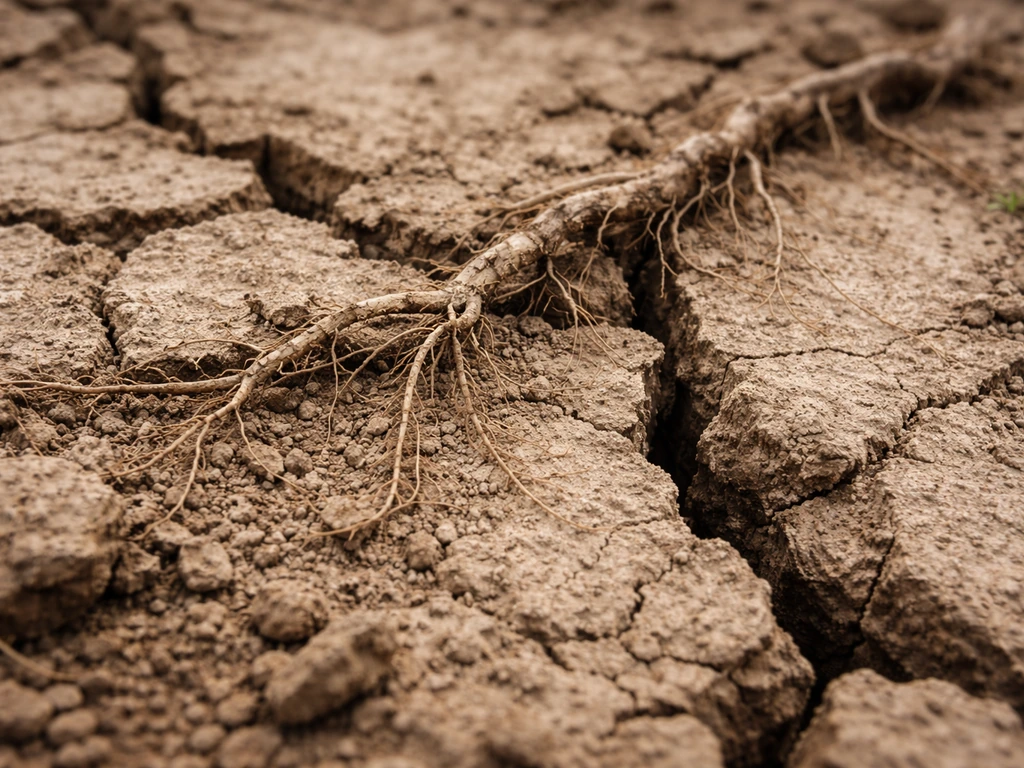
Plants need liquid water in the root zone. When soil water potential drops low enough that plants can't pull moisture against osmotic gradients, growth stops and cells desiccate. True hyper-arid deserts like the Atacama's driest core receive less than 1 mm of precipitation per year, and the surface supports almost nothing except a thin biological crust. Most deserts, though, support surprising plant diversity because drought-adapted species have evolved deep taproots, water-storing tissue, or the ability to go dormant and wait for rain.
Waterlogged and flooded soils
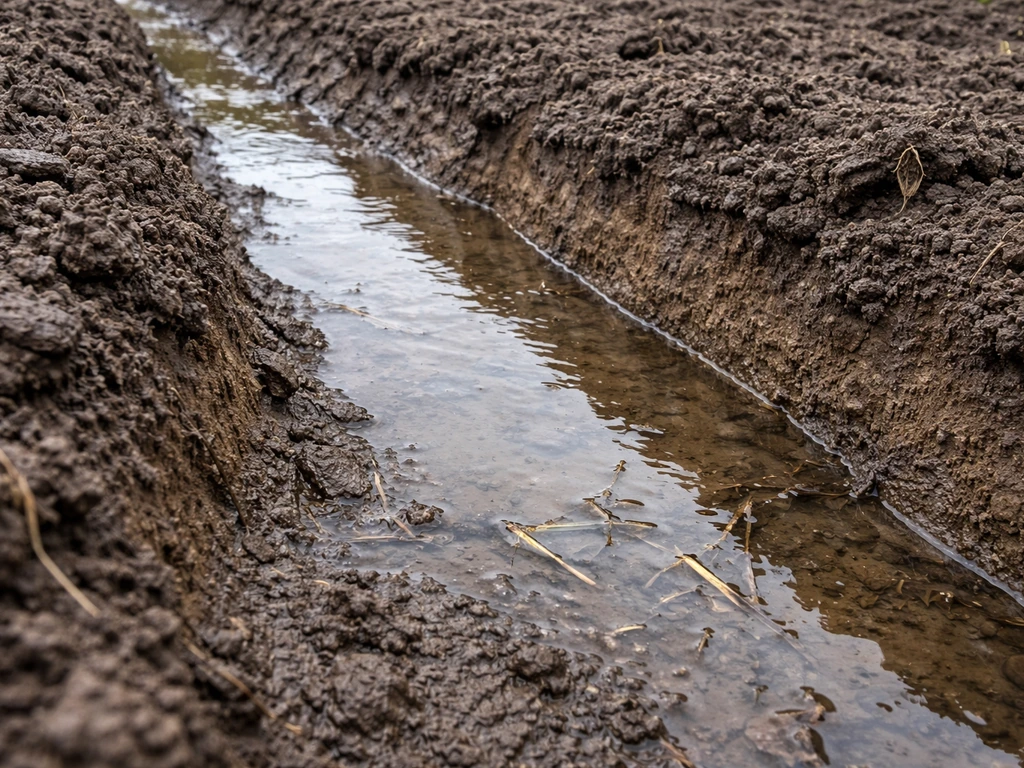
Flooding is counterintuitive as a plant killer because water seems like a growth ingredient, not a threat. The problem is oxygen. When soil pores fill completely with water, there's no room for the oxygen that roots need for cellular respiration. Within 24 to 72 hours of complete saturation, many plant species begin suffering root damage. Prolonged waterlogging also creates anaerobic conditions that favor pathogens causing root rot. In a Reddit hydroponics thread about blank" rel="noopener noreferrer">root discoloration, commenters described first-hand symptoms that can fit root stress or rot concerns, even though the reports are anecdotal rather than controlled research. Hardpan layers, shallow water tables, and heavily compacted soils all produce the same oxygen-deficiency outcome even without surface flooding. If you've seen a lawn where one low spot stays persistently yellow and stunted, oxygen deprivation at the root zone is likely the cause.
Salinity and alkalinity
High salt concentrations in soil water create osmotic stress: soil solution pulls moisture out of root cells rather than allowing uptake. Salinity is measured as electrical conductivity (EC) in units of dS/m. Most vegetables begin to suffer measurably above about 2 dS/m, while highly tolerant species like barley or saltgrass handle 8 dS/m or more. Coastal salt marshes, tidal flats, and the margins of saline lakes are genuine growth barriers for most plants, but halophytes (salt-tolerant specialists like Salicornia or mangroves) occupy those very niches. Soil pH works through a different mechanism but lands in the same category of chemical barriers: below about pH 6.0, phosphorus, nitrogen, and potassium become less available to roots; above pH 7.5, iron, manganese, and other micronutrients can lock up. Either extreme starves plants of essential elements even when those elements are physically present in the soil.
Soil and substrate barriers: structure, nutrients, and compaction
Physical soil problems often look like nutrient problems because the symptoms overlap. Yellowing, stunted growth, and poor establishment can all stem from compaction preventing root expansion, hardpan blocking drainage, or nutrient deficiency. The distinction matters because the fixes are completely different.
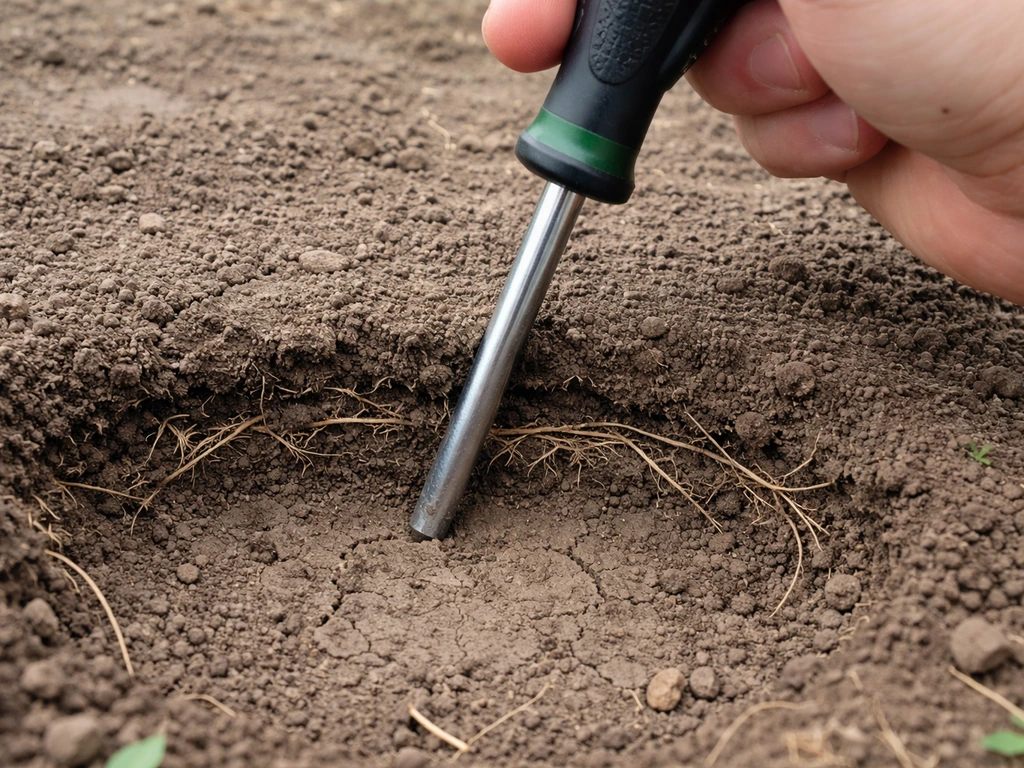
Compacted soil increases penetration resistance to the point where roots cannot push through. Penn State Extension also notes that soil compaction reduces air-filled pores and oxygen, restricting root growth and helping explain why plants fail in compacted soils. Penn State Extension research identifies penetration resistance as a more reliable indicator of root-limiting compaction than bulk density alone, because resistance reflects what roots actually experience when trying to grow. Once a soil layer becomes essentially impermeable, roots hit it like a wall and spread laterally near the surface, making plants drought-prone and unstable. Heavily trafficked areas, construction fill, and any site where heavy equipment has operated are prime suspects.
Rocky substrates and thin soils over bedrock limit plant growth in a related but different way. There's simply not enough rooting volume to anchor a plant, buffer temperature swings, or store water and nutrients between rain events. Most terrestrial plants also depend on soil as a valuable material where most of their roots can grow soil is a valuable material where most terrestrial plants grow. High-elevation talus slopes and exposed granite outcrops support only the most specialized communities: cushion plants, saxicolous mosses, and crevice ferns that root in tiny pockets of accumulated organic matter. For most plant species, those sites are genuinely off-limits.
Nutrient deficiency in naturally infertile soils (highly leached tropical laterites, old sand plains, acidic bogs) creates growth constraints that can seem climate-based but are actually chemical. The bog ecosystem is a good example: cold, waterlogged, and nutrient-poor conditions together produce an environment where carnivorous plants like Sarracenia and Drosera thrive precisely because they obtain nitrogen from insects rather than soil. The plants that succeed in these places are specialists, not exceptions to the rule.
Light and exposure: shade, wind, and cloud cover
Light is the energy source that drives photosynthesis, and when it drops below a plant's compensation point (where photosynthesis equals respiration), the plant runs a net energy deficit and eventually dies. Dense closed-canopy forest floors receive less than 2% of full sunlight in many cases. Most agricultural crops and sun-adapted natives cannot survive long term under those conditions. What does survive are deep-shade specialists: understory ferns, mosses, certain orchids, and shade-adapted herbs that have very low compensation points.
Persistent cloud cover at high latitudes and elevations creates a similar effective light shortage even when there's no canopy overhead. During polar winters, weeks pass without any usable solar radiation. The Arctic and Antarctic support virtually no vascular plants in their coldest zones, and what grows at the margins (primarily mosses and lichens) exploits every brief window of summer light with remarkable efficiency.
Wind compounds many of the problems above. Strong persistent winds desiccate foliage faster than roots can supply water, sand-blast and damage stem tissue, physically prevent plants from maintaining upright structure, and accelerate evaporation from already-dry soils. Coastal headlands, high-alpine ridges, and open steppe environments all show the effects of chronic wind stress in plant form: gnarled, low-growing, windward-leaning krummholz trees at treeline are a textbook example of wind physically sculpting growth limits. Afternoon sun exposure compounds this for partial-shade species, pushing combined heat and desiccation stress beyond tolerable thresholds.
How to figure out what's actually stopping growth at your site
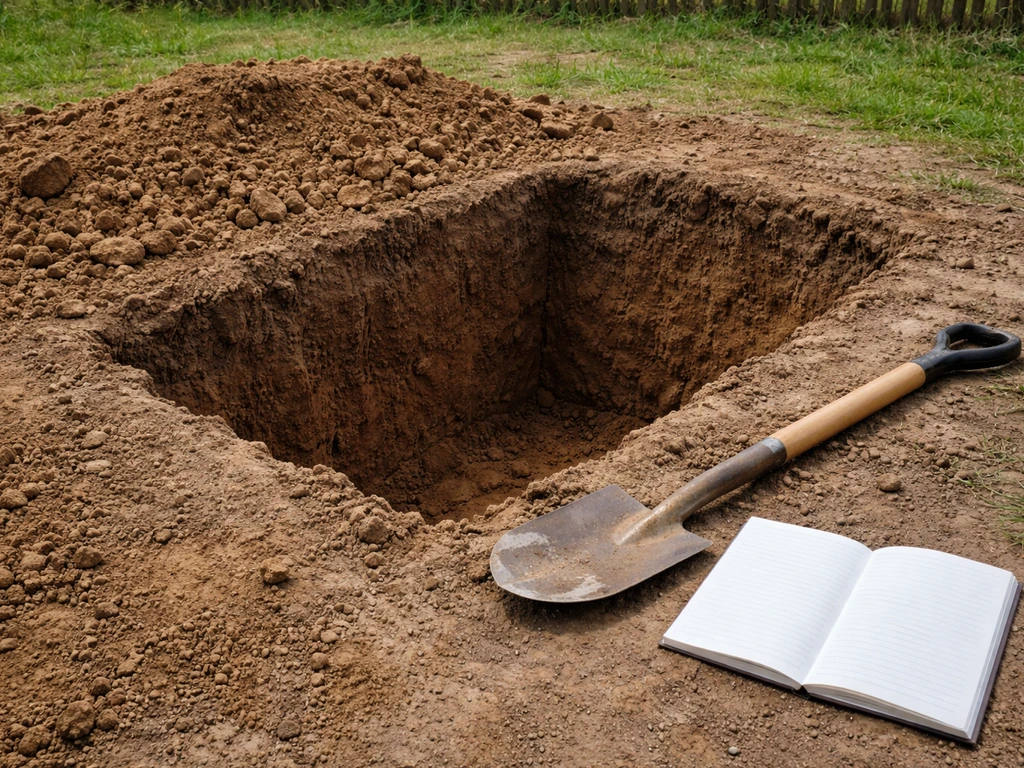
Before spending money on amendments or new plants, spend an hour with a notepad and a shovel running through this sequence. For parents and educators planning places where plants grow, start with the same approach to choose kid-friendly plant spots that can actually thrive places where plants grow kindergarten. It will point you directly at the limiting factor.
- Check drainage first. Dig a hole at least 12 inches deep and 12 inches wide in dry conditions. Fill it with water and time how fast it drains. If it's still holding water after several hours, you have an aeration and drainage problem. Standing water after 24 hours means severe restriction, whether from hardpan, compaction, or a high water table.
- Probe the soil. Push a screwdriver or soil probe into the ground. If it stops hard at 6 to 8 inches, you've hit a compaction layer or hardpan. Roots stop at the same point.
- Test soil pH and basic nutrients. A basic soil test through a cooperative extension office costs very little and tells you whether pH is outside the 6.0 to 7.5 range where most nutrients are available, and whether macro- or micronutrient levels are deficient. This one step eliminates a lot of guesswork.
- Measure light. Count usable light hours at the actual planting spot across the day (not just at midday). Partial shade means 3 to 6 hours of direct sun; full shade means under 3 hours. If you're unsure, a light meter app run at hourly intervals gives a reliable picture.
- Assess wind and temperature microclimate. Note whether the site is in a topographic low (frost pocket), on an exposed ridge (wind/desiccation), or against a south-facing wall (heat amplification). Compare your site's behavior to nearby weather data and adjust your expectations accordingly.
- If salinity is suspected (coastal site, irrigated arid-region soil, site with white salt crusting on the surface), have the soil tested for EC. Levels above 2 dS/m start affecting sensitive plants; above 4 dS/m you need salt-tolerant species or remediation.
- Only after running these checks should you evaluate temperature zone suitability. Cross-reference your observed frost dates and accumulated growing degree days against the requirements of target species.
Comparing the main limiting factors at a glance
| Limiting Factor | Field Sign | Fixable? | Best Next Step |
|---|---|---|---|
| Compaction / hardpan | Screwdriver stops at 6–8 inches; water pools after rain | Often yes | Deep tillage, aeration, raised beds |
| Waterlogging / poor drainage | Water in hole after 24 hours; yellow stunted plants in low spots | Partially | French drains, raised beds, flood-tolerant species |
| Soil pH out of range | Nutrient deficiency symptoms despite fertilizing | Yes | Lime (for acidity) or sulfur/acidifiers (for alkalinity) |
| Nutrient deficiency | Chlorosis, poor growth across whole bed | Yes | Soil test, targeted amendments, compost |
| Salinity | White crust on surface; scorched leaf margins; EC above 2 dS/m | Partially | Leaching with clean water; halophyte selection |
| Frost / freeze damage | Die-back after cold events; late-spring kill of new growth | Partially | Frost cloth, microclimate siting, hardier varieties |
| Insufficient growing degree days | Plants never mature before cold returns | No (climate) | Switch to shorter-season species or varieties |
| Light deficit (deep shade) | Etiolated, leggy growth; seedling death under canopy | Partially | Canopy thinning, shade-tolerant species selection |
| Wind / desiccation | Windward die-back, flagging growth, rapid soil drying | Partially | Windbreaks, low-growing or wind-adapted species |
| True extreme (active lava, ice sheet, deep permafrost) | No biological soil, no liquid water, no rooting medium | No | Accept as a genuine no-plant zone |
What you can change and what you can't
Soil chemistry and structure are the most changeable barriers. Adding lime raises pH; sulfur lowers it. Organic matter (compost worked in at 3 to 4 inches per application) improves drainage in clay, water retention in sand, and nutrient availability across the board. Compacted soils can be mechanically aerated, subsoiled, or bypassed entirely with raised beds that give roots a separate growing medium above the problem layer. Missouri Extension research on raised beds specifically supports this approach for sites with poor aeration.
Water management is partially changeable. Drainage can be engineered: French drains, swales, and raised beds all move excess water away from the root zone. Irrigation addresses drought. But if the underlying cause of waterlogging is a permanently high water table or an impermeable clay hardpan that can't be excavated, the practical fix shifts from "change the site" to "choose species that tolerate the site." Flood-tolerant trees like willows, alders, and bald cypress are the right plants for chronically wet soils, not the same species you'd plant in a dry border.
Temperature is largely fixed by geography and climate. You can buffer microclimate effects with windbreaks, thermal mass from walls or water features, frost cloth during critical events, and careful siting on slopes that drain cold air. But if your location doesn't accumulate enough growing degree days to mature a given species, or if killing frosts arrive before a plant can harden, no amount of effort will change that fundamental constraint. This is exactly where climate-matched plant selection becomes the practical solution rather than the fallback. Choosing species whose native range includes your climate zone is not a compromise; it's the most reliable path to plants that actually persist.
Choosing plants that actually match your conditions
The most durable approach is to match plants to your site rather than modify your site to match plants. University of Minnesota Extension frames this directly: select plants whose growing requirements match your site conditions for soil, sun, and temperature. UMass research on plant siting lists light availability and intensity, temperature extremes, wind exposure, soil type, drainage, and compaction as the criteria that must align for a plant to establish and persist without ongoing intervention.
Native plants from the same ecological region are your most reliable candidates for difficult sites. They're already calibrated to local frost dates, accumulated heat units, rainfall patterns, and soil chemistry. A native prairie grass from your region tolerates the same clay hardpan, the same freeze-thaw cycles, and the same dry summers that have defeated introduced ornamentals on that site for years. Finding what grows naturally in your habitat type (dry rocky outcrop, wet meadow, shaded forest understory, coastal dune) and working from that species list will almost always outperform any imported alternative.
For truly extreme sites (active salt flats, bare scree above treeline, saturated bogs with pH below 4.0), the honest answer is that only highly specialized species can survive, and attempting to force generalist plants there will be a repeated failure. Recognizing those sites for what they are, and understanding which habitat specialists occupy them, is exactly the kind of plant-environment knowledge this field of study is built on. The upper layer of soil where most terrestrial plants grow is itself a product of accumulated organic matter, weathered minerals, and biological activity: where that foundation is missing or severely degraded, rebuilding it is a long-term project measured in years, not a weekend fix.
Run the diagnostic steps above, identify your single most limiting factor, and work from there. Fix what's fixable, match the species to what isn't, and you'll find that the number of genuinely impossible planting sites is much smaller than it first appears.
FAQ
How can I tell if salt is the reason nothing grows, and will flushing the soil help?
Test EC and soil moisture right after rainfall or irrigation. If EC stays high even in wetter periods, salinity is likely the barrier, and flushing only works if there is good drainage below the root zone. In saline ground with a high water table, leaching can spread salts upward instead of washing them out, so raised beds and halophytes often perform better.
If it gets cold but not as cold as the species supposedly tolerates, why do plants still die?
When plants fail in winter cold, check whether they were exposed to cold that occurred during active growth, not just the lowest temperature on record. Late frosts that hit soft tissue, wind-driven desiccation, or repeated freeze-thaw cycles can be the actual cause, and a frost-tolerant plant may still die if it is planted too early or exposed in an unprotected microclimate.
What’s the most common mistake when diagnosing compacted soil?
Use the penetration resistance idea, not just “looks compact.” If you can push a shovel in but roots still fail, compacted or hardpan layers may be below the surface. A practical check is to look for roots that circle near the surface or for water that ponds above a layer, then decide between aeration, subsoiling, or building raised beds with fresh soil.
My soil stays wet after rain, how do I know if flooding oxygen stress is the limiting factor?
Look for oxygen limitation signs, not just “wet ground.” Persistent yellow, stunted growth in low spots, and plants with weak, brown roots are typical when pores stay water-filled. If there is a near-permanent saturated layer or impermeable hardpan, improving surface drainage may not be enough, and selecting flood-tolerant species or relocating the bed is often the realistic fix.
If my soil test shows pH is off, why do plants still struggle after I adjust it?
Don’t rely on pH alone if plant failure is severe. Extremely low pH can tie up phosphorus and other nutrients, but iron or manganese issues can also show up as chlorosis at the “wrong” pH range for that diagnosis. Take a soil test that includes nutrients, not just pH, then correct the limiting element rather than applying lime or sulfur repeatedly.
How can I tell whether the problem is low light versus poor soil nutrients in a shaded area?
Light failure is often about usable hours and intensity, not just whether there is any sun. Morning shade, dense overhead branches, or a thick leaf litter layer can keep effective light below a plant’s compensation point. A simple decision aid is to track whether sun reaches the plant area during the time of day when nearby leaves cast the longest shade.
What clues suggest wind stress is stopping growth rather than heat or drought?
Wind injury can show up as dry, scorched leaf edges, leaning stems, and poor survival even when soil moisture looks adequate. If the site is windy, irrigation alone may not prevent desiccation. Solutions often start with windbreak placement, using plants that are naturally shorter or more flexible, and avoiding installation of shallow-rooted plants where sand-blast is frequent.
Can growing degree days explain failures even when summer temperatures look warm enough?
Yes, in some cases the “true” barrier is the timing of heat and cold. If the season ends before heat units accumulate enough to complete flowering, fruiting, or maturation, extra fertilizer will not help. Compare your local growing degree days to the crop’s maturity requirement, then choose varieties bred for shorter seasons.
Is adding compost always a good fix for wet clay soil?
If waterlogged conditions are caused by a high water table or an impermeable layer, adding organic matter can help only to a limited depth and may worsen anaerobic conditions if it encourages more water retention. The more dependable approach is to ensure drainage pathways (swales, ditches, raised beds) or shift to species adapted to that aeration level.
When should I stop trying to amend a site and instead choose different species or a different location?
Yes. If a site is physically off-limits due to bedrock depth, persistent saturation, or deep permafrost, amendments won’t create rooting volume or oxygen availability. In those scenarios, success comes from matching habitat specialists or changing site placement. A fast check is to ask, “Can roots realistically expand to more than a shallow fraction of the soil profile?”
What’s different about working in very acidic bog-like soil compared with typical gardens?
If soil pH is extremely acidic (for example, below about 4 in very boggy sites), nutrient availability alone can prevent most normal plants from establishing. In those conditions, specialist species that tolerate low pH and low nitrogen but get nutrients via insects or very specific nutrient strategies can be the only workable option. Treat these as habitat restoration problems that take long-term work rather than a quick planting fix.
If my site drains poorly, what practical steps work even if the weather keeps getting worse?
For plants that dislike “wet feet,” the best improvement may be changing the rooting medium rather than chasing every rainfall event. Raised beds with well-draining soil, grading that prevents low-spot ponding, and selecting plants with proven drainage tolerance usually outperform frequent, incremental amendments that keep the root zone unstable.