
Non-vascular plants (mosses, liverworts, and hornworts) grow wherever moisture lingers long enough for them to absorb water directly through their surfaces and complete their life cycles. That means shaded forest floors, stream banks, bog margins, rock crevices, tree bark in humid forests, and even the surface of arctic tundra during the brief wet season. The single thread connecting all of these places: water has to be available in the environment itself, because these plants have no internal plumbing to pull it up from the soil.
Where Do Non-Vascular Plants Grow? Habitats and How to Find Them

Dr. Marcus Weatherby
23 Apr 2026
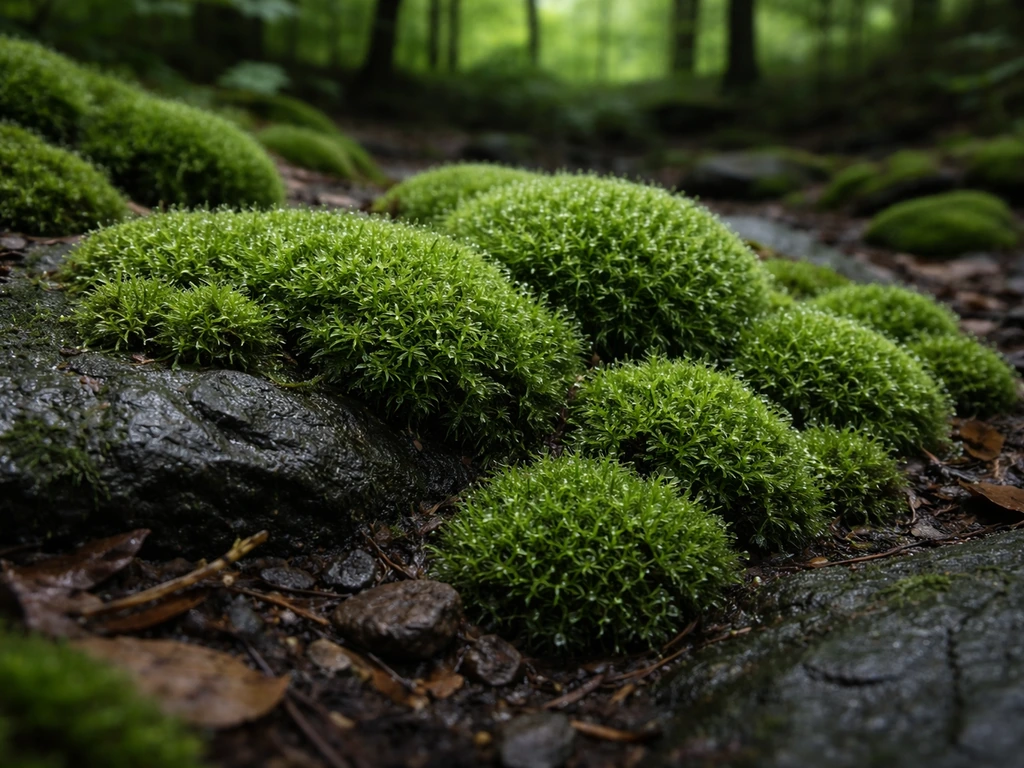
What non-vascular plants are, and why that limits where they live
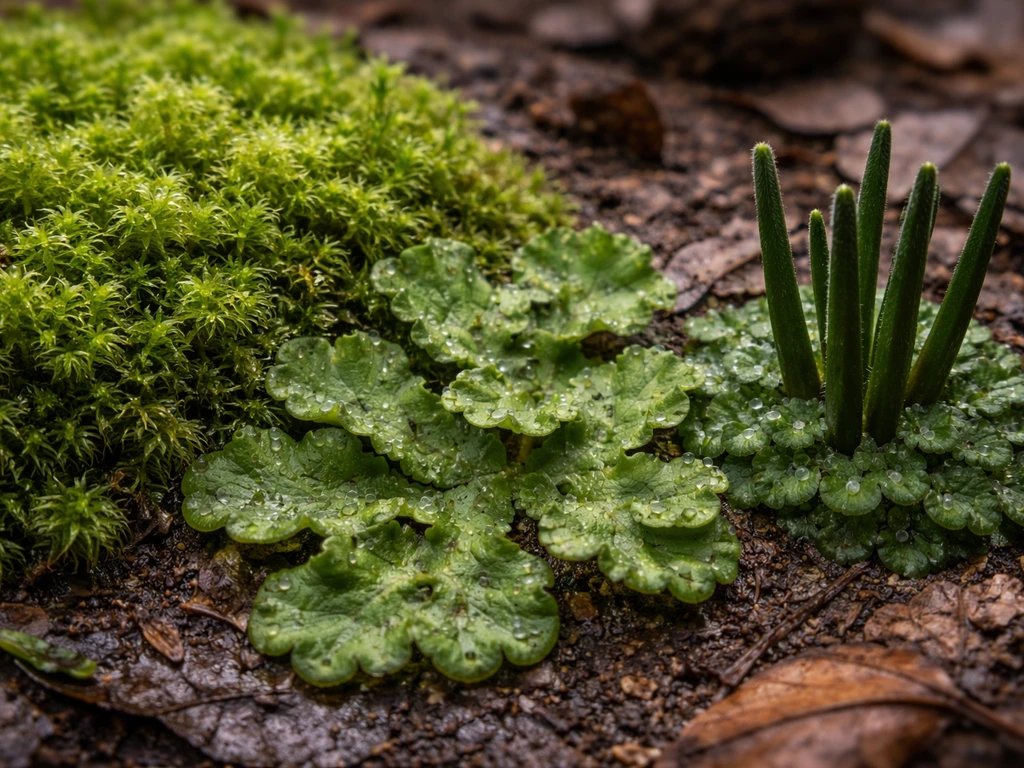
The term 'non-vascular plants' covers three groups: blank" rel="noopener noreferrer">mosses, liverworts, and hornworts, collectively called bryophytes. What they have in common is the absence of xylem and phloem, the internal tissue networks that vascular plants use to move water and nutrients from roots to leaves. Without that plumbing, every cell in a bryophyte has to get water directly from its immediate surroundings, absorbed by osmosis through the leaf or stem surface.
This is why location is everything for these plants. They are described as poikilohydric, which just means their internal water content tracks whatever humidity or moisture is in the surrounding air and substrate. When conditions dry out, they dry out too. Most can survive that, and some species are remarkably good at reviving from a completely air-dried state once moisture returns. But they can only photosynthesize and reproduce when they are hydrated, so they tend to occupy spots where water is reliably or repeatedly available, even if not constantly present.
The other key constraint is reproduction. Bryophytes need free water for their sperm to swim to the egg. Without it, the sexual phase of their life cycle stalls. So even drought-tolerant moss species tend to cluster in microhabitats that get regular wet periods, whether that is daily fog, seasonal rain, or proximity to running water.
The four habitat factors that matter most
Before getting into specific places, it helps to understand what to look for. When I am scouting for bryophytes in the field, I am reading four conditions at once:
- Moisture: Is there a nearby water source, high relative humidity, or a substrate that holds water (decaying wood, sphagnum peat, shaded rock)? Bryophytes need moisture available at the surface, not just in the soil below.
- Shade: Direct sun dries surfaces fast. Most bryophytes thrive where tree canopy, cliff faces, or dense vegetation reduces evaporative stress. Species that colonize open rock or tundra often do so in north-facing or otherwise sheltered micro-spots.
- Wind exposure: Moving air pulls moisture away from surfaces quickly. Sheltered gorges, ravines, stream corridors, and the windward sides of objects that intercept fog or rain are prime territory. Wide-open, windy ridges are generally too desiccating except for specialized species.
- Water retention in the substrate: Rock crevices trap moisture. Decaying wood holds water like a sponge. Dense bryophyte mats themselves retain moisture, sometimes building up layers more than 20 inches thick in peatlands. The substrate matters as much as the weather.
Drought-sensitive species solve the moisture problem by simply living in perpetually wet or heavily shaded spots, or by growing in dense clusters that slow evaporation from the center of the mat. More tolerant species can colonize drier situations by reviving when rain or dew arrives. Either way, you are always looking for the intersection of available moisture and protection from rapid drying.
Where they actually grow: landscape by landscape
Forest floors and shaded understory
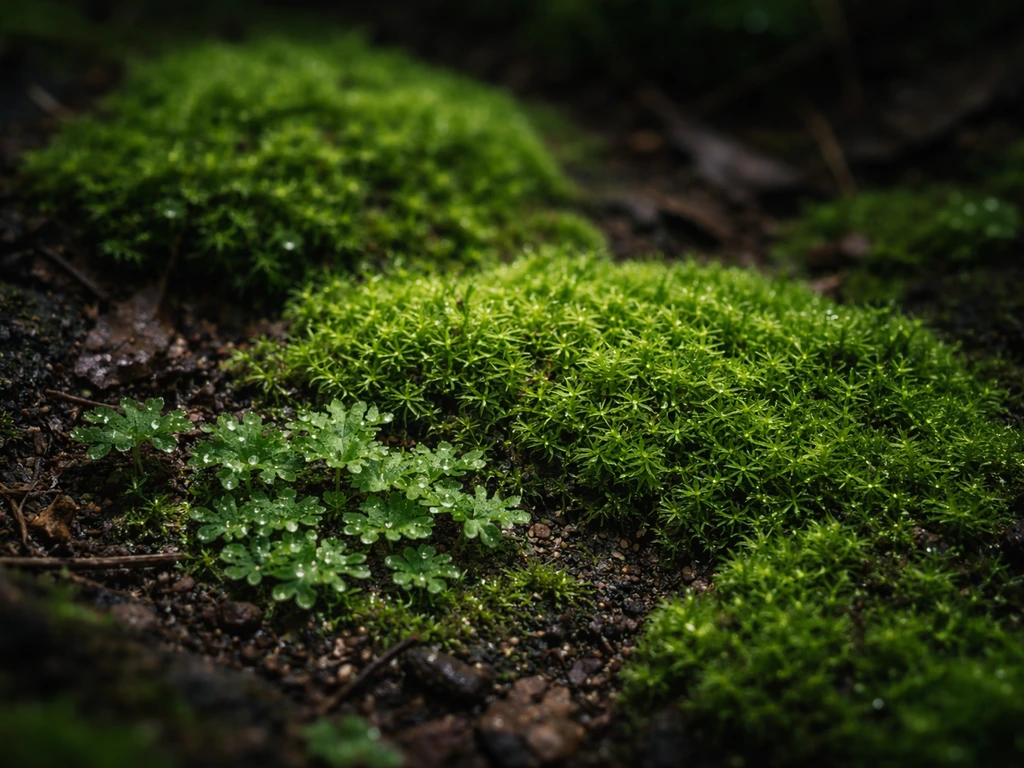
This is the classic bryophyte habitat, and for good reason. In humid temperate, subtropical, and tropical forests, bryophytes can form continuous carpets on the ground, sheath the lower trunks and branches of trees, and cover exposed roots and fallen logs. After rain, you can watch them green up almost in real time. They grow on decomposing wood, on mineral soil, on the persistent remains of older bryophyte growth, and directly on living bark. The shade keeps evaporation down, the canopy intercepts and slowly releases rain, and fallen wood provides a moisture-retaining substrate that lasts for years. Species like the green shield-moss (Buxbaumia viridis) are specifically associated with humid sub-alpine and alpine conifer forests and decaying wood.
Wetlands, bogs, and peatlands
Sphagnum moss is the defining plant of peatlands, and it essentially engineers its own habitat. It has no roots and draws moisture directly from the water table and surrounding water. As it grows and dies, it accumulates into deep peat layers and can eventually build up into raised bogs and blanket bogs that cover entire landscapes.
Within a bog, microtopography matters: mosses growing on raised hummocks experience more water stress than those in the hollows between them, because the hummock surface sits higher above the water table. If you find a bog, you will often also find carnivorous plants like sundews and pitcher plants growing in and around the same sphagnum mats, drawn by the same nutrient-poor, constantly wet, acidic conditions.
Insectivorous plants generally grow in areas that stay wet and nutrient-poor, such as bogs and other peatland habitats. Carnivorous plants also depend on persistently wet habitats for survival, so knowing where they grow helps you look in the same places carnivorous plants like sundews and pitcher plants.
Stream banks, seeps, and riparian zones
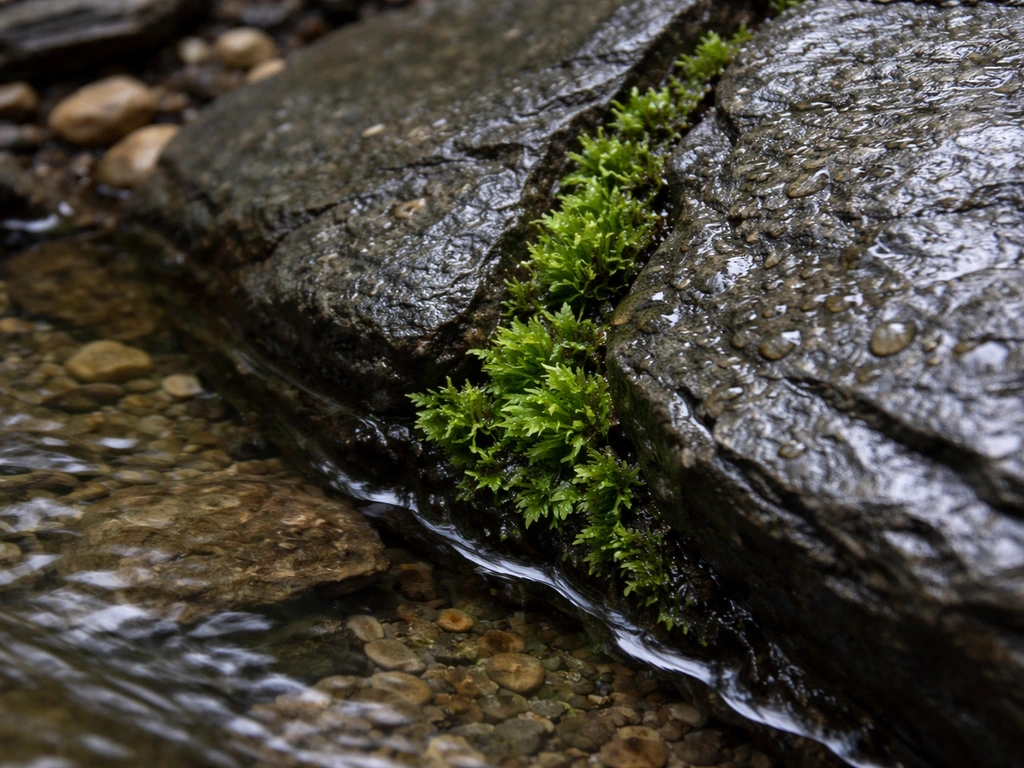
Hornworts and many liverworts particularly favor stream banks, terraces just above streams, and north-facing slopes where moisture accumulates. In headwater streams in the Pacific Northwest, bryophyte cover on stream banks can reach 34 to 68 percent, and aquatic mosses like Fontinalis are dominant macrophytes in the water itself, outcompeting vascular plants where high current velocity and shifting substrate make rooting difficult. The Carolina hornwort, to give a specific example, prefers fresh to moist, sandy-loamy soils along waterways, in partial to full shade. If you find a seep, a spring, or anywhere groundwater breaks the surface, look down. There will almost certainly be bryophytes close by.
Rock surfaces, crevices, and gorges
Rock looks like hostile territory, but shaded, moist rock is excellent bryophyte habitat. Crevices trap water and provide shelter from drying wind. North-facing cliff faces and the walls of gorges and ravines stay shaded and cool much of the day. Some species are specialists: Seligeria pusilla grows on shaded, moist calcareous surfaces including limestone and basalt; Thamnobryum alleghaniense colonizes moist, shady gorges and ravines. The key is that the rock retains surface moisture and is not exposed to prolonged direct sun. Open, south-facing rock in a dry climate will rarely support much beyond the most desiccation-tolerant crust formers.
Tree bark in humid climates
In humid temperate and tropical forests, tree bark is prime real estate for liverworts and mosses. The bark provides a textured surface for anchoring, and in persistently humid conditions there is enough atmospheric moisture to keep epiphytic bryophytes hydrated even without rain. In cloud forests, where fog and mist are nearly constant, entire trees can be sheathed from base to canopy. At lower elevations in temperate forests, mosses and liverworts tend to concentrate on the shadier, north-facing sides of trunks and on the lower portions where humidity is higher.
Arctic tundra and alpine zones
Bryophytes are among the most successful plants in arctic and alpine environments precisely because of their poikilohydric nature and ability to revive from drying. In tundra, moss microhabitats can differ dramatically from the surrounding environment in moisture, temperature, and light, even within a few centimeters. Wet depressions, the sheltered lee side of rocks, and the margins of snowmelt streams all support distinct bryophyte communities. During the brief arctic summer, standing water and saturated soil create conditions where mosses can complete growth and reproduction quickly before conditions dry or freeze again.
How climate and season control the distribution
| Climate zone | When bryophytes are most active | Key habitats | What limits them |
|---|---|---|---|
| Arctic / alpine | Summer snowmelt window (roughly June–August at high latitudes/elevations) | Wet tundra depressions, snowmelt seeps, sheltered rock faces | Short growing season, freeze, wind desiccation on exposed surfaces |
| Humid temperate | Spring through autumn; some activity in mild winters | Forest floors, stream banks, shaded rock, tree bark | Summer drought in drier temperate regions; competition for light under dense canopy |
| Tropical / subtropical | Year-round in humid zones; wet season in monsoon climates | Forest understory, tree bark, gorges, stream edges | Dry season length and intensity; high direct sun in open areas |
| Arid and semi-arid | After rain events; cooler wet seasons | Shaded rock crevices, north-facing slopes, soil biocrusts in desert shrublands | Prolonged drought; high evaporation rates limit species to desiccation-tolerant types |
The tropical case is worth pausing on. In rainforests where humidity stays high year-round, bryophytes grow profusely in places that seem less obviously 'wet,' including high in tree canopies and on vertical rock faces. In seasonally dry tropical zones, they may look completely absent during the dry season but green up and spread rapidly when the rains return. The plants are still there; they are just dormant and brown, which is easy to miss.
In arid regions, bryophytes persist by occupying the low-lying boundary layer right at the ground surface, where evaporative humidity is higher than the surrounding air. This is why dryland mosses are often part of biological soil crusts, growing flat and low, and why they tend to show a clustered distribution that tracks small-scale moisture variability across the landscape.
How to spot non-vascular plants where you are
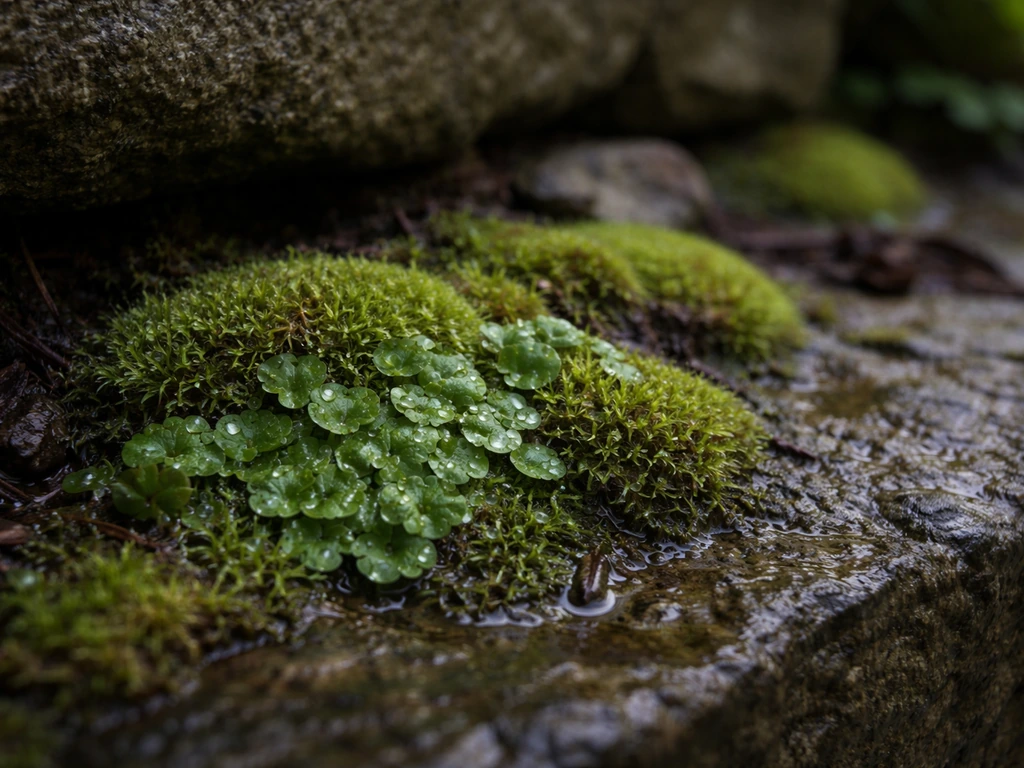
You do not need a field guide to start finding bryophytes. You need to train your eye to read moisture and shade in the landscape. Here is the field checklist I run through mentally when I am somewhere new:
- Look for green in the wrong places. Mosses and liverworts stay green when everything else has dried out in autumn or during a dry spell. A patch of green on a north-facing rock wall or on a shaded log after a dry week is almost certainly a bryophyte.
- Follow the water. Check stream banks, the margins of seeps, any place where water drains slowly after rain. Look at the base of slopes where moisture collects. These are almost guaranteed bryophyte zones.
- Check the shadiest sides of objects. The north-facing side of a boulder, the underside of a leaning log, the shaded base of a tree trunk. Reduced evaporation there means moisture lingers, and bryophytes exploit that.
- Look after rain. Many bryophytes are nearly invisible when dry (brown, flat, and easy to ignore) but become vivid green within hours of rain. A walk through a forest floor or around rock outcrops just after rain will show you communities that seem to appear from nowhere.
- Look at the substrate. Decaying wood, concrete with a rough texture in shade, limestone rock, peat soil, and the bark of trees in humid areas are all classic substrates. Smooth, dry, sandy, or sun-baked surfaces are not.
- Consider your climate window. In a Mediterranean climate, check north-facing slopes and stream banks in winter and spring. In a continental climate, look in summer near any persistent water source. In a humid climate, look almost anywhere with shade.
One thing worth knowing: bryophyte moss microhabitats are genuinely small. A boulder that is mostly dry and sun-exposed may have a thriving community in a single north-facing crevice. Do not write off a habitat at the landscape scale; look for the micro-spots within it where all four conditions (moisture, shade, wind shelter, water-retaining substrate) converge.
Finding non-vascular plants in your garden or yard
If you are looking for bryophytes in a garden or residential setting, the same logic applies but the habitats are more predictable. If you are also wondering where rubber plants grow, focus on warm, bright conditions and consistent moisture. Mosses show up reliably in lawns that get too much shade for grass (where vascular turf plants struggle but bryophytes thrive), on the shaded sides of walls and fences, on roof tiles and concrete paths in moist climates, and on the surface of pot soil that stays damp and shaded.
To find them intentionally, start by identifying the shadiest, dampest corners of the property. The base of a north-facing fence or wall, a spot under a large deciduous tree where rain still reaches but direct sun does not, or the edge of a water feature are all good starting points. Look at ground level and on vertical surfaces. If you have any natural stone, check the shaded faces.
If you want to encourage bryophytes to establish, the practical steps are simple: reduce disturbance in moist shaded areas, avoid blowing or raking away material from those spots, and do not let those areas dry out repeatedly. Bryophytes can colonize on their own surprisingly quickly when conditions are right. They arrive as spores or fragments carried by wind, water, or animals, and once a small patch establishes, it tends to retain moisture and expand.
One last note: if you are interested in broader patterns of what grows where and under what conditions, it is worth comparing bryophyte habitats with those of other non-flowering plant groups. Ferns, for instance, often share the same shaded, moist understory environments as mosses but need slightly better soil and a more stable moisture supply because they are vascular. Understanding the moisture and shade gradient across a single forest or yard helps explain why you might find mosses carpeting a rock face where no fern could gain a foothold, or why a seep supports a distinct layered community from ground-level hornworts up through taller fern fronds.
FAQ
If I do not see green moss during a sunny day, does that mean bryophytes are not there?
Try to find “wet enough” microhabitats, even if the weather looks dry. Look for dew-soaked spots at dawn, shaded north-facing crevices, areas near irrigation splash zones, or ground that stays damp after rain for a day or more. If you wait for a long dry spell, most bryophytes will be brown and harder to see, even though they may still be alive.
Do non-vascular plants always need soil to grow?
Yes. Some non-vascular plants form mats or crust-like colonies on surfaces where they do not rely on true soil depth, such as rocks, tree bark, and decomposing wood. In many places, the “substrate” is best understood as anything that holds a thin film of water (or traps fog) rather than as fertile soil.
Why do some mossy areas have lots of moss but few signs of reproduction?
Look for free water at least briefly, because fertilization needs swimming sperm. In practice, that often means places with frequent drizzle, fog drip, seepage, streamside humidity, or regular dew. If you only have humidity without periodic wetting, you may still see growth, but you may not find much reproductive activity.
How can I tell bryophytes apart from lichens or algae on rocks and walls?
Identify “bryophyte-like” lookalikes before assuming you found non-vascular plants. Algae and lichens can coat rocks or soil and may look mossy, but they usually behave differently under drying and often form smoother or crustier layers. A good field cue is whether it forms leafy-looking shoots or mats with distinct texture that stays where you expect water to linger.
In peatlands, do non-vascular plants grow the same everywhere in the bog?
Yes, within the same bog, hummocks and hollows can host different moss species and different moisture stress levels. If you are sampling, check both the higher mound tops and the lower, wetter depressions, because the higher areas can be drier and host fewer specialists.
Why do some shaded rocks still fail to support mosses?
If a rock is shaded but the surface is very exposed to wind or intense sun, it may still be too dry. Bryophytes often need both water retention (like crevices or rough microtopography) and wind shelter. Test by feeling how quickly the surface dries after mist or light rain.
When is the best time to look for bryophytes in a garden or yard?
Expect the best coverage in sheltered, frequently rewetted zones, but you can also use timing. For garden searches, check after rain, after overnight fog, or in the early morning when dew is present. During the hottest part of the day, many bryophytes will retract visibly by drying.
How long do bryophytes need stable wet conditions to establish after dispersal?
It depends on the species and environment, but many bryophytes reproduce and disperse without needing long-term wetness between events. Spores and fragments can spread quickly, yet establishment still requires repeated wetting for months, not just one brief soaking. If a patch dries out repeatedly after it starts, it often stalls or dies back.
Where should I look in drylands if bryophytes are not obvious?
Use location logic instead of only looking for “moss.” In arid regions, non-vascular plants may sit close to the ground where humidity is higher, including low flat crusts or small clustered patches. They can be missed if you only search higher ground or if you overlook subtle moisture gradients across bare soil.
Is it safe to move or transplant moss to a new spot to help it grow?
Do not disturb or remove damp substrate once you find a patch. Bryophytes can spread from fragments, but many species are vulnerable to desiccation during handling, trampling, and scraping. If you want to encourage growth, focus on reducing drying and disturbance rather than transplanting.
Do hornworts grow in the same places as mosses?
Hornworts and many liverworts often favor consistently moister, sheltered sites like stream banks, seeps, and north-facing slopes, but the exact success depends on whether the surface periodically wets over. If the area stays humid but never gets wet, mosses may persist while hornworts and some liverworts struggle.
How do I know where to look for bryophytes on tree bark (height and side)?
In trees, look at the direction and position that match persistent humidity. Lower trunks and the shadier sides often hold moisture longer, and in cloud forests, fog drip can keep bryophytes hydrated high on the canopy. In drier forests, you may only see them where bark texture plus mist exposure combine to hold water.