
Crocus, gladiolus, freesia, and colchicum are some of the most common plants that grow from corms. These are plants that store energy in a swollen, compressed underground stem rather than a true bulb or rhizome, and that structural difference shapes almost everything about when to plant them, how deep, how much water they need, and what kills them (usually waterlogged soil). If you know your climate zone, your soil drainage, and whether you want spring or fall blooms, you can narrow down the right corm plants quickly and get reliable results.
Examples of Plants That Grow From Corms: How to Grow Them

Dr. Marcus Weatherby
4 May 2026
What a corm actually is (and how to tell it apart)
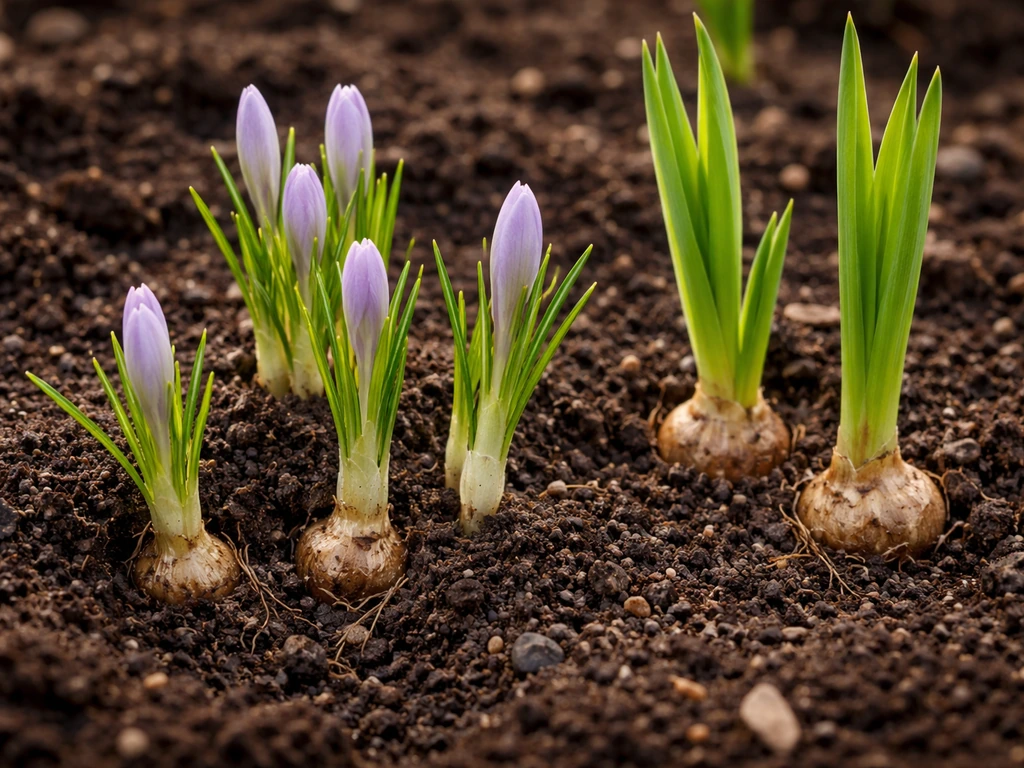
A corm is a compressed, squat stem packed with food storage tissue. Penn State Extension describes them as "short squat stems filled with food storage tissue," and that's a useful image. Unlike a true bulb (think onion layers), a corm is solid all the way through. Unlike a rhizome, which grows horizontally just above or below the soil surface, a corm sits more or less upright underground and has a visible bud on top where the shoot will emerge. The University of Minnesota Extension puts it simply: a corm is a "compressed stem that contains food and has a bud on top."
Practically speaking, here's how to tell a corm from its look-alikes when you're holding one in your hand. Flip it over and look for a basal plate (a flat, slightly roughened base where roots will emerge). Corms have one, but tubers generally don't. Corms are also solid and firm, not layered like a true bulb. They're often covered in a papery or fibrous tunic, sometimes quite tough and dark. Colchicum corms, for example, are covered in a dark-brown, leathery skin with a waxy, irregular surface. That's a reliable visual cue when you're sorting a mixed bag at a garden center.
| Structure | Examples | Key ID features |
|---|---|---|
| Corm | Crocus, gladiolus, freesia, colchicum | Solid stem, basal plate, bud on top, papery tunic |
| True bulb | Tulip, daffodil, onion | Layered scales, basal plate, tunicate or naked |
| Rhizome | Bearded iris, ginger | Horizontal stem, growth buds along the length, often at or just below soil surface |
| Tuber | Dahlia, potato | Swollen root or stem, no basal plate, no dry leaf covering |
This matters because planting instructions are not interchangeable. Rhizomes like bearded irises want to sit near the surface where sun can hit them. Some plants that store energy underground use rhizomes instead, so they grow and spread horizontally rather than forming corms Rhizomes like bearded irises. Tubers like dahlias are planted deeper and don't have the same drainage tolerance window as corms. Mixing these up is a common reason plants fail or never emerge at all. If you're also curious about plants that spread via stolons or rhizomes, those are genuinely different growth strategies with their own site requirements.
Common corm plants: spring bloomers vs. fall bloomers
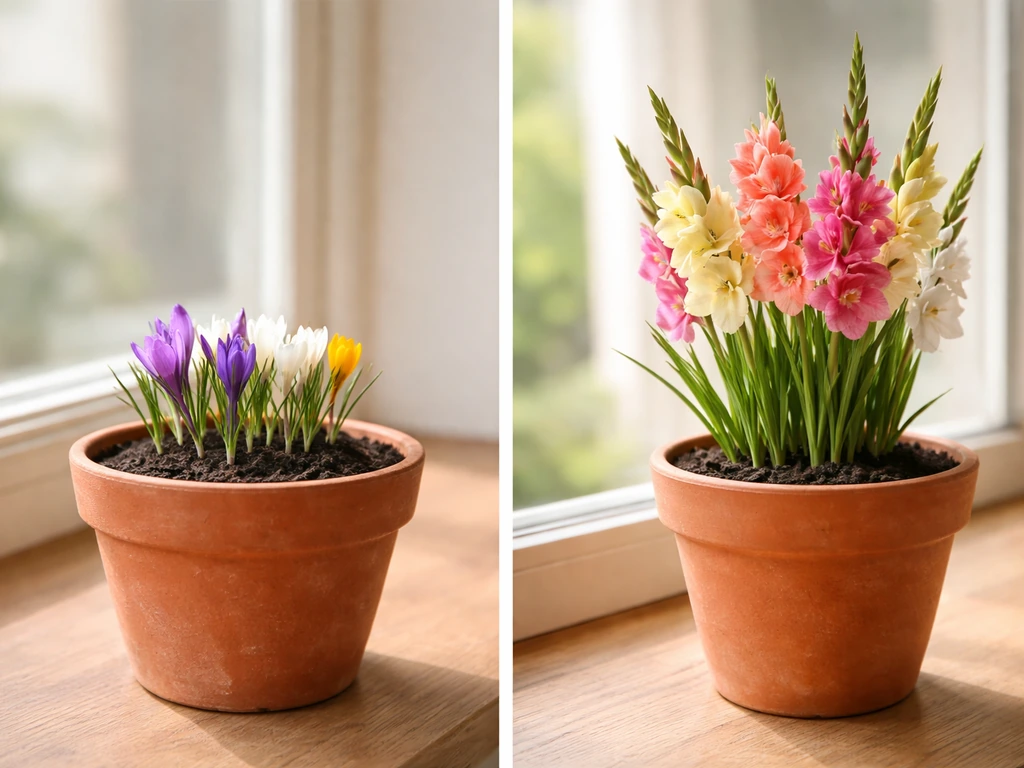
The easiest way to organize corm plants is by when they flower, because that timing drives when you plant them, which is the opposite of what most beginners expect. Spring-flowering corms go in the ground in fall. Fall-flowering corms go in the ground in late summer. Get that backwards and you'll be waiting a full year for nothing.
Spring-flowering corm plants
- Crocus (Crocus spp.): The classic early-spring corm. Native to meadows and rocky slopes across the Mediterranean and central Asia, crocus thrive in well-drained soils with cold winters. They naturalize beautifully in temperate climates (USDA zones 3 to 8) and are among the first plants to push through in late winter or early spring.
- Freesia (Freesia spp.): Originally from the Cape region of South Africa, freesias are warm-climate corms that flower in spring in frost-free or Mediterranean-type climates. In colder regions, they're grown as annuals or in containers brought indoors for winter. They prefer full sun and excellent drainage.
- Sparaxis (Harlequin flower): Another South African native, sparaxis grows in Mediterranean-type climates and produces spring blooms in warm, dry conditions. It's naturalized in parts of coastal California. Hardy in zones 9 to 11; treat as a tender corm elsewhere.
- Ixia (African corn lily): From the Western Cape of South Africa, ixia grows in dry, sunny conditions and flowers in late spring. Best suited to Mediterranean climates (zones 9 to 11). Can be lifted and stored in colder regions.
- Babiana (Baboon flower): Another Western Cape native, adapted to well-drained, sandy soils and dry summers. Flowers in spring, goes dormant in summer heat. Hardy in zones 8 to 10.
Summer- and fall-flowering corm plants
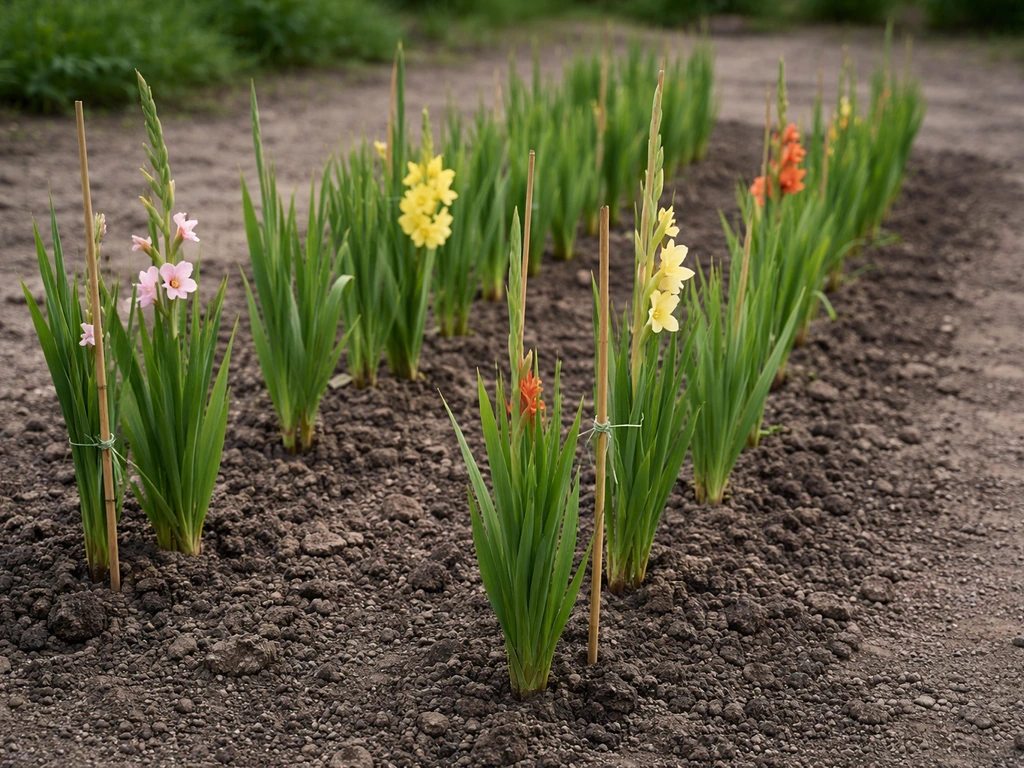
- Gladiolus (Gladiolus spp.): Probably the most widely grown corm plant worldwide. Native to sub-Saharan Africa and the Mediterranean, gladiolus are planted in spring after frost danger passes and bloom in summer. They're not cold-hardy and must be lifted in zones below 7 to 8.
- Crocosmia (Montbretia): A vigorous summer-flowering corm from South Africa, naturalized in parts of western Europe and the Pacific Northwest. Hardy in zones 5 to 9. Produces arching sprays of orange, red, or yellow flowers. It spreads readily and can be aggressive in mild climates.
- Watsonia: From South Africa, watsonias are tall, dramatic summer bloomers well suited to Mediterranean-type climates and mild coastal areas. Hardy to about zone 8.
- Colchicum (Colchicum autumnale and relatives): These are fall-flowering corms often called 'autumn crocus,' but they are not true crocuses. This is a common and important distinction. The University of Wisconsin Extension specifically flags this confusion: in the U.S., 'autumn crocus' in garden centers usually refers to Colchicum, not a true Crocus species. Colchicum corms are noticeably larger, produce leaves in spring (which die back before flowering), and bloom in fall without any foliage present. Hardy in zones 4 to 9.
- Autumn crocus (Crocus speciosus, Crocus sativus): True fall-blooming crocuses do exist. Crocus sativus is saffron crocus, native to Southwest Asia, and is planted in late summer for fall blooms. It requires excellent drainage and a dry summer dormancy.
Planting timing by climate and how dormancy works
Dormancy is the key to understanding corm timing. A corm enters dormancy after it flowers and the foliage dies back. During that dormant period, the corm is essentially sitting in the ground rebuilding energy for the next growing cycle. Disturbing or watering it heavily during dormancy is one of the fastest ways to cause rot. This is also when you lift and store corms in cold climates.
| Corm plant | Plant in the ground | Blooms | Goes dormant | Cold hardiness (USDA) |
|---|---|---|---|---|
| Crocus (spring types) | Fall (Sept–Nov) | Late winter to early spring | Late spring | Zones 3–8 |
| Gladiolus | Spring (after last frost) | Summer | Fall | Lift below zone 7 |
| Freesia | Fall (mild climates) or spring (cold climates) | Spring | Summer | Zones 9–11 |
| Crocosmia | Spring | Midsummer | Fall/winter | Zones 5–9 |
| Colchicum | Late summer (Aug) | Fall | Summer (foliage dies back) | Zones 4–9 |
| Crocus sativus (saffron) | Late summer (Aug–Sept) | Fall | Summer | Zones 6–8 |
| Sparaxis / Ixia | Fall (mild climates) | Spring | Summer | Zones 9–11 |
In temperate climates with cold winters (zones 4 to 7), spring-blooming corms like crocus are your most reliable choices. They've evolved to handle freeze-thaw cycles, and the cold period is actually part of what they need to flower. In Mediterranean or warm-summer climates (zones 8 to 11), you have far more options: freesia, sparaxis, ixia, and watsonia all thrive there because they match those conditions natively. In tropical or subtropical areas where there's no real cold dormancy, most temperate corm plants struggle without artificial cold treatment.
Soil, sun, spacing, and water
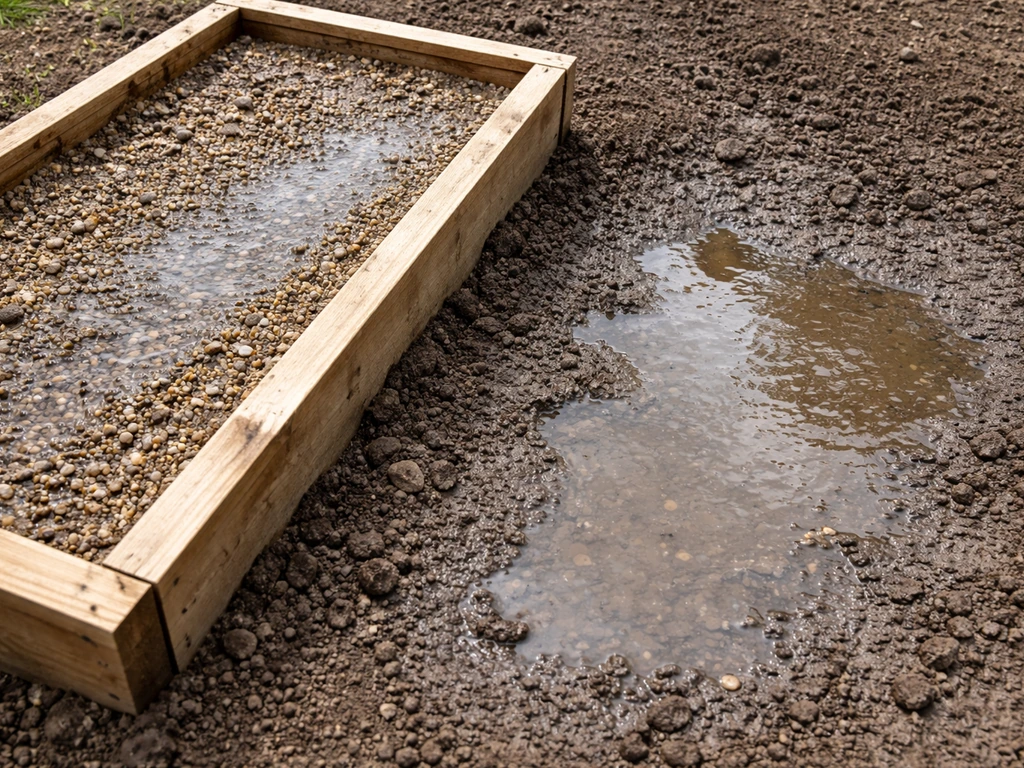
The single most important variable for any corm plant is drainage. Corms rot fast in waterlogged soil. In their native habitats, most corm plants grow on rocky slopes, in sandy grasslands, or in soils that dry out significantly during summer dormancy. That's not an accident. If you're planting in heavy clay, you either need to amend heavily with coarse grit and organic matter, raise your beds, or choose a different plant entirely.
- Soil: Loose, well-drained, and moderately fertile. A sandy loam is ideal. Heavy clay needs amendment or raised beds. Avoid areas where water pools after rain.
- Sun: Most corm plants want full sun (at least 6 hours of direct sun per day). Crocus will tolerate light dappled shade under deciduous trees, especially since they bloom before the leaves fully emerge. Gladiolus and crocosmia need full sun for strong flowering.
- Spacing: Crocus can be planted 3 to 4 inches apart and naturalize into drifts over time. Gladiolus corms (cormels) are spaced about 6 to 8 inches apart in rows. Colchicum needs a bit more room, around 6 inches, because the foliage that comes in spring is quite large.
- Watering: Water in after planting to help roots establish. During active growth and flowering, keep the soil moist but never saturated. Reduce watering as foliage dies back. Stop almost entirely during summer dormancy for Mediterranean-type corms like freesia and ixia.
How to plant corms: depth, emergence, and after-bloom care
The general rule for planting depth is to bury the corm about two to three times its own diameter deep. A small crocus corm about 1 inch across goes in at 2 to 3 inches deep. A gladiolus corm, which might be 2 inches across, goes in about 4 to 6 inches deep. Always plant with the pointed growing tip facing up and the basal plate (the flat, slightly rough base) facing down. If a corm has no obvious tip, plant it on its side and it will usually sort itself out.
- Dig to the correct depth for the corm size: roughly 2 to 3 times the corm's diameter.
- Place the corm bud-side up, basal plate down.
- Backfill with loose, well-drained soil. If planting in clay, mix in coarse grit or perlite.
- Water in gently after planting to settle the soil.
- Mark the location (especially for fall-planted corms you won't see for months).
- After flowering, allow the foliage to die back naturally. The leaves are photosynthesizing and rebuilding the corm for next year. Cutting them back early significantly weakens the plant.
- Once the foliage has fully yellowed and died, you can tidy up. In mild climates, leave corms in the ground. In cold climates, lift tender corms before the first hard freeze.
Emergence timing varies a lot by species and weather. Crocus planted in October in a zone 5 garden might start pushing shoots through snow in late February or early March. Gladiolus planted in May might take 70 to 90 days to bloom. Colchicum planted in August will often flower within 6 to 8 weeks, sometimes before you've even watered them in properly. Don't panic if nothing seems to be happening in the first few weeks after planting; root development happens underground first.
Lifting, storing, and replanting in cold climates
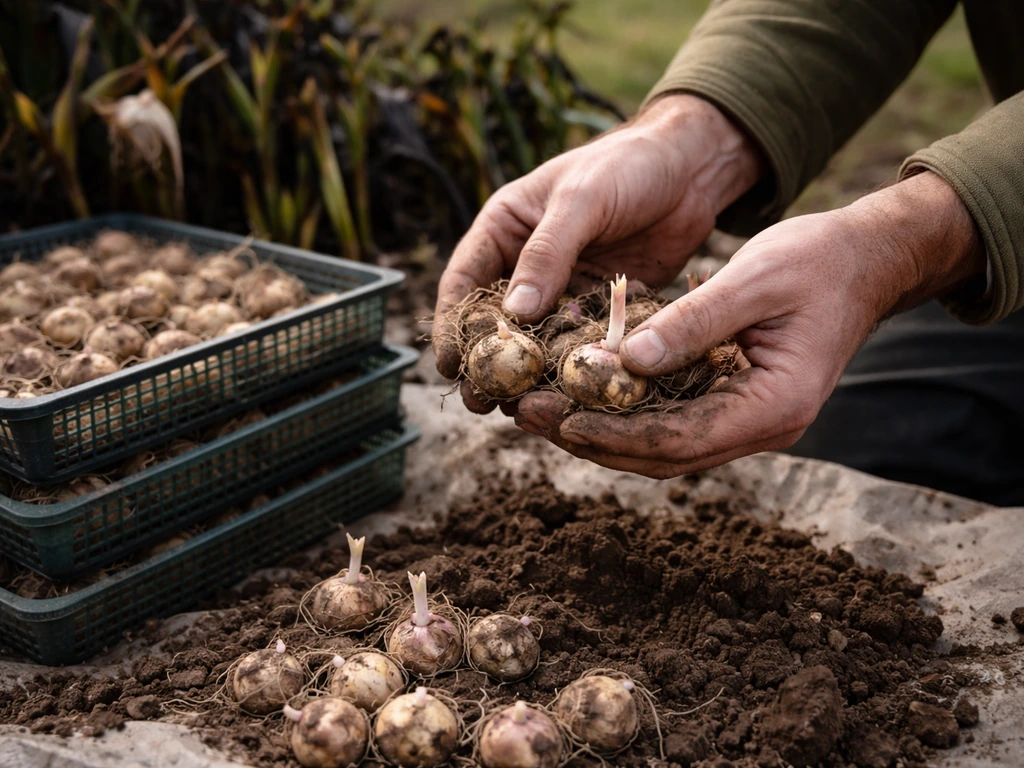
If you're growing tender corms like gladiolus, freesia, or sparaxis in zones 6 or colder, you'll need to dig them up after the first light frost kills the foliage and store them indoors over winter. This is a straightforward process if you do it at the right time and in the right conditions.
- Wait until after the first light frost has blackened the foliage. This signals the corm has finished its growing cycle.
- Dig carefully, about 6 inches out from the plant base, to avoid slicing through the corm.
- Shake off loose soil and let the corms cure in a warm, dry, well-ventilated spot for 2 to 3 weeks. This toughens the skin and reduces rot risk in storage.
- Remove any dead foliage and check for soft spots or mold. Discard any corms that are soft or shriveled beyond recovery.
- Dust with a fungicide powder (like sulfur) if disease is a concern in your area.
- Store in paper bags, mesh bags, or cardboard boxes filled with dry peat, vermiculite, or sand. Keep them cool and dry: 40 to 50°F is ideal. A basement, unheated garage, or cool closet works.
- Check on stored corms once a month through winter. Remove any that have gone soft or moldy so they don't spread rot to neighboring corms.
- Replant in spring once soil temperatures warm up and frost danger has passed.
Cold-hardy corms like crocus, colchicum, and crocosmia (in the warmer end of their range) can stay in the ground year-round in appropriate zones. Crocus will naturalize and multiply over several years without any intervention, which makes them a particularly low-effort choice for temperate gardens.
Troubleshooting and picking the right corm for your location
When corms rot
Rot is the number one failure mode with corms, and it's almost always a drainage problem. If you plant corms in soil that stays wet for more than a few days at a time, fungal pathogens move in fast. The fix is either to improve drainage before replanting (add coarse grit, build raised beds, choose a different spot) or to switch to a more rot-tolerant species. If you're finding soft, hollow corms when you dig, that's Fusarium or a similar fungal rot. Starting fresh with new corms in a different location is often the most practical solution rather than trying to remediate heavily infected soil.
When corms don't flower
Poor or absent flowering usually comes down to a few causes: foliage was cut back too early the previous year (so the corm didn't rebuild enough energy), the corm is too small or immature, the planting site doesn't get enough sun, or the plant is out of its climate zone and never gets the cold or warm period it needs to trigger flowering. Gladiolus that are planted too late in a short-season climate may not have enough time to bloom before frost. Freesia planted in a cool, humid climate may not get the warm dry dormancy they need.
Matching corm plants to your location
Start by confirming your USDA hardiness zone and your local summer rainfall pattern. Those two factors together will point you toward the right corm plants more reliably than any other approach. A dry-summer Mediterranean climate in zone 9 is perfect for freesia, ixia, sparaxis, and watsonia. A cold, wet zone 5 temperate garden is best served by crocus, colchicum, and crocosmia. Penn State Extension also notes that “autumn crocus” is a common misleading name for colchicum because colchicums resemble crocuses but are not true crocuses. A zone 7 garden with hot humid summers is good for gladiolus planted annually and some of the hardier South African corms, but you'll fight rot more in summer.
Also check your soil before you plant anything. Dig a hole about 12 inches deep, fill it with water, and time how long it takes to drain. If it drains in under an hour, you're in good shape. If it's still sitting there after several hours, you have a drainage problem that will defeat most corm plants without intervention. Amending with grit, planting on slopes, or building raised beds are all practical solutions.
Finally, it's worth knowing that corms are just one type of underground storage structure plants use to survive seasonal extremes. If you want more underground storage options beyond corms, plants that grow from tubers examples can help you compare how tubers are handled in the garden. Plants that grow from rhizomes (like irises), tubers (like dahlias and potatoes), stolons, or spores all solve the same basic survival problem in different ways, and understanding which structure a plant uses helps you read its soil, water, and timing needs correctly from the start.
FAQ
What should I do if my corm has no visible tip or bud? Can I still plant it?
If a corm is firm but has no obvious “point,” place it on its side and keep the growing side up when you can. The bud will usually correct its orientation during emergence. If the corm is soft, hollow, or smells sour, do not plant it, discard it, and improve drainage in that spot first.
How much should I water corm plants after flowering when they enter dormancy?
During dormancy, avoid routine watering and do not fertilize. The safest approach is to keep the soil slightly dry, especially for temperate corms stored in the ground or when you lift and store them indoors. If you live in a region with winter rain, raised beds or covering the planting area can help keep excess water away.
Can I dig up and replant corms the same year, or will it harm flowering?
Yes, but timing and spacing matter. Corms generally need enough room to avoid crowding, which increases rot risk in wet weather. Replanting the same year is sometimes possible only if the corm is fully mature and you can keep the soil drier, but most gardeners get better results by lifting after foliage dies back and replanting in the correct season.
My corm planted correctly, but nothing is sprouting. How long should I wait before assuming failure?
For most corms, you should expect roots before visible shoots. If no shoot appears, check that the corm was planted at the right depth and in sufficiently drained soil, then wait. A practical rule is to give spring types at least several weeks beyond the period when you would normally see early growth, unless the corm was diseased or planted too shallow in cold, wet conditions.
How do I handle it if I suspect Fusarium or other rot when I lift corms?
If you find soft or hollow corms, treat it as a drainage and disease signal. Remove all infected corm material, let the area dry out, then replant only with healthy, dry corms in improved conditions (raised bed, added coarse grit, or a slope). Heavily infected soil is often hard to “fix,” so moving to a new spot is commonly more reliable than attempting full soil remediation.
What happens if I plant corms too deep or too shallow, and can I correct it later?
Planting depth is usually more forgiving than shallow planting, but overly deep corms can delay emergence significantly and keep soils cold and wet longer. A useful adjustment is to start near the lower end of the depth range in very dry areas, and near the upper end in loose or sandy soils that dry out quickly. Never plant “in between” without considering how fast water moves through your specific soil.
How should I store tender corms indoors over winter to prevent rot?
Dry storage conditions reduce rot and mold. Keep lifted corms in a breathable container (paper bag, mesh, or slatted tray), away from standing moisture. Store them cool but not wet, and inspect periodically. If you notice any soft spots during storage, remove the affected pieces to prevent spreading.
Do corm plants multiply, and when should I separate the new corms?
Many corms form new corms and multiply, but the pace varies by species and by whether you maintain good conditions. If flowering weakens over time, dig in dormancy, separate daughter corms, and replant larger pieces for best blooms while smaller ones may need an extra season to bulk up.
Can I grow these corm plants outside their normal climate zone if I control temperature?
Yes, but it is not the same as bulb storage. Corms generally need a seasonal temperature cue (cold for many temperate types, warmth and dryness for some Mediterranean types) to trigger the next cycle. If you live outside the plant’s typical zone, you may need artificial cold treatment or you may need to grow a different corm species that matches your natural summer and winter pattern.
Why did my corm bloom once and then stop flowering the following year?
Sunlight is about more than flowering, it affects energy buildup after bloom. Plant in the brightest spot you can for your corm type, then allow foliage to remain until it naturally yellows and dies back. Cutting leaves early reduces the carbohydrates returned to the corm, which often shows up as fewer flowers the next year.