
Plants that grow without seeds include mosses, ferns, liverworts, and algae. Instead of seeds, these plants reproduce using spores, which are tiny single cells that can travel through air or water and grow into new plants under the right conditions. These are called seedless plants, and they are a genuinely fascinating group to learn about because they were thriving on Earth long before flowering plants ever appeared.
Which Plants Grow Without Seeds Class 5 Guide

Dr. Marcus Weatherby
13 May 2026
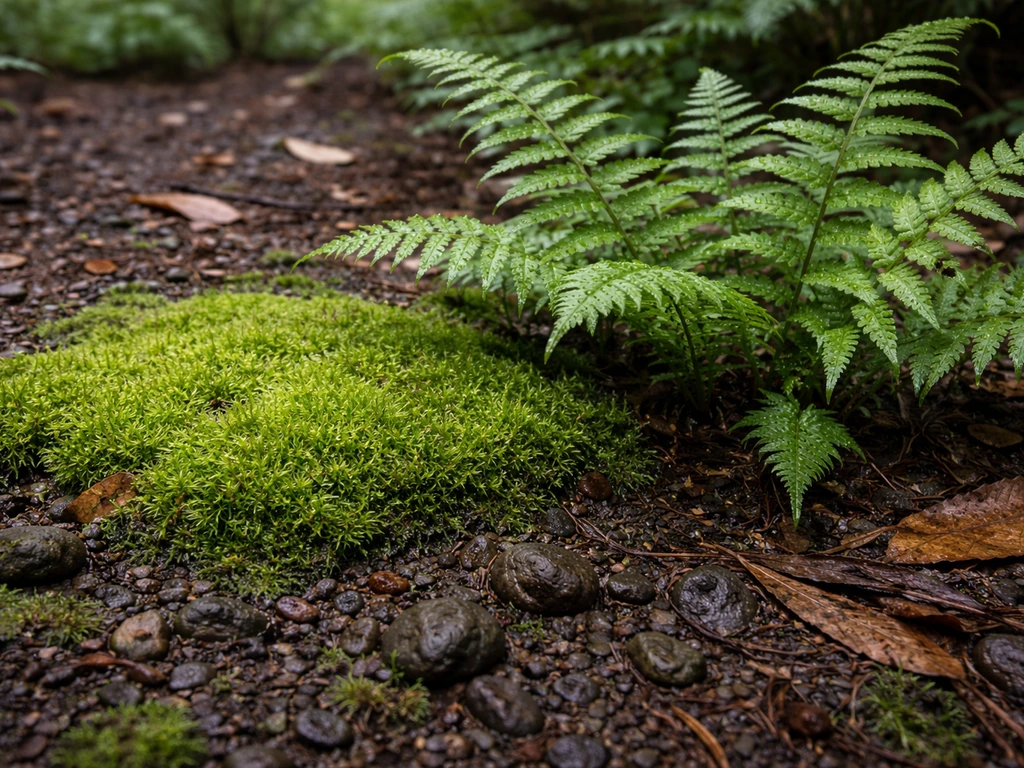
What 'seedless plants' actually means (Class 5 level)
Most plants you see around you every day, like mango trees, sunflowers, or wheat, produce seeds. Seeds form inside fruits or cones after a flower is fertilized. Seedless plants skip that whole process. They never make flowers, never make fruits, and never make seeds. Instead, they have a completely different reproductive strategy built around spores. This puts them in a separate category from what most people picture when they think of a 'plant,' but they are very much real, living, and incredibly widespread.
At the Class 5 level, you can think of it this way: if a plant does not flower and does not produce seeds, it belongs to this seedless group. The main members of this group are mosses, ferns, liverworts, and algae. Two examples of plants that do not grow from seeds are ferns and mosses. Each one has its own way of making and spreading spores, and each one tends to live in specific kinds of environments.
The main examples of seedless plants
Mosses
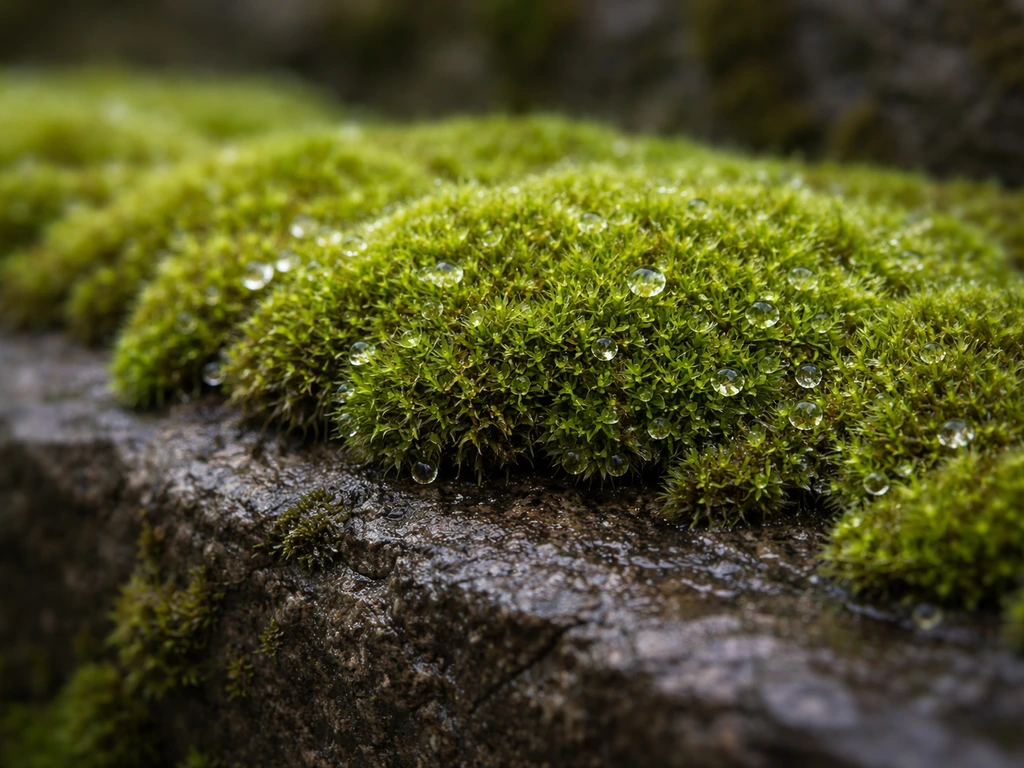
Mosses are probably the easiest seedless plants to spot. They form soft, dense, cushion-like or mat-like green patches on rocks, soil, tree bark, and walls, almost always in damp, shaded spots. Mosses do not have true roots, stems, or leaves in the same way as flowering plants. When a moss reproduces, it grows a sporophyte, which looks like a slender stalk tipped with a tiny capsule. That capsule is packed full of spores. When conditions are right, the capsule opens and releases those spores into the air, where wind carries them to new locations.
Ferns
blank" rel="noopener noreferrer">Ferns are seedless vascular plants, meaning they have internal tubes for moving water and nutrients (unlike mosses), but they still do not produce seeds or flowers. Ferns reproduce through spores that form on the underside of their fronds (leaves). OpenStax Biology notes that fern sori and sporangia release spores from the underside of the fronds blank" rel="noopener noreferrer">sporangia clustered in sori on the frond underside. If you flip over a fern frond and look closely, you will often see small brown dots or patches. Those are called sori, and inside each sorus are spore cases called sporangia. The sporangia release spores that can germinate in moist soil and eventually grow into new fern plants. Because fern sperm literally has to swim to reach the egg during fertilization, ferns are almost always found in damp environments.
Liverworts
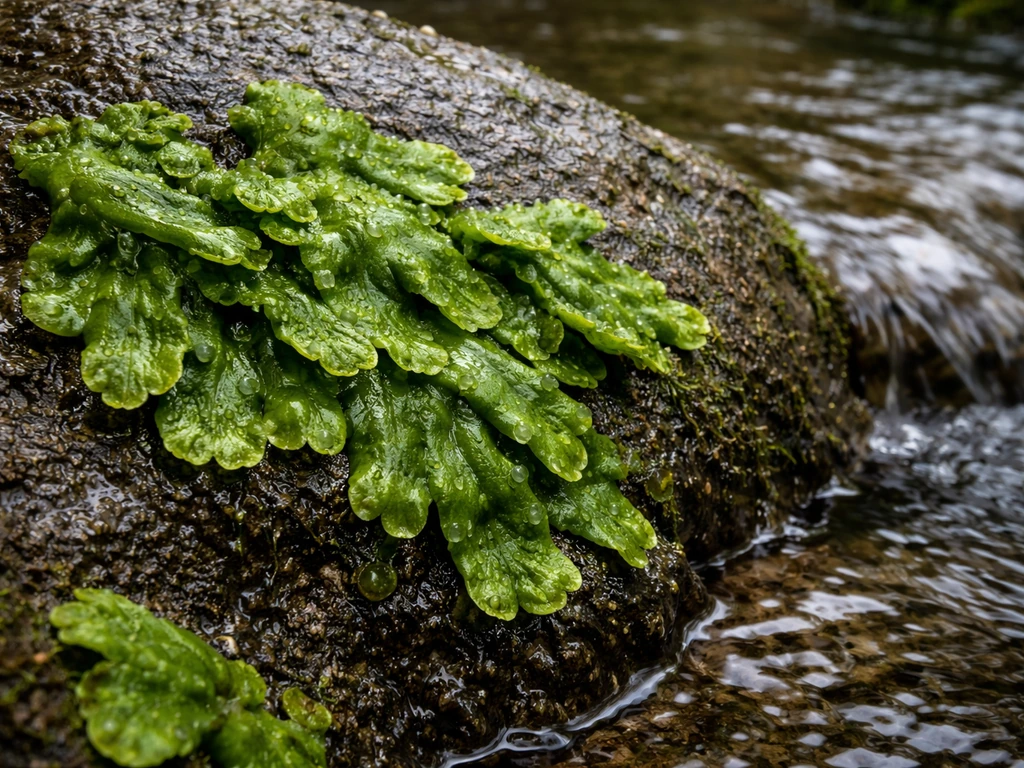
Liverworts look a bit like flat, green ribbons or sheets growing tightly against a moist surface like a rock, a stream bank, or the base of a tree. They do not have true roots, stems, or leaves; instead, they have a flat body called a thallus and attach to surfaces using thread-like structures called rhizoids. Liverworts produce spores inside a capsule on the sporophyte stage, similar to mosses. Some liverworts also reproduce asexually through small structures called gemmae, which sit in cup-like structures on the thallus and can be splashed away by raindrops to start new plants.
Algae
Algae are the simplest of the seedless plants and are mostly aquatic. Filamentous green algae, often called pond scum, is the kind you will spot floating in still ponds or clinging to rocks and logs near water. It forms fine, hairlike green strands that can mass together into large greenish mats on the water surface. Algae have no true roots, stems, or leaves at all, and they do not flower or fruit. They reproduce using spores too, including zoospores (spores with tiny flagella that help them swim) and non-motile spores called aplanospores.
How seedless plants spread: spores, not seeds
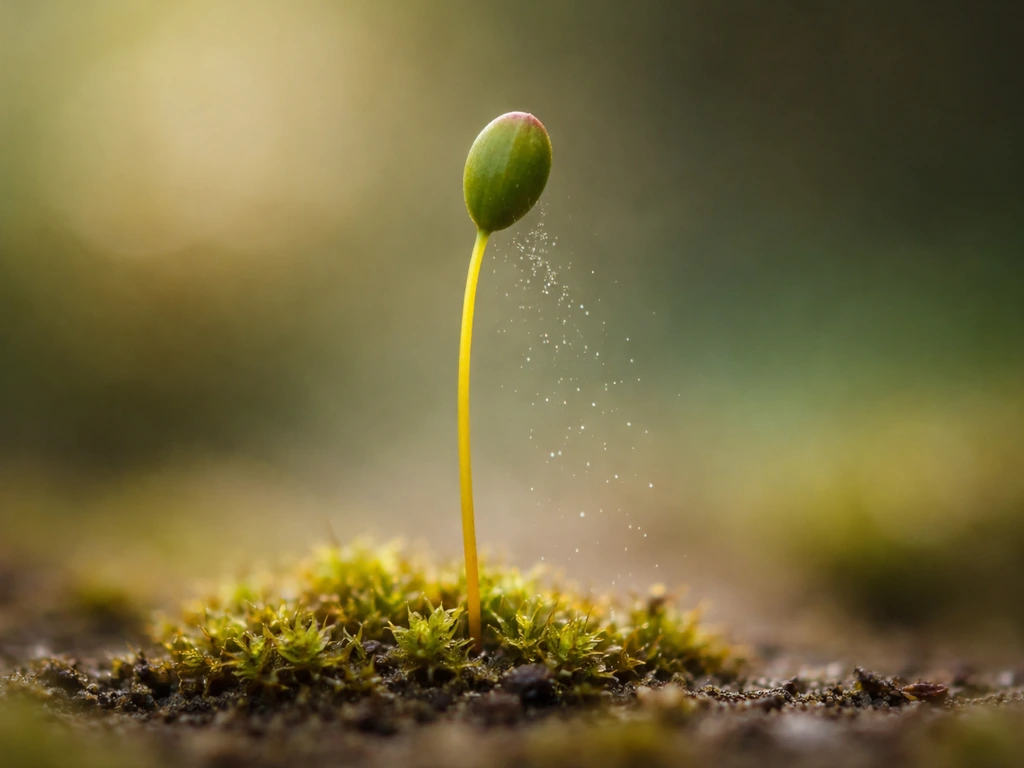
The key difference in how seedless plants spread comes down to spores versus seeds. A seed is a relatively complex structure with a protective coat, stored food, and a tiny embryo ready to develop. A spore is far simpler, usually just a single cell with a tough outer wall. Spores are also much lighter and produced in enormous numbers, which means wind, water, and even animals can carry them long distances.
In mosses, spores are packed into a capsule on the sporophyte stalk and released when the capsule opens. In ferns, spores are released from sporangia clustered in sori on the frond underside. In liverworts, spores are released from the sporophyte capsule, and some species use elaters (tiny spring-like structures inside the capsule) to fling spores outward as the capsule dries and opens. In algae, spores either swim using flagella or drift passively through water. One important thing to note: seedless vascular plants like ferns still need liquid water for fertilization because the sperm must physically swim to reach the egg. That is why you will almost never find thriving fern populations in dry, arid environments.
Seed plants vs. seedless plants: a simple comparison
| Feature | Seed Plants | Seedless Plants |
|---|---|---|
| Reproduction method | Seeds (formed inside fruits or cones) | Spores (released from capsules or sori) |
| Do they flower? | Most do (angiosperms) or use cones (gymnosperms) | No flowers at all |
| Do they produce fruit? | Many do | No fruit |
| True roots, stems, leaves? | Yes | Often absent or simplified (e.g., thallus, rhizoids) |
| Need water to reproduce? | Not always (pollen can travel by wind or insects) | Often yes, especially for fertilization |
| Common examples | Mango, wheat, rose, pine | Moss, fern, liverwort, algae |
| Where they thrive | Diverse habitats, including dry land | Mostly moist, shaded, or aquatic environments |
The bottom line: seed plants have a more advanced and drought-tolerant reproductive system, which is why they dominate most land environments today. Seedless plants are older in evolutionary terms and are mostly tied to wet or humid conditions because their sperm needs water to swim.
Where seedless plants actually grow
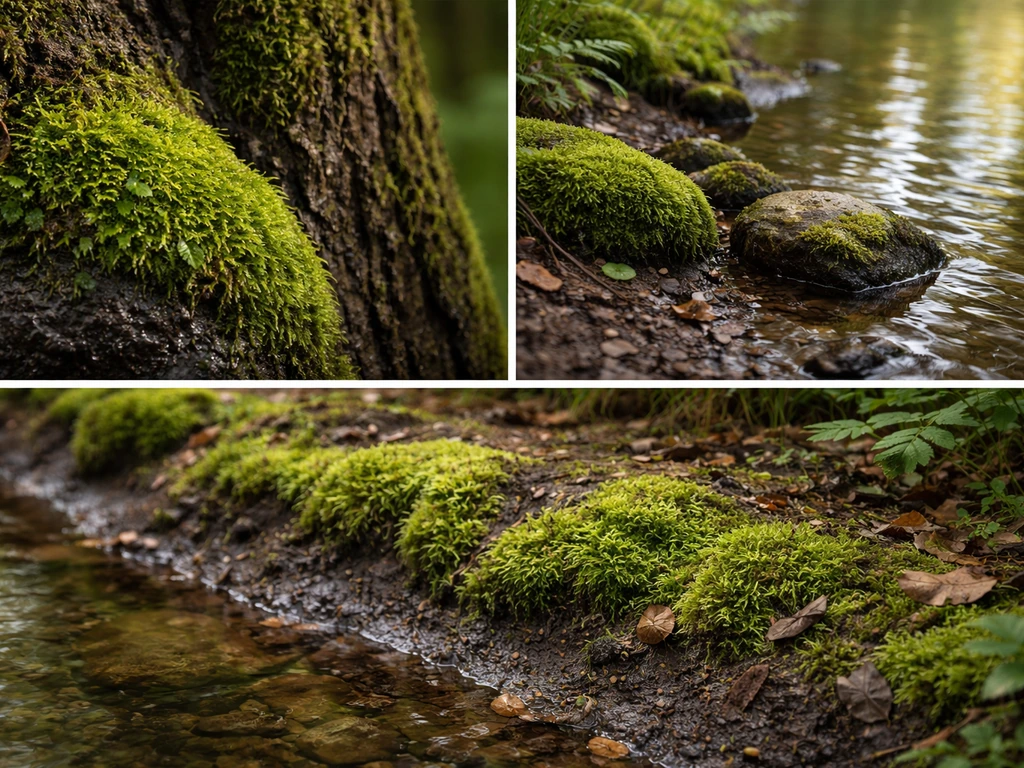
If you want to find seedless plants in the real world, look for moisture and shade. That combination is where almost all of these plants do best. Here are the specific habitats to check:
- Mosses: on rocks, tree trunks, soil, and walls in shaded, damp areas; common along stream banks and on forest floors
- Ferns: in forested areas, ravines, and beside streams where the soil stays moist; also in tropical and temperate rainforests
- Liverworts: on moist rock surfaces, stream edges, shaded soil, and the bases of trees; they grow flat and tight against the surface
- Algae: in ponds, lakes, slow-moving streams, and on wet rocks or logs near water; filamentous algae forms visible greenish mats on still water
The reason moist habitats are so important comes back to reproduction. Seedless vascular plants like ferns need water so their sperm can swim to fertilize eggs. Mosses and liverworts are similarly dependent on water at key moments in their life cycle. Algae are fully aquatic in most cases. While some liverworts can handle periodic drying and heat, they still do best where moisture is reliable. If you are in a dry, sunny, open area, you are unlikely to find many seedless plants. Head toward the shady, damp side of a hillside, a mossy stream bank, or the edges of a pond and you will find them almost immediately.
This habitat dependence connects seedless plants closely to the kinds of environments covered across this site, such as wetlands, forest understories, and aquatic zones, where plant communities are shaped heavily by water availability. Students interested in plants that grow without soil will also find seedless plants relevant, since algae and many mosses attach to surfaces rather than rooting into soil in the traditional sense. Seedless plants, including many algae and mosses, fit this idea because they often attach to surfaces instead of rooting in traditional soil plants that grow without soil.
Things you can actually do to learn this right now
The best way to make this stick at Class 5 level is to go look at real seedless plants. Here is a simple observation activity you can do today or over a weekend:
- Go outside and look for a shaded, damp area: a garden wall, the base of a tree, a pond edge, or a stream bank all work well.
- Look for soft green patches on rocks or bark. That is almost certainly moss. Notice how it forms a cushion or mat and look for any thin stalks with tiny capsules sticking up from it.
- If you find a fern, gently flip one of its fronds over and look at the underside with a magnifying glass if you have one. Look for small brown dots or clusters. Those are the sori where spores are made.
- At a pond, look for greenish, slimy, stringy material on the water surface or on submerged rocks. That is filamentous algae. It has no leaves, roots, or flowers.
- On a moist rock or stream bank, look for flat green patches that look almost like a green ribbon or liver-shaped sheet pressed against the surface. That is likely a liverwort.
- Draw what you find in a notebook. Label whether it is a moss, fern, liverwort, or algae, and note where exactly you found it (on rock, on bark, in water, on soil) and how much light and moisture was there.
This kind of fieldwork observation is exactly how botanists and ecologists work. Even a short 20-minute walk in a park or garden can turn up at least two or three different seedless plants if you know what to look for.
Common questions and things people get wrong
Do seedless plants have flowers?
No. This is one of the most common misconceptions. Ferns, mosses, liverworts, and algae do not produce flowers at all. Flowers are structures that seed plants evolved specifically for reproduction via seeds. Seedless plants never developed that system. If you see something described as a seedless plant with a flower, that is either a mistake or mislabeling.
Do they produce fruit?
No. Fruit is the ripened ovary of a flower, and since seedless plants have no flowers, they have no fruit either. What mosses do have is a spore capsule on a stalk, and ferns have sori on their fronds, but neither of these is a fruit in any sense.
Do liverworts have roots?
Not in the way seed plants do. Liverworts attach to surfaces using rhizoids, which are simple thread-like structures. They absorb water directly through their thallus rather than through a root system. Similarly, mosses use rhizoids for attachment, not for nutrient uptake the way true roots work.
Are spores the same as seeds?
They serve a similar purpose (spreading to new locations and starting new plants) but they are very different in structure. Seeds contain a tiny embryo and stored food and are protected by a seed coat. Spores are single cells with no embryo and no stored food supply. Spores are older, simpler, and depend much more on landing in exactly the right environment to survive.
Can seedless plants grow anywhere?
Not really. Unlike many seed plants that have adapted to dry, hot, or even arctic environments, most seedless plants are tied to moist or aquatic conditions. Seedless vascular plants in particular favor damp environments and marshes because their reproduction process requires water for sperm to swim. This is a real ecological constraint, and it explains why you find ferns and mosses clustering around streams, forest floors, and wetland edges rather than spreading across open grasslands or deserts. Some seedless plants, like certain mosses and algae, can also be good options if you want plants which need less water to grow.
FAQ
Do all seedless plants reproduce only by spores, or can they spread other ways too?
Many algae and mosses can spread without seeds by spores, but some algae also reproduce by breaking into pieces or by forming special spore-like cells. For Class 5 answers, you can say, “They do not need flowers or seeds,” and that reproduction often happens in damp places like ponds (algae) or shady, wet surfaces (mosses).
How can I tell moss and fern apart if both grow without seeds?
You can spot a likely ferns vs mosses difference by looking at the structure. Ferns have fronds (leaf-like parts) with sori (small dots) on the underside, while mosses grow as a thick green mat and release spores from a capsule on a stalk.
Why can spores land in dry places but still not lead to many new seedless plants?
Seedless plants need water mainly for fertilization, especially ferns and many mosses. If the area is very dry most of the time, spores might still land there, but they usually cannot lead to new fern plants because sperm cannot swim to the egg.
If I see green patches in my backyard, how do I know if it is algae or moss?
Some seedless plants look “small” but are not always algae. For example, pond scum in water is algae, but moss can also grow on wet walls and soil. If it is floating in water, it is more likely algae, while mats on land surfaces are more likely mosses or liverworts.
Can moss or liverwort survive when it is dry for a while?
Some seedless plants can survive short dry periods, like certain mosses that stay dormant until moisture returns. They do not become seed plants, but they can pause growth and resume when water is available.
Where exactly do spores form on mosses, ferns, and liverworts?
Sori are on the underside of fern fronds and look like small brown dots or patches, while the moss spore capsule is usually a tiny stalk-tipped structure in a dense moss patch. Liverworts are flat and ribbon-like, so you will not see fern-style sori.
Are all seedless plants the same, or are some more complex than others?
Not exactly. Ferns are seedless vascular plants (they have internal tubes for water and nutrients), but they still rely on water for fertilization. Seedless vascular plants are “more advanced” than mosses in structure, not in seed-making.
If a plant looks like it has a flower, does that mean it can still grow without seeds?
No. If something has flowers and fruits, it is part of seed plants. A seedless plant may have spore capsules or other structures, but a flower means seeds are involved in reproduction somewhere in that plant’s life cycle.
Does “seedless” mean they never reproduce?
When you see “seedless” plants in textbooks, it usually refers to plants that do not produce seeds like flowering plants. However, they can still produce reproductive cells, spores, and in some cases have asexual reproduction structures, so “seedless” does not mean “no reproduction.”
What is the easiest checklist to find seedless plants during a school field walk?
For a simple rule of thumb in Class 5, check for moisture and shade, then look for either a mossy mat (moss), leaf-like fronds with tiny dots on the underside (ferns), flat ribbon patches (liverworts), or green film and strands near water (algae).