
If you want plants that grow both tall and fast, your best realistic options are hybrid poplars (4–6 feet per year in good conditions), Leyland cypress (3–4 feet per year), 'Green Giant' arborvitae (3–4 feet per year once established), trumpet vine (can hit 30–40 feet on a support structure), and giant miscanthus or bamboo grasses in warmer climates. Which one actually works for you depends almost entirely on your USDA hardiness zone, your soil, and when in the season you're planting. Get those three things right and any of these will genuinely impress you with height. Get them wrong and even the fastest grower on the list will stall for a full season.
What Plants Grow Tall and Fast: Zone, Season, Care Tips

Dr. Marcus Weatherby
27 Apr 2026
How to think about tall and fast together
"Fast" means two different things in practice, and mixing them up is the most common reason gardeners get frustrated. The first meaning is how quickly a plant establishes after planting, which is the period when energy goes into roots, not height. For woody plants, a rough rule of thumb from extension research is about one full growing season per inch of trunk caliper at planting.
A two-inch caliper tree could spend two seasons mainly building roots before it visibly shoots up. During that window, the plant isn't stalling, it's investing. The second meaning is seasonal height gain once that root system is in place, measured in feet per growing season. When someone says hybrid poplar grows 4–6 feet a year, that's the second phase.
"Tall" also splits into two things: noticeable early height versus mature height. 'Green Giant' arborvitae is a good example. It can top out at 40–60 feet at maturity, but you'll see meaningful height in the first few seasons after establishment. That's different from a slow grower that just happens to get very tall eventually.
For practical purposes, this guide focuses on plants that gain noticeable height (multiple feet) within the first two to three growing seasons, not just plants that eventually become large. If you want the opposite goal, plants that do not grow tall can be a better fit for tight spaces or near foundations. If you’re trying to avoid plants that grow slow, use the early growth criteria this guide emphasizes.
One honest trade-off worth knowing: rapid-growing trees tend to be weaker-wooded. They reach noticeable height faster but often need more attention to site conditions, structural pruning, and pest pressure. You're not getting something for nothing. Pairing fast height with the right environment is how you avoid spending that speed budget on recovery from wind damage or disease.
Fast-growing tall plants by category
Trees
Hybrid poplar is the speed record holder in the tree category. The best clones in USDA trials in Pennsylvania and Maryland averaged 4–6 feet of height growth per year. It's also cold-hardy to Zone 3, which makes it one of the few genuinely fast options available to northern gardeners. The trade-off is a relatively short lifespan compared to oaks or maples, and it needs deep, well-drained soil and full sun to hit those numbers. Plant it in a waterlogged spot and growth stalls noticeably.
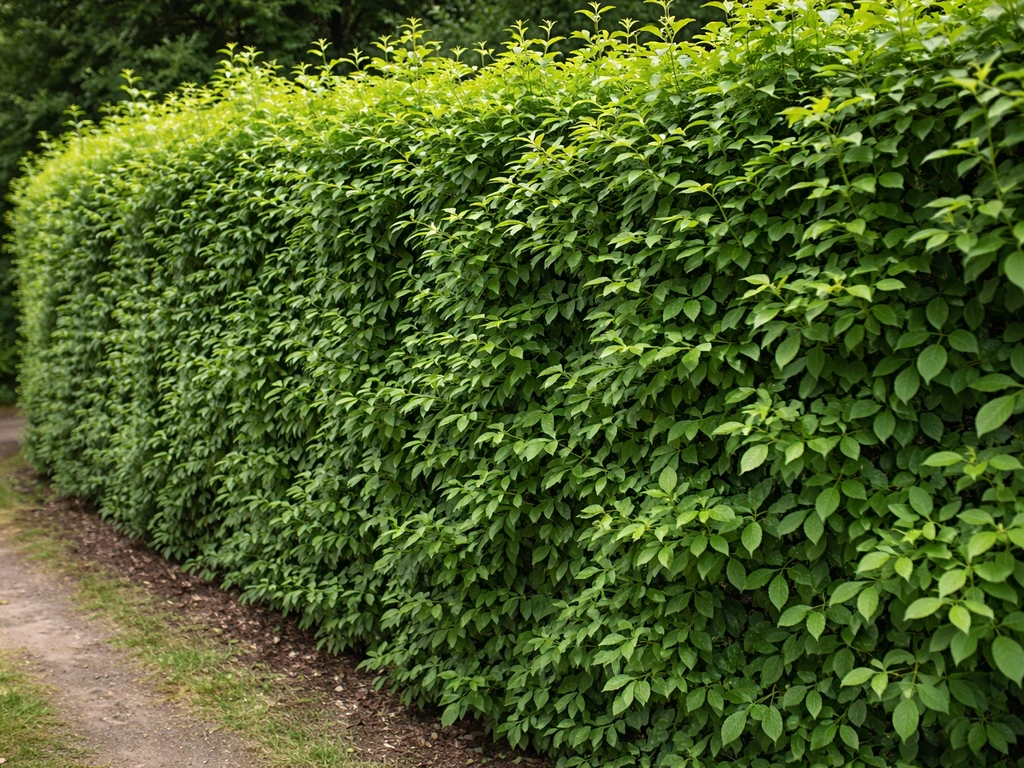
Leyland cypress is the go-to privacy screen choice across the mid-Atlantic and Southeast, growing 3–4 feet per year when young. It thrives in Zones 6–10 and tolerates a wide range of soil types, which partly explains its popularity. It does have a documented vulnerability to certain canker diseases, especially when planted too close together or under drought stress, so spacing and site drainage matter more than people give them credit for.
'Green Giant' arborvitae hits the same 3–4 feet per year pace after establishment and is better suited to Zones 5–8, giving it a useful edge in cooler climates where Leyland cypress can suffer winter damage. Narrow, tall growth is often easiest to achieve with fast-growing columnar evergreens and cypress-style privacy trees what plants grow tall and narrow. It's more structurally durable than Leyland in exposed sites and holds its color through cold winters better than most competing evergreens.
Shrubs
Fast-growing tall shrubs are often overlooked because people want trees, but for height in the 8–15 foot range within two to three seasons, shrubs like elderberry, native willows, and Lespedeza thunbergii can move quickly in the right conditions. When you want plants that do not grow tall, focus on compact growth habits and mature size instead of speed. Elderberry in particular is remarkably fast in moist, fertile soils and will reach 8–12 feet in just a few seasons. It's also native across most of North America, meaning it's already adapted to a wide range of climates without babying.
Vines and trellised climbers
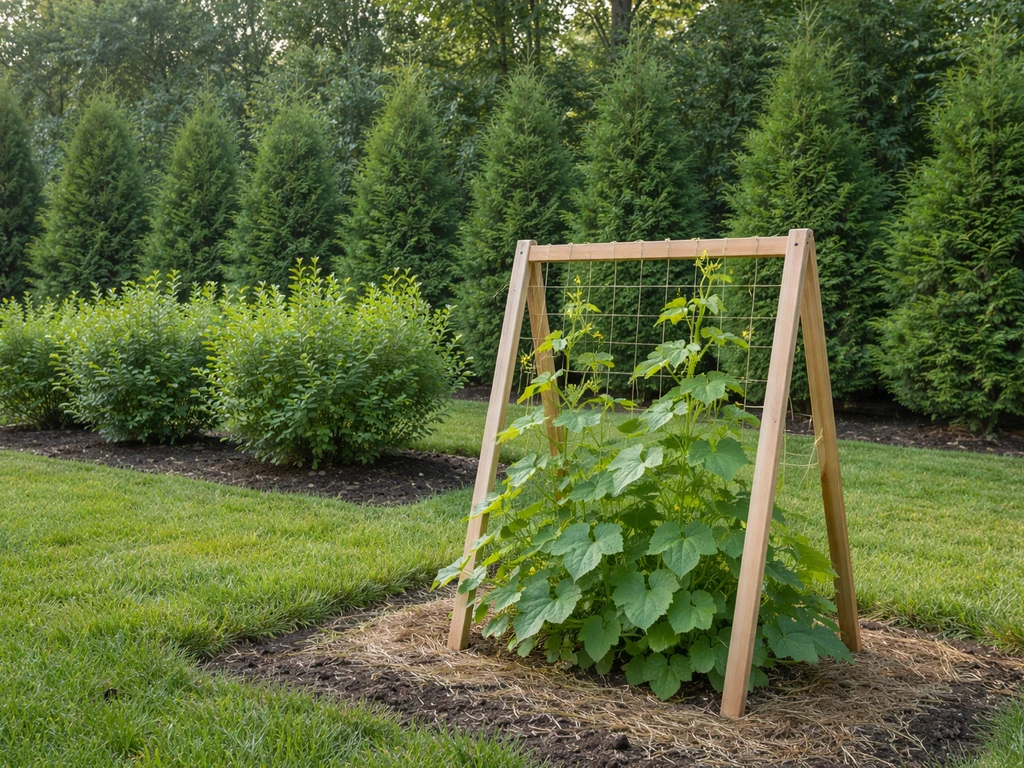
If vertical coverage is the goal rather than a freestanding tall plant, trumpet vine is in a class of its own. It's hardy from Zone 4B through Zone 10A and can reach 30–40 feet when given a fence, wall, or trellis and full sun.
Trumpet vine (Campsis radicans) is hardy in Zone 4 through Zone 9, depending on where within the range you’re planting, and it can grow about 30 to 40 feet long when supported It’s hardy from Zone 4B through Zone 10A and can reach 30–40 feet. It needs some structure to reach that height, but it gets there faster than almost anything else you can plant.
Fair warning: trumpet vine spreads aggressively through root suckers, so it's best used in situations where you want it to stay put and expand, not as a contained specimen.
Grasses and bamboo-like options
For sheer seasonal speed, ornamental grasses like giant miscanthus (Miscanthus x giganteus) can reach 10–14 feet in a single growing season once established. Running bamboo species in Zones 6 and warmer can do similar or better, though they come with the same containment considerations as trumpet vine. For running bamboo, RHS guidance says rhizome barriers should extend above soil level by at least about 7. 5 cm (3 in) to help prevent rhizomes from growing over the barrier [Bamboo control](https://www.
rhs. org. uk/advice/profile? PID=210&cID=1741).
These are not slow-start plants: they put on height fast because they're growing from established rhizomes rather than a developing root system. If you're looking at related plant types that specifically stay compact, that's a different conversation entirely, but for pure upward speed in a single season, grasses are hard to beat.
If you want the opposite, focus on compact plants that do not grow very tall, since they are bred to stay smaller even in good conditions what type of plant does not grow very tall.
What grows where: climate and seasonal windows
Matching a fast grower to your actual climate is more important than picking the theoretically fastest plant. Here's a practical breakdown by zone and region.
| USDA Zone / Region | Best tall-fast options | Key seasonal window | Notes |
|---|---|---|---|
| Zone 3–4 (Northern Plains, Canada border, upper Midwest) | Hybrid poplar, native willows | Plant in early spring after last frost | Short season; root establishment is critical first year |
| Zone 5–6 (Mid-Atlantic, Midwest, New England interior) | 'Green Giant' arborvitae, hybrid poplar, trumpet vine, elderberry | Spring planting preferred; fall for woody plants if watered well | Reliable 3–4 ft/year gains possible with good moisture |
| Zone 7–8 (Pacific Northwest, mid-South, upper Southeast) | Leyland cypress, 'Green Giant', trumpet vine, giant miscanthus | Spring or fall planting both work well | Avoid summer planting; heat stress slows establishment |
| Zone 9–10 (Deep South, Gulf Coast, coastal California) | Leyland cypress (cooler parts), trumpet vine, bamboo, giant miscanthus | Fall through early spring planting preferred | Summer heat limits new woody plant establishment; grasses thrive |
Seasonal timing within your zone matters almost as much as the zone itself. For woody plants, the safest establishment window is when temperatures are moderate and soil moisture is reliable. In most of the country, that means early spring (after the last hard frost) or early fall (at least six weeks before first hard freeze). Planting in midsummer is asking the plant to establish roots during the highest heat load of the year, which burns the establishment budget fast and delays the shift into active height growth. If you're in a short-season climate like Zone 3 or 4, spring planting is almost mandatory because the fall window is too narrow to guarantee adequate root development before freeze-up.
Soil, sun, and water conditions that actually drive speed
Full sun is non-negotiable for almost every fast-tall plant on this list. Part shade is defined as roughly 3–6 hours of sunlight per day, and most fast growers become noticeably slower growers in that range. If you're working with a shaded site, the list of realistic fast-tall options shrinks dramatically. You're not picking from the same menu.
Soil pH has a bigger effect on growth rate than most people realize. The majority of landscape plants, including fast-growing trees and shrubs, perform best in a pH range of about 6.0–7.0. Outside that range, nutrient availability drops even when fertilizer is present, and growth slows as a result. If you haven't soil tested in the last few years, that's the first practical step before planting anything tall and fast. A soil test also tells you what's actually limiting your soil so you're not guessing at fertilizer ratios.
Drainage is the other soil factor that determines whether a fast grower performs or stalls. Hybrid poplar and Leyland cypress both need well-drained soil to hit their maximum growth rates. In clay or compacted soil, roots can't expand quickly, and height growth slows to match. If your site has drainage problems, either fix them before planting (amending, raised planting, drainage tile) or choose a plant like elderberry or native willow that's genuinely adapted to wet conditions rather than fighting the site.
Watering strategy for newly planted woody plants follows a tapering schedule: more frequent early, then less often as roots expand. For small newly planted trees, daily watering for the first couple of weeks, then tapering toward weekly is a reasonable starting framework. What you're targeting is keeping the top 6–9 inches of the root zone moist without saturating it. In clay soils, overwatering is just as growth-limiting as underwatering because roots need oxygen. Checking actual soil moisture at 6–9 inch depth before watering (using a probe or a screwdriver test) is more reliable than watering on a fixed calendar.
How to plant for rapid height gains
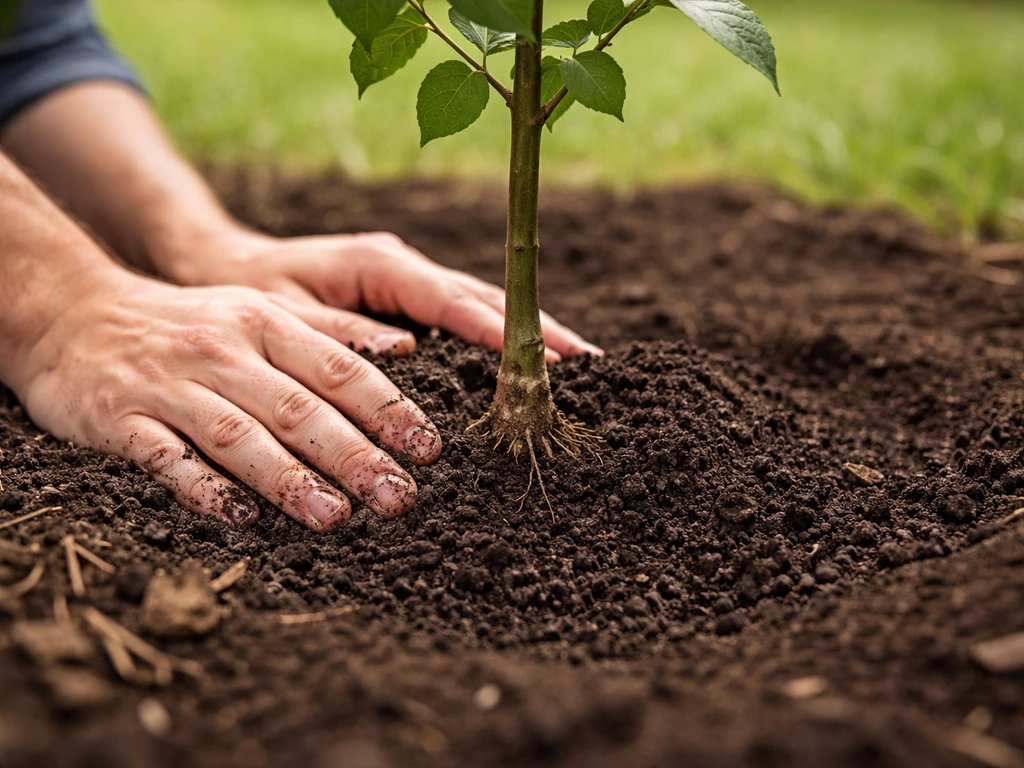
- Plant at the right depth: for trees and shrubs, the root flare should sit at or slightly above the soil surface. Planting too deep is one of the most common causes of slow establishment.
- Remove competing turf: dense grass in the top few inches of soil competes directly with tree and shrub roots for water and nutrients. Keep a clear, mulched area at least 3–4 feet in diameter around any new woody plant.
- Apply 2–4 inches of organic mulch over the root zone but keep it off the trunk. Mulch conserves soil moisture, moderates temperature, and reduces the weed/turf competition that limits early root growth.
- Space correctly: Leyland cypress planted too close together (under 6 feet) increases disease pressure and reduces airflow. 'Green Giant' arborvitae used as a privacy screen performs best at 5–6 foot spacing. Trumpet vine needs its support structure in place at planting.
- Hold off on fertilizer at planting: readily available nitrogen at planting can inhibit root development rather than accelerate it. Wait until the plant has shown active growth (new leaves or measurable shoot extension) before applying fertilizer.
- Once established, use a soil-test-guided fertilizer rather than guessing. Avoid applying more than 1 lb of actual nitrogen per application for woody plants, and lean toward slow-release formulations.
- For vines, install the trellis or support structure at planting. Trumpet vine needs to attach early to make vertical progress; without support it sprawls horizontally rather than gaining height.
- Control weeds aggressively in the first season. Weed competition in the root zone slows establishment just like turf competition does, and the first season is when establishment speed matters most.
Why tall-fast plants stall (and how to diagnose it)
The most common reason a supposedly fast grower does nothing for a season is a hardiness zone mismatch. A plant planted one zone outside its cold-hardiness range may survive but spends its energy on winter recovery rather than height growth. Leyland cypress in Zone 5 is a good example: it technically survives some Zone 5 winters but suffers enough cold damage that it never achieves the 3–4 foot annual growth you'd see in Zone 7. Always check the updated USDA Plant Hardiness Zone Map for your specific location, not just your general region, because urban heat islands and elevation differences mean neighboring zip codes can be in different zones.
Poor drainage and compacted soil are the second most common culprits. When roots can't penetrate or expand, the above-ground plant hits a ceiling on growth rate no matter how good everything else is. Compacted soil from construction, foot traffic, or heavy clay often doesn't show obvious symptoms other than slow growth.
Competing vegetation, especially turf grass, is underestimated. The dense fibrous root system of lawn grass occupies the same top few inches where new tree and shrub roots need to establish. It's not just a nutrient competition, it's a physical space competition that directly limits root expansion and therefore limits height growth.
Fertilizer timing errors cut both ways. Applying quickly available nitrogen at or right after planting can inhibit root growth rather than support it. But under-fertilizing an established fast grower that's running out of available nitrogen also stalls it. Yellowing older leaves with sparse new growth is the classic sign of nitrogen deficiency. The solution isn't more fertilizer immediately, it's a soil test to confirm what's actually needed.
Insufficient light is self-diagnosing in most cases: if the plant is growing toward light, producing long weak shoots with wide internodal spacing (etiolation), or just sitting still while producing minimal new growth, light is likely the issue. Most fast-tall plants need at minimum six full hours of direct sun. Below that, you're selecting from a different category of plant entirely.
Finally, transplant stress from summer planting or inadequate watering in the first few weeks can set a woody plant back by an entire growing season. A stressed newly planted tree that drops leaves or goes dormant early in its first summer isn't dead, but it has essentially lost that season for height growth and will need to re-establish before it can resume normal growth rates.
Your selection checklist before you buy anything

Before you walk into a nursery or hit a seed website, work through this list. It takes five minutes and saves a season of frustration.
- Confirm your USDA hardiness zone using your specific zip code on the current USDA zone map, not a regional estimate.
- Identify whether your site is full sun (6+ hours direct sun), part shade (3–6 hours), or shade (under 3 hours). Most fast-tall plants require full sun.
- Check your soil drainage: does standing water persist after rain? Compact or clay-heavy soil will need amendment or you need a wet-site species.
- Get a soil pH reading if you haven't in 2–3 years. Target 6.0–7.0 for most fast-growing woody plants. Many county extensions offer low-cost soil testing.
- Match your goal to plant type: freestanding height (tree or shrub), quick vertical coverage (vine on a structure), or seasonal mass and height (ornamental grass).
- Check hardiness zone range for your specific candidate before purchasing: hybrid poplar for Zone 3+, 'Green Giant' for Zones 5–8, Leyland cypress for Zones 6–10, trumpet vine for Zones 4B–10A.
- Plan your planting window: target early spring after last frost or early fall at least six weeks before first hard freeze. Avoid summer planting for woody plants.
- Prepare the planting site first: clear turf and weeds from a 3–4 foot radius, have mulch ready, and ensure your watering plan is in place before the plant goes in the ground.
- Hold fertilizer until the plant shows active growth (new shoot extension), then apply based on soil test results rather than guessing.
- If your goal is plants that stay compact rather than grow tall, or plants with very slow height development, those are genuinely different plant lists with different environmental fits.
The simplest next step after working through that checklist: pick one plant from this guide that matches your zone, sun level, and drainage situation, and plant it this spring in a properly prepared site with mulch and a watering plan.
Many of the fastest, tall plants discussed in this guide are chosen for foliage and growth rate rather than for flowers, so if you specifically want plants that do not grow flowers, you will need to filter by plant type and lifecycle as well. If you’re still deciding on what are plants that grow fast in your area, use your USDA zone and the amount of sun you can provide as the starting filters.
One well-sited fast grower will outperform five poorly sited ones every single time. If you’re still deciding on what are plants that grow quickly in your area, use your USDA zone and the amount of sun you can provide as the starting filters plants that grow fast. The height comes from the environment match, not just the species name.
FAQ
How can I tell whether a “fast” plant will actually reach tall height in my yard, not just survive?
Check two things before buying: first, whether your USDA zone is within the plant’s stated hardiness range, and second, whether your site matches the light and drainage requirements (most fast-tall plants assume full sun and oxygenated soil). A plant can survive an out-of-zone winter but lose its height-growth season to recovery.
Do I need to use a larger starting size (taller nursery tree) to get fast results?
Usually, yes for woody plants, because thicker trunk caliper often means quicker visible height, not necessarily faster root establishment. However, the biggest gains still come from proper site prep, adequate watering during the first weeks, and avoiding late-summer planting, which can delay the shift into active growth.
What is the best way to water so a fast-growing tree or cypress doesn’t stall?
For the first few weeks, keep the top portion of the root zone evenly moist, then taper to less frequent deep watering as roots expand. Use a soil check at 6 to 9 inches to avoid the common mistake of watering too little (dry stress) or too much (low-oxygen roots, especially in clay).
Why does my fast-tall plant grow roots first and seem stuck for a while?
That’s often normal. Many woody “fast” plants prioritize root development immediately after planting, so you may not see height for an entire growing season. If there is also leaf drop, wilting, or minimal new growth during that first summer, suspect stress from heat, transplant timing, or insufficient water.
What spacing rules should I follow for Leyland cypress so it grows tall and stays healthy?
Plan for spacing that allows airflow and reduces long-term disease pressure, not just for how tall you want it right away. If you plant them too close and the site gets dry during heat, canker problems are more likely and growth can slow as the plants recover.
Is trumpet vine a good choice if I need tall coverage but I want it contained?
It’s usually a poor match for contained beds because it spreads by root suckers. If you want a tall, vertical climber, consider whether you can dedicate a section with strong root barriers, or choose a different trellis-friendly vine that doesn’t aggressively expand underground.
Can giant miscanthus or bamboo grasses provide real privacy-level height quickly?
They can reach tall, screening height relatively fast once established, but the timeline depends on how quickly their rhizomes take hold in your soil and sun. For bamboo and similar grasses, plan containment from day one, otherwise the “fast” growth becomes fast takeover.
Will fertilizing guarantee faster height on a fast-growing plant?
Not always, and timing matters. Nitrogen-heavy feeding right at planting can divert energy away from root establishment, while under-fertilizing an established plant can also stall growth. A soil test is the most reliable way to decide whether you need nutrients at all and how much to apply.
What’s the fastest tall option for Zone 3 or cold winters?
From the plants mentioned in the article, hybrid poplar is one of the more cold-tolerant speed options. Still, expect strong performance only when the site has deep, well-drained soil and full sun, and when you plant in an establishment window your climate allows (typically spring in very short seasons).
If my yard is partly shaded, what should I do instead of forcing a “full sun” fast grower?
First, measure real sun hours (not guesses) and note whether the site gets at least about six hours of direct sun. If it doesn’t, you’ll likely get slower growth than advertised, so you may need to switch to plants that tolerate shade better rather than expecting the same height rate.
What are the most common reasons a fast-tall plant fails to grow for a full season?
The top culprits are zone mismatch (winter recovery instead of growth), poor drainage or compacted soil (roots cannot expand), turf competition from lawn grass (root-space theft), and transplant stress from summer planting or inconsistent early watering.