
The fastest-growing plants you can put in the ground right now are radishes (harvestable in as little as 4 weeks), spinach (35–45 days to maturity), arugula (around 40 days), bush beans (45–65 days), and cucumbers (50–70 days depending on variety). Which ones will actually work for you depends on your current soil temperature, your climate zone, and whether you're starting from seed or transplant. That's what this guide covers.
What Plants Grow Quickly? Fast Growers by Season

Dr. Marcus Weatherby
21 Apr 2026
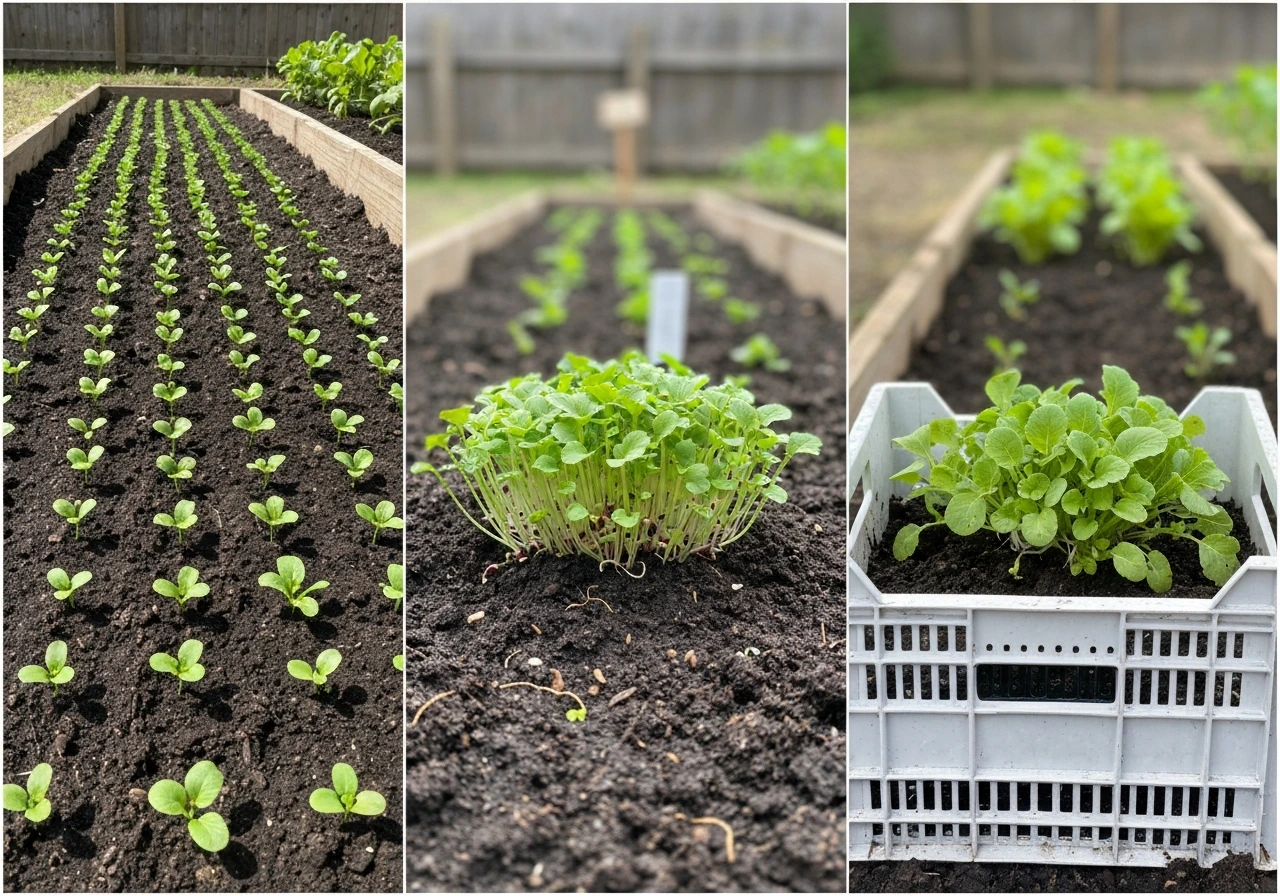
What 'quickly' actually means for plants
When people ask what plants grow quickly, they usually mean one of two things: how fast does it germinate, or how fast does it reach a usable size. Those are different timelines and worth separating. A radish seed can emerge within 10 days and be harvest-ready in 30. A cucumber takes longer to germinate but will start producing fruit in 50–70 days from transplant. Peas need about 60 days of growth before harvest. 'Quick' for a vegetable is generally under 60 days from seed to usable harvest. Under 45 days is genuinely fast. Anything over 90 days is in slow territory, at least for annual crops.
Germination speed is also temperature-dependent. As South Dakota State University Extension notes, ideal temperatures ensure the quickest germination for each plant type. That means the same radish seed that sprouts in 7 days at 65°F might take 12–14 days at 45°F. The seed hasn't changed, but the soil has. This is why knowing your soil temperature matters as much as knowing which plant you want to grow.
| Plant | Days to Germination | Days to Harvest/Usable Size | Season |
|---|---|---|---|
| Radish | 5–10 days | 30–45 days | Cool |
| Arugula | 5–7 days | 35–40 days | Cool |
| Spinach | 7–14 days | 35–45 days | Cool |
| Peas | 7–10 days (at 55–65°F soil) | 60 days | Cool |
| Kale | 5–10 days | 40–65 days | Cool |
| Bush beans | 7–14 days | 45–65 days | Warm |
| Cucumber | 7–10 days | 50–70 days from transplant | Warm |
| Turnip | 5–7 days | 35–60 days | Cool |
Cool-season vs warm-season quick growers
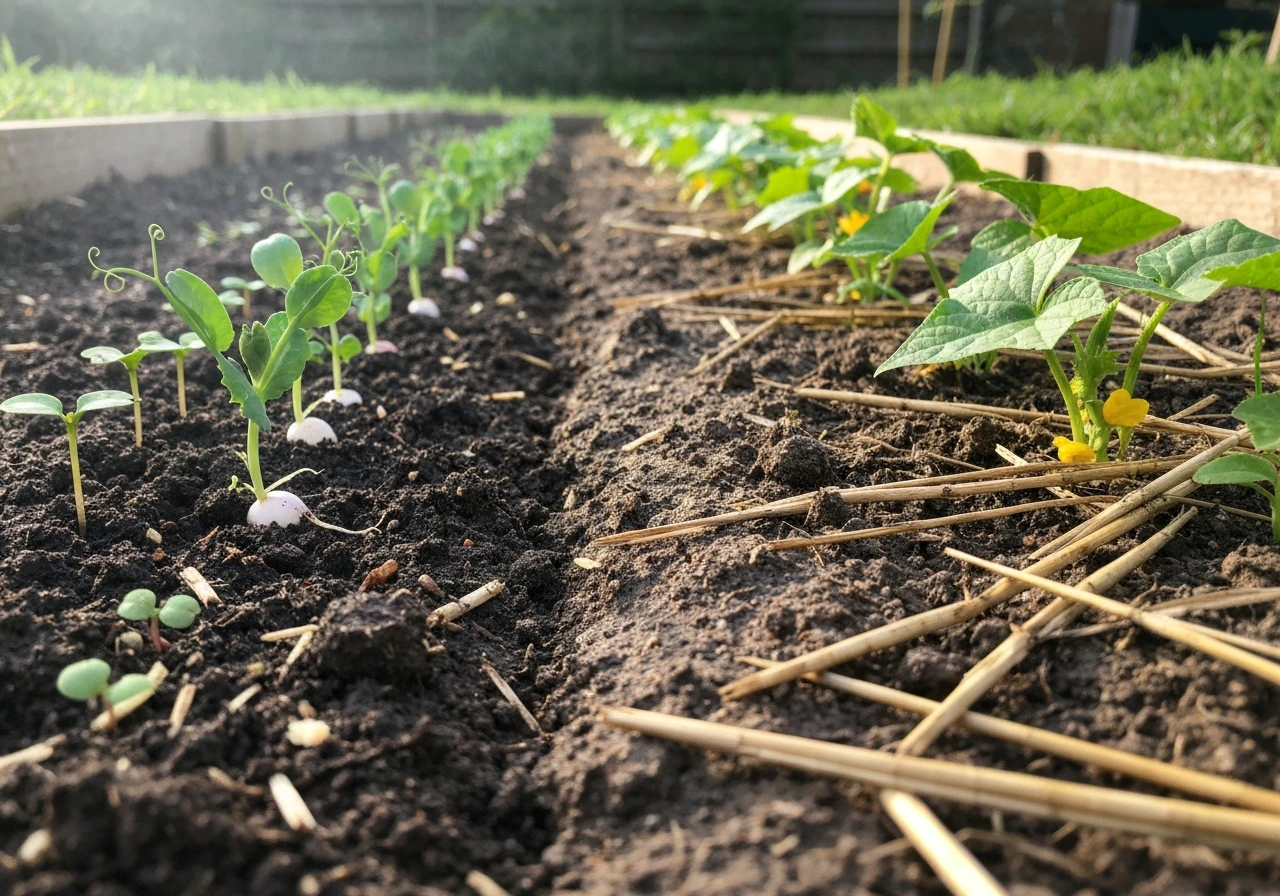
Matching the plant to the season is the single biggest factor in whether it grows quickly or just sits there struggling. Cool-season crops like radishes, peas, arugula, mustard, turnips, spinach, and kale can be direct-seeded once soil temperatures reach around 50°F. In Oregon, cool-season vegetables are typically planted when soil reaches about 50°F, emphasizing soil temperature over calendar timing blank" rel="noopener noreferrer">cool-season crops like radishes, peas, arugula, mustard, turnips, spinach, and kale can be direct-seeded once soil temperatures reach around 50°F. Oregon State University Extension specifically points to that 50°F soil threshold as the trigger for cool-season crops, and emphasizes soil temperature over calendar date because that's what actually controls germination and early root development.
Warm-season crops need warmer soil and air before they'll move fast. Cucumbers are a good example: Penn State Extension says the best temperature range for cucumber production is 65°F to 95°F, and you shouldn't transplant them until soil is at least 60°F at 3 inches deep. Below 50°F, cucumber growth stalls almost completely. Bush beans have a similar profile. Plant them too early and they just sit in cold soil, becoming vulnerable to rot and slow germination. Wait until that soil warms up and they take off.
Cool-season fast growers (soil 40–65°F)
- Radishes: germinate in 5–10 days, harvest in 4–5 weeks. Plant every 1–2 weeks for continuous harvest before heat arrives.
- Arugula and mustard: extremely fast from direct seed, and bolt-tolerant varieties can handle fluctuating spring temps.
- Peas: direct-seed when soil is above 40°F consistently; shoots emerge in 7–10 days when soil is 55–65°F. Harvest around 60 days. Stop producing once temps exceed 85°F.
- Spinach: reliable cool-season performer, 35–45 days to harvest, handles light frost well.
- Turnips: 35–60 days, both greens and roots are edible and grow quickly in cool conditions.
- Kale: 40–65 days, slower on the fast end but highly cold-tolerant and dual-purpose.
Warm-season fast growers (soil 60°F+)
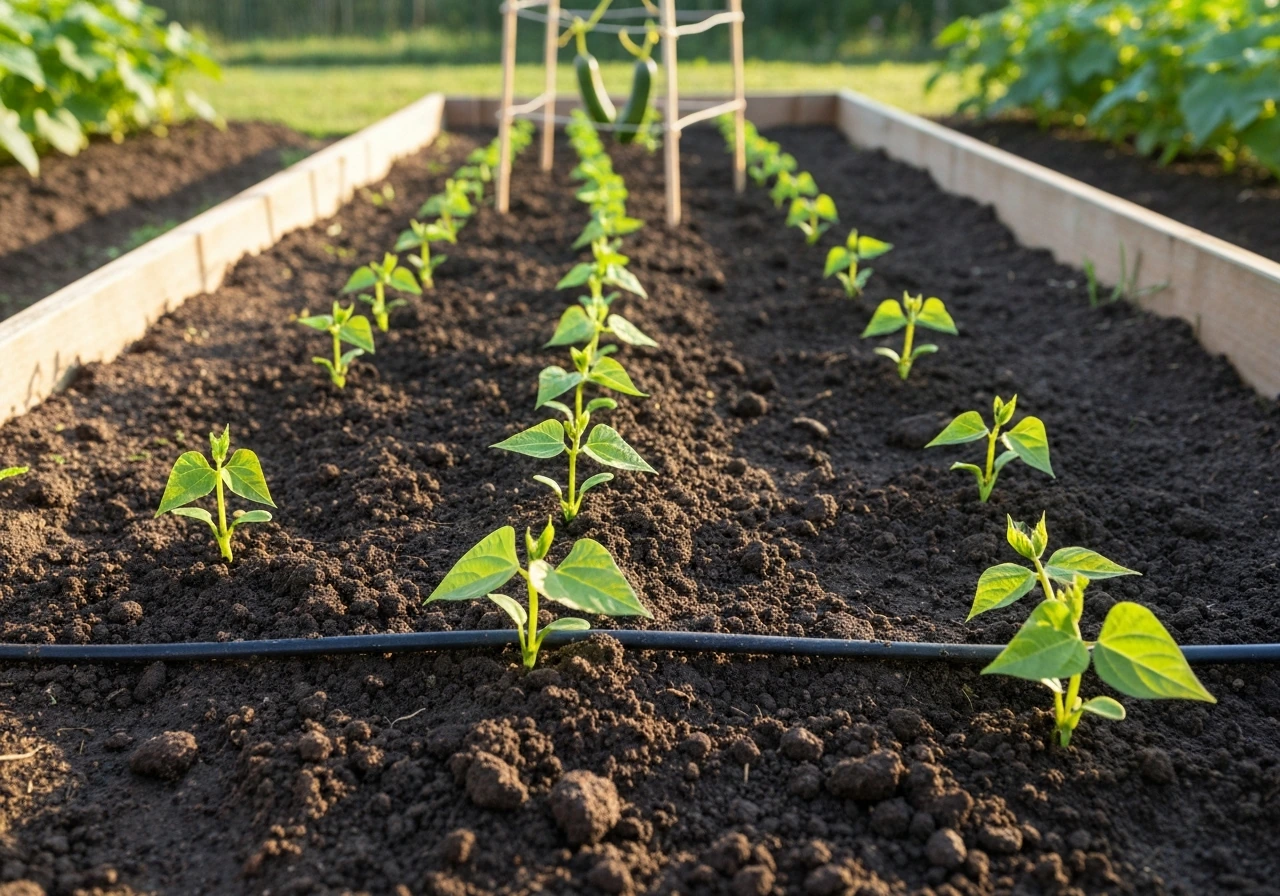
- Bush beans: 45–65 days from seed, no transplanting needed, direct-seed once soil is reliably warm.
- Cucumbers: 50–70 days from transplant, fastest when grown in consistent 65–85°F air temperatures.
- Summer squash (zucchini): not in the data set above but follows the same warm-season profile and is one of the fastest producers once temperatures are right.
Seed vs transplant: which gets you there faster
For most fast-growing plants in the list above, direct seeding is either equal to or better than transplanting. Radishes, peas, arugula, spinach, and beans all prefer direct seeding and actually resent root disturbance. You gain nothing by starting them indoors and a lot can go wrong in the transplanting process.
Cucumbers and squash are where transplants earn their keep. Starting cucumbers indoors 3–4 weeks before your last frost date and then transplanting once soil hits 60°F gets you fruit several weeks earlier than direct seeding in the same window. UMN Extension notes that seedlings should move into containers 1–2 inches wider than the cell pack before final transplant, and row covers can protect them after planting while soil warms further.
When starting from seed, the depth rule is simple: plant about twice as deep as the seed's width. UMN Extension phrases it as planting seeds 'two times as deep as their width.' For tiny seeds like arugula or lettuce, that's barely a quarter inch. For peas, it's about an inch. After sowing, cover with a thin layer of fine vermiculite and keep the medium consistently moist to encourage germination.
How to make your plants grow faster
The conditions that drive quick growth are consistent and well-established. Here's what actually moves the needle.
Soil temperature first, calendar second
OSU Extension makes this point directly: planting based on soil temperature is more reliable than planting by date. A cheap soil thermometer is one of the most useful tools a gardener can own. Minnesota Extension echoes this, noting that wide temperature swings and late frosts reduce yields if crops go in too early. Letting the soil catch up before planting saves more time than it costs.
Water consistently
Vegetables need about one inch of water per week. UMN Extension provides this as a baseline, with the note that sandy soils need more frequent watering than clay-heavy soils because they drain faster and hold less moisture. Uneven watering stresses plants and slows growth. Consistent soil moisture, not flooding and drying out in cycles, is what keeps fast-growing plants moving.
Starter fertilizer after thinning
After thinning seedlings to proper spacing, apply a starter fertilizer. UMN Extension recommends a mix of 1.5 tablespoons of 5-10-5 fertilizer dissolved in one gallon of water applied at the root zone. Penn State Extension describes starter fertilizer as a nitrogen-and-phosphorus blend that provides a favorable early-growth response. UMN Extension's fertilizing quick guide discusses nutrient forms and common vegetable fertilizing concepts, which can help explain how nitrogen and phosphorus relate to fertilizer ratios starter fertilizer as a nitrogen-and-phosphorus blend. This is especially useful for transplants and newly thinned seedlings that need to establish quickly.
Use row covers to extend your window and speed growth
Floating row covers are one of the most practical tools for accelerating growth in shoulder seasons. Utah State University Extension notes that row covers speed plant growth in addition to protecting against pests. Colorado State University Extension adds that they raise growing temperatures for early crops, which effectively extends the warm-season window by 2–4 weeks depending on your climate. The one management note: on warmer days, crack the covers open to prevent heat buildup, as CSU Extension advises.
Light and sunlight exposure
Fast-growing vegetables need full sun, typically 6–8 hours of direct sunlight per day. This is the single most limiting factor in many home garden situations. A plant in partial shade may still grow but will take significantly longer to reach harvestable size. Prioritize your sunniest bed for whatever you want to grow fastest.
Matching fast growers to your climate and region
The 2023 USDA Plant Hardiness Zone Map, hosted by USDA-ARS, is the standard reference for understanding what perennial plants survive your winters. For annual fast-growers, however, what matters more is your frost dates, your current soil temperature, and your growing season length. A gardener in Minnesota has a much shorter warm-season window than someone in Georgia, which makes cool-season fast growers like radishes, peas, and spinach more strategically important in northern climates. Some people prefer plants that do not grow tall, such as compact bush varieties, low-growing herbs, or creeping groundcovers, so choose based on mature height.
In the Pacific Northwest, cool-season crops have an extended window well into June before heat becomes an issue. In the Desert Southwest, that window is brief and runs from late winter through April before temperatures push past what cool-season plants can handle. If you also want plants that do not grow tall, focus on compact varieties and low-growing herbs or ground covers.
If you also want what type of plant does not grow very tall, focus on compact varieties and low-growing herbs or ground covers. If you specifically want what plants grow tall and narrow, look for varieties bred for upright growth and provide a sunnier spot so they can reach their full height plants that do not grow tall. In the upper Midwest and Northeast, soil may not hit 50°F until late April or May.
In the Southeast and lower Plains, warm-season growers like bush beans and cucumbers can go in as early as March or April. If you want plants that do not grow flowers, focus on foliage plants, herbs, and ground covers bred for leaf growth instead of blooms.
| Region | Best Fast Growers Right Now (Late April) | Key Constraint |
|---|---|---|
| Pacific Northwest | Peas, radishes, arugula, spinach | Soil likely 50–60°F, cool season in full swing |
| Upper Midwest / Northeast | Radishes, spinach, arugula (cool crops) | Watch for late frosts; soil may still be 45–55°F |
| Southeast / Gulf Coast | Bush beans, cucumbers (transplant) | Soil warm enough for warm-season crops now |
| Desert Southwest | Radishes wrapping up; shift to warm-season | Cool window closing fast; heat arrives early |
| Mountain West | Peas, radishes, spinach under row covers | Short season; row covers extend window significantly |
If you're interested in how fast-growing plants compare to slow-developing species across different habitats, that's a genuinely useful contrast because it clarifies what the word 'quickly' means ecologically. Fast annual crops like radishes and arugula operate on a completely different timescale than slow-growing perennials or woody plants, and understanding that difference helps you set realistic expectations for any planting project.
Your planting checklist for rapid growth
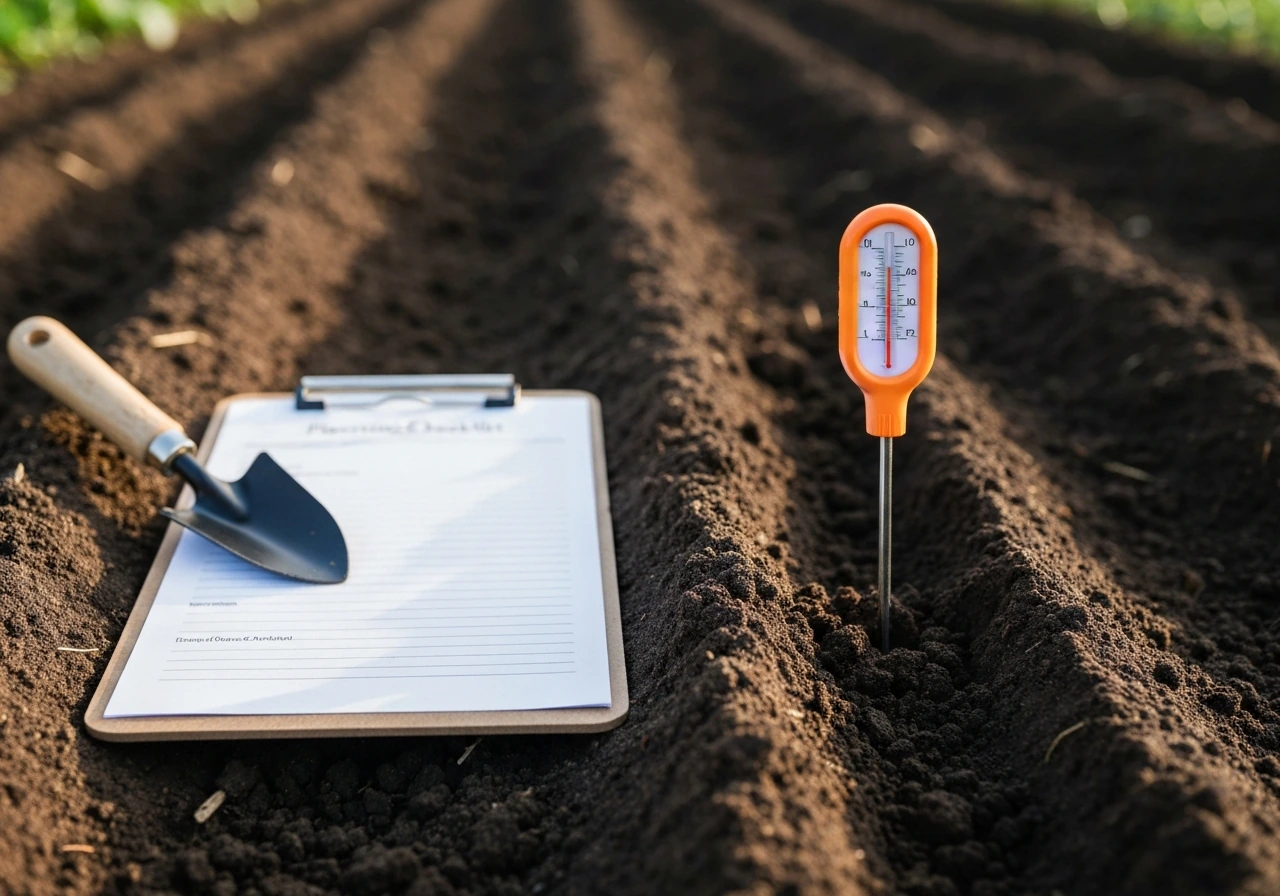
Here's the practical sequence to follow if you want the fastest possible results from any of the plants above.
- Check your soil temperature with a thermometer at 2–3 inches depth. Cool-season crops need 40–50°F minimum; warm-season crops need 60°F+.
- Pick your plant based on current soil temp, not the calendar. If soil is below 60°F today, start with radishes, spinach, arugula, or peas.
- Prepare your bed by loosening soil 6–8 inches deep and mixing in compost if available. Good drainage and loose structure speeds root development.
- Sow seeds at twice their width in depth. Most small vegetable seeds go in at ¼ to ½ inch. Peas go in at about 1 inch. Brassica seeds go ⅓ to ½ inch deep.
- Cover seeds with fine vermiculite or a thin layer of loose soil and water gently. Keep consistently moist until germination.
- Thin seedlings to proper spacing once they reach 1–2 inches tall. Crowded plants slow down significantly.
- Apply starter fertilizer (1.5 tbsp of 5-10-5 per gallon of water) at the root zone after thinning.
- Water consistently to deliver about one inch per week. More frequent, lighter watering works better for sandy soils.
- Add a floating row cover if temperatures are still fluctuating. This alone can accelerate growth by several days to a week.
- Monitor soil temperature and air temperature weekly. Transition to warm-season crops once soil is reliably 60°F at 3 inches deep.
If you want to keep harvesting fast crops all season, succession plant radishes every 1–2 weeks as OSU Extension recommends. One bed of radishes gives you a continuous harvest rather than one big flush and a gap. The same approach works for arugula and spinach in cool weather: stagger plantings 2 weeks apart and you'll have greens coming in through the whole cool season.
One last thing worth noting: if fast growth is your goal, variety selection matters. Within any plant category, some varieties are bred for speed. 'Cherry Belle' radishes hit 22–25 days. 'Baby Leaf' spinach reaches harvest size faster than full-leaf varieties. Always check the days-to-maturity on the seed packet and pick the shortest one for your conditions. That small detail can save you two weeks.
FAQ
How do I tell if a fast-growing plant is actually going to perform quickly in my garden?
Don’t rely only on the “days to maturity” number. Confirm it matches your type of growing (direct-seeded versus transplanted), then check the days to first harvest if listed. Also look for “early,” “bushy,” or “compact” wording for quicker usable size, since “full maturity” can be later than the first pick, especially for greens.
What’s the most common reason fast plants germinate slowly?
Cold soil plus deep sowing. Even if you plant the right crop, radishes, peas, spinach, and arugula will stall if soil is still below their germination-friendly range, and too-deep planting can delay emergence for small seeds.
Can I use row covers to grow faster all the time, even in hot weather?
You need to vent them. On sunny days, row covers can overheat seedlings and slow growth or damage leaves. Crack or remove covers when temperatures rise, then close again in cool evenings if pests or frost risk matter.
Should I thin seedlings aggressively for the fastest harvest?
Yes, but do it on schedule and avoid disturbing roots unnecessarily. Thinning too late leads to overcrowding, smaller heads, and slower maturity. Use scissors to remove extra seedlings at the soil line when possible, rather than pulling, to preserve the roots of the ones you keep.
Do fast growers need fertilizer even if the soil is already rich?
They usually benefit from a starter feeding, but the type and timing matter. If you heavily amend with compost or use a high-nitrogen feed early, you can get fast leafy growth but weaker production later (especially for crops grown for fruits). For best results, fertilize right after emergence or after thinning, then avoid repeated high-nitrogen doses.
What watering mistake slows down fast-growing vegetables the most?
Letting the soil swing between wet and dry. Fast growers need steady moisture because their growth rate depends on continuous water uptake, not occasional deep soakings. If you’re on sandy soil, plan for more frequent watering than you would on clay to maintain consistent moisture at the root zone.
Are fast plants good candidates for container gardening?
Often yes for greens and compact vegetables, but containers change moisture and temperature quickly. Choose a pot depth appropriate for root size (leafy greens are more forgiving than cucumbers), use consistent watering, and consider starting with a short “days to maturity” variety since heat swings in containers can speed or stunt growth.
How does variety choice affect “what plants grow quickly” more than I think?
Within the same crop, early varieties can shift usable harvest by days to weeks. For example, “early” or “baby” types of greens often provide earlier pickable leaves than full-size forms. Always compare the seed packet’s days-to-harvest wording, not just days-to-maturity.
What should I plant second if my first fast bed finishes early?
Plan for succession. Radishes, arugula, and spinach are ideal for another round because they tolerate cool conditions and you can replant every 1 to 2 weeks during the workable temperature window, rather than waiting until the next broad season.
Why do some gardeners transplant fast crops even though they’re better direct-seeded?
People transplant to gain control, but it can backfire when the crop has sensitive roots. Radishes, arugula, peas, and spinach generally resent root disturbance, so direct seeding usually gives more reliable speed. If you must transplant greens, protect roots and avoid letting them dry out between stages.
For warm-season quick growers like cucumbers and beans, what’s the real “go” signal?
Soil temperature at depth, not calendar dates. Use a thermometer and wait until the soil is in the recommended range where growth won’t stall, then plant. Planting into borderline cold soil often causes slow emergence and can increase disease risk.
How much sunlight do I need to actually get quick harvests?
Aim for the crop’s full-sun target, typically 6 to 8 hours of direct light for quick vegetables. If your bed gets partial shade, plants may survive but will mature later, and greens intended for quick size can remain small longer than the seed packet suggests.