
Air plants (Tillandsia) grow best in spots with bright indirect light, good airflow, and enough ambient humidity to keep their leaves from drying out between waterings. Indoors, that usually means within 1 to 3 feet of an east- or west-facing window. Outdoors, it means a shaded or dappled-light spot in USDA zones 9 to 12, or a seasonal patio placement in cooler climates. The exact location matters more for air plants than for almost any other houseplant, because they absorb water through their leaves rather than their roots, so the air around them is their water source as much as any watering routine is.
Where to Grow Air Plants: Best Indoor and Outdoor Spots

Dr. Marcus Weatherby
5 May 2026
What 'where to grow' actually means for air plants
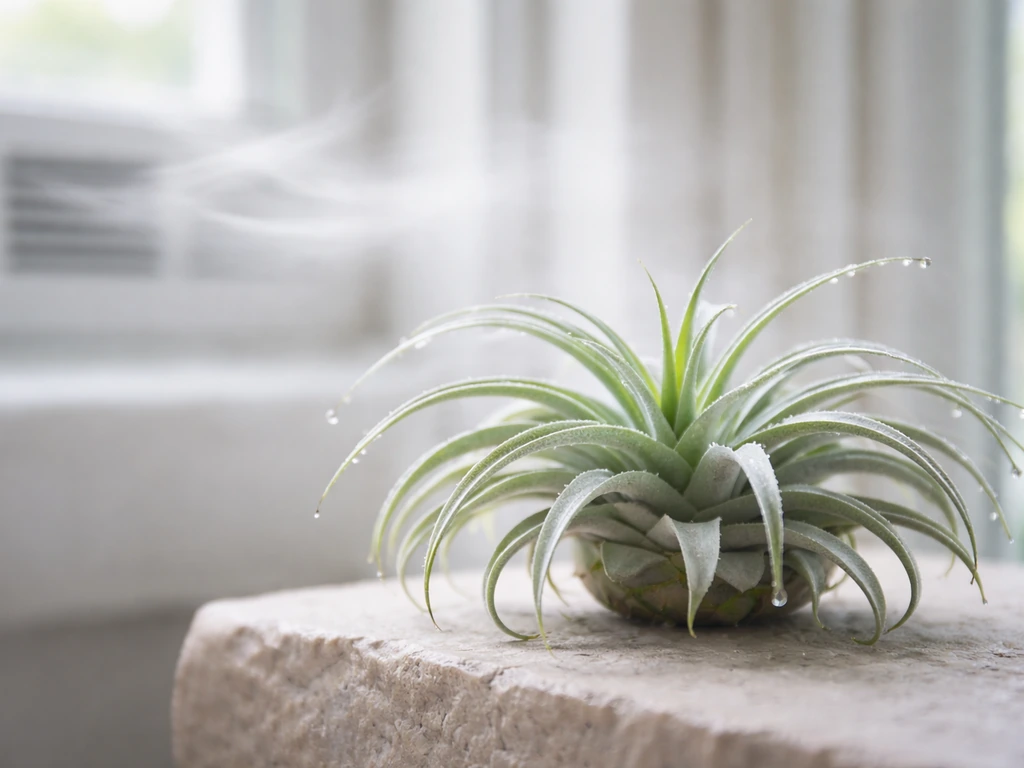
When people ask where to grow air plants, they're really asking three questions at once: how much light does the spot get, how does air move through it, and how dry or humid is the surrounding air? All three variables interact. A bright bathroom with a running shower might work perfectly. A bright windowsill above a heating vent might kill the same plant in two weeks.
The biology explains why. Tillandsia leaves are covered in specialized scales called trichomes. These structures open to pull moisture and nutrients directly from the surrounding air and any water that contacts the leaf surface. A study on extreme atmospheric epiphytes notes that epiphytic bromeliads generally lack functional roots and rely on water and nutrients absorbed by multicellular trichomes on leaf and epidermal surfaces [specialized scales called trichomes](https://onlinelibrary.
wiley. com/doi/abs/10. 1111/pce. 13496).
This is why air plants grow naturally in forest canopies, coastal fog belts, and cloud forests rather than in soil. If the air around the plant is too dry, the trichomes lose moisture faster than they can absorb it, and the leaves dehydrate. Low air humidity doesn't just mean you need to water more often; it means the plant is actively losing water through its leaves all the time. That's a location problem, not a watering problem.
Because of that, the question where do ghost plants grow comes down to whether you can match that species' natural humidity, airflow, and light conditions.
Light sets the pace for everything else. More light means faster growth but also faster moisture loss. Airflow is essential because stagnant, wet air after watering causes rot at the base, but too much direct airflow from a fan or vent dries the plant out. The sweet spot is a location with gentle air circulation, enough light to support the species' natural habitat range, and enough ambient humidity that the plant isn't fighting constant evaporative stress.
Best indoor locations by window light and room type
Indoors, window orientation is your primary tool. East-facing windows give soft morning light and cooler temperatures, which is ideal for most Tillandsia species that come from shaded canopy environments. West-facing windows work well too, with stronger afternoon light that suits slightly more sun-tolerant species like T. ionantha or T. xerographica. North-facing windows are generally too dim unless you're a few feet back and supplementing with a grow light. South-facing windows can work in winter when the sun angle is low, but in summer the direct light is too intense for most species and will bleach the leaves pale or scorch them.
Distance from the window matters as much as direction. A common working rule is to keep the plant within 3 feet of the glass for adequate light. Beyond 5 feet in most rooms, natural light drops off sharply enough that growth stalls and the plant becomes vulnerable to rot because it's metabolically slower and can't process moisture efficiently.
Room-by-room breakdown
| Room | Why it works (or doesn't) | Best for |
|---|---|---|
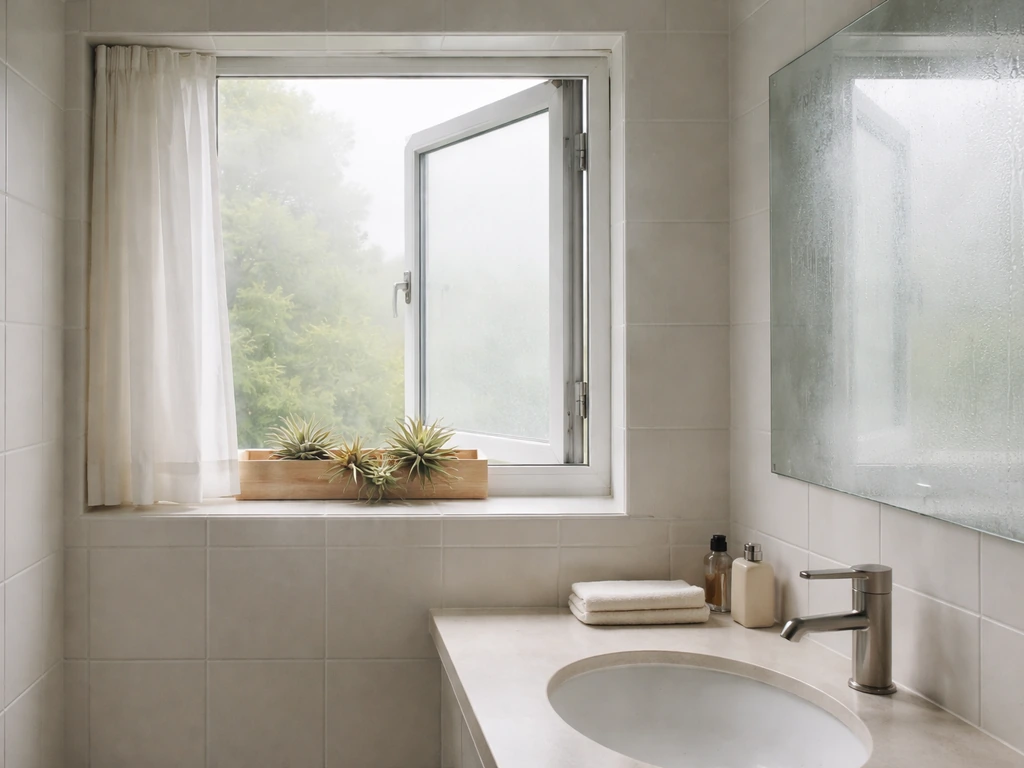
| Bathroom with window | High humidity from showers, indirect light, good air exchange if vented | Most Tillandsia species; especially cloud-forest types like T. streptophylla |
| Kitchen near sink | Moderate humidity, usually good ambient light, natural air movement from cooking | Smaller species; T. ionantha, T. stricta |
| Living room east/west window | Bright indirect light, lower humidity unless humidifier present; needs regular misting | Sun-tolerant species; T. xerographica, T. caput-medusae |
| Home office or desk | Often low light and dry HVAC air; needs grow light and humidifier nearby | Tolerant compact species with regular soaking schedule |
| Terrarium (open) | Retains humidity well; must be open-top for airflow to prevent rot | Humidity-loving species; avoid closed terrariums |
| Terrarium (closed) | Traps moisture; poor airflow causes rot at base | Not suitable for Tillandsia |
Bathrooms get recommended so often because they replicate the coastal fog and cloud-forest humidity that many Tillandsia species evolved in. If your bathroom has a window (even a small frosted one) and you shower daily, it's often the single easiest location in the house. The caveat is that bathrooms with no window and purely artificial lighting usually don't provide enough light for long-term health.
Best outdoor locations by climate and seasonal conditions
Outdoors, air plants can thrive year-round in warm, humid climates and seasonally in almost any climate as long as temperatures stay above 50 degrees Fahrenheit (10 degrees Celsius). A mainstream gardening reference notes Tillandsia are typically grown as houseplants and are only fully hardy in USDA zones 10, 12, with a suitable temperature range of about 50, 90°F (10, 32°C) Growing Air Plants Outdoors. Below that, most Tillandsia species stop absorbing water efficiently and become vulnerable to cold damage. Hard frost is lethal for all but a handful of cold-tolerant species.
Outdoor placement by climate zone
| Climate Zone | Outdoor Viability | Recommended Placement |
|---|---|---|
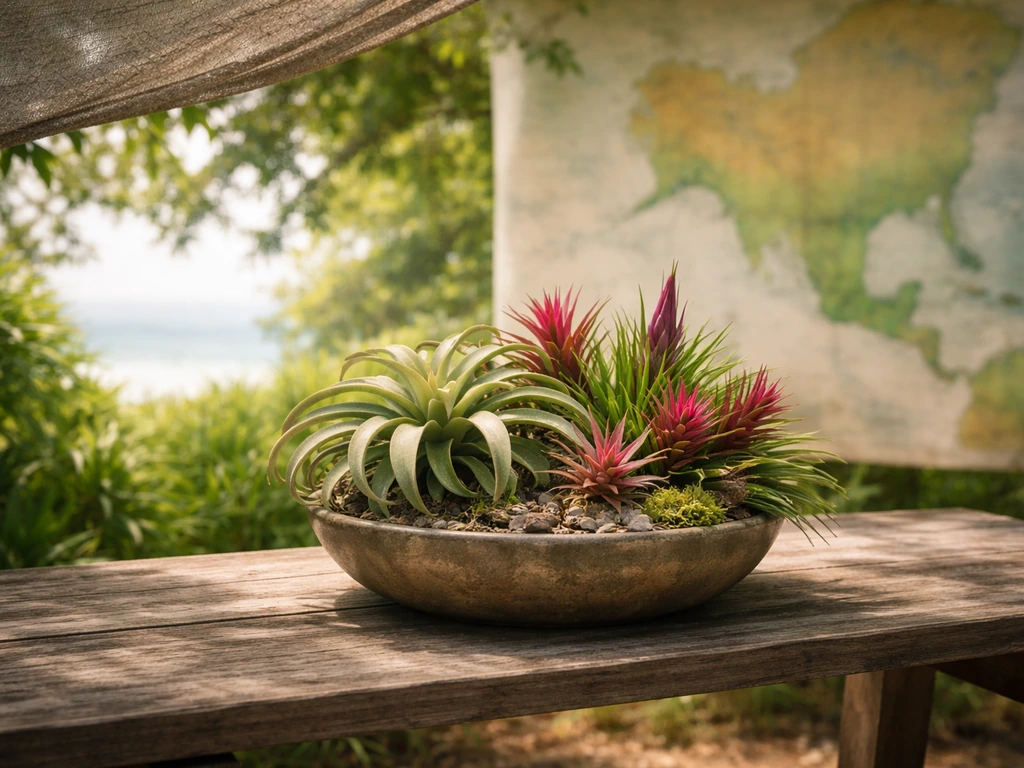
| USDA Zones 9-12 (subtropical/tropical) | Year-round outdoors | Under shade cloth or tree canopy; 50-70% filtered light; protected from frost |
| USDA Zones 7-8 (mild temperate) | Spring through fall; bring in below 45°F | Covered patio, pergola, or south-facing sheltered wall with morning light |
| USDA Zones 5-6 (cold temperate) | Summer only (May to September) | Shaded porch or outdoor table; never in direct midday sun; monitor for temperature drops |
| USDA Zones 3-4 (northern/continental) | Short summer window only | Bring outdoors in warmest weeks; keep sheltered; easier to grow indoors year-round |
| Arid/desert climates (any zone) | Possible with shade and frequent misting | Deep shade essential; morning mist or soak every 2-3 days; humidity often critically low |
In Florida, coastal California, Hawaii, and the Gulf Coast, growing air plants outdoors year-round is not just possible, it's often better than indoors because natural humidity and air movement match what these plants experience in their native Central and South American ranges. Hanging them from tree branches, fence rails, or pergola beams works well, mimicking the epiphytic lifestyle they evolved with.
In arid climates like the American Southwest or high desert, outdoor placement is harder. The dry air accelerates transpiration through the trichomes, meaning the plant loses moisture much faster than it can absorb it from the environment. If you're in Phoenix or Albuquerque, deep shade and a misting or soaking schedule every two days is the minimum. Even then, indoor placement near a humidifier is more reliable.
How you mount or display them changes everything
The way you display an air plant directly affects how quickly it dries out and how much airflow reaches the base, where rot is most likely to start. This is a practical location decision, not just an aesthetic one.
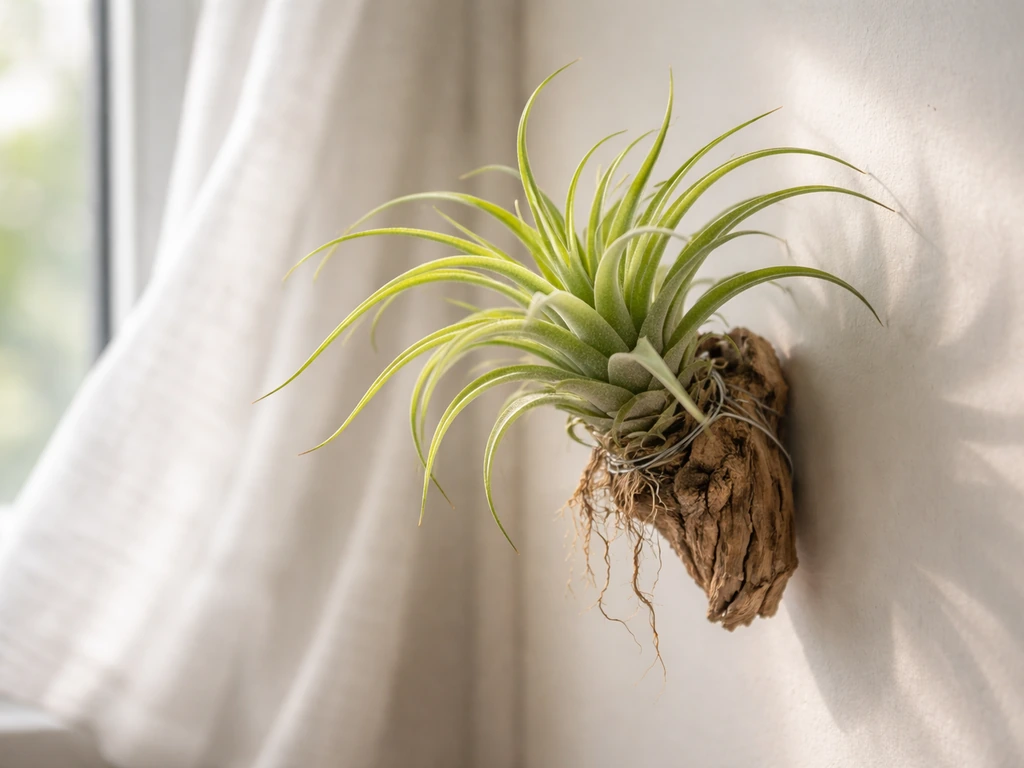
- Mounted on wood (driftwood, cork bark, branches): excellent airflow to all surfaces, dries quickly after watering, mimics natural epiphytic attachment; best for humid rooms or climates where drying is not already a problem
- Wire or macrame hanging: similar airflow benefits, slightly slower dry time than bark mounts, good for near-window placement where air circulates freely
- Shells, bowls, or cupped containers: restricts airflow at the base, holds residual moisture which can cause rot; keep upside-down for 1 to 2 hours after any soaking before returning to container
- Tilted or inverted display (common for T. caput-medusae or T. bulbosa): allows water to drain away from the central cup or base naturally; significantly reduces rot risk in lower-humidity environments
- Open terrariums with a wide mouth: retains some humidity around the plant while still allowing air exchange; works well if terrarium opening faces a window
The general rule is: the more enclosed the display, the more carefully you need to manage drying time after watering. In a dry environment, enclosed displays help retain leaf moisture. In a humid environment, open mounts are safer because the plant gets enough ambient humidity without sitting in stagnant wet air. Match the display type to your room's humidity level, not just to what looks good on a shelf.
Reading natural habitat to predict where your plant will thrive
Tillandsia as a genus spans an enormous ecological range, from sea-level humid coastal forests to high-altitude cloud forests to dry rocky desert scrublands in the American Southwest and South America. That range is why different species have different placement needs. Understanding which habitat type a species comes from gives you a reliable shortcut for where to put it.
Species with dense white or silvery trichomes (T. xerographica, T. tectorum, T. harrisii) come from drier, higher-light habitats. Those trichomes reflect intense light and capture fog or dew. They tolerate more direct sun and drier air than green-leaved species. Place them closer to a bright window or in a spot with lower humidity. Species with smooth, greener leaves and fewer trichomes (T. stricta, T. flabellata, T. lindenii) come from shadier, wetter forest habitats. They need more humidity, less direct sun, and more frequent moisture.
This is the same logic used to understand where aerial plants grow naturally as a category, and it connects closely to understanding other epiphytes. You can use the same habitat clues to understand where do air plants grow naturally in the wild, from humid coasts to misty mountain forests. Pitcher plants, for instance, occupy completely different ecological niches (boggy, nutrient-poor soils) while spider plants are terrestrial shade growers.
Spider plants, by contrast, are terrestrial growers, and knowing the conditions they naturally thrive in helps you choose the right placement. Pitcher plants, on the other hand, tend to grow in wet, acidic habitats like bogs and damp forest floors, so their ideal location is very different from air plants. Air plants occupy the canopy and vertical surface niche, which is why their placement rules are so different from soil-rooted plants.
If you're trying to understand what grows in air more broadly, the trichome density on a Tillandsia is one of the clearest ecological signals you can read from the plant itself. If you want examples, look for plants like Tillandsia and other epiphytes that pull moisture from surrounding air instead of soil what grows in air.
If you’re looking for plants that grow in air example situations, focus on organisms that absorb moisture from the surrounding environment instead of relying on soil roots what grows in air more broadly.
Location checklist and troubleshooting
Before placing your plant, run through these conditions. If you can check all of them, you've found a good spot.
- Light level: bright indirect light for at least 4 to 6 hours per day (within 1 to 3 feet of an east or west window, or equivalent grow light at 2,000 to 3,000 lux)
- Temperature: consistently between 50 and 90 degrees Fahrenheit (10 to 32 degrees Celsius); no cold drafts from windows in winter, no hot air from vents
- Airflow: gentle natural air circulation; not in a sealed corner, not directly in front of a fan or AC vent
- Humidity: ideally 40 to 60% relative humidity; if your home is below 30% (common with winter heating or desert climates), plan to soak rather than mist, and consider a small humidifier nearby
- Drainage access: you can remove the plant easily, soak or mist it, shake off excess water, and let it dry upside-down or on a towel for 1 to 4 hours before returning it to its display
- No standing water: the base of the plant (where leaves meet) must never sit in pooled water for more than 2 hours
Troubleshooting by symptom
| Symptom | Likely cause | Location fix |
|---|---|---|
| Leaf tips turning brown and curling | Too dry; low humidity or insufficient watering | Move closer to humidity source; soak for 20-30 minutes twice a week instead of misting |
| Leaves turning pale, bleached, or yellowish | Too much direct sun | Move back from window by 12-18 inches or add a sheer curtain |
| Soft, dark, or mushy base | Rot from trapped moisture and poor airflow | Move to open mount; ensure drying time after watering; reduce enclosure |
| Leaves curling inward lengthwise | Water stress; trichomes losing moisture faster than absorbing it | Increase misting frequency or ambient humidity; check for nearby heat vent |
| Very slow or no growth after months | Light too low or temperature too cool | Move to brighter spot or add a full-spectrum grow light; check ambient temperature |
| Leaves dropping or plant feels loose on mount | Root stress or rough handling; natural in some cases | Re-secure mount; ensure conditions are stable; check for rot at attachment point |
One thing worth noting: most problems with air plants trace back to location rather than watering technique. If you keep adjusting your watering schedule but the plant still looks stressed, the issue is usually the spot itself, whether it's too dry, too dim, or too stagnant. Fix the location first, then dial in the watering routine to match it.
For seasonal adjustment: in winter, heating systems drop indoor humidity sharply. Even a plant that thrived all summer near a window may need to move to the bathroom or near a humidifier in January. In summer, watch for heat buildup near south-facing glass, especially if you're in a warm climate. The plant's leaves will tell you what's wrong faster than any schedule will, so treat placement as something you revisit every few months rather than a one-time decision.
FAQ
How can I tell if my air plant’s location is too dry even if I’m watering it on schedule?
Look for a gradual, overall leaf dehydration pattern (leaves curl inward, feel papery, or look dull) that improves briefly after soaking but returns quickly. If only the base stays green while tips keep drying, the surrounding air is likely too dry or airflow too harsh at the mount.
Can I place an air plant directly under a ceiling fan or near a vent?
Usually not. Strong forced airflow can dry the leaves faster than the plant can rehydrate, especially in dry seasons. A safer setup is gentle room airflow, or moving the mount a few feet away from vents while keeping bright light.
What if my windowsill is bright but the plant still turns brown or rots at the base?
That combination often means the location has enough light but insufficient drying time and stagnant wet air around the base. Use a more open mount, ensure the plant can shed water quickly, and keep it out of corners where air circulation is weak.
Is it okay to grow air plants in a closed terrarium or glass display?
It depends on humidity and how quickly moisture evaporates. In dry rooms, more enclosed displays can help, but in enclosed setups water can stay trapped and promote rot. If you use a glass container, leave space for airflow and remove the plant from any “always wet” environment after watering so it fully dries.
How do I choose indoor placement when I have only a north-facing window?
Expect lower light, so you may need to supplement with a grow light and/or move the plant closer to the glass (within a few feet). Species with denser trichomes often handle brighter conditions better, but dim light generally slows growth and can increase vulnerability if combined with high moisture.
What’s the safest mounting type if my room humidity is low?
Prefer mounts that let water and air move around the base, like open holders or airy wiring, as long as the plant still gets enough ambient humidity. Enclosed or tightly packed displays can trap moisture after soaking, but very exposed mounts can over-dry leaves, so you want a balance that lets it dry fully between waterings.
Do air plants need to be watered less in humid places and more in dry places?
Generally, yes, but the key is drying speed after watering. In humid environments, the plant can take longer to dry, so you may water less frequently or ensure better airflow. In dry environments, the plant loses moisture continuously through its leaves, so you may need more frequent rehydration to prevent chronic leaf stress.
How close to a window should I place an air plant if my room is especially bright or very dim?
Use distance as a dial for light. The article’s common guideline is within about 3 feet of the glass for most rooms, but extremely bright south or west sun can require more distance to prevent bleaching. If the room is dim, staying closer or adding grow light helps because growth stalls beyond several feet in many homes.
Can I move an air plant outdoors in summer if I live in a cooler climate?
Yes, as long as nighttime temperatures stay above about 50°F (10°C) and the spot is shaded or dappled light. Acclimate gradually over a week to avoid sudden sun stress, and bring it back indoors before temperatures drop.
What should I do if the plant looks fine indoors but struggles outdoors?
Outdoor conditions can change airflow, evaporation rate, and sun intensity quickly. Even in warm climates, direct sun can bleach pale leaves, while intense dry wind can dehydrate trichomes. Start with deeper shade and protect from wind, then adjust based on leaf color and texture after a couple of weeks.
How does the species’ leaf color or trichome density help me decide where to grow it?
Dense white or silvery trichomes usually indicate the plant tolerates drier air and brighter light, so it can often sit closer to a bright window or in slightly less humid spots. Greener leaves and fewer trichomes often signal a need for higher ambient humidity and softer light, so a bathroom or more humid area is typically a better match.
My air plant dries out too fast, but I’m worried about rot, what’s the practical compromise?
Choose a placement with bright indirect light and gentle, not strong, airflow, then use a mount that prevents water from pooling at the base. If it dries too fast, increase ambient humidity (for example with a humidifier nearby) or adjust rehydration frequency, but avoid putting it in a stagnant, wet environment.
What seasonal location adjustment should I plan for if I use indoor heating?
Heating often drops indoor humidity in winter, so your summer spot may become too dry. Move the plant closer to a naturally humid area like a windowed bathroom or add humidity near the plant, then reassess every few months because the stress pattern shows up in the leaves before you notice major growth changes.