
Air plants (genus Tillandsia) grow naturally in the Americas, from the southeastern United States down through Mexico, Central America, and deep into South America. Where do aerial plants grow? What plants grow in air are a related consideration, and Tillandsia are among the most common examples. Air plants naturally grow across the Americas, from the southeastern United States through Mexico and Central America and deep into South America. In the wild, they are epiphytes, meaning they grow on other plants or rocky surfaces rather than in soil. They anchor themselves to tree bark, branches, and rock faces, pulling moisture and nutrients from the air and rain rather than from roots in the ground. That single fact shapes everything about where they thrive and how to care for them.
Where Do Air Plants Grow Naturally? Habitats and Climates

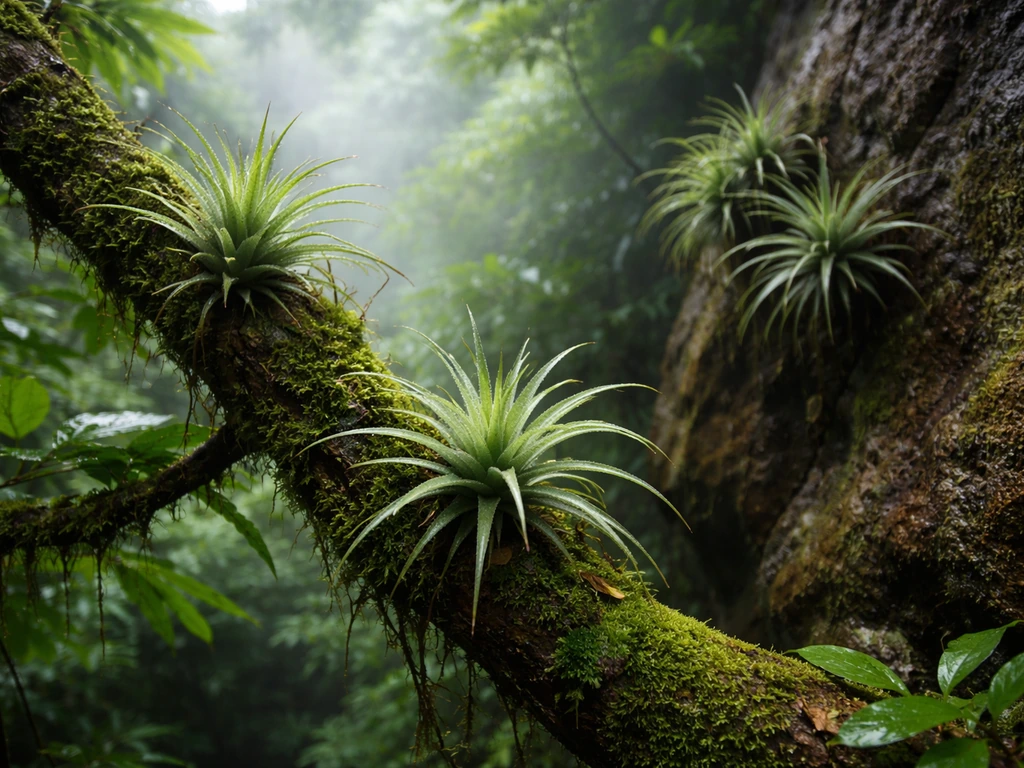
The real natural habitat of air plants
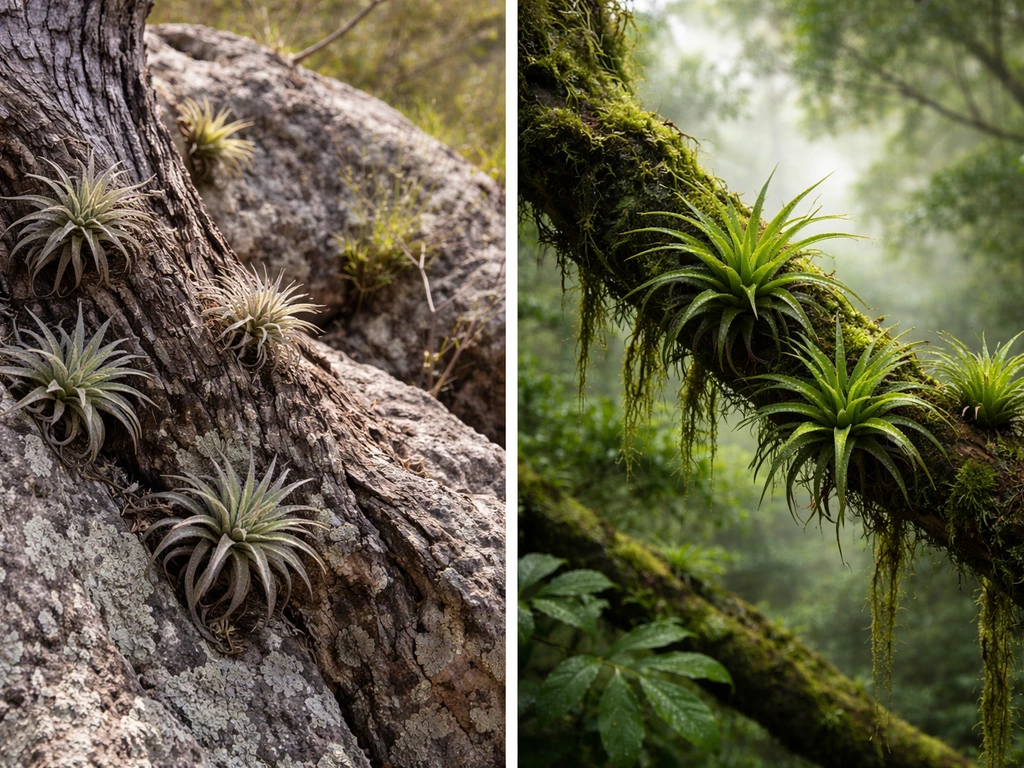
Tillandsia are not houseplants by origin. They evolved in some of the most varied habitats on the continent, from coastal mangroves and humid rainforest canopies to dry mountain ridges and even semi-desert scrub. What they all share is that the plants grow on a host surface, never rooting into soil. Their roots serve mainly as anchors, gripping bark or stone. All water and nutrient absorption happens through tiny specialized leaf structures called trichomes, which are the small, scale-like cells covering the leaves. Depending on the species, trichomes can be sparse and barely visible, or so dense that the whole plant looks fuzzy or silvery-grey.
You can sort wild Tillandsia into two broad ecological categories: xeric types and mesic types. Xeric species are built for drier conditions. They have thick, dense trichome coverage that helps them trap and hold atmospheric moisture quickly during brief humid periods. Mesic species have fewer trichomes, softer leaves, and need more consistently moist air because they cannot store as much water on their leaf surfaces. This distinction matters practically: a xeric species growing on a sun-baked rock face in Mexico is experiencing completely different conditions than a mesic species hanging from a tree branch in a humid Guatemalan cloud forest.
Climate and weather patterns across their range
The Tillandsia genus covers a remarkable span of climates, which is part of why there are so many species (over 650 recognized). In broad terms, their natural climates fall into three categories: tropical humid, subtropical with seasonal dry periods, and montane or semi-arid zones.
- Tropical humid zones: Consistent warmth year-round (rarely below 60°F/15°C), high annual rainfall, and humidity often above 70%. Rainforest interiors and cloud forests in Central and South America fall here. Mesic Tillandsia dominate these settings.
- Subtropical with seasonal dry periods: Think coastal Florida, parts of the Gulf Coast, and much of Mexico. These areas have warm, humid summers and mild, occasionally dry winters. Both xeric and mesic species appear here depending on microsite.
- Montane and semi-arid zones: Higher elevations in the Andes and arid scrubland in northern Mexico and the American Southwest. Temperature swings are wider, rainfall is sparse, and fog or dew may be the primary moisture source. Xeric, heavily trichomed species dominate.
Florida is a good example of the subtropical pattern. Native bromeliads there, including several Tillandsia species, grow as epiphytes on large trees in hammocks and cypress swamps. They experience hot, humid summers with regular rainfall and drier, cooler winters where humidity drops and rain is infrequent for weeks at a time. The plants are built to handle both ends of that cycle.
Where they attach in the wild: trees, rocks, and surfaces
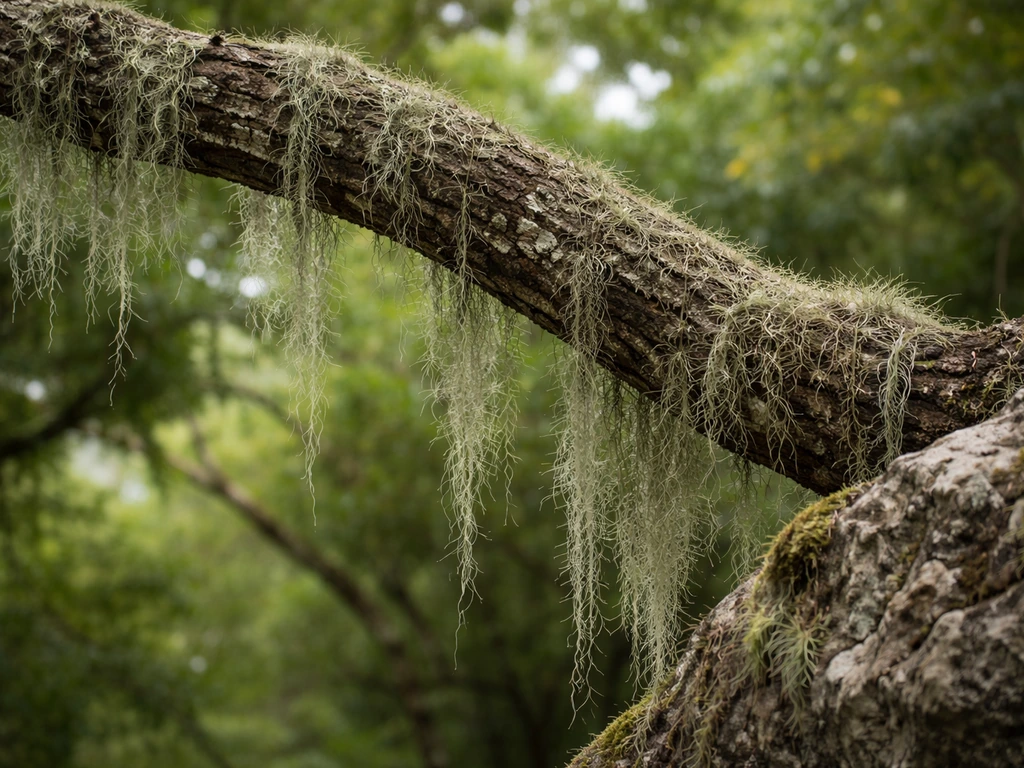
Tillandsia colonize a wide range of surfaces, and understanding this helps explain what conditions they actually need. On trees, they most commonly attach to branches and the upper portions of trunks where light penetration is better and air circulation is strong. They rarely sit in dense shade at the base of a trunk where humidity stagnates and airflow is minimal. In forests, you'll find them concentrated on outer canopy branches, angled branches where water drains off freely, and fork junctions that get broken sunlight.
Spanish moss (Tillandsia usneoides) is probably the most recognizable example. It drapes in long, hanging curtains from large trees, particularly live oaks and bald cypresses in the American South. blank" rel="noopener noreferrer">Spanish moss (Tillandsia usneoides) grows on larger trees in the southeastern United States, commonly Southern Live Oak (Quercus virginiana) or Bald Cypress (Taxodium distichum). Missouri Botanical Garden's Plant Finder describes Spanish moss (Tillandsia usneoides) as an epiphytic, rootless perennial that wraps around and droops from host tree branches or bark slabs, with the deep South as a signature region and hosts including bald cypress and live oak blank" rel="noopener noreferrer">live oaks and bald cypresses. The hanging growth form is not just aesthetic; it maximizes exposure to moving air and light on all sides. There are no leaves pressed against bark trapping moisture and causing rot. That airflow is doing real ecological work.
Rock-dwelling species (called lithophytes in some contexts, though they remain epiphytic in habit) colonize rocky outcrops, cliff faces, and large boulders, particularly in drier regions. These sites are fully exposed to sun, wind, and rain but drain completely and quickly. There is no moisture retention around the roots at all. This is why sitting an air plant in standing water or enclosing it in a terrarium with poor airflow runs directly counter to what these plants experience in the wild.
Regional distribution by area
| Region | Representative Habitat | Climate Type | Dominant Species Type |
|---|---|---|---|
| Southeastern USA (Florida, Gulf Coast) | Cypress swamps, live oak canopies, coastal hammocks | Subtropical, seasonal dry winters | Mesic and moderate xeric |
| Mexico (north and central) | Dry scrub, thorn forests, rocky hillsides | Semi-arid to subtropical | Xeric, heavily trichomed |
| Central America (Guatemala, Costa Rica) | Cloud forests, humid rainforest canopy | Tropical humid, montane | Mesic, soft-leaved |
| Northern South America (Colombia, Venezuela, Ecuador) | Andean slopes, cloud forest, dry inter-Andean valleys | Montane, varied micro-climates | Both xeric and mesic by elevation |
| Southern South America (Argentina, Chile) | Dryer open forests, Patagonian scrub | Temperate to semi-arid | Xeric, cold-tolerant species |
| Caribbean islands | Coastal scrub, humid forest margins | Tropical, hurricane-season rain patterns | Mesic with seasonal stress tolerance |
The Andes are particularly important as a center of Tillandsia diversity. The varying elevation bands create an extraordinary range of microclimates within a short distance, and different species have colonized each band. High-altitude species can tolerate cold nights and intense solar radiation. Lower-elevation species in the same mountain range may never experience frost but deal with prolonged dry seasons instead.
Light, moisture, and airflow in their natural setting
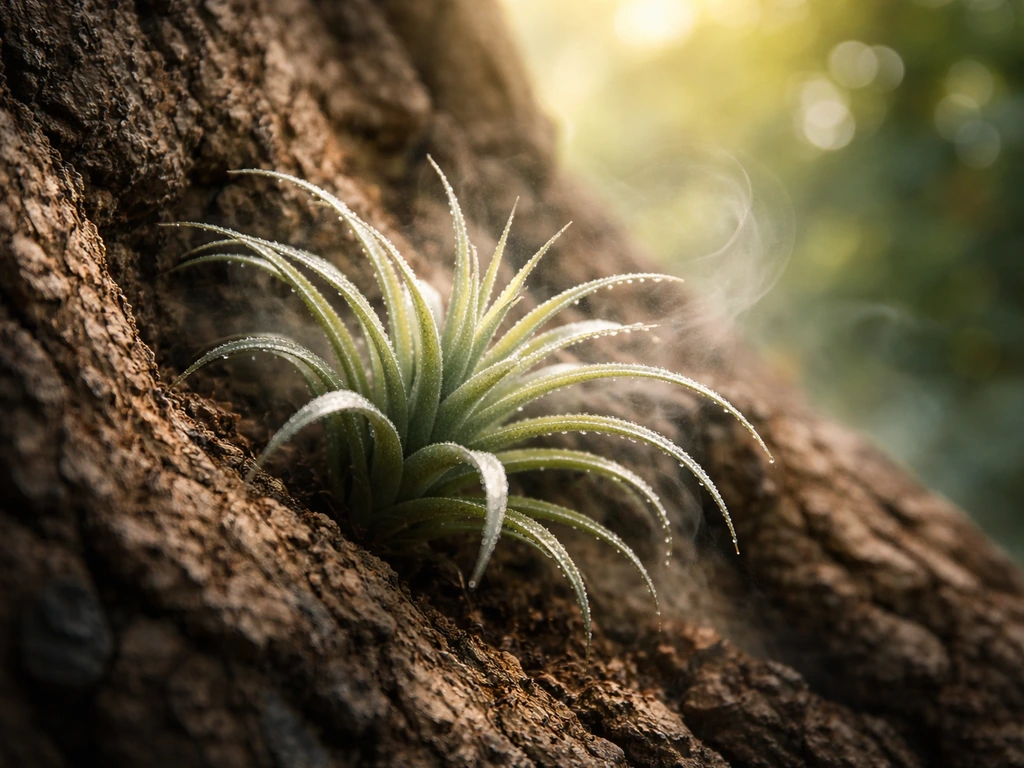
These three factors are the real levers that control where Tillandsia grow and thrive. In nature, each is set by the plant's physical position on its host.
Light
Most Tillandsia in the wild receive bright, indirect light or dappled direct sun filtered through a canopy. Even the more sun-adapted xeric species on exposed rock faces are often angled away from the most brutal midday radiation, or they have their heavy trichome coat acting as a reflective shield. Very few species are truly adapted to deep shade. When you see air plants sold in windowless bathrooms or dim office corners, that is not where they come from.
Moisture
Wild Tillandsia get wet and then dry out. This is the cycle that matters most. In humid zones, that cycle might be daily: morning mist or afternoon rain followed by drying in afternoon sun and warm air. In drier zones, rain events may be weeks apart, and the plants rely on heavy dew, fog, or brief intense storms. What they almost never experience is sustained wetness with no drying period. The trichomes absorb water very efficiently during wet periods, which is why even a brief soak or heavy misting is effective. Prolonged standing moisture, especially around the base of the plant, is a recipe for rot because it simply doesn't happen naturally.
Airflow
Consistent air movement is not optional for these plants, it's fundamental to how they function. The trichomes work best when they are alternately wetted and dried quickly by moving air. Position on exposed branches, cliff faces, or hanging from canopy limbs ensures this. Stagnant air leads to the kind of sustained moisture around the plant body that these plants did not evolve to handle. In practice, that means a well-ventilated space is as important as watering frequency.
How to use all of this to pick a real spot at home
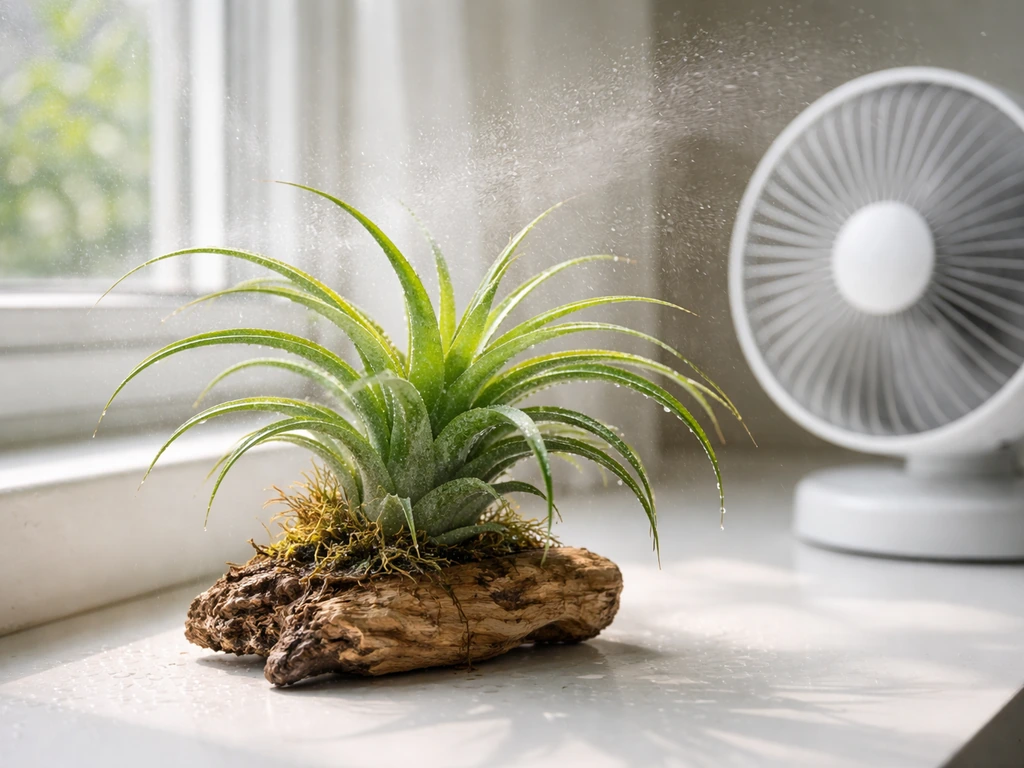
The goal is not to recreate a rainforest, it's to match the functional conditions: bright indirect or filtered light, regular wetting with complete drying, and moving air. Here's how to translate the wild habitat into a practical home or outdoor location.
- Light first: Place air plants near a bright window (within 1 to 3 feet of a south or east-facing window is ideal indoors) where they get strong, indirect light or a few hours of gentle direct morning sun. Avoid dim corners. Outdoors, a spot with filtered shade or bright shade works well in warm months.
- Airflow before humidity: A bathroom with a running exhaust fan beats a humid but stagnant bathroom. If you're indoors, place plants near a ceiling fan set to low, a window that gets occasional breezes, or anywhere air circulates naturally. Avoid glass terrariums with narrow openings.
- Match species to your conditions: If your home is dry (under 40% humidity), choose xeric species with silver-grey, fuzzy leaves. They evolved for this. If you have naturally higher humidity (coastal areas, humid climates), softer green mesic types will do better and need less supplemental misting.
- Water like rain, not like a houseplant: Soak or thoroughly mist your plants once or twice a week, then set them upside down for 15 to 30 minutes to drain, and let them fully dry before putting them back in their display spot. This mimics the wet-then-dry cycle they experience in nature.
- Temperature range: Most Tillandsia are comfortable between 50°F and 90°F (10°C to 32°C). They can handle brief dips toward 45°F if dry, but sustained cold combined with moisture will damage or kill them. Avoid outdoor placement in frost-prone areas unless you're growing cold-tolerant species native to those regions.
- Outdoor growing in warm climates: If you're in USDA zones 9 through 11, you can grow many Tillandsia outdoors year-round mounted on trees, driftwood, or wire structures in shaded or filtered-light positions. This most closely replicates wild conditions and is genuinely the easiest way to grow them if your climate allows it.
If you're exploring broader questions about epiphytic or air-growing plants, Tillandsia sits in a fascinating group alongside other plants that have adapted to grow without conventional soil anchoring. If you are also curious about other air-dwelling oddities, check where do ghost plants grow as a related comparison for unusual growth habits. If you want plants that grow in air, Tillandsia is one of the best-known examples to start with. The patterns you see in Tillandsia, using host surfaces for attachment and ambient air for nutrition, show up in related discussions about aerial plants and what it actually means for a plant to grow in air rather than in ground.
The bottom line is that air plants are native to an enormous geographic range, but they share a consistent set of functional needs everywhere they grow: something to anchor to, good light, regular wet-dry cycles, and moving air. If you're curious about spider plants, they have a different natural range and growing conditions than air plants where do spider plants grow naturally. Match those four conditions, and you're replicating what nature already figured out across thousands of miles of the Americas. If you are wondering where pitcher plants grow, the answer depends on local moisture and soil type, but many thrive in nutrient-poor, wet-dry habitats where do pitcher plants grow.
FAQ
Do air plants grow naturally outside the Americas?
In the wild, Tillandsia are native to the Americas, but individual species can be cultivated worldwide. If you find them growing on local trees, those are usually naturalized specimens, not true native populations, and conditions still need the same wet-dry cycle and strong airflow to prevent rot.
Are “air plants” actually rooted in soil in nature?
No. They are epiphytes or epiphyte-like on rocky surfaces, they anchor using roots mainly as grips. All uptake happens through the leaf trichomes, so potting mix does not replace their real needs and can increase the chance of trapped moisture at the base.
What types of wild sites match best for growing at home?
Choose locations that resemble canopy or exposed rock microhabitats: bright indirect or filtered sun, rapid drying after wetting, and noticeable airflow (for example near a vent, open window with airflow, or a sheltered outdoor spot). Still, dim corners that stay damp do not match their natural pattern.
How do I tell whether my air plant is more “xeric” or “mesic”?
A common clue is leaf look and trichome density. Xeric types often appear thicker, grayer, and more heavily “fuzzy/silvery,” while mesic types tend to look softer and greener with fewer visible trichomes. This affects how much misting time and how quickly it must dry.
Is misting enough, or should I soak air plants?
Both can work because the goal is wetting followed by complete drying. Soaking can help when plants are very dry or when humidity is low, but either method must be followed by fast drying with airflow. If they do not dry fully within a few hours (especially at the base), that is a risk sign.
Why do air plants rot even when the leaves look wet?
Rot usually starts when water stays pooled, commonly around the base, inner crevices, or trapped between overlapping leaves. In nature, plants dry quickly due to air movement and their position, so at home you may need to shake off excess water and ensure strong airflow rather than increasing soak frequency.
Can I keep air plants in a terrarium or closed container?
Usually no, unless the container has strong ventilation and airflow that mimics outdoor drying. Closed terrariums often create sustained humidity, which they did not evolve for, so the base can stay wet too long and trigger rot. If you must use a container, prioritize open sides or dedicated airflow.
Where on a tree would you most likely find air plants in the wild?
They are most common on outer canopy branches, angled limbs where water drains freely, and fork junctions with light and airflow. Dense shade near the trunk base often lacks the moving air and drying conditions they require.
Do air plants need full sun, or can they handle shade?
Very few thrive in deep shade. Many tolerate dappled sun or bright indirect light, and even sun-adapted types may avoid the harshest midday exposure by growing at an angle. If growth becomes slow or leaves look stretched or dull, it often indicates insufficient light.
How important is air movement compared with watering schedule?
Air movement is as important as the wet-dry cycle. Two plants that get the same amount of mist can behave very differently if one dries quickly and the other stays damp. If your watering seems “right” but plants keep discoloring or getting soft at the base, improve airflow first.