Plants that grow on their own without being deliberately planted are called volunteer plants, or simply "volunteers. If you're wondering what plant grow on land, the answer depends on whether you're talking about volunteers, weeds, pioneer species, or naturalized plants. " If those volunteers are showing up somewhere unwanted, they get the more familiar label of weeds. And when plants show up fast and spread aggressively on their own, ecologists call them pioneer species or, in a managed landscape context, invasive species. Those three terms cover most of what people mean when they ask this question, and knowing which one applies tells you a lot about what you're dealing with.
Plants That Grow on Their Own Are Called What
Dr. Marcus Weatherby
27 Apr 2026
The core terms: volunteers, weeds, pioneers, and naturalized plants
A volunteer plant is the broadest, most neutral term. It simply means a plant that germinated and grew from naturally dispersed seed or regrowth, not from anything you planted. The USDA's agricultural thesaurus defines volunteer plants as those found growing without being planted, established through natural regeneration. A tomato seedling that sprouted from last year's dropped fruit is a volunteer. So is the oak seedling that popped up in your lawn from a buried acorn.
Weed is a human-context word layered on top of that neutral idea. A weed is simply any plant growing where it isn't wanted. That means lawn grass growing in your flower bed is technically a weed, and a wildflower growing in a meadow is not a weed at all, even if it's the same species. Context is everything. The Colorado State University Extension gives a clean example: purslane pushing up between patio pavers is a landscape weed; in a vegetable garden where someone planted it intentionally, it's dinner.
Naturalized refers to a non-native species that has become established in the wild without ongoing human help. Think of dandelions across North America or Queen Anne's lace spreading through roadsides. These plants arrived from elsewhere, adapted, and now reproduce and persist on their own as part of the local flora.
Invasive species takes it one step further. The U.S. blank" rel="noopener noreferrer">Fish and Wildlife Service defines invasive species as non-native organisms that thrive outside their native range and cause, or are likely to cause, economic, environmental, or human health harm. Invasive species are non-native organisms whose introduction causes or is likely to cause economic, environmental, or human health harm blank" rel="noopener noreferrer">non-native organisms that cause or are likely to cause economic, environmental, or human health harm. Not every naturalized plant is invasive, but every invasive plant is, by definition, growing on its own somewhere it doesn't belong while actively displacing other species.
What "grows rapidly on its own" is called, and how that's different
When plants don't just show up but take over quickly, you're looking at pioneer species. Pioneer species are defined ecologically as the first colonizers of a newly created or recently disturbed environment. They're the plants that rush into a burned forest clearing, a scraped construction site, or a plowed field left fallow. Ecologists use this term within the framework of ecological succession, the process by which plant communities change over time. The USDA Forest Service links these early arrivals to what's called early-seral habitat, the initial stage right after disturbance, which is dominated by annual forbs and fast-spreading plants.
The key difference from a plain volunteer is pace and ecological role. A volunteer tomato in your garden is one random plant growing on its own. A pioneer species is an entire strategy: fast germination, short life cycle, prolific seed production, and tolerance for harsh, low-competition conditions. Pioneers are built for speed and colonization. Crabgrass, lamb's quarters, fireweed, and foxtail are classic examples depending on where you live.
| Term | What it means | Example |
|---|---|---|
| Volunteer | Any plant growing without being deliberately planted | Tomato sprouting from last year's compost |
| Weed | Any plant growing where it is unwanted (human-context label) | Grass in a flower bed, purslane in paving cracks |
| Naturalized | Non-native species established and reproducing in the wild | Dandelion, Queen Anne's lace across North America |
| Pioneer species | First rapid colonizers of disturbed or newly created environments | Fireweed after a wildfire, crabgrass on bare soil |
| Invasive species | Non-native plant that thrives outside its range and causes harm | Kudzu in the southeastern U.S., purple loosestrife in wetlands |
How to spot them: quick identification cues in the wild or your yard
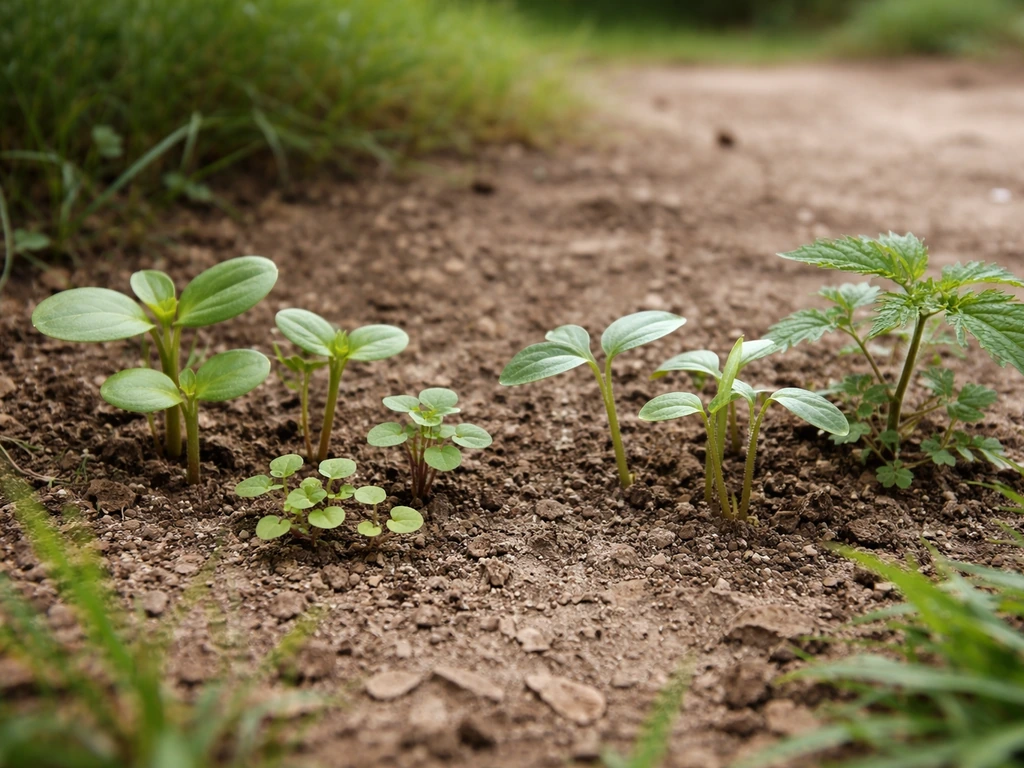
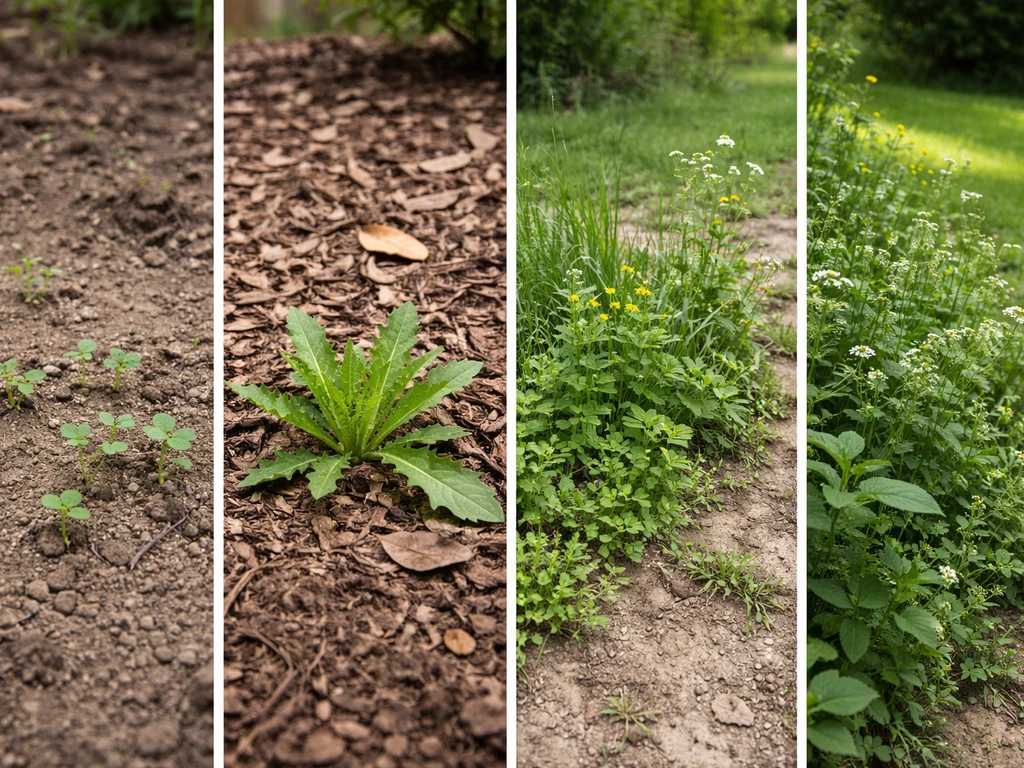
Most volunteer and pioneer plants give themselves away before you even know the species. The first thing to notice is location: they appear in disturbed, open, or recently bare soil. If you turned over a patch of ground, scraped a path, or left a bed unplanted, expect something to fill it within weeks. That's ecological succession starting its clock.
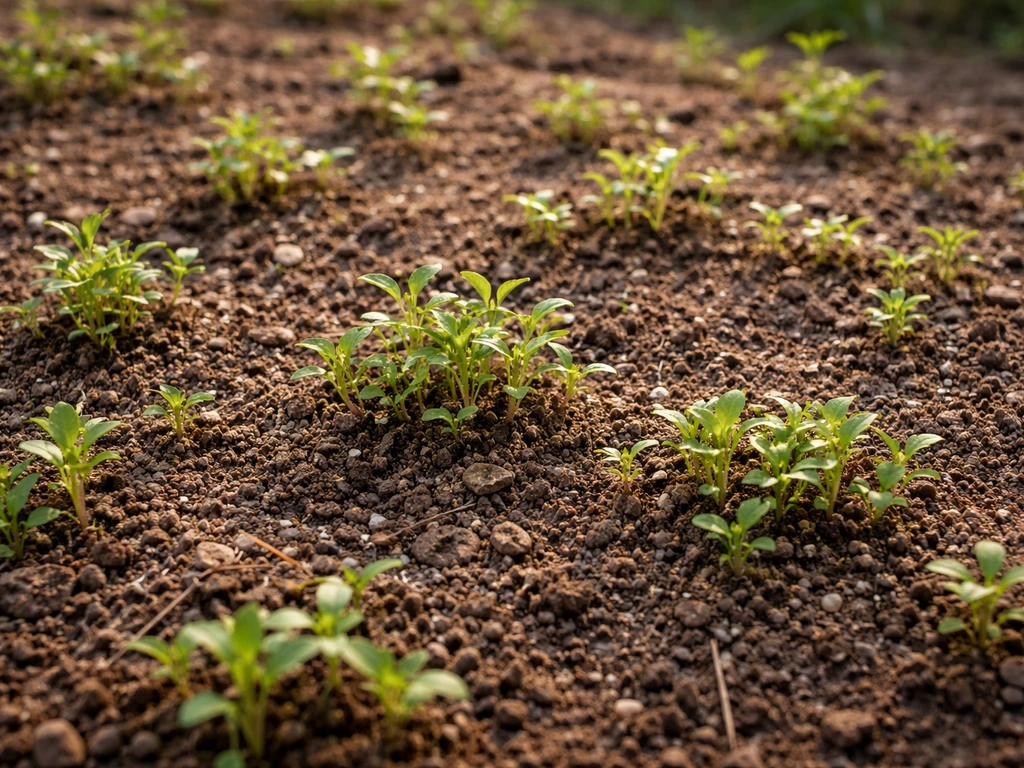
At the seedling stage, the simplest split is between broadleaf plants and grasses. Broadleaf seedlings (dicots) emerge with two seed leaves, called cotyledons, which are often round or oval and look nothing like the plant's adult leaves. Grass-type seedlings (monocots) push up a single narrow blade. This distinction matters practically because it narrows the field of likely species and also tells you whether a selective grass herbicide would affect it.
- Two rounded seed leaves emerging together: you're looking at a broadleaf volunteer (dicot), such as lamb's quarters, pigweed, or a tomato sprout
- A single narrow blade poking straight up: this is a monocot, likely a grass, sedge, or onion-family plant
- Deeply lobed or serrated true leaves appearing after the cotyledons: common in thistles, dandelions, and many fast-spreading annuals
- Purple, reddish, or hairy stems on young plants: often an identification marker for pigweed, purple deadnettle, or henbit
- Milky sap when stem is broken: typical of spurges and some dandelion relatives
- Sprawling, mat-forming growth in cracks or compacted soil: often purslane, knotweed, or prostrate spurge
In the field, pioneer species tend to cluster where disturbance is most obvious: roadsides, trail edges, logged clearings, floodplain margins after flooding, burned patches. If you see a dense flush of uniform-looking young plants all roughly the same size in a recently disturbed area, that's a pioneer cohort germinating from the same triggering event. Fireweed (Chamerion angustifolium) is one of the most recognizable, turning burned or cleared ground magenta-pink in summer across boreal and montane zones.
Why they show up fast: the real conditions behind rapid self-seeding
When a plant explodes onto a bare patch seemingly overnight, it's not random. There are specific triggers, and once you know them you can predict pretty reliably when and where volunteers will appear.
Disturbance and bare soil
Soil disturbance is the single biggest trigger. Tilling, digging, foot traffic, erosion, fire, flooding, and construction all expose mineral soil and bring buried seeds to the surface where light can reach them. Many weed seeds in a seed bank have been sitting dormant for years, held back only by darkness and soil pressure. Flip the soil and you hand them a germination invitation.
The University of Nevada Reno Extension notes that seeds can persist in the soil as a viable seed bank long after the parent plants have gone, meaning bare ground is never truly empty. In general, the same volunteer and pioneer plants that colonize disturbed ground can also show up on remains when conditions allow what plants grow over dead bodies.
Sunlight
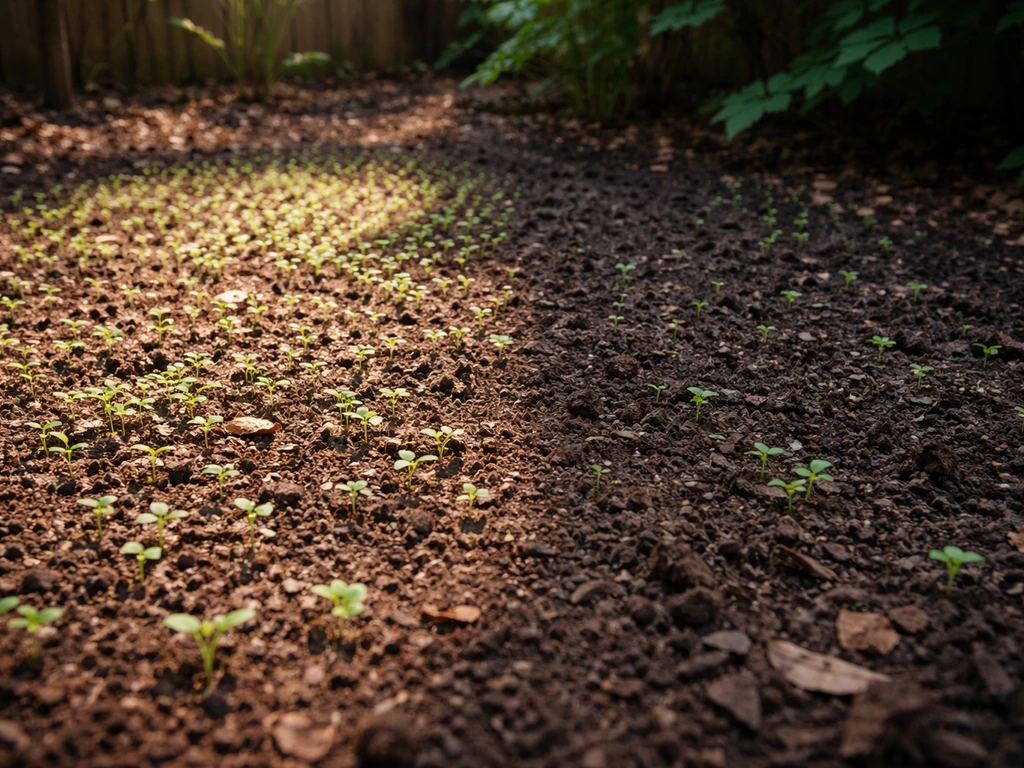
Most pioneer and volunteer species are light-demanding. They need full or nearly full sun to germinate and establish. This is why disturbed open ground fills up fast while a closed forest canopy suppresses them. Light is also a direct germination trigger for many species, not just a growth requirement. Some weed seeds won't break dormancy until they detect light, which means they stay dormant when buried and activate the moment they're exposed.
Temperature and season
Most warm-season annual weeds and volunteers germinate in spring as soil temperatures rise. West Virginia University Extension research on weed germination prediction shows that ambient and soil temperature are the primary triggers for summer annuals, which make up the bulk of what competes in gardens and farm fields during the growing season. In late April, in a temperate climate like most of the continental U.S., soil temperatures are climbing through the 50 to 60 degree Fahrenheit range, which is prime germination territory for species like crabgrass, lamb's quarters, and bindweed.
Soil moisture and oxygen
Seeds need adequate moisture and oxygen to germinate. A rain event or irrigation after a dry period often triggers a wave of emergence. SARE's weed ecology guidance also lists temperature fluctuation between day and night as a germination cue for many species, which is exactly what spring delivers in temperate climates. Compacted or waterlogged soil can suppress germination by limiting oxygen, which explains why some areas of a yard stay cleaner than others.
Soil nutrients
High nitrate levels in the soil are a germination cue for certain weed species. Freshly fertilized beds, compost-enriched areas, and sites near animal activity often see a surge of volunteer plants. This is why newly composted vegetable beds can look like a weed nursery: the nutrient boost is signaling seeds that conditions are favorable.
What grows in your environment: matching conditions to climate zone, season, and habitat
The species you'll actually find growing on their own depend heavily on where you live. Right now, in late April 2026, conditions across many parts of the world are triggering specific flushes of self-seeding plants. Here's how to think about it by environment.
Temperate zone (USDA zones 5 to 7, spring right now)
This is peak germination season for summer annuals. Expect lamb's quarters, pigweed, common chickweed, hairy bittercress, and crabgrass to be pushing up in bare or tilled soil. In slightly shadier spots or where winter annuals got an early start, henbit and purple deadnettle may already be blooming. These are classic volunteer and pioneer plants for the temperate growing season, all of them dicots with two-lobed cotyledons except the grasses.
Arid and semi-arid zones (desert, high plains)
In dry climates, volunteers are strongly rainfall-dependent. After spring precipitation, you'll see desert annuals like globe mallow, filaree (redstem stork's bill), and tumbleweeds as seedlings on disturbed roadsides and washes. Sandy or gravelly soils with good drainage favor these pioneers. In undisturbed desert, cryptobiotic soil crusts suppress germination, so volunteers cluster almost exclusively on disturbed ground.
Humid subtropical and warm climates (zones 8 to 10)
Warm, wet climates produce year-round volunteer pressure. Tropical and subtropical pioneers like tropical soda apple, Brazilian pepper, and various Amaranthus species can germinate in almost any month given moisture. Disturbed roadsides and edges of developed land in Florida, Texas, and the Gulf Coast are some of the most active areas for invasive pioneer plants in North America. Many of these overlap with the invasive species category, growing rapidly on their own and displacing natives.
Boreal and montane zones (post-disturbance, summer)
After fire or logging in boreal forests and mountain zones, fireweed is often the first and most dramatic pioneer. It spreads via wind-dispersed seeds and can cover hectares of burned ground in a single growing season. Willowherbs, raspberries, and bracken fern follow. In higher-elevation meadows, native pioneer forbs take advantage of bare soil created by snowmelt erosion or animal activity. The ecological succession here is slower than in temperate lowlands but the pioneer-species concept plays out just as clearly.
Wetland and riparian edges
Wetland edges after flooding are prime pioneer habitat. Sedges, cattails, and reed canary grass are fast-growing volunteers in disturbed riparian zones. Invasive species like purple loosestrife and common reed (Phragmites australis) are among the most aggressive self-spreading plants in North American wetlands. These are areas where the invasive plant category becomes especially important ecologically, since the damage to native wetland function can be severe.
How to figure out exactly what's growing in your area right now

The most practical step you can take today is to combine local habitat observation with a photo-identification tool. The iNaturalist Seek app uses your phone camera and draws from observation data near you to suggest likely species. It works offline and covers plants in virtually every region. To get a useful ID, photograph the seedling at ground level showing the cotyledons or true leaves, a close-up of the leaf surface and margin, and the stem color and texture.
- Go to where you've seen bare or recently disturbed soil and look for seedlings emerging now
- Note whether the seedlings have one or two seed leaves (monocot vs dicot), and the leaf shape once true leaves appear
- Photograph stem, leaf, and whole-plant angles in good natural light
- Run the photos through iNaturalist's Seek app or a regional plant ID app for a species-level suggestion
- Cross-reference with your local extension service's weed emergence calendar for your climate zone, which will list the species most likely germinating in your area right now based on current soil temperatures
- Check whether the species is flagged as invasive in your state using your state's invasive species council or the USDA PLANTS database
Cornell University weed ecology research reinforces the value of seasonality here: most weed species have a particular season in which they emerge most abundantly, so knowing your climate zone and the current date narrows the field dramatically. In late April in a temperate zone, you're not looking at the full universe of 10,000 possible plant species. You're probably looking at a short list of twenty to thirty summer-annual pioneers that are all doing the same thing at the same time.
It's also worth knowing that this question connects to broader ecological patterns. The first plants ever to grow on land millions of years ago were themselves a kind of pioneer story, colonizing bare rock surfaces with no soil to work with. And some of the most fascinating self-spreading plants today are epiphytes, plants that grow on other plants rather than in soil at all. Understanding where plants spread on their own, and why, is really about understanding how plant life fills every available niche, which is the foundation of everything this kind of environmental observation is about.
FAQ
Is a volunteer plant automatically a weed?
Not always. Volunteers are plants growing without being planted by you, but whether they are weeds depends on whether you consider that location “wanted.” The same species can be a volunteer in one spot and not a weed in another if it fits your landscape goals or a natural area.
How can I tell the difference between a naturalized plant and an invasive species?
Look first at the plant origin, not just the behavior. A naturalized plant may persist on its own for years but is not necessarily spreading aggressively, while an invasive species is defined by non-native status plus harm or likely harm (ecology, economy, or health).
Can a pioneer species be native or invasive?
If you see large, rapid colonization after a disturbance, think “pioneer,” but remember pioneer is an ecological role and can be native or non-native. You can have native pioneer plants (early colonizers) that are still volunteers, and you can also have invasive pioneers in the same disturbed habitats.
Are volunteers always coming from seeds, or can they regrow from roots?
Seedlings that appear right after you disturb soil are often responding to light exposure and changing soil conditions, but you may also be seeing regrowth from existing roots or rhizomes. To separate the two, check whether the plant is coming from below-ground structures already present (consistent return in the same patch) versus first emergence from exposed seed.
Why did I pull some volunteer seedlings but new ones kept showing up later?
Yes, especially in early season. Many species have a “delayed germination” pattern, so you can have dormant seeds present that do not sprout until a later light or temperature cue. Waiting a few weeks after the initial flush, or checking soil moisture and light exposure, can reveal a second emergence wave.
What should I look for to tell “a few volunteers” from a pioneer takeover?
Pace and appearance can help, but the deciding factor is ecological role and spread outcome. A single volunteer patch is often just one or a few dispersed seeds, while a pioneer cohort usually shows many similar-sized plants clustered in a disturbed area, often linked to one triggering event.
Do volunteers have a typical time of year they emerge?
Yes. Warm-season annuals often germinate after soil warms in spring, while winter annuals can emerge earlier and bloom sooner. If you identify the seedling stage and compare it to local emergence timing, you can narrow whether the plant is a spring, winter, or year-round self-seeder.
Why do volunteers show up more in some parts of my yard than others?
Location cues matter, but microhabitats matter too. Volunteers and pioneers often concentrate where disturbance and resources line up, like along edges, under fence lines, compacted walkways, or the thinnest turf. Two identical-looking yards can produce different volunteers based on sun exposure and soil compaction.
How can I be proactive about detecting invasive plants early?
Invasive plants often still look like “normal volunteers” in the beginning. A practical approach is to track whether the plant is expanding in area over one or two seasons, and whether it outcompetes nearby natives in disturbed and undisturbed spots. If it spreads faster than typical local weeds, investigate further.
What’s the easiest next step if I want to remove volunteers without making things worse?
Herbicides and removal plans depend on whether the plant is a grass-type or broadleaf seedling, because different selective products target different plant groups. Also, timing matters, pulling or treating works best when the plant is small and actively growing, not after it has set seed.