
Plants that grow along the ground are any low-spreading species that hug the soil surface rather than growing upright, and they fall into a few distinct groups: true groundcovers (dense, low perennials usually under 3 feet), creeping or trailing vines that root as they spread, mosses and lichens that carpet bare rock or soil, and low grasses or sedges that fill open ground. Specific examples include creeping thyme, creeping phlox, ground ivy, sea thrift, low juniper cultivars, sea lyme-grass, and a wide range of mosses and lichens. Which one belongs in your space depends entirely on whether the spot is sunny or shaded, wet or bone-dry, sandy, loamy, or rocky. To narrow it down, you can start by matching the site conditions to which plant grow along the ground naturally in that area.
Plants That Grow Along the Ground: Examples by Habitat

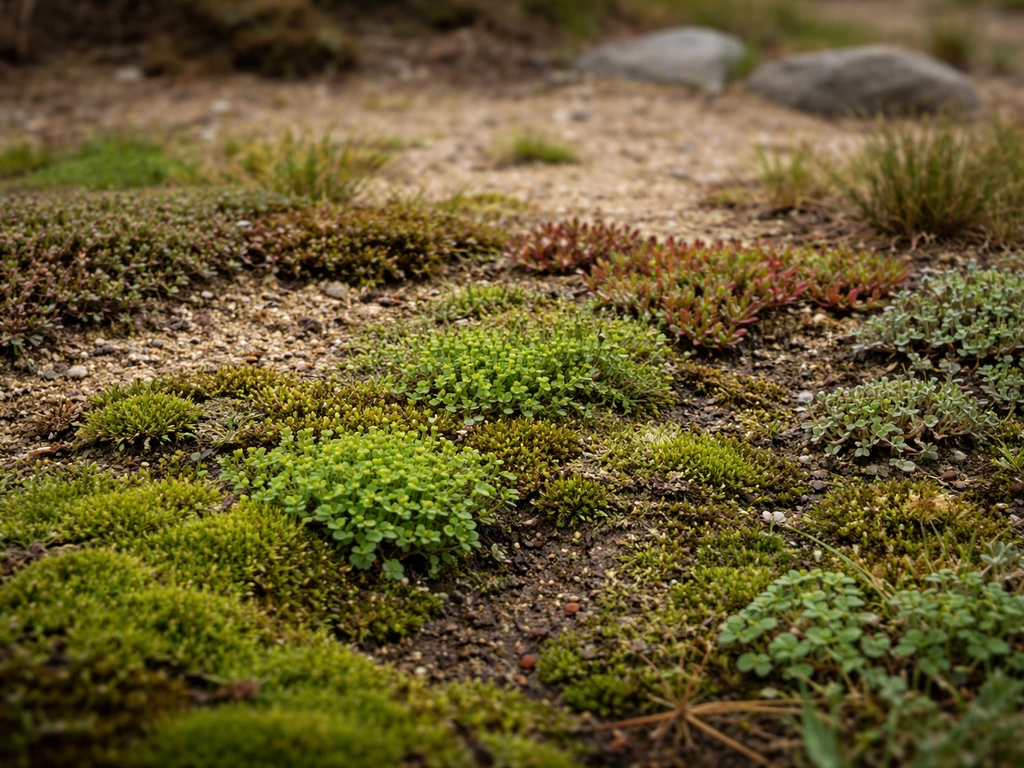
What counts as a plant that grows along the ground
University of Georgia Extension draws a practical line here: a groundcover is a spreading, low-growing plant, and for practical purposes that means it stays under about 3 feet tall and spreads laterally rather than climbing. If it spreads primarily by seed and does not actively creep or mat, it usually does not make the groundcover category either. Colorado State University Extension adds more precision by describing the four main ways these plants actually move across the ground: rhizomes (underground stems pushing outward), stolons (above-ground runners that root where they touch soil), offsets (small plantlets that detach from the parent), and tip layering (where a trailing stem roots at its tip when it contacts soil). Knowing how your plant spreads matters because it tells you how quickly it will cover bare soil and how hard it will be to contain or remove later.
For this site's purposes, the category also includes mosses, lichens, and low sedges that carpet natural habitats. These are not landscaping plants in the traditional sense, but they are absolutely among the most ecologically important ground-hugging plants on the planet, covering forest floors, dune surfaces, and exposed rock in conditions where almost nothing else survives.
Quick examples by habitat
Forest floor
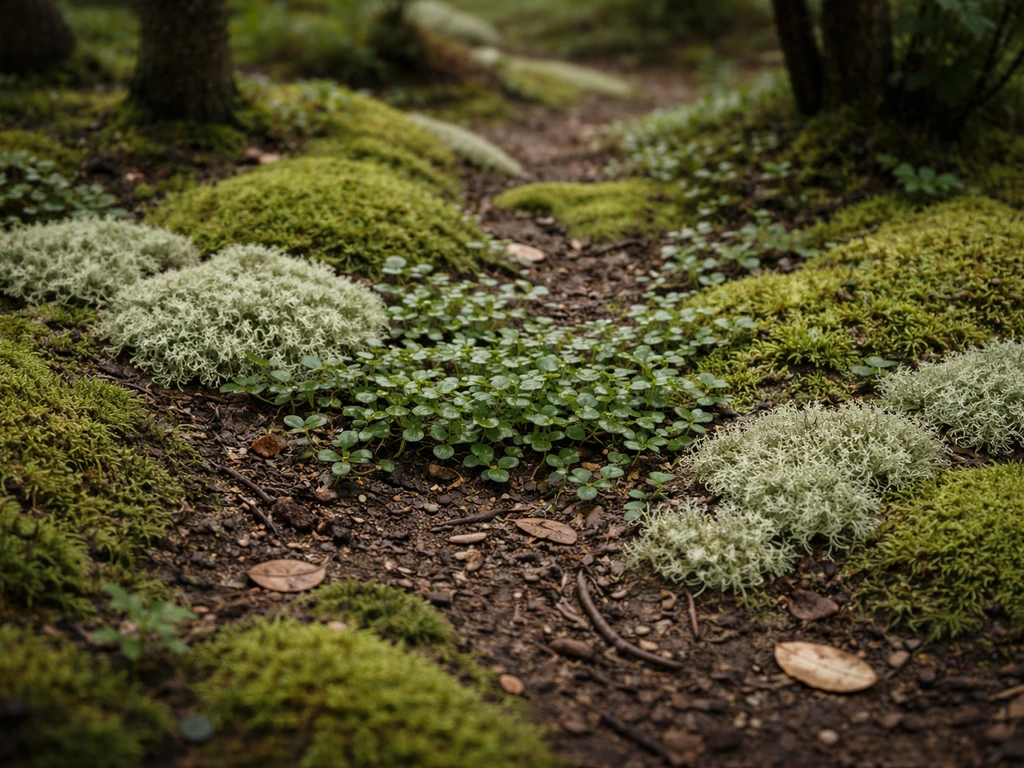
Forest floors favor shade-tolerant creepers and mosses. Creeping phlox (Phlox subulata) works on the shaded and semi-shaded edges, staying around 6 inches tall and spreading up to 36 inches at maturity. It does particularly well on poor, bare soils with little competition, which is exactly the description of a disturbed forest margin. Ground ivy (Glechoma hederacea) is another forest-edge colonizer: it spreads by stolons that run along the soil surface and root aggressively at the nodes, forming loose mats in consistently moist, shaded spots. Mosses carpet the deeper forest floor where light is minimal and humidity stays high. They have no roots and absorb water and nutrients directly from the air and the substrate beneath them.
Meadow edge
Meadow margins get more sun and typically have average to dry soil moisture. Creeping thyme (Thymus serpyllum) is an ideal fit here: it stays very low, tolerates foot traffic reasonably well, and thrives in lean, well-drained soil in full sun. Purple heart (Setcreasea purpurea) is a trailing plant reaching 1 to 1.5 feet that handles both sun and part shade at the meadow edge. Low juniper cultivars are another solid option at meadow boundaries, with selected cultivars ranging from just 6 inches to about 2 feet tall and spreading 6 to 8 feet wide across open ground.
Streamside
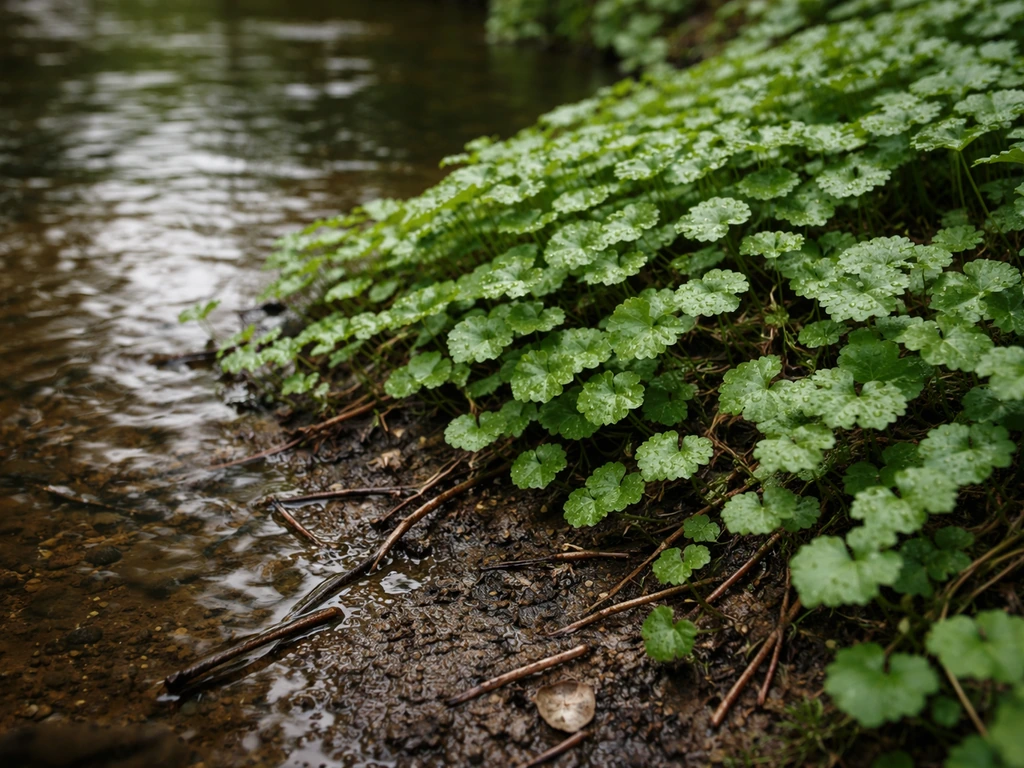
Streamsides combine high moisture, periodic flooding, and variable light. Ground ivy is again relevant here given its preference for consistently moist conditions, but it can become invasive in these fertile, wet environments. Native sedges and low grasses are better ecological choices for streambanks because their dense root systems stabilize soil without the aggressive spreading that makes ground ivy a problem in managed landscapes.
Dunes and sandy ground
Coastal dunes are one of the harshest environments for any plant: salt spray, low nutrients, rapidly draining sand, and constant wind. Sea thrift (Armeria maritima) handles this by staying compact at 6 to 12 inches tall with a similar spread, preferring full sun and very well-drained, lean sandy or rocky soil. Sea lyme-grass (Leymus mollis) takes a different approach: it grows taller (50 to 150 cm) but spreads from robust rhizomes that run under the sand, physically anchoring and stabilizing dunes as they expand. Plants that grow underground are called because rhizomes are underground stems that spread below the surface. Both species are adapted to dry-to-normal moisture and are genuinely found in coastal and dune habitats rather than just planted there.
Examples sorted by light and moisture
| Plant | Light | Moisture | Height | Spread | Notes |
|---|---|---|---|---|---|
| Creeping thyme (Thymus serpyllum) | Full sun | Dry to average | 2–4 in | 12–18 in | Tolerates foot traffic; great for lean soils |
| Sea thrift (Armeria maritima) | Full sun | Dry to normal | 6–12 in | 6–12 in | Sandy/rocky well-drained soils; coastal adapted |
| Sea lyme-grass (Leymus mollis) | Full sun | Dry to average | 50–150 cm | Wide via rhizomes | Dune stabilizer; spreads underground |
| Low juniper cultivars | Full sun to part shade | Average to dry | 6 in–2 ft | 6–8 ft | Evergreen; very wide coverage over time |
| Creeping phlox (Phlox subulata) | Part shade to shade | Average to dry | ~6 in | Up to 36 in | Poor soils; forest margins and slopes |
| Purple heart (Setcreasea purpurea) | Sun to shade | Average | 12–18 in | Trailing | Versatile trailing habit; vivid foliage |
| Ground ivy (Glechoma hederacea) | Shade to part shade | Moist | 4–8 in | Aggressive via stolons | Moist woodland edges; can become invasive |
| Mosses (various) | Shade to deep shade | Moist to wet | 0.5–4 in | Variable mat | No roots; absorb moisture from air and substrate |
| Lichens (various) | Varies by species | Varies | Flat to low | Slow-spreading | Rock/bark substrate; air moisture critical |
Low groundcover vs creeping vine vs moss or lichen: how to tell them apart
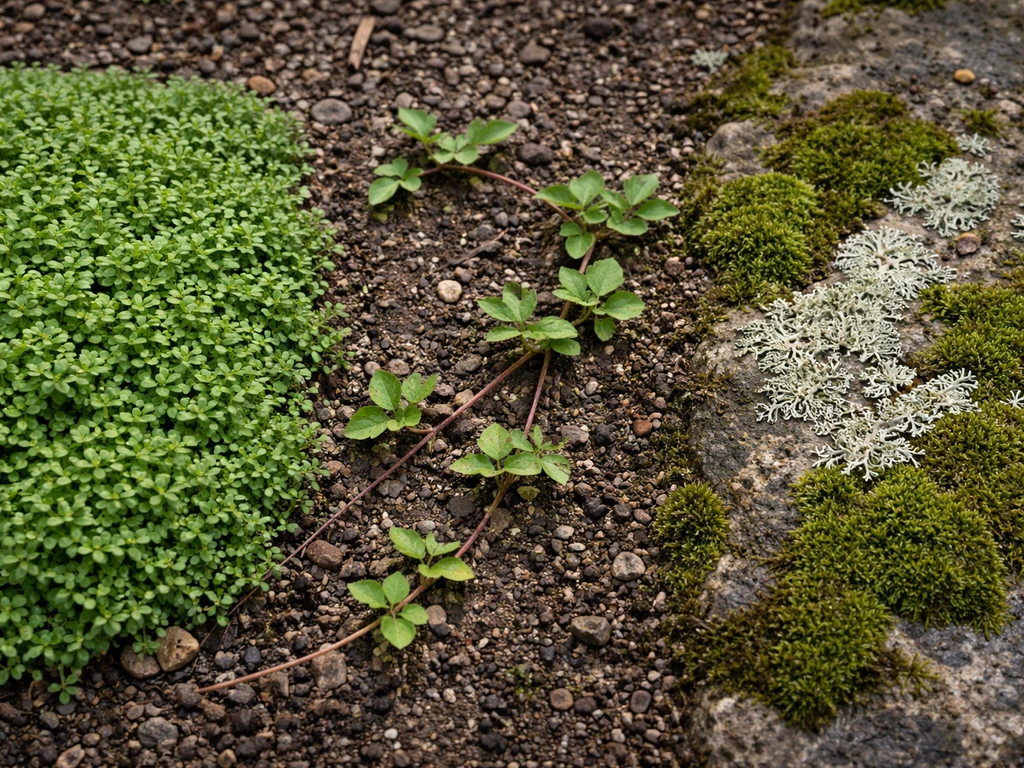
These three groups look similar from a distance but behave very differently, and mixing them up leads to wrong planting decisions. A low groundcover like creeping thyme or creeping phlox has a woody or semi-woody base, distinct leaves, and spreads by rhizomes, stolons, or tip-layering. It stays low but is a true vascular plant with roots pulling water and nutrients from the soil. It can be dug up, divided, and replanted.
A creeping vine or trailer like ground ivy or purple heart also has vascular tissue and roots, but its stems are specifically designed to run horizontally across the soil surface and root at nodes wherever they touch ground. Underground stems like rhizomes are one reason some ground-hugging plants spread so effectively under the soil. This is what makes plants like ground ivy so difficult to remove once established: every rooted node is essentially a new plant. The distinction between a low groundcover and a creeping vine is mostly about stem behavior: groundcovers tend to form a clump that slowly widens, while creeping vines actively run and root.
Mosses and lichens are a completely different story. Mosses are non-vascular plants that reproduce by spores and absorb everything they need directly through their leaf surfaces, with no true roots. Lichens are not even a single organism: they are a blank" rel="noopener noreferrer">partnership between a fungus and algae or cyanobacteria. The USDA Forest Service notes that lichens have blank" rel="noopener noreferrer">no waxy cuticle, no stomata, and no roots at all, so they rely entirely on air moisture, air nutrients, and whatever substrate they grow on. Foggy coastal areas support particularly rich lichen communities because of the water available in the air itself. You cannot transplant a lichen the way you transplant a perennial. If you want a moss or lichen covering a surface, you are mostly working with habitat conditions rather than planting decisions.
How to choose the right ground plant for your spot
Start with the actual conditions of the site rather than what you like the look of. Walk the area at different times of day and answer these questions honestly before you pick a species. You can also grow many of these ground-hugging plants from seed or small starts, depending on the species what plants grow in the ground.
- Light: Is it full sun (6+ hours direct), part shade (3–6 hours), or full shade? Most of the best groundcovers are strongly sun or shade adapted, not both.
- Soil moisture: Does water pool there after rain, drain within a few hours, or dry out quickly? Moist spots suit ground ivy or native sedges. Fast-draining sandy soil suits sea thrift or creeping thyme.
- Soil type: Is the soil sandy, loamy, clay-heavy, or rocky? Lean and sandy soils are actually an advantage for many ground-hugging plants that hate wet feet.
- Foot traffic: Will people or animals walk through this area regularly? Creeping thyme handles light foot traffic. Most other groundcovers do not.
- Maintenance expectations: Are you willing to edge and contain a spreading plant, or do you need something self-limiting? Creeping vine types like ground ivy can overtake neighboring plants if not managed.
- Size and spread timeline: A low juniper cultivar will eventually cover 6 to 8 feet but takes years to get there. Creeping thyme fills in much faster in the right conditions.
Colorado State University Extension makes a point worth repeating: if parts of your intended groundcover area get foot traffic, build a path or stepping stones through it before you plant. Trying to add access later damages the established plants. That kind of upfront planning changes the whole project.
If you are dealing with an area where ground ivy has already taken over and you want to replace it with something better suited, West Virginia University Extension recommends a combined approach: raise mowing height to about 3 inches, open the tree canopy to increase light if that is an option, and bring soil pH to around 6.5 to make conditions better for competing turf or preferred groundcovers. The fix is ecological, not just chemical.
Soil, planting, and getting established
Drainage first
Most low ground-hugging plants fail not because of the wrong species choice but because of poor drainage. Even moisture-tolerant groundcovers like creeping phlox want water to move through the soil rather than sit. If the site stays soggy for days after rain, you either need to address drainage or shift to species that genuinely prefer wet ground. For sandy dune or rocky sites, drainage is usually not the problem: the challenge is retaining enough moisture and nutrients for anything to establish at all.
Spacing and planting density
Illinois Extension specifies spacing creeping thyme at 8 to 12 inches apart, which gives you a sense of the scale for small-leafed, low creepers. Larger spreading species like juniper cultivars need much more room: 3 to 4 feet between plants is typical because they will eventually reach 6 to 8 feet wide. Planting too close wastes money and causes crowding; planting too far apart leaves bare soil exposed for too long, inviting weeds. A middle ground is to plant at the recommended spacing and mulch the gaps with 2 to 3 inches of organic mulch while waiting for coverage.
Establishment period
The first growing season is the most vulnerable window for any ground plant. Watering consistently during this period matters more than any other care step, especially for drought-tolerant species like sea thrift and creeping thyme: they are drought-tolerant once established, but they need regular moisture while their root systems develop. After year one, most low groundcovers become largely self-sufficient in appropriate conditions. For spreading types like ground ivy, the maintenance question flips: the first year you are encouraging establishment, and after that you are managing containment.
Ongoing maintenance
Most true groundcovers need very little once established: an occasional trim to keep edges tidy, removal of dead material in early spring, and weeding until the canopy closes enough to suppress weed seedlings on its own. Creeping vines need edge management to prevent them from invading adjacent planting beds or turf. For natural habitat plantings (dune stabilizers, moss gardens, forest edge revegetation), the goal is usually minimal intervention: choose the species that fits the conditions and let it do what it would do naturally. The less you fight the site conditions, the better any of these ground plants will perform.
FAQ
How do I choose plants that grow along the ground if my yard has both sun and shade in the same area?
Split the area into zones based on what gets at least 4 to 6 hours of direct sun versus mostly shade. Then match one species to each zone, because a plant that hugs the soil in shade (like many moss types) will not thrive in the same exposure as a full-sun groundcover like creeping thyme.
Is ground ivy a good groundcover, or will it take over?
Ground ivy can work as a mat-forming option in consistently moist shade, but it is also aggressive in fertile conditions. If you plant it, plan for containment by edging the border (a physical barrier at installation time is much easier than removal after roots and stolons are established).
What is the difference between creeping thyme and creeping phlox as ground plants?
Creeping thyme is typically chosen for very low, foot-tolerant coverage in lean, well-drained sun areas, and it stays closer to the soil surface. Creeping phlox is a spring-flowering, dense spreader that tolerates shade or part shade better, but it is not as reliably foot-tolerant as thyme.
Can I mix moss, lichen, and typical vascular groundcovers in the same spot?
Often it is better not to force them into the same planting plan. Mosses and many lichens depend on stable humidity and light conditions and are easily disturbed by traffic, soil disturbance, and fertilizers meant for vascular plants, which can tip the balance toward moss or lichen loss.
Why do my ground-hugging plants fail even when I picked a species that matches the light?
Drainage and soil movement are common culprits. If water pools for more than a day after rain, many “drought-tolerant once established” species will still struggle during establishment. Consider a drainage fix, raised soil, or switching to species that naturally handle wet feet in your region.
How much spacing should I really use for faster coverage?
Use the recommended spacing as your baseline, then adjust based on how quickly you need bare soil covered. If you plant wider for cost control, coverage will take longer and weeds will move in sooner, which often means you must mulch gaps more consistently until the canopy closes.
What should I do if I need to access the area (mowing, tools, kids or pets)?
Plan paths or stepping stones before planting. Groundcovers hate repeated trampling, and you can permanently thin or uproot the mat if you keep walking across the same line while they establish.
Should I expect to be able to transplant lichens the same way I transplant plants?
No. Lichens are not typically successful as transplants because they rely on air moisture and nutrients from the surrounding environment and are easily damaged by drying, handling, or changes in light and substrate. The practical approach is to replicate the habitat conditions rather than relocating material.
How can I remove an established spreading ground plant like ground ivy without making it worse?
Removal usually requires persistence because every rooted node can re-sprout. Keep the area covered or consistently prevent photosynthesis, remove the rooted fragments as you go, and plan for multiple follow-up rounds rather than one “dig it all out” session.
Do groundcovers need fertilizer?
In most cases, no, especially for species meant for poor soils (like creeping thyme or coastal dune plants). Fertilizing can increase competition from weeds and lush grasses, and it may push the site away from the lean conditions these plants evolved for.
How do I water groundcovers in the first year without washing soil or drowning them?
Water deeply and less frequently rather than constantly misting, and aim for slow application so the soil can absorb without runoff. For slopes, use gentler watering or temporary drip lines so seeds and shallow roots are not exposed or displaced.