Three classic places where plants grow are deserts, freshwater ponds, and temperate forests. Each one looks completely different on the surface, but the reason plants can survive in all three comes down to the same short list of conditions: how much water is available, how much light reaches them, what temperature range they deal with, and what kind of soil or substrate they're rooted in. Nail those four factors, and you can figure out what grows almost anywhere.
Name Three Places Where Plants Grow and Why
Dr. Marcus Weatherby
14 May 2026
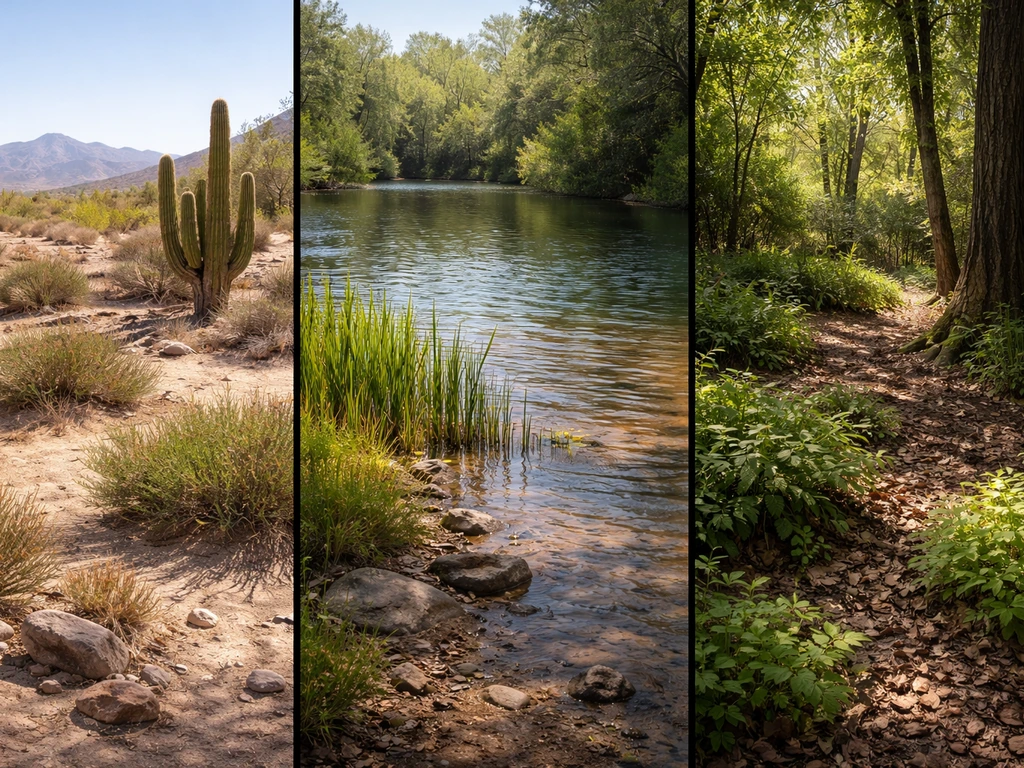
Three real habitats where plants grow
Before diving into each one, it helps to understand why these three were chosen. They represent very different ends of the water-availability spectrum: deserts are water-starved, ponds are water-saturated, and temperate forests sit comfortably in the middle. That range makes them genuinely useful examples because they show that plants don't need a single perfect condition, they need a workable balance of conditions. Each habitat has its own version of that balance.
Habitat 1: Deserts, where plants survive on almost no water
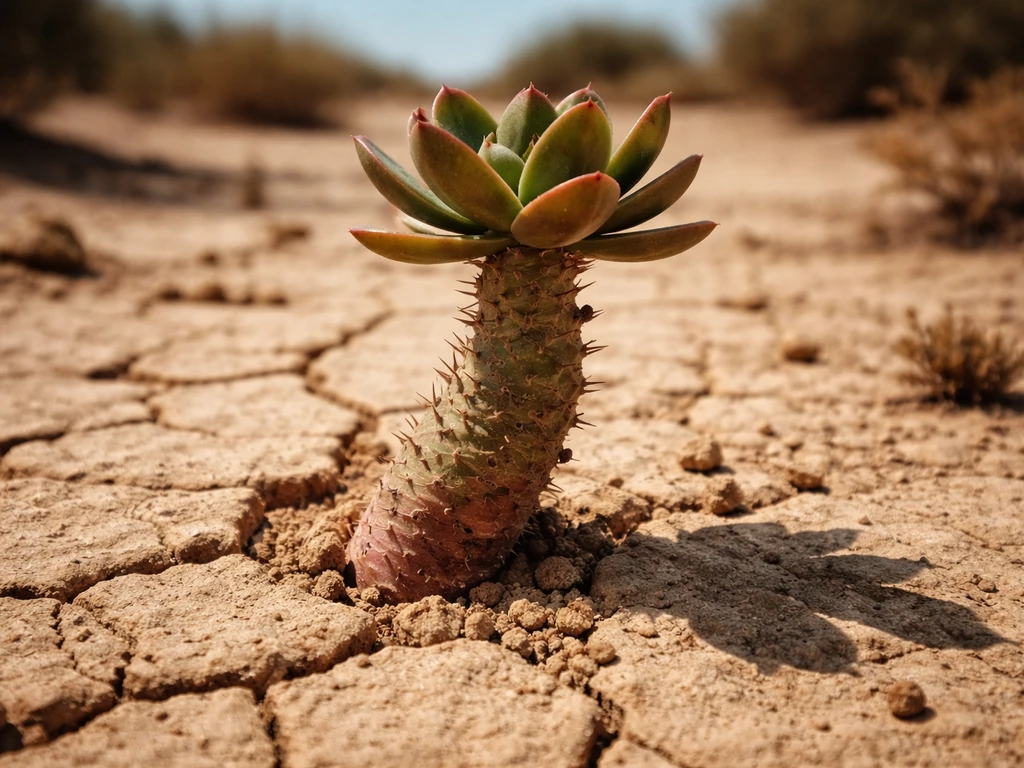
Deserts typically receive less than 250 millimeters (about 10 inches) of rainfall per year, and evaporation almost always outpaces whatever rain does fall. Temperatures swing hard between day and night because dry air holds heat poorly, so a desert that hits 40°C (104°F) in the afternoon can drop to near freezing after dark. You'd think nothing could grow here, but plants absolutely do, they've just had to get creative.
Desert plants have two main survival strategies. The first is adaptation: succulents like cacti store water in thick, waxy stems, reduce leaf surface area to cut moisture loss, and grow shallow, wide root systems that can absorb the brief pulse of water after a rare rain event before it evaporates. The second strategy is speed: some desert annuals have life cycles measured in weeks. They wait out the drought as seeds, then germinate, flower, and set seed again in a rush right after rainfall. Both approaches are clever solutions to the same problem, a landscape where water is the single biggest limiting factor.
Soil in desert environments tends to be low in organic matter and often coarse or sandy, which means it drains fast and holds little water. That reinforces why shallow roots that can grab moisture quickly from the topsoil before it disappears make so much ecological sense here. Light is rarely the limiting factor in a desert, there's usually plenty of sun. The challenge is always water.
Habitat 2: Freshwater ponds, where the limiting factor is light, not water
Switch to the opposite extreme: a freshwater pond or lake. Water is everywhere, so that's no longer the constraint. Instead, light becomes the main variable controlling where plants can grow. In a pond, the shallow zone near the shoreline (called the littoral zone) is where sunlight penetrates all the way down to the sediment, and that's exactly where aquatic plants take hold. Move out into deeper, open water and light levels drop fast. Scientists use the "1% light level" as the rough cutoff for the euphotic zone, below that depth, there isn't enough light to drive photosynthesis, and rooted plants can't survive there.
In the littoral zone you'll find emergent plants like cattails, which root in the bottom sediment but grow their stems and leaves up above the water surface. These plants have the best of both worlds: their roots are anchored in nutrient-rich pond sediment while their leaves stay in full sun and open air. Further from shore, submerged and floating-leaf plants fill in wherever light still reaches the bottom. The substrate matters here too, rooted aquatic plants need soft, silty sediment to anchor into, not bare rock.
Temperature and dissolved oxygen also shape the seasonal picture. In colder months, dissolved oxygen levels in pond water are high, which supports a healthy aquatic environment. In summer, warm stratified water develops layers, and the deep, dark bottom layer loses oxygen and light both, making it essentially off-limits for plant life. This is why pond plant communities are almost always concentrated in the shallow, well-lit edges, not the deep middle.
Habitat 3: Temperate forests, where light, soil, and seasons all interact
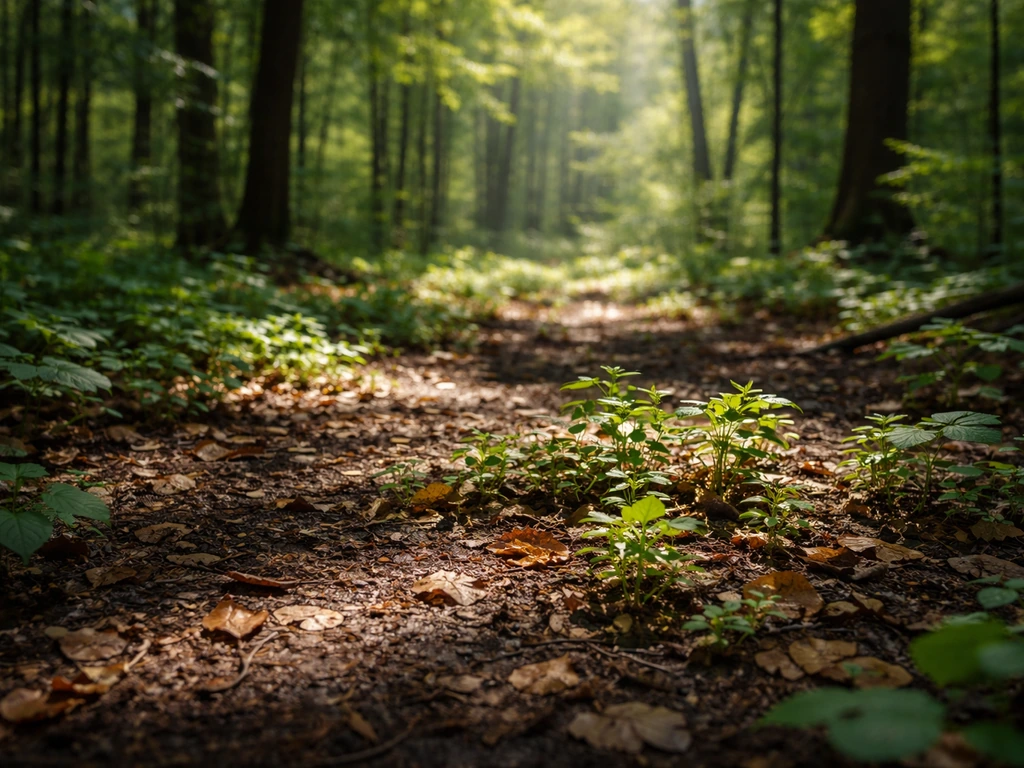
Temperate deciduous forests grow in the mid-latitudes, roughly between 23.5° and 66.5° north or south, and they receive around 30 to 60 inches of precipitation per year. That's a comfortable water supply by any standard. Daily temperatures can range from about −30°C (−22°F) in deep winter to around 30°C (86°F) in summer, so the plants here have to deal with real seasonal swings, and they've built their entire growth cycle around them.
The forest canopy in a temperate woodland can cover 60 to 100 percent of the sky overhead, which has a massive effect on what grows underneath. Canopy trees get the most light, so understory shrubs, wildflowers, and ferns have to either tolerate low light or exploit the brief window in early spring before the tree canopy leafs out. That's why you see so many spring ephemerals, wildflowers that shoot up, bloom, and go dormant all before the full canopy shade sets in. The whole growth calendar is tuned to the seasonal light cycle.
Soil quality is a major driver in forest plant distribution. Forest soils are often rich in organic matter from years of decomposing leaf litter, which gives them excellent water-holding capacity and nutrient availability. Plant-available water is mostly dependent on soil texture, which is a major control on site conditions relevant to forest plant growth Soil quality is a major driver in forest plant distribution.. Soil pH plays a big role too: a range of about 6 to 7 is generally optimal for most plants because key nutrients are most soluble and accessible to roots in that window. Forest soils can vary quite a bit across a landscape depending on parent rock, drainage, and slope, which is why you'll sometimes see completely different plant communities within the same forest just a few hundred meters apart.
How to use these three habitats to find what grows in your area
Once you've internalized these three examples, the real skill is applying the same logic anywhere you look. Every plant grows (or doesn't grow) somewhere because of the same core checklist. These same kinds of conditions also explain the places where plants grow in kindergarten gardens, such as near sunny windows or in well-watered soil. If any one of these factors falls outside a plant's tolerance, it limits or blocks growth entirely, this is sometimes called the law of limiting factors, and it's one of the most practical ideas in plant ecology.
- Water availability: Is your site dry like a desert, waterlogged like a pond edge, or somewhere in between? This single factor narrows your plant list dramatically.
- Sunlight: How many hours of direct sun does the spot receive? Full sun, partial shade, and deep shade each support different plant communities.
- Temperature and growing season: What's the frost-free window in your area? Many plants are tuned to specific seasonal cues, just like temperate forest understory species are tuned to the pre-canopy spring window.
- Soil type and pH: Is the soil sandy and fast-draining, silty and moisture-retentive, or clay-heavy? A simple mason jar test (shake a soil sample in water and watch the layers settle) can reveal your soil's texture at home. For pH, inexpensive test kits or your local extension office can give you a precise number.
For practical next steps, your local cooperative extension office is one of the most underrated resources available. They can help you identify plants from photos or descriptions, recommend species suited to your specific soil and climate zone, and sometimes even run soil tests. Online tools like native plant databases (many organized by state or region) let you filter by exactly these conditions: moisture level, sun exposure, soil type, and hardiness zone. Start with water and light, those two factors alone will cut your options down to a manageable list, and from there soil type and temperature fine-tune the rest.
It's also worth knowing that these three habitats connect to a broader picture. This same logic helps you understand places where plants grow beyond deserts, ponds, and temperate forests these three habitats. Understanding what places where plants cannot grow (like the deep hypolimnion of a stratified lake, or compacted urban hardpan with no organic matter) is just as useful as knowing where they thrive. And the upper layer of earth in which plants grow, that biologically active topsoil layer, is what ties the land-based examples together, whether you're looking at desert soils, forest soils, or the pond-edge sediment where cattails root. Wherever plants grow, they're working with some version of the same set of conditions. In most places on land, plants are also limited by the same basic conditions that explain why so many terrestrial species can grow these three habitats connect to a broader picture. A place where plants grow is called a habitat. Learn to read those conditions, and you can predict plant distributions almost anywhere.
| Habitat | Water availability | Key light condition | Typical soil or substrate | Main limiting factor |
|---|---|---|---|---|
| Desert | Very low (under 250 mm/year) | High — rarely limited | Sandy, low organic matter, fast-draining | Water |
| Freshwater pond | Abundant — plants are submerged or waterlogged | Limited by depth; best in shallow littoral zone | Soft silty sediment near shore | Light (depth-dependent) |
| Temperate forest | Moderate — 30 to 60 inches per year | Canopy-filtered; seasonal windows for understory plants | Organic-rich, variable pH, layered | Light (canopy shade) and seasonal temperature |
FAQ
What are the three places where plants grow, if I need a quick answer for a worksheet?
Deserts, freshwater ponds (including the pond shoreline or shallow littoral zone), and temperate deciduous forests.
Do plants grow in the deep middle of a freshwater pond?
Usually very few rooted plants do, because light drops rapidly with depth and oxygen levels can be low in deeper, darker layers during warm, stratified seasons.
Are deserts always too dry for any plant life?
Not necessarily. Many desert plants survive by storing water (like succulents) or by completing their life cycle quickly after rare rainfall (some annuals remain as seeds until conditions improve).
Why is light more important than water in a pond compared with a desert?
Water is abundant in ponds, so the main constraint becomes how much light reaches the bottom, which determines whether photosynthesis can support rooted or floating plants.
What soil factor matters most for plants in each habitat?
In deserts, drainage and organic matter are often low so water disappears quickly. In ponds, soft silty sediment is needed for anchoring rooted plants. In temperate forests, nutrient availability and water-holding capacity from leaf-litter-rich soils help support growth.
If I’m trying to grow plants outdoors, which condition should I check first?
Start with water and light. If either one falls outside the plant’s tolerance, other factors like soil pH or nutrients will not rescue the plant.
How can I tell whether shade plants can survive in a temperate forest?
Look for species that tolerate low light or that take advantage of early-season light gaps, such as spring ephemerals that grow and bloom before the canopy fully shades the understory.
Do temperature swings affect all three habitats the same way?
They matter everywhere, but deserts often have extreme day-night swings and ponds can form low-oxygen deep layers in summer, while temperate forests have strong seasonal cycles that shape growth timing and dormancy.
What’s a common mistake when learning plant habitats?
Treating each habitat as defined by a single factor. Habitats work as a balance of water, light, temperature range, and substrate, so you need to check multiple conditions at once.
Can I use the same logic for places plants cannot grow?
Yes. If you can identify the limiting factor that drops below a plant’s tolerance, you can predict failure points, such as too little light at pond depth or compacted, low-organic urban soil that cannot support root growth.