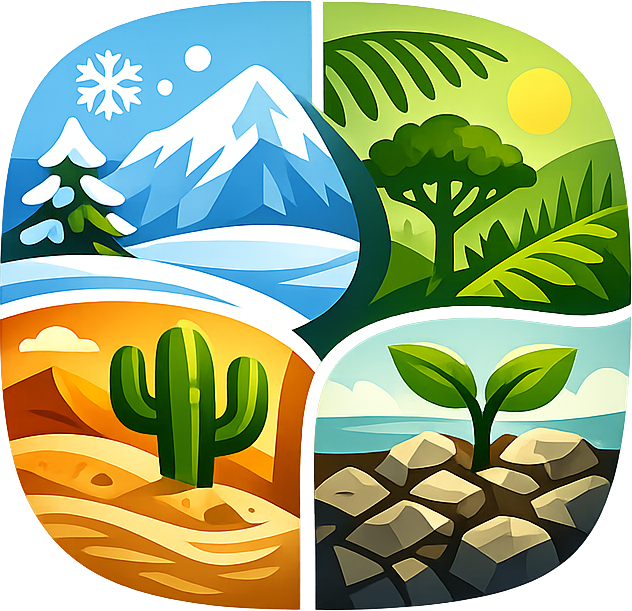
Decorative plants grow wherever their natural habitat conditions are met: the right temperature range, light exposure, soil drainage, moisture, and humidity. That's the real answer. It doesn't matter whether a plant looks beautiful in a catalog or a neighbor's yard, if your climate, soil, and seasonal pattern don't match where that plant evolved, it will struggle or fail. The good news is that once you understand which conditions a plant needs, you can quickly figure out where it will thrive and, just as importantly, where it won't.
Where Do Decorative Plants Grow and How to Match Conditions

Dr. Marcus Weatherby
21 May 2026
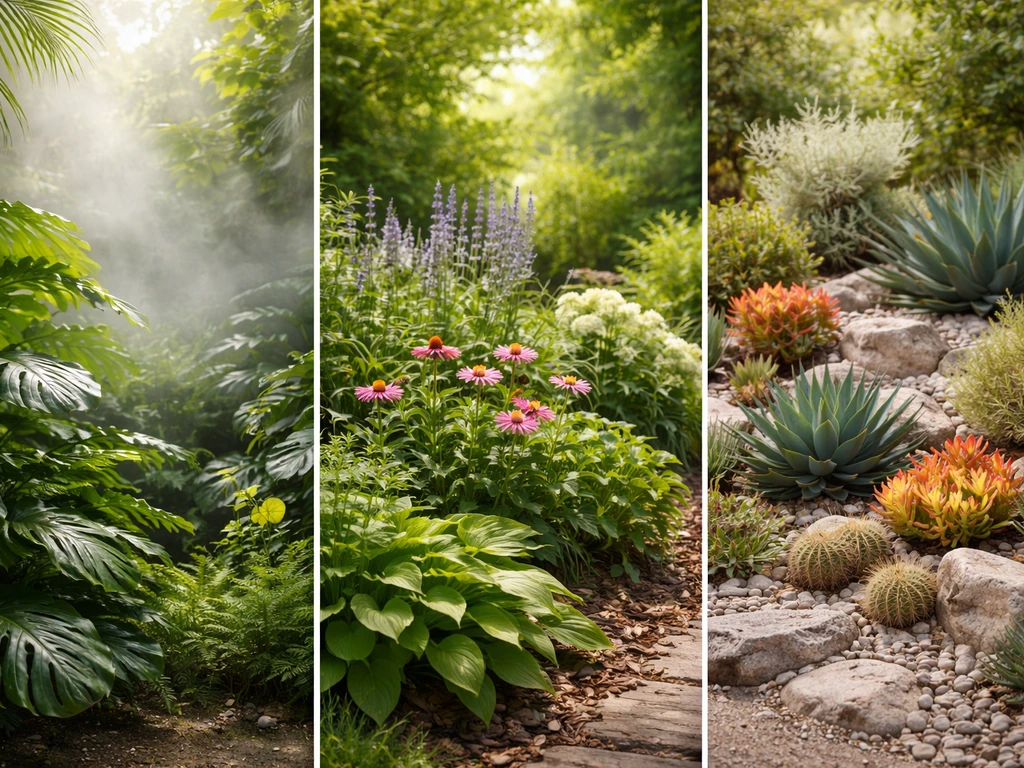
What actually drives where plants grow
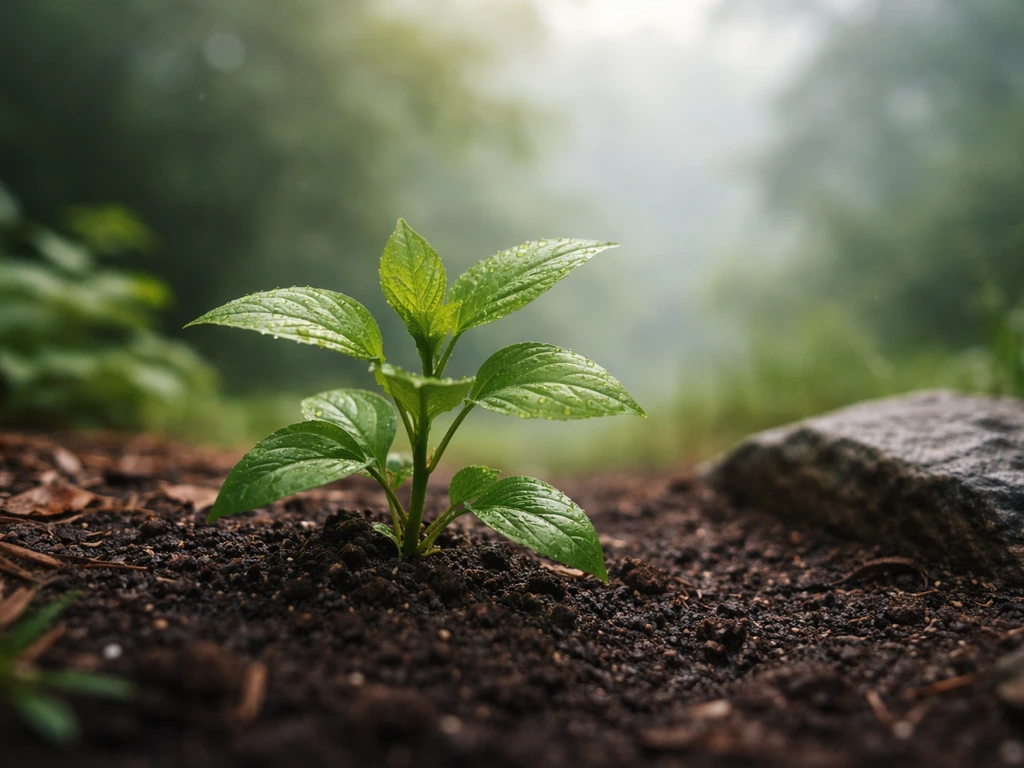
Every decorative plant has a native habitat, a place where it evolved over thousands of years under specific conditions. Those conditions include winter cold (the extreme minimum temperature a plant can survive), summer heat, annual rainfall, humidity, soil texture, and day length. When you replicate those conditions, even partially, the plant does well. When you don't, you're fighting nature. The USDA Plant Hardiness Zone system captures one of the most important variables: average annual extreme minimum winter temperature, divided into 10°F bands with 5°F half-zones. That tells you whether a perennial plant can survive your coldest nights. But it doesn't tell you about summer heat, drought tolerance, or soil moisture, so it's a starting point, not a complete picture.
The UK's RHS hardiness system works similarly, rating plants by the minimum temperatures they can handle in Celsius, but it's a different scale from the USDA system and the two aren't directly interchangeable. Both systems are essentially asking the same question: can this plant survive the worst your climate throws at it? Beyond cold hardiness, you also need to think about soil salinity, drainage, and humidity, all of which quietly determine success or failure in ways a hardiness zone number will never show you.
Where decorative plants grow by climate zone
Climate zone is the single biggest filter. Here's how the major zones break down for ornamental plants, and what kinds of decorative species are naturally at home in each one.
Tropical and rainforest climates
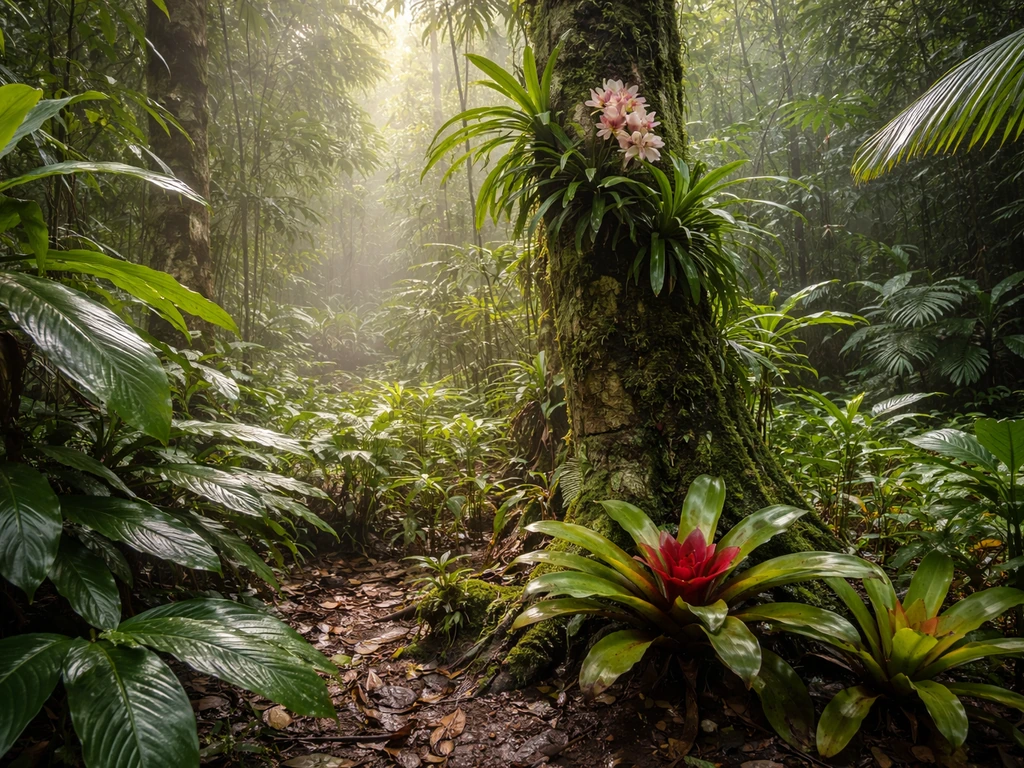
Tropical ornamentals, think hibiscus, bird of paradise, bromeliads, and many orchids, evolved in environments where temperatures rarely drop below 50°F (10°C) and rainfall is abundant year-round or concentrated in a wet season. USDA zones 12 and 13, which cover areas with average annual extreme minimum temperatures above 50°F and 60°F respectively, represent the closest North American equivalent. In practice, that means South Florida, Hawaii, and coastal Southern California in sheltered spots. In Europe, the Canary Islands, parts of coastal Portugal, and southern Sicily host similar conditions. Tropical decorative plants grown outside these zones need to be brought indoors before the first frost, they simply aren't built for cold.
Temperate climates
The broadest category for ornamentals is temperate: four distinct seasons, moderate rainfall, and winters cold enough to freeze the ground but not persistently brutal. Most of the classic decorative plants people associate with "the garden", roses, hydrangeas, hostas, peonies, ornamental grasses, are temperate natives or have been bred from temperate species. They need a cold winter dormancy to reset their growth cycle and are perfectly at home in USDA zones 4 through 8, which covers most of the continental US and the majority of Western and Central Europe. Bigleaf hydrangeas (Hydrangea macrophylla), for example, are native to coastal Japan, a temperate maritime climate, which is why they thrive so readily in the Pacific Northwest, coastal New England, and the UK but can struggle in zones with extreme cold snaps that damage their flower buds on old wood.
Arid and desert climates
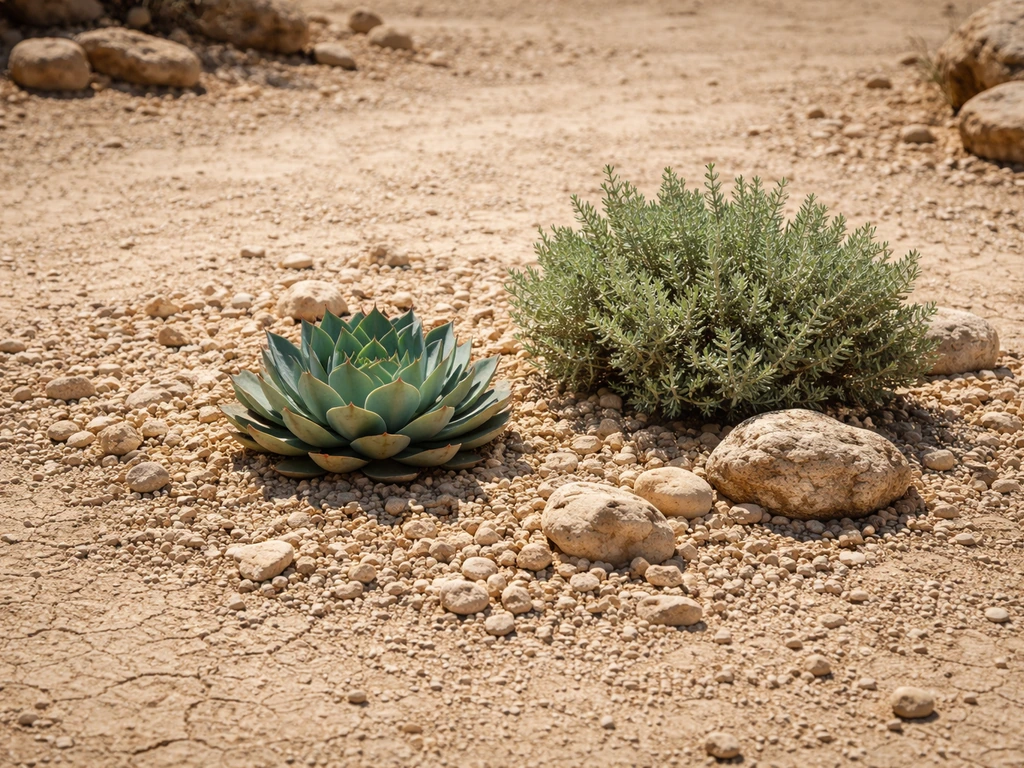
Desert ornamentals evolved under very low precipitation, most true deserts receive under 400 mm (about 16 inches) of rain annually, and many receive far less. The Mojave, for instance, averages just 2 to 6 inches per year. Decorative plants from these regions, agaves, desert roses, certain salvias, lavender, and many succulents, have deep or specialized root systems, waxy coatings, and drought-coping physiology. They grow naturally in the American Southwest, the Mediterranean basin, South Africa, and parts of Australia.
Rubber plants generally grow naturally in warm tropical and subtropical regions, where temperatures stay mild and humidity is relatively high rubber plants grow naturally in which region. Once established (which can take months to a couple of years of careful watering), they're extremely low maintenance because their roots have grown deep enough to find moisture in the rooting zone independently. Planting them in wet, heavy soils where drainage is poor will kill them faster than drought ever would.
Cold and boreal climates
Some of the toughest decorative plants come from boreal and cold continental climates, think Siberian iris, cold-hardy conifers, and certain ornamental shrubs that shrug off USDA zone 3 winters (down to -40°F/-40°C). These plants need cold winters to properly harden and complete dormancy. Gardeners in Minnesota, Quebec, Scandinavia, or the Scottish Highlands are actually well-positioned to grow a wider range of these cold-adapted ornamentals than people in milder climates where the winters never get cold enough to trigger proper dormancy.
Alpine environments
Alpine ornamentals are a specialized group. True alpine tundra is treeless, wind-scoured, and cold year-round, average annual temperatures around -2.8°C (27°F), average annual precipitation around 325 mm (roughly 13 inches), and July highs that barely reach 52°F (11°C) in places like Rocky Mountain National Park. Alpine plants like edelweiss, gentians, and saxifrages are adapted to intense UV exposure, fast-draining rocky soils, and very short growing seasons. They grow naturally in the Rockies, Alps, Himalayas, and Andes. Trying to grow them at low elevations in warm, humid conditions usually fails because they need the cold, the drainage, and the high light intensity of their native habitat.
How seasons and light shape where decorative plants grow
Day length (photoperiod) is one of the most underappreciated factors in ornamental plant performance. Many decorative plants are classified as long-day, short-day, or day-neutral, meaning flowering is triggered by whether days are lengthening or shortening. Short-day plants like chrysanthemums and poinsettias flower as days get shorter in late summer and fall. Long-day plants like certain petunias and coneflowers flower in the long days of summer. This is why a plant that blooms perfectly in one region can refuse to flower in another with the same temperature but different latitude and day length.
Frost timing matters just as much as hardiness zone. A late spring frost can blast open flower buds on early-blooming ornamentals even if the plant itself survives winter fine. Cold injury to flower buds during late winter and early spring is one of the most common reasons decorative plants fail to bloom, the plant lives but the blooms are damaged before they open. This is especially relevant for stone fruits used ornamentally, magnolias, and early-flowering shrubs in zones where cold snaps can occur into April or May.
Soil, water, and humidity: where roots actually succeed
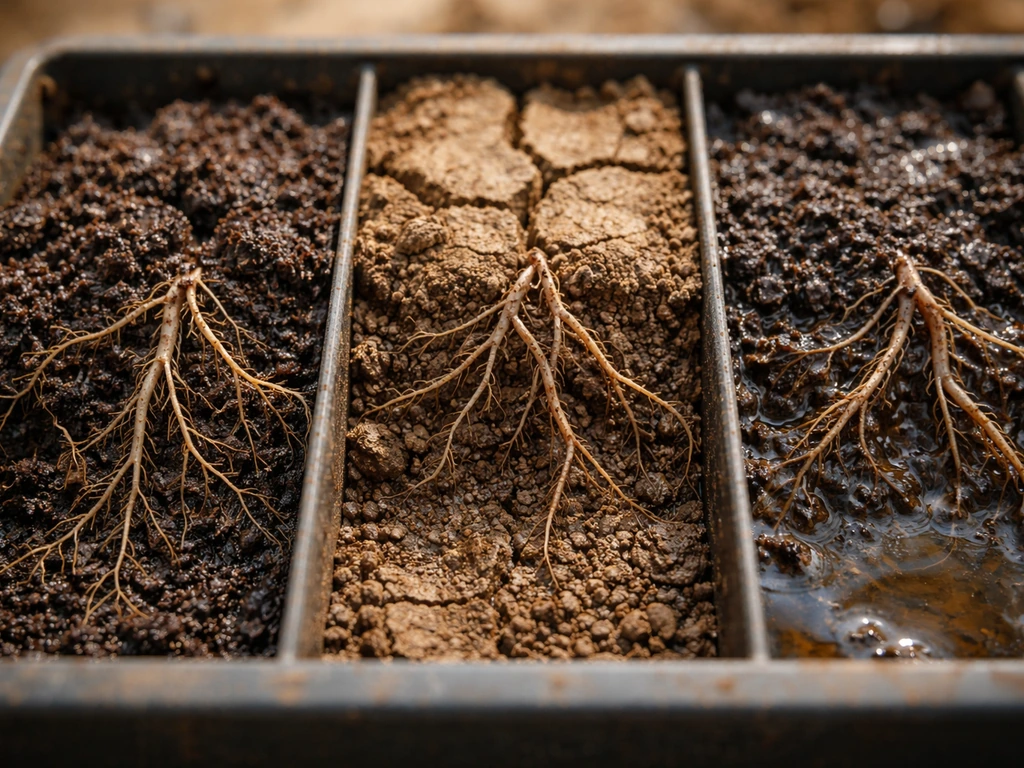
A plant might be perfectly cold-hardy for your zone and still die because the soil is wrong. The two most common killers are waterlogging and drought stress during establishment. When soils stay saturated, roots can't access oxygen and plants essentially drown, even plants that like moisture will die in permanently waterlogged conditions unless they specifically evolved for wetlands or bog environments. The other extreme is compacted or sandy soil that drains so fast roots never get enough moisture. Most decorative plants want well-structured soil that holds some moisture but drains freely after rain.
Soil salinity is another factor that's easy to overlook, especially in coastal gardens, arid climates with salty irrigation water, or areas with road salt exposure. Water with electrical conductivity above 0.7 dS/m can start stressing salt-sensitive ornamentals, and high soil EC causes stunted growth and leaf burn across many decorative species. If you're gardening in the arid Southwest, near coastlines, or in regions with alkaline soils, it's worth testing EC before assuming your soil is suitable.
Humidity ties into both soil moisture and disease pressure. Ornamentals from Mediterranean climates (lavender, rosemary, many salvias) hate humid summers, they evolved in dry summer heat and are prone to fungal problems in the humid East or Pacific Northwest. Conversely, moisture-loving ornamentals from woodland or tropical habitats will stress and scorch in low-humidity desert air even if you water them constantly, because atmospheric moisture matters as much as soil moisture for many species.
Matching decorative plants to real US and European locations
Here's where the ecology becomes practical. Let's look at some real-world region-to-plant matches to show how habitat conditions translate to actual planting decisions.
| Region | Climate type | USDA Zone (approx.) | Well-matched decorative plants | Key condition to check |
|---|---|---|---|---|
| Pacific Northwest (US) | Temperate maritime | 7b–9a | Hydrangeas, rhododendrons, Japanese maples, ferns | Drainage in wet winters; cool summers |
| Southeast US (e.g., Georgia, Florida) | Humid subtropical | 8a–10b | Gardenias, camellias, crape myrtles, azaleas | Heat and humidity tolerance; late frost risk |
| Southwest US (e.g., Arizona, Nevada) | Hot arid/desert | 9a–11b | Agave, bougainvillea, desert willow, lantana | Drainage, salinity, summer heat |
| Upper Midwest / Great Plains (US) | Cold continental | 3b–6a | Coneflowers, ornamental grasses, Siberian iris, hardscape shrubs | Extreme cold hardiness; wind exposure |
| Mediterranean Europe (Spain, S. France, Italy) | Mediterranean | 9a–11a | Lavender, rosemary, oleander, rock roses | Summer drought; well-drained soils |
| UK and NW Europe | Temperate oceanic | 8a–9b (RHS H4–H5) | Roses, hydrangeas, clematis, alliums, hardy geraniums | Reliable cold hardiness; waterlogging in clay |
| Central Europe (Germany, Poland) | Temperate continental | 6a–7b | Peonies, hostas, ornamental cherries, ornamental grasses | Winter cold tolerance; spring frost timing |
Notice the pattern: in every case, the best-matched plants are those whose native habitats share the same combination of temperature, moisture, and seasonal rhythm. Japanese maples come from temperate East Asian forests, cool winters, moist summers, no extreme drought, which is why they feel right at home in the Pacific Northwest and UK but struggle in Phoenix. Lavender comes from the dry rocky hills of the Mediterranean, which is why it's miserable in humid Florida but thrives in Southern California and Provence.
How to find the right decorative plant for your yard right now
Here's a repeatable method you can apply today, whether you're choosing a plant for the first time or troubleshooting why something isn't performing.
- Find your USDA hardiness zone (plants.usda.gov for US gardeners) or RHS hardiness rating for UK/Europe. This tells you the coldest temperatures your site regularly reaches — start here to eliminate plants that simply won't survive winter.
- Check your light pattern honestly. Count the hours of direct sun your planting spot receives on a midsummer day. Full sun is 6+ hours, part shade is 3–6 hours, full shade is under 3. Many ornamentals fail not because of cold or soil but because they're planted in the wrong light.
- Probe your drainage. Dig a hole about 12 inches deep, fill it with water, and check how long it takes to drain. If water is still sitting after an hour, you have poor drainage — most ornamentals will drown there unless adapted to wet conditions. If it drains in under 10 minutes, you have fast-draining soil better suited to drought-tolerant species.
- Note your typical frost dates. Your last spring frost and first fall frost define your growing window. Plants that need a long warm season to bloom — or that are damaged by late frosts — need to be planted after that last frost date, not before.
- Read the plant label for native region or origin. Labels showing Mediterranean, tropical, or alpine origin immediately tell you what conditions the plant prefers. If you can't find that information on the label, look up the species on Kew's Plants of the World Online (powo.science.kew.org) or GBIF (gbif.org), both of which map native distributions and show where the plant actually occurs in the wild.
- Check for humidity and salinity mismatches. If you're in a humid climate, avoid Mediterranean dryland species prone to fungal issues. If you're in an arid region with hard water or near a coast with salt spray, check that your chosen ornamental handles elevated soil EC — most Mediterranean and desert natives do, but many woodland and tropical ornamentals don't.
- Cross-check with local native plant databases. The USDA PLANTS database (plants.usda.gov) lists native status and distribution across US states and territories. Plants that occur naturally in your region — or in a climate closely matching yours — are your safest bets.
One practical habit worth building: whenever you're drawn to a decorative plant, look up its natural habitat before you buy. A five-minute check on GBIF or Plants of the World Online will show you a dot map of where it occurs in the wild. You can use the same habitat-matching approach to learn where insectivorous plants grow, too. If those dots cluster in Pacific coastal climates and you're in Kansas, that's a signal.
GBIF provides open-access species occurrence records that can be used to map species distributions and study biodiversity patterns and how they change over time. If they cluster in Mediterranean hillsides and you're in coastal California, you've found a match.
This habit, more than any single tip, is what separates gardeners who consistently grow thriving plants from those who keep replacing failures.
It's also worth noting that the same ecological logic applies to other specialized plant groups you might explore from here, from tropical flowering plants that need year-round warmth, to century plants adapted to arid scrubland, to sensitive plants evolved in humid tropical zones. Sensitive plants evolved in humid tropical zones, so matching their temperature and moisture needs is key to where they can thrive.
Each group has its own natural habitat fingerprint, and understanding that fingerprint is always the first step to knowing where those plants will actually grow. GBIF-US FAQs describe typical occurrence record components, including a scientific name, geographic references such as decimal coordinates, and date or time context.
If you want to know where flowering plants grow in your area, start by comparing their native habitat conditions to your local climate, light, and soil where do flowering plants grow.
FAQ
If a plant is in my USDA hardiness zone, why does it still fail or not bloom?
Use the worst-case cold (not your average) for perennials, but also check spring frost risk by the plant’s typical bloom time. A plant can survive winter and still fail to bloom if its buds open during a late cold snap, so look for guidance on “flower bud hardiness” or bloom calendar timing in your region.
Do decorative plants grow the same way in containers as in the ground?
Treat container gardens as their own microclimate. Roots heat up and dry out faster than ground soil, and winter exposure can be harsher in a pot, so you may need a colder hardiness margin and more winter protection (mulch, sheltered placement, or insulating pot covers).
Can two gardens in the same neighborhood grow the same decorative plants successfully?
Yes, some species are “microclimate specialists,” like plants that naturally grow on slopes, near water, or under forest edges. Even within one city, a south-facing wall can create warmer conditions, while low spots can stay wetter, so your best “where do plants grow” answer may be a specific yard location, not just a zone number.
What changes when I’m gardening near the ocean or using salty irrigation water?
If you’re near the coast, don’t assume drainage and humidity are the only issues. Salt spray, wind exposure, and soil or irrigation water salinity can burn leaves and stall growth, so consider windbreak placement and test soil electrical conductivity (EC) if plants show slow growth or leaf edge damage.
What’s the most common mistake when people try to match plants to their climate?
Start by matching all key constraints, not just one trait. For example, drought-tolerant plants may still die in wet, heavy soil during cool months, and moisture-lovers may scorch in very dry, sunny air even with frequent watering. The “where they grow” test is temperature plus moisture plus drainage plus humidity together.
Why do plants sometimes look fine at first, then die later?
Consider the establishment period separately. Many decorative plants tolerate imperfect conditions once roots are established, but they are most sensitive to waterlogging or drought stress during the first months, so focus on irrigation scheduling and soil amendments before expecting stability.
How can my plant’s flowering fail even when temperatures seem right?
Day length affects flowering triggers, so if a plant blooms beautifully in one region and not yours, check photoperiod type and seasonal timing. Latitude and local seasonality can change when short-day or long-day plants “think” it’s time to flower, even when temperatures match.
Can I grow tropical or alpine decorative plants outside by using protection like covers or moving them indoors?
Yes, but only if you can replicate the limiting factor. For example, moving a Mediterranean plant indoors can solve humidity issues, but you may also need bright light, airflow, and a watering rhythm that matches its native dry season.
What should I check for frost timing beyond my hardiness zone?
Plan around frost events, not just winter survival. If your area sees freezes during bud break, choose later-flowering varieties, protect plants during cold snaps (covers at the right time), or select species whose bloom timing avoids your historical late frosts.
How do I translate a “native habitat dot map” into a practical planting plan?
Use habitat dot maps to look for climate patterns, then verify locally with light and soil observation. If the wild dots cluster in fast-draining rocky habitats, test your drainage (how quickly water moves through) and avoid burying plants in heavy compost that stays wet.