
Rubber plants (Ficus elastica) naturally grow across a broad sweep of tropical and subtropical Asia, from the foothills of Nepal and Bhutan through northeastern India, Bangladesh, Myanmar, Thailand, Malaysia, and down into Indonesia. Wikipedia summarizes the natural range of Ficus elastica as extending from Nepal in the north to Indonesia, including Bhutan, northeastern India, Bangladesh, Myanmar, Thailand, Yunnan (China), and Malaysia blank" rel="noopener noreferrer">Ficus elastica naturally grow across a broad sweep of tropical and subtropical Asia, from the foothills of Nepal and Bhutan through northeastern India, Bangladesh, Myanmar, Thailand, Malaysia, and down into Indonesia.. Their native habitat is warm, humid lowland rainforest and hill forest, sometimes reaching elevations up to about 1,650 meters in the Himalayan foothills. Outside that native range, they survive outdoors only in USDA hardiness zones 10 through 12, where temperatures never drop to freezing. Everywhere else, they grow as indoor plants, and they do that very well as long as you replicate a few key conditions from their tropical home. If you're wondering where carnivorous plants grow, the key is usually acidic, nutrient-poor habitats with consistently wet conditions rather than rich tropical forest soil. Insectivorous plants generally grow in warm, wet habitats where nutrients are scarce, such as bogs and other areas with acidic soils insectivorous plants generally grow in which area.
Where Do Rubber Plants Grow Naturally and How to Replicate It

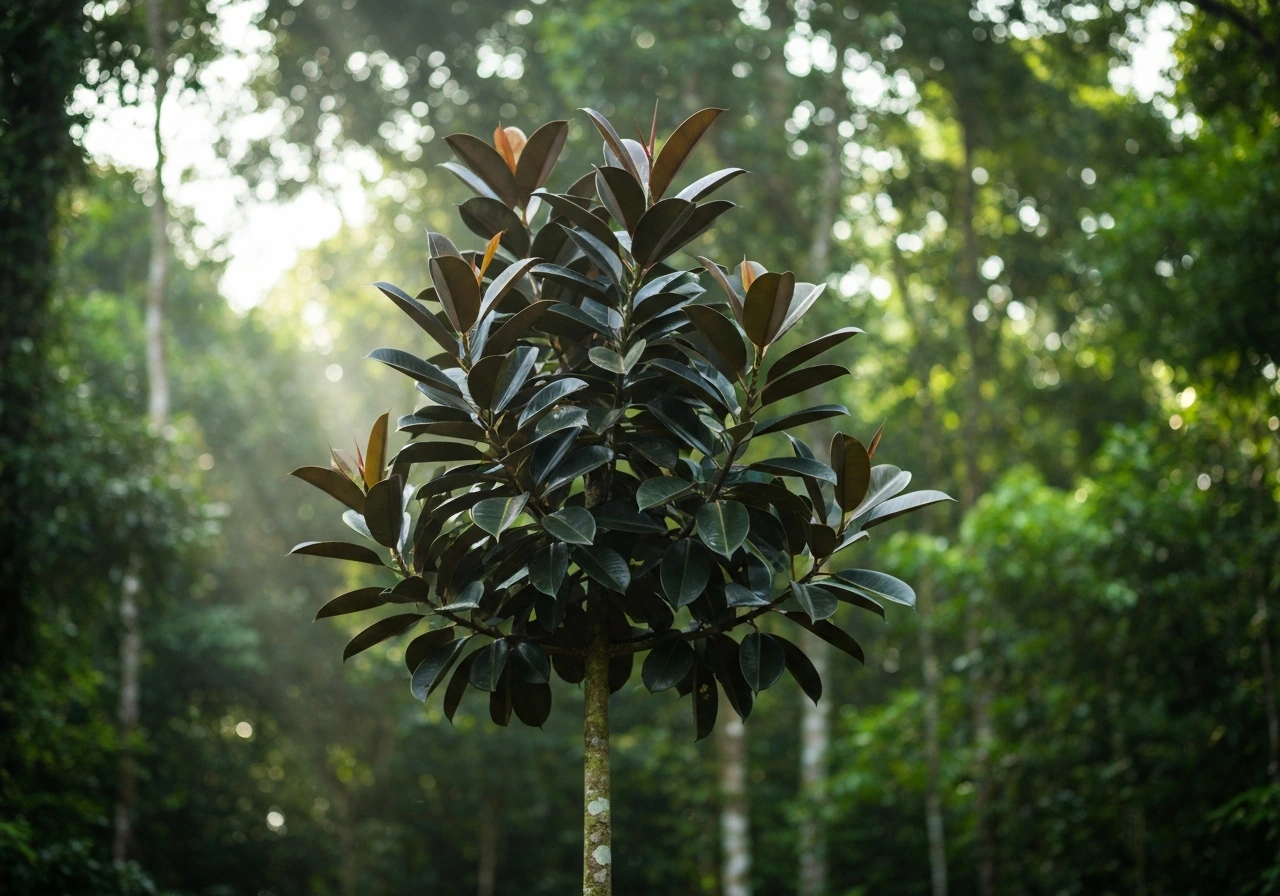
Rubber plant's native range and natural habitats
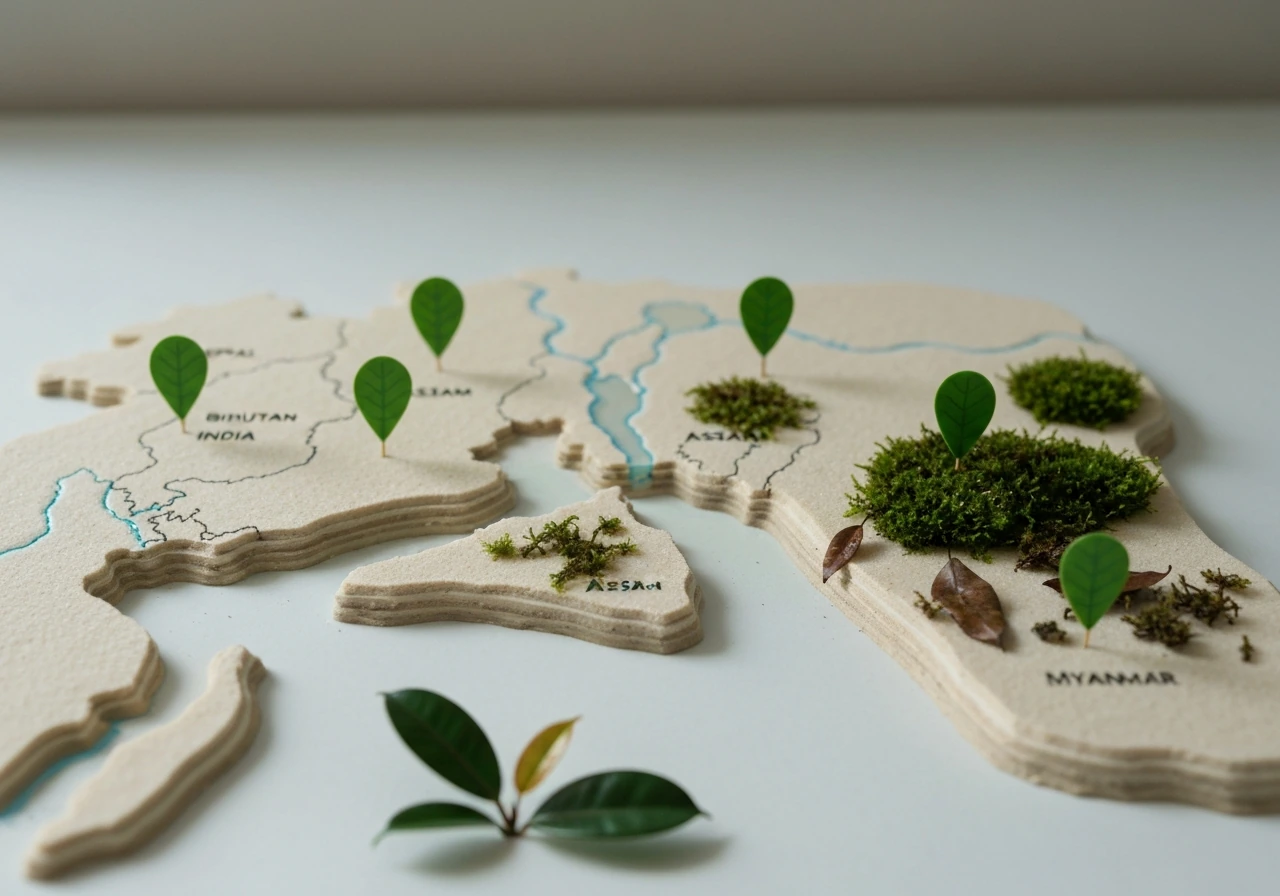
Ficus elastica's native territory stretches from Nepal in the northwest, through Bhutan, northeastern India (especially Assam), and into Bangladesh and Myanmar, then south and east through Thailand, Yunnan province in China, Malaysia, and into Indonesia. That's a large geographic footprint, but what ties it all together is climate: every part of that range is warm, wet, and frost-free year-round.
Within those countries, rubber plants show up in blank" rel="noopener noreferrer">lowland moist forests, hill forests, and even on cliffs and limestone outcrops, as documented in Singapore's natural forests. Non-vascular plants like mosses and liverworts grow in similarly moist, sheltered areas, where they can absorb water directly through their tissues. They're not restricted to flat jungle floor. The elevation range is worth noting: while they're most abundant in lowland rainforest, they have been recorded up to around 1,650 meters in the Himalayan foothills. That higher-elevation presence explains why the plant tolerates slightly cooler conditions than a strictly lowland tropical species would, and it matters when you're trying to figure out whether your climate is close enough.
In the wild, Ficus elastica grows as a large canopy or emergent tree. Its latex-filled tissues, distinctive sheath-covered new leaves, and aggressive root systems are all adaptations to its forest environment, not ornamental features. Understanding that this is a full-sized forest tree in its home range helps calibrate what it needs to grow well, whether in your garden or your living room.
Climate zone fit: temperatures, humidity, and rainfall
The rubber plant's climate requirements flow directly from where it originates. Its native range sits squarely in tropical and humid subtropical zones, so it needs warmth, consistent moisture in the air, and no frost. Here's what that looks like in practical numbers.
| Climate factor | Native range conditions | Minimum for outdoor survival | Indoor cultivation target |
|---|---|---|---|
| Temperature | Warm year-round, typically 20–30°C (68–86°F) | No frost; USDA zones 10–12 | 16–24°C (60–75°F) |
| Humidity | High: 70–90%+ in rainforest | Tolerates lower, but growth slows | 40–60% relative humidity |
| Rainfall / moisture | Heavy seasonal rainfall, well-distributed | Consistent moisture, not waterlogged | Water every 7–10 days in growing season |
| Elevation | Mostly lowland, up to ~1,650 m | Sea level to moderate elevation, frost-free | Not applicable indoors |
The freeze tolerance question is simple: rubber plants cannot survive freezing temperatures. That hard limit confines outdoor planting to USDA zones 10 through 12, which in the continental United States means southern Florida, coastal Southern California, Hawaii, and a few pockets of the Gulf Coast and Arizona. In the rest of the country, and across most of Europe, Canada, and temperate Asia, this is strictly an indoor plant for most of the year.
Humidity matters more than most people expect. The indoor target of 40 to 60 percent relative humidity is workable in most homes, but if you're in a dry climate or running forced-air heat in winter, your indoor air can drop well below that range. In its native rainforest, humidity regularly exceeds 80 percent. The plant won't die at 40 percent, but you'll notice slower growth, and leaf edges may brown if it stays consistently dry for weeks.
How rubber plants actually grow
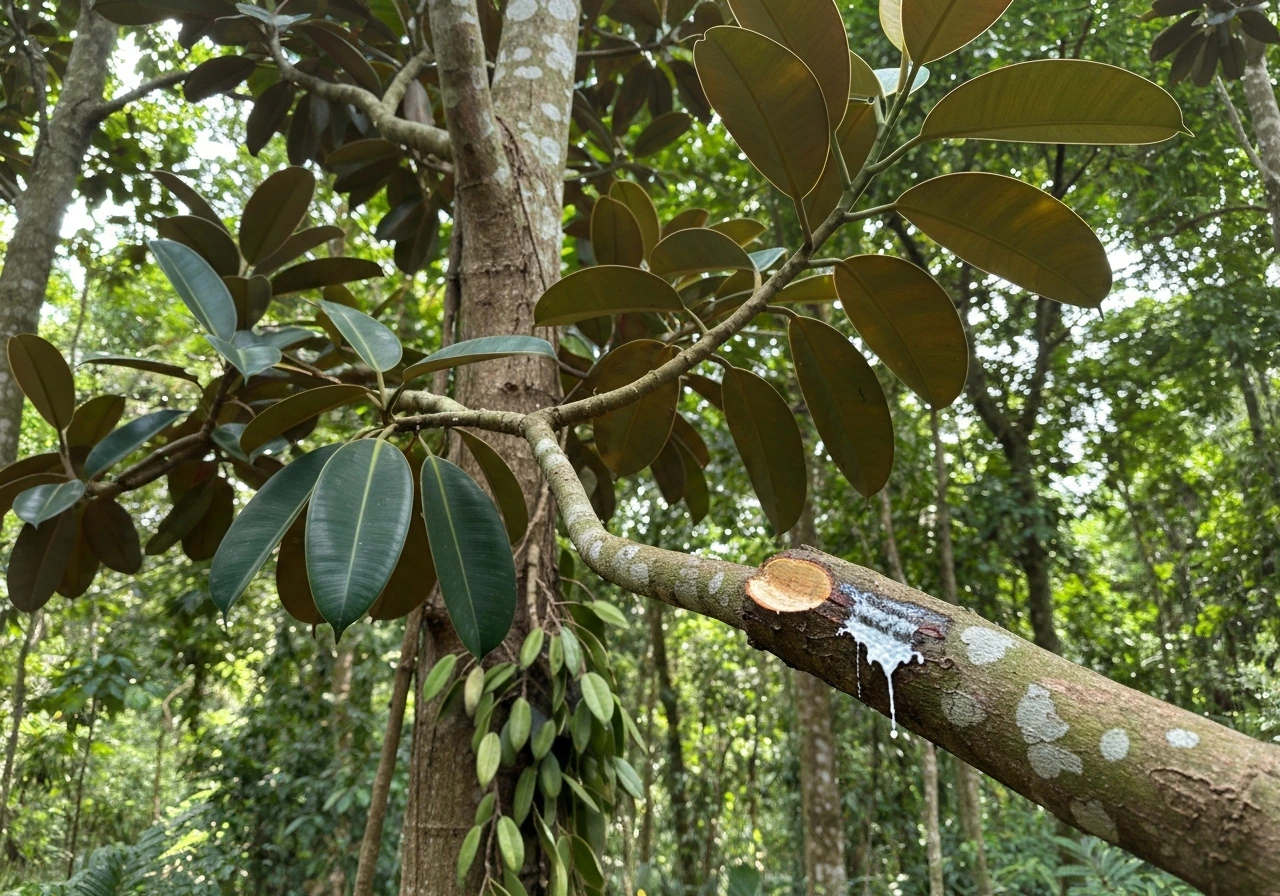
In its native forest habitat, Ficus elastica grows into a substantial canopy tree. Field measurements and forestry data put mature specimens at roughly 40 feet (about 12 meters) in managed or semi-natural settings, and wild trees in ideal conditions can exceed that. Growth is driven by warm temperatures, consistent moisture, and strong light filtering through the forest canopy. New leaves emerge from a tight sheath at the growing tip, unfurling one at a time, which is one of the most recognizable features of the species.
All parts of the plant contain milky latex, which is where the common name comes from. This latex is present in the stems, leaves, and roots, and it serves as a defense mechanism in the wild. It also means cuts and pruning should be handled carefully, and the plant should be kept away from pets and children.
Light is one of the biggest growth drivers. In the forest, rubber plants are adapted to receiving bright but diffused light under the canopy, occasionally with direct sun breaks. Indoors, bright indirect light is what you're aiming to replicate. Insufficient light slows growth noticeably, causes the plant to reach toward the nearest window, and can cause lower leaves to drop. Direct midday sun through glass can scorch the large, glossy leaves. An east-facing or lightly filtered south or west-facing window tends to work best in the northern hemisphere.
Soil and site conditions: what the ground looks like in their native range
Tropical forest soils are not particularly rich in nutrients, but they are almost always well-drained. Rubber plants grow on slopes, cliffs, and hillsides in Singapore's natural forests, which means their roots are used to conditions where water moves through quickly and doesn't pool. They want consistent moisture, but they are not bog plants. The roots need oxygen, and sitting in waterlogged soil is one of the fastest ways to kill one.
The soil pH in their native range tends toward slightly acidic to neutral. For cultivation, a range of about 5.5 to 7.0 pH hits the mark. Any well-draining potting mix or loamy garden soil in that pH range works well. Adding perlite or coarse sand to a standard potting mix improves drainage if you're working with a dense, moisture-retaining medium. The key principle from their native habitat is: never let the roots sit in standing water, but don't let the medium go bone dry for extended periods either.
If you're growing one outdoors in a zone 10 to 12 landscape, pick a site with good drainage and some wind protection. Rubber plants grown in-ground in Florida or Hawaii can reach significant size, so give them space. For containers, go up in pot size gradually rather than potting into a large container all at once, since excess soil volume holds moisture longer and raises the risk of root rot.
When rubber plants grow: seasons and active growth periods
In their native range near the equator, rubber plants grow more or less year-round because temperatures and day length stay fairly constant. The main seasonal driver is rainfall. During wetter months, growth accelerates. During drier periods, growth slows but doesn't stop entirely, because the warm temperatures keep metabolic processes ticking along.
For plants grown outside their native range, including most indoor specimens in temperate regions, the pattern shifts to follow the seasons more noticeably. Active growth peaks in spring and summer, when light levels are higher and temperatures warmer. This is when you'll see new leaves unfurling regularly and the plant visibly putting on size. Watering frequency during this period runs about every 7 to 10 days for most indoor specimens, though your specific conditions will vary. Fertilizing during spring and summer supports that growth push.
Come fall and winter, growth slows considerably. Water less frequently, hold off on fertilizing, and don't be alarmed if the plant sits static for several months. It isn't dead or unhappy; it's just responding to lower light and cooler ambient temperatures the way its seasonal-zone counterparts would. Avoid moving the plant to a cold windowsill in winter, where drafts can push leaf temperatures below the plant's comfort threshold even if the room itself is warm enough.
Matching your climate and planning your next steps
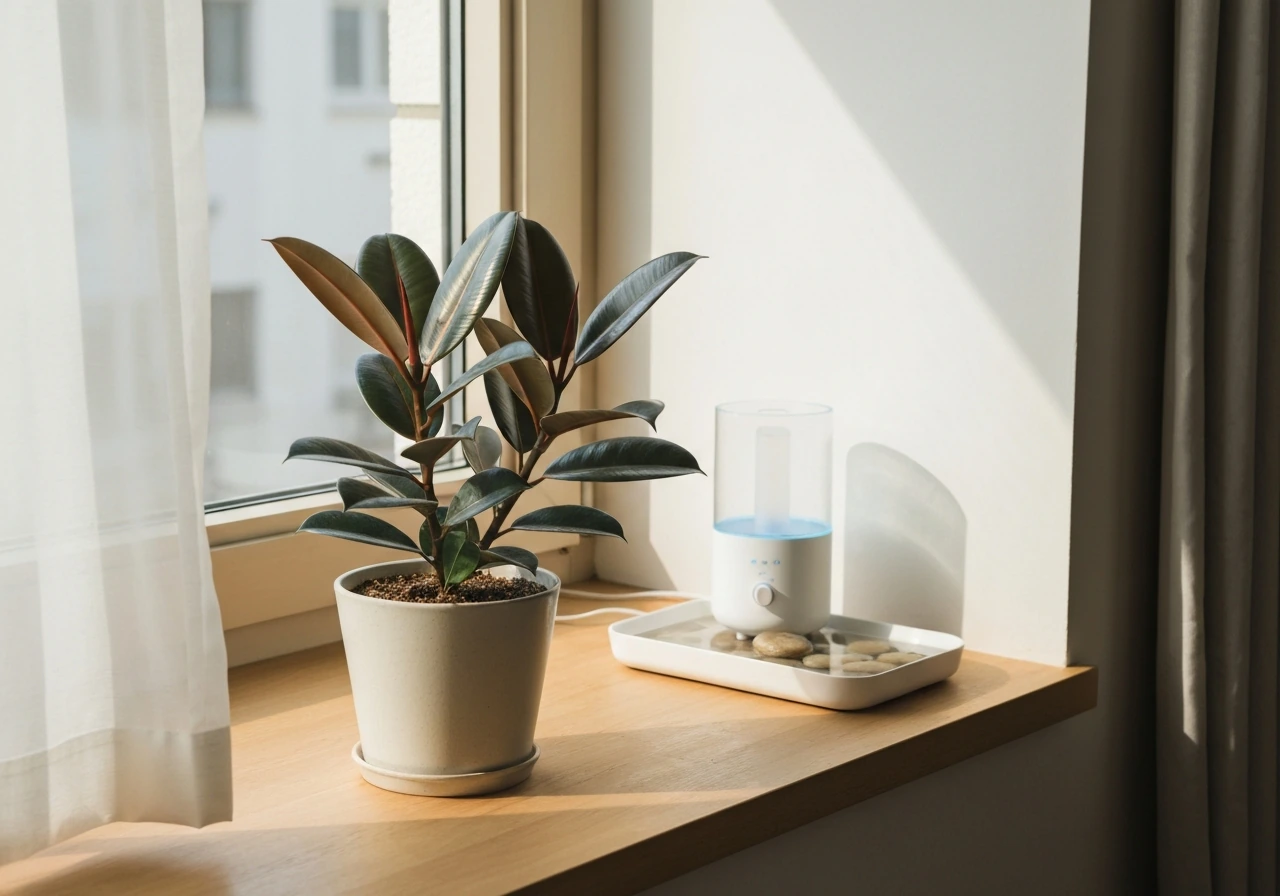
The first thing to check is your USDA hardiness zone or local frost data. If you're in zones 10 to 12, you can grow rubber plants outdoors year-round and let them reach their natural size. If you're in zones 8 or 9, you might push it in a sheltered microclimate, but even a brief frost will damage or kill an established plant, so that's a real risk. Everywhere colder than zone 10, you're growing this indoors, and that's completely fine.
For indoor growers, the checklist is short: find a bright spot with indirect light, keep temperatures above 16°C (60°F) at all times, aim for at least 40 percent indoor humidity (a small humidifier near the plant in winter helps in dry climates), and use a well-draining potting mix. Water thoroughly when the top inch or two of soil dries out, and back off significantly in fall and winter.
If you're in the northern hemisphere right now in late April, you're entering the best window for rubber plant growth. This is a good time to repot if needed, start a regular fertilizing schedule, and move the plant to its brightest available spot. If you've been keeping it in a dim corner through winter, the increased spring light will trigger new growth quickly.
One thing worth comparing if you're exploring plant ecology more broadly: rubber plants occupy a very specific niche in the tropical forest environment, one that shares some overlap with ferns in terms of humidity preference but diverges sharply when it comes to light and drainage. Ferns typically prefer shadier, more consistently moist conditions than rubber plants, which need stronger light and better drainage despite both originating in humid tropical settings. Ferns are most likely to grow in humid, sheltered spots with consistently moist soil, such as forest understories and shaded garden beds where are fern plants most likely to grow. Understanding those distinctions is exactly the kind of thing that helps you match the right plant to the right microclimate in your home or garden.
The practical takeaway: if you can give a rubber plant warmth, bright indirect light, and a soil that drains well but stays evenly moist during the growing season, you're replicating the essential conditions of its native Southeast Asian forest habitat. That's the whole framework. Everything else is fine-tuning.
FAQ
Where do rubber plants grow naturally, and what region is closest to their native climate?
Rubber plants (Ficus elastica) naturally occur in warm, frost-free regions of South and Southeast Asia, spanning from the Himalayan foothills (like Nepal and Bhutan) through parts of India, Bangladesh, Myanmar, Thailand, Malaysia, and into Indonesia. The key is not just geography, it is consistently warm temperatures and high year-round moisture.
Can a rubber plant live outdoors if my area is technically warm enough but occasionally gets cold at night?
Outdoor survival is mostly about avoiding freezing, but it also depends on drainage and humidity. In zones 10 to 12 they can be grown outdoors, yet in the real world a cold snap combined with wet, poorly drained soil can still damage roots, so shelter and fast drainage matter even in mild climates.
What happens if the plant’s soil moisture is fine but the indoor air is dry?
If the air is dry, growth usually slows and leaf tips can brown, even if watering seems “right.” To diagnose this, check the relative humidity with a small hygrometer and compare watering timing, if soil stays moist but humidity is consistently low, focus on humidity rather than adding more water.
How do I avoid root rot if I am unsure how often to water my rubber plant?
Most indoor issues come from waterlogged conditions, not from lack of water alone. A practical test is to use a pot with drainage holes and wait until the top inch or two dries, then water thoroughly, never leave the pot sitting in a saucer of runoff.
Is pruning or repotting a rubber plant dangerous or messy?
Their latex can be irritating, so handle pruning and leaf cleanup carefully, wear gloves if you are sensitive, and keep the plant away from pets and children. If sap gets on skin, rinse promptly, and if it gets on surfaces, wipe it up before it dries.
Should I upsize the pot immediately when repotting a rubber plant?
Yes, especially in containers where excess soil stays wet for too long. Instead of jumping to a much larger pot, increase size gradually so the root ball does not sit in cool, wet medium, and ensure the mix is well-draining with added perlite or coarse material if needed.
Do rubber plants need acidic soil specifically, or is drainage more important?
They tolerate a slightly acidic to neutral mix (roughly pH 5.5 to 7.0), but pH is only part of the equation. Even with the right pH, dense potting mixes that hold water too long can cause problems, so prioritize aeration and drainage.
My rubber plant sits near a window, how do I tell if it is getting too much direct sun or not enough light?
Bright indirect light is the goal, but the exact window depends on how strong sun is in your area. If leaves appear bleached or scorchy, reduce direct exposure, if the plant is leaning or dropping lower leaves, increase light gradually and avoid moving it through very cold drafts.
What is the best watering pattern during spring and summer versus winter?
They are not bog plants, they prefer evenly moist conditions during growth but require oxygen around the roots. In practice this means watering to achieve full wetting, then allowing the top layer to dry before watering again, and using a potting mix that drains quickly.
How can I tell if poor growth is from light versus root stress in a container?
Choose containers that dry at a reasonable pace and use a mix that does not stay soggy, because rubber plants can outgrow small roots and then suffer if the soil never fully aerates. If you see persistent wilting with wet soil or a foul smell, inspect roots rather than only adjusting watering frequency.