
Five plants that reliably grow from stems are pothos, willow, mint, strawberry, and rose. Each one roots from a different part of the stem, under slightly different conditions, but all share one key trait: their stems carry nodes, and nodes are where roots and new shoots actually form. Whether you are propagating cuttings indoors or watching a strawberry runner touch soil in a meadow, that node is the critical point.
5 Examples of Plants That Grow From Stems and How

Dr. Marcus Weatherby
28 May 2026
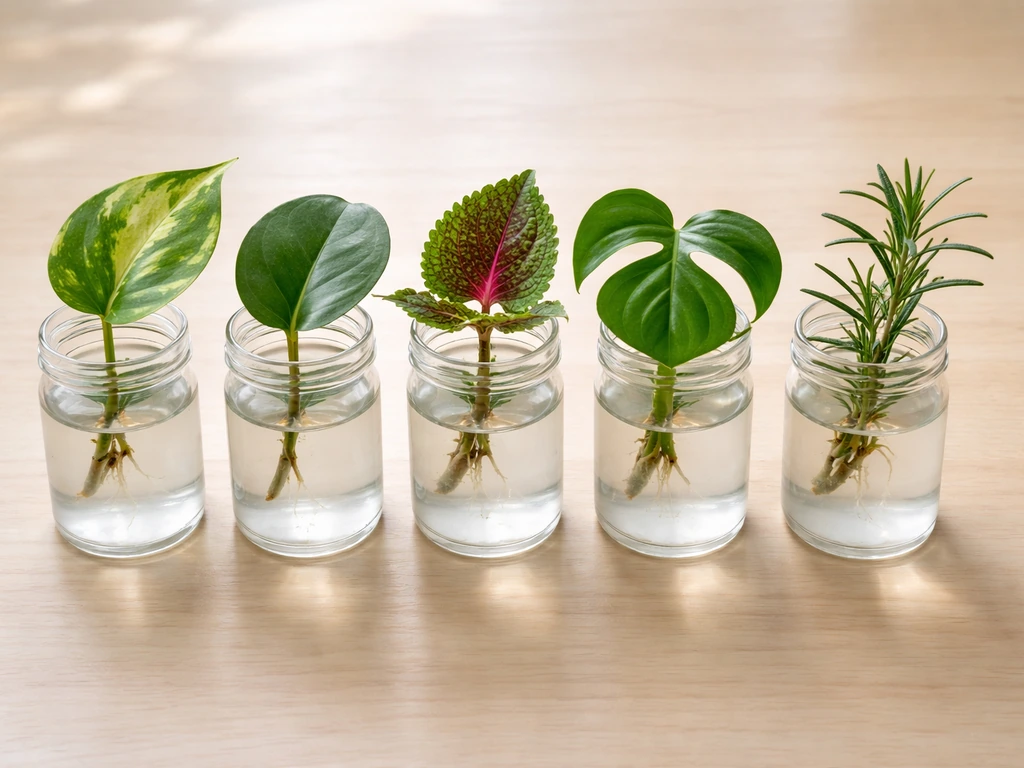
Here is what each plant needs, how to do it today, and how to pick the right one for where you live. Many other plants also root from stems, so use the step-by-step node logic to expand your list beyond the five covered here 20 examples of plants that grow from stems.
What "grow from stems" actually means
The phrase covers two related but distinct things, and it is worth separating them before diving in. The first is natural stem regrowth: some plants send out horizontal stems (called stolons or runners) that touch the ground, form roots at nodes, and produce entirely new plants without any human help. Strawberries do this constantly in the wild.
The second is stem propagation: a gardener deliberately cuts a stem section, prepares it correctly, and gets it to root in water, soil, or another medium. Pothos and roses are classic examples here. Both processes rely on the same biology, which is that nodes on stems contain meristematic tissue capable of producing both roots and shoots. When you see "plants that grow from stems" in a biology or gardening context, it almost always means one or both of these processes.
This article covers plants where stem-based growth or propagation is practical, well-documented, and beginner-friendly.
The 5 plants and which part of the stem matters
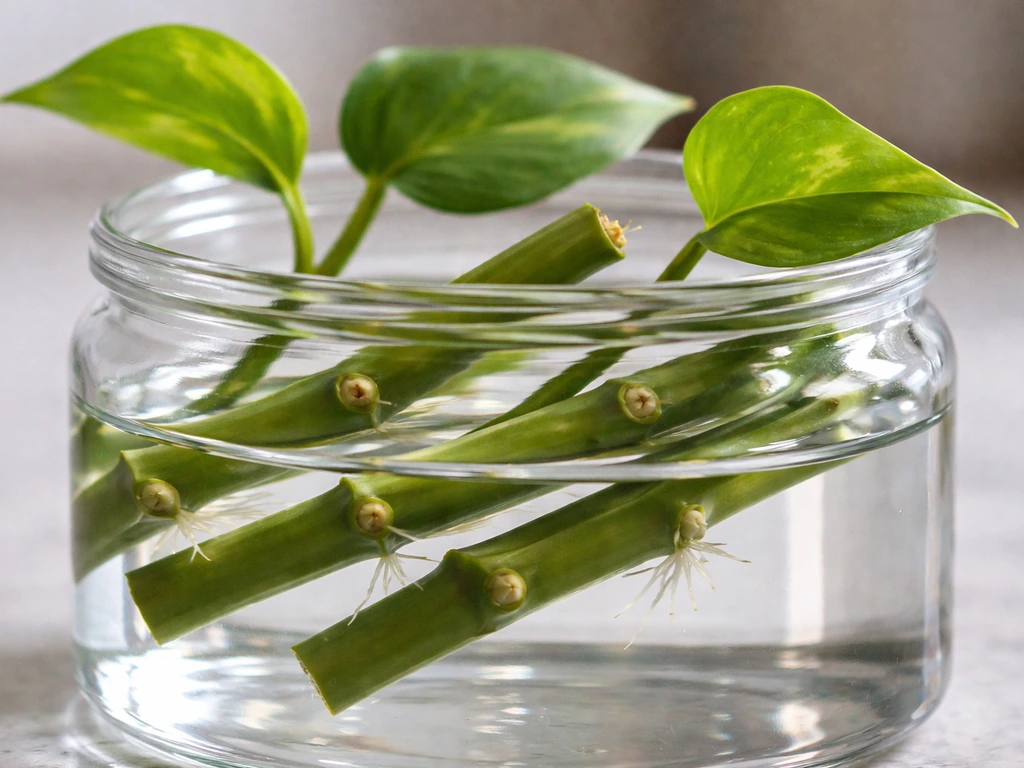
1. Pothos (Epipremnum aureum)
Pothos is probably the most forgiving stem-cutting plant you will find. Native to tropical forest floors in Southeast Asia, it naturally trails along the ground or climbs trees, and every node along that stem is capable of producing roots. When propagating, you want a cutting with at least one node and ideally two or three. The node is the small bump or joint on the stem where a leaf attaches.
Cut 1 to 2 inches below a node, remove any leaves that would sit under water, and drop the cutting in a glass of water in bright indirect light. Roots appear in 1 to 3 weeks. Pothos thrives in humid, low-light conditions, which makes it one of the few stem-propagation plants that works well indoors year-round.
2. Willow (Salix spp.)
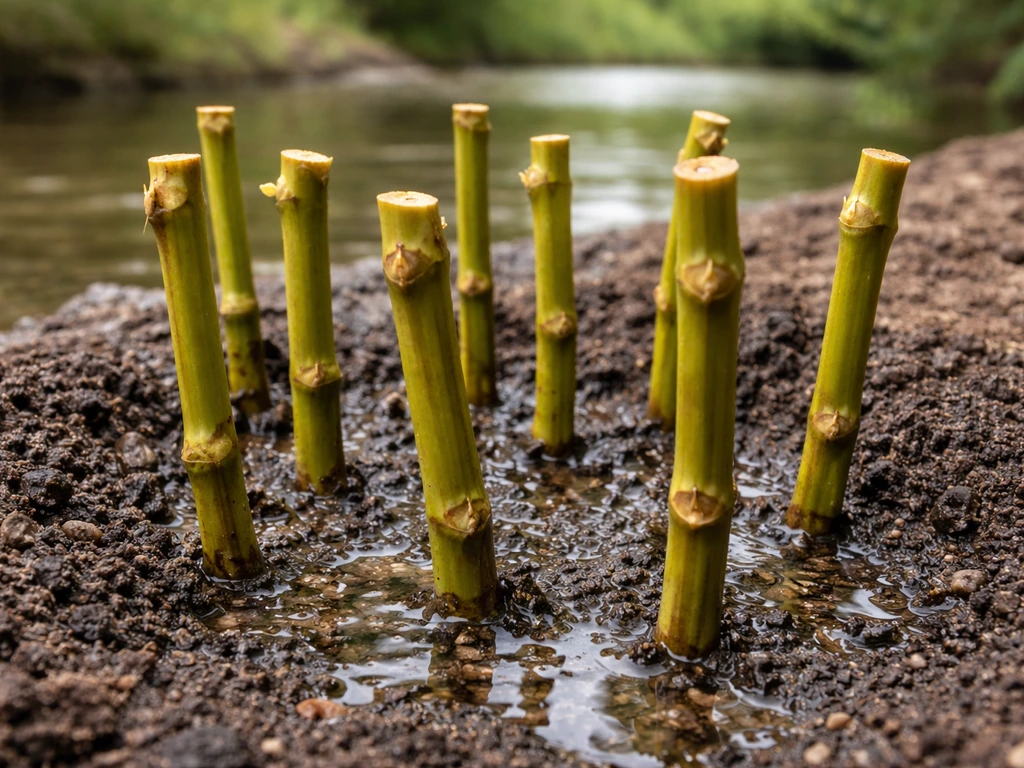
Willows are famous for rooting aggressively from stem cuttings, which is why they dominate riverbanks and floodplains across temperate North America, Europe, and Asia. In nature, a broken branch falls into moist soil or a stream edge and simply roots on its own. That is natural stem regeneration at work.
For propagation, you take a hardwood cutting from a dormant branch in late winter or early spring, just before bud break, cut it to about 10 to 12 inches with at least two or three nodes, and push it directly into moist soil. No rooting hormone is needed because willows naturally produce high levels of indole-butyric acid (IBA), which triggers root formation. The bottom cut goes just below a node. Keep the soil consistently moist.
Rooting takes 2 to 4 weeks in cool, wet conditions, which mirrors their natural habitat.
3. Mint (Mentha spp.)
Mint spreads so aggressively in moist soils because it produces both underground stems (rhizomes) and above-ground stems that root at every node they touch. Found naturally along stream banks, forest edges, and disturbed moist ground across temperate regions worldwide, mint is practically designed to regenerate from stem pieces. For propagation, take a 4 to 6 inch tip cutting just below a node, strip the lower leaves, and place it in water or directly in moist potting mix. Roots appear in 7 to 14 days in warm conditions. Mint cuttings taken in spring or early summer root fastest because the plant is actively growing, which is exactly when stem tissue is most metabolically active.
4. Strawberry (Fragaria x ananassa and wild Fragaria spp.)
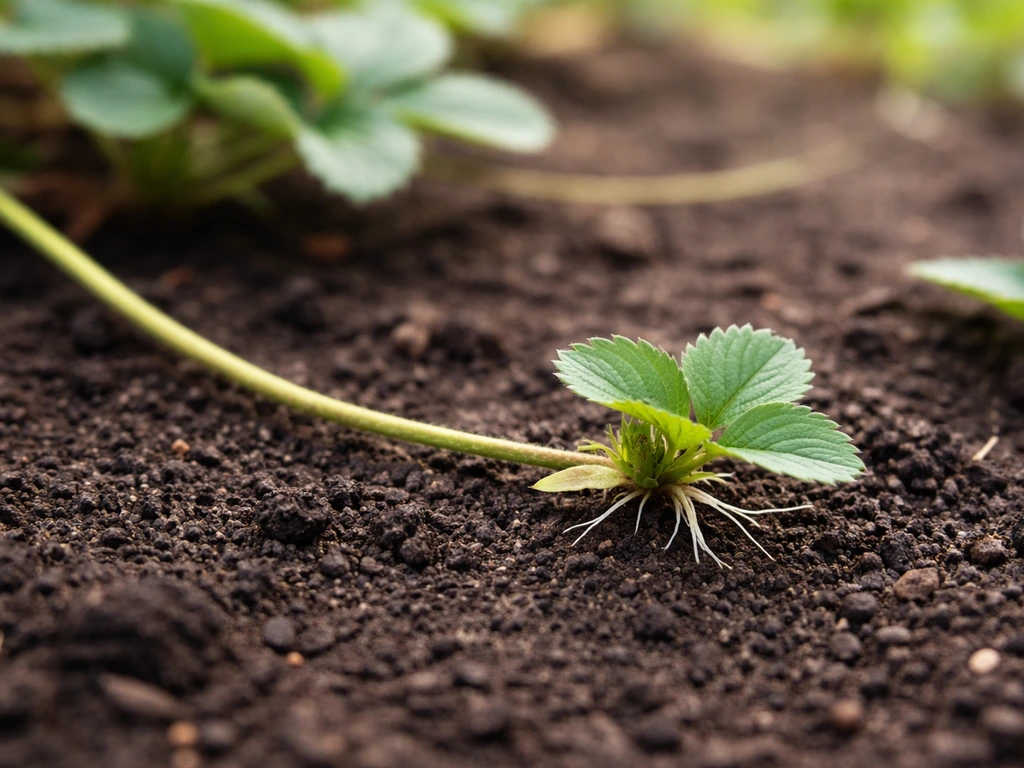
Strawberries are a textbook example of natural stem-based propagation. They produce stolons, which are long horizontal stems that run along the soil surface. At nodes along those stolons, small leaves appear and blank" rel="noopener noreferrer">adventitious roots develop downward into the soil, forming a daughter plant. This happens entirely without human intervention in meadows, forest edges, and disturbed grasslands across temperate zones. To propagate intentionally, you simply pin a stolon node to moist soil using a U-shaped wire or a small stone, keep it watered, and it roots in 2 to 4 weeks. Once rooted, cut it free from the mother plant. The node is everything here: a stolon with no node will not produce a new plant.
5. Rose (Rosa spp.)
Roses propagate well from stem cuttings, though they require a bit more care than mint or pothos. Found across temperate and subtropical regions in a huge range of habitats from open grasslands to forest edges, roses produce woody canes with clearly visible nodes. Softwood cuttings taken in late spring (when new growth is about 6 to 8 inches long) root more reliably than hardwood cuttings.
Cut just below a node with a clean sharp blade, remove the lower leaves, and dip the cut end in rooting hormone powder to encourage adventitious root formation, since roses are considered moderately hard to root compared to willows or mint. Insert into a moist, well-draining mix of perlite and potting soil. Keep humidity high by covering with a clear plastic bag or dome. Rooting takes 4 to 8 weeks.
How to propagate any of these from stem cuttings today
The process is similar across all five plants. Here are the core steps that apply whether you are working with pothos on a windowsill or rose canes in a backyard bed.
- Select a healthy stem with at least 2 to 3 visible nodes (the points where leaves emerge). Avoid stems that are diseased, extremely thick and woody, or actively flowering.
- Make a clean cut just below a node using sharp, sterilized scissors or a knife. A clean cut heals faster and reduces rot risk. Cut at a slight angle to increase the surface area exposed to rooting medium.
- Strip all leaves from the lower half of the cutting, leaving only 1 to 2 leaves at the top. Submerged leaves rot and introduce bacteria.
- For harder-to-root species like rose, dip the cut end in rooting hormone (indole-butyric acid powder or gel) before planting. This step is optional for pothos, willow, mint, and strawberry.
- Place the cutting in water, moist perlite, or a 50/50 mix of perlite and potting soil. The rooting medium should be moist but not waterlogged.
- Set it in bright indirect light (not direct sun, which stresses cuttings before roots form). Maintain warmth, ideally 65 to 75°F (18 to 24°C).
- Check for root development after 2 weeks for fast rooters like pothos and mint, and after 4 to 6 weeks for slower ones like rose. Roots in water are visible; in soil, tug gently and resistance means roots have formed.
- Once roots are 1 to 2 inches long, transplant water-rooted cuttings into potting mix. Soil-rooted cuttings can stay put or be moved to a larger container or outdoor bed.
Conditions that actually determine success
The biology is straightforward but the environment is where most people run into trouble. These are the four variables that matter most.
Season and timing
Spring and early summer are the best seasons for stem cuttings because the plant is actively growing and stem tissue is metabolically primed for root formation. Willows are the exception: they root best from dormant hardwood cuttings taken in late winter before bud break. Mint, pothos, and strawberry can be propagated almost any time of year indoors, but outdoor timing still matters if you plan to establish them in garden beds.
Light
Cuttings need light to support the small amount of photosynthesis happening through their remaining leaves, but direct sun causes water loss faster than the rootless stem can compensate. Bright, indirect light is the standard. North or east-facing windowsills work well indoors. Outdoors, dappled shade under a tree canopy mimics the conditions where many of these plants naturally establish from fallen or layered stems.
Soil and moisture
The rooting medium must stay consistently moist but never waterlogged. The UC ANR guidance explains that the rooting medium should be kept moist but not soggy to avoid problems while roots form kept consistently moist but never waterlogged. Soggy conditions starve the developing roots of oxygen and promote rot. A mix of perlite and potting soil drains well while holding enough moisture. For willows, which naturally root in saturated floodplain soils, you can get away with wetter conditions than you would use for roses or pothos. Strawberry stolons root directly in whatever soil the mother plant is growing in, so match your moisture to that existing environment.
Climate zone and habitat
Each of these plants comes from a specific natural environment, and that origin shapes what conditions they need to root successfully. Willows and mint originate in cool, moist temperate zones and tolerate cold, wet conditions far better than pothos, which comes from tropical humidity. Roses span a huge natural range but most cultivated varieties root best in temperate conditions with moderate humidity. If you are working outdoors, matching the plant to your local climate zone is the single biggest predictor of long-term success after propagation.
Troubleshooting: why stem cuttings fail
No roots after several weeks
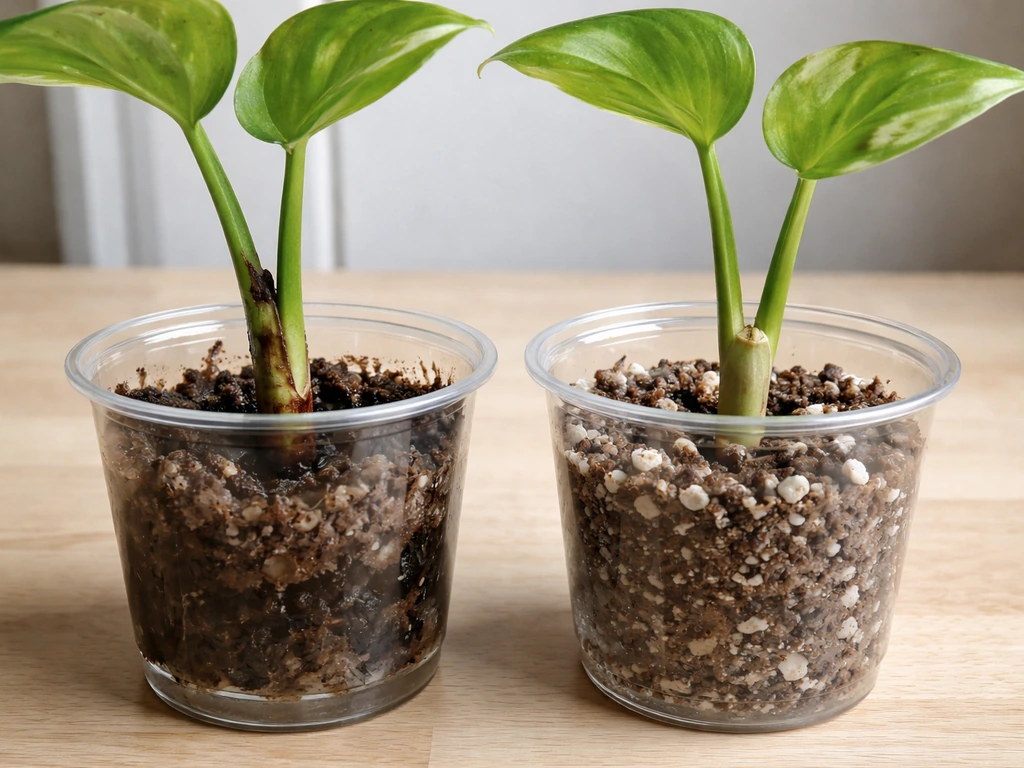
The most common cause is a cutting taken without a node, or a node that was damaged during cutting. Roots develop from node tissue, so if your cutting has only internode sections between the nodes, it will not root reliably. Double-check that your bottom cut landed just below a visible node. The second cause is low temperature: rooting slows dramatically below 60°F (15°C). Move the cutting somewhere warmer and root development should resume.
Stem rot at the base
Rot almost always means the rooting medium is too wet or the submerged portion of the stem still has leaves on it. Fix this by removing any leaves that contact the medium, letting the rooting mix dry out slightly between waterings, and ensuring your container has drainage. If propagating in water, change the water every 3 to 4 days to prevent bacterial buildup.
Wilting leaves and weak growth
Wilting right after taking a cutting is normal: the stem has no roots yet and cannot replace the water lost through leaves. Reduce leaf area by removing the lower leaves and trimming large remaining leaves by half. Covering the cutting with a clear plastic bag or humidity dome dramatically reduces water loss and gives the cutting time to root before it desiccates. Persistent wilting after 2 to 3 weeks usually means the cutting is getting too much direct sun or the air is too dry.
Roots form but new shoots are slow or absent
Once roots are established, slow above-ground growth usually comes down to light or temperature. Move the cutting to a brighter spot (still avoiding direct afternoon sun) and ensure nighttime temperatures stay above 60°F. For outdoor plantings, wait until your local last frost date has passed before transplanting rooted cuttings of frost-sensitive plants like pothos or mint.
Choosing the right plant for your location and timing
Here is a quick way to match these five plants to where and when you are working right now.
| Plant | Best climate zone | Best season to propagate | Indoor or outdoor | Rooting speed | Difficulty |
|---|---|---|---|---|---|
| Pothos | Tropical to subtropical; indoors anywhere | Year-round indoors | Primarily indoor | 1 to 3 weeks | Very easy |
| Willow | Temperate, cool and moist | Late winter to early spring | Outdoor | 2 to 4 weeks | Easy |
| Mint | Temperate, moist to mesic | Spring to early summer | Both | 1 to 2 weeks | Very easy |
| Strawberry | Temperate to cool temperate | Late spring to summer | Outdoor or raised bed | 2 to 4 weeks | Easy |
| Rose | Temperate to subtropical | Late spring (softwood) | Both | 4 to 8 weeks | Moderate |
If you are indoors with no garden access, start with pothos. It roots in water on any windowsill, is nearly impossible to kill during propagation, and gives you a clear visual confirmation of root growth. If you are in a temperate climate with outdoor space and it is spring or early summer right now, mint is the fastest win because cuttings root in under two weeks in moist soil.
If you are in a cool, wet region and want a permanent outdoor plant, willow cuttings pushed into streamside or riparian soil in late winter will establish with almost no effort. Strawberry is the best choice if you already have a parent plant producing runners in a garden bed. Rose is worth the extra effort if you want a woody perennial and have access to softwood cuttings in late spring.
These five examples cover the main categories of stem-based plant propagation: water-rooting tropical vines (pothos), hardwood dormant cuttings (willow), fast-rooting herbaceous stems (mint), natural stolon layering (strawberry), and softwood shrub cuttings (rose). Once you have tried one, the underlying skill transfers directly to dozens of other plants. If you want to go further, the same principles apply to a much wider list of plants that share these stem-rooting traits, and exploring how climate zone and season shape the timing for each one is the most practical way to expand what you can propagate successfully.
FAQ
Can a plant grow from stem cuttings if the cutting has nodes but no leaves?
Not always. Many stem plants root only from tissue that has an intact node (and sometimes nearby leaf-bud tissue). If your cutting has nodes but they were stripped, bruised, or dried out during cutting, rooting can fail. A reliable test is to keep at least one healthy node on the cutting, avoid damaging the bump where a leaf attached, and start with fresh cuttings rather than letting them sit for hours.
What happens if I bury or submerge multiple nodes on the same cutting?
Yes, you can root “node to node” cuttings for some plants, but it often increases rot risk. If you submerge or bury multiple nodes, remove any leaves that would sit in water or contact the mix, and keep only the lowest portion in contact with moisture. For higher success, use the shortest cutting that still includes the target node(s), for example 1 to 2 inches below a node for pothos.
My cutting is sitting for weeks with no roots, how do I troubleshoot?
If the cutting forms a callus but shows no roots after the expected window, first check whether the node is actually intact and in contact with moisture. Temperature is the next most common cause, rooting slows sharply below about 60°F (15°C). Also verify your light is bright but not hot direct sun, since overheating can stop root initiation even when callus is present.
How often should I change water or water the rooting medium?
Use temperature and leaf condition to decide. For pothos and mint in water, changing every 3 to 4 days is a good default to limit bacterial buildup. For soil rooting, you usually do not “water on a schedule,” instead keep the mix consistently moist and check by feel, the surface can dry slightly before watering again. Avoid keeping the pot constantly saturated, since oxygen starvation drives rot.
Should I root these plants in water or in soil for best results?
Water rooting is usually more reliable for pothos, while roses often do better with a well-draining mix plus humidity. Willows commonly establish in moist soil, and strawberry stolon layering depends on pinning the runner so the node can send roots downward. If you are choosing between water and soil, match the plant’s natural rooting style: water for tropical easy-to-root vines, soil for woody or stolon-based growth.
How do I move a rooted cutting from water to potting mix without killing it?
Yes, but transplant shock is common. Move rooted cuttings when roots are well formed, then handle gently and avoid letting roots dry out during transfer. When going from water to soil, start in slightly damp mix and keep light indirect for a few days, then gradually increase brightness. If the cutting wilts repeatedly after transplant, reduce sun exposure and keep humidity higher until new growth resumes.
Which leaves should I remove before propagating, and which should I keep?
Remove leaves that touch the water or the rooting medium, since submerged leaves decompose and accelerate rot. Keep at least some leaves on above the medium portion if the plant can photosynthesize, but for very large leaf surfaces, trimming or reducing leaf area helps prevent excessive water loss before roots form. For mint, strip lower leaves on the stem section that will be in water or soil.
How can I tell whether my cutting is rotting or just not rooting yet?
The clearest indicator for most of these plants is the node and the lower stem portion. If nodes are present and intact, but the cutting still stays firm without roots, consider warmth and moisture balance. If the cutting turns black or mushy at the base, that is typically rot from excess wetness or leaf contact with the medium. If it stays pale or green but not rooting, it is more likely a temperature or seasonal issue.
Why do willow cuttings fail when I take them in summer?
Willows are the exception to the “spring and early summer” general rule. They usually root best from dormant hardwood cuttings taken in late winter or early spring just before bud break, and they prefer consistently wet, cool conditions. Taking willows too late in the season, when they are actively growing, can reduce rooting speed and increase failure rates.
When can I transplant outdoors, and how do I prevent stalling after transplanting?
Long-term success after rooting depends on light and climate matching, not just root presence. Warm, bright indirect light is important early, but avoid placing freshly rooted cuttings into intense sun. For frost-sensitive plants like pothos and mint, wait until after your last frost date before outdoor transplanting, and if nighttime temperatures still drop near 60°F (15°C), growth will stall.