
Hundreds of familiar plants grow from rhizomes, including bearded iris, ginger, bamboo, daylilies, many ferns, turmeric, canna lilies, lily of the valley, and a long list of grasses (both useful and weedy). A rhizome is a horizontal underground stem that creeps sideways through soil, producing new shoots upward and roots downward as it goes. That spreading habit is the key trait: if a plant keeps forming new clumps by creeping outward rather than just bulking up in place, it's almost certainly rhizome-driven.
What Plants Grow From Rhizomes: Examples and Care Guide

Dr. Marcus Weatherby
12 May 2026
Rhizomes vs. other underground stems
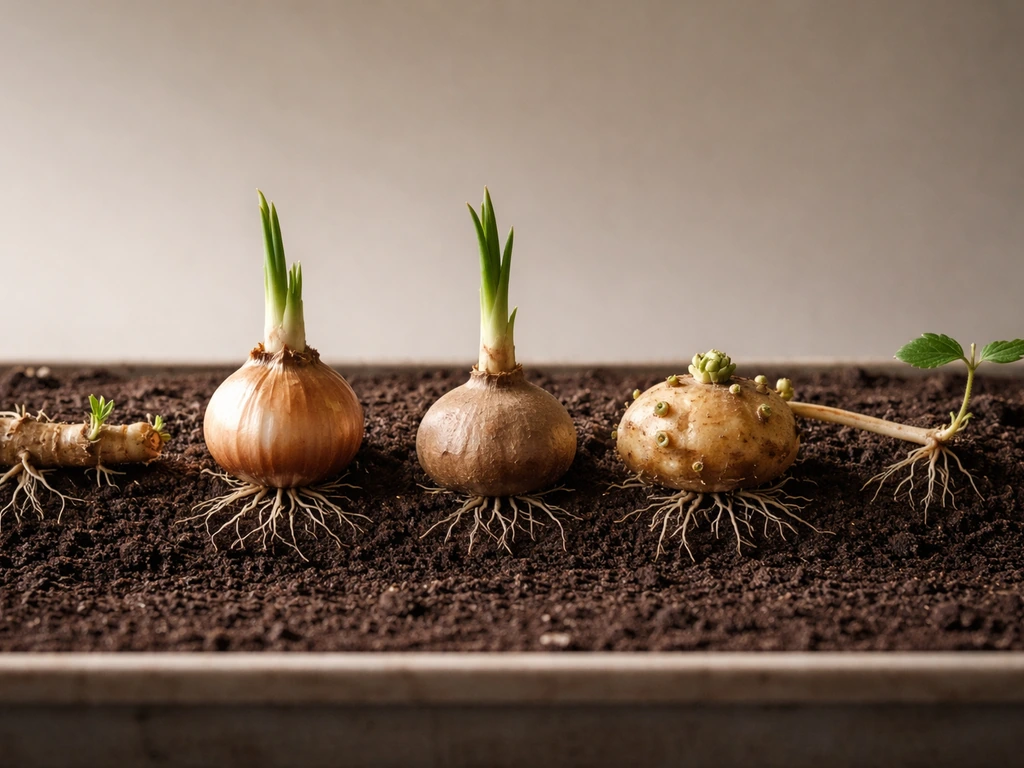
People mix up rhizomes, bulbs, corms, tubers, and stolons constantly, and the confusion matters because each structure behaves differently in the ground. If you're trying to compare underground types, it also helps to see plants that grow from tubers with a few clear examples plants that grow from tubers examples. Here's a fast way to keep them straight.
| Structure | What it is | Key difference | Example plants |
|---|---|---|---|
| Rhizome | Horizontal underground stem | Spreads laterally, has nodes, produces shoots and roots along its length | Iris, ginger, bamboo, quackgrass |
| Tuber | Swollen underground stem tip used for storage | No nodes that produce lateral shoots along the sides; growth buds (eyes) clustered at one end | Potato, Jerusalem artichoke |
| Corm | Compressed, upright underground stem | Solid mass, no layers; next season's corm forms on top of the old one | Crocus, gladiolus |
| Bulb | Layered underground bud | Made of fleshy leaf scales; a true bulb has a basal plate and papery tunic | Tulip, daffodil, onion |
| Stolon | Horizontal stem that runs above or just at ground level | Travels above ground or at the surface rather than through the soil | Strawberry, buffalograss |
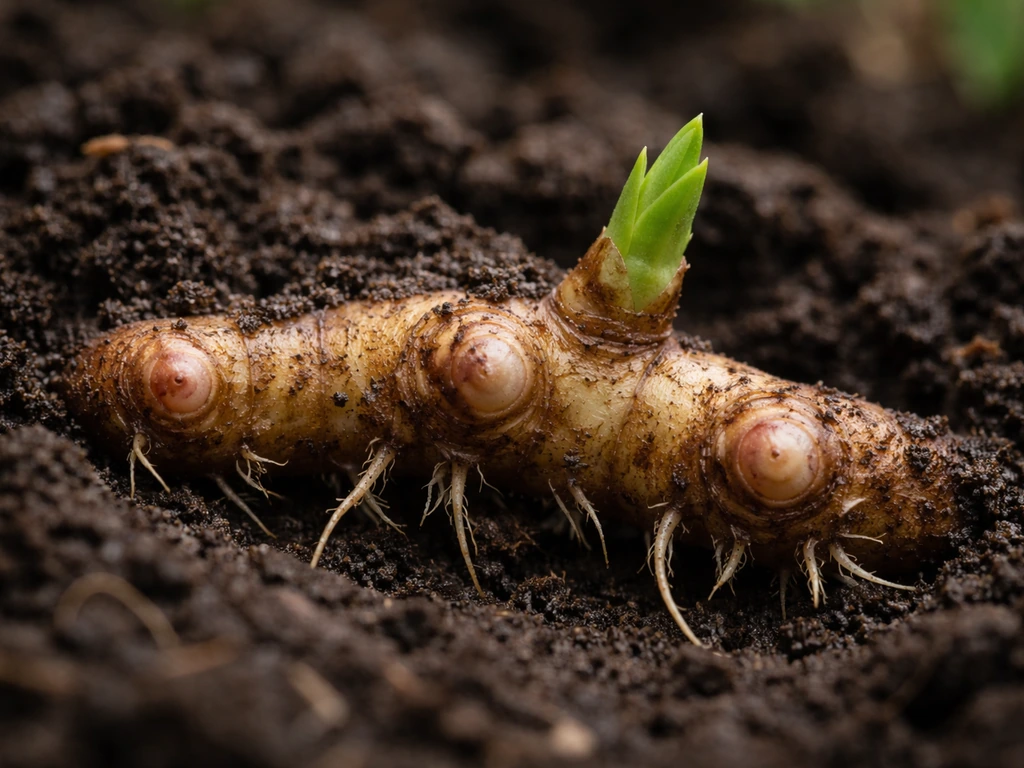
The practical takeaway: dig up what you think is a rhizome and look for visible nodes along a horizontal stem. If you see roots emerging from the bottom of those nodes and shoots from the top, you've got a rhizome. That same node-based structure is why a single broken fragment can sprout into a whole new plant, which matters a lot when managing invasive species. Stolons work similarly but run along the surface rather than underground, and corms and tubers store energy in a single swollen mass rather than spreading through a network. Stolons are also capable of producing new plants from their runner tips, which is why they can spread quickly in favorable conditions.
Plants that actually grow from rhizomes
The list is wide, spanning food crops, ornamental perennials, native wildflowers, wetland species, and some of the most aggressive weeds on the planet. Here are the most important categories with real examples.
Ornamental garden plants
- Bearded iris (Iris germanica) and many other iris species: the thick, fleshy rhizome is the storage and growth organ; it needs to sit at or just above the soil surface to flower well
- Daylily (Hemerocallis spp.): spreads by short, fleshy rhizomes and builds into expanding clumps over several years
- Canna lily (Canna spp.): large tropical rhizomes that store energy over winter in mild climates
- Lily of the valley (Convallaria majalis): thin, wiry rhizomes (called pips) spread steadily into dense ground cover
- Solomon's seal (Polygonatum spp.): slowly creeping rhizomes form arching colonies in shaded woodland gardens
Food and culinary crops

- Culinary ginger (Zingiber officinale): the harvested 'root' you buy at the grocery store is the rhizome itself
- Turmeric (Curcuma longa): same family as ginger, same growth habit, same tropical climate requirements
- Galangal (Alpinia galanga): used widely in Southeast Asian cooking; spreads aggressively in warm, moist conditions
- Lotus (Nelumbo spp.): edible rhizomes used in Asian cuisine; grow in aquatic or waterlogged environments
- Asparagus (Asparagus officinalis): forms a spreading crown of rhizomes called a 'fern crown' once established
Native wildflowers and ferns
- Wild ginger (Asarum canadense): slow-spreading native ground cover of eastern North American woodlands
- Ostrich fern (Matteuccia struthiopteris): spreads by short, stout rhizomes; a classic shade-garden and streambank plant
- Royal fern (Osmunda regalis): thick rhizomes anchor it in waterlogged, acidic soils
- Bracken fern (Pteridium aquilinum): one of the most widely distributed plants on Earth, spreads by deep, tough rhizomes
- Blue flag iris (Iris versicolor): native to North American wetlands and stream margins
Grasses and bamboos (including invasive species)
- Running bamboo (Phyllostachys spp.): rhizomes travel underground and can spread more than 100 feet from the parent plant; shallow rhizomes usually stay within about a foot of the surface
- Quackgrass/couch grass (Elymus repens): aggressive cool-season perennial weed; even fragmented rhizome pieces regenerate into new plants
- Torpedograss (Panicum repens): subtropical to tropical perennial grass considered one of the most invasive in Florida; shoots emerge from every node of creeping rhizomes and plants can reach about 40 inches tall
- Japanese knotweed (Reynoutria japonica): technically a forb, not a grass, but spreads by a massive rhizome network; a single small fragment can establish a new stand
How to grow and propagate rhizome plants
Propagating rhizome plants is straightforward once you understand that each section of rhizome with at least one healthy growth bud (sometimes called a node or eye) is capable of becoming a new plant. The steps below cover the three plants people most commonly propagate this way: iris, daylilies, and ginger.
Iris
- Dig clumps in mid to late summer, about four to six weeks after bloom. This timing lets the plant build energy reserves before you divide it.
- Use a sharp knife to separate young, firm rhizome sections from the outside of the clump. Discard the old, woody center.
- Let the cut surfaces dry and callus (suberize) for at least a few hours, ideally overnight, before replanting. This reduces rot.
- Dig a shallow hole about 4 inches deep and form a small soil ridge inside it. Set the rhizome on the ridge so the top surface of the rhizome is just barely visible at the soil surface or no more than half-buried. Burying too deep prevents flowering.
- Fan out the leaves, firm the soil around the roots, and water in. Irises like to bake in the sun, so full-sun placement and shallow planting are both critical.
Daylilies
- Divide in early spring as new growth just emerges, or in late summer after flowering is finished. Both windows give the divisions time to establish before stress arrives.
- Dig the entire clump and use a fork or two garden forks back-to-back to pry sections apart. Each section needs a few fans of leaves and a healthy set of roots.
- Trim the leaves back to about 6 inches to reduce water stress on the newly divided plant.
- Replant so the crown (the point where roots meet stems) sits about 1 inch below the soil surface. No deeper.
- Water thoroughly and keep consistently moist for the first few weeks.
Culinary ginger and turmeric
- Start with fresh, plump rhizome pieces from a grocery store or nursery. Cut into 1 to 1.5-inch sections, each with at least one visible growth bud (the slightly raised, pale nub on the surface).
- Let cut surfaces callus for 24 to 48 hours in a warm, dry spot before planting.
- Wait until soil temperature is reliably above 68°F (ginger grows best around 77°F). In cooler climates, start rhizomes indoors in pots 6 to 8 weeks before your last frost date.
- Plant with growth buds pointing upward, about 2 to 4 inches deep and 6 to 8 inches apart. Water regularly but never let the soil become waterlogged.
- Because rhizomes grow upward as the season progresses, mound additional soil around the base if you see them breaking the surface.
Ferns
Hardy ferns with visible horizontal rhizomes (like ostrich fern or cinnamon fern) can be propagated by simple division. In early spring, dig sections of rhizome that include a healthy growing tip and attached roots, replant at the same depth, and keep consistently moist until new fronds emerge. The division point is wherever a firm, healthy-looking stem segment can be separated without crushing it.
Where rhizome plants thrive: climate, season, soil, and habitat
Rhizome-forming plants span virtually every climate on Earth, but specific groups are tied to specific conditions. Matching a plant to its native habitat type is the fastest route to success.
| Plant / Group | Climate zone | Preferred soil | Typical habitat | Active growth season |
|---|---|---|---|---|
| Bearded iris | Temperate (USDA zones 3–9) | Well-drained, sandy loam to loam; pH 6.8–7.0 | Open, sunny slopes and meadows | Spring growth, summer dormancy |
| Culinary ginger | Tropical/subtropical (zones 9–12; annual elsewhere) | Rich, moist, well-drained; high organic matter | Partially shaded tropical forest understory | Summer through early fall |
| Daylily | Temperate (zones 3–9) | Adaptable; prefers well-drained loam | Roadsides, open woodland edges, garden borders | Spring emergence, summer bloom |
| Running bamboo | Temperate to subtropical (zones 5–10, species-dependent) | Moist, well-drained loam; tolerates wide pH range | Forest edges, disturbed land, stream corridors | Spring and early summer rhizome expansion |
| Quackgrass | Cool temperate (zones 3–7) | Tolerates most soils; thrives in disturbed, cultivated ground | Agricultural fields, roadsides, garden beds | Cool seasons: spring and fall |
| Ostrich fern | Cool temperate (zones 3–7) | Rich, moist to wet; tolerant of flooding | Floodplains, streambanks, moist woodland | Spring flush, summer growth |
| Wild ginger (Asarum) | Temperate woodland (zones 3–7) | Rich, moist, humus-rich; slightly acidic | Shaded forest floor | Spring through summer |
| Canna lily | Tropical/subtropical (zones 8–11; lift and store elsewhere) | Rich, consistently moist; tolerates wet conditions | Tropical margins, wetland edges | Late spring through fall |
| Torpedograss | Subtropical/tropical (zones 8–11) | Sandy, poorly drained; tolerates wet and dry | Coastal plains, ditches, disturbed flatwoods | Year-round in warm climates |
Seasonality matters at both ends. In temperate climates, rhizome expansion is most vigorous in spring and early summer when soil is warm but not hot. That's also your best window for propagation because divided rhizomes establish quickly when active growth is about to begin. In tropical climates, growth is more tied to the wet season than to temperature. Ginger, turmeric, and galangal follow rainfall patterns: they push hard during monsoon months and slow or go dormant in the dry season.
How to spot rhizomes and manage their spread
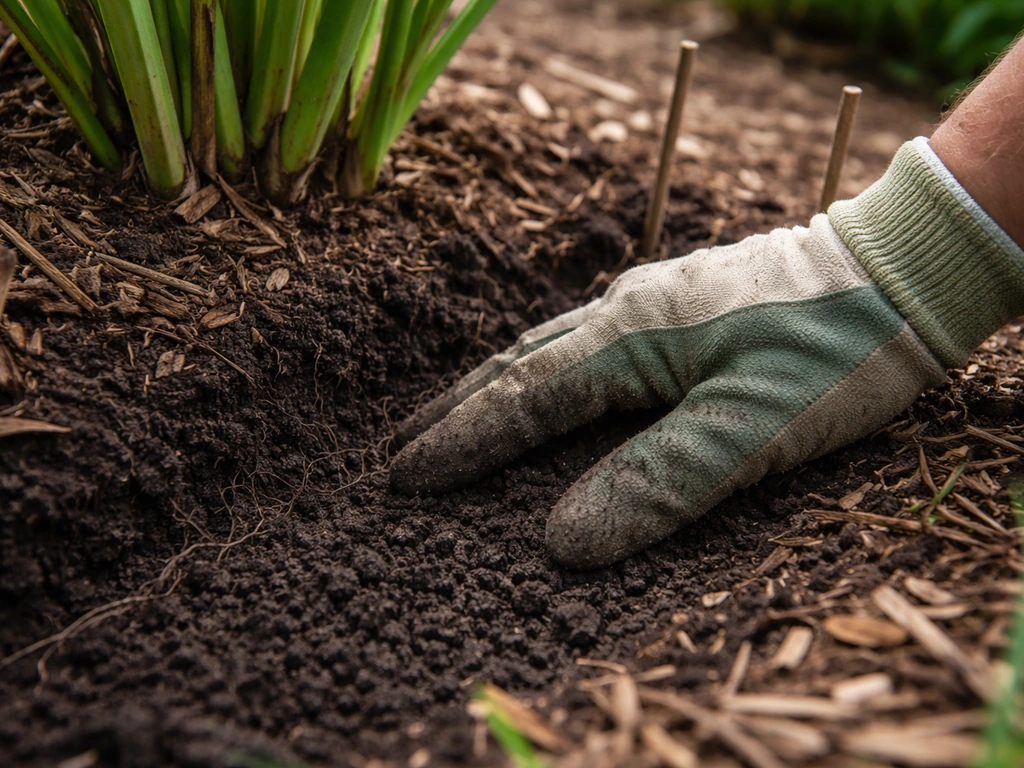
Finding rhizomes in the field is usually straightforward once you know what you're looking for. Probe the soil a few inches down near the base of a clumping perennial and follow any horizontal stem away from the main crown. You'll feel or see the segmented, often pale-tan or cream-colored stem, sometimes with papery scale-like leaves at the nodes. Fern rhizomes are often visible on or just below the soil surface and look like hairy, dark brown cables running between frond clusters.
Managing well-behaved rhizome plants
For garden ornamentals like iris and daylily, management is mostly just regular division every 3 to 5 years to keep flowering vigorous. When the center of a clump starts dying out or flower production drops, that's the signal to dig, divide, and replant. It's a renewal process rather than a problem.
Containing aggressive spreaders
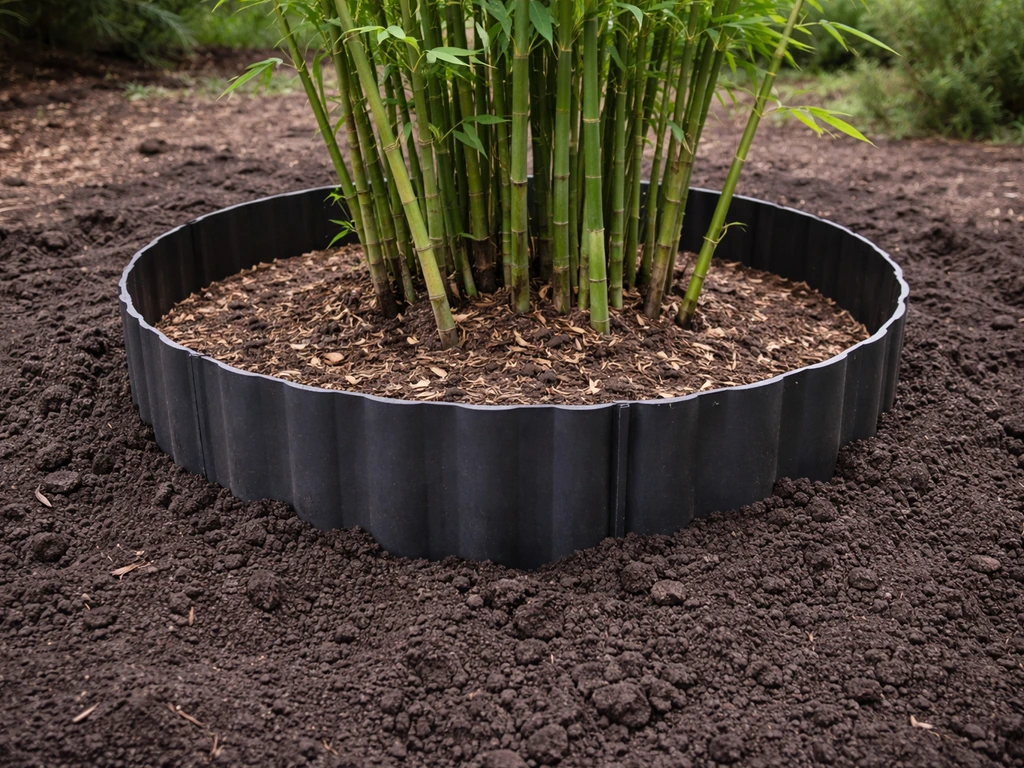
Running bamboo is the classic containment challenge. Rhizomes stay relatively shallow (usually within a foot of the surface), which makes physical root barriers effective if installed correctly. Barriers should be at least 24 to 30 inches deep, made of high-density polyethylene or similar material, and angled slightly outward at the top to redirect rhizomes upward where you can catch them. Mowing the perimeter regularly also interrupts new rhizome growth. Left unmanaged, running bamboo rhizomes can spread well over 100 feet from the mother plant.
Quackgrass and torpedograss are serious weed problems because of exactly the same trait that makes ornamental rhizome plants useful: fragmented pieces regenerate. Tilling to control quackgrass actually spreads it by cutting rhizomes into many viable fragments. The same applies to Japanese knotweed, where even a small rhizome piece can establish a new stand. Some plants reproduce differently, including examples of plants that grow from spores like many ferns and spore-producing relatives.
For these species, digging and hand-pulling are not reliable controls once a population is established. A systemic herbicide (typically glyphosate, applied when plants are actively growing and photosynthesizing) is the most effective tool for severe infestations, with multiple follow-up treatments needed because the rhizome network can be deep and extensive. Organic suppression approaches (thick mulch layers, repeated cutting) can reduce growth but rarely eliminate a well-established infestation.
Japanese knotweed is worth treating as a special case: its rhizomes have been documented penetrating concrete and asphalt, and it colonizes stream corridors, roadsides, and disturbed ground across much of North America and Europe. Early intervention, before the rhizome mass builds, is dramatically more effective than tackling a mature stand.
Choosing the right rhizome plant for your location
The best starting point is matching the plant's native habitat to what your site naturally offers. Here's a practical decision framework based on climate zone, soil, and available space.
| Your conditions | Good rhizome plant choices | Watch out for |
|---|---|---|
| Cool temperate, full sun, well-drained soil (zones 3–6) | Bearded iris, daylily, Solomon's seal, ostrich fern (part shade) | Quackgrass encroachment from neighboring areas |
| Temperate woodland, partial shade, moist soil (zones 4–7) | Wild ginger, lily of the valley, ostrich fern, royal fern | Lily of the valley spreading beyond intended area |
| Warm temperate to subtropical, full sun (zones 7–9) | Canna lily, clumping bamboo, Louisiana iris, bearded iris at the cooler end | Running bamboo if space is not contained |
| Tropical/subtropical, humid, partial shade (zones 9–12) | Culinary ginger, turmeric, galangal, canna lily, lotus in wet areas | Torpedograss invading garden beds in sandy coastal soils |
| Any zone, limited space | Clumping bamboo varieties, bearded iris, daylily (divide regularly) | Avoid running bamboo and any Phyllostachys species without containment |
| Any zone, naturalized/woodland area with no nearby cultivated land | Native ferns, wild ginger, native iris species matched to local range | Japanese knotweed near waterways; it spreads by water-carried rhizome fragments |
A few practical next steps regardless of your zone: First, identify whether any rhizome plants already exist on your site before you introduce new ones. Quackgrass, for example, can undermine a new perennial planting from below if it's already present in the soil. Second, if you're planting something with aggressive spread potential (running bamboo, canna in warm climates), install containment before the plant goes in, not after. Third, use the seasonal window to your advantage. In temperate zones, spring planting lets rhizomes establish through a full growing season before winter. In tropical climates, plant at the start of the wet season when soil moisture is reliably available.
Rhizome propagation is also one of the most reliable ways to source locally adapted plants. If a neighbor's bearded iris or daylily has been thriving in your neighborhood for decades, a divided section from that clump will be better acclimated to your local soils and climate than anything bought from a distant nursery. UNL Extension’s iris culture guidance also notes that rhizomes should be placed just below the soil surface to support proper establishment [Culture of Iris](https://extensionpubs. unl.
edu/publication/g1741/na/pdf/view). Don't overlook that. It's also worth knowing that other vegetative storage structures like corms, tubers, and stolons each produce their own distinct plant communities and climate-matching considerations, so understanding how rhizomes differ from those structures helps you make sharper choices when you're reading plant labels or planning a new bed. If you're comparing rhizomes with corms, remember that corms store energy in a compact underground structure rather than creeping outward.
FAQ
Can I tell a rhizome from a bulb, tuber, or corm just by digging once?
Usually, yes, look for a connected, horizontal stem with multiple nodes, where shoots emerge from the top of nodes and roots emerge from the bottom. Bulbs are more like a layered disk, tubers are mainly swollen storage with “eyes” but no long creeping network, and corms are a single solid lump.
What happens if a rhizome fragment has no obvious node or “eye” on it?
It often will not sprout reliably. Successful propagation depends on at least one healthy growth bud at a node. If you see only storage-like tissue with no buds, treat it as low probability and do not expect dependable regrowth.
How deep should I plant rhizome divisions like iris, daylilies, or ginger?
Plant at the same depth they were growing before division, then keep the soil evenly moist until new growth appears. If you bury too deep, shoots can take longer to emerge, and shallow planting can dry out buds, especially in hot or windy sites.
When is the best time to divide rhizome plants if I do not know their exact growing schedule?
Choose a period just before active growth begins. In many temperate gardens that is spring to early summer, for tropical species it is aligned with the wet season. If you divide during a dormancy period, divisions may sit without sprouting for weeks or months.
Do rhizomes need to be kept wet after division, or can they dry like some bulbs?
Keep them consistently moist, especially during the establishment window. Rhizomes do not have the same “stored dryness tolerance” as bulbs, so extended drying can damage buds and reduce sprouting.
Why do some rhizome plants regrow after I pull or dig them, even when I remove the obvious shoots?
Because rhizomes regenerate from nodes and viable fragments. Cutting the plant too thoroughly without removing the connected network can leave enough nodes underground to reestablish, which is why fragmentation matters most for invasive rhizome weeds.
Is tilling ever a good control method for rhizome weeds like quackgrass?
Not usually. Tilling cuts rhizomes into many pieces, and each piece can regenerate. For serious infestations, consider targeted removal or systemic herbicide with follow-up, or a non-soil-disturbing suppression plan depending on your constraints.
For containment, how do I stop running bamboo if rhizomes tend to spread beyond the root barrier?
Install the barrier early, before planting, and ensure it is deep enough (commonly 24 to 30 inches) and angled outward at the top. Also watch for gaps or punctures at seams, and keep mowing the perimeter because rhizomes often expand from the edge.
What is the fastest way to scout for rhizomes on my property before I plant something new?
Check near the base of existing clumping perennials and follow any horizontal stem away from the crown a few inches into the soil. For ferns, look for visible or near-surface rhizomes, often darker and cable-like, between frond clusters.
Do rhizome plants ever fail to spread even if they are rhizome-formers?
Yes. Poor light, nutrient deficiency, drought stress, or transplanting at the wrong season can suppress bud activation. Some species also slow growth during unfavorable periods, so a lack of spread right after planting can be seasonal rather than structural.
Can I compost rhizome fragments, or will they survive?
Assume they can survive. For invasive rhizomes, do not compost unless you can confirm conditions that reliably kill buds. Many gardeners bag and dispose of infested plant material to avoid reintroducing viable nodes into garden beds.