Plants that grow in sand are called psammophytes. That's the standard ecological and botanical term, from the Greek roots psamm- (sand) and -phyte (plant). You'll also hear them called sand-adapted plants, dune plants, or strand plants depending on where they grow, but psammophyte is the precise word to use when searching scientific databases, plant lists, or asking at a native plant nursery. If the sandy habitat is also salty, some of these species qualify as halophytes too, since salt tolerance often goes hand in hand with sand tolerance in coastal environments.
Plants That Grow in Sand Are Called Sand-Dwelling Species

Dr. Marcus Weatherby
20 May 2026
What 'growing in sand' actually means ecologically
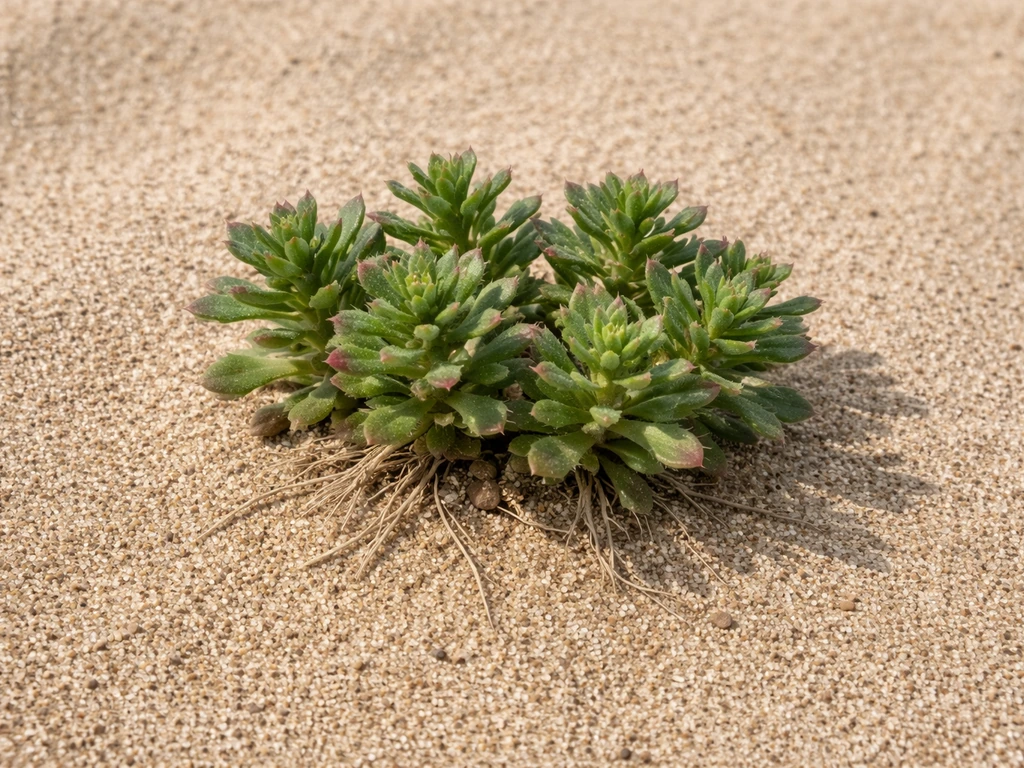
Sandy soil isn't just a texture preference for these plants. It's a whole set of stressful conditions that most species simply can't handle. Sand drains freely and holds almost no water, which means the root zone dries out fast after rain or irrigation. It's also extremely low in plant nutrients because organic matter doesn't accumulate well, and there's very little microbial activity to cycle what little there is. On top of that, sandy habitats, especially coastal dunes and desert sandbeds, often add wind exposure, salt spray, intense radiant heat from the sand surface, and physical disturbance from shifting sand.
When ecologists classify sandy soils, they use terms like coarse-textured soils, which includes fine sands, loamy sands, and fine sandy loams. These soils have a relatively small water reservoir compared to loam or clay. If your site drains within minutes of watering and you can barely form a ball with a handful of moist soil, you're likely working with a genuinely sandy substrate. That's worth confirming before you start selecting psammophytes, because the mismatch goes both ways: moisture-loving plants fail in sand, but true psammophytes can also struggle if you overcompensate with water and compost and accidentally turn the site into something they didn't evolve for.
The physical adaptations that give them away
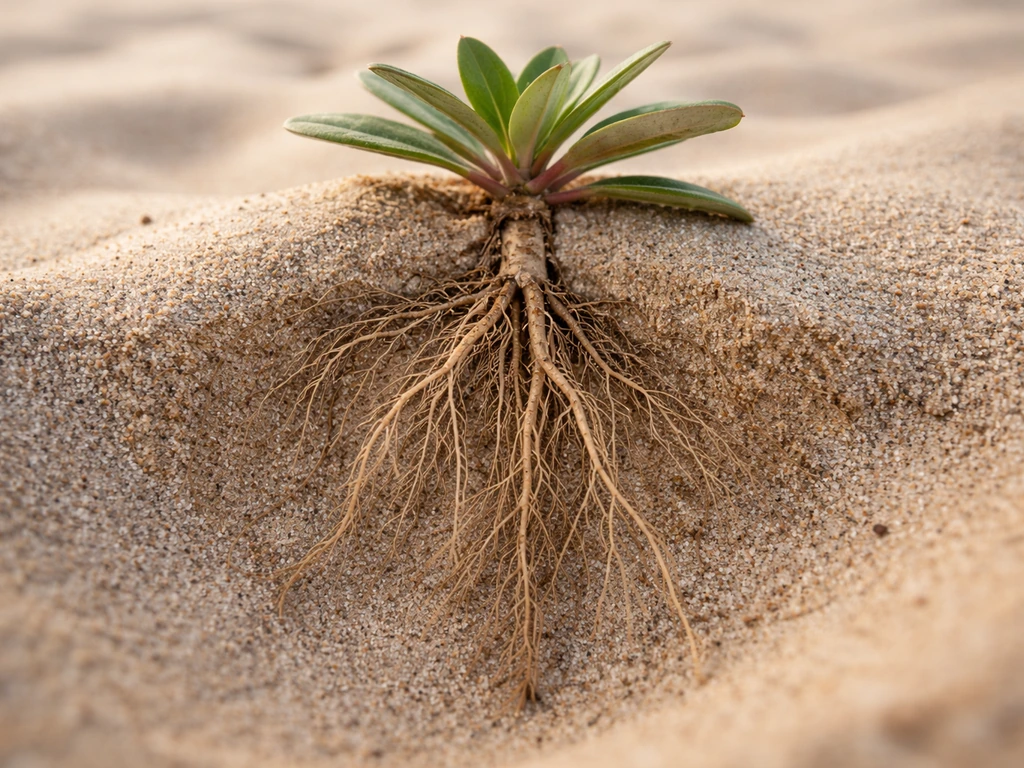
Once you know what to look for, you can often recognize a sand-adapted plant in the field or at a nursery without reading the label. The most common traits are deep, extensive root systems (sometimes deep tap roots) that reach moisture well below the dry surface layer, and modified leaves that reduce water loss. Those leaf modifications show up as waxy coatings, rolled or folded blades, dense hairs, or thick fleshy tissue for water storage.
Marram grass (Ammophila arenaria), the iconic dune builder of European and North American coasts, rolls its leaves inward during drought to cut evaporation. Many dune succulents have gone even further and store water directly in stems or leaves. Some coastal strand species also grow low and prostrate, rooting at nodes as they spread, which helps them stay anchored in shifting sand and keeps them out of the wind.
Sand-adapted plant groups and real examples
Psammophytes span a wide range of plant families and habitats. The group you encounter depends heavily on whether the sandy habitat is coastal, inland arid, or somewhere in between. Here's how the main groups break down.
Dune grasses and foredune pioneers
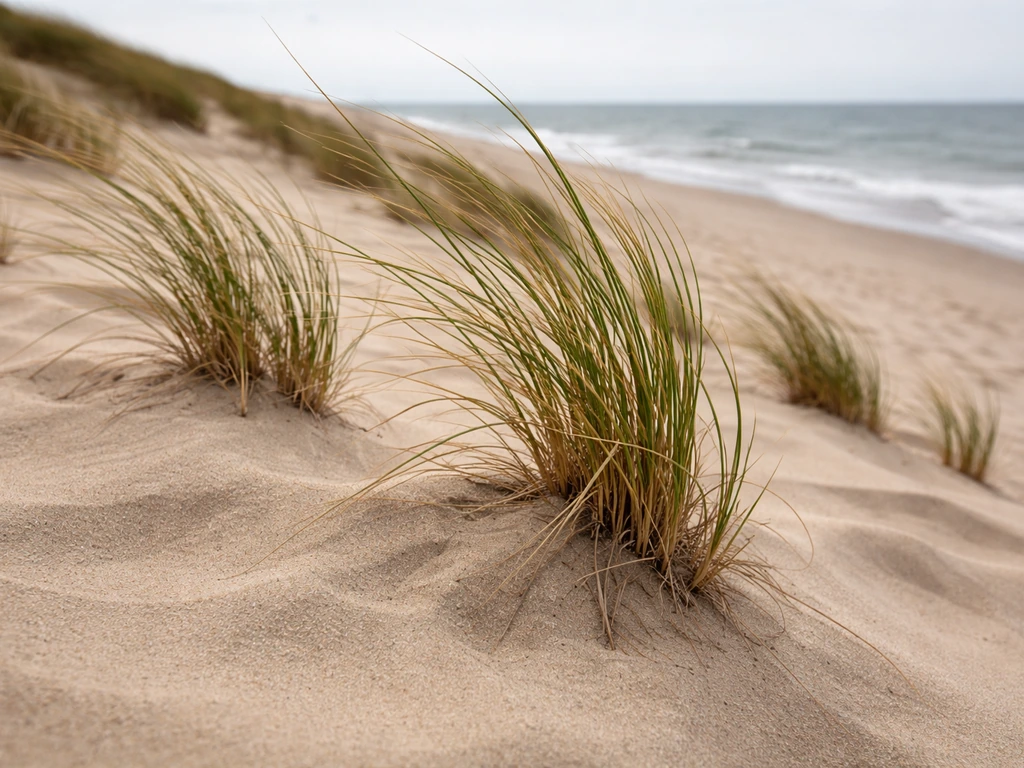
These are the plants that move into bare, shifting sand first and stabilize it enough for other species to follow. Marram grass (Ammophila arenaria) is the most widely recognized example globally. Its tough, scaly rhizomes spread horizontally through the sand, forming new roots as the plant gets buried by accreting sand rather than dying from it. Sand couch grass and sea oats (Uniola paniculata) play a similar role along Atlantic and Gulf Coast dunes in North America, with deep root and rhizome systems that lock loose substrate in place. These grasses thrive in low fertility and actually perform poorly if soil gets too rich, which is a useful reminder that psammophytes aren't just tolerating their conditions, they're adapted to them.
Coastal strand and beach plants
Strand plants occupy the zone just above the high tide line where loose sand, salt spray, wind, and extreme summer surface temperatures combine. Many of these coastal sand specialists can be identified as species that tolerate salt spray and sand burial, which helps explain which plants grow in coastal areas. [Beach verbena (Verbena maritima)](https://edis. ifas.
ufl. edu/publication/FP598) is a good example, stabilizing dunes while tolerating salt air and sandy, nutrient-poor substrate. If you want plants grow in coastal areas examples, focus on strand and dune species that handle salt spray and sandy, nutrient-poor conditions coastal strand species. Yellow sand verbena (Abronia latifolia) is a foredune specialist along the Pacific Coast, described by NPS as a 'salt-tolerant opportunist' that pioneers some of the harshest dune environments.
These coastal strand species are closely related ecologically to the plants covered in topics about coastal areas and saline soils, since sand and salinity frequently overlap in shoreline habitats.
Desert and arid-interior psammophytes
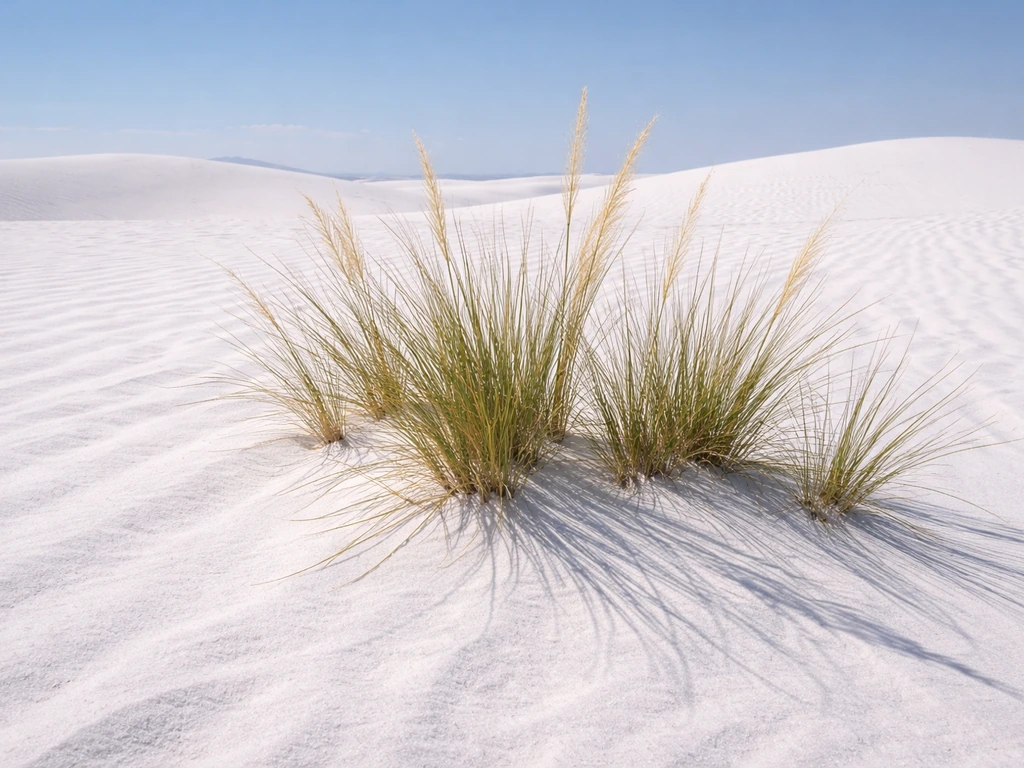
Inland sandy habitats like the gypsum dunefield at White Sands National Park take the stress even further. The substrate there is described as sterile gypsum sand with salty, alkaline conditions, yet a surprising number of species have developed strategies to survive it, including fast growth to outpace burial and highly efficient water use. Sand dropseed (Sporobolus species) is adapted to sandy, wind-exposed sites across the interior West and is often used for erosion control on sandy range sites. Many desert psammophytes overlap with the broader category of xerophytes, plants adapted to arid conditions in general, since the root challenge in both is the same: finding water in a dry, fast-draining medium.
| Plant / Group | Habitat | Key Sand Adaptation | Salt Tolerance |
|---|---|---|---|
| Marram grass (Ammophila arenaria) | Coastal dunes, Europe / N. America | Rhizomes root deeper as sand buries plant | Moderate to high |
| Sea oats (Uniola paniculata) | Atlantic / Gulf Coast foredunes | Deep roots and rhizomes in loose sand | Moderate |
| Yellow sand verbena (Abronia latifolia) | Pacific Coast foredunes | Low-growing, salt-spray tolerant | High |
| Beach verbena (Verbena maritima) | Coastal dunes, SE USA | Deep tap root, salt-air tolerance | Moderate to high |
| Sand dropseed (Sporobolus spp.) | Arid interior sandy sites | Wind erosion control, drought tolerance | Low to moderate |
| Dune succulents / xerophytes | Desert sandbeds and inland dunes | Fleshy water-storing tissue, waxy leaves | Variable |
How to recreate sandy conditions in a garden
The most practical advice here is counterintuitive: if you want to grow true psammophytes, don't fight the sand too hard. The RHS frames it well by recommending you choose plants naturally suited to dry, infertile conditions rather than forcing moisture and fertility inputs to compensate for the soil. Over-amending a sandy site with compost and fertilizer can actually give a competitive edge to weeds and generic garden plants, crowding out the sand-specialists you're trying to establish.
That said, a modest improvement to moisture retention can help during establishment, before root systems get deep enough to function on their own. The key is doing it without fundamentally changing the soil character. A light surface mulch or a single incorporation of organic matter can bridge that establishment gap without converting your sandy bed into something unrecognizable to the plants you're growing.
Matching the exposure, not just the soil
Beyond soil texture, think about the other conditions your site shares with natural sandy habitats. Full sun is almost universal for psammophytes since sandy and dune habitats rarely have significant canopy cover. Wind exposure, reflected heat from light-colored sand, and occasional drought stress are features of the environment, not problems to solve. Position your sand-adapted plants where they'll get those conditions and they'll reward you with the resilience they've evolved over thousands of years.
Soil prep and watering strategy for sandy beds
If you're gardening in naturally sandy soil (or building a sand-based bed for psammophytes), the irrigation and fertilization approach needs to shift from what works in loam. Sandy soils have a small water reservoir and drain rapidly, so large, infrequent waterings just run through before roots can absorb much. Multiple extension services, including Utah State, Oregon State, and Purdue, all point to the same solution: water more frequently but in smaller amounts per session. This keeps the upper root zone consistently accessible without waterlogging the few beneficial microbes that do exist in sandy soil.
Fertilization follows the same logic. Nutrients leach out of sandy soil quickly, so applying large doses at once is wasteful and can even cause salt buildup from excess fertilizer, which harms the very plants you're trying to establish. Smaller, more frequent applications of a dilute fertilizer, or better yet, a light surface dressing of finished compost worked in shallowly, keeps nutrients available without overwhelming the soil chemistry. UC ANR coastal extension research specifically recommends this 'little and often' approach for sandy coastal soils.
If you want to improve moisture retention modestly without losing the sandy character, the RHS and Colorado State University Extension both recommend incorporating finished compost or aged manure into the top layer before planting. For established sandy beds where you don't want to disturb roots, a surface mulch of organic material achieves a similar effect more gently. Just keep in mind that heavily amended sandy soil stops being a true psammophyte habitat, so calibrate the improvement to what the plants actually need rather than what looks impressive on paper.
How to find more plants that fit your specific sandy site
The most reliable way to find the right psammophytes for your location is to match your site conditions as specifically as possible. Start by confirming your soil texture: coarse sandy soils (fine sand, loamy sand, fine sandy loam) behave differently from sandy loam, which already has better water retention. If your site is coastal, salinity tolerance becomes a critical filter alongside sand tolerance, since salt spray and occasional saltwater intrusion eliminate most non-halophytes quickly.
Some plants that grow in saline soil are known as halophytes saline soils. The overlap between psammophytes and halophytes is significant in coastal habitats, and plants suited to brackish or saline conditions deserve a close look if your sandy site is anywhere near the shore. In other words, when you search for what plants can grow in brackish water, prioritize species known to tolerate both salt and sand stress brackish or saline conditions.
For coastal sandy sites, institutions like the Virginia Institute of Marine Science maintain structured plant lists specifically for sand beaches and dunes, organized by where plants appear relative to the high tide line. That kind of habitat-based list is far more useful than a generic drought-tolerant plant list because it filters for the full combination of conditions: sand, low fertility, salt spray, and physical disturbance.
NPS also notes that secondary dunes tend to support higher species diversity and more woody species than foredunes because they experience lower salt spray and less sand movement secondary dunes have higher species diversity and more woody species than foredunes.
Your local cooperative extension service will have comparable regional lists, especially in states with significant coastal or desert sandy habitat.
When searching online or at a native plant nursery, use psammophyte as a search term alongside your region or climate zone. Terms like 'dune plant,' 'strand plant,' 'coastal sand plant,' and 'desert sand plant' will also return useful results, and they're often more indexed in retail plant databases than the formal botanical term. If a species profile lists habitat as 'dry sandy soils,' 'loose sand,' 'coastal foredune,' or 'low fertility sandy substrate,' you're looking at a legitimate psammophyte regardless of whether the label uses that word.
- Search for 'psammophyte' plus your state, region, or climate zone to find locally appropriate species
- Check that a plant profile mentions sandy, well-drained, or low-fertility soil as the native habitat, not just drought tolerance in general
- For coastal sites, filter additionally for salt spray or halophyte tolerance since coastal sand almost always involves salinity
- Use native plant society databases and extension service plant lists rather than general garden retailer sites, which rarely organize by soil texture
- Look at what's naturally growing on undisturbed sandy sites in your area: those locals are your best model for what will thrive without intervention
- When in doubt, choose species from the same ecoregion as your site rather than lookalike species from different climates, since sand conditions vary significantly between desert, temperate coastal, and subtropical dune habitats
FAQ
Is “psammophyte” the only correct name for plants that grow in sand?
It’s the precise scientific term, but it’s not the only one you’ll see. “Sand-adapted,” “dune plants,” and “strand plants” are common ecological labels, and the best choice depends on whether you’re searching for inland desert sand specialists or coastal dune and high-tide-zone species.
What if my sand is too coarse, like I can’t form a ball of damp soil at all, will psammophytes still work?
They often can, but you must separate “true sand” from drainage extremes caused by construction fill or very low organic matter. If water disappears immediately after watering, prioritize species described for loose, low-fertility sands and plan for more frequent establishment watering rather than switching to general drought-tolerant plants.
Do psammophytes need less water than other plants once established?
Usually yes, but not always during the first growth season. Many psammophytes still need consistent moisture until roots reach deeper, wetter layers, after which they rely on drought-resistant traits. If you water only once and wait long gaps during establishment, even adapted plants can fail.
Can I just plant typical “drought-tolerant” garden plants in sand instead of true sand specialists?
Often they won’t perform well long-term. “Drought-tolerant” usually refers to low irrigation in general soils, not the combination of rapid drainage, low nutrients, wind stress, and sand burial. In sandy beds, generic garden plants may struggle or be outcompeted by weeds that prefer the added fertility you accidentally apply.
Will adding compost or fertilizer help psammophytes establish faster?
A little, carefully, can help, but heavy amendments can shift the habitat away from what sand specialists evolved for. Compost incorporated too deeply or frequent high-dose fertilizing can increase competitive grasses or weeds and reduce survival of the intended psammophytes.
How can I tell if my plant choice is actually salt-tolerant for a coastal sandy site?
Look for explicit references to salt spray, brackish tolerance, or halophytic behavior, not just “coastal” or “drought-tolerant.” If your site receives sea spray or occasional saltwater splash, prioritize species described for saline or brackish conditions, since non-salt-tolerant psammophytes can decline quickly.
Do dune-building grasses like marram grass spread too aggressively for home gardens?
They can, because their rhizomes spread and they tolerate burial. For smaller spaces, choose clumping or less-invasive alternatives or install physical root or planting boundaries. Also remember that overly rich soil can reduce the advantage these dune builders have in competing for nutrients.
How should I water psammophytes in sand, small frequent amounts or deep soaking?
For newly planted psammophytes, small frequent waterings are usually more reliable because sandy soil drains quickly and deep soaking often bypasses the root zone. Once established, watering can often be reduced, but still aim for an approach that supports continuous access to moisture until deep roots are functioning.
What mulch is best if I want modest moisture retention but still keep the sand character?
Use light, surface mulches that don’t heavily enrich the bed, such as a thin organic layer applied after planting. Avoid thick compost mounds or deep incorporation of rich amendments, which can turn the bed into a more loam-like environment that sand specialists may not tolerate.
Why do some psammophytes fail even when they’re labeled for “dry sandy soils”?
Common causes include using the wrong sand type for the plant’s niche, overwatering during establishment, overfertilizing, planting in shade where sand specialists are not adapted, or underestimating burial and wind exposure. Confirm your micro-site matches the species’ described habitat, especially for coastal foredunes versus strand zones.
Are inland gypsum or desert sand plants considered psammophytes too?
Yes. Psammophytes are defined by sand-adapted growth, and inland sand systems can include highly specialized chemistry like salty or alkaline gypsum sand. If the description mentions unusual substrate chemistry, treat it as a major selection filter, not a minor detail.
Should I plant in the exact zone relative to the high tide line for coastal species?
Yes, whenever possible. Many coastal specialists are adapted to a narrow band of salt spray exposure, sand movement, and temperature extremes. If you plant a high-foredune species in a calmer or more sheltered area, or a higher-tolerance strand species too far inland, performance can drop.