Quite a few plants can handle brackish water, but the right choice depends entirely on how salty your water actually is and whether the exposure is constant or seasonal. The best performers include cordgrass (Spartina species), common reed (Phragmites australis), saltbush (Atriplex species), sea purslane, salt marsh bulrush, and mangrove seedlings for the saltiest end of the spectrum. For brackish-irrigated gardens and ponds, spinach, red orach, and New Zealand spinach round out the edible options. The key is measuring your salinity first, then matching plants to that specific range rather than guessing.
What Plants Can Grow in Brackish Water? Best Picks

Dr. Marcus Weatherby
20 May 2026
What brackish water actually means for your plants
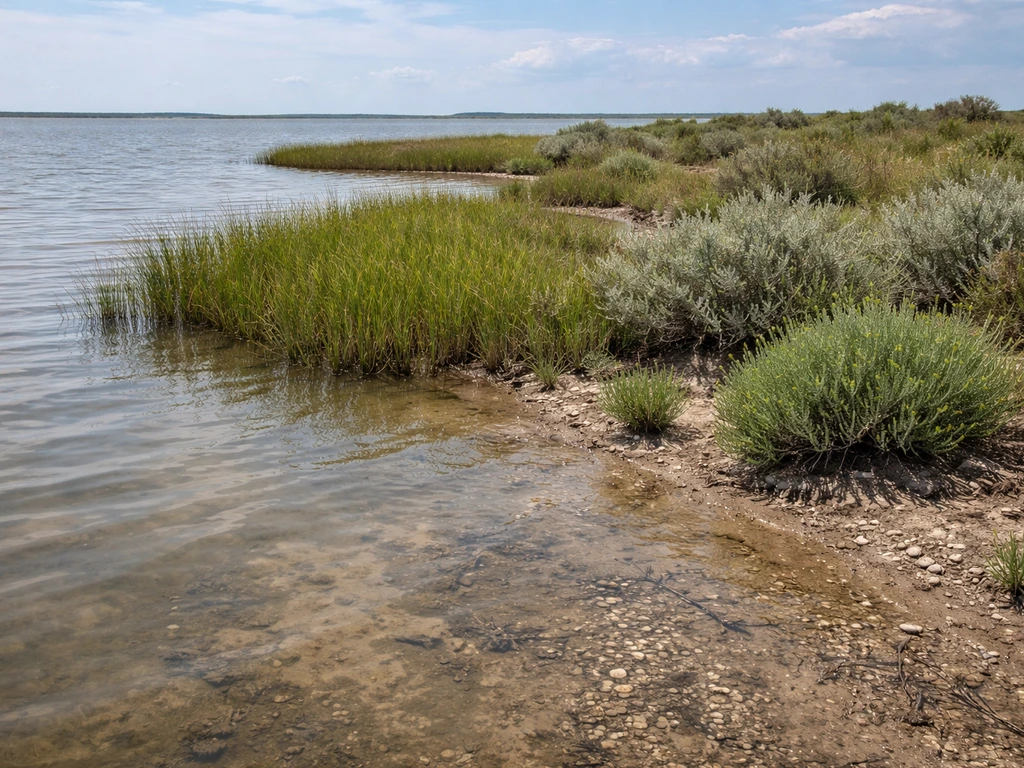
Brackish water sits between freshwater and full seawater on the salinity scale. NOAA defines it as the mixed water found in estuaries, with salinity ranging from about 0.5 to 35 parts per thousand (ppt). For practical reference: freshwater runs below 0.5 ppt, brackish covers 0.5 to 30 ppt (some engineering references extend it to 35 ppt), and seawater sits around 35 ppt. Brine is anything above 50 ppt. So when you say "brackish," you're actually describing a wide band that covers everything from barely salty tidal creek water at 1 ppt to near-marine conditions at 30 ppt. That range matters enormously because a plant that thrives at 5 ppt may be dead at 20 ppt.
In nature, brackish conditions form wherever freshwater dilutes seawater: estuaries, tidal creeks, brackish marshes, mangrove fringes, and coastal wetlands. These are the habitat analogs you want to keep in mind when choosing plants. The plants that evolved in these zones developed specific physiological tools to manage salt, whether that means excreting salt through leaf glands, storing it in succulent tissue, or simply tolerating higher cellular salt concentrations than most plants can manage.
How to measure your salinity and match it to plant tolerance
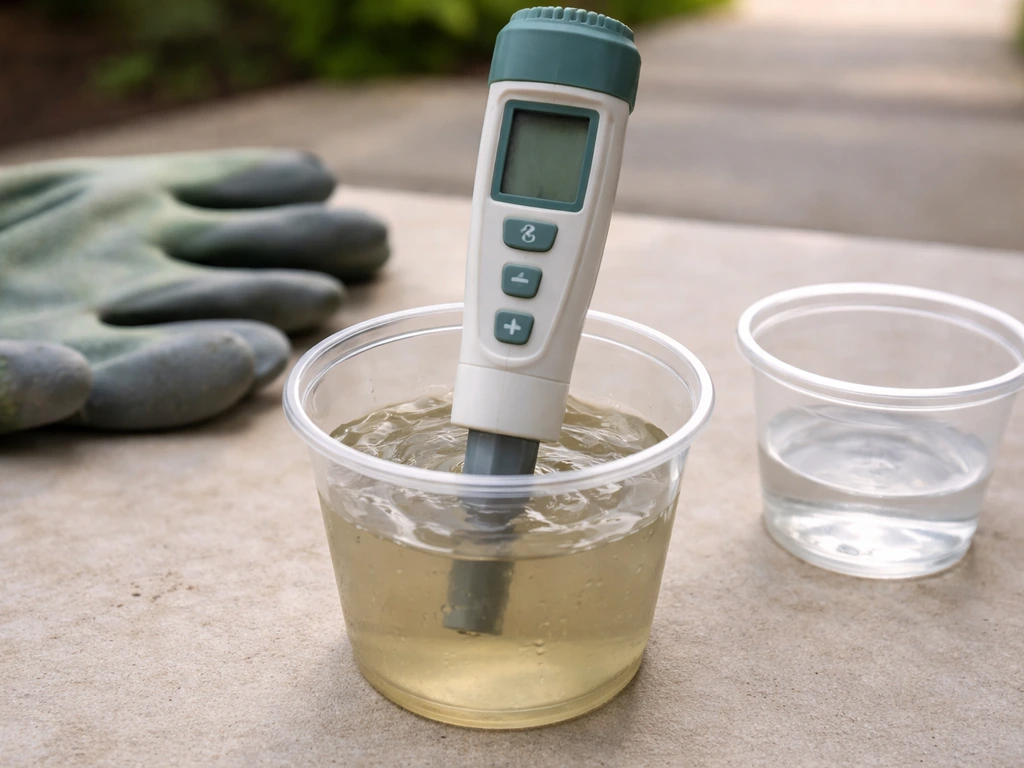
Before you plant anything, measure your water. This is non-negotiable. Two tools work well for most gardeners: an electrical conductivity (EC) meter and a refractometer. EC meters are the go-to for irrigation water and soil testing because extension services and university crop guides express salinity tolerances in EC units (dS/m), which you can directly compare to plant tolerance tables. Refractometers are fast and useful for spot-checking water from ponds or tidal sources, and they typically read in ppt or PSU (practical salinity units), which are numerically close enough to treat as equivalent in everyday use. If you use a refractometer, calibrate it with a 35 ppt standard rather than distilled water for accurate results.
For irrigation salinity, the key number is the EC of your water source (ECw). To translate: 1 dS/m is roughly 640 mg/L of dissolved salts, and typical brackish irrigation water might run anywhere from 1 to 8 dS/m depending on the source. Most sensitive vegetables start showing yield decline above EC 1 dS/m (lettuce drops off around 0.9 dS/m, Chinese cabbage around 1.5 dS/m), while genuinely salt-tolerant crops handle 4 to 8 dS/m without major problems. Wetland halophytes like cordgrass and saltbush operate in a completely different league, tolerating what would be lethal to any vegetable crop.
| Salinity level | Approx. ppt range | Approx. ECw (dS/m) | Plant category that fits |
|---|---|---|---|
| Low brackish | 0.5–5 ppt | ~1–8 dS/m | Salt-tolerant vegetables, most wetland marginals |
| Mid brackish | 5–15 ppt | ~8–24 dS/m | Cordgrass, common reed, saltbush, sea purslane |
| High brackish | 15–30 ppt | ~24–48 dS/m | Spartina, Salicornia, mangroves, Atriplex |
| Near-marine | 30–35 ppt | >48 dS/m | True halophytes and mangrove species only |
The best plants for brackish water wetlands, marshes, and estuaries
These are the plants built for consistently brackish conditions. They come from real brackish marsh and estuary habitats where salinity fluctuates between 0.5 and 35 ppt and flooding is regular, sometimes daily with tidal influence. Wikipedia describes brackish marshes as developing where salt marshes are diluted by freshwater influx, with salinity ranging from about 0.5 to 35 ppt blank" rel="noopener noreferrer">salinity fluctuates between 0.5 and 35 ppt. If you're restoring a wetland edge, planting a tidal pond margin, or working in an area where saltwater intrusion has already changed the character of the soil, these are your core candidates.
Cordgrass (Spartina species)
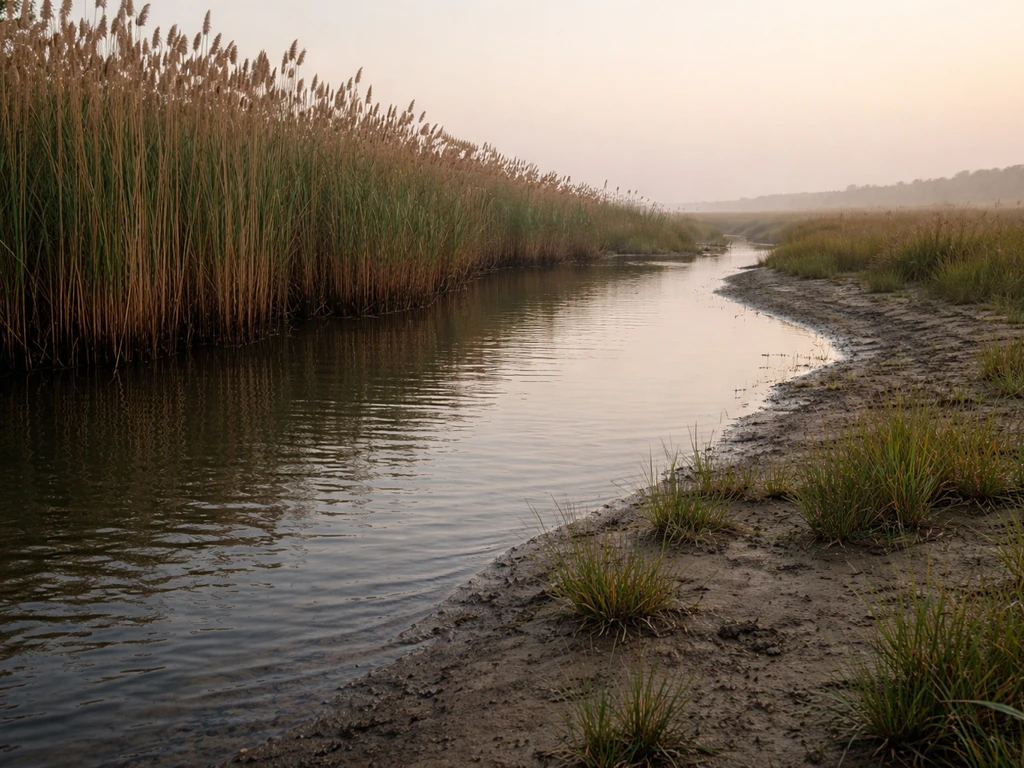
Spartina patens (salt meadow cordgrass) and Spartina alterniflora (smooth cordgrass) are the ecological backbone of Atlantic and Gulf Coast salt marshes. Spartina patens has been reported tolerating up to 60 ppt in some citations, which puts it well beyond most brackish situations. In practice, it dominates the mid-to-high marsh zone where salinity runs 10 to 30 ppt. It forms dense meadow-like stands, handles periodic flooding well, and its root system stabilizes soft sediment effectively. Use it where you want a self-sustaining brackish marsh community rather than a managed garden.
Common reed (Phragmites australis)
Phragmites is one of the most widely distributed wetland plants on Earth, and it genuinely tolerates brackish conditions up to roughly 12 to 40 ppt depending on the local population. It grows best in slow or stagnant water with silty substrates, which is exactly the condition you find in sheltered tidal creeks and brackish lagoons. One important caveat: in North America, the invasive European strain of Phragmites is ecologically aggressive and can outcompete native marsh plants. Know your local regulations before introducing it. The native North American strain is far less aggressive and preferable for restoration plantings.
Saltbush (Atriplex species)
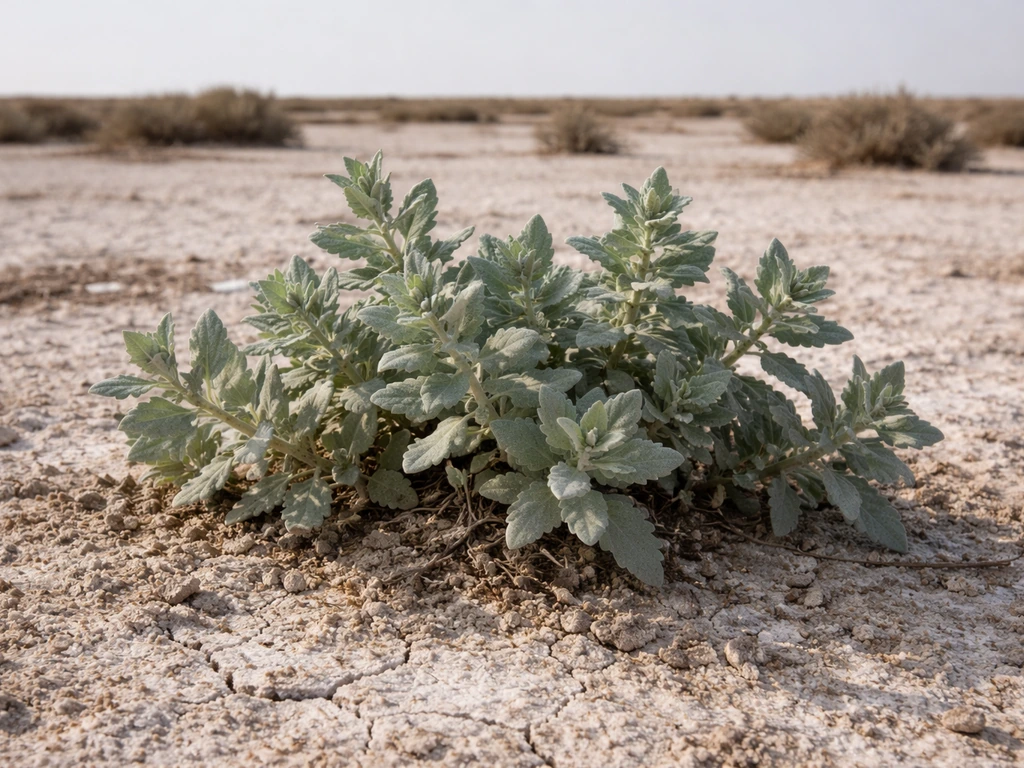
Atriplex nummularia (old man saltbush) and related species are proven halophytes used in everything from saline land reclamation in Australia to fodder systems in arid zones. They handle increasing NaCl concentrations by sequestering salt in leaf bladders and dropping older leaves. In a brackish irrigation or saline soil context, saltbush outperforms virtually any common garden plant. It's also browsable by livestock, which makes it practical on working properties with brackish groundwater irrigation.
Salicornia (glasswort / pickleweed)
Salicornia species grow directly in salt and brackish marshes, right at the water's edge. They're succulent, salt-excreting, and thrive where other plants simply cannot exist. In tidal flats and upper estuary zones, you'll find them colonizing bare mud with almost no competition. Interestingly, Salicornia is also edible and is increasingly cultivated commercially in saline aquaculture systems. If you have high-end brackish conditions (15 ppt and above), Salicornia is one of the most reliable options available.
Sea purslane (Sesuvium portulacastrum)
Sea purslane is a low-growing succulent that carpets the upper edges of tropical and subtropical brackish marshes. One common type of halophyte you may encounter when exploring plants adapted to sandy, salty areas is sea purslane. It handles tidal inundation, poor sandy soils, and salinities well into the mid-brackish range. It's also edible, with a salty, crunchy texture. In warm coastal climates (USDA zones 9 to 11), it spreads readily and can serve double duty as ground cover and occasional salad green in a brackish-irrigated kitchen garden.
Salt marsh bulrush (Bolboschoenus maritimus / Schoenoplectus maritimus)
This bulrush is a classic brackish marsh plant found in estuaries across Europe, Asia, and North America. It tolerates a wide salinity range and handles periodic inundation well. In constructed wetlands and brackish pond margins, it provides habitat structure and filters sediment effectively. It's a practical choice for naturalistic pond edges where salinity fluctuates seasonally.
Mangroves (Avicennia, Rhizophora, Laguncularia)
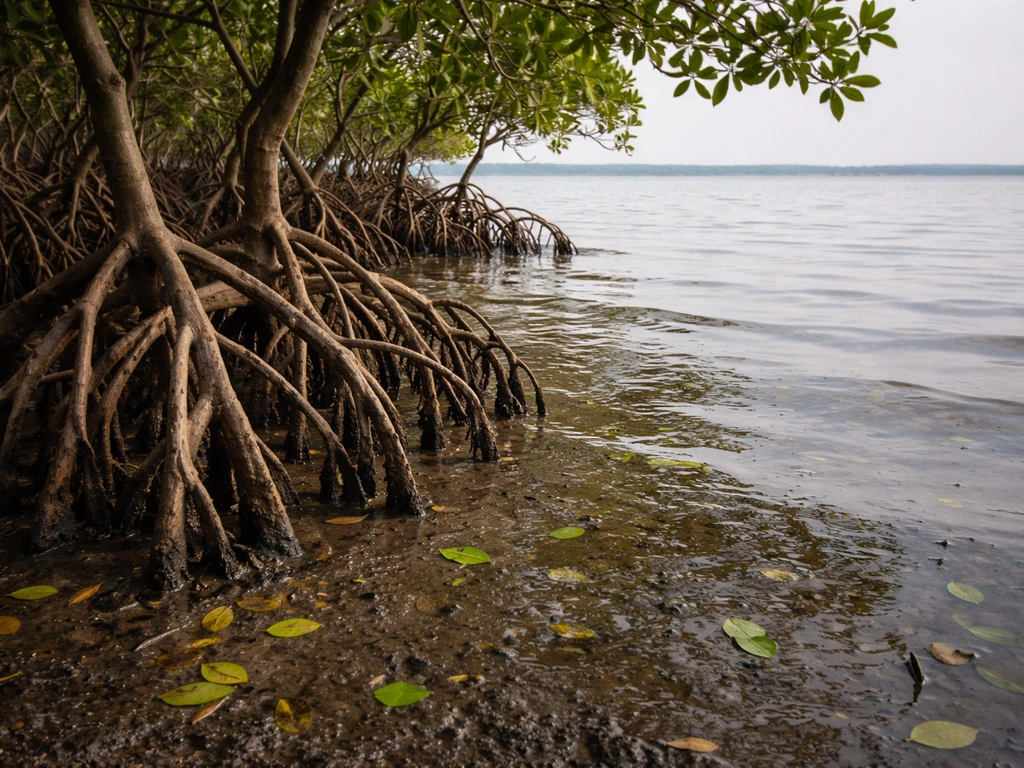
Mangroves occupy the tropical and subtropical estuary niche where salinity can swing from 0.5 ppt in the wet season to over 30 ppt near the mouth. Within mangrove systems, salinity readings span the full brackish range and can spike hypersaline in isolated tide pools. Grey mangrove (Avicennia marina) and red mangrove (Rhizophora mangle) are the most commonly planted, but they only work in frost-free coastal climates. They're not garden plants in the traditional sense, but if you're establishing a brackish coastal system in a tropical or warm subtropical zone, they're the ecological anchor species.
Plants that handle brackish irrigation and pond edges
Not everyone working with brackish water is managing a wetland. A lot of people reading this are dealing with brackish well water for irrigation, a slightly saline garden pond, or seasonal saltwater intrusion into an otherwise normal growing setup. These plants sit in a middle zone: they're not true halophytes, but they handle brackish-leaning conditions that would kill standard garden plants.
- Spinach (Spinacia oleracea): one of the most salt-tolerant common vegetables, able to handle irrigation water in the mid-brackish EC range better than most leafy crops
- New Zealand spinach (Tetragonia tetragonioides): native to coastal environments, moderately salt-tolerant, though seedlings are more sensitive than mature plants
- Red orach (Atriplex hortensis): a close relative of saltbush, used as a leafy green, and noticeably more salt-tolerant than standard greens, though seedling establishment needs care
- Sea beet (Beta vulgaris subsp. maritima): the wild ancestor of beet and chard, native to coastal cliffs and upper salt marshes, handles brackish irrigation well
- Tamarisk (Tamarix species): a woody shrub with extreme salt tolerance used in arid saline landscapes; note that several species are invasive in the American Southwest
- Saltgrass (Distichlis spicata): a native North American grass of saline flats and brackish meadows, useful for stabilizing brackish pond margins
- Cattail (Typha domingensis and T. latifolia): common in brackish pond edges up to about 10 ppt; T. domingensis handles slightly higher salinities than T. latifolia
- Iris pseudacorus (yellow flag iris): tolerates mild brackish conditions at pond margins; not for high-salinity situations but handles seasonal brackish flooding
For brackish pond setups, the most practical approach is to plant the most salt-tolerant species along the waterline, transitioning to progressively less tolerant plants as you move away from the water. This mirrors exactly what happens in real brackish marshes, where zonation by salinity tolerance is the defining feature of the plant community. If you want to understand that pattern in more detail, the coastal areas plant topic covers it from a broader ecological angle.
How to actually grow and maintain these plants
Soil and growing media
For true wetland/marsh species like Spartina, Phragmites, and Bolboschoenus, silty or clay-rich substrates with consistent moisture are ideal. These plants evolved in sediment-rich estuary beds and do not perform well in fast-draining sandy media. For brackish irrigation setups growing edibles or ornamentals, you want well-structured soil with good drainage, not because salt-tolerant plants hate water but because poor drainage concentrates salt at the root zone over time. In raised beds, a mix of loam and coarse sand with 15 to 20% extra drainage capacity gives you the ability to leach accumulated salts without waterlogging roots.
Managing salt buildup
Salt accumulation is the slow killer in brackish irrigation systems. Every time you water with brackish water, some salt stays behind in the root zone as the water evaporates or gets taken up by plants. Over weeks and months, that accumulation compounds. The solution is leaching: applying enough extra water to push salts below the root zone. Adding 15 to 20% more water than the plants need is a useful starting point for light leaching. For more saline irrigation sources, you calculate a formal leaching fraction, which is the portion of irrigation water that must pass through the root zone and drain away carrying dissolved salts with it. The more saline your water, the higher the leaching fraction you need to maintain safe root-zone EC levels.
One practical note on irrigation method: sprinkler or overhead irrigation with brackish water causes leaf burn because the salt-laden droplets dry on the leaf surface and concentrate ions that desiccate leaf tissue directly. Drip irrigation or flood irrigation at the soil surface avoids this problem. Keep the water on the soil, not the foliage.
Drainage and preventing salt lock
Any setup using brackish water for irrigation needs a drainage outlet. Without it, salts have nowhere to go and the root zone becomes progressively more saline regardless of how tolerant your chosen plants are. In raised beds, install drainage holes. In ground-level plots, avoid areas with hardpan or compacted layers that prevent water from infiltrating past the root zone. If you have a restrictive layer, you may need to break it up before attempting brackish irrigation at any meaningful scale. During dry periods, leaching becomes even more critical because evapotranspiration concentrates root-zone salts faster without any rainfall to dilute them.
Timing and growth stage
Salt sensitivity changes with growth stage in many species. New Zealand spinach and red orach, for example, are more sensitive at seedling stage than as established plants. Starting seeds in fresher water or a lower-salinity medium and transitioning to brackish irrigation once plants are established can dramatically improve survival rates. Don't expose newly germinated seedlings to full brackish conditions if you can avoid it.
Matching plants to your region and habitat analog
Where you are geographically shapes which brackish-tolerant plants will actually perform for you, because these plants evolved in specific climate envelopes as well as specific salinity envelopes. A plant that thrives in a subtropical estuary in Florida may survive but struggle in a cold brackish tidal creek in Maine. Climate and season interact with salinity tolerance in real ways.
| Climate zone / region | Natural habitat analog | Best-fit plants |
|---|---|---|
| Temperate Atlantic coast (zones 5–8) | Brackish marsh, tidal creek, estuary | Spartina alterniflora, Spartina patens, Phragmites australis (native), Bolboschoenus maritimus, Distichlis spicata |
| Gulf Coast / subtropical (zones 9–10) | Brackish lagoon, mangrove fringe, coastal wetland | Spartina patens, Salicornia, Sesuvium portulacastrum, Typha domingensis, Avicennia marina |
| Tropical coastal (zones 10–13) | Mangrove estuary, tidal flat | Rhizophora mangle, Avicennia marina, Laguncularia racemosa, Salicornia, Sesuvium |
| Arid/semi-arid inland (brackish groundwater) | Saline flat, brackish floodplain, saltbush scrub | Atriplex nummularia, Atriplex hortensis, Tamarix (check invasive status), Distichlis spicata |
| Cool temperate (zones 4–6, seasonal brackish) | Brackish wetland, estuary margin | Phragmites australis, Bolboschoenus maritimus, Iris pseudacorus, Typha latifolia |
| Mediterranean/dry coastal (zones 8–10) | Coastal salt marsh, estuarine scrub | Atriplex species, Salicornia, sea beet (Beta vulgaris subsp. maritima), Sesuvium |
The habitat analog concept is genuinely useful here. If your site resembles a sheltered tidal lagoon with slow water movement and silty substrate, look at what grows in those conditions naturally in your climate region. If it looks more like an upper marsh that gets flooded occasionally but drains between tides, your plant palette shifts accordingly. Plants adapted to saline soil share some overlap with this group, and the halophyte classification that covers salt-soil plants applies to many of the same species discussed here.
Seasonal salinity patterns also matter. In climates with distinct wet and dry seasons, brackish water sources can swing dramatically: low salinity during rainy months when freshwater input is high, spiking near-marine during dry season drought. Plants like Phragmites and Spartina handle this variability naturally because it's exactly what happens in their native estuary habitats. Plants from purely freshwater backgrounds typically cannot, which is why you don't want to just assume a "water-loving" plant will handle occasional saltwater exposure.
Your quick-start plan for today
Here's the practical sequence to follow if you're setting this up now:
- Test your water today. Use an EC meter or refractometer to measure your water source salinity. Record the result in both ppt (or PSU) and EC (dS/m) if possible. If you're dealing with irrigation water from a well or canal, test the actual water you'll use, not a nearby surface sample. Also test your existing soil EC at root depth (roughly 15 to 30 cm) to know if salt has already accumulated.
- Classify your salinity level using the table above and identify which salinity band you're working in: low brackish (0.5–5 ppt), mid brackish (5–15 ppt), or high brackish (15–30 ppt). This determines which plant category you're shopping from.
- Shortlist three to five species from the matching category for your climate zone. Start with the most tolerant option as your anchor plant, then add one or two secondary species to create a functional community rather than a monoculture.
- Plant with establishment in mind, not maximum salinity exposure. Use lower-salinity water or ambient rainfall during the first two to four weeks after planting, then transition to full brackish irrigation once root systems are established. This is especially important for edible species started from seed.
- Set up drainage and a basic leaching routine. Plan to apply 15 to 20% more water than your plants strictly need per watering cycle to flush accumulated salts past the root zone. Ensure there's somewhere for that extra water to go.
- Test root-zone soil EC monthly for the first growing season. If EC is climbing above your target plant tolerance threshold, increase leaching frequency or leaching fraction. If it stays stable or drops, your system is working. Adjust once per season rather than reacting to every reading.
The most common mistake people make with brackish growing setups is skipping the measurement step and choosing plants based on rough intuition about "salt tolerance." A plant labeled salt-tolerant might handle 3 ppt comfortably and be dead at 15 ppt. Get the number first, match it to a species with documented tolerance for that specific range, and you'll avoid a lot of expensive failures. For plants that grow in coastal areas, looking at real-world examples like cordgrass, saltbush, and sea purslane can help you match the right species to your local conditions plants grow in coastal areas examples. Once you have a working system, brackish-tolerant plants are often remarkably low-maintenance precisely because they're in their native salinity comfort zone, which is exactly the condition they evolved to handle. Plant species that grow in saline soil are often classified as halophytes.
FAQ
Can I use the same plants for both brackish irrigation and a brackish fish pond?
You can use overlaps, but fish-pond conditions add constraints. Look for species that tolerate prolonged submerged or saturated soil, and confirm they will not release excessive leaf material that can clog filters. Also prioritize drip or flood-style irrigation and margin planting, so salinity stays in the pond edge zone rather than on top of the water surface.
How do I figure out whether my brackish water is “safe” for seedlings versus mature plants?
Measure salinity, then plan a staged increase. Many edible salt-leaning crops survive better if you start seeds in fresher water or a lower-salinity medium, then transition after establishment, since seedlings are often far more salt-sensitive than mature plants. If you cannot start fresh, use smaller initial exposure (lower salinity inlet or more dilution) and increase gradually over weeks.
What if my readings change by season, for example after storms or during drought?
Treat it like a moving target. In seasonal systems, pick plants that tolerate the high-salinity end, then make sure they can also survive the low-salinity months without lagging growth. If the source swings widely, wetland-type species (like cordgrass or Phragmites) often match the natural “boom and bust” salinity pattern better than typical garden ornamentals.
Do I need to worry about which type of salt is in the water, not just total salinity?
Yes, sometimes. Total salinity (ppt or EC) tells you the overall salt load, but the salt composition affects plant stress, especially for vegetables. If you notice leaf edge burn or poor growth despite meeting a general EC target, test a small set of plants first and consider water-source blending or dilution to reduce the most problematic ions.
Can I irrigate with brackish water using a sprinkler if I avoid watering midday?
Avoid sprinklers anyway. Even brief droplet deposition concentrates salts as the water dries on leaf surfaces, which commonly causes leaf burn. Drip irrigation (or flood irrigation on the soil surface) keeps salt where you need it, in the root zone, instead of on foliage.
How much extra water should I apply for leaching in a brackish-irrigated garden?
A practical starting point is adding about 15 to 20% more water than the plants need to flush salts below the root zone. If your EC is higher, move to a formal leaching fraction approach so you maintain root-zone EC within a safe band. Just make sure you have a functioning drainage outlet, otherwise the extra water will not reduce salinity overall.
What drainage setup works best if I’m using raised beds with brackish irrigation?
Install drainage holes and ensure the bed sits over material that can accept drained leachate. Avoid sealing the bottom, since that traps salts. If you hit a hardpan or compacted layer, water may pool and salinity can still build up near roots, so you may need soil reshaping or subsoiling before scaling up brackish irrigation.
How close to the waterline can I plant, especially for cordgrass and Salicornia?
Use zonation principles. Plants like Salicornia typically do best at or near the water edge where they can handle frequent inundation and bare-mud conditions. Cordgrass generally performs best in the mid-to-higher marsh band that sees regular flooding but not constant standing water, so place them slightly farther from the most continuously submerged zone.
Will brackish water harm soil health long-term even if plants tolerate it?
It can, mainly through salt accumulation and root-zone osmotic stress. Even halophytes have better performance when salinity is stable rather than constantly escalating. Use periodic leaching and confirm drainage works, and consider rotating or resting the wet area if you are in an irrigated garden system rather than a natural wetland.
Is Phragmites always a safe choice, and what about invasiveness?
Not always. In many regions, invasive European strains can spread aggressively and outcompete native wetland plants. Before planting, check local guidance on which strain or species is appropriate, and prioritize native options for restoration rather than relying on generic “Phragmites” availability.
What plants are best if my site is sandy and dries out quickly between tides?
Many true marsh halophytes prefer silty or clay-rich, consistently moist substrates and may underperform in fast-draining sand. If your site is sandy, focus on plants that tolerate poor soils and place them in the correct inundation band, or amend/structure the media (for example, add loam and improve water-holding capacity) so salt does not concentrate too aggressively at the root zone.
Can I grow edible brackish plants in containers instead of in-ground beds?
Yes, containers can work well if you can manage drainage and leaching. Use a well-draining medium but not a “dry-out instantly” mix, and make sure excess water can exit freely so salts do not accumulate. Monitor EC in the drainage runoff from time to time, because container setups can concentrate salts faster than in-ground soils.