
Plants grow well next to each other when they share compatible light, water, and soil needs without competing for the same resources at the same time. The short answer: pair shallow-rooted, light-feeding plants with deep-rooted, heavy feeders; Plants grow well next to each other when they share compatible light, water, and soil needs without competing for the same resources at the same time. The short answer: pair shallow-rooted, light-feeding plants with deep-rooted, heavy feeders; mix legumes with hungry crops to let natural nitrogen fixation do the fertilizing; and always check that neighbors tolerate the same soil pH range before you put them in the ground together. and always check that neighbors tolerate the same soil pH range before you put them in the ground together. The rest of this guide breaks down exactly how to apply that logic to your specific climate, season, and soil type.
What Plants Can Grow Next to Each Other: Pairings That Thrive

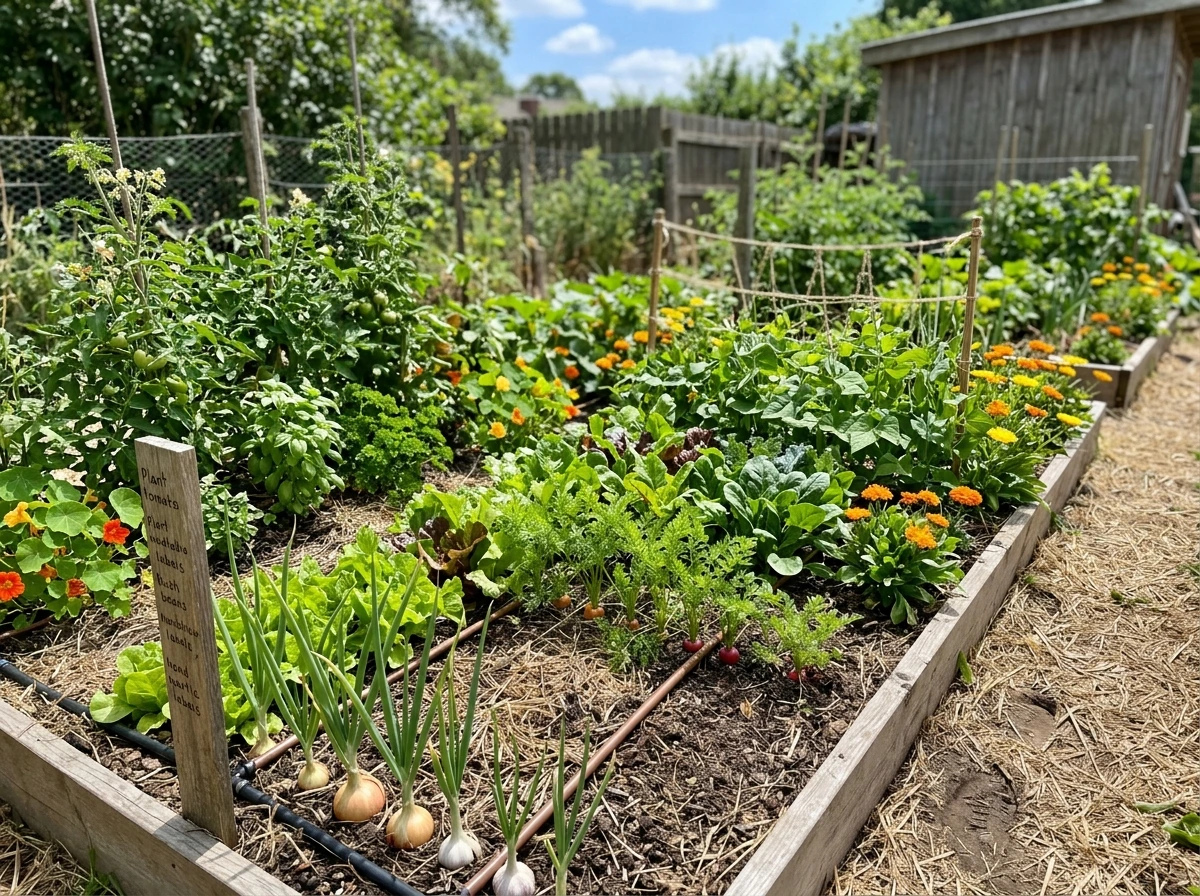
Why plants grow well side-by-side (compatibility checklist)
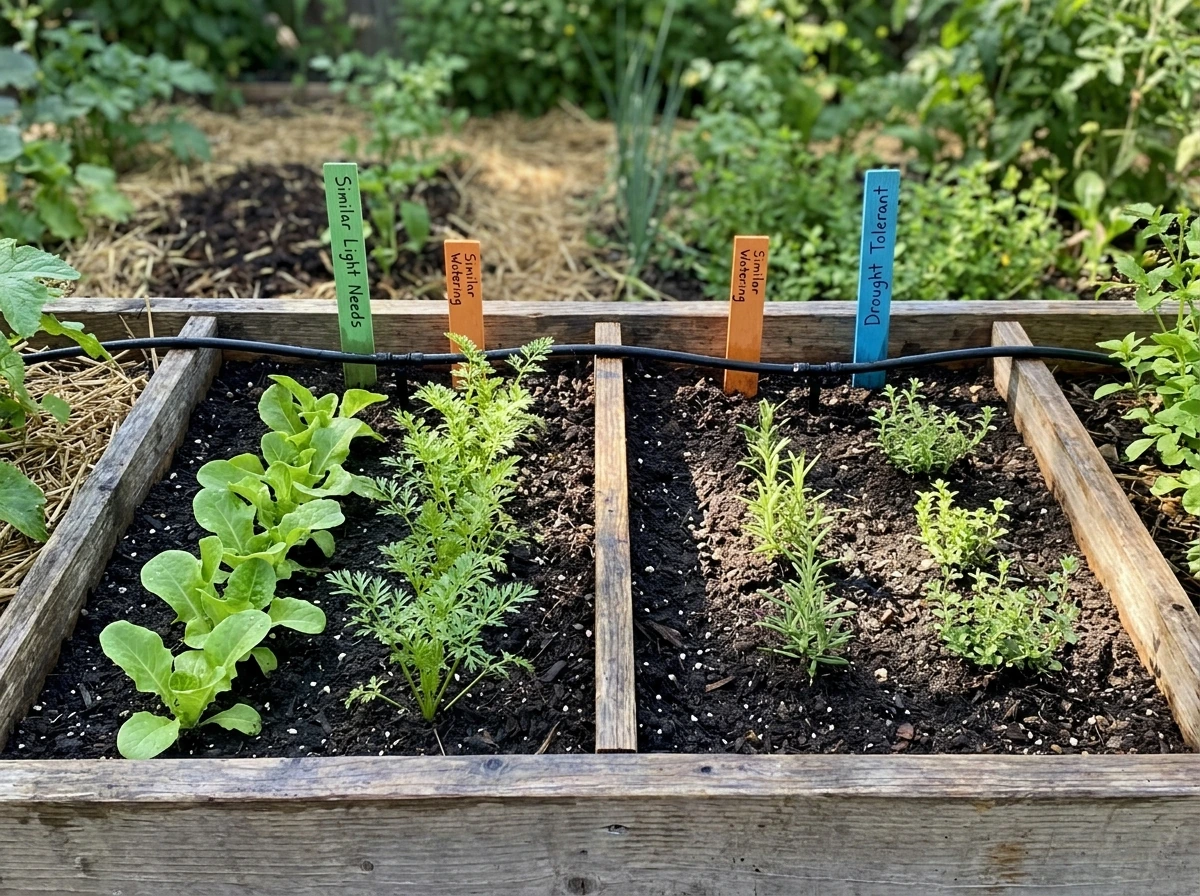
Two plants can share a bed happily when their environmental demands overlap just enough to allow shared conditions but differ enough that they are not fighting for exactly the same resources. The most reliable way to evaluate any potential pairing before planting is to run through a short checklist.
- Sunlight requirement: both plants need roughly the same daily light hours, or one is naturally shorter and tolerates the shade cast by its taller neighbor
- Water demand: irrigation or rainfall timing and volume suits both without waterlogging one while drought-stressing the other
- Soil pH: both plants have overlapping pH tolerance (most vegetables thrive at 6.0 to 7.0, with 6.5 as the sweet spot for mixed beds)
- Root depth: one plant roots deeply while the other is shallow, so they draw moisture and nutrients from different soil layers rather than the same zone
- Nutrient demand: a heavy feeder is paired with a light feeder, or one plant actively enriches the soil while the other uses what it provides
- Disease and pest profile: neighbors do not share the same major pathogens or insect pests that could amplify pressure across the bed
- Growth rate and timing: plants mature on compatible schedules so a fast grower does not smother a slow one before either reaches harvest
Run any proposed pairing through these seven points. If more than two boxes show a mismatch, reconsider the combination. If only one or two show partial overlap, spacing and soil prep can often compensate.
The main rules for pairing (light, water, soil, nutrients, roots)
Light
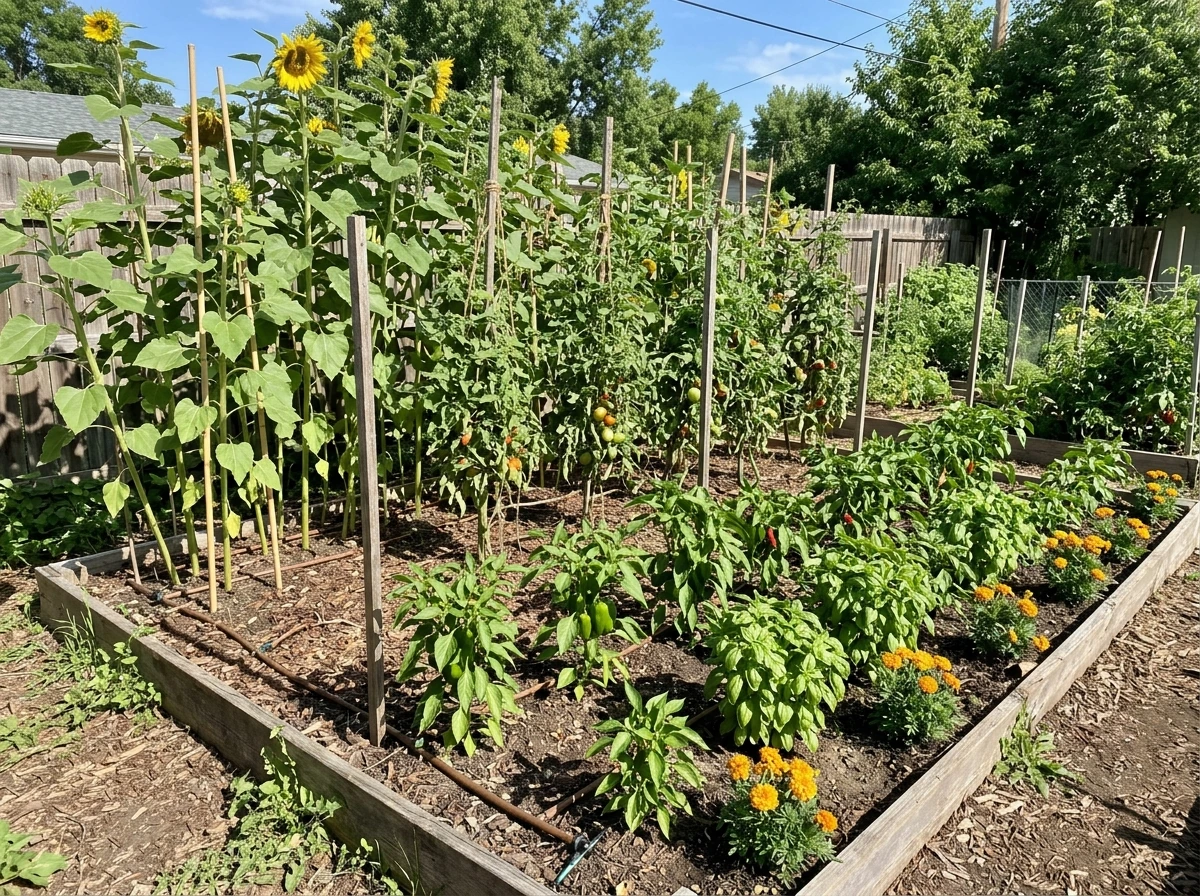
Full-sun crops planted next to tall shade-casting neighbors will underperform, plain and simple. The practical fix is to arrange taller plants on the north side of a bed in the Northern Hemisphere so their shadow falls away from shorter companions. Classic examples: tall corn on the north edge of a bed with beans and squash to its south, or tomatoes staked vertically with low basil growing at their base in the same footprint.
Water
Pairing a drought-adapted plant with a moisture-hungry one usually ends with one being stressed no matter how you irrigate. Most edible plants are shallow-rooting to about 12 inches or less, which means they pull water from the same zone and respond similarly to surface irrigation. When you step outside that range and include a deep-rooted crop like watermelon, which draws from much deeper soil layers, you get a pairing that can actually co-exist with a shallow-rooted companion even in drier conditions because they are not competing for the same water reservoir.
Soil pH and texture
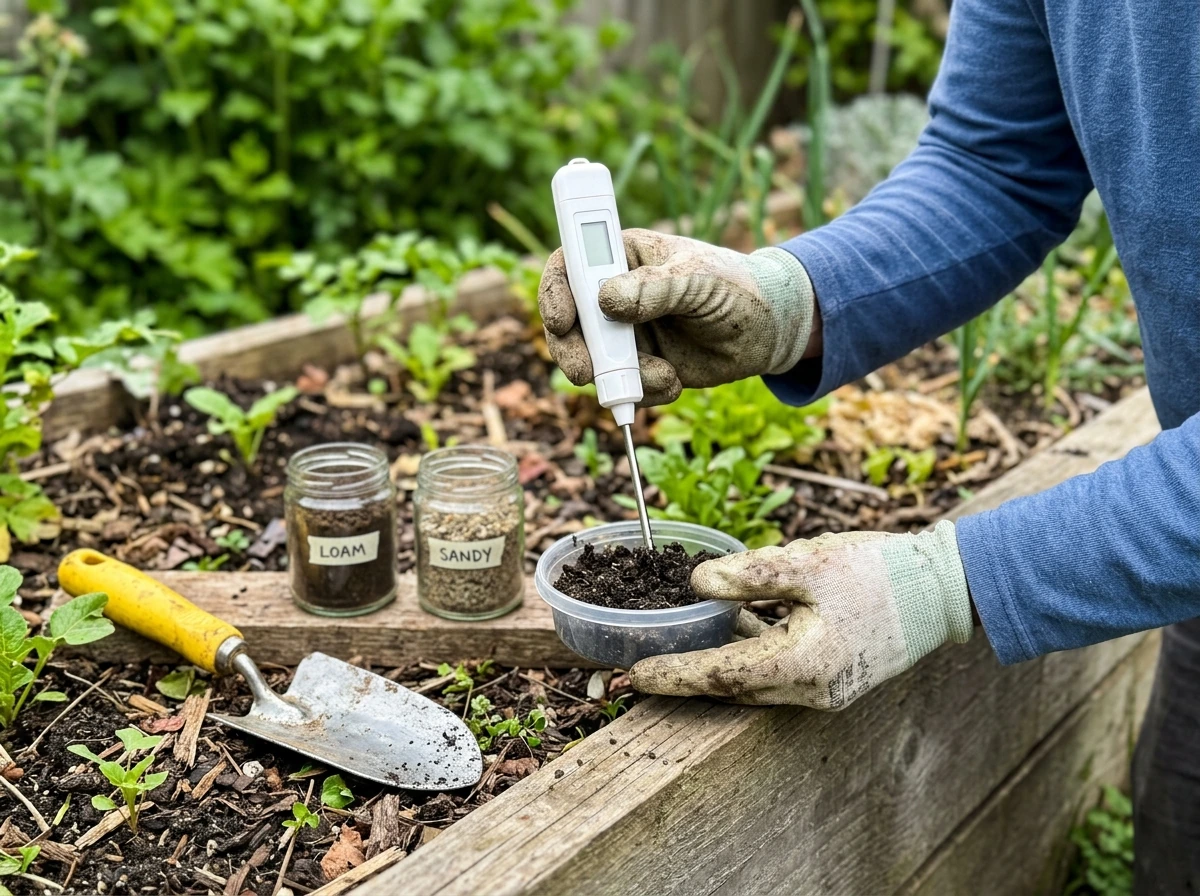
Before planting any mixed bed, test your soil pH. This single measurement tells you which combinations are viable. Most vegetables share a workable range of 6.0 to 7.0, but individual crops have specific targets: watermelon, for example, has a target pH around 6.2 but can tolerate as low as 5.5. Soil pH above 7.5 becomes too alkaline for most vegetables regardless of species, so if your soil tests above that level, amending before planting is not optional. Pairing a blueberry (which needs pH 4.5 to 5.5) with brassicas (which prefer 6.5 to 7.0) in the same bed is a fundamental incompatibility no amount of spacing will fix.
Nutrients and root depth
The single most useful rule of thumb in companion planting comes from root architecture: deep-rooted, heavy nutrient feeders are generally excellent companions for shallow-rooted, light feeders. They are reaching into different soil horizons and making different demands on the nutrient pool. Corn (deep, heavy feeder) paired with lettuce (shallow, light feeder) works precisely for this reason. Corn (deep, heavy feeder) paired with lettuce (shallow, light feeder) works precisely for this reason, and it is the kind of setup that helps plants that can grow together share the same bed without constant stress. Add a nitrogen-fixing bean to that combination and you have the classic Three Sisters, which uses all three mechanisms simultaneously: structural support, root-depth differentiation, and in-soil nitrogen production.
Good plant neighbor examples by function
Nitrogen fixers
Legumes fix atmospheric nitrogen through rhizobium bacteria in their root nodules and convert it into plant-available compounds in the soil. This is not folklore; it is a well-documented symbiotic process that makes legumes some of the most valuable neighbors you can plant. Beans, peas, clover, and vetch all do this. Plant them next to nitrogen-hungry crops like corn, brassicas, or leafy greens and the heavy feeder benefits from the nitrogen the legume is depositing in the surrounding soil. When a legume cover crop dies and breaks down, that stored nitrogen releases and feeds whatever you plant next. This is why a winter cover crop of field peas followed by spring brassicas is such a reliable sequence in temperate gardens.
Pollinator attractors
Flowering neighbors that provide nectar and pollen over a long seasonal window attract beneficial insects that also pollinate vegetable crops. The goal is continuous bloom across your growing season, not just one flush of flowers. Borage is a standout here: it attracts pollinators reliably and has a reputation for deterring some insect pests. Coreopsis, phacelia, and sweet alyssum are other practical choices. The USDA recommends placing insectary plants in blocks rather than scattering single plants, because blocks create a more detectable habitat signal for beneficial insects. If your site uses a lot of vegetables that require pollination (squash, cucumbers, beans), dedicate a proper strip or corner of the bed to continuous-bloom insectary plants rather than treating them as accidental afterthoughts.
Pest management through diversity and trap crops
Mixing plants of different heights, colors, and textures makes it harder for insects to locate and colonize a single crop. A uniform block of one species is essentially a buffet with clear signage; a mixed planting is harder to navigate. This is not a guarantee of pest-free growing, but it is a documented mechanism for reducing host-finding efficiency by common garden pests.
Trap crops take this further by deliberately placing a more attractive host nearby to lure pests away from your main crop. Nasturtiums are a well-tested trap crop: they attract aphids and flea beetles away from vegetables. Radishes intercropped with brassicas draw flea beetles, root maggots, and cabbage maggots. The critical operational rule with trap crops is that you cannot just plant them and walk away. If you leave the trap crop in place too long once it is infested, the pest population multiplies and eventually spills back onto your main crop. Monitor trap crops at least weekly and remove or destroy infested material promptly.
| Functional role | Example plants | Best paired with | Notes |
|---|---|---|---|
| Nitrogen fixer | Beans, peas, clover, vetch | Corn, brassicas, leafy greens | Root nodule bacteria deposit N into surrounding soil |
| Pollinator attractor | Borage, coreopsis, phacelia, sweet alyssum | Squash, cucumbers, beans | Plant in blocks; aim for continuous seasonal bloom |
| Trap crop (aphids/flea beetles) | Nasturtium | Brassicas, beans, peppers | Remove infested plants before pest population peaks |
| Trap crop (root maggots) | Radish | Cabbage family crops | Intercrop at bed edges; monitor and destroy weekly |
| Ground cover/moisture retention | Low-growing clover, thyme | Fruit trees, tall perennials | Reduces evaporation and suppresses weeds |
Avoiding bad neighbors (disease/pest overlap, allelopathy, competition)
Shared disease risk
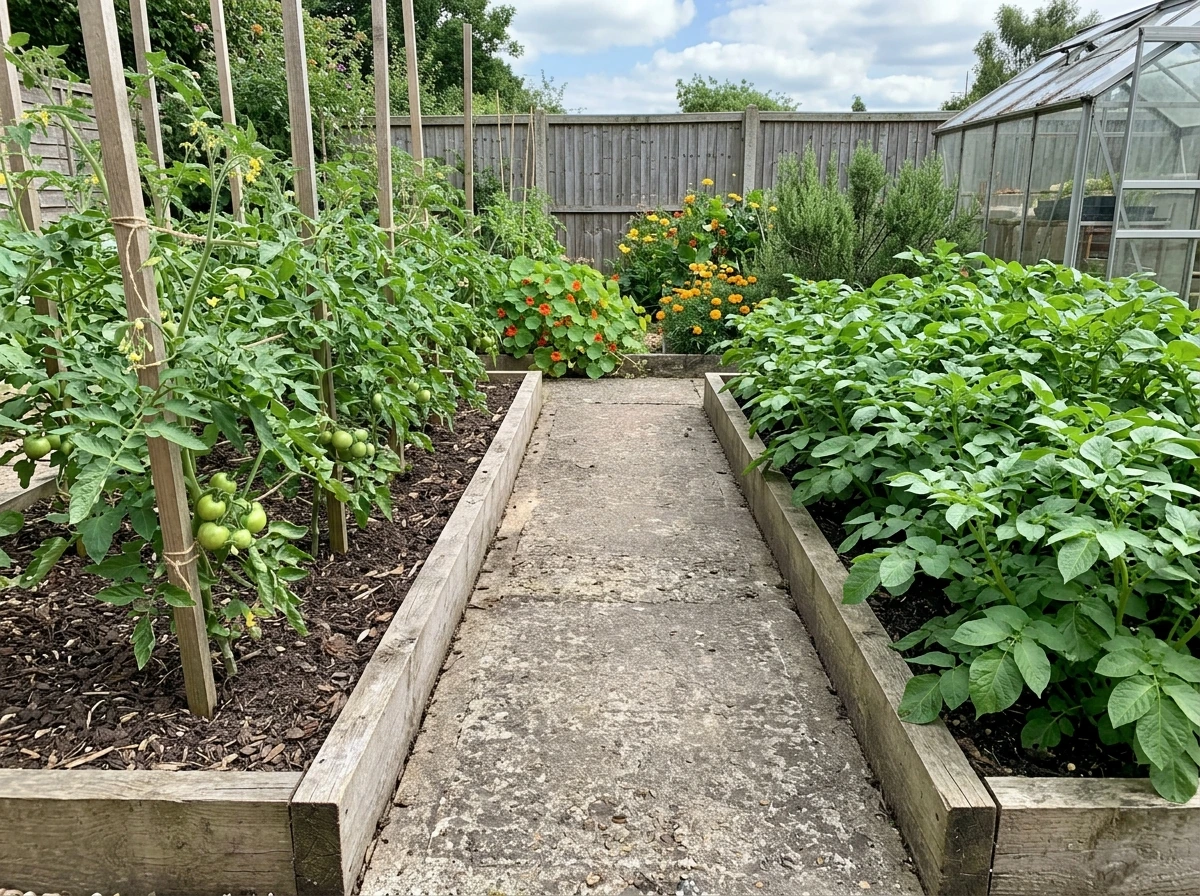
The clearest example in home vegetable gardens is tomato and potato. Both are Solanaceae and both are devastated by late blight, a pathogen that can spread from one crop to the other across a bed with alarming speed under humid conditions. Planting tomatoes next to potatoes is not just risky; it is an active disease-amplification setup. The pathogen also infects solanaceous weeds like bittersweet nightshade, so even weedy volunteers near either crop matter. Keep members of the nightshade family spatially separated, practice crop rotation across years, avoid overhead watering, and give plants enough space for good air circulation to reduce the conditions late blight needs to spread.
Cucurbits (cucumbers, squash, melons, zucchini) share a different threat: powdery mildew caused by Podosphaera xanthii affects all of them. Planting multiple cucurbits close together in a dense block concentrates disease pressure. Spacing at planting matters, and the same principle applies across the family. Powdery mildew overwinters in crop debris, so if you had an infection in one part of the bed, the neighboring cucurbit in the same spot next season will encounter the pathogen again unless you remove infected material thoroughly and rotate the family to a new bed location.
Allelopathy (chemical inhibition)
Some plants release chemicals that suppress the germination or growth of neighbors. The most practically relevant example for vegetable gardeners is rye used as a cover crop. When rye is tilled into soil, it can inhibit vegetable growth both by temporarily tying up nitrogen and through allelopathic compounds. If you use rye as a cover crop and turn it in, wait several weeks before transplanting or direct-seeding vegetables into that bed. Black walnut trees are another well-known allelopath: they release juglone through roots and decomposing leaves, which is toxic to tomatoes, peppers, and many other vegetables. Do not plant sensitive crops under or adjacent to black walnut canopy. Sunflowers also have mild allelopathic effects on some neighbors, so keep them at the bed edge rather than intermixed.
Resource competition and overcrowding
Planting the same crop in a dense monoblock not only increases pest and disease spread, it also creates direct competition for light, water, and nutrients in the same soil zone. Proper spacing does two things simultaneously: it ensures air movement (which physically reduces disease pressure) and it reduces resource competition. Overcrowding is one of the most common beginner mistakes, and it tends to produce worse harvests than a properly spaced, diverse planting with more physical room between plants.
How to choose pairings for your climate, season, and soil type
The pairing rules above apply universally, but the specific plants you can use change dramatically depending on where and when you are gardening. Climate zone and seasonal window determine which species are even available to you as options.
Cool temperate and continental climates
In cool temperate regions (think northern US, Canada, northern Europe), your seasonal window is defined by frost dates. Early spring and late fall belong to cool-season crops: brassicas, peas, lettuce, spinach, and root vegetables. Pair these with nitrogen-fixing cover crops like field peas or vetch that can be overwintered or sown in early spring. Summer slots open up warm-season pairings: the Three Sisters (corn, beans, squash) perform best here when planted after last frost with at least 90 to 100 frost-free days ahead. In these climates, succession planning is essential because no single pairing can fill the whole growing season. A spring planting of peas followed by summer beans followed by a fall cover crop of clover is a full-year companion rotation.
Subtropical and warm temperate climates
In warmer climates like the southeastern US, Gulf Coast, or Mediterranean zones, the dynamic inverts. Cool-season crops are your fall and winter options, not spring. Brassicas, lettuce, and root crops planted in October through February avoid heat stress. Warm-season pairings (tomatoes, peppers, beans, squash) go in spring and run until heat peaks. In subtropical climates, the real companion planting challenge is managing humidity-driven disease pressure, so air circulation and disease-profile matching become even more critical. Avoid heavy Solanaceae plantings in the same bed across consecutive seasons, and prioritize open spacing.
Arid and semi-arid climates
Desert and semi-arid gardeners face a fundamentally different pairing constraint: water. The root-depth differentiation rule matters more here than anywhere else because shallow water access is limited. Pairing a deep-rooted drought-tolerant plant like watermelon with a shallow-rooted crop can work as long as the shallow plant gets supplemental irrigation to its root zone. Native desert plants (agave, mesquite, desert marigold) are not productive vegetable companions, but they can function as windbreaks or habitat zones at bed edges. For vegetable production in arid zones, focus pairings on crops with overlapping low-water profiles: melons, peppers, and herbs like oregano and thyme share both heat tolerance and lower water demand. Raised beds with mulch retain moisture long enough for shallow-rooted light feeders to function alongside deeper-rooted crops, but plants that require a hydrophytic environment won’t fit here.
Soil pH as a climate-linked pairing filter
Your regional geology affects your default soil pH. In the humid eastern US and Pacific Northwest, soils tend toward acidity. In the arid west and many prairie zones, alkaline soils are common. Before pairing based on crop guides, test your actual pH. If your soil sits at 5.8, pairing acid-sensitive brassicas with acid-tolerant blueberries sounds compatible on paper, but the brassicas will underperform because their optimal range starts at 6.5. Adjust with lime before planting mixed beds, then choose pairings whose target pH ranges genuinely overlap within the range you can realistically maintain.
Quick planning steps and bed layout tips
Step-by-step pairing process
- Test your soil pH before the season starts and amend if needed to bring it into the 6.0 to 7.0 range suitable for mixed vegetable beds
- List the crops you want to grow this season and note each one's root depth (shallow: 12 inches or less vs. deep: 18 inches or more), water demand (low/moderate/high), and nutrient demand (light vs. heavy feeder)
- Pair heavy feeders with light feeders, and deep-rooted plants with shallow-rooted ones wherever possible
- Add at least one nitrogen-fixer (beans, peas, or clover) to every bed section that contains a heavy nitrogen feeder
- Include a block of continuous-bloom insectary plants (borage, phacelia, or coreopsis) somewhere in or adjacent to the bed to support beneficial insects across the season
- Check the disease and pest profiles of every plant in the bed and confirm you are not co-locating crops from the same vulnerable family (Solanaceae together, cucurbits in a dense block)
- Plan your spacing to allow air circulation: do not fill every inch just because plants are companion-compatible — proper spacing actively reduces disease pressure
- Map out a succession sequence: what cool-season crops start the bed, what warm-season crops replace them, and what cover crop closes the season
Bed layout and spacing principles
In a standard raised bed or garden plot, arrange taller plants (corn, tomatoes, staked beans) on the north side so they cast shade away from shorter companions. Place insectary plants at corners or edges where they are accessible to insects but not competing with main crops for center-bed resources. Trap crops like nasturtiums and radishes go at the perimeter, where they intercept pests arriving from outside the bed and where you can remove them easily once infested without disturbing the main planting.
For succession planting, make three maps before the season: a spring map showing which beds hold cool-season crops, a summer map showing what replaces them, and a fall map showing what follows and what goes to cover crop. Cool-season crops can be followed by warm-season crops, which can then be followed by cool-season plants again or overwintered with a nitrogen-fixing cover crop like clover or vetch. This approach keeps beds productive across the full year while building soil health, reducing disease carryover, and naturally diversifying the pest environment across seasons.
Rotation to reinforce companion logic
Companion planting works best when combined with crop rotation across seasons and years. Group crops by plant family and move each family to a different bed section each year. This prevents the build-up of family-specific pathogens and pests in any one zone and gives legumes the chance to fix nitrogen for the crop family that follows them. A simple four-year rotation by family group: legumes (beans, peas), then nightshades (tomatoes, peppers, potatoes), then brassicas, then cucurbits, with root vegetables and alliums filling gaps. This way, the beneficial relationship between companions extends not just within a single bed but across the full arc of the growing year.
FAQ
Can I combine multiple companion pairings in one raised bed, or does it get too complicated?
Yes, but only if the pH and watering strategy can stay consistent for all plants in that bed. If you want multiple companion groups (like legumes plus insectary plus greens), build the bed around the “most demanding” requirement (often pH or sun time), then place less demanding plants as fillers at appropriate spacing.
What’s the best way to position plants when they have similar light needs but very different mature heights?
Avoid sharing the same canopy layers when one plant will repeatedly block light. In practice, treat it like a three-layer height plan, keep tall plants on the north edge (Northern Hemisphere), and use spacing so airflow stays open between leaves, not just between stems.
If two plants have different root depths, do I still need to prepare the soil differently for each one?
Yes, especially for root and soil-neighbor compatibility. If two crops use different soil depths, they can coexist better, but you still need a shared soil prep approach (same amendment timing and depth). Mixing in deep compost for one plant can leave the shallow crop short on nutrients if you do it at the wrong depth.
How can I tell quickly that a plant pairing is actually worsening pests or disease, not improving it?
Watch for “pest and disease load” signals, not just plant stress. If neighboring plants start sharing the same symptoms within days (for example, leaf spots or mildew patches spreading outward), that is often evidence the pairing is amplifying disease pressure and you should separate them immediately in the next planting cycle.
Do companion plant pairings still matter if I harvest one crop early (cut-and-come-again or short-season varieties)?
You should, because companion planting is affected by season length and plant maturity. If one crop will be harvested early, its remaining roots can still influence the following crop. Plan neighbors so the “early finisher” clears out before the next crop needs full space, and don’t leave infested debris behind.
What’s the safest waiting time after turning in a rye cover crop before planting vegetables?
If you’re using allelopathic plants as a cover (like rye), timing is critical. Turning in cover crops ties up nitrogen and releases growth-inhibiting compounds, so wait several weeks before sowing, and consider adding a nitrogen source if your bed tests low.
Can I rely on companion planting rules from charts, or should I verify them for my specific garden conditions?
Yes, but use it as a “guide” rather than a guarantee, because each plant’s actual performance depends on your microclimate. For example, a plant that tolerates a slightly wider soil pH range might still fail next to a neighbor if one requires consistently drier soil or if one stays shaded most of the day.
What should I do if I want companion planting but my beds are too small for recommended spacing?
In small spaces, spacing becomes the limiting factor. If you can’t give each plant its recommended mature footprint, choose companions that differentiate by root depth and nutrient demand, and avoid pairing crops that both need the same level of sun and consistent surface moisture at the same time.
Is it okay to pair drought-tolerant and moisture-loving plants if I use the same sprinkler schedule for the whole bed?
No, not if the goal is stable performance. Even though both may tolerate the same overall temperature, conflicting irrigation schedules can create a cycle of stress for one partner. A practical approach is to choose either (1) overlapped low-water crops, or (2) combine deep- and shallow-rooted plants but add targeted supplemental water only to the shallow-root zone.
When I’m designing a companion bed, which plant should I choose first if multiple pairings seem possible?
Start with the plants that set your bed’s constraints. Pick the crop with the narrowest soil pH target or the strictest humidity and sun needs first, then add companions that overlap those requirements. This prevents “almost compatible” additions from forcing constant compromises.