
Plants grow together well when their needs align: same light requirements, compatible watering rhythms, non-competing root zones, and no chemical warfare happening underground. Plants that can grow together are best when you match their light, watering, spacing, and maturity so they thrive in the same bed without competing or stressing each other. That's the short answer. The longer version is that companion planting is part science, part observation, and part knowing your specific conditions, because a pairing that thrives in a humid Georgia summer can completely fall apart in a dry Colorado spring. This guide walks you through the real criteria, gives you concrete combinations that hold up across conditions, flags the combinations to avoid, and helps you build a layout that actually works in your garden today.
What Plants Grow Together: Companion Pairing Guide

How to Decide Which Plants Should Be Neighbors
Before you plug any two plants into the same bed, run them through four quick filters: light, water, spacing, and maturity rate. These are the variables that Extension programs at WVU and UMN consistently flag as the baseline for companion planting decisions, and they matter more than any folklore chart.
Light Requirements
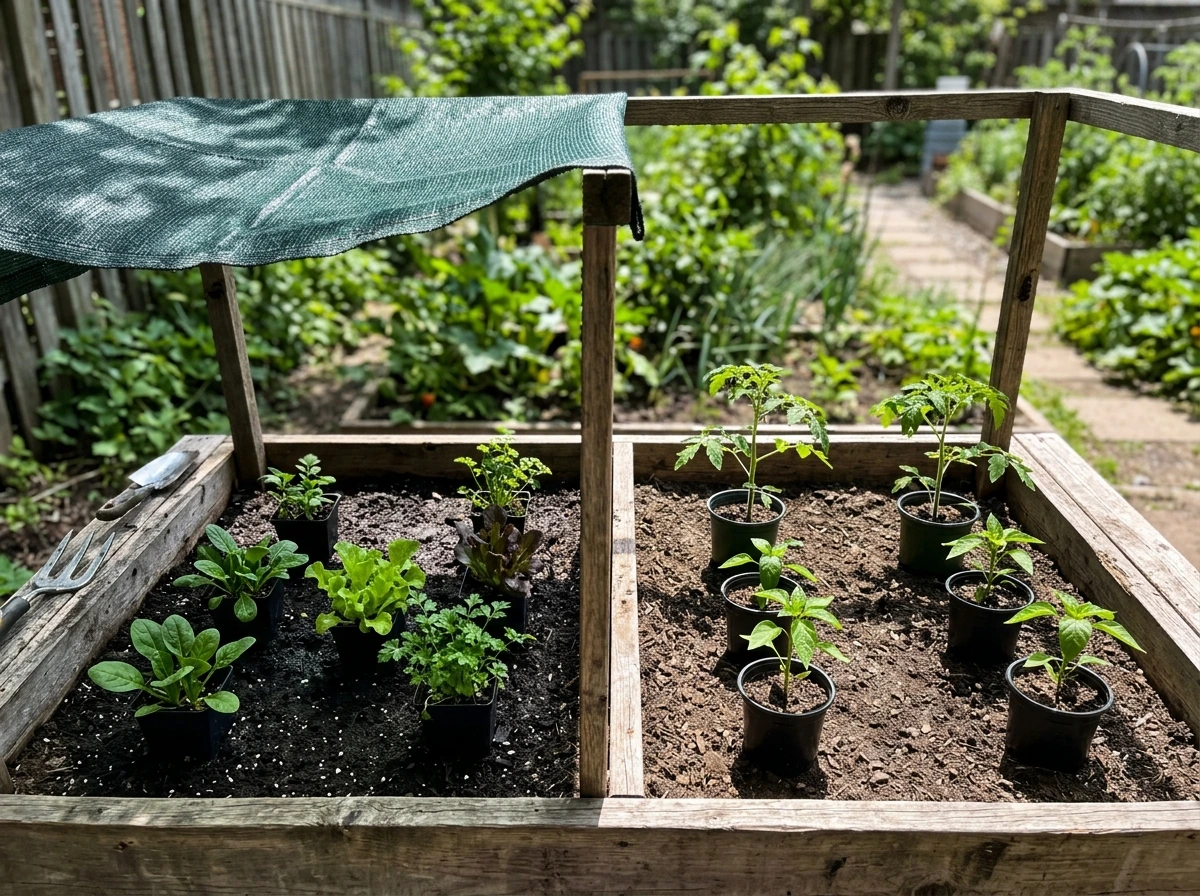
Fruit-bearing vegetables like tomatoes, peppers, melons, and squash need full sun, meaning at least 6 to 8 hours of direct sun per day. Crops grown for their leaves, stems, or buds, think lettuce, spinach, kale, and most herbs, can do well with 4 to 6 hours. This difference is actually useful: if you place a tall tomato or trellised bean on the north side of a bed, the shade it casts in the afternoon can shelter a bolting-prone lettuce during summer heat. That's companion planting working with light, not against it. OSU Extension specifically recommends planting tall or trellised crops on the north side of the garden to avoid shading shorter neighbors, and observing sun and shade patterns throughout the day before finalizing placement.
Watering Needs
Pairing a drought-tolerant herb like thyme with a moisture-hungry squash is asking for trouble. One plant will always be stressed. Group plants that want consistent moisture together, and let drought-tolerant companions share a drier zone. This becomes especially important in raised beds, which warm and drain faster than in-ground beds. OSU Extension notes that raised beds require more frequent watering, so if your bed dries out quickly, pairing water-hungry plants there means you're committing to more irrigation, and the companions sharing that space need to match that rhythm.
Spacing and Maturity Rate
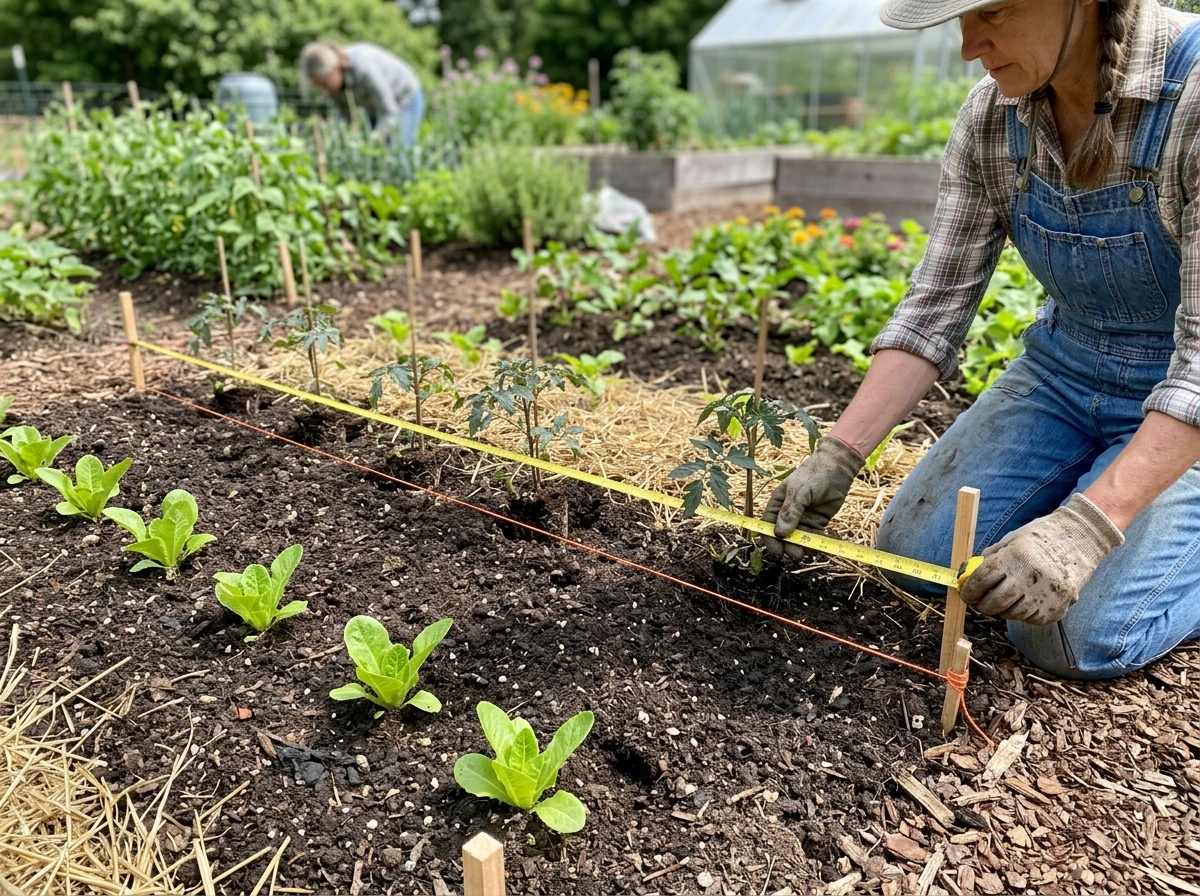
WVU Extension specifically calls out maturity rate, nutrient requirements, and size at maturity as the three things to evaluate when deciding what to interplant. A fast-maturing radish harvested in 30 days is a great neighbor for a slow-growing carrot because it's gone before the carrot needs the space. A large sprawling pumpkin vine, on the other hand, will smother almost anything you try to grow alongside it unless you plan spacing intentionally. Before planting, check the mature spread of every plant in the bed and make sure they have room to grow without crowding out their neighbors.
The Plant Factors That Make or Break a Pairing
Once you've matched light and water, you need to look at what's happening at the soil level. Soil chemistry, root structure, pH, and allelopathy are the hidden factors that determine whether a combination thrives or quietly fails.
Root Structure and Soil Depth
One of the most practical advantages of companion planting is pairing plants that use different parts of the soil profile. UMN Extension explains that plants with taproots or deep root systems pull water and nutrients from deeper layers, while shallow-rooted plants work the top few inches. Put them together and they're not competing, they're partitioning the resource. A classic example is deep-rooted tomatoes alongside shallow-rooted lettuce. Their roots occupy different zones, and the soil as a whole gets aerated more thoroughly than with either plant alone.
Soil pH and Nutrients
Most vegetables prefer a soil pH between 6.0 and 7.0, but there's variation within that range. Blueberries, for example, want a much more acidic soil (around 4.5 to 5.5) and don't play well with most garden vegetables as neighbors for that reason. When you're building a companion bed, group plants with similar pH preferences. Texas A&M AgriLife Extension also notes the nutrient rotation issue: heavy feeders pull a lot of nitrogen and phosphorus from the soil, so what follows them matters. This is as relevant in a multi-plant bed as it is in a seasonal rotation.
Allelopathy: When Plants Poison Their Neighbors
Some plants release chemicals that suppress or damage surrounding plants. The most well-documented example in home gardening is the black walnut tree, which produces a compound called juglone from its roots, hulls, and decomposing leaves. MSU Extension advises that if you're gardening near a black walnut, you should select juglone-tolerant vegetables and consider raised beds with root barriers to prevent walnut roots from infiltrating. UNH Extension explains that black walnut allelopathy comes from juglone accumulating, and that you can reduce toxicity by keeping gardens far away or using lined raised beds to limit root contact. Penn State Extension adds that even small concentrations of juglone from decaying roots can affect sensitive plants, and some vegetables may only tolerate growing outside the canopy drip line. Potatoes are particularly vulnerable. This isn't a minor footnote: if you have a black walnut tree anywhere near your garden, it changes your companion planting strategy from the ground up.
A Note on Pest Repellent Claims
A lot of companion planting folklore centers on one plant repelling pests from another. Some of this holds up, some doesn't. UMN Extension is direct about this: there's little research to support many commonly claimed repellent pairings, and some Extension sources contradict each other on the same claims. What does have support: thyme, onion, and nasturtium reduced cabbage looper and imported cabbageworm damage in broccoli in an Iowa study; basil and marigolds can reduce thrips in tomatoes under field and greenhouse conditions; and intercropping with basil may support tomato growth. Use those evidence-backed combinations and treat the rest as hypotheses worth testing in your own garden.
Best Plant Combinations by Garden Goal
Here are combinations that hold up across a range of conditions. These are organized by what you're trying to grow, not by abstract category, because that's how most people think about their garden.
Vegetable Combinations
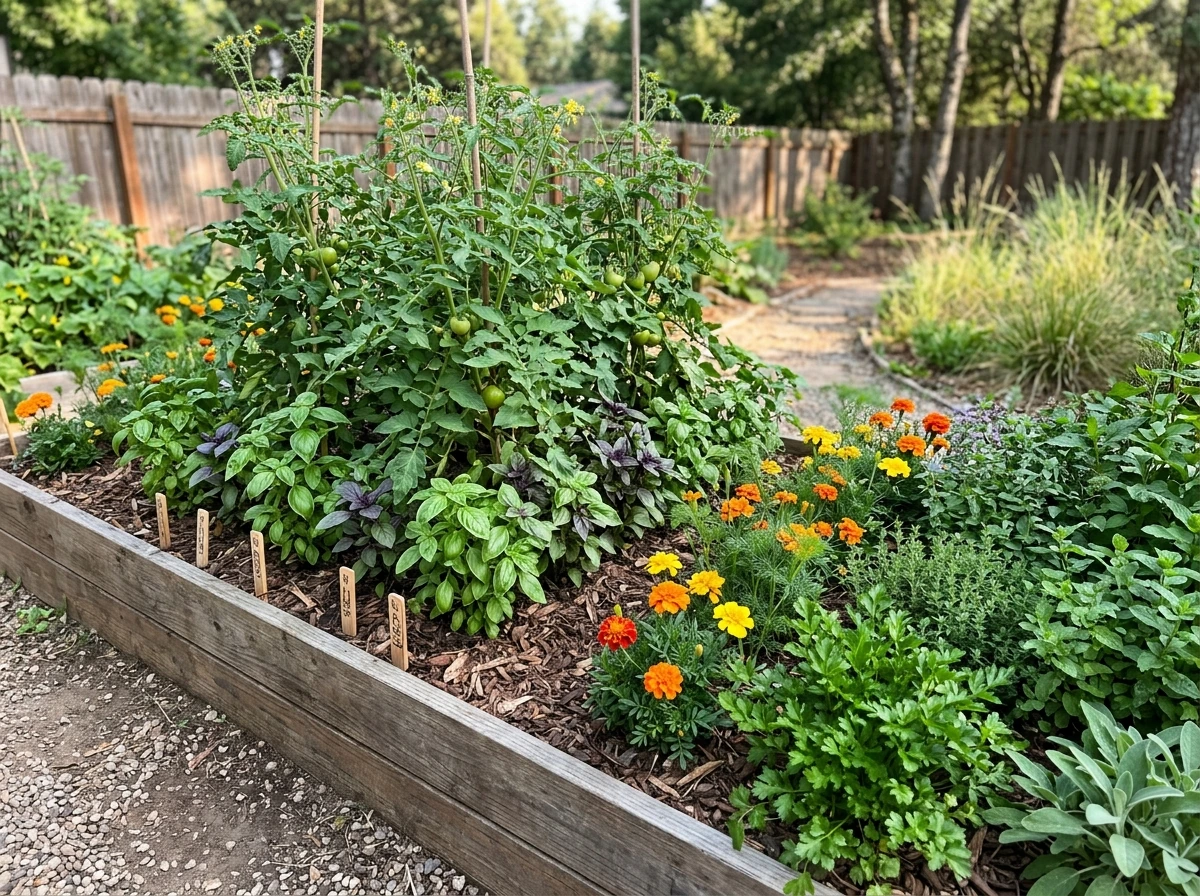
- Tomatoes + basil + marigolds: Basil may support tomato growth, and marigolds have evidence behind them for reducing thrips. All three prefer full sun and consistent moisture. A classic for a reason.
- Tomatoes + parsley or dill: WVU Extension lists parsley and dill as companions for tomato. Both attract beneficial insects and occupy different height tiers in the bed.
- Broccoli + thyme + nasturtium + onion: The Iowa study data supports this combination for reducing caterpillar pest pressure. Nasturtium also acts as a trap crop, attracting aphids away from the brassica.
- Bush beans + spinach + lettuce: WVU Extension lists this combination directly. Beans fix nitrogen, while lettuce and spinach are light feeders that harvest early, clearing space as the beans mature.
- Carrots + radishes: Radishes mature in 25 to 30 days and loosen the soil as they're pulled, giving carrots room to develop their taproots. Minimal competition.
- Squash + corn + beans (Three Sisters): A well-documented Indigenous polyculture. Corn provides structure for beans to climb, beans fix nitrogen for the heavy-feeding corn, and squash leaves shade the soil to retain moisture and suppress weeds.
- Spinach + strawberries: WVU Extension lists this pairing. Spinach fills the space between strawberry plants early in the season and is harvested before the strawberries need the full bed.
Herb Combinations
- Basil + tomatoes: Evidence-backed for both pest reduction and possible growth promotion.
- Dill + brassicas (broccoli, cabbage, kale): Dill attracts predatory wasps that feed on caterpillar pests. Don't let dill go fully to seed next to fennel, though, as they cross-pollinate and both lose flavor.
- Thyme + most vegetables: A low-growing, drought-tolerant herb that works as a living mulch around taller plants and has some pest-reduction evidence with brassicas.
- Parsley + tomatoes or asparagus: Parsley attracts beneficial insects and is shade-tolerant enough to grow under taller plants.
Flower Combinations
- Marigolds + tomatoes or peppers: French marigolds in particular have some evidence for reducing soil nematodes over time and thrips above ground.
- Nasturtiums + brassicas or cucumbers: Nasturtiums attract aphids, effectively pulling them away from food crops. They're also edible, so they earn their space twice.
- Borage + tomatoes or beans: WVU Extension lists borage with beans. Borage attracts pollinators and is anecdotally reported to deter tomato hornworm, though the research is thin on that last point.
Quick-Reference Pairing Chart
| Plant | Good Companions | Notes |
|---|---|---|
| Tomato | Basil, marigold, parsley, dill, borage, carrot | Full sun; basil and marigold have evidence-backed pest benefits |
| Broccoli / Cabbage | Thyme, onion, nasturtium, dill, celery | Nasturtium as trap crop; thyme + onion reduce caterpillar damage (Iowa study) |
| Bush Beans | Spinach, lettuce, borage, carrot, cucumber | Beans fix nitrogen; avoid onion family nearby |
| Lettuce / Spinach | Tomato, carrot, radish, strawberry, tall flowers | Tolerates partial shade; harvests early, freeing space |
| Carrot | Rosemary, sage, onion, lettuce, tomato | Onion family may deter carrot fly; avoid dill at flowering stage |
| Cucumber | Nasturtium, dill, beans, corn | Nasturtium deters aphids; beans add nitrogen |
| Pepper | Basil, marigold, carrot, parsley | Full sun required; shares companions with tomato well |
| Squash / Zucchini | Corn, beans, nasturtium, dill | Give squash room; sprawling habit crowds most neighbors |
| Strawberry | Spinach, lettuce, borage, thyme | Thyme as ground cover between rows; borage attracts pollinators |
| Basil | Tomato, pepper, asparagus | Avoid rue and sage as close neighbors |
What NOT to Grow Together
Incompatibilities matter just as much as the good pairings. Some of these are chemical, some are about competition, and some are about disease transmission, even in a hydrophytic environment. For a deeper look at specific conflicts, a dedicated resource on what plants do not grow well together covers these cases in more detail, but here are the most important ones to know before you plant. If you want to avoid trouble, it helps to learn what plants can grow next to each other with confidence, not just what to avoid hydrophytic environment.
| Combination to Avoid | Why |
|---|---|
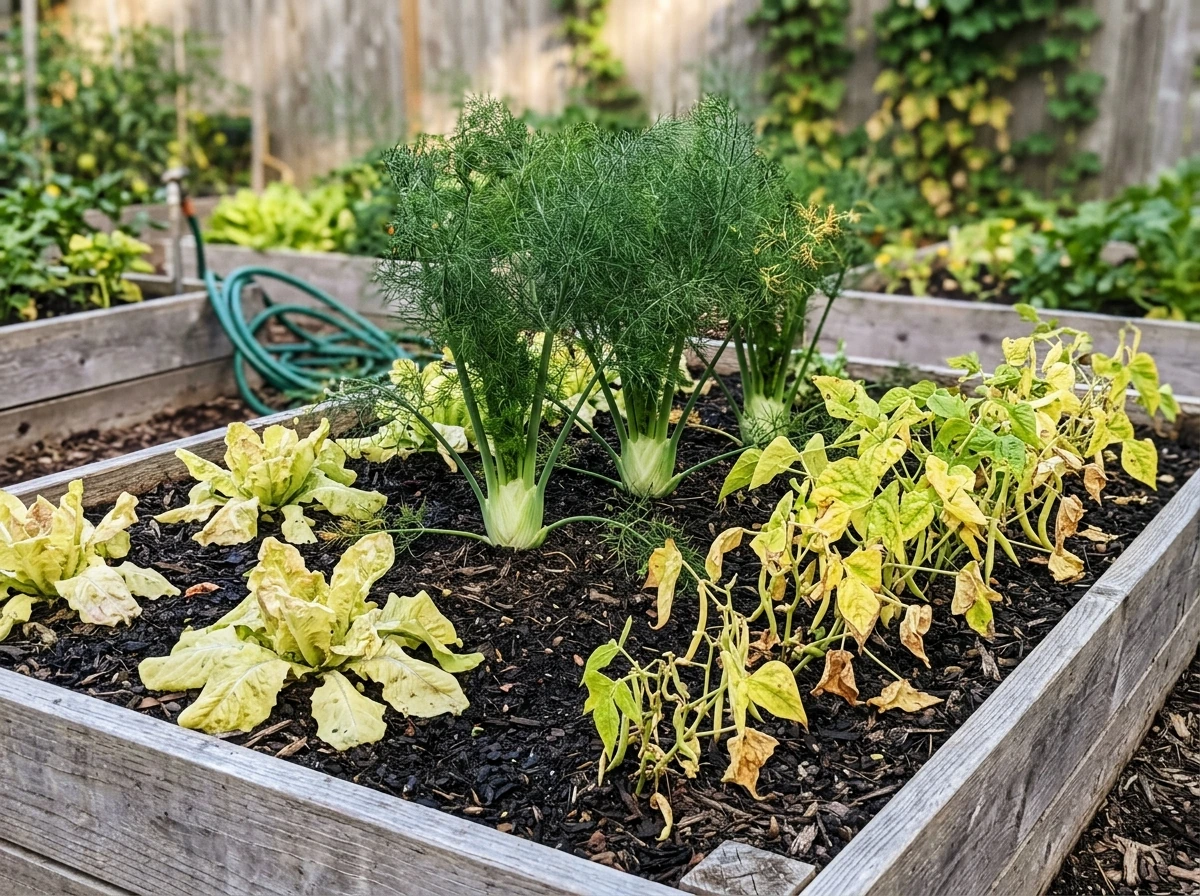
| Fennel + almost everything | Fennel releases allelopathic compounds that inhibit germination and growth in many vegetables, especially tomatoes, peppers, and beans. Grow it in its own container or isolated corner. |
| Onions / Garlic + beans or peas | Alliums suppress bean and pea growth. Keep them on opposite sides of the bed. |
| Tomato + brassicas (broccoli, cabbage, kale) | They compete heavily for nutrients and can share disease pressure. Despite some sources listing them as compatible, most Extension guidance separates them. |
| Potato + tomato (same bed) | Both are Solanaceae and share late blight (Phytophthora infestans). Growing them together creates a disease pressure concentration. |
| Potato + black walnut proximity | Juglone from black walnut roots severely stunts and wilts potato. Wisconsin Extension flags potato as especially vulnerable. |
| Dill (mature) + carrot | Mature dill cross-pollinates with carrot and can reduce seed quality. Fine as young plants, problematic once dill flowers. |
| Cucumber + aromatic herbs (sage, rosemary) | Strongly aromatic herbs can inhibit cucumber growth. Keep them separated. |
| Squash + potato | Heavy competition for nutrients and water; squash vines can also shade out potato foliage, reducing yield. |
| Basil + rue or sage | Rue in particular is allelopathic to basil; these should not share close quarters. |
Adapting Pairings to Your Climate, Season, and Soil
Generic companion planting charts are a starting point, not a prescription. WVU Extension is explicit that companion planting is not an exact science and that successful pairings vary by area. What works in a coastal Pacific Northwest garden with mild summers, consistent rainfall, and cool nights is not automatically what works in a hot, dry Texas garden or a short-season Minnesota plot. Here's how to adapt. UMD Extension also notes that dill can be grown from seed sown in spring after the danger of frost has passed.
Start with Your USDA Hardiness Zone
The USDA Plant Hardiness Zone Map is the baseline reference for understanding your temperature range. Your zone tells you frost dates, which determines your planting windows and which seasonal companions make sense. In Zone 5 (much of the upper Midwest and New England), your frost-free window is roughly May through September, so fast-maturing companions like radish, lettuce, and spinach are doing double duty as space-fillers before warm-season crops take over. In Zone 9 or 10 (parts of California, Texas, and Florida), you can layer companions across two or even three growing seasons in the same bed annually.
Match Companions to Your Soil Type
Heavy clay soil drains slowly, which means moisture-loving companions will fare better there initially, but you'll also have compaction issues that make deep-rooted companions (like carrots or parsnips) more valuable because their taproots break up the clay layer over time. In sandy, fast-draining soil, you need to group companions that tolerate drier conditions or invest in organic matter to hold moisture. WSU Extension recommends incorporating compost before planting or using it as surface mulch, and this matters especially when you're pairing plants with different moisture tolerances because compost helps buffer both extremes.
Use Seasonal Succession as a Companion Strategy
UMN Extension describes a practical approach that's worth building into every bed plan: grow cool-season crops like lettuce, spinach, and basil early in the season, then transplant warm-season crops like peppers and tomatoes into the same bed as the cool-season crops are harvested. The cool-season plants are functionally companions to the warm-season transplants for a few weeks, providing ground cover, reducing bare soil, and being out of the way before the summer crops need full space. Illinois Extension defines intercropping similarly: fast-growing vegetables among slow-growing ones, sharing space through different windows of the season.
Microclimate Adjustments
Your yard has microclimates regardless of your hardiness zone. A south-facing raised bed against a brick wall in Zone 6 can behave like Zone 7 in terms of soil warmth. OSU Extension notes that raised beds warm and drain faster in spring, allowing earlier planting in heavy clay soils, but they also require more frequent watering. A bed in partial shade from a fence or tree line limits your full-sun companion options but opens up a great space for shade-tolerant combinations like lettuce, spinach, and herbs. The site you choose shapes the pairings you can make. OSU Extension's direct advice: observe sun and shade patterns throughout the day and across the growing season before committing to a layout.
Step-by-Step: Laying Out a Companion Bed and Troubleshooting When It Fails
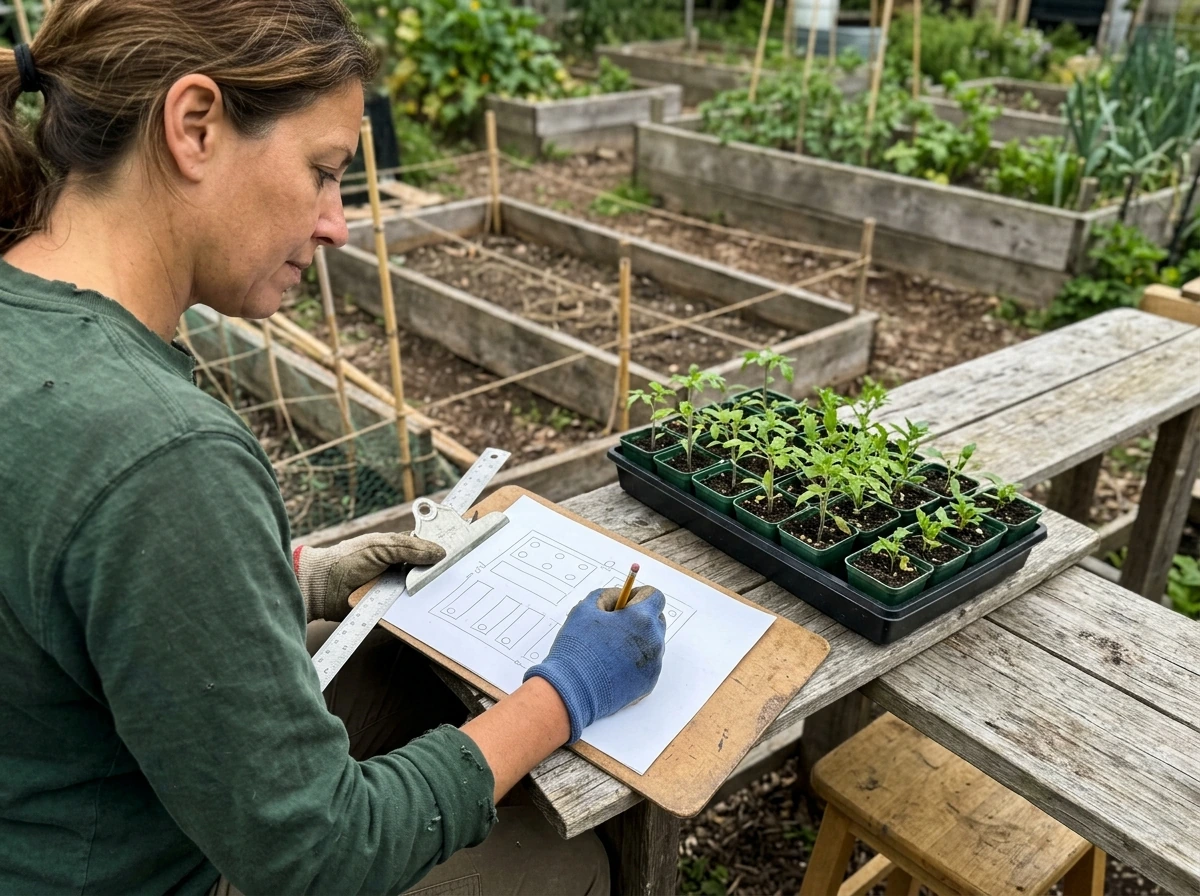
OSU Extension recommends planning your garden on paper before you touch the soil. It sounds basic, but drawing a bed map with plant spacing and arrangement prevents most of the common mistakes. Here's a process that works.
- Draw your bed to scale on paper. Note the orientation (which end faces north), any shade sources (fences, trees, buildings), and approximate dimensions. Mark the north side where tall or trellised plants will go.
- List the plants you want to grow and sort them by light need (full sun vs. partial shade tolerant) and water need (consistent moisture vs. drought tolerant). Group similar needs together.
- Check mature spacing for each plant and block out their footprint on your drawing. A tomato plant needs 24 to 36 inches of space; a lettuce plant needs 6 to 12 inches. Make sure companions fit without crowding at maturity, not just at transplant size.
- Assign a maturity date to each plant. Fast-maturing plants (radishes, lettuce, spinach) can occupy space that slower plants will eventually need. Plan what fills in when the fast crops are harvested.
- Check your pairings against the incompatibility list above. Swap out any conflicting neighbors before you plant, not after.
- Amend your soil before planting. Incorporate compost, do a pH test if you haven't recently, and make sure drainage is adequate for the companions you've chosen. OSU Extension warns specifically against planting near shrubs or trees that compete for water and nutrients.
- Plant according to your map. Set tall plants (tomatoes, trellised beans, corn) on the north side. Place shade-tolerant companions where afternoon shade will fall. Transplant cool-season crops first if you're using the seasonal succession approach.
- Label everything and note planting dates. This isn't optional if you want to improve over time. WVU Extension recommends recording outcomes year to year because companion planting results vary by location.
- Monitor for signs of failure: yellowing leaves (nutrient competition or pH mismatch), stunted growth (allelopathy or root competition), bolting in shade-planted crops (insufficient light), or wilting in dry periods (mismatched water needs). Identify the specific cause before assuming the pairing is wrong.
- After harvest, rotate your planting families. Following a heavy feeder like tomato or corn with a nitrogen fixer like beans or peas, or a light feeder like lettuce, keeps your soil balanced across seasons. Texas A&M AgriLife Extension notes that following heavy feeders without attention to soil testing and fertilization leads to nutrient deficiencies over time.
Troubleshooting Common Problems
| Symptom | Likely Cause | Fix |
|---|---|---|
| One plant significantly smaller than expected | Root competition or allelopathy from neighbor | Check for allelopathic plants nearby (especially fennel or black walnut); increase spacing or move the affected plant |
| Both plants yellowing or stunted | Nutrient competition or pH mismatch | Soil test; add targeted amendment; separate heavy feeders |
| Shade-planted crop bolting early | Too much light or heat from reflective surfaces | Add more shade cloth or move shade-tolerant crops further from reflective walls |
| Pest pressure concentrated on one plant despite companion planting | Companion pairing lacked evidence backing, or density of pests exceeded companion benefit | Increase density of repellent companion; add physical barriers; revisit which pairing you used |
| Moisture-loving plant wilting despite irrigation | Fast-draining bed drying out too quickly, or companion plant is out-competing for water | Add compost to increase water retention; separate drought-tolerant and moisture-loving plants |
| Disease spreading quickly across bed | Plants from the same family grouped too closely (e.g., tomato and potato) | Separate plants from the same family across the bed; practice crop rotation next season |
The most practical thing you can do after reading this is to start a notebook, an actual or digital record of what you planted together, what date, what your conditions were, and what happened. WVU Extension says it plainly: record your observations and outcomes year to year. Companion planting is location-specific, and your garden will teach you more than any chart can if you're paying attention. Contact your local Extension office if you want region-specific pairing advice, especially for unusual soil conditions or local pest pressures. They'll know what actually works in your county.
FAQ
What are the fastest ways to tell if two plants will “fight” in the same bed before I plant them?
Do a quick compatibility check using three signals: (1) match their light and watering rhythms on paper, (2) confirm mature width so one plant cannot shade or crowd the other for the last third of the season, and (3) consider root depth and possible chemical issues. If either plant needs a very different soil pH (for example, blueberries versus most vegetables), assume the bed will underperform unless you use a dedicated soil pocket or container.
Can I use companion planting in containers, or does it only work in-ground?
You can use it in containers, but spacing and watering become stricter. Raised beds and containers dry faster than in-ground, so pair plants with similar moisture needs, and prioritize “same water, compatible light” over complex nutrient-rotation ideas. Also, root systems in pots interact more quickly, so deep-root and shallow-root partitioning helps less than it does in larger soil volumes.
How do I choose companions if my bed gets partial shade part of the day?
Start by tracking sun patterns at least one full growing cycle, then assign tall or trellised crops to the side that does not cast the longest afternoon shade. For the shaded portion, pick shorter, bolt-sensitive crops that tolerate 4 to 6 hours (or whatever your measured window is), and avoid pairing shade-tolerant plants with neighbors that require full sun if the shade overlaps their peak growth period.
What if I want to plant a fast crop next to a slow crop, but the fast crop also attracts pests?
Use the maturity-speed strategy, but pair with pests-aware companions. For example, radish as a space-filler is fine next to carrots, but if your fast crop is a magnet for the same pest as the slow crop, you may need a third plant (like evidence-backed basil with certain tomato pests) or physical controls (row cover) during the fast crop’s short window.
Is it ever worth overriding a “don’t pair” chart if my garden soil conditions are unusual?
Only when the conflict is likely to be mitigated by technique. You can sometimes offset nutrient imbalance with targeted fertilizing, and you can reduce root competition by using barriers or wider spacing. But if the issue is pH mismatch or suspected allelopathy from nearby trees (like juglone risk), don’t rely on workaround planting. Build separate beds with compatible soil instead.
How do I prevent nutrient depletion or nitrogen “hogging” when multiple heavy feeders share a bed?
Plan feeder levels and timing. Group plants by how much nitrogen they need, and avoid stacking several heavy feeders that peak at the same time. If you do interplant heavy feeders, add compost or amendments ahead of planting and consider splitting fertilizer applications rather than a single dose, so the slow growers are not left behind when the fast growers spike first.
What should I do if one plant is doing great and the other is struggling, even though I matched light and watering?
Re-check spacing at maturity and inspect soil chemistry. Crowding often shows up as the “mystery failure” even when daily watering seems correct, especially in warm-season crops. If growth looks stunted while moisture is adequate, test soil pH and consider root-zone competition or chemical incompatibility, then adjust by thinning, pruning, or separating in the next cycle with raised-bed zones or containers.
Are allelopathy problems only from big trees like black walnut, or can it happen with smaller plants too?
It can happen with other species, but black walnut is the most consistently problematic in home gardens because juglone can move through soil from roots and decaying material. If you suspect allelopathy, the safest approach is to avoid using that soil area for sensitive crops, or switch to raised beds with a root barrier and fresh soil for the most vulnerable plants.
What’s the best record-keeping approach so I can improve pairings each year?
Log four things every time: bed location, exact plant varieties, transplanting or sowing dates, and a simple weekly note on outcomes (vigorous, average, failing) plus any pest or disease sightings. Include weather notes like heat waves or unusually wet weeks. Over time, you’ll learn which pairings are stable under your microclimate and which only work in specific seasons.
When should I contact my local Extension office instead of guessing with companion planting combos?
Contact them when you have a high-stakes constraint, like unusual soil (very acidic, very sandy, or drainage problems), persistent pest pressure that keeps returning, or a suspected toxic-plant situation near your property. They can also help you translate hardiness zone timing into your actual frost dates and growing window, which is often the deciding factor in what “works together” for your specific county.