Plants that grow tall and narrow include columnar conifers like Emerald Green arborvitae (15–18 feet tall, just 2–3 feet wide), Sky Pencil Japanese holly (10 feet tall, roughly 2.5 feet wide), upright ornamental grasses like Karl Foerster feather reed grass (4–5 feet tall, 1.5–2 feet wide), and trained climbers like star jasmine (10–20 feet on a trellis). Which one actually works for you depends heavily on your climate zone, soil drainage, sun exposure, and whether you need the plant to stay narrow on its own or with some help from pruning and training.
What Plants Grow Tall and Narrow: Best Options

Dr. Marcus Weatherby
5 May 2026
Tall and narrow plant types by category
Columnar trees and conifers
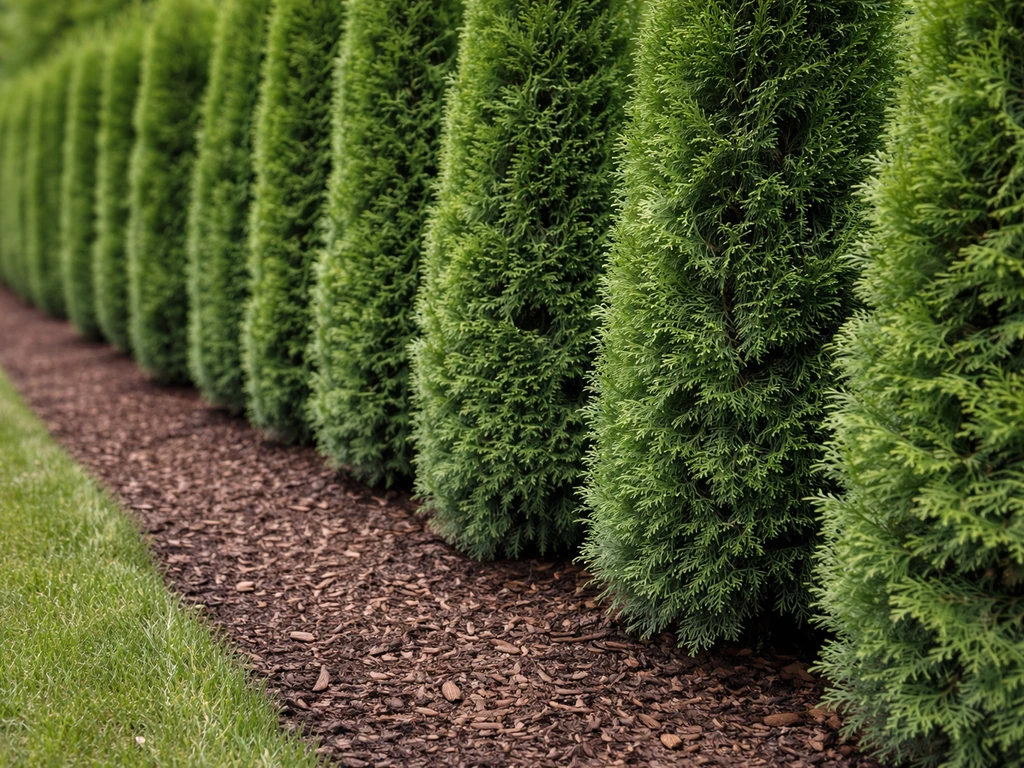
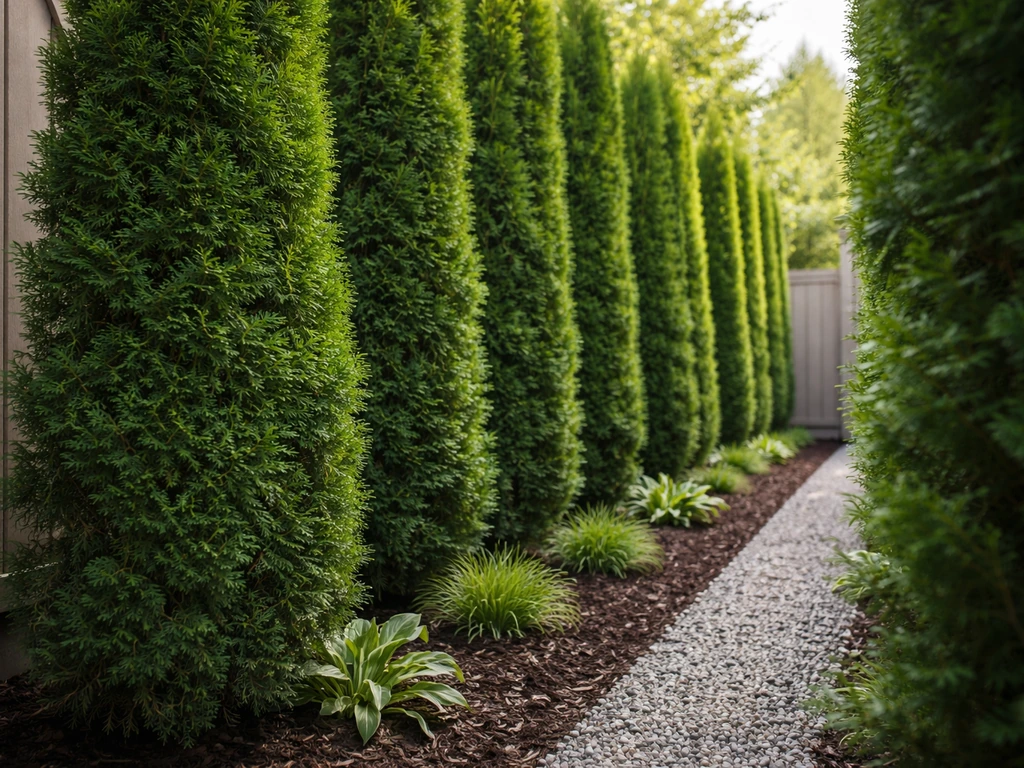
Columnar conifers are the workhorses of narrow planting. If you want plants that do not grow flowers, focus on foliage-forward evergreens and grasses rather than flowering shrubs. They hold their form year-round, require minimal training, and many are cold-hardy enough to survive harsh winters. Emerald Green arborvitae (Thuja occidentalis 'Smaragd') is one of the most reliable picks: it matures at 15–18 feet tall and just 2–3 feet wide, stays naturally dense, and holds its bright green color through winter. Techny arborvitae is a tougher alternative for exposed or windy sites in the upper Midwest. Sky Pencil Japanese holly is a different beast entirely: it grows to about 10 feet tall and less than 3 feet wide, with a dramatically upright, almost cylindrical form that makes it excellent for tight urban spots, though it's only reliably hardy to USDA zone 6. Italian cypress (Cupressus sempervirens) reaches 40–70 feet tall in warm climates while staying just 3–5 feet wide, making it the columnar tree of choice in Mediterranean-climate gardens.
Upright shrubs
Among shrubs, upright junipers (Juniperus scopulorum cultivars like 'Skyrocket' or 'Blue Arrow') naturally grow in a narrow column 10–15 feet tall and 2–3 feet wide. They tolerate poor soils and drought better than arborvitae, which makes them the smarter pick for dry, rocky, or clay-heavy sites in the Mountain West and Great Plains. Swedish columnar aspen (Populus tremula 'Erecta') is a deciduous shrub-tree option for cold climates that grows fast and stays relatively narrow, though it does spread by suckers if you are not careful.
Ornamental grasses
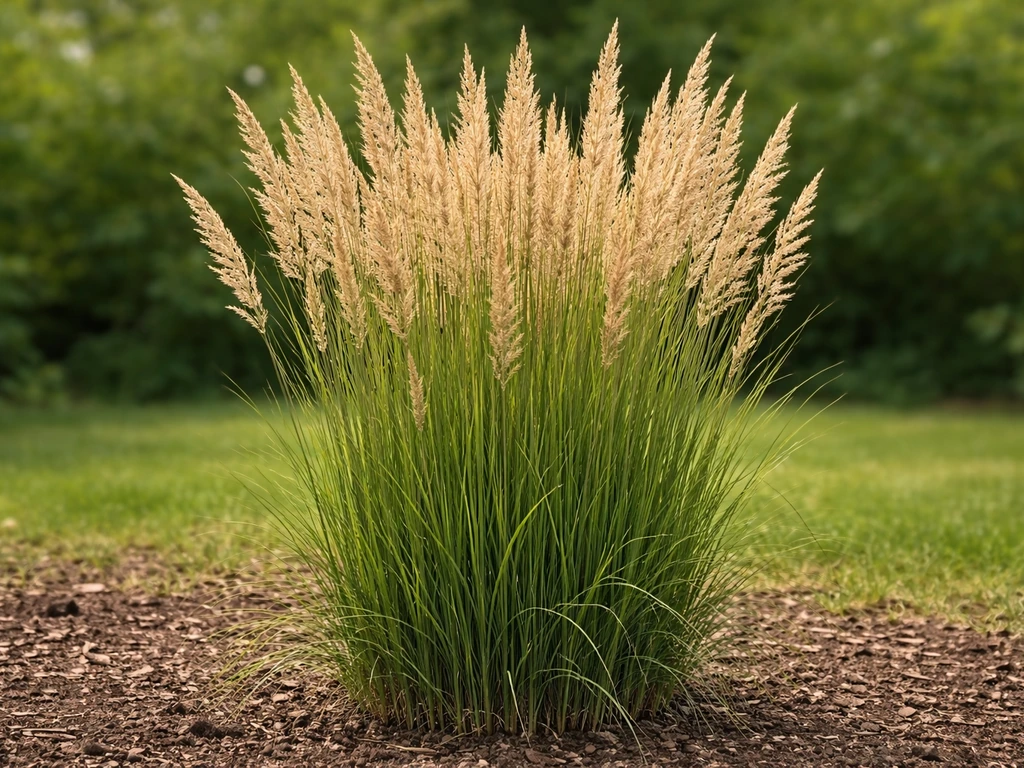
Ornamental grasses give you a different kind of vertical: feathery, dynamic, and surprisingly compact. Karl Foerster feather reed grass (Calamagrostis x acutiflora 'Karl Foerster') is the standard-bearer. UW, Madison Extension also reports that 'Karl Foerster' is hardy in USDA plant hardiness zones 3, 9 and that its flower stems typically appear in early summer at about 5, 6 feet tall Karl Foerster feather reed grass (Calamagrostis x acutiflora 'Karl Foerster') is the standard-bearer.. It reaches 4–5 feet tall with plumes and spreads only 1.5–2 feet wide, forming a clean upright clump that looks good from summer through winter. It's cold-hardy to zone 4 and handles clay soil better than most ornamental grasses. Morning Light maiden grass (Miscanthus sinensis 'Morning Light') grows 5–6 feet tall in a fountain form, a bit wider than Karl Foerster, so it works better where you have a few more inches of space. Unlike the conifers covered here, grasses die back in winter and re-emerge in spring, which changes the seasonal picture significantly.
Climbers and trained vines
If you have a fence, wall, or trellis, climbers and vines let you achieve 10–20 feet of height in very little horizontal space. Star jasmine (Trachelospermum jasminoides) is a twining evergreen vine that reaches 10–20 feet tall when supported and stays just a foot or two wide if trained on a vertical structure. Missouri Botanical Garden’s Plant Finder lists Trachelospermum jasminoides with a USDA zone range of 8 to 10 and a height range up to 3 to 20 feet Star jasmine (Trachelospermum jasminoides) is a twining evergreen vine that reaches 10–20 feet tall. It's suited to zones 7–10 and is particularly effective in warm, humid climates. Climbing hydrangea and trumpet vine offer similar vertical reach in temperate climates. The key with all climbers is providing the right structure from day one: once they spread laterally, getting them back to a narrow column takes significant effort.
Choosing the right plant for your specific site
Before you pick a plant, work through four conditions at your site: sun, soil, available space (height and width), and wind. Columnar arborvitae and most junipers want full sun (at least 6 hours), and they thin out and lose their density fast in shade. Sky Pencil holly tolerates partial shade, which makes it useful on the shaded side of a building. Soil drainage matters enormously: arborvitae struggles in consistently wet soil or heavy clay, while Karl Foerster grass actually handles clay well. Junipers thrive in poor, dry, or rocky soils where arborvitae would languish.
Wind is a factor that most gardeners underestimate. A narrow plant in a high-wind corridor will lean, lose branches on the windward side, and desiccate in winter if it's an evergreen. Junipers and white spruce handle wind better than arborvitae. If you are planting in a genuinely windy corridor, look at species with flexible wood and deep root systems, and plan to stake new plantings for the first two growing seasons.
Also be realistic about mature width. Some plants are sold as narrow but grow wider with age. A few cultivars that look columnar in a nursery pot spread to 5–6 feet wide at maturity. Always check the mature spread, not just the height, and give the plant slightly more room than it needs at planting. Consulting your local extension office or a regional nursery for cultivar-specific performance in your area is worth the ten-minute conversation.
Matching plant to climate zone
Climate is the filter that narrows your list before anything else. Here is how the main plant groups shake out by climate region.
| Climate / Region | Best tall-narrow options | Notes |
|---|---|---|
| Cold temperate (zones 3–5, upper Midwest, Canada) | Techny arborvitae, Black Hills white spruce, Karl Foerster grass, columnar Swedish aspen | Prioritize wind hardiness; avoid Italian cypress or star jasmine |
| Temperate (zones 5–7, mid-Atlantic, PNW, central plains) | Emerald Green arborvitae, 'Skyrocket' juniper, Sky Pencil holly (zone 6+), Karl Foerster grass | Broadest plant selection; confirm drainage before choosing arborvitae |
| Hot and humid (zones 7–9, Southeast, Gulf Coast) | Sky Pencil holly, star jasmine on trellis, Leyland cypress, bamboo (clumping varieties) | Leyland cypress grows fast but watch for disease in humid climates |
| Hot and dry (zones 7–10, Southwest, Mountain West, Mediterranean) | Italian cypress, 'Blue Arrow' juniper, desert willow trained narrow, Mexican fan palm (columnar) | Drought tolerance is essential; avoid moisture-demanding arborvitae |
| Mild maritime (zones 8–10, coastal California, PNW lowlands) | Italian cypress, star jasmine, 'Sky Pencil' holly, columnar apple/pear (espalier) | Mild winters expand options; espalier works well against warm walls |
In cold climates, evergreen conifers like white spruce and arborvitae do the heavy lifting because they provide year-round screening and handle freeze-thaw cycles. In hot, dry climates, junipers and Italian cypress dominate because they tolerate drought and reflected heat from walls and pavement. In humid subtropical zones, disease pressure shifts the calculus: Leyland cypress grows fast (2–3 feet per year) but is prone to canker diseases in the Southeast, so Sky Pencil holly or well-maintained climbing plants on trellises often hold up better long-term.
When they grow and how fast to expect height
Growth rate matters as much as mature size when you are trying to solve a privacy or screening problem. If you are wondering what plants grow quickly for a privacy screen, focus on species with naturally fast vertical growth and plan for the right spacing and care to keep them narrow. Tall and narrow plants fall into a wide spectrum: some sprint to height, others take a decade to get there. If you prefer a lower profile, look for plants that do not grow tall and still provide dense coverage for privacy or landscaping. If you are looking for plants that grow slow, focus on species known for steady, gradual growth and build your privacy plan around their eventual mature size.
- Karl Foerster feather reed grass: emerges in early spring (late March to April in the Midwest), reaches full height by June or July, and holds its structure through winter. It is one of the earliest ornamental grasses to show growth. Cut it back to a few inches above the ground in April before new growth starts.
- Emerald Green arborvitae: grows 6–9 inches per year on average, so it takes roughly 10–15 years to reach its 15-foot mature height. Plant it now if you want screening in 5 years; you will have a solid 5–7 foot hedge by then.
- Italian cypress: grows 1–2 feet per year in warm climates, reaching useful screening height (15–20 feet) in 10–15 years.
- Leyland cypress: fast at 2–3 feet per year, reaching 30–40 feet in 10–15 years if conditions are right.
- Star jasmine on a trellis: a moderate grower that adds 3–6 feet per year in warm climates once established (the first year it focuses on root development).
- Sky Pencil holly: slow to moderate, adding roughly 4–6 inches per year, so patience is required for this one.
The fastest-growing options overlap with a related category of plants that grow tall and fast, and if speed is your primary concern, you may want to compare those choices directly. Some examples of plants that grow fast include certain cypress types, bamboo, and fast-growing poplars, but it helps to match speed to your site and spacing needs. For most narrow-footprint situations, though, the fastest growers (Leyland cypress, bamboo, some poplars) come with trade-offs in root behavior, disease susceptibility, or eventual width that offset the speed advantage. If you specifically want speed, Leyland cypress is often compared for its rapid height alongside other tall, fast-growing options tall and fast-growing options.
Seasonal timing for planting matters too. For bare-root and balled-and-burlapped conifers in cold climates, fall planting (September to October) or early spring (March to April, before new growth starts) gives roots the best establishment window. Container-grown plants can go in the ground at almost any time, but midsummer planting in hot climates demands consistent irrigation for the first season.
Spacing and planting for a narrow footprint
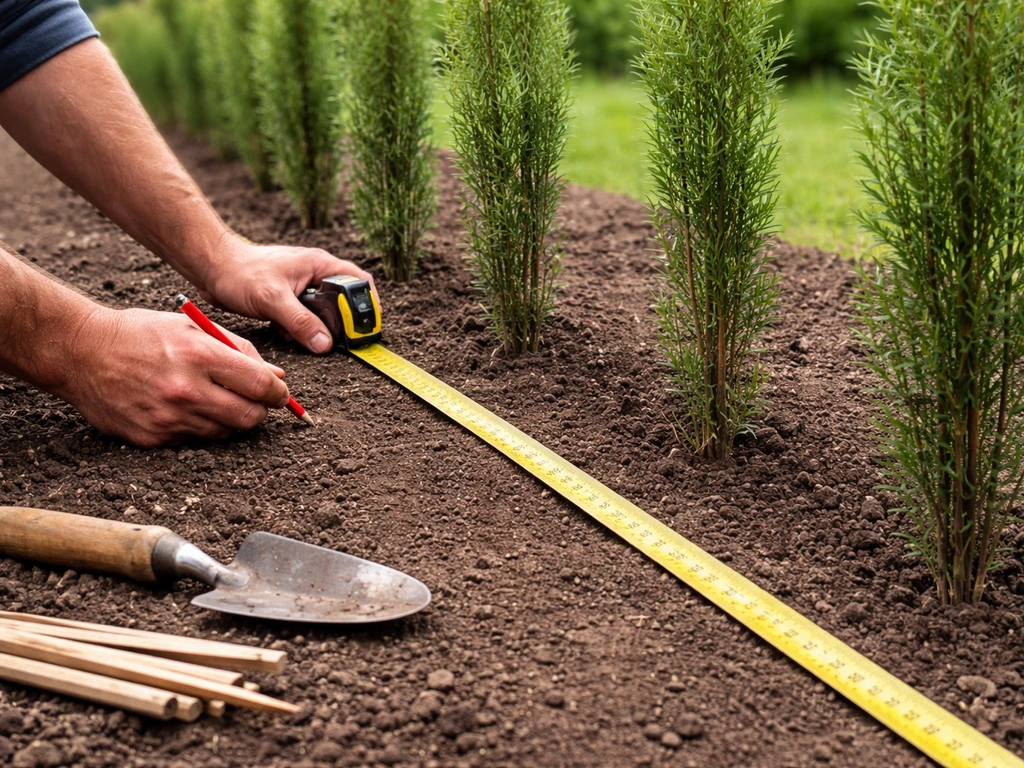
Getting spacing right from the start determines whether you end up with a clean privacy screen or a crowded, unhealthy row of plants fighting each other for light and nutrients. The general principle is this: space plants based on their mature spread, not their current size. A plant that is 2 feet wide today but will be 4 feet wide at maturity needs 4 feet of spacing, not 2.
For formal screening or windbreak rows, here are the working guidelines used by extension programs across the country. Within a row, shrubs can be spaced 4–6 feet apart; junipers and cedars 6–8 feet; pines and spruce 10–14 feet. If you are planting multiple rows for a windbreak, leave 6–10 feet between rows. For a single-row privacy screen using Emerald Green arborvitae specifically, 3–4 feet on center gives you a solid, touching screen at maturity while still leaving room for each plant to develop properly. Tighter than that and you risk crowding out the lower branches and creating gaps at the base.
For containers and patio planting, columnar forms like Sky Pencil holly and columnar junipers work well in large pots (at least 15–20 gallons for a mature plant). Use a well-draining potting mix, elevate the container slightly for drainage, and water more frequently than in-ground plants since containers dry out faster. Container plantings rarely reach the same height as in-ground specimens, so temper your expectations if you are going this route for a tall screen.
For espalier and trellis systems (the approach that creates the narrowest possible footprint), plan a support structure first. A trellis mounted 4–6 inches from a wall gives air circulation and a framework to tie branches. Space espalier plants 6–12 feet apart along a wall to allow lateral arm development without crowding. Star jasmine, climbing roses, and even certain fruit trees work in this system.
Keeping them narrow: pruning, watering, and soil prep
Pruning and training
Most truly columnar plants need minimal pruning if you chose the right cultivar for your space. But there are a few situations where intervention keeps the form tight. For columnar arborvitae, the biggest structural issue is multiple leaders (competing tops) that can cause the plant to split open in heavy snow. The guidance from extension programs is to allow no more than three leaders on pyramidal or columnar arborvitae, and ideally just one central leader. If you see a competing leader developing, remove it in early spring before growth flushes. For junipers, light tip pruning in late spring after new growth extends will thicken the plant and maintain density without opening up the interior.
For vines and climbers trained to a trellis or wall, prune to a narrow plane by removing any lateral shoots that push away from the support structure. This is the core idea behind espalier: you are redirecting the plant's energy into vertical and along-the-wall growth rather than outward growth. Wisconsin Extension notes that espalier is one of the most effective tools for maintaining plants in genuinely tight spaces, and it works on a wider range of plants than most gardeners realize, including apples, pears, pyracantha, and some hollies.
Ornamental grasses need a different approach entirely. Cut them back hard (to 4–6 inches above the crown) in early spring before new growth emerges. In Iowa and similar climates, that means April. In the Pacific Northwest and other mild climates, late February to March works. Do not cut them back in fall: the dried stems provide winter structure and protect the crown in cold climates.
Watering
Newly planted tall-narrow trees and shrubs need consistent moisture during their first two growing seasons to establish root systems deep enough to support their eventual height. If you want plants that stay short and narrow, look for dwarf or columnar cultivars that have a limited mature height not grow very tall. Water deeply and infrequently rather than shallowly every day: aim for slow, deep irrigation that reaches 12–18 inches into the soil. Once established, columnar junipers and Italian cypress are genuinely drought-tolerant and perform better with less water. Arborvitae stays moisture-hungry and will show bronze, dying foliage if it dries out in summer or is desiccated by winter wind without adequate soil moisture going into freeze-up.
Soil preparation
Most columnar conifers and upright shrubs want well-drained soil above almost anything else. Before planting in clay-heavy or compacted soil, dig the planting hole 2–3 times as wide as the root ball (but no deeper than the root ball height) and amend the backfill with compost to improve drainage and structure. Avoid the old practice of digging a deep hole and filling the bottom with gravel: it creates a perched water table that drowns roots. For ornamental grasses, good drainage is equally important, but they are more forgiving of clay than conifers. Apply 2–3 inches of mulch around newly planted specimens, keeping it away from the trunk, to retain moisture and regulate soil temperature.
What goes wrong and how to fix it
The plant is getting wide, not tall
This usually means one of two things: you planted the wrong cultivar, or the plant is getting too much shade and is reaching outward for light. Some arborvitae cultivars sold as narrow will reach 5–6 feet wide at maturity despite looking like a pencil in the nursery pot. If the plant is young and in the wrong spot, moving it to a full-sun location can help. If it is the wrong cultivar, the honest fix is to replace it with a verified narrow selection like 'Smaragd' (Emerald Green) or 'Degroot's Spire'. Consult a local nursery or extension office for cultivars that have proven to stay narrow in your region.
Leggy or sparse growth
Leggy, open growth with bare stems and sparse foliage is almost always a light problem. Most tall-narrow conifers and upright shrubs require full sun to stay dense. In partial shade, they put energy into stretching upward rather than filling out, and the interior branches die out. The fix: if possible, improve light by trimming overhanging branches of neighboring trees. If the site is permanently shady, switch to a shade-tolerant option like Sky Pencil holly, which handles partial shade better than junipers or arborvitae.
Flopping or leaning
Tall ornamental grasses and some upright shrubs flop open in the center or lean significantly, especially after rain or wind. For Karl Foerster grass, flopping is unusual (it is one of the more self-supporting ornamental grasses), but if it happens, it often means the plant is in too much shade or the soil is overly rich and nitrogen-heavy, causing soft, rapid growth. Reduce or eliminate nitrogen fertilizer. For arborvitae with multiple leaders, snow load causes the top to splay open: tie the leaders gently together with soft tree ties in late fall before snow season as a preventive measure.
Pests and disease
Bagworms are a serious pest on arborvitae, juniper, and many other conifers in the Midwest and East. They appear as small, spindle-shaped bags hanging on branches and can strip a plant of foliage if left unchecked. Hand-pick bags in late fall and winter (when they are visible), or apply Bt (Bacillus thuringiensis) spray in late spring when larvae are small and actively feeding. Spider mites hit arborvitae in hot, dry summers, causing bronzing and stippling on foliage. A strong spray of water dislodges them; serious infestations benefit from a miticide application.
Nutrient and browning issues
Interior browning on conifers is often normal (older interior needles drop naturally), but widespread browning signals a problem. Winter desiccation on arborvitae turns foliage brown on windward sides: water thoroughly in late fall before the ground freezes and consider an anti-desiccant spray on exposed plants. Yellowing new growth often indicates iron or nitrogen deficiency, which is common in alkaline soils. A soil test will confirm it, and acidifying fertilizers or chelated iron can correct it. Avoid high-nitrogen fertilizers on established conifers: they push soft growth that is more vulnerable to pests, disease, and winter injury.
FAQ
How close can I plant tall and narrow evergreens for a privacy screen without creating gaps at the base?
Use spacing based on mature width, not current size, and if you are aiming for a tight row with Emerald Green arborvitae, plan about 3 to 4 feet on center. Closer than that often crowds lower branches, so you can end up with a narrower “top but open bottom” look even if the plants are healthy.
What’s the best tall and narrow option for a site that gets full sun in summer but lots of winter wind?
For evergreen narrow plants, wind desiccation is a common failure point. If you cannot shelter the site, consider junipers or white spruce over arborvitae, and make sure you water deeply in late fall (before the ground freezes). For arborvitae specifically, an anti-desiccant spray and gentle leader tying (where snow loads splay branches) can prevent winter browning.
Can tall and narrow plants stay narrow without pruning if I choose the right cultivar?
Many do, but “no pruning” only applies when the cultivar matches your site conditions. If a narrow plant is placed in partial shade or poor drainage, it often grows less densely and outward for light, which can make it appear wider. Even columnar forms may need light corrections for competing leaders (arborvitae) or tip pruning (junipers) to maintain the tight column.
Why does my narrow arborvitae look like it’s stretching upward but not thickening?
That pattern usually points to insufficient light (partial shade) or nutrient imbalance. Dense columnar growth generally requires at least about 6 hours of sun, and heavy nitrogen can also trigger soft, leggy growth. If the site is shaded, switching to a cultivar that tolerates partial shade (like Sky Pencil holly) is often more reliable than trying to “fix” it with fertilizer.
My tall and narrow plant widened more than expected, what should I check first?
Check the mature spread printed on the plant tag or local nursery notes, because some “pencil-like” nursery stock develops into a much wider adult form. Then verify your spacing and soil conditions, because stress can cause uneven branching and a wider look. If the cultivar truly is narrow for your region and it still widened, overcrowding or persistent low light are common drivers.
Is it better to plant fall or spring if I’m installing a narrow row for screening?
For cold climates with bare-root or balled-and-burlapped conifers, fall (roughly September to October) or early spring (March to April before new growth) gives roots the best establishment window. For container plants, you can plant most times, but in hot climates midsummer planting works only if you commit to consistent deep irrigation during the first season.
Do ornamental grasses count as tall and narrow if they die back in winter?
They can, but you should plan for seasonal disappearance of the “vertical” look. Grasses like Karl Foerster die back to the crown in winter and re-emerge in spring, so they do not provide year-round screening. Also, don’t cut them in fall, the dormant stems help protect the crown in cold climates.
How do I prevent flopping in a tall upright clump after rain or wind?
Flopping often comes from shade or overly rich, nitrogen-heavy soil that produces soft growth. For example, Karl Foerster usually holds its form, so if it leans, reduce or stop nitrogen fertilization and consider improving sun exposure. If the soil is consistently wet or shaded, the plant may need a site change rather than just staking.
What’s the right pruning timing to keep columnar arborvitae tight during snow season?
Competing leaders are the main structural risk for splitting open. If you see a second or extra top forming, remove the extra leader in early spring before the growth flush. For existing multi-leader plants, gently tie leaders together in late fall before snow to reduce splaying under load.
How often should I water a newly planted tall and narrow tree or shrub to help it stay dense?
During the first two growing seasons, keep moisture consistent so roots establish to support eventual height. Use deep, infrequent watering rather than frequent light watering, aim for irrigation that reaches roughly 12 to 18 inches into the soil. After establishment, water needs usually drop significantly for drought-tolerant options like columnar junipers and Italian cypress.
Can I grow tall and narrow plants in containers without losing the column shape?
Yes, but container size and drainage are critical. Use large pots (at least 15 to 20 gallons for mature columnar plants), a well-draining mix, and elevate the pot slightly for runoff. Containers often produce smaller overall height than in-ground plants, so plan your privacy target with that limitation.
What should I do if my conifer browning is happening mainly on one side?
If browning is worse on the windward side, winter desiccation is likely. Water thoroughly in late fall before freeze-up and consider an anti-desiccant spray on exposed plants. If browning is widespread rather than sided, it may be related to drainage, pests, or nutrient issues, and a targeted diagnosis is needed.