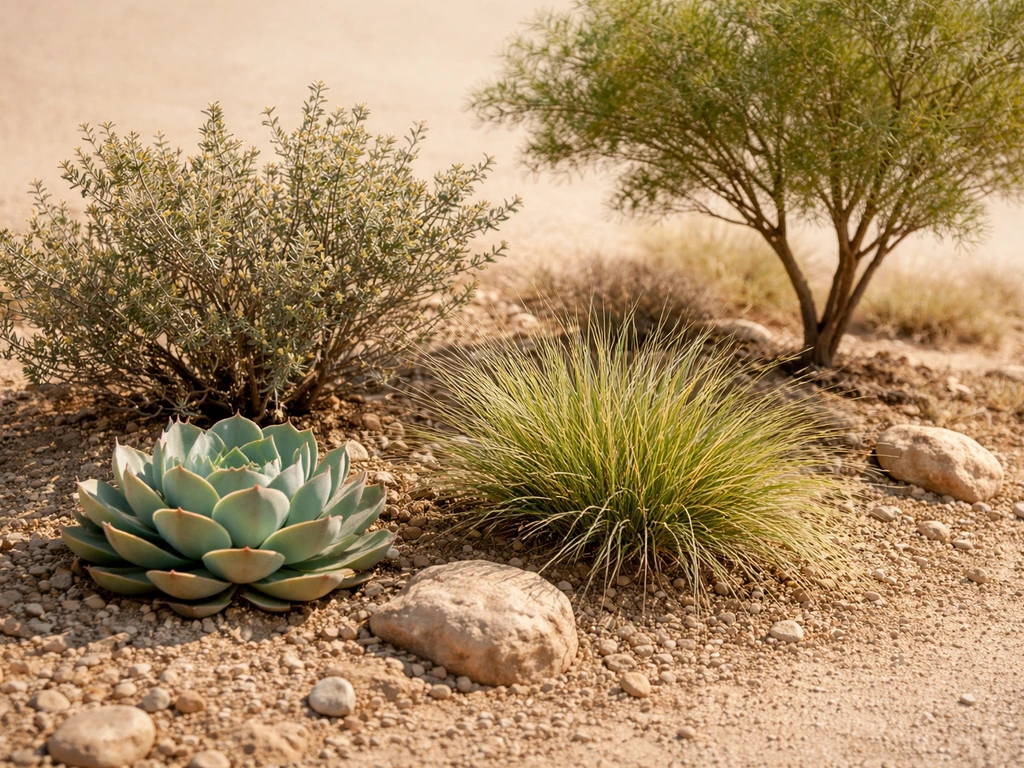
Cacti, agave, sagebrush, palo verde trees, bunchgrasses like blue grama, and Mediterranean shrubs like lavender and rosemary are some of the most dependable examples of plants that grow in dry areas. The exact species that will work for you depends on whether you're dealing with true desert aridity, semi-arid shrubland, or a dry-summer Mediterranean-type climate, and each of those calls for a slightly different plant list. Plants that grow in dry areas are called drought-tolerant or arid-land species, and choosing the right ones starts with understanding your local climate limits. Here's a practical breakdown of what grows where, organized by climate type and growth form, so you can match the right plant to your real conditions.
Examples of Plants That Grow in Dry Areas
Dr. Marcus Weatherby
1 Jun 2026
How to tell if your area actually qualifies as 'dry'
Before matching plants to a location, it helps to understand what 'dry' means in measurable terms. The standard scientific measure is the aridity index (AI), which compares annual precipitation to how much water the atmosphere could potentially evaporate given the local temperature and conditions. The formula is simple: AI = precipitation divided by potential evapotranspiration. The lower the number, the drier the climate. The FAO and UNEP use the following thresholds to classify drylands: hyper-arid is AI below 0.05 (think Sahara or Atacama), arid is 0.05 to 0.20 (Sonoran Desert, Mojave), semi-arid is 0.20 to 0.50 (Great Plains, Patagonian steppe), and dry sub-humid is 0.50 to 0.65 (savanna edges, parts of the Mediterranean basin). Technically, drylands are any region with an AI at or below 0.65.
In practical terms, you're looking at a dry area if annual rainfall is reliably below 500 mm (about 20 inches), summers are long and hot with minimal rain, soils dry out completely between rain events, and plants show obvious drought adaptations like thick leaves, waxy coatings, or deep taproots. Look for a plant that can grow in harsh dry conditions, with drought-tolerant traits suited to your rainfall pattern and soil. Drought isn't just about total rainfall either, it's about when rain falls relative to when plants need it. A region getting 600 mm of rain but all of it in winter can still produce extremely dry summers, which is exactly what happens in Mediterranean climates.
Plants from true arid and desert climates
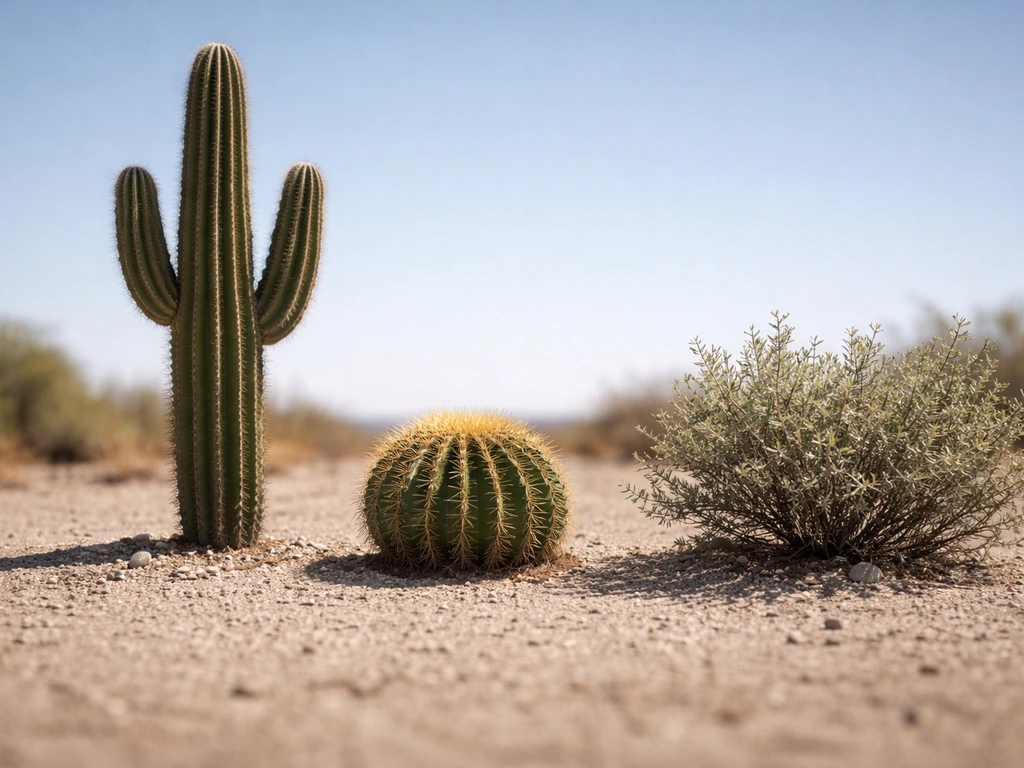
These are the heavy hitters, species that evolved in places where rainfall drops below 250 mm per year and where months can pass without a drop. They have the most specialized drought adaptations and thrive where almost nothing else will.
Iconic desert natives worth knowing
- Saguaro cactus (Carnegiea gigantea): Native to the Sonoran Desert of Arizona and northwest Mexico. Stores hundreds of liters of water in its accordion-pleated trunk after rain events. Grows only where winter temperatures rarely dip below -9°C (16°F).
- Prickly pear cactus (Opuntia spp.): One of the most widespread desert plants in North America. Found from sea level Sonoran Desert up to high-elevation desert grasslands. Tolerates poor, rocky soil and can survive on less than 150 mm of annual rain.
- Agave (Agave spp.): A classic example of a monocarpic desert plant — it lives for 10 to 30 years, flowers once dramatically, then dies. Native to Mexico and the southwestern United States. Handles heat, drought, and rocky substrate with ease.
- Ocotillo (Fouquieria splendens): Leafless most of the year in the Chihuahuan and Sonoran deserts, but sprouts small leaves within days of rain. A fascinating example of rapid drought-response adaptation.
- Creosote bush (Larrea tridentata): Arguably the most drought-tolerant shrub in North America. Dominates the Mojave, Sonoran, and Chihuahuan deserts. Some individual clones in the Mojave are estimated to be over 11,000 years old.
- Welwitschia (Welwitschia mirabilis): Found only in the Namib Desert of Namibia and Angola, one of the most hyper-arid places on Earth. It has just two leaves that grow continuously throughout its life, sometimes for over 1,000 years.
- Joshua tree (Yucca brevifolia): Endemic to the Mojave Desert, typically at elevations between 400 and 1,800 meters. Depends on sandy, well-draining soil and cold winters for germination.
Trees that anchor desert ecosystems
- Palo verde (Parkinsonia spp.): Native to the Sonoran Desert. Green bark performs photosynthesis when leaves drop during drought, making it one of the most efficient desert trees.
- Acacia (Vachellia and Senegalia spp.): Widespread across African and Australian drylands. Deep taproots access groundwater far below the surface. Some species fix nitrogen, improving poor desert soils.
- Date palm (Phoenix dactylifera): Native to the Middle East and North Africa. Thrives in hyper-arid conditions as long as it has access to groundwater or irrigation. A keystone species in oasis ecosystems.
- Mesquite (Prosopis spp.): Found across North American and South American desert grasslands. Has some of the deepest recorded root systems of any plant — reportedly reaching over 50 meters in search of water.
Plants for semi-arid and Mediterranean dry-summer climates
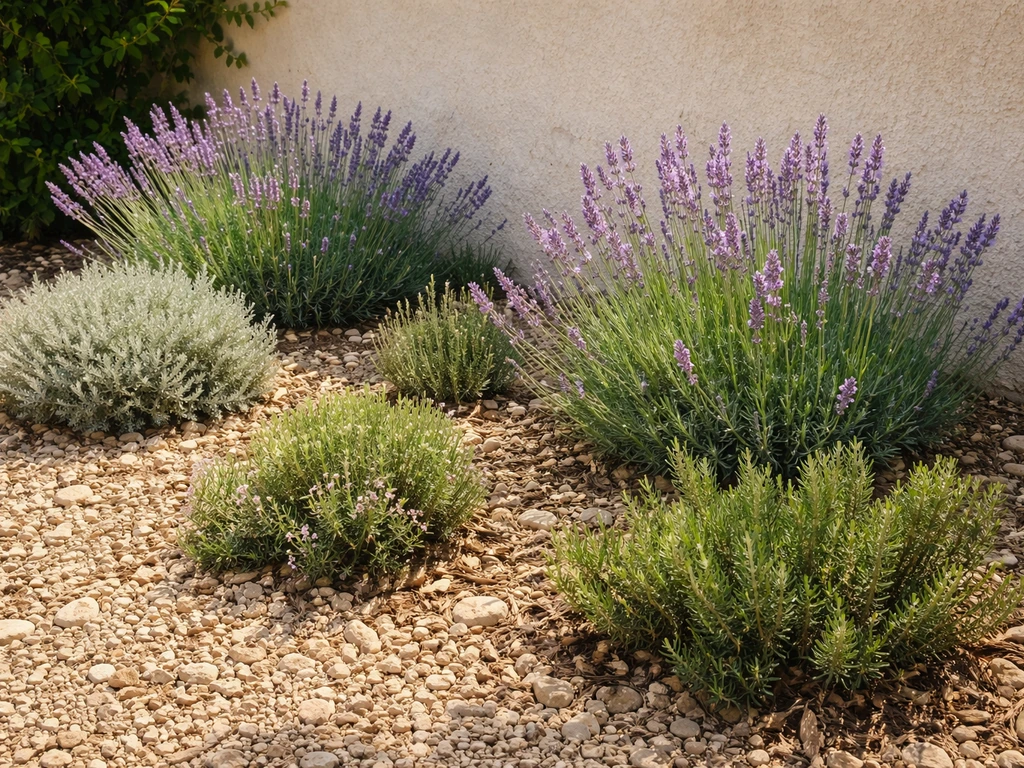
Semi-arid and Mediterranean climates are distinct from true deserts. They get more annual rainfall (roughly 250 to 600 mm), but the timing is the challenge, most precipitation falls in cool months, leaving summers bone dry. Plants here have evolved to grow aggressively in wet winters and early spring, then either go dormant or tolerate extended summer drought. This growth pattern makes these plants especially adaptable, and many of them transfer well to gardens in California, South Africa, southern Europe, southwestern Australia, and central Chile.
Mediterranean shrubs and herbs
- Lavender (Lavandula spp.): Native to the Mediterranean basin and Canary Islands. Thrives in full sun, well-draining rocky or sandy soil, and dry summers. Struggles in humid climates with wet winters and wet summers simultaneously.
- Rosemary (Salvia rosmarinus): Also Mediterranean in origin. Handles rocky slopes, thin soil, and months without rain. Often found on coastal limestone cliffs where nothing else holds on.
- Mastic tree (Pistacia lentiscus): A tough evergreen shrub from the Mediterranean that handles summer drought and poor, stony soil. Produces resin used since antiquity.
- Cistus (rockrose, Cistus spp.): One of the most drought-tolerant shrubs of the Mediterranean. Pioneer species on disturbed, dry, poor soils. Extremely fire-adapted and resprouts or reseeds after wildfire.
- Artemisia (sagebrush, Artemisia spp.): Dominant across North American semi-arid regions including the Great Basin. Adapted to cold winters and very dry summers. Gives the Great Basin its characteristic silver-gray landscape.
- Manzanita (Arctostaphylos spp.): Native to California's chaparral, a classic Mediterranean-climate shrubland. Grows on steep, dry, rocky slopes with minimal soil. Extremely drought-tolerant once established.
Semi-arid grassland and savanna plants
- Blue grama grass (Bouteloua gracilis): One of the most important native grasses of the North American semi-arid shortgrass prairie. Survives on as little as 250 mm of annual rain.
- Buffelgrass (Cenchrus ciliaris): Native to African and Asian drylands, now widespread in semi-arid regions globally. Highly drought-resistant but considered invasive in some desert ecosystems.
- Spinifex (Triodia spp.): The defining grass of Australia's arid interior. Forms spiky hummocks that persist through extreme heat and almost no rain.
- Kangaroo paw (Anigozanthos spp.): Native to southwestern Australia, a Mediterranean-climate region. Highly adapted to dry summers and sandy, low-nutrient soils.
Dry-area plants sorted by what you want to grow
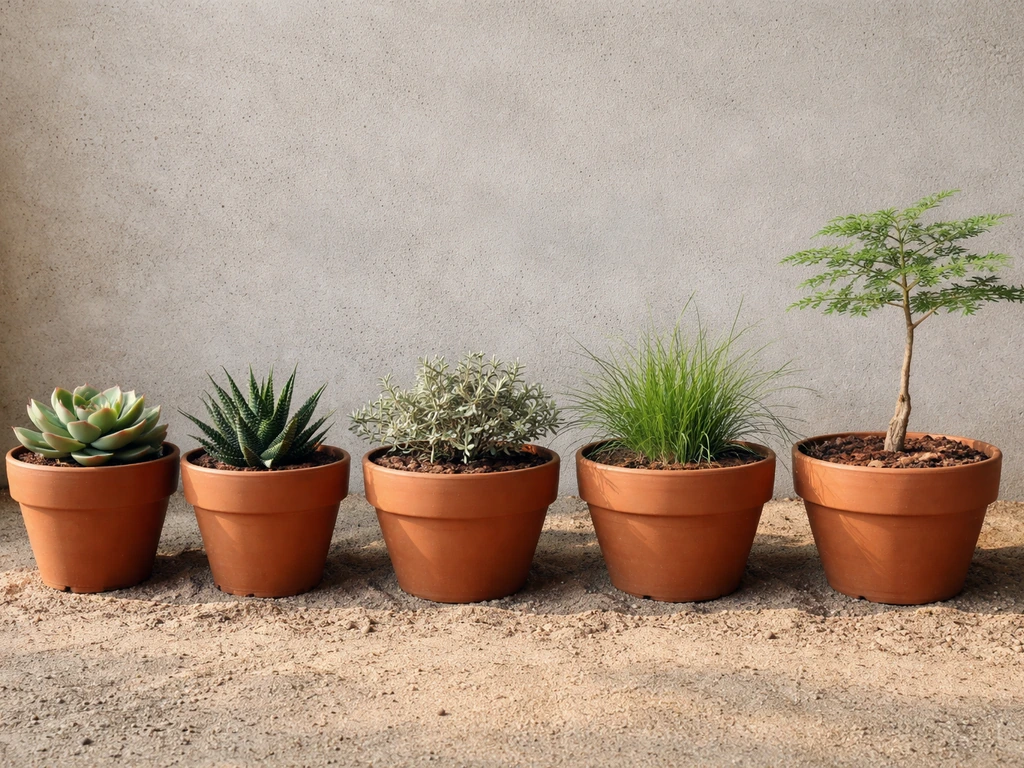
Growth form matters a lot when choosing plants for dry conditions. Different forms solve the drought problem in different ways, succulents store water, shrubs go semi-dormant, grasses die back and reshoot, and trees chase water deep underground. Here's a quick-reference breakdown.
| Growth Form | Examples | Primary Drought Strategy | Best Suited To |
|---|---|---|---|
| Succulents | Agave, aloe, prickly pear, echeveria, saguaro | Water storage in leaves, stems, or roots | Hyper-arid and arid zones; containers; rocky gardens |
| Shrubs | Creosote, sagebrush, lavender, manzanita, cistus | Leaf drop, waxy coatings, deep roots | Semi-arid, Mediterranean-type dry summers |
| Grasses | Blue grama, spinifex, buffelgrass, blue fescue | Dormancy during drought; rapid regrowth after rain | Semi-arid grasslands, dry sub-humid zones |
| Trees | Palo verde, mesquite, acacia, Joshua tree, date palm | Extremely deep roots; photosynthetic bark; small leaves | Arid to semi-arid; areas with occasional groundwater |
If you're working in a truly hyper-arid spot, succulents and a few specialized trees are your realistic options. For semi-arid and Mediterranean-type climates, the shrub and grass categories open up considerably, and you can layer in some smaller trees as anchor plants.
What dry-area plants actually need to survive
Knowing the plant species is only half the answer. Plenty of drought-tolerant plants fail not from lack of water but from the wrong soil or wrong establishment conditions. Here are the variables that actually control whether these plants succeed.
Soil: drainage is everything
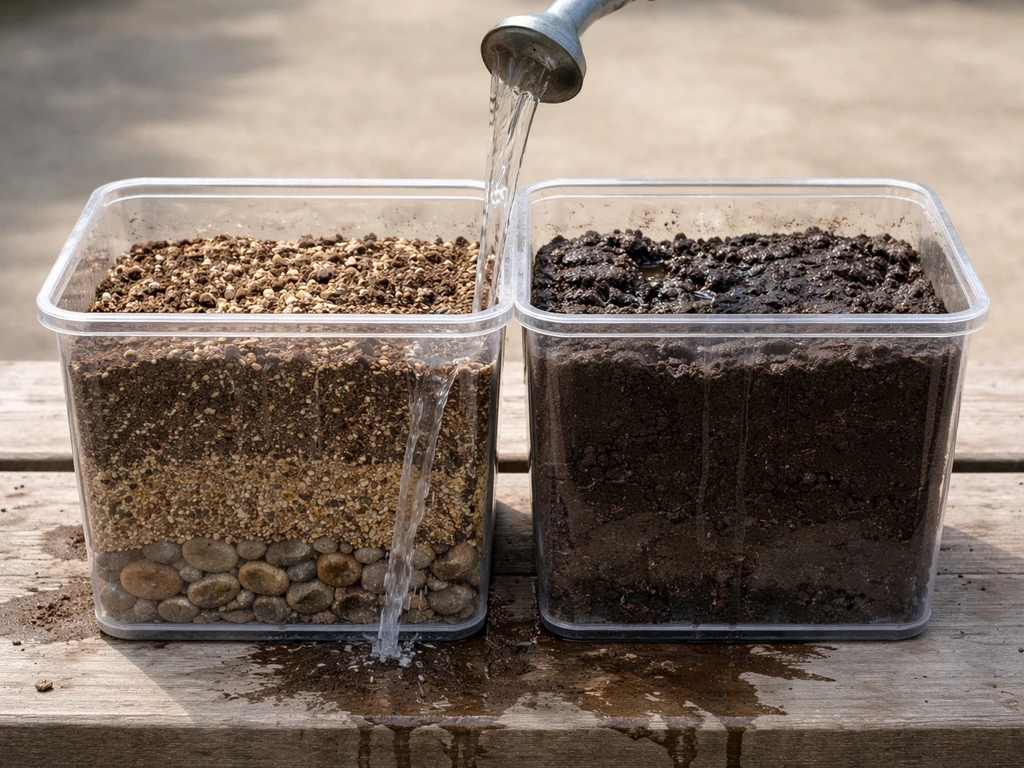
The single most important soil characteristic for dry-area plants is drainage. Almost all desert and semi-arid natives evolved in sandy, rocky, or gravelly soils that drain within minutes after rain. Plant a saguaro or lavender in clay soil that holds water and the roots will rot within a season, even without regular watering. If your native soil is heavy clay, you have two realistic options: amend heavily with coarse sand and grit (at least 50% by volume in the planting area), or build a raised bed or mound with free-draining substrate. Many of these plants also prefer low-nutrient soils, so resist the urge to add rich compost.
Water: establishment vs. long-term drought tolerance
Here's something that trips up a lot of people: drought-tolerant does not mean needs-no-water-ever. Most dry-area plants require regular watering for their first one to two growing seasons while they establish root systems deep enough to find their own moisture. After that establishment window, they can be left to natural rainfall in most cases. During establishment, deep and infrequent watering (soaking the root zone every one to two weeks rather than daily light sprinkles) encourages roots to go deep rather than stay near the surface. Once established, overwatering is a more common killer than underwatering.
Sun exposure
The vast majority of dry-area plants require full sun, typically six or more hours of direct sun daily. This isn't just about growth rate; in low-sun conditions, many succulents and drought-tolerant shrubs stretch toward light (etiolation), weaken, and become more susceptible to rot. A sheltered north-facing wall in a dry climate can be almost as problematic as poor drainage. If your dry garden spot is shaded, the plant list narrows considerably and shifts toward shade-tolerant dry-adapted species like some aloes or certain desert ferns.
Finding the right plants for your specific dry spot
Dry areas are not all the same, and the best plant matches come from understanding local nuance rather than just the broad climate zone. Two spots within the same city can behave like different climates depending on slope, aspect, wind exposure, and soil. Here's how to think through local matching.
Start with your climate zone and aridity category
Knowing whether you're in a hyper-arid, arid, semi-arid, or dry sub-humid zone (using the AI thresholds described earlier) immediately narrows the plant palette. A commonly cited FAO aridity-index scheme used in dryland assessments groups hyper-arid areas as AI 0.00, 0.05, arid as 0.05, 0.20, semi-arid as 0.20, 0.50, and dry sub-humid as 0.50, 0.65 blank" rel="noopener noreferrer">aridity-index scheme groups hyper-arid, arid, semi-arid, and dry sub-humid ranges. Hyper-arid zones (AI below 0.05) support very little without irrigation, you're looking at specialist succulents, halophytes, and opportunistic ephemerals after rare rains. Arid zones (0.05 to 0.20) open up the full desert-native plant list. Semi-arid zones (0.20 to 0.50) support the richest range including shrubs, grasses, and trees that cycle through seasonal drought. Dry sub-humid zones (0.50 to 0.65) can handle Mediterranean-type plants and drought-tolerant woodland species.
Read the microclimate before you plant
Microclimates within a dry region can be dramatic. A south-facing rocky slope in a semi-arid zone might behave like a true arid zone, hotter, faster-drying, more exposed. A north-facing slope in the same area might retain soil moisture weeks longer after rain. Coastal dry climates (like coastal California or the coast of southern Spain) differ from inland aridity: coastal sites get moisture from fog and sea air even when rain is absent, which suits plants like Ceanothus and coastal sagebrush that wouldn't survive the interior. Inland sites are hotter, more exposed, and need plants with tougher drought credentials like creosote and agave.
Look at what's already growing nearby
The most reliable plant-matching tool available is observation of the existing native vegetation in your area. If creosote and prickly pear are thriving in an undisturbed nearby lot, you're in an arid zone and those species (or close relatives) are your baseline. If native grasses and sagebrush dominate, you're semi-arid. Native plant societies, local university extension services, and herbarium databases for your region are excellent resources for identifying which species are already locally adapted and what habitat conditions they're associated with. Plants that are already growing in your climate zone without any human intervention are your best starting candidates.
Understanding the broader category your site falls into, whether it involves low-moisture climates with seasonal patterns, or harsher conditions characteristic of high desert zones where temperature extremes compound drought stress, helps narrow the choice significantly. The most successful dry-area gardens and plantings aren't built around any single dramatic species but around a layered community of grasses, shrubs, and a few anchoring trees that mirror what naturally grows in similar conditions nearby.
FAQ
If a plant is drought-tolerant, can I stop watering right after planting?
Not always. Even drought-tolerant plants can die if the soil stays wet too long. If your area gets dry summers but you have clay-heavy or compacted soil, the plant may rot or suffer root stress. Prioritize fast drainage (often via raised beds or amending with lots of coarse grit) before choosing a species list.
How long does drought establishment watering usually take for plants in dry areas?
A good rule is to plan for 1 to 2 growing seasons of deeper, infrequent watering while roots establish. After that window, many dry-area plants can transition to natural rainfall, but the move depends on your rainfall timing, mulch, and whether your site gets summer heat waves or strong winds.
What if my location has decent annual rainfall but the summers are dry?
Yes. The article highlights that “dry” is partly about rainfall timing, so a plant matched to annual rainfall totals can still fail if rain comes in the wrong season. For Mediterranean climates, you typically want plants that grow when moisture is available and tolerate summer dormancy.
Can I grow these drought-area plants in partial shade or near a north-facing wall?
In many dry climates, partial shade can be worse than full sun plus good drainage, because reduced light can lead to weaker growth and higher rot risk for succulents and dry shrubs. If you must plant in shade, pick species already adapted to lower light in your region, and avoid spots that stay damp after rain.
What should I do if my soil is heavy clay but I still want plants that grow in dry areas?
Yes, by changing the planting method rather than only the plant species. If you have heavy clay, build a mound or raised bed with a free-draining mix and keep it consistent across the rooting zone, not just the top layer. Also skip rich, moisture-retaining compost unless you can verify drainage improves.
How can I tell whether I’m watering too much or too little for drought-tolerant plants?
Overwatering is a common failure because it keeps roots in oxygen-poor, wet conditions. Use slow, deep soaking rather than frequent sprinkling, and let the planting area dry out between watering. If you’re unsure, check moisture by feel a few inches down.
Are dry-area plants usually tolerant of frost and cold winters?
For true dry-area plants, cold can be as limiting as drought. Hyper-arid or arid plants often tolerate low rain but may not tolerate frequent freezing or wet-cold winters. If you face winter cold with wet soils, focus on species that are hardy in your temperature range and still insist on drainage.
What if my dry area is also salty, like near the coast or with salty irrigation water?
They are possible, but the choice should match your local salinity and water source. If you irrigate with saline water, some plants will perform poorly even in dry conditions. Look for halophytes (salt-tolerant species) if salt is a factor, and confirm with local guidance if you’re near coasts or using brackish water.
How do I account for microclimates like slope, wind exposure, and aspect?
Yes. Microclimates can shift your plant list dramatically, for example, by slope and aspect, which affect heat load, wind exposure, and drying speed. Use observation of nearby thriving natives and also consider windbreak placement, since persistent wind can increase plant stress even when rain is adequate.
What’s the best way to pick species for my exact dry garden site?
Start with plants that are already thriving nearby with no human intervention, then confirm they match the site conditions of your specific lot. That means using local natives and close relatives rather than relying only on a generic “dry area” category.