Plants that grow in low-moisture climates have evolved specific physical and chemical strategies to survive where water is scarce: deep or wide-spreading root systems, water-storing tissues, small or waxy or hairy leaves, and metabolic tricks that keep their stomata closed during the hottest part of the day. If you want to grow them successfully, the key is matching the right plant to exactly how dry your site actually is, then getting it through its first season with enough supplemental water to build a strong root system before you back off irrigation entirely.
Plants That Grow in Low-Moisture Climates: What to Choose

Dr. Marcus Weatherby
27 May 2026
What 'low-moisture climate' actually means for a plant
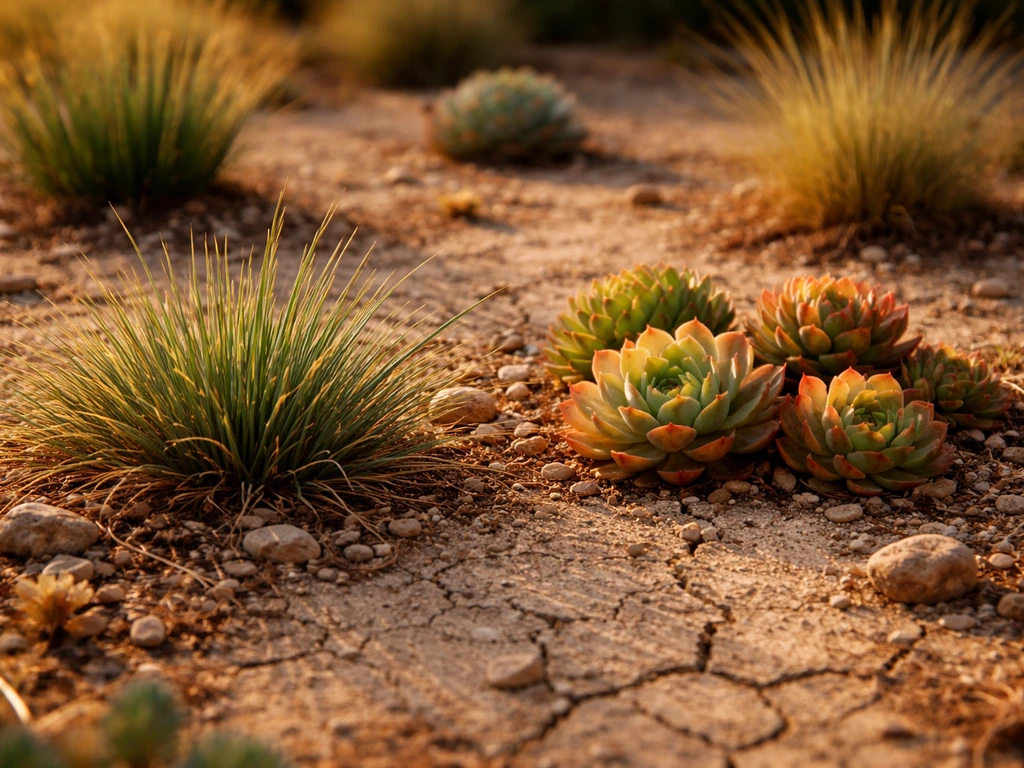
Rainfall totals alone don't tell the whole story. A site that gets 12 inches of rain per year in cool, overcast Scotland is far less stressful for plants than a site that gets 12 inches in the Mojave Desert, where summer temperatures push evapotranspiration (ET) demand through the roof. What matters to a plant is the gap between how much water is available in the soil and how much the atmosphere is pulling out through heat, wind, and low humidity. When ET demand consistently exceeds supply, you have a low-moisture climate from the plant's perspective, regardless of what the rain gauge says.
Practically, low-moisture conditions fall into a few categories. True arid climates (deserts) get under 10 inches of annual precipitation. Semi-arid climates get roughly 10 to 20 inches. Dryland or xeric conditions also show up seasonally in otherwise moderate climates: think California's dry summers, the southern Great Plains during drought cycles, or rocky hillsides that drain faster than flat ground no matter where they are. Soil texture makes this even more site-specific: sandy soils drain and dry out quickly, while heavy clay soils can waterlog in winter and crack bone-dry in summer. Where water sits in the profile, how long it stays, and how fast it disappears is as important as how much falls from the sky.
How drought-tolerant plants actually survive
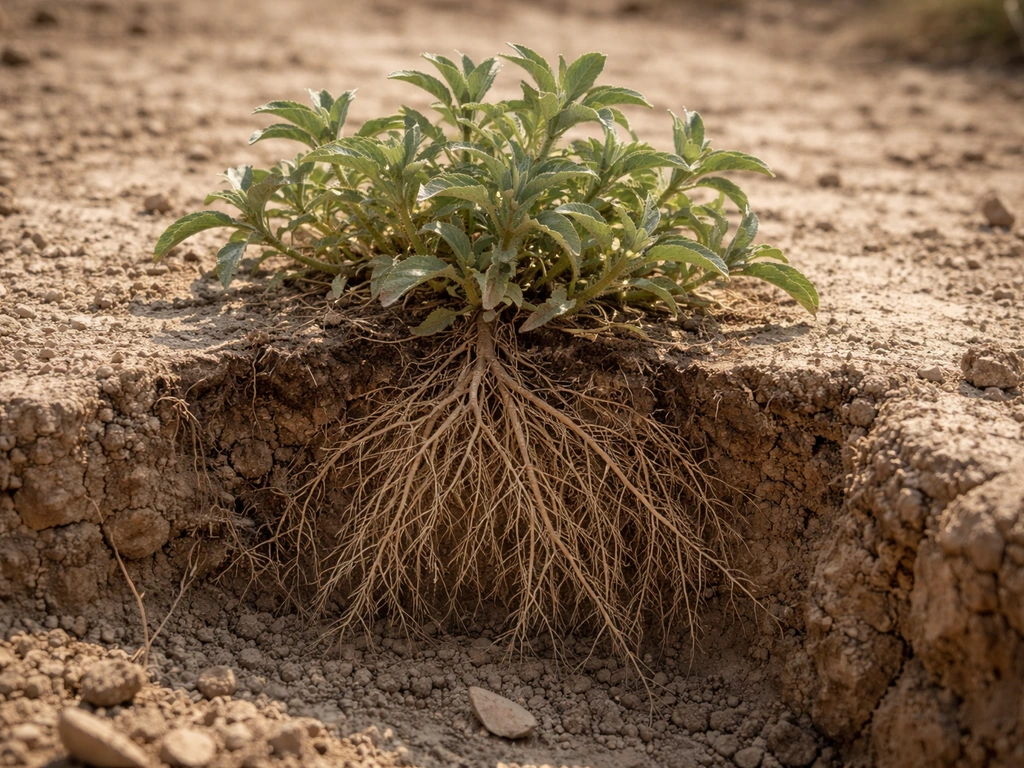
The adaptations that let plants thrive in dry conditions are real, observable, and directly useful when you're selecting plants. Once you know what to look for, you can read a plant's drought tolerance just by looking at it.
Stomatal control and leaf structure
Most drought-adapted plants close their stomata (the tiny pores through which water vapor escapes) earlier and more aggressively than ordinary plants when soil moisture drops. Many also have leaves designed to lose less water in the first place: thick waxy cuticles, small leaf area, rolled or needle-like leaves that reduce surface exposure, or blank" rel="noopener noreferrer">dense silvery-white hairs like the ones you see on brittlebush (Encelia farinosa). A plant that can grow in harsh dry conditions is often better matched by its natural strategies, like stomatal control, rather than by generic labels. Those hairs aren't just decorative. They reflect intense sunlight, which lowers leaf temperature and cuts the rate at which water evaporates. When you spot a plant with fuzzy, silver, or felt-like leaves, that's almost always a drought adaptation signal.
CAM photosynthesis: the nighttime strategy
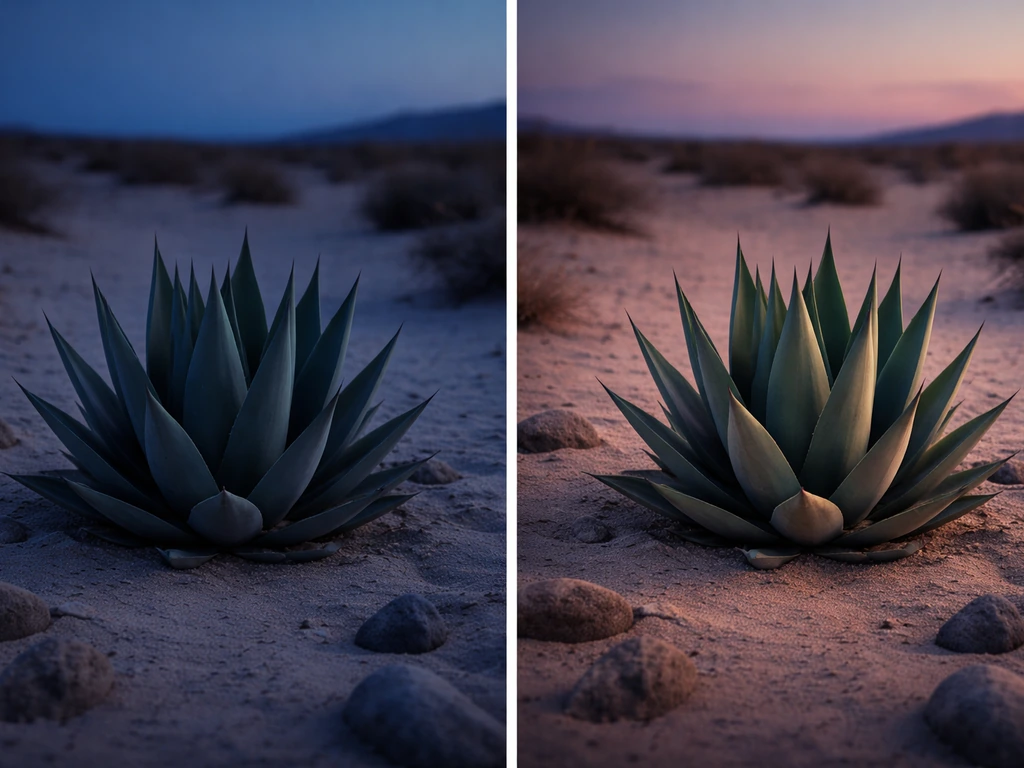
Cacti, agaves, and many succulents use a photosynthetic pathway called CAM (Crassulacean Acid Metabolism) that essentially flips the timing of gas exchange. Instead of opening stomata during the hot, dry daytime when water loss would be severe, CAM plants open them at night when temperatures are lower and humidity is relatively higher. They store the captured carbon dioxide and process it for photosynthesis during the day with stomata closed. This is why a saguaro cactus can survive in a climate where summer temperatures exceed 110°F for weeks at a time. The structural companion to CAM is succulence: thick, water-storing stems or leaves that act as a reservoir between rain events.
Roots, dormancy, and leaf-area reduction
Many desert shrubs push roots extremely deep to access groundwater or spread laterally across a huge area to capture what little rain does fall. Others go semi-dormant during dry seasons, dropping leaves to reduce water demand to near zero until conditions improve. Some grasses roll or fold their leaves along the midrib, physically reducing the surface area exposed to drying air until rain returns. These aren't signs of a sick plant; they're exactly the survival strategies you want working for you in a dry garden.
Plant categories that naturally live in dry climates
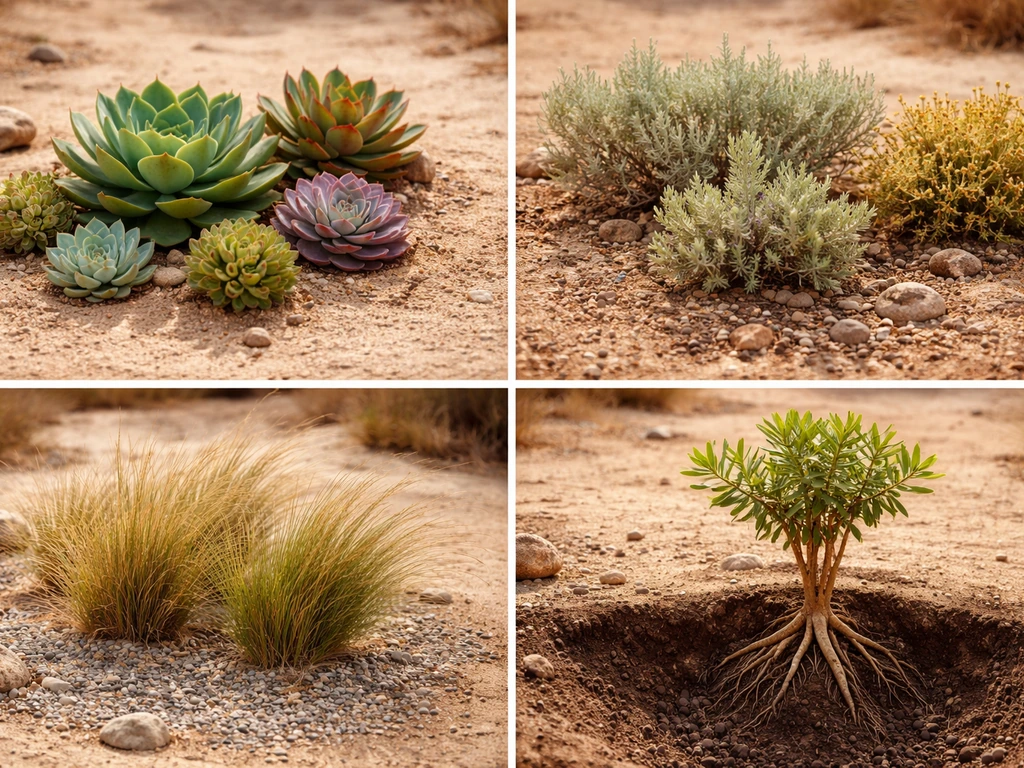
Drought-adapted plants aren't just cacti. They span a wide range of growth forms and come from dry environments all over the world. Here's how the major categories break down, with examples of where they actually occur in the wild. For a quick starting point, these examples of plants that grow in dry areas can help you match plant categories to your own site.
| Plant Category | Natural Habitat | Representative Examples | Key Drought Traits |
|---|---|---|---|
| Cacti and succulents | Chihuahuan, Sonoran, Mojave deserts; arid grasslands | Prickly pear (Opuntia), saguaro, agave, aloe | CAM photosynthesis, water-storing stems/leaves, spines replace leaves |
| Desert shrubs | Xeric scrublands, washes, rocky bajadas in the American Southwest and similar arid zones globally | Brittlebush, creosote bush, sage (Salvia), Apache plume | Reflective leaf hairs, stomatal closure, deep taproots, drought-deciduous |
| Dryland grasses | Shortgrass and mixed-grass prairies, dry savannas, high desert flats | Blue grama, buffalo grass, desert marigold | Leaf rolling, deep fibrous roots, dormancy during dry periods |
| Mediterranean-climate shrubs | California chaparral, Mediterranean basin maquis, South African fynbos | Lavender, rosemary, rockrose (Cistus), manzanita | Small waxy or aromatic leaves, sclerophylly (hard tissue tolerant of wilting) |
| Xeric-adapted perennials | Rocky outcrops, dry prairies, canyon rims across the central and western US | Yarrow, black-eyed Susan, hummingbird trumpet, penstemons | Deep taproots, waxy cuticles, summer dormancy in some species |
| Drought-tolerant trees | Dry woodlands, desert edges, semi-arid plains | Mesquite, palo verde, pinyon pine, desert willow | Extremely deep taproots, small compound leaves, heat-reflective bark |
It's worth noting that there's an important distinction between plants from true desert environments (under 10 inches of rain, intense heat) and plants from seasonally dry climates like California's Central Valley or the Oklahoma plains. Mixing them up can lead to failure: a plant adapted to California's dry-summer/wet-winter rhythm can rot if it gets summer irrigation, while a Sonoran desert cactus may not handle a wet, cold winter in zones where hard freezes occur. Understanding natural habitat is the most reliable shortcut to getting plant selection right.
Matching plants to your specific dry site
The single biggest mistake people make with drought-tolerant plants is treating 'drought-tolerant' as a single category. It isn't. Here's the practical framework for narrowing down your choices.
Start with your USDA Hardiness Zone
Your USDA Plant Hardiness Zone tells you the average annual minimum winter temperature your site experiences. This matters enormously in dry climates because many desert plants are cold-sensitive. A prickly pear cactus (Opuntia humifusa) is hardy to Zone 4 and can handle brutal Midwest winters, but a saguaro will die if temperatures drop below about 25°F for extended periods. Start with your zone and eliminate anything that can't survive your coldest nights before worrying about drought tolerance.
Quantify your actual dryness
Think beyond annual rainfall. What matters is how dry it gets during your hottest months, whether you have a distinct dry season, and how quickly your soil drains after rain. A site that gets 16 inches of annual rain spread evenly through the year is very different from one that gets 16 inches only in winter and bakes bone-dry from June through September. If you're in an area where summer ET demand consistently exceeds rainfall, choose plants native to summer-dry environments, not just 'dry environments' in general. Plants that grow in high desert areas must be able to handle intense heat and low humidity, so match them to your local ET demand and soil drainage.
Read your soil texture
Sandy soil drains fast and dries out quickly, which mimics desert conditions even in climates with moderate rainfall. Clay soil holds water longer but can become compacted and anaerobic, which stresses even drought-tolerant roots. Loamy soils fall in between. Most xeric-adapted plants do best in fast-draining, lower-fertility soil that mirrors their natural habitat. If your soil is heavy clay, you'll either need to amend it or choose plants adapted specifically to dry clay conditions, such as native prairie species, rather than desert species that need open, porous drainage.
Factor in sun exposure and heat load
South and west-facing slopes and walls amplify heat and dryness dramatically. A plant that tolerates moderate drought in partial shade may struggle badly on a south-facing slope in full afternoon sun. Choose plants that naturally grow in your exposure type. Plants from rocky, exposed canyon slopes and desert bajadas are your best candidates for the hottest, driest spots. Plants from dry woodland edges or seasonally dry meadows are better suited to dappled or eastern exposures where afternoon heat is reduced.
Soil prep that makes a real difference in dry gardens
The goal with soil prep in a low-moisture garden is almost the opposite of what you'd do for a vegetable garden. You're generally not trying to maximize water retention. You're trying to ensure water infiltrates quickly and deeply when it does rain or when you do irrigate, so roots can chase it downward rather than sitting in a waterlogged surface layer or having water run straight off baked soil.
For sandy or rocky soils that drain extremely fast, you may want to add a modest amount of compost, worked into the top 6 to 12 inches. Compost improves soil structure and can help retain just enough moisture to support root establishment without making conditions too wet for xeric plants. Don't overdo it: filling a desert plant's root zone with rich, moisture-retentive compost can encourage rot and shallow rooting.
For clay soils, the priority is improving infiltration and aeration rather than adding moisture retention. Composted wood chips, coarse sand, or other fibrous organic material worked into the top 6 to 12 inches can open up the structure and let water move through. Avoid adding fine sand alone to clay: the classic mistake of mixing small amounts of sand into clay creates something closer to concrete. You need enough coarse material to genuinely change the texture.
After planting, apply a 3 to 4 inch layer of organic mulch (wood chips work well) across the root zone, keeping it a few inches away from stems and trunks to avoid rot. Mulch reduces surface evaporation, moderates soil temperature, suppresses weeds, and slows the rate at which the topsoil bakes between irrigations. One caution: in intense full sun, dark wood chip mulch can get very hot and actually impede water infiltration if it dries out into a hydrophobic crust. In those conditions, use a lighter-colored inorganic mulch like decomposed granite or coarse gravel, which is also more visually consistent with xeric plantings.
Watering through the first season
Here's a principle that surprises a lot of people: drought-tolerant plants still need regular water in their first season. The entire point of that first year is to grow a deep, wide root system that will allow the plant to survive on minimal irrigation later. If you plant a native desert shrub in June and immediately ignore it, it may die before it ever gets the chance to prove how tough it is.
One important timing note: avoid planting during an active drought if you can't commit to consistent supplemental watering for the rest of the growing season. The establishment window is when plants are most vulnerable, and a new transplant with a root ball confined to a small container has essentially none of the drought-buffering capacity it will develop over time.
First two weeks
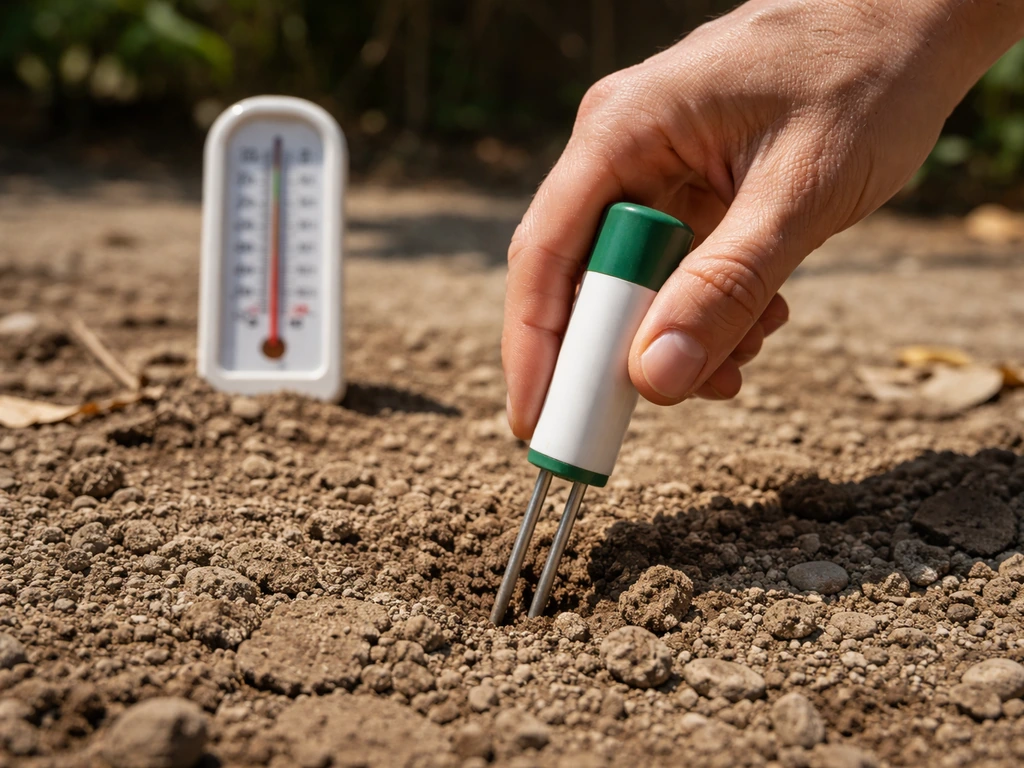
Check soil moisture daily for the first two weeks after planting. If the top 6 inches feel dry, water deeply. The goal is to wet the soil to a depth of 8 to 10 inches, which encourages roots to grow downward rather than staying near the surface. Shallow frequent watering is one of the most common establishment mistakes: it trains roots to stay near the surface where they're vulnerable to heat and drought.
First month through end of season
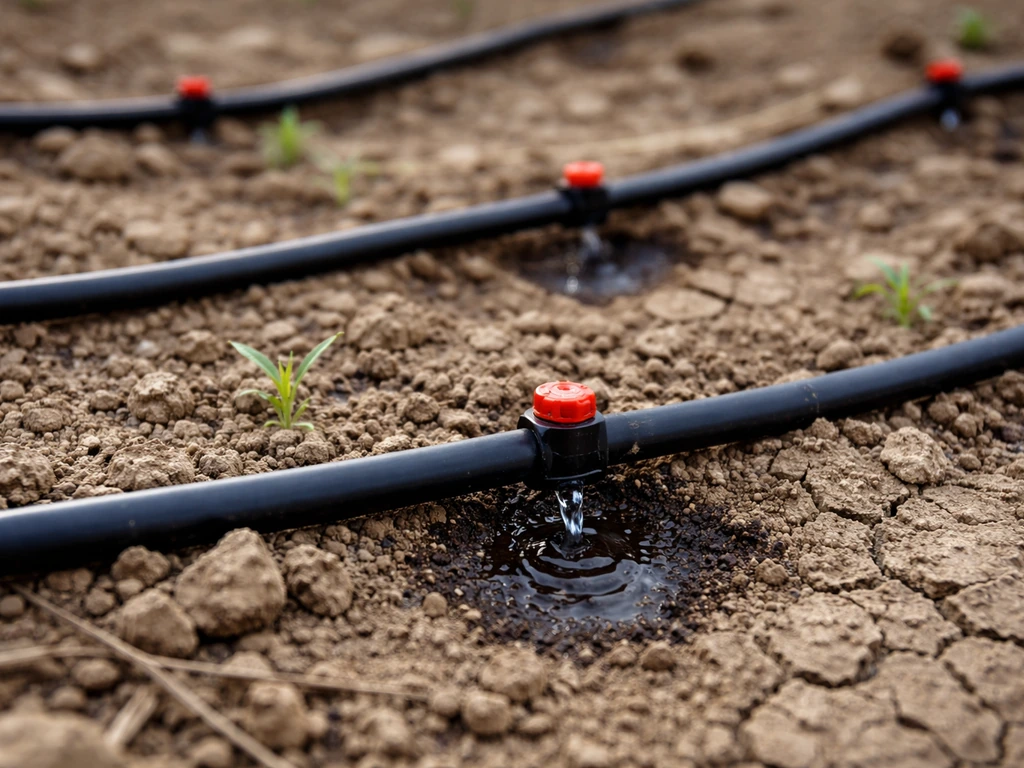
After the first two weeks, shift to checking soil moisture at least once a week, watering deeply when the profile dries out. A staged schedule works well: water once a week for the first month, then every two weeks for the next month or two, then once a month as the plant's root system expands. Each deep watering encourages roots to follow the moisture downward. Focus water near the drip line (the outer edge of the canopy) rather than right at the base of the stem, because that's where feeder roots are actively growing.
Drip irrigation for precision
Drip irrigation is the most efficient delivery method for dry-climate gardens. Low-volume emitters placed near the root zone apply water slowly directly where roots can use it, minimizing evaporation and surface runoff. For sizing a drip system correctly, you can use a water-budget approach based on the plant's canopy area, a plant factor (how thirsty the species is relative to a reference crop), and your local ET rate. Your local cooperative extension service will have ET data for your area.
Keeping dry-climate plants healthy long term
Once your plants are established (typically after one to two full growing seasons), maintenance shifts toward working with their natural drought strategies rather than against them.
Recognizing and responding to heat stress
Even drought-tolerant plants show stress above about 104°F, especially if heat and dry wind combine. Watch for limp or curling leaves, leaf scorch (brown edges), off-color foliage, and premature leaf drop. In trees, look for leaf margin burn, reduced shoot growth, and premature leaf senescence. These symptoms can mean either true water deficit or temporary heat stress without drought. Check soil moisture 4 to 6 inches down before you reach for the hose. If the soil is still moist, the plant is reacting to heat, not thirst, and extra watering won't help. If the soil is dry, water deeply near the drip line.
Fertilization during dry periods
Hold off on fertilizing during drought or extreme heat. Fertilizer pushes new vegetative growth, and new soft growth has high water demands that drought-stressed plants can't meet. Repeated drought cycles that force new growth and then stress it can cause root dieback and make plants progressively more vulnerable over time. Most drought-adapted plants in established xeric gardens need little to no supplemental fertilization anyway: their native soils are typically low in nutrients.
Pruning timing and weed control
Keep pruning minimal during the establishment period and avoid it entirely during heat waves or drought. Pruning wounds and the resulting new growth both increase water demand. When you do prune, time it for the cooler, lower-stress part of the year. For weed control, mulch is your best tool: a proper 3 to 4 inch layer smothers most weed seed germination and eliminates the competition for the soil moisture your drought-tolerant plants need most. Manual removal works for anything that breaks through. Avoid herbicides near sensitive dryland shrubs and perennials whose root systems often spread well beyond the visible canopy.
The payoff is real
A well-established planting of drought-adapted species, properly matched to your climate zone, soil texture, and sun exposure, genuinely does become low-maintenance after the first couple of seasons. The root system does the work you'd otherwise be doing with a hose. The plants that grow in low-moisture climates have spent millions of years developing the tools to survive dry conditions: your job is simply to give them a site where those tools can do their job, and enough support at the start to get their root systems large enough to use them.
FAQ
How can I tell if my yard is “low-moisture” even when the annual rainfall looks decent?
Check whether your summers create persistent water deficit, not just yearly totals. Look for how quickly the soil dries after a typical summer storm, and whether midday soil moisture stays low for days. If it dries fast and ET demand stays high, you’re effectively in a low-moisture scenario for plants.
Is sandy soil automatically better for drought-tolerant plants?
It usually helps because it drains quickly, but very sandy sites can go too far, drying beyond what a plant can tolerate during establishment. Plan on more frequent deep watering in the first season, and use only a light top dressing of compost (or none) depending on how fast your root zone loses moisture.
Can I irrigate less often but for longer periods with drought-tolerant plants?
Yes, that’s generally the right approach once plants are established, because it encourages deep rooting. During the first two weeks after planting, however, you still need enough water to wet 8 to 10 inches deep, then transition to longer intervals as the roots grow.
Do drought-tolerant plants ever need more water than the schedule suggests?
They can, especially after transplanting, in unusually hot weeks, or when plants are exposed (full sun, south-facing slope, wind). If you dig down 4 to 6 inches and it is dry, water deeply near the drip line. If the soil is moist, symptoms may be heat stress rather than thirst.
What’s the best way to water if I do not have a drip system?
You can still target deep infiltration by using a slow soak method, like a hose with a controlled flow and time to wet the root zone without runoff. Place the water application near the drip line, not right at the stem, and avoid short “sprays” that only wet the surface.
How much mulch is safe for xeric plants?
Use 3 to 4 inches, but keep it a few inches away from stems and trunks to reduce rot risk. In intense full sun, dark wood chips can overheat and form a hydrophobic crust when dry, so switch to lighter inorganic mulch like decomposed granite or gravel if you see water beading or poor infiltration.
Should I fertilize drought-tolerant plants to help them “get established” faster?
Usually not. Skip fertilizer during drought or extreme heat because it pushes tender growth with high water needs that drought-stressed plants cannot support. If you must fertilize, delay until the plants show healthy, stable growth and follow a conservative amount, prioritizing species that thrive in low-nutrient soils.
Can I mix desert species with seasonally dry California-style plants in the same bed?
Be careful. Even though both come from dry regions, their failure points differ, especially around summer irrigation and winter cold or wet. Match plants to their natural precipitation timing (dry summer versus uniform rainfall) and their cold tolerance for your USDA zone.
What is the difference between “drought-tolerant” and “drought-proof”?
Drought-tolerant means the plant can survive and function with limited water once established, but it still needs establishment irrigation and it can show stress under extreme heat or wind. Drought-proof plants are not a realistic category, especially in hot climates where ET demand spikes.
What are the most common establishment mistakes with low-moisture plants?
Two big ones are shallow, frequent watering that trains roots near the surface, and planting during a drought without a plan for consistent supplemental watering. Another common issue is watering at the base of the stem instead of near the drip line where feeder roots are developing.
How do I choose plants if my site has both wet winters and dry summers?
Use precipitation seasonality as your guide. If summer is dry and soil bakes, prioritize plants adapted to that dry-summer pattern, even if your annual rainfall is higher. If you have winter waterlogging risk from heavy clay, choose plants that tolerate dry clay conditions and focus on improving infiltration rather than holding more moisture.
If my plant looks stressed, how do I know whether to water or not?
Test soil moisture before watering. Check 4 to 6 inches down, if it is still moist, hold off because heat stress can mimic drought symptoms and extra water may not help. If the soil is dry at that depth, water deeply near the drip line.