Plants that grow in high desert areas must tolerate a brutal combination of conditions at once: hard freezes in winter, scorching sun in summer, daily temperature swings that can exceed 40°F in a single 24-hour period, relentless wind, low humidity, and soils that drain fast and offer little organic matter. That list is not an exaggeration, it is the actual selection filter. Any plant that can't handle all of those pressures simultaneously is going to fail, no matter how drought-tolerant it looks on the nursery tag. The good news is that plenty of plants have evolved exactly these traits, and once you match the right ones to your specific site, they need surprisingly little help.
Plants That Grow in High Desert Areas: What to Plant
Dr. Marcus Weatherby
29 May 2026
What 'High Desert' Actually Means for a Plant
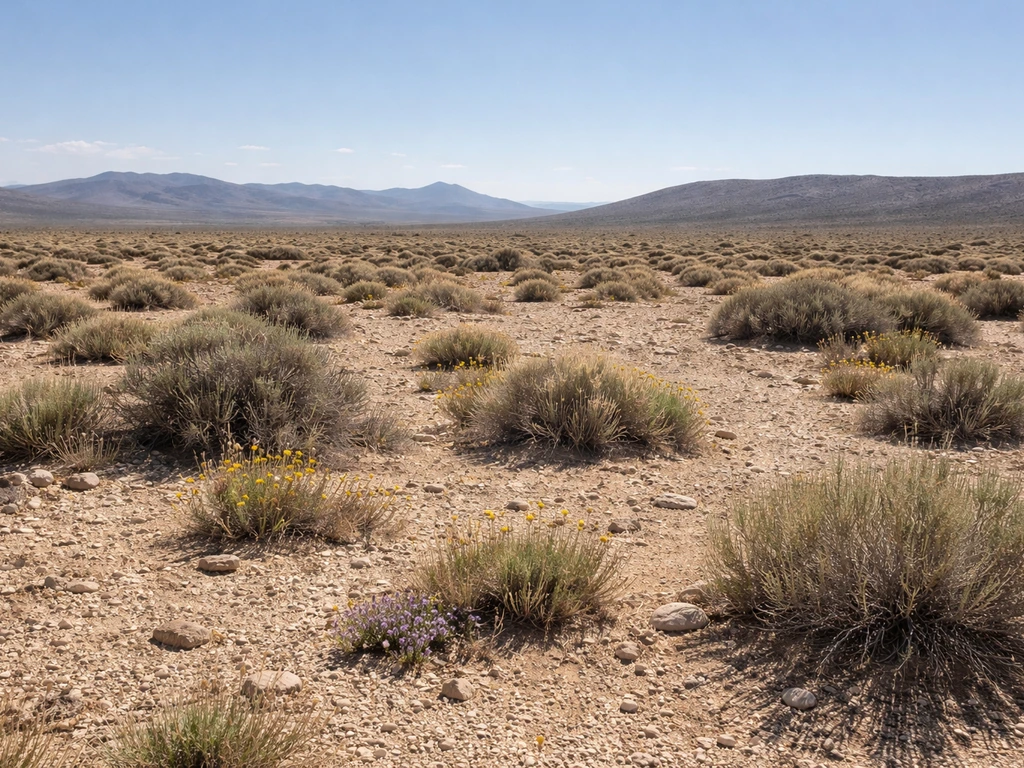
The term gets thrown around loosely, so let's pin it down. A high desert sits at elevation, typically above 4,000 feet and often above 5,000, which changes everything compared to a low hot desert like the Sonoran. The Colorado Plateau, the Great Basin, the Chihuahuan Desert above its valley floors, and the high plateaus of the Intermountain West are the textbook examples. Annual precipitation is generally under 10 inches, which puts it firmly in the desert category by USGS standards. But the altitude adds cold that a cactus-and-sand mental image doesn't capture.
Because high desert air is extremely dry, it holds almost no heat overnight. NASA's research on desert environments highlights exactly this: dry air releases heat rapidly after sunset, which is why a 90°F afternoon can become a 45°F night within hours. NASA notes that because desert air is very dry, it releases heat rapidly after sunset, helping explain drastic day-to-night temperature swings dry air releases heat rapidly after sunset. On the Colorado Plateau, daily swings of more than 40°F in 24 hours are documented and common. Add to that strong, desiccating winds, Joshua Tree NP lists them as a defining desert characteristic, and you've got an environment that stresses plants through desiccation, mechanical damage, and rapid temperature cycling all at once.
Winter hardiness is where high desert diverges most sharply from other arid zones. The Great Basin, for example, has cold winters and warm summers with low humidity throughout, it is climatically closer to a cold steppe than to a warm desert. Plants regularly face USDA hardiness zones 4 through 6 depending on exact elevation and exposure. That means anything marketed purely as 'desert-adapted' without frost hardiness to at least zone 5 or 6 is a bad bet unless you're in a very sheltered microclimate.
The Traits That Actually Let Plants Survive Here
When you're out in the field and you see which plants are thriving in the open, not just surviving in a sheltered corner, a clear pattern emerges. Successful high desert plants share a specific set of adaptations, and understanding them helps you evaluate any new candidate before you buy it.
- Drought tolerance combined with frost hardiness: This is the non-negotiable pairing. Drought tolerance alone is common; frost hardiness alone is common. Having both at the same time, down to zone 4 or 5, is the actual filter that separates high desert survivors from everything else.
- Deep or wide-spreading root systems: High desert plants rarely rely on surface moisture. Sagebrush, for instance, sends roots both deep (sometimes over 10 feet for water) and wide laterally (for surface moisture when it does rain). This dual strategy is a hallmark of the zone.
- Dormancy strategies: Many successful plants go semi-dormant or fully dormant during summer heat or winter cold rather than trying to push growth through stressful periods. Cool-season grasses, for example, go summer-dormant. Deciduous shrubs shed leaves to reduce water loss.
- Small, waxy, gray, or hairy leaves: These reduce surface area for water loss and reflect intense UV radiation. Gray and silver foliage is almost a visual cue for high desert adaptation—think sagebrush, four-wing saltbush, or Apache plume.
- Tolerance of poor, alkaline, fast-draining soils: High desert soils are often sandy loam, gravelly, or rocky with high pH (7.5 to 8.5 is typical). Plants that insist on rich, amended, or acidic soil will struggle or fail entirely.
- Wind resistance: Low, mounded growth forms and flexible stems reduce wind damage and desiccation. Upright plants with large leaf surfaces are consistently more stressed and damaged in exposed high desert positions.
The Best Plant Picks by Category
These are plants that show up repeatedly across high desert landscapes because they genuinely work, not just in gardens, but in the wild. Here are clear examples of plants that grow in dry areas, including species like sagebrush and penstemons. If you see a plant naturally established on open, dry slopes and flats at elevation, that's better evidence of fitness than any nursery description.
Shrubs
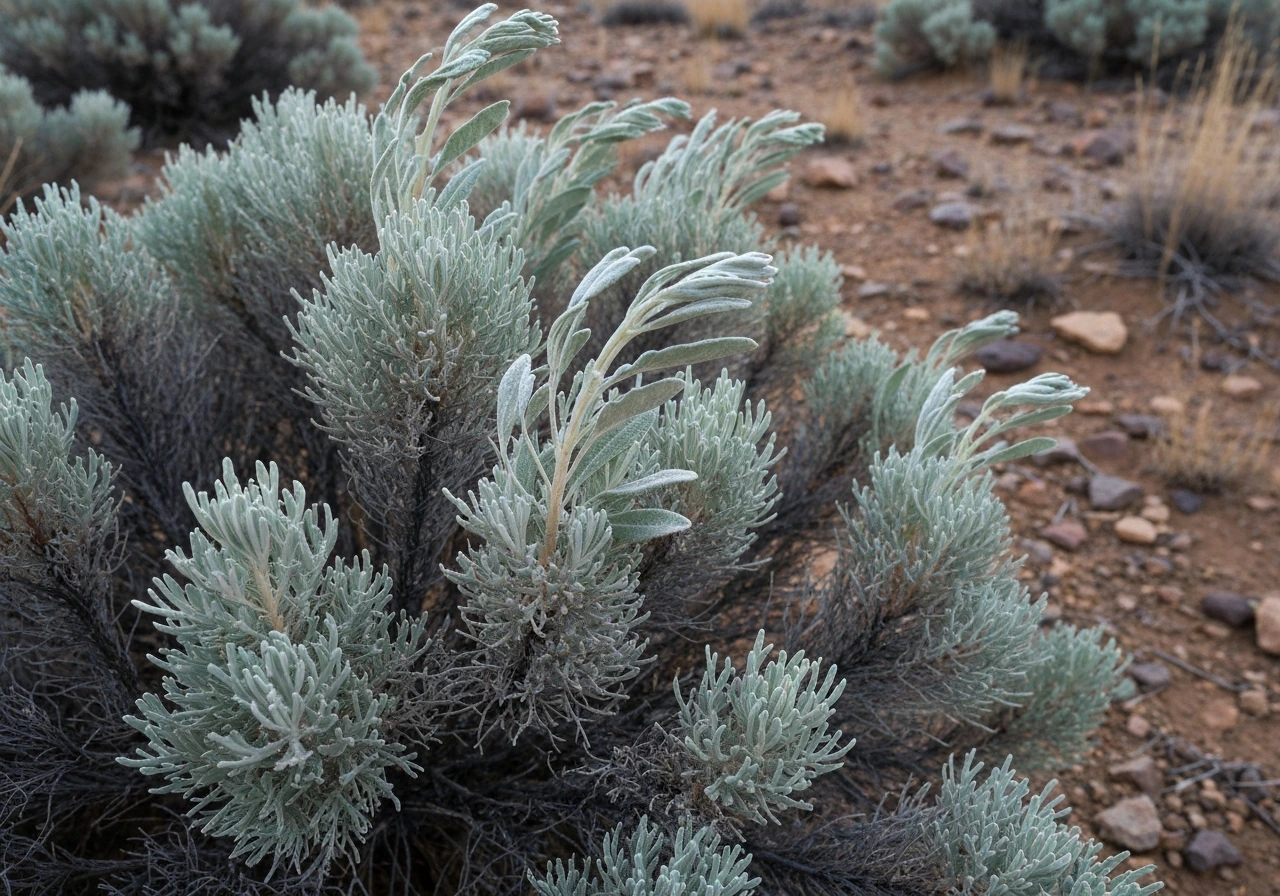
- Big Sagebrush (Artemisia tridentata): The iconic high desert shrub. Hardy to zone 4, handles alkaline rocky soil, and once established needs no supplemental water. Its silvery leaves reduce heat and water loss. It defines the Great Basin and Colorado Plateau plant community.
- Four-wing Saltbush (Atriplex canescens): Extremely tolerant of poor, saline, and alkaline soils. Hardy to zone 4, reaches 3 to 6 feet, and handles both drought and cold wind without complaint. A workhorse for tough exposed sites.
- Apache Plume (Fallugia paradoxa): Native to elevations from 4,000 to 8,000 feet across the Southwest. Produces white flowers and feathery pink seed heads, is hardy to zone 5, and tolerates dry rocky slopes better than most ornamental shrubs.
- Rabbitbrush (Ericameria nauseosa): Late-blooming yellow flowers in fall when almost nothing else is flowering. Hardy to zone 3, extremely drought-tolerant, and adapts to a wide range of high desert soils including disturbed areas.
- Cliffrose (Purshia mexicana): A rugged native shrub with fragrant white-yellow flowers. Hardy to zone 5, grows on rocky dry slopes from 4,000 to 8,000 feet, and handles alkaline soils well.
Grasses
- Blue Grama (Bouteloua gracilis): Perhaps the most reliable native grass for high desert. Hardy to zone 3, grows 6 to 12 inches tall, and handles both dry heat and cold winters. Its eyelash-like seed heads are distinctive. Often used in low-water lawns in the region.
- Buffalo Grass (Bouteloua dactyloides): Goes dormant in summer heat and winter cold, which is exactly right for this climate. Hardy to zone 3 and requires almost no water once established on well-drained soil.
- Indian Ricegrass (Achnatherum hymenoides): A native bunch grass found across Great Basin and Plateau high deserts. Hardy to zone 4, tolerates sandy and gravelly soils, and provides winter interest with its airy seed heads.
- Sideoats Grama (Bouteloua curtipendula): Taller than Blue Grama (up to 2 feet), with distinctive oat-like seeds along one side of the stem. Extremely hardy and drought-tolerant, well suited to open high desert slopes.
Wildflowers
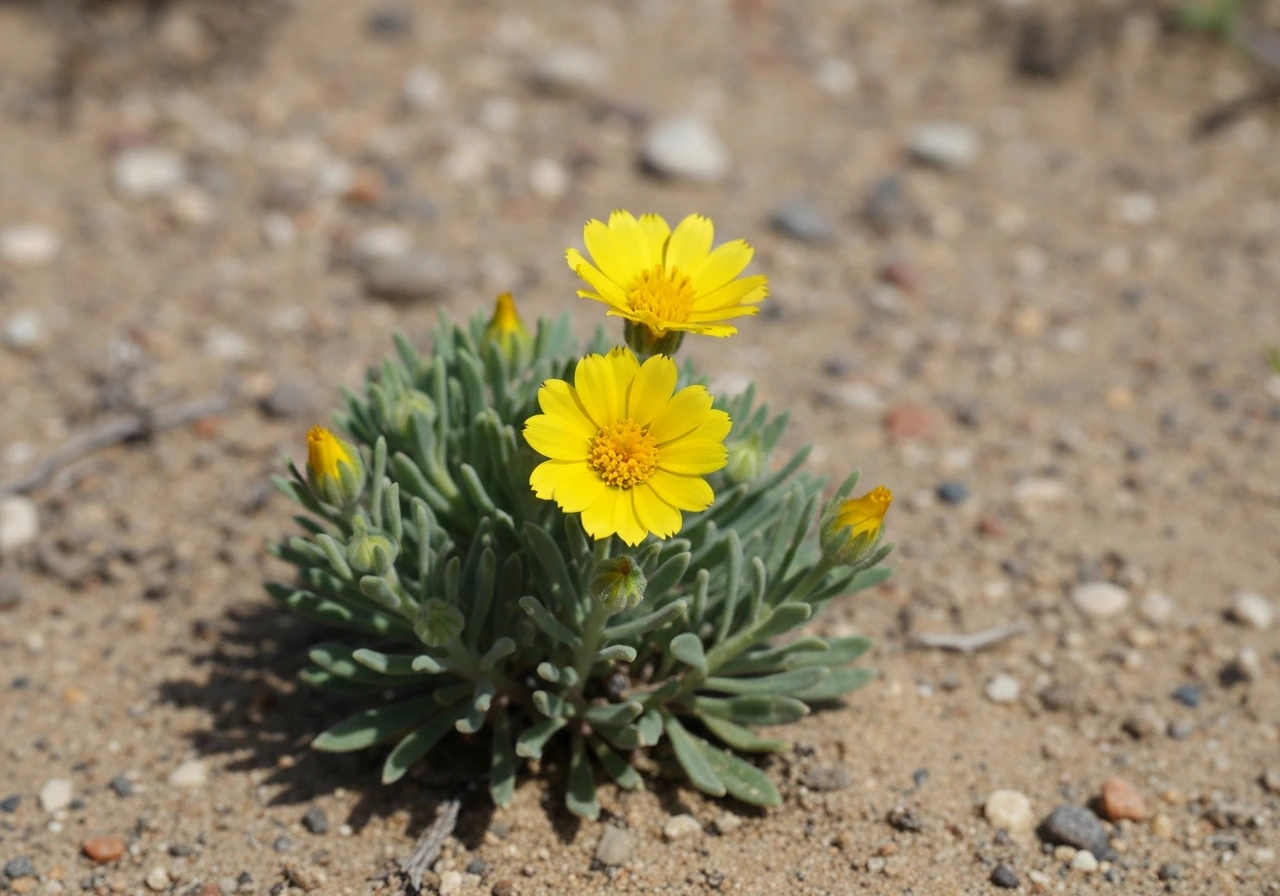
- Desert Marigold (Baileya multiradiata): Bright yellow flowers on gray-green foliage, blooms spring through fall, and reseeds reliably. Hardy to zone 5, but often survives zone 4 in well-drained spots. Thrives in gravelly alkaline soils.
- Penstemon (various species, especially P. strictus and P. palmeri): Penstemons are native high desert wildflowers available in multiple species matched to different elevations. Rocky Mountain Penstemon (P. strictus) is hardy to zone 3 and thrives in dry rocky slopes.
- Scarlet Globemallow (Sphaeralcea coccinea): A low, spreading wildflower with orange-red blooms that appears on open, disturbed, and rocky ground across the Colorado Plateau. Hardy to zone 4 and very drought-tolerant.
- Clarkia (Clarkia pulchella): A cool-season annual that germinates with spring rains and completes its cycle before summer stress peaks. Direct seeding in fall or early spring works well in high desert.
- Blazingstar (Mentzelia laevicaulis): A native biennial that produces large showy white-yellow flowers on rocky slopes at 4,000 to 7,000 feet. Tolerates both drought and poor soils extremely well.
Trees
- Pinyon Pine (Pinus edulis): The classic high desert tree, naturally occurring at 5,000 to 8,000 feet across the Colorado Plateau and Great Basin. Hardy to zone 5, slow-growing, and completely adapted to dry rocky alkaline soils.
- Utah Juniper (Juniperus osteosperma): Often grows alongside Pinyon Pine in the same elevation band. Hardy to zone 4, extremely wind-resistant, and tolerates a wider range of soils than almost any other tree in the region.
- Gambel Oak (Quercus gambelii): A deciduous oak that forms groves at mid-to-high elevations in the Southwest high desert. Hardy to zone 3, spreads by rhizomes to form thickets, and provides shelter and wind protection.
- New Mexico Olive (Forestiera neomexicana): A tough native shrub-tree reaching 6 to 18 feet, hardy to zone 4, with small olive-like fruits. It handles alkaline, dry, rocky soil and exposed positions well.
- Two-needle Pinyon (Pinus edulis) and Single-leaf Pinyon (Pinus monophylla): Choose based on region—two-needle is more common on the Colorado Plateau, single-leaf dominates in the Great Basin.
Matching Plants to Your Specific Site
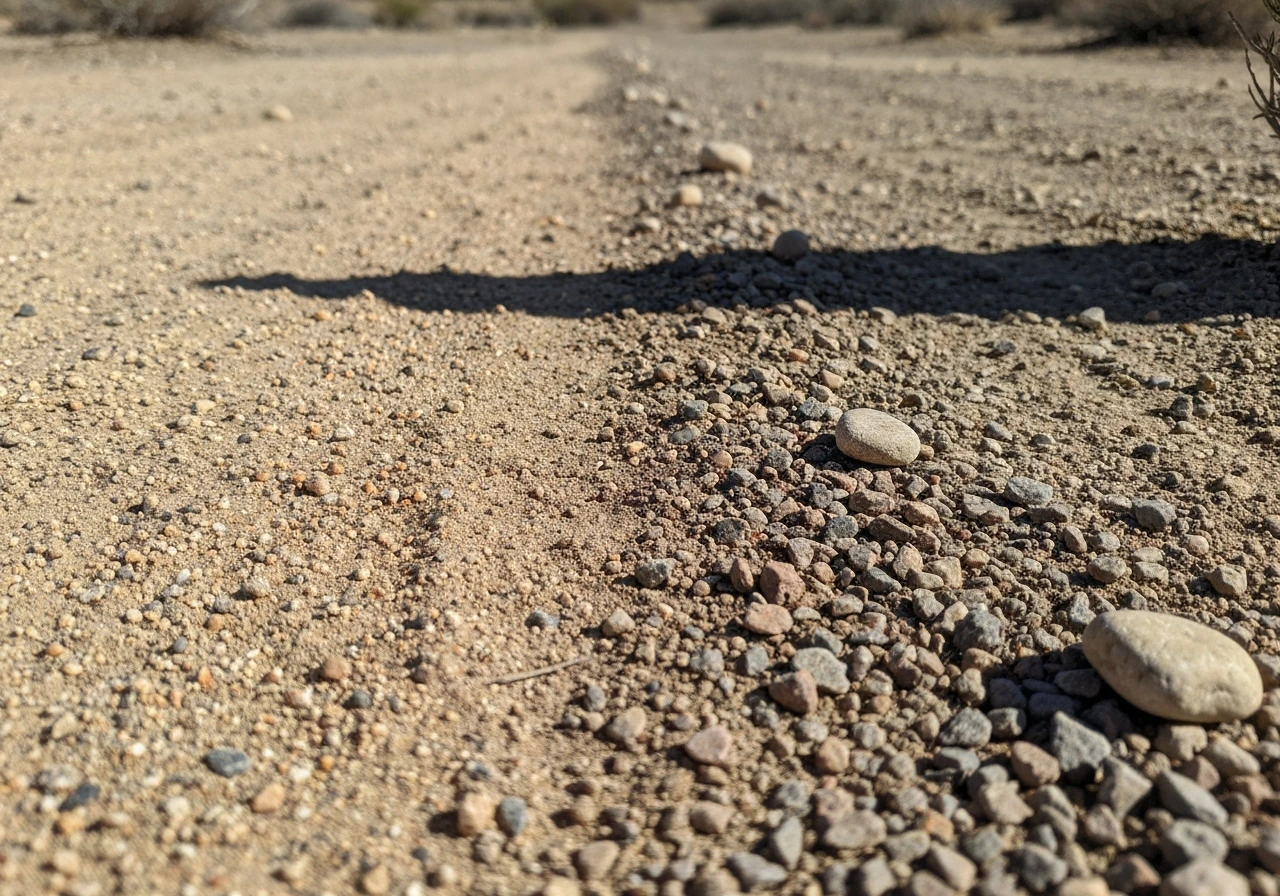
'High desert' is not one uniform thing. A flat, sandy basin at 5,500 feet in Nevada and a rocky south-facing slope at 6,500 feet in New Mexico are both 'high desert,' but the plants that perform best in each are different. Before you buy anything, run through these site variables.
| Site Variable | What to Look For | Plant Selection Impact |
|---|---|---|
| Soil texture | Sandy, gravelly, or rocky = fast-draining; clay = slow-draining | Fast-draining favors sagebrush, rabbitbrush, penstemons; heavy clay is harder and needs drainage improvement before planting |
| Soil pH | Most high desert soils run 7.5–8.5 (alkaline) | Choose natives adapted to alkaline soils; avoid acid-loving plants like azaleas or blueberries entirely |
| Sun exposure | South/west-facing slopes are hottest and driest; north-facing slopes hold more moisture | Reserve south-facing spots for the toughest drought-tolerant species; north-facing allows slightly less xeric choices |
| Elevation | Every 1,000-foot gain drops average temperature ~3–5°F and increases wind/UV | At 7,000+ feet, stick to zone 3–4 hardy plants; at 4,500 feet you may have more zone 5–6 options |
| Wind exposure | Open ridge tops and canyon mouths funnel wind heavily | Use low-mounded species or windbreak plantings of juniper/pinyon on exposed faces |
| Microclimates | South sides of boulders, walls, and buildings create warmer pockets; north sides stay colder and moister | Use microclimates to extend your plant palette slightly—but don't push the hardiness zone more than one step |
The most useful field exercise you can do before planting is to drive or walk the surrounding natural landscape and note exactly what native plants are growing where, not just what species, but which slope aspect and soil type they favor. A rabbitbrush growing in sandy wash bottom and one growing on an exposed rocky ridge are in very different conditions even though they're the same species. That kind of local observation is worth more than any plant list.
Getting Plants Established: Timing, Water, and Mulch
High desert plants are tough once established, but the first growing season is genuinely vulnerable. Most failures happen in year one, and most of those failures come from either planting at the wrong time or mismanaging water during establishment.
When to Plant
Fall planting (late August through October, before the ground freezes) is the best window for most high desert natives. Cooler temperatures and occasional fall rain let roots establish before summer stress arrives. Spring planting works too, but it gives plants only a few weeks before summer heat hits, which makes the irrigation demand much higher in that first year. Avoid planting anything in the peak of summer heat, even heat-adapted plants suffer severe transplant shock when moved into 90°F days with low humidity right out of a nursery pot.
How to Water During Establishment
- Water deeply at planting—soak the root zone thoroughly to remove air pockets and encourage roots to follow moisture downward.
- For the first 4 to 6 weeks, water every 3 to 7 days depending on heat and wind conditions. The goal is to keep the root zone from completely drying out, not to keep it moist.
- Gradually extend the interval between waterings through the first growing season. By late fall of the first year, most native shrubs and grasses should need little or no supplemental water except in severe drought.
- In year two, healthy established natives in well-drained soil typically need water only during extended dry spells—maybe once or twice a month in summer if there has been no rain for 3 or more weeks.
- Stop irrigating entirely once plants are established unless you have an unusually hot, dry stretch. Overwatering in subsequent years is a more common killer than drought.
Mulching Without Causing Rot
Mulch helps regulate soil temperature and reduce evaporation, but organic mulch (wood chips, bark) in high desert soils creates a moisture-retention layer that can rot the crowns of drought-adapted plants, especially sagebrush, penstemons, and plants with taproots. Joshua Tree National Park’s NPS education material lists desert-defining conditions such as strong winds and wide temperature ranges, along with low or sporadic rainfall and high evaporation strong winds, wide temperature ranges, low or sporadic rainfall, and high evaporation. The best mulch for high desert is gravel or decomposed granite, 2 to 3 inches deep, kept a few inches away from the plant's crown. It moderates temperature, lets rain penetrate, and doesn't hold moisture against stems. If you use wood chip mulch, keep it thin (1 inch maximum) and well away from the plant crown.
Spacing and Positioning
Space high desert natives generously, closer plantings trap humidity and can increase disease pressure. More importantly, give plants room to develop their full root spread, which in many cases extends well beyond the canopy. A sagebrush 3 feet tall may have roots spreading 6 to 8 feet wide. Planting taller shrubs or trees on the north or west side of smaller plants provides afternoon shade and wind protection, mimicking the natural nurse-plant relationships you see in wild high desert landscapes.
Common Mistakes and How to Fix Them
Root and Crown Rot
This is the most common failure mode in high desert gardens. It shows up as sudden collapse in late spring or early summer, a plant that looked fine all winter suddenly wilts and doesn't recover. The culprit is almost always slow-draining soil combined with overwatering, often made worse by organic mulch piled against the crown. The fix: always plant in or create well-drained conditions. If your native soil is clay-heavy, raise the planting area or amend with coarse gravel, not compost, which holds water. Compost is counterproductive for most high desert natives.
Transplant Shock and Wilting
Wilting in the first few weeks is expected and not always fatal, especially if you planted in warm weather. Shade cloth over new transplants for the first two weeks dramatically reduces transplant shock in hot, sunny, windy conditions. Water deeply and wait. If the plant is still wilting after 4 to 6 weeks with regular water, check the roots: mushy brown roots mean rot (too wet), while dry, barely-established roots mean it hasn't been watered enough or deeply enough. The latter is more recoverable.
Insufficient Frost Hardiness
A plant sold as 'drought-tolerant' or 'desert-adapted' at a generic nursery may only be rated to zone 7 or 8. At 6,000 feet in the Colorado Plateau, you're looking at zone 5 or even zone 4 conditions. Always verify hardiness zone ratings before purchasing, and lean toward plants native to your specific high desert region rather than warm-desert imports. A plant from the Sonoran Desert at 1,500 feet is not automatically suited to a high-elevation cold desert site.
Wrong Soil Amendments
Well-meaning gardeners often add large amounts of compost or peat moss when planting, expecting to help. For most high desert natives, this creates a rich, moist pocket that the plant hasn't evolved to handle and that encourages soft, rank growth more vulnerable to frost damage and rot. Skip the compost. If your soil is compacted, break it up with coarse grit or small gravel. If you want to improve nutrition slightly for non-native plants, use very small amounts of compost worked into the whole planting area, not concentrated in the planting hole.
Seasonal Planting and Maintenance Guide
Spring (March through May)
Spring is when the high desert feels most forgiving, and it's tempting to plant everything at once. Cool-season wildflowers and grasses respond well to early spring planting once the soil can be worked. Direct-seed annuals like Clarkia and desert marigold in late March or early April. Hold off on planting heat-sensitive shrubs until soil temperatures are consistently above 50°F. Watch for late frosts, high desert elevations can get killing frosts into late May, so protect newly transplanted specimens with frost cloth if a cold snap is forecast.
Summer (June through August)
This is the hardest establishment window. If you must plant in summer, choose only the toughest, most established container plants, water more frequently, and use shade cloth for at least the first few weeks. Focus maintenance on monitoring moisture, not adding more water automatically, but checking whether established plants show real stress versus normal seasonal dormancy. Many cool-season grasses will look brown and dead in July; that's dormancy, not death. Avoid fertilizing anything during peak summer heat, as it pushes soft growth that dehydrates easily.
Fall (September through November)
Fall is the prime planting window. Temperatures drop, humidity occasionally rises with monsoon tails or early autumn weather, and roots have the whole winter to slowly establish before summer stress. Plant shrubs, trees, and perennial grasses in September and October. Hold off on bare-root planting until spring. After the first hard frost, cut back dead annual growth but leave the seed heads of grasses and wildflowers, they provide winter interest and self-seeding that fills gaps naturally.
Winter (December through February)
Established high desert natives generally need no winter protection. New plantings from fall, especially marginally hardy species, benefit from a light layer of gravel mulch over the root zone to moderate freeze-thaw cycling, which can heave roots out of the ground. Don't cover plants with organic mulch over winter; it holds moisture that freezes and damages crowns. If you're at the extreme cold end (zone 4 or colder), wrap young tree trunks with tree wrap to prevent sunscald, which is common at high altitude where winter sun is intense even when temperatures are below freezing. Use winter to plan next year's additions, focusing on species you've observed thriving in nearby natural areas.
The underlying principle across all seasons is the same: work with what this environment actually does, not against it. High desert plants have evolved strategies, dormancy, deep roots, gray leaves, mounded forms, that are responses to exactly the conditions you're dealing with. Your job as a gardener is to choose plants that already have those responses built in, put them in conditions that match where they grow naturally, and let them do the rest. Plants that grow in dry areas are called desert plants, and they match these tough survival strategies choose plants that already have those responses built in. Plants that grow in dry areas more broadly share some of these traits, but the cold-hardiness and elevation tolerance of high desert natives are what separate this zone from other arid environments.
FAQ
How do I verify a plant is truly suitable for high desert conditions, not just drought-tolerant?
Check “USDA hardiness zone” plus your actual elevation and slope exposure, then add a safety margin. If you are around zone 4 to 5 at your site, avoid plants marketed only for “zone 7 to 8,” even if they are labeled drought-tolerant. Also confirm the plant’s mature size so spacing does not become too tight as it develops.
What’s the best watering approach during the first year, when failures are most common?
High desert plants often need a longer, deeper watering pattern during establishment rather than frequent light watering. Water thoroughly until moisture reaches well below the planting hole, then let the root zone dry down before watering again, especially in fall. If you see persistent wilting with dry, brittle soil, that points to under-watering rather than “more drought.”
Can I add compost or peat moss to help high desert plants grow faster?
Avoid “natural” looking but moisture-holding amendments concentrated in the planting hole. Compost or peat moss creates a rich, wet pocket that can keep roots too wet in winter and too soft to handle freeze-thaw. If you want to improve poor soil, use only small amounts mixed into the whole area, or prioritize coarse grit and gravel to improve drainage.
Is wood chip mulch ever okay in high desert gardens?
Yes, but only if the mulch does not contact the crown and it is the right type. Gravel or decomposed granite (about 2 to 3 inches) is usually safest, leaving a few inches of clearance around the stem base. Wood chip mulch can work only when kept thin (around 1 inch), well pulled back from the crown, and monitored closely so it does not stay damp.
My plant looks fine through winter, then wilts and dies. What should I check first?
If a plant collapses suddenly in late spring or early summer, first suspect waterlogging and slow drainage, not heat alone. Dig gently and inspect roots, mushy brown roots indicate rot, while dry and shriveled roots indicate insufficient deep watering. Fix drainage before planting more by raising beds, adding coarse gravel, or reworking the planting area.
How can I tell dormancy from actual death in hot-season high desert conditions?
Do not rely on the nursery pot to judge moisture needs. In high desert, the same plant can go dormant and look “dead” during hot mid-summer even when it will green up later. Look for signs of life at the root collar (firmness and slight flexibility) and monitor over multiple weeks before assuming failure.
Do high desert plants need winter protection, and when does it matter?
You still need freeze management, but it is usually targeted. Established plants generally handle winter naturally, but new fall plantings near the cold edge may benefit from a gravel or decomposed granite layer over the root zone to reduce freeze-thaw heave. Skip organic winter mulches that trap moisture against crowns.
How do slope aspect and wind exposure change what plants will work?
Use aspect and shelter intentionally. Plant taller shrubs on the north or west side of smaller plants to provide afternoon shade and reduce wind exposure, mimicking nurse-plant patterns. Also consider microclimates like rocky ridges, south-facing slopes, and sheltered washes, because the “same species” may do differently in each.
Should I buy native plants from my state or region, or are desert plants from elsewhere fine?
Most high desert natives are easier from region-matched sources because they have already adapted to local winter severity and elevation variability. For “desert-adapted” buys, prioritize plants native to your specific high desert region rather than warm low-elevation deserts, and avoid assuming a label means cold hardiness.
What if my soil seems sandy but still causes root rot or collapse?
If soil is compacted, you can get drainage problems even with “sandy” topsoil. Break up compaction with coarse grit or small gravel, and avoid only loosening a small hole, since roots will encounter the compacted surrounding layer. Aim for improved drainage through the planting area, not just at the surface.
What should I do if I must plant in summer, not fall?
In summer, choose only the toughest available stock, keep the plant shaded for the first few weeks, and increase monitoring rather than automatically increasing irrigation. Shade cloth reduces transplant stress from sun and wind, but you still need a controlled “deep water, then dry down” approach so roots do not stay wet.