Plants that grow on dry land are called xerophytes. That's the umbrella scientific term, and it covers everything from saguaro cacti standing 40 feet tall in the Sonoran Desert to the silver-leafed sagebrush carpeting the cold high-desert basins of the American West. You can see examples of plants that grow naturally in deserts and steppe habitats, from succulents and cacti to drought-tolerant shrubs. In everyday language you'll also hear "drought-tolerant plants," "arid-adapted plants," or "xeric plants" used interchangeably, but xerophyte is the precise term that ecologists and botanists actually reach for.
What Are Plants That Grow on Dry Land Called?

Dr. Marcus Weatherby
17 May 2026
The Basic Term: Xerophyte
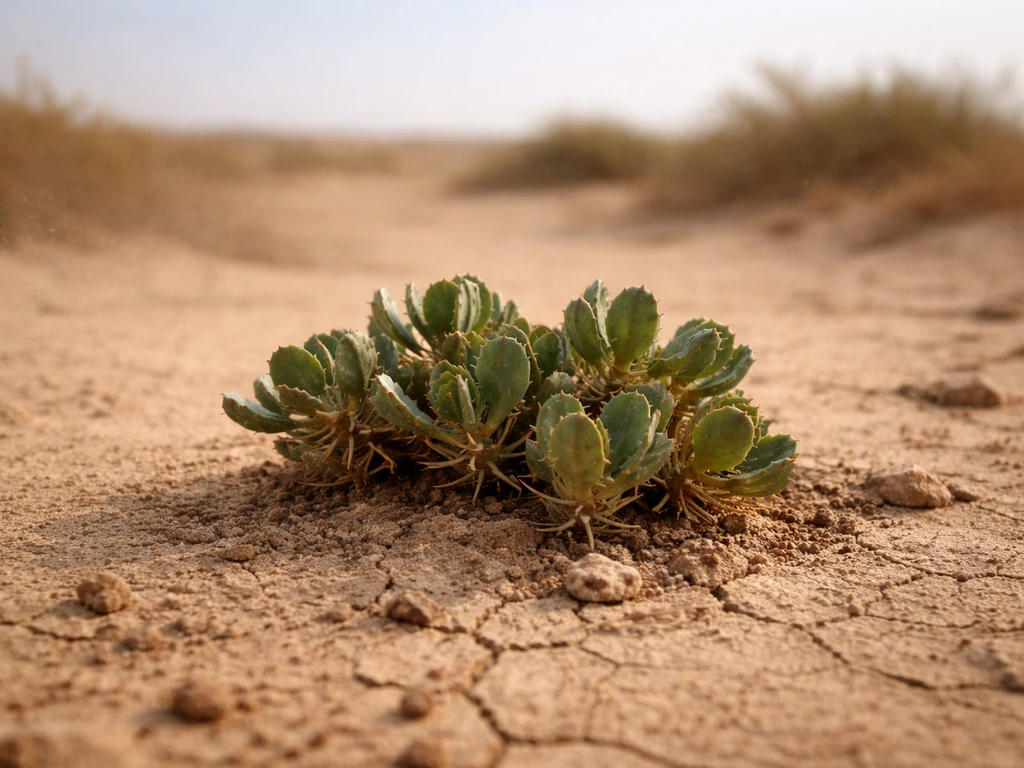
A xerophyte is any plant adapted to life in a dry or physiologically dry habitat. That second part matters more than most people realize. "Physiologically dry" means the plant can't easily access water even if some moisture is present, which is why Britannica groups salt-marsh plants, saline-soil species, and even some acid-bog plants under the xerophyte label alongside desert cacti. The common thread is that all of them have evolved mechanisms to prevent water loss, store available water, or do both at once.
It's also worth separating xerophytes from drought-escaping plants. Some annuals simply sidestep dry conditions by germinating, flowering, and setting seed during the brief wet season, then dying before the drought hits. Those are drought escapers, not true xerophytes. Xerophytes are the plants that stay put, keep growing, and use morphological or physiological tricks to survive when the soil is bone dry for months on end. That distinction is useful when you're trying to identify what you're actually looking at in the field.
The Two Main Groups: Desert Plants vs. Steppe and Grassland Plants
When people search for plants that grow on dry land, they're usually picturing one of two distinct environments, and the plant communities in each look quite different from each other.
Desert and Arid-Region Plants
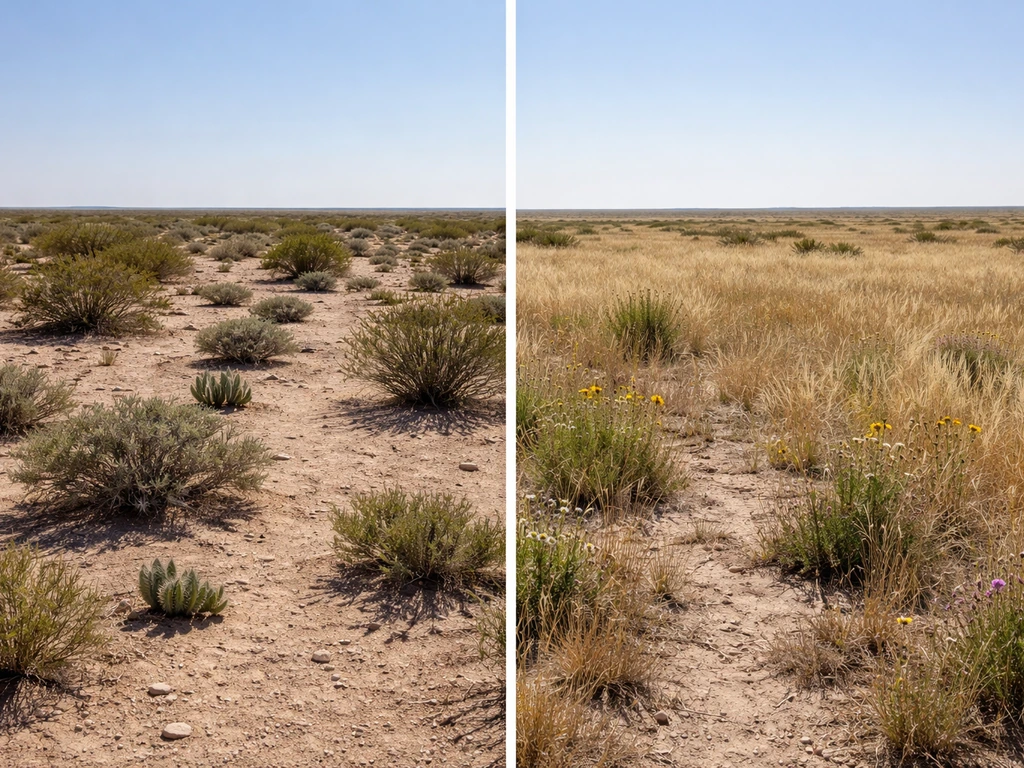
True deserts are defined by severe aridity, where evaporation dramatically outpaces precipitation year-round. In Köppen climate terms, potential evapotranspiration demand far exceeds what the sky delivers. The plants here face the harshest possible water stress, and their adaptations reflect that.
The classic examples are succulents like cacti, and the saguaro cactus (Carnegiea gigantea) is a perfect illustration of the extreme end: a pleated, ridged columnar stem that expands to store huge volumes of water after rain, armored with hard spines, growing slowly to that remarkable 40-foot height over many decades.
Creosote bush (Larrea tridentata), another desert fixture, takes a different approach: its leaves are small, thick, and coated in a waxy resin that slows water loss, and its roots spread laterally in the shallow soil to intercept any rainfall before it evaporates. You can smell a creosote stand after desert rain, and that sharp, medicinal scent is actually coming from those resinous coatings.
Steppe and Dryland Grassland Plants
Steppes sit in the ecological middle ground between desert and fully humid grassland, receiving roughly 25 to 50 centimeters (10 to 20 inches) of rain per year. They're semi-arid rather than truly arid, and the plant communities reflect that extra margin of moisture. Here you find grasses dominating, particularly heat- and drought-tolerant warm-season bunchgrasses in shortgrass prairie zones where ground cover stays sparse and low.
Big sagebrush (Artemisia tridentata) is the signature shrub of the cold semi-arid steppe in North America: silvery-gray, strongly aromatic, growing in desert shrub communities and pinyon-juniper woodlands across the Great Basin. It's notably intolerant of waterlogged soils, and if you walk a steppe drainage line you'll often see a sharp visual edge where the sagebrush stops and riparian vegetation begins.
| Feature | Desert/Arid Plants | Steppe/Dryland Grassland Plants |
|---|---|---|
| Annual rainfall | Below ~25 cm (10 in) | 25–50 cm (10–20 in) |
| Typical plant forms | Succulents, resinous shrubs, spiny cacti | Grasses, aromatic shrubs, bunchgrasses |
| Key examples | Saguaro cactus, creosote bush | Big sagebrush, shortgrass prairie species |
| Water storage strategy | Stems/leaves store water (succulence) | Deep or lateral roots, drought-enduring foliage |
| Climate type (Köppen) | Arid desert (BWh/BWk) | Semi-arid steppe (BSh/BSk) |
If the site you're studying gets less than 10 inches of rain annually, you're looking at desert xerophytes. If it gets 10 to 20 inches, you're in steppe territory. That rainfall threshold is one of the most reliable quick-reference tools for predicting which plant community you'll encounter.
How Dry-Land Plants Actually Survive
The Desert Museum's framework sums it up cleanly: desert and dry-land plants use three main strategies, succulence, drought tolerance, and drought avoidance. In practice, most xerophytes combine more than one of these.
Succulence and Water Storage
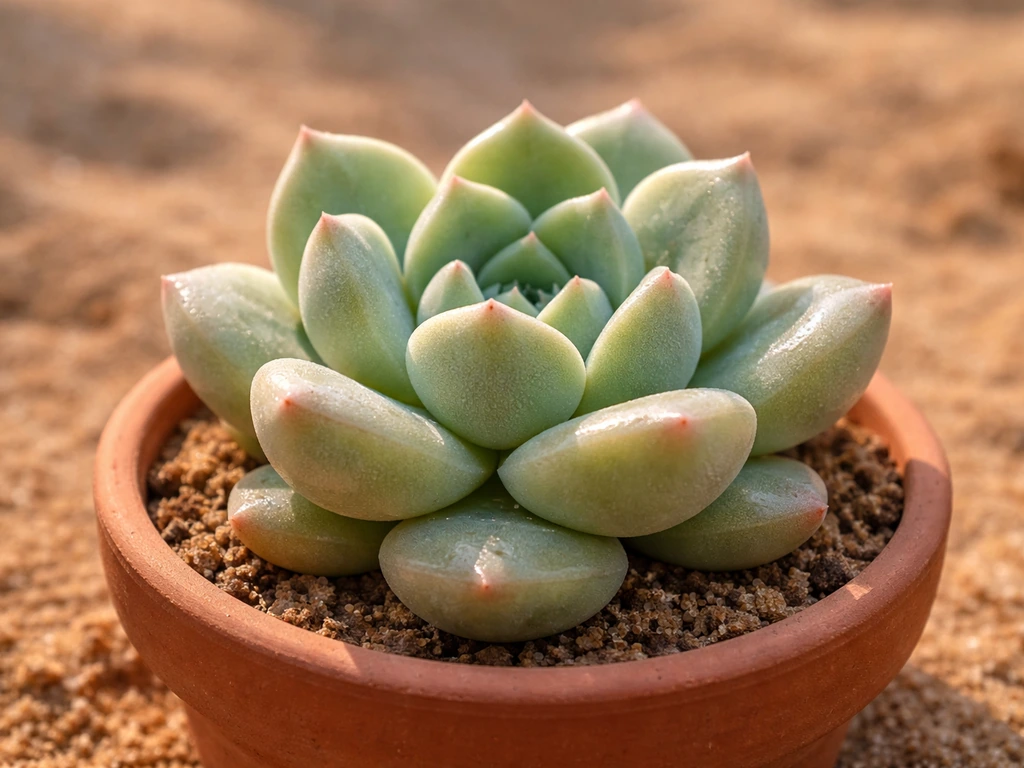
Succulents store water in their roots, stems, or leaves, and the most water-efficient among them use a specialized photosynthesis pathway called Crassulacean Acid Metabolism, or CAM. In CAM plants, stomata (the tiny pores that exchange gases) open at night rather than during the heat of the day. Because nighttime air holds less moisture than daytime desert air, vapor-pressure differences are lower and the plant loses far less water during gas exchange.
The carbon dioxide absorbed at night is stored chemically and used for photosynthesis during daylight hours with the stomata closed. You can't see CAM happening, but its physical side effects are visible: the thick, fleshy stems and leaves that make succulents so recognizable are directly tied to this water-storing capacity. In some cacti the stem takes over photosynthesis entirely, and leaves are reduced to spines. CSU Stanislaus also notes that [succulent stems can photosynthesize even when leaves are reduced](https://www.
csustan. edu/biology/stan-state-greenhouse/desert-plants-storing-and-protecting-water), and that desert plants often retain water because of low rainfall.
Leaf Adaptations That Reduce Transpiration
Non-succulent xerophytes like creosote bush and sagebrush rely more heavily on structural leaf modifications. Look for thick, waxy cuticles on leaf surfaces, which act as a physical barrier to water vapor escaping. Stomata are often fewer, smaller, and positioned on the lower leaf surface or even sunken below the surface (as in conifer needles) to reduce exposure to drying air. The silvery or gray color you see on sagebrush and many dry-land shrubs usually comes from fine hairs or scales that reflect sunlight and reduce leaf temperature, which in turn reduces the rate of water loss through transpiration.
Root Systems Built for Scarcity
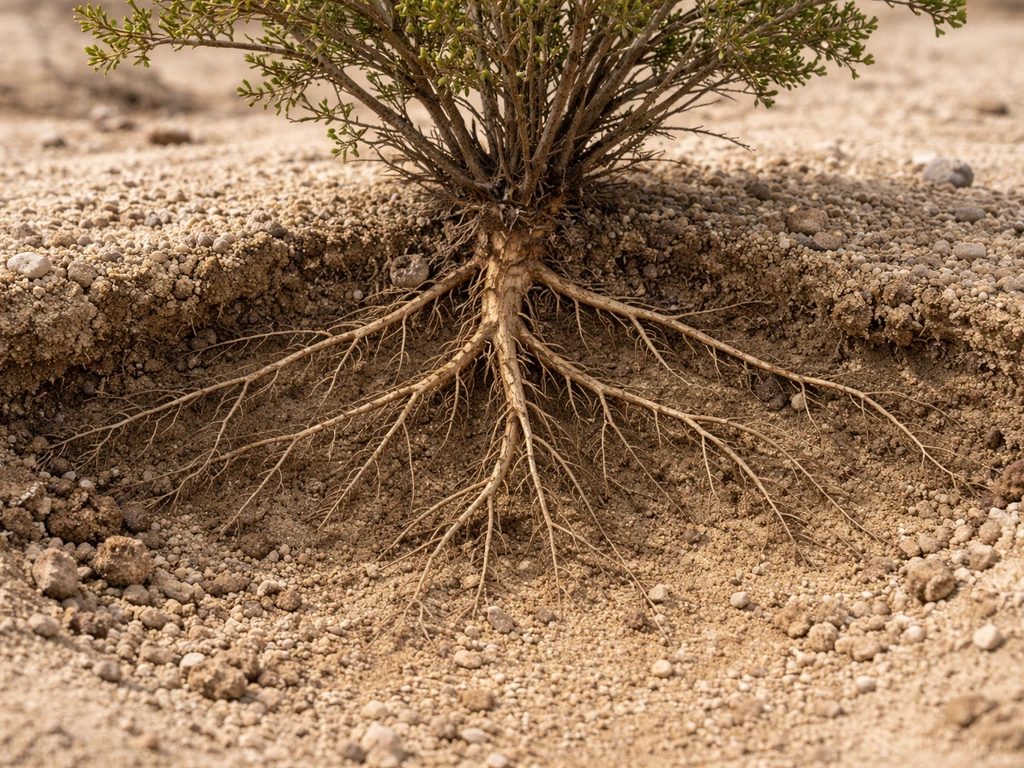
Belowground strategies are just as important as leaf modifications. Creosote bush uses a combination of a shallow taproot and spreading lateral roots to intercept rainfall at the surface before it percolates away, and it actively competes for soil moisture in a way that spaces individual plants apart visibly across the desert floor. Other dry-land plants push roots deep to reach sub-surface moisture that surface soil never holds. Either way, the root architecture is a direct response to how water moves through arid soils.
Where You'll Actually Find These Plants: Climate, Soil, and Plant Communities
Dry land, in ecological terms, comes down to two conditions working together: low precipitation and fast drainage. Aridity is the climate side of the equation, where evapotranspiration demand consistently exceeds rainfall input. Soil drainage is the physical side: sandy or rocky soils with high infiltration rates shed water quickly, creating dry conditions even in areas with moderate rainfall. This is why you can find xerophytic plants growing on steep, south-facing rocky outcrops in regions that aren't technically classified as deserts.
In terms of natural plant communities, here's how the zones stack up. True desert communities (the Sonoran, Chihuahuan, Great Basin deserts of North America, the Sahara, the Atacama) are dominated by widely spaced shrubs, cacti, and succulents with large bare-ground gaps between plants. Moving into semi-arid steppe, plant cover increases and grasses become dominant alongside drought-tolerant shrubs. The evapotranspiration in these systems can be several times greater than annual precipitation, which tells you just how much pressure the plants are under to hold onto every molecule of water they absorb.
Soil type is a reliable field indicator. Dry-land plant communities almost universally occupy soils with fast drainage and low organic matter content. Compacted clay soils, despite being moisture-retentive, can also force some xerophytic adaptations by making water physiologically unavailable to roots during dry periods, which connects back to Britannica's broader definition of xerophytes including physiologically dry habitats.
How to Identify Dry-Land Plants in the Field or Garden
Once you know what adaptations to look for, identifying xerophytes in the field becomes much more straightforward. Here are the features I check in order when I'm walking unfamiliar dry habitat.
- Check leaf texture and color first. Thick, waxy, resinous, or silvery-gray leaves are a strong xerophyte signal. If the leaves feel leathery or coated, or if the plant has a notable scent from essential oils or resins, you're likely looking at a drought-adapted species.
- Look at leaf size and shape. Smaller leaves, needle-like leaves, or the near-absence of leaves (with green stems taking over photosynthesis) are all classic dry-land adaptations. Spines instead of leaves on cacti is the most extreme version of this.
- Assess overall plant spacing. In true desert communities, plants space themselves out across the landscape in response to root competition for water. Dense, evenly distributed individual plants with visible bare ground between them is a reliable ecological indicator of arid conditions.
- Feel and test the soil. Dry-land plants almost always grow in well-draining soils. A quick field drainage test confirms this: dig a small hole about 12 inches deep, fill it with water, and measure how fast it drains. Sandy or gravelly xeric soils typically drain faster than one inch per hour and often much faster. Slow drainage (under half an inch per hour) usually indicates the soil retains moisture and supports different plant communities.
- Note sun exposure and slope aspect. South- and west-facing slopes in the Northern Hemisphere receive more direct solar radiation and dry out faster, creating micro-habitats where xerophytic species establish even within generally wetter regions.
- Look for CAM and succulent indicators. If a plant has notably thick, fleshy stems or leaves, waxy surfaces, and grows in full sun in arid conditions, it's a strong candidate for CAM photosynthesis and succulent water storage.
When choosing plants for a garden in dry conditions, use these same traits as your selection filter. A plant native to a steppe or desert community, with silvery foliage, resinous scent, or fleshy leaves, is likely already built to handle the soil drainage, sun exposure, and seasonal drought you're working with. Matching plants to the conditions they evolved in is always more reliable than fighting the site with irrigation.
It's also worth knowing that dry-land plants sit within a broader ecological picture. These are plants that grow where they are not wanted, and they are often called invasive species plants that grow where they are not wanted are called. The site covers plants adapted to very different extremes: plants that grow in air (epiphytes and aerophytes), plants that colonize disturbed ground where they aren't wanted, and plants that grow on land more generally across all climate types. Xerophytes are the dry-land specialists within that larger story, defined not by where they can't grow, but by the specific water-scarcity pressures that shaped everything about them, from their roots to their leaf surfaces to the chemistry running inside their cells.
FAQ
If a plant survives in drought, does that automatically mean it is a xerophyte?
Not always. Xerophytes are adapted to grow and function in a dry environment that is often physiologically dry, meaning water is hard to access even when the soil briefly has moisture. A “drought-tolerant” plant may tolerate dry spells, but it might still rely on accessible water, or it may escape drought by dying back to survive.
What is the difference between xerophytes and drought escapers?
Drought escapers avoid the problem by completing their life cycle during brief wet periods, then leaving seeds or dormant stages to survive until the next favorable window. Xerophytes stay active for long dry seasons and use structural or physiological mechanisms to limit water loss or store water.
Can xerophyte plants grow in places that are not technically deserts?
Yes. If the site is dry due to fast drainage or “physiologically dry” conditions, xerophyte adaptations can appear in rocky outcrops, steep slopes, and some soils with high infiltration even if total annual rainfall is moderate.
Do all dry-land plants have thick, fleshy leaves or stems?
No. Some xerophytes are succulents that store water, but others are non-succulent. Non-succulents often rely on traits like thick waxy cuticles, fewer or sunken stomata, reflective hairs or scales, and drought-adapted root systems.
Is Crassulacean Acid Metabolism (CAM) required for a plant to be a xerophyte?
No. CAM is one specialized water-saving strategy used by many succulents, but some xerophytes use other approaches like reduced leaf area, protective leaf coatings, or drought-resistant rooting depth and spread.
How can I tell if the dry conditions are physiological (water not accessible) rather than just low rainfall?
Watch how the soil behaves after rain. If moisture quickly disappears due to fast drainage, or roots cannot access water because of soil structure, the site can become physiologically dry. Plants adapted to xeric conditions will often match that pattern with traits that limit transpiration and maximize root interception.
What soil clue best predicts you will find xerophyte communities?
Look for fast-draining soils and low organic matter, often sandy or rocky. Even compacted clays can create xeric outcomes by restricting effective water access to roots during dry periods, so “moisture retentive” does not always mean “plant available.”
Are plants that live in salty or acidic habitats always xerophytes?
Many are, at least under the broader definition used by ecologists for physiologically dry conditions. Saline-soil or high acidity can reduce water availability to roots, so plants may evolve xeric-type adaptations even if the habitat is not a classic desert.
Do xerophytes necessarily grow far apart like in deserts?
Often, but not always. True desert communities commonly show widely spaced shrubs and large bare-ground gaps, while steppe systems typically have higher plant cover, with grasses playing a larger role. Spacing depends on both water stress and how plants compete for limited moisture.
If I want to grow xerophyte-like plants at home, what is the biggest mistake people make?
Overwatering on a schedule. Many dry-land plants need infrequent, deep watering only when the soil has fully dried, because frequent moisture can encourage rot or shallow rooting. Match the site’s drainage and light conditions, then use irrigation conservatively.