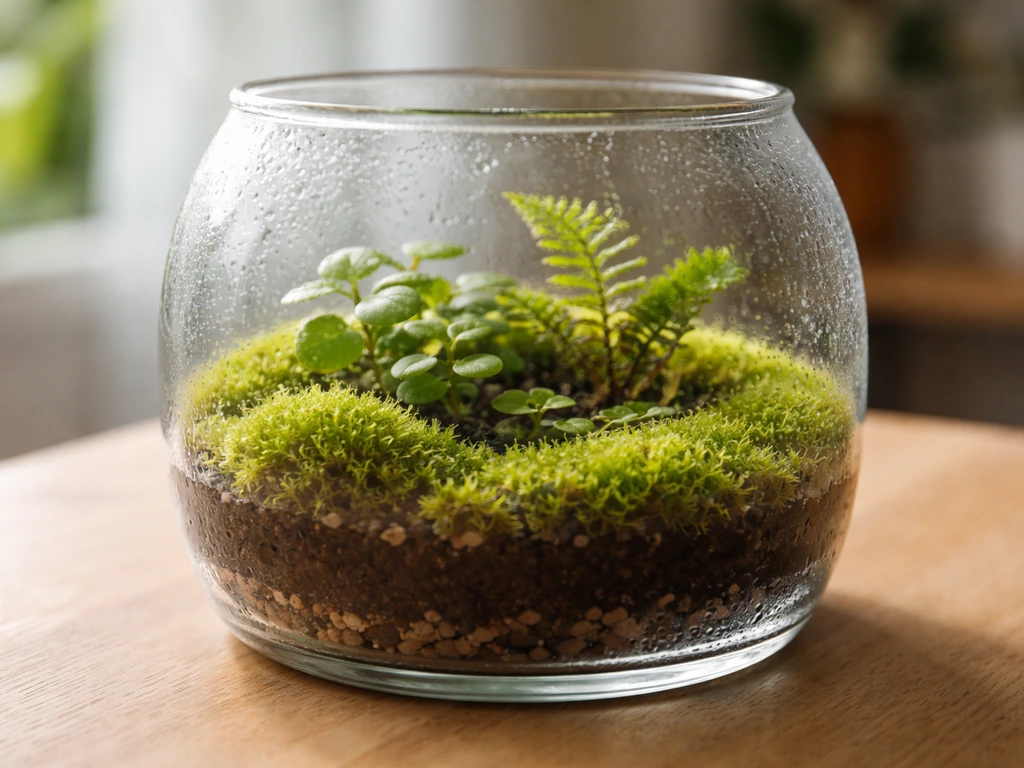
Terrariums work because they replicate a miniature habitat. The plants that thrive in them are ones that already live in low-airflow, high-humidity, filtered-light environments in the wild: forest floors, cave edges, stream banks, and shaded rock faces. Get that habitat match right and the plants practically look after themselves. Get it wrong and you end up with rotting moss and crispy fern tips. Here is a direct answer to what grows in a terrarium, broken down by setup type, so you can pick the right plants for the conditions you actually have.
What Plants Grow in a Terrarium Best Picks and Care Tips

Dr. Marcus Weatherby
18 Apr 2026
Terrarium basics: light, humidity, and size come first
Before you pick a single plant, you need to nail down three conditions: how much light reaches the terrarium, how humid the interior stays, and how large the container is. These three factors eliminate most of the wrong choices immediately.
Light
Most terrarium plants are adapted to the filtered light of a forest understory, not a sunny windowsill. A placement about 6 to 8 feet from a bright south-facing window, or directly on a north or east windowsill with a sheer curtain, is what most sources call 'bright indirect light.' That range covers the majority of suitable terrarium plants. If you are using LED grow lights, keep them at least 6 inches above the plant surface: closer than that with a 10 to 20W LED and you risk photoinhibition on sensitive mosses and ferns. Avoid placing glass terrariums in direct sun. The glass amplifies heat and scorches leaves fast.
Humidity
Closed terrariums (sealed or nearly sealed lids) hold humidity at 80 to 100 percent. Open terrariums (no lid, or a wide-open bowl) sit much closer to typical indoor air, around 40 to 60 percent. This single distinction drives almost every plant choice. Tropical humidity-lovers like ferns and Fittonia belong in closed setups. Succulents and air plants belong in open ones. Mixing the two is the most common beginner mistake.
Container size
Size determines which plants stay manageable. A compact 10 to 15 cm (4 to 6 inch) wide container rules out anything that sends out runners aggressively or grows taller than about 10 cm. A larger 30 cm (12 inch) or wider vessel opens up small ferns, Fittonia, and trailing mosses. Always research mature growth size, not the size of the cutting or plug you are planting.
The main plant types that actually thrive in terrariums
Mosses
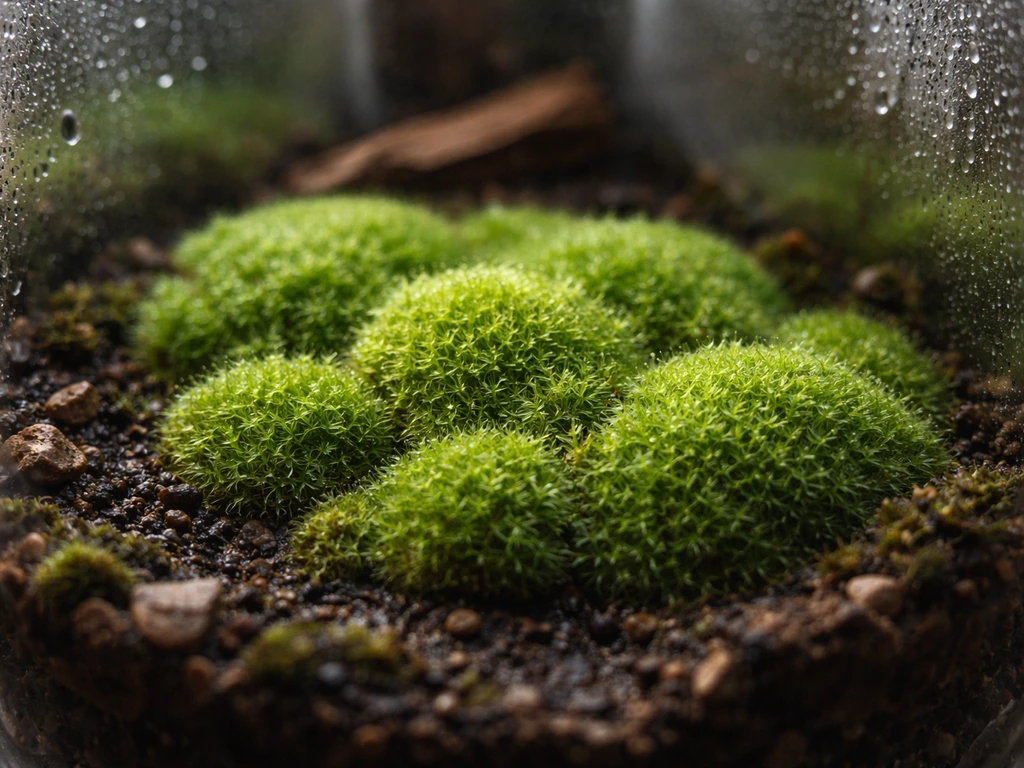
Mosses are the most naturally terrarium-adapted plants you can use. In the wild, they grow on forest floors, cave mouths, north-facing rock surfaces, and stream banks where humidity is consistently high and direct sun is rare. On a north-facing wall, you generally want shade-tolerant, moisture-loving plants that can handle low light and consistent humidity. Sheet moss (Hypnum), cushion moss (Leucobryum), and pillow moss all work well in closed terrariums. They need almost no soil depth (a 2 to 3 cm substrate layer is enough), tolerate low light better than most plants, and actively benefit from the high humidity a sealed lid creates. They do not need fertilizer. Their only real enemy is drying out, which a closed lid prevents.
Ferns
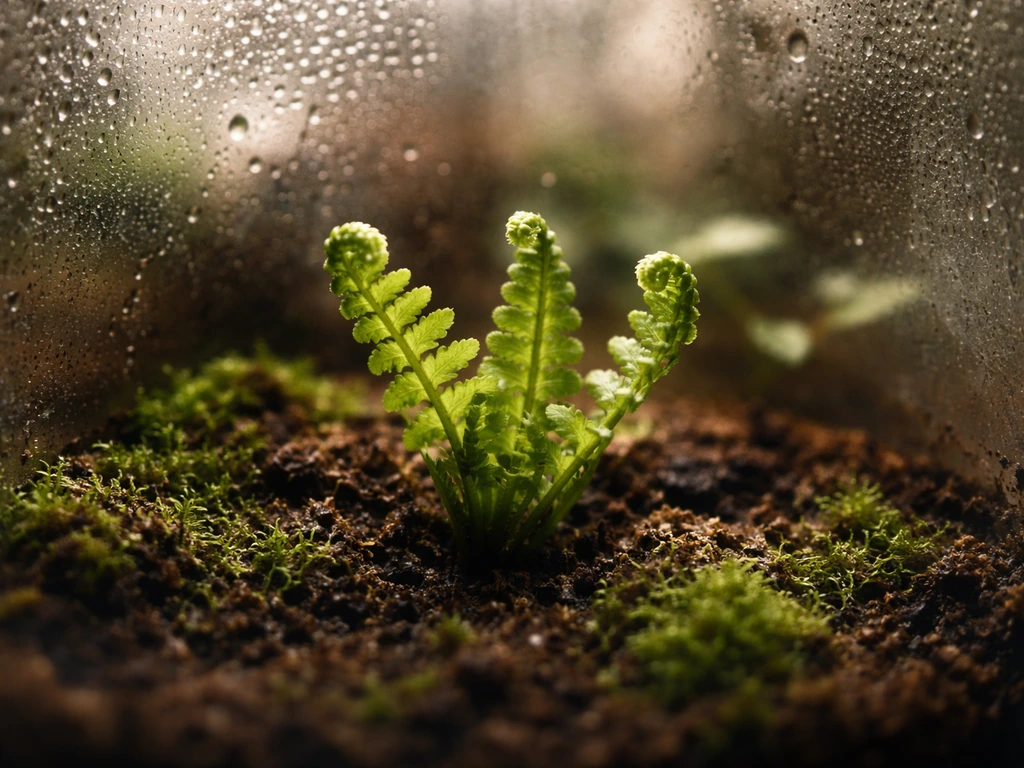
Ferns evolved in humid, shaded forest habitats and are a natural fit for closed terrariums. Button ferns (Pellaea rotundifolia), maidenhair ferns (Adiantum), and bird's nest ferns (Asplenium nidus) are the most practical picks for terrarium scale. They want filtered light, consistent moisture at their roots (not waterlogged), and high ambient humidity. In a closed terrarium, condensation cycling keeps them happy without daily watering. Maidenhair ferns in particular are notoriously difficult to keep alive in dry indoor air, but they are much easier inside a humid closed terrarium where they are essentially in the damp forest-floor habitat they come from.
Tropical foliage plants
Fittonia (nerve plant) is probably the most widely recommended terrarium plant, and for good reason. Its native habitat is the humid floor of Peruvian rainforests, which is almost exactly what a closed terrarium replicates. It wants bright, indirect light (near a filtered north or east window works well), high humidity, and consistent but not waterlogged moisture. Fittonias need a blank" rel="noopener noreferrer">bright position out of direct sunlight and grow best in moisture-retentive (peat-free) compost, enjoying humidity but not waterlogged compost. OurHousePlants recommends keeping Fittonia soil consistently moist but not soggy, to avoid waterlogged conditions, and it notes light needs range from low to indirect bright light blank" rel="noopener noreferrer">consistent but not waterlogged moisture. Fittonia stays compact, has striking leaf patterning that marks changes in humidity clearly (it wilts dramatically when dry, then recovers fast), and tolerates the low airflow of a sealed container. Tradescantia species like Tradescantia zebrina (silver inch plant) also work in larger open or semi-open terrariums: they prefer bright indirect light, grow fast, and tolerate moderate humidity. Be warned, Tradescantia grows aggressively and needs trimming in a contained space.
Air plants (Tillandsia)
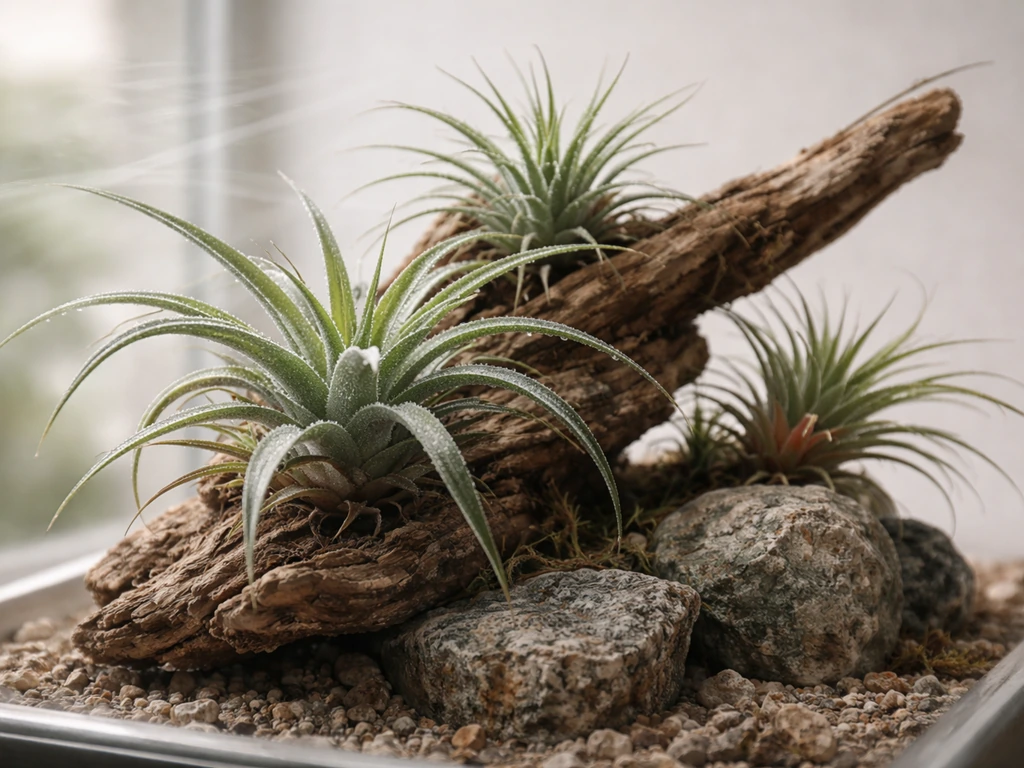
Air plants are epiphytes. In nature, they grow attached to tree branches and rock faces in environments with excellent airflow and periodic wetting followed by complete drying. This makes them a poor fit for closed terrariums (too humid, too still) but a genuinely good fit for open terrariums or glass vessels without lids. They absorb moisture through their leaves rather than roots, so they need regular misting or a 30-minute weekly soak, then complete drying before being placed back in the vessel. They work well with the same type of exposed, rocky, dry-leaning conditions you would find on rock faces and walls, which is worth keeping in mind if you have also been exploring plants that grow on rocks or bare walls. If you want more ideas for plants that naturally cling to vertical surfaces, check out what works on bare walls too plants on bare walls.
Closed vs. open terrariums: matching plant to setup
| Terrarium Style | Humidity Level | Best Plant Types | Avoid |
|---|---|---|---|
| Closed (lidded, sealed) | 80–100% | Mosses, ferns, Fittonia, Peperomia, small orchids | Succulents, cacti, air plants, Tradescantia (outgrows space fast) |
| Open (no lid, wide bowl) | 40–60% (ambient) | Tillandsia, succulents, Haworthia, Tradescantia, sedums | Maidenhair fern, Fittonia (dries out too fast), aquatic moss |
| Semi-open (partial lid or mesh) | 60–75% | Small ferns, Peperomia, miniature Fittonia, artillery fern | Highly sensitive tropical ferns, fully aquatic plants |
Closed terrariums mimic the humid microhabitats of tropical forest floors and cave edges. If you are curious about the kinds of plants that colonize low-light, high-humidity natural environments like caves, that ecological overlap explains why the same plant families show up in both contexts. Open terrariums are closer to exposed rock ledge or semi-arid scrub conditions: more light, lower humidity, better airflow.
Beginner picks: the plants most likely to succeed
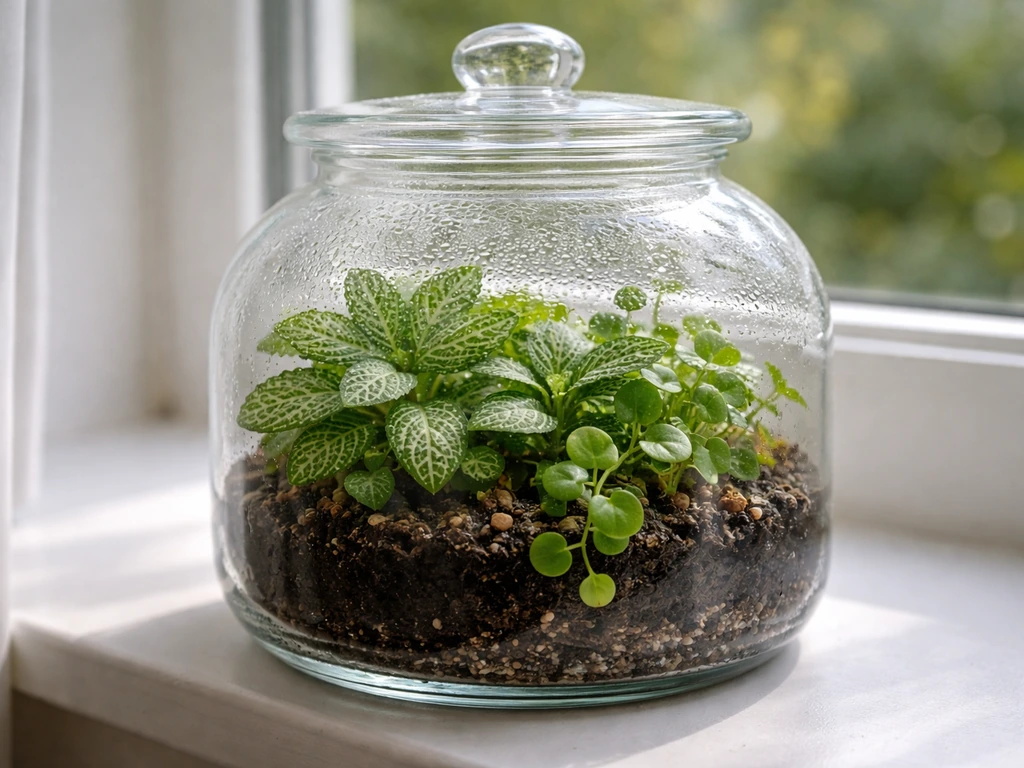
If you are starting out, narrow your choice to plants with a track record of tolerating the inevitable beginner mistakes: slight overwatering, inconsistent light, and a container that is slightly too small. These are the most forgiving and most rewarding options.
- Fittonia (nerve plant): Closed terrarium. Bright indirect light (filtered north or east window). Keep substrate moist but not waterlogged. Will visibly wilt when dry and bounce back quickly after watering. Stays under 15 cm tall. Ideal starter plant.
- Cushion moss (Leucobryum glaucum): Closed terrarium. Low to medium indirect light. Almost no watering once established in a sealed container. Extremely low maintenance. Perfect for a 'set it and forget it' setup.
- Maidenhair fern (Adiantum): Closed terrarium. Medium indirect light. Consistent moisture, never let the root zone dry. Thrives in the condensation cycle of a sealed lid. Struggles everywhere else indoors, but genuinely easy in the right terrarium.
- Haworthia (zebra plant): Open terrarium. Bright indirect to low direct light. Water sparingly every 2 to 3 weeks. Tolerates neglect. Great for open bowls or glass jars without lids.
- Peperomia (multiple species): Closed or semi-open. Medium indirect light. Drought-tolerant for a tropical plant, so it handles slight under-watering without drama. Compact and slow-growing.
- Tillandsia (air plant): Open terrarium only. Bright indirect light with good airflow. Mist twice weekly or soak weekly, then dry completely. No soil needed.
Why things go wrong and how to fix them
Overwatering
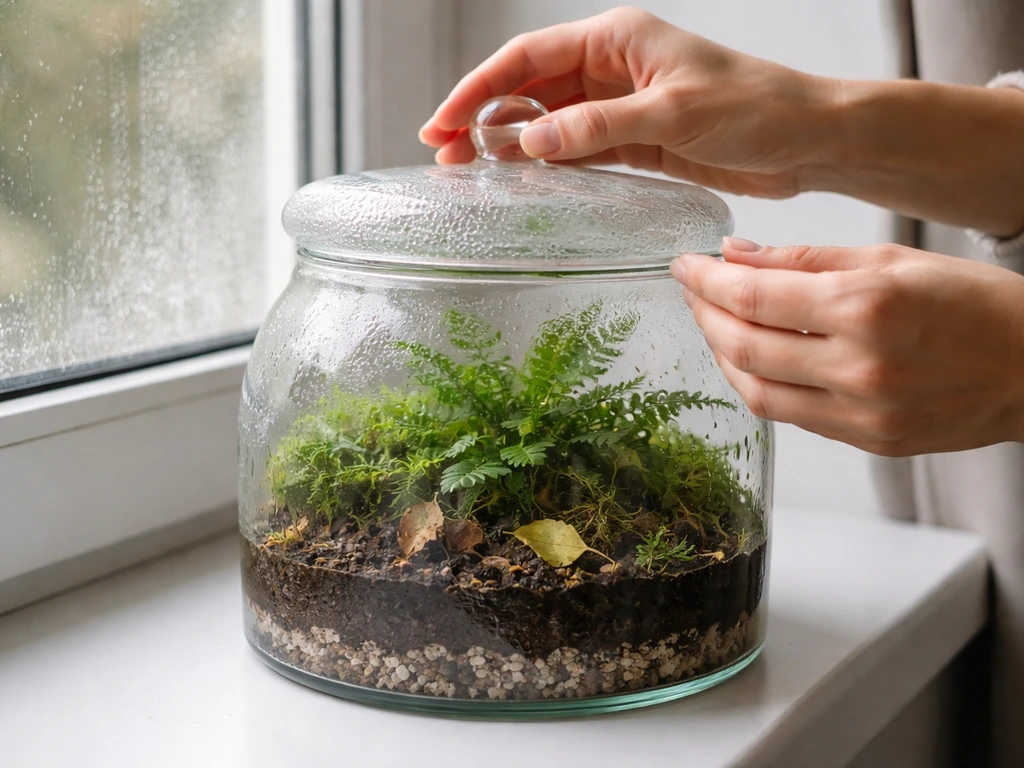
This is the number one killer in closed terrariums. A sealed terrarium recycles its own moisture through condensation, so after the initial watering, many setups need no added water for weeks. If you see standing water at the base or smell anything musty, the substrate is waterlogged. Fix it by removing the lid entirely for 24 to 48 hours, then only partially closing it for another day before resealing. If you added drainage layers (gravel or leca under the substrate), that helps buffer against waterlogging but does not eliminate the risk of overwatering.
Wrong light
Two problems show up here: too much direct sun (leaves scorch or bleach, especially through glass which amplifies heat) and too little light (plants etiolate, reaching toward any light source with weak, stretched stems). Most terrarium plants want the equivalent of a bright but shaded forest floor. A north-facing windowsill or a position 6 to 8 feet from a south window hits that range well. If you rely on grow lights, 10 to 20W full-spectrum LEDs placed at least 6 inches above the plants on a 10 to 14-hour daily cycle work reliably for mosses and ferns.
Incompatible plants
Mixing plants with different habitat requirements in one container is a very common mistake. A succulent placed in a closed, humid terrarium will rot within weeks. A Fittonia in an open bowl next to a sunny window will dry out and die just as fast. Before combining plants, check that they share the same natural habitat type: both forest-floor tropical, or both arid-tolerant. Do not mix them based on aesthetics alone.
Fast-growing plants crowding the space
Tradescantia and similar fast-growers can overwhelm a terrarium in a matter of weeks. If you plant them, trim regularly (every 3 to 4 weeks) or reserve them for larger, open containers where they have room. Mosses are generally the safest choice for compact spaces because they grow very slowly and do not compete aggressively with neighbors.
Using your climate and season to guide plant choice
Your local climate and the current season matter more than most terrarium guides admit. If you are in a temperate zone in spring (as it is now, mid-April 2026), natural light levels are increasing, ambient temperatures are rising, and indoor humidity may still be low from winter heating. That seasonal context affects two things: how much supplemental light your terrarium actually needs right now (probably less than in January) and how fast the substrate dries in an open terrarium (faster as indoor heating reduces and windows get opened).
If you live in a naturally humid climate (coastal tropics, temperate rainforest zones, or near large water bodies), your open terrarium will hold moisture longer and support a wider range of plants than the same setup in a dry continental interior. If you are in an arid or semi-arid zone, closed terrariums are significantly more practical because keeping any humidity-loving plant alive in an open container in dry air is a constant battle. In those climates, closed terrariums filled with moss and ferns essentially create a portable humid microhabitat that does not exist naturally outside.
The same logic applies to elevation. At higher elevations where UV levels are stronger and humidity drops, terrarium glass provides a useful buffer: it filters some UV and traps humidity. Plants adapted to mid-elevation cloud forest conditions (like many ferns and small bromeliads) often do well in closed terrariums at altitude for exactly this reason.
Keeping your terrarium plants thriving long-term
A well-chosen, well-set-up terrarium is genuinely low-maintenance. The goal is to replicate a stable microhabitat, not to manage a pot of houseplants. Here is a simple maintenance approach that works across most closed and open setups.
- Check condensation levels weekly in closed terrariums. Light condensation on the glass walls is normal and healthy. Heavy streaming condensation means too much moisture: crack the lid for a day. No condensation at all means the substrate is drying out and needs a small amount of water added.
- Rotate the terrarium every 2 to 4 weeks if it is near a window. This prevents uneven growth toward the light source.
- Trim any fast-growing plants before they crowd others. Remove any dead or yellowing leaves immediately to prevent mold spreading in the humid environment.
- For open terrariums with succulents or air plants: water on a strict schedule (every 2 weeks for succulents, weekly soaks for air plants) rather than guessing by feel. Then wait for the substrate or plant to fully dry before watering again.
- Fertilize sparingly, if at all. Closed terrariums recycle nutrients through the decomposition of organic matter. Adding fertilizer encourages fast, leggy growth in a space that rewards slow, compact growth. If you fertilize, use a quarter-strength liquid fertilizer no more than once every 2 to 3 months.
- Replace plants that are clearly not working. If a plant has been declining for more than 4 weeks despite correct light and moisture, it is probably a habitat mismatch. Replace it with something better suited rather than adjusting care indefinitely.
The best terrarium setups are ones where the plants' natural habitat and the terrarium's conditions align so closely that the system becomes self-regulating. Pick plants from similar wild environments (forest floor, tropical understory, arid rock ledge), match them to a closed or open container accordingly, place the container in appropriate light, and let the environment do the work. That is essentially what a healthy ecosystem does, whether it is a patch of moss on a cave wall or a fern colony on a shaded streambank: the conditions sustain the plants without constant intervention.
FAQ
Can I mix moss and ferns with succulents in the same terrarium?
Yes, but only when the enclosure conditions match the plant. For closed or nearly sealed terrariums (80 to 100% humidity), ferns, Fittonia, and many mosses are good candidates. For open bowls, choose plants that tolerate lower humidity, because fully sealed air can quickly rot plants that want airflow and drying cycles.
What plants are best if I want a terrarium that does not spread or need constant trimming?
If you want plants that stay put, prioritize slow, clumping moss varieties and compact ferns. Avoid runner-formers (especially fast trailing trades over small spaces), and choose a container wide enough for mature spread, since cutting size matters less than final growth habit.
How do I tell if my terrarium is too wet versus just properly humid?
A practical rule is to treat any “wet soil” signal as waterlogging. If condensation is heavy and constant, but the base smells musty or you see standing water, remove the lid for a short dry-out period (about 24 to 48 hours), then reintroduce the lid gradually instead of watering more.
What should I do if leaves start turning pale or getting brown edges in a glass terrarium?
Most terrarium plants dislike harsh direct sun through glass. If you notice bleaching (light patches) or scorched edges, move the terrarium farther from the window or add a sheer curtain. When adjusting light, shift location first, then only fine-tune watering after a few days so you can see whether the issue is heat/light or moisture.
Do moss terrariums need fertilizer or frequent watering?
Moss can work with minimal substrate, but it should not be left to dry and crack repeatedly. Check moisture by feel, then mist lightly only when the surface looks dry, not when the interior is still wet. In closed terrariums, condensation usually means you should stop adding water until the cycle suggests drying.
How long should I wait to judge whether my plant choices and watering schedule are working?
A new terrarium often needs a short “settling period.” After the initial watering, wait about 1 to 2 weeks and observe condensation patterns and soil smell before making big changes. Repeated over-corrections, like watering more because you are unsure, is a common way people create waterlogged conditions.
How far should grow lights be from terrarium plants and for how many hours?
Use a light strategy based on plant type and distance. Low-light adapted plants usually do fine with bright indirect light, but if you use LEDs, keep fixtures far enough from sensitive moss and ferns (at least several inches) and run a moderate daily cycle. Also, keep the timer consistent so the humidity cycle does not swing wildly day to day.
Can air plants work in a closed terrarium if I only mist them lightly?
Choose air plants only for open terrariums where they can fully dry between wetting cycles. For these plants, drying time is the key variable, because lingering moisture in still, humid air encourages decay. If you cannot reliably provide complete drying, skip air plants and choose mosses, Fittonia, or ferns instead.
Is it okay to combine multiple humidity-lovers like Fittonia and ferns in one closed terrarium?
Yes, but only if the plant’s habitat match is preserved. For example, keep ferns and Fittonia together in high-humidity closed setups, and keep “rock ledge” clingers or trades in more open designs. If you do want multiple textures, group them by the closed versus open requirement first, then refine by light needs.
If my Fittonia or fern wilts, is it usually a watering problem or a soil problem?
If a plant starts wilting and then recovers after rehydration, that usually points to the container being too dry rather than a nutrient deficiency. For humidity-lovers, raise humidity by moving the terrarium to a less dry spot, adjusting lid tightness, and reducing direct sun, then only review substrate moisture after you see whether the plant bounces back.
How should I plant different terrarium plants in terms of depth and spacing?
You can, but keep the planting layout simple. Place slower moss closer to the edges and give ferns or trades enough space to reach mature size without trapping them under moss mats. Also, avoid pressing plants too deeply into substrate, because many terrarium plants prefer shallow moisture at the surface or consistent ambient humidity rather than compact, saturated media.
Why do my terrarium plants do well in summer but struggle in winter?
In dry climates, condensation may be lighter in open setups, which makes humidity-loving choices harder. If your home air is dry, start with a closed terrarium or choose hardier, lower-humidity options. The same container that works in a coastal area may not sustain the same plant mix in an arid interior.