
Plants that grow on walls fall into three broad groups: climbers and vines that grow up a wall using a support or their own attachment organs, self-clinging creepers that press directly against the surface, and crevice or crack plants that root into joints, gaps, and pockets in the masonry itself. A fourth scenario, the 'living wall' or 'green wall,' uses modular pocket systems or felt panels mounted to a wall so you can grow almost anything vertically without needing masonry gaps or a climbing habit at all. Which group you're working with changes everything about your setup, your plant choices, and what actually fails.
What Plants Grow on Walls: Types and How to Grow Them

Dr. Marcus Weatherby
20 Apr 2026
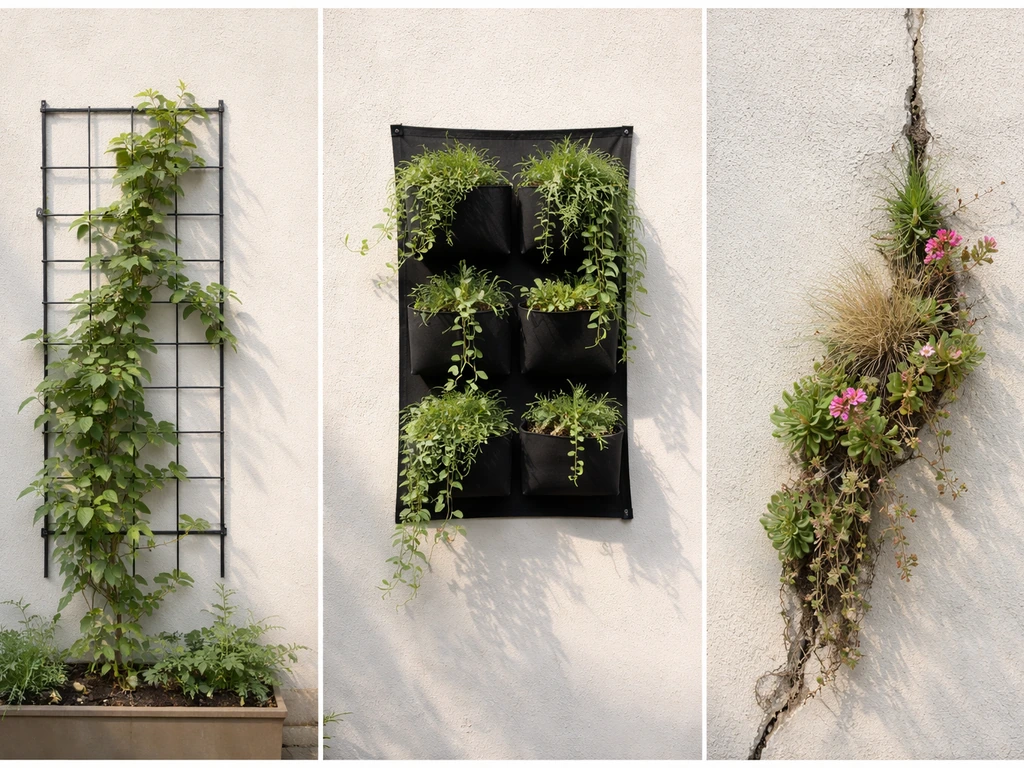
What plants that grow on walls are actually called
The terminology gets blurry fast, so here's how the categories actually break down. 'Climbers' or 'vines' are plants that grow vertically by twining, sending out tendrils, or producing aerial roots. They need something to grab: a trellis, wire, lattice, or existing structure. Clematis is the textbook example here, widely grown in USDA zones 4 through 9 depending on variety, and reliably one of the best-performing flowering climbers for wall displays. Virginia creeper is another classic, attaching itself to surfaces using adhesive discs on its tendrils rather than penetrating the masonry, which matters for older brick or rendered walls.
'Self-clingers' include ivy (Hedera), climbing hydrangea, and Virginia creeper, which use either aerial roots or adhesive pads to stick directly to a wall face without trellis support. 'Crevice plants' or 'crack plants' are a genuinely distinct category, typically low-growing, drought-tolerant species that colonize the thin mortar joints and gaps in stone or brick walls. Stonecrop (Sedum species) is the go-to example here.
Mosses are the other common wall-crevice group, though they prefer shaded, damp conditions rather than the full-sun drainage that Sedum needs. Finally, 'wall pocket' or 'living wall' plants are whatever you choose to grow in a modular vertical planter system, from ferns and herbs to succulents and grasses, because the system creates the growing environment rather than the wall itself.
How plants actually grow on walls: three different strategies
Climbers on supports (green facades)
In vertical gardening, there's a useful distinction between 'green facades,' where climbing plants grow up a wall using a support system, and 'living walls,' where plants are embedded across the wall area in a structural planting system. Green facades are simpler and cheaper to establish. The wall provides shelter and a warm microclimate; a trellis, wire grid, or lattice provides the actual support the plant climbs. The plant roots stay in the ground (or a large container at the base). Clematis, roses, wisteria, and many annual vines like sweet peas work this way.
Self-clinging plants
Self-clingers attach directly to wall surfaces without any support hardware. Virginia creeper uses adhesive discs that grip the surface securely without penetrating masonry, so the structural damage risk is lower than many people assume. Boston ivy works the same way. True ivy and climbing hydrangea use aerial roots that do push into mortar joints and can widen cracks over time, particularly in older, lime-mortared walls. For newer, hard-mortared or rendered walls the risk is lower, but it's worth knowing before you plant.
Crevice and crack planting
This is a genuinely distinct growing niche, sometimes called 'crevice gardening,' and it works because certain plants are adapted to exactly these conditions: thin substrate, extreme drainage, temperature fluctuation, and often full sun. In the same way, some plants can survive in cave-like conditions by settling into narrow crevices where moisture and light levels suit them crevice gardening. Stone walls, dry-stone retaining walls, and old brick with eroded mortar joints are the ideal habitat.
The plants that succeed here, Sedum, thyme, Erigeron (wall daisy), and mosses in shadier spots, are not compromising. They're doing exactly what they do in their native alpine or rocky environments. These are also the kinds of plants that can grow on rocks, where similar thin crevices and drainage conditions let them establish rocky environments.
Living wall and pocket systems
Living wall systems mount directly to a wall and create a growing substrate that has nothing to do with the masonry itself. The two main formats are modular panels (rigid trays or cassettes filled with a growing medium) and felt pocket systems (fabric panels with individual planting pockets sewn in). Products like FloraFelt and Wally Pocket are typical examples. The felt style works by wicking moisture through the fabric, keeping roots hydrated between waterings. In both cases you're essentially installing a vertical garden bed on your wall, which means the plant palette is much wider but the system requires more setup and active management.
How to set up plants on a wall: step by step
Setting up a trellis for climbers
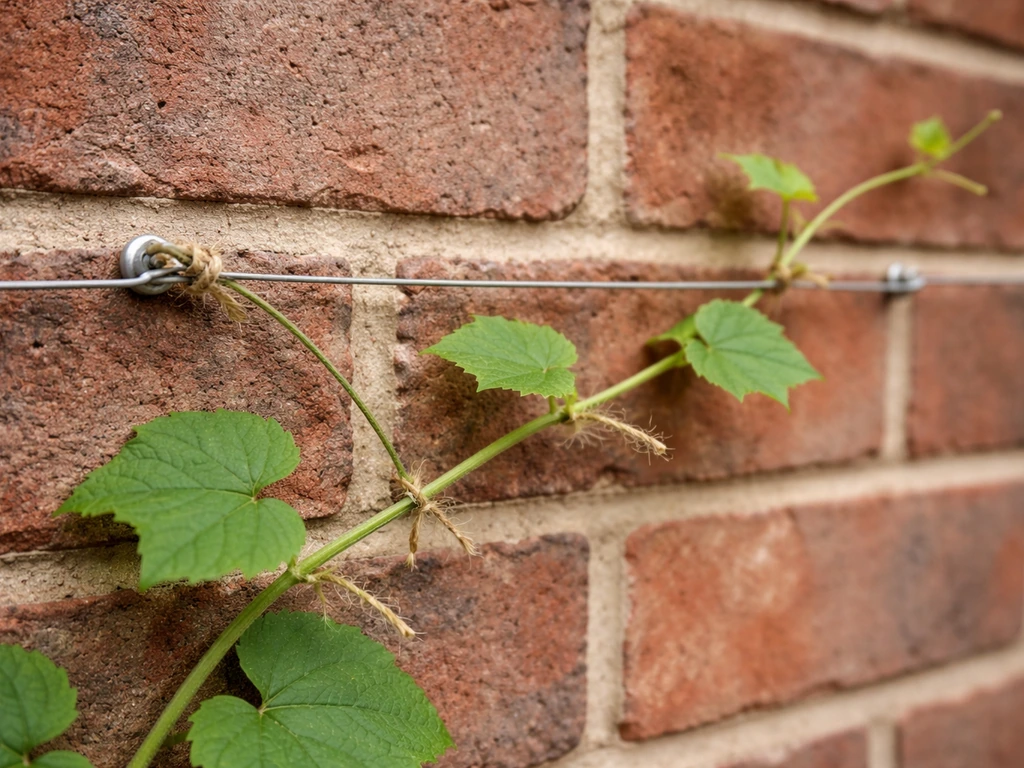
- Choose your support: galvanized wire strung horizontally across vine eyes, a wooden or metal trellis panel, or a lattice. Wire systems are least obtrusive and very durable.
- Mount the support at least 5 to 10 cm (2 to 4 inches) off the wall face. This gap is critical for climbers like clematis, which need airflow around stems to reduce fungal disease pressure.
- Fix anchor points into masonry with appropriate wall plugs and screws. For rendered or cavity walls, check what's underneath before drilling.
- Plant at the wall's base, 30 to 45 cm (12 to 18 inches) away from the wall itself where soil is less dry and compacted. Lean the plant toward the support.
- Train new growth toward and onto the support immediately, tying loosely with soft twine or garden ties.
- Water in thoroughly and mulch the root zone heavily to retain moisture.
Planting into wall crevices
- Identify suitable gaps: joints between stones or bricks where mortar has eroded or where you can pack in a small quantity of gritty compost. A crack of 2 to 3 cm depth is enough for Sedum.
- Mix your planting medium: roughly equal parts coarse horticultural grit and low-nutrient compost. Avoid rich, moisture-retaining mixes as they promote rot.
- Push a small plug of compost mix into the crack using a stick or narrow trowel. You want contact between the medium and the masonry, not air pockets.
- Plant very small seedlings or rooted cuttings, not large specimens. Firm in gently.
- Water carefully at first to settle the medium. Once established, these plants are largely self-sufficient in outdoor conditions.
- Note wall chemistry: lime mortar and concrete are alkaline, which suits most crevice plants but is unsuitable for acid-loving species like some ferns.
Installing a felt pocket or modular living wall system
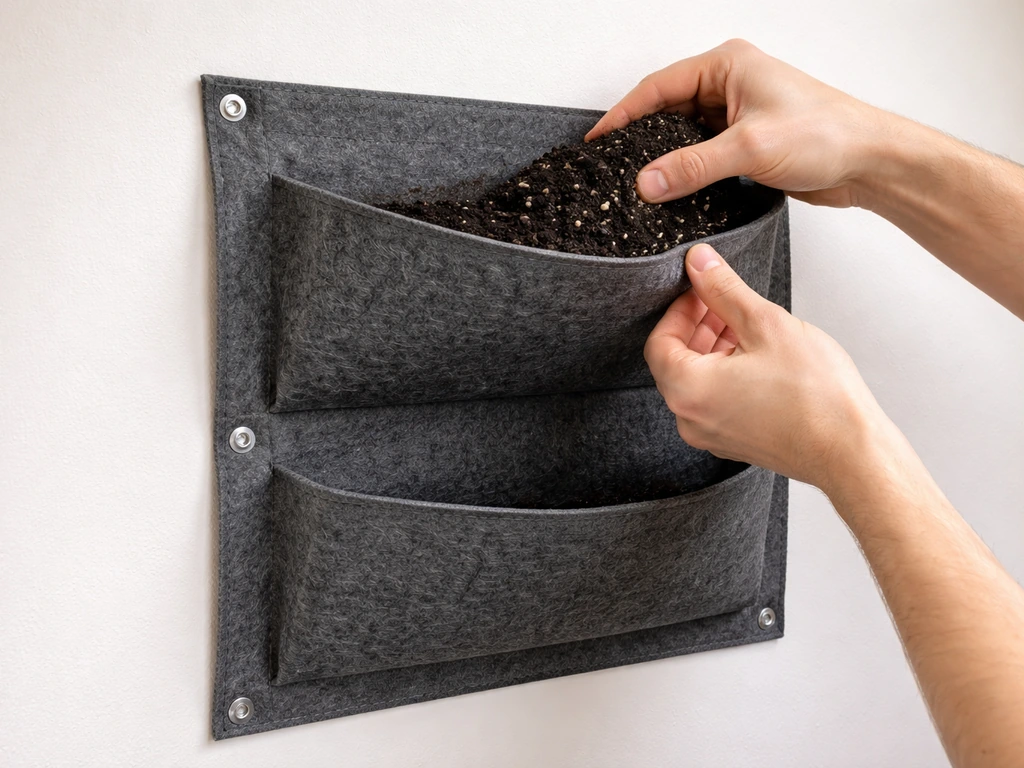
- Measure your wall area and choose a system sized to it. Check weight capacity: saturated pocket panels are heavy, and modular systems even more so.
- Locate wall studs or solid masonry for anchor points. Use appropriate fixings for your wall type (masonry anchors for brick or concrete, structural fixings for timber-frame walls).
- Mount the backing panel or felt system level. Most systems include mounting hardware.
- Fill pockets with the recommended growing medium. For felt systems, a lightweight mix of coir, perlite, and a small amount of compost works well and drains freely.
- For felt-pocket systems, wrap plant root balls in the felt root wrapper if provided, then insert into each pocket so roots contact the medium directly.
- Water thoroughly before and immediately after planting. The felt needs to be fully saturated to begin wicking correctly.
- Set up irrigation if possible: a drip line along the top of the system, running water downward, is the most reliable way to maintain consistent moisture. Hand watering works but top pockets dry faster than bottom ones, so you'll need to compensate.
Picking the right wall plants for your actual conditions
The single biggest reason wall plants fail is a mismatch between the plant and the wall's real microclimate. A south- or west-facing wall in a temperate climate is warm, sunny, and can be surprisingly dry and wind-sheltered. A north-facing wall is cooler, shadier, and often damper. North-facing walls specifically support quite a different plant palette, one worth exploring separately if that's what you're working with. If you're working with that cooler, shadier, damper setting, this guide to what plants grow on a north facing wall can help you pick reliable options. East-facing walls get morning sun and are generally the gentlest environment for plants that dislike intense afternoon heat.
| Wall orientation / condition | Best plant types | Examples | Notes |
|---|---|---|---|
| South or west facing, full sun | Climbers, self-clingers, crevice plants | Clematis (many varieties), Virginia creeper, Sedum, thyme | Clematis needs at least 6 hours of sun to flower; in hot climates, shade lower stems with low shrubs |
| North or east facing, shade or partial shade | Shade-tolerant climbers, mosses, ferns | Climbing hydrangea, ivy, hart's tongue fern, mosses | Climbing hydrangea is notably good on shaded walls; mosses thrive in damp shade |
| Exposed/windy wall | Low-growing self-clingers | Virginia creeper, Boston ivy | Avoid twining climbers or large-leaved vines that catch wind and tear from supports |
| Old stone or brick with joints | Crevice plants | Sedum, Erigeron, Arabis, mosses (shade) | Full sun and great drainage are the key requirements for most crevice species |
| Smooth rendered or concrete wall | Pocket/panel systems, supported climbers | Anything in a pocket system, clematis on trellis | Self-clingers struggle to attach to smooth render; trellis or pocket system is the practical route |
| Cold climate (USDA zones 4–6) | Hardy climbers and crevice plants | Clematis (zone 4+ varieties), Sedum acre, Virginia creeper | Check variety hardiness; many clematis cultivars are genuinely cold-hardy to zone 4 |
Wall material matters more than most people expect. Hard modern cement mortar is dense and doesn't allow roots to penetrate, which makes it unsuitable for crevice planting but fine for trellis-mounted climbers. Old lime mortar is softer, more porous, and supports crevice colonization well, but is also more vulnerable to root damage from vigorous self-clingers like ivy. Rendered walls with no surface texture give self-clingers nothing to grip. For these, a trellis or pocket system is your practical route. Seasonal timing also matters: spring planting gives climbers and crevice plants a full growing season to establish before their first winter. Pocket systems can be planted in spring or early autumn in most climates.
Growing systems compared: trellis, pockets, and crevice planting
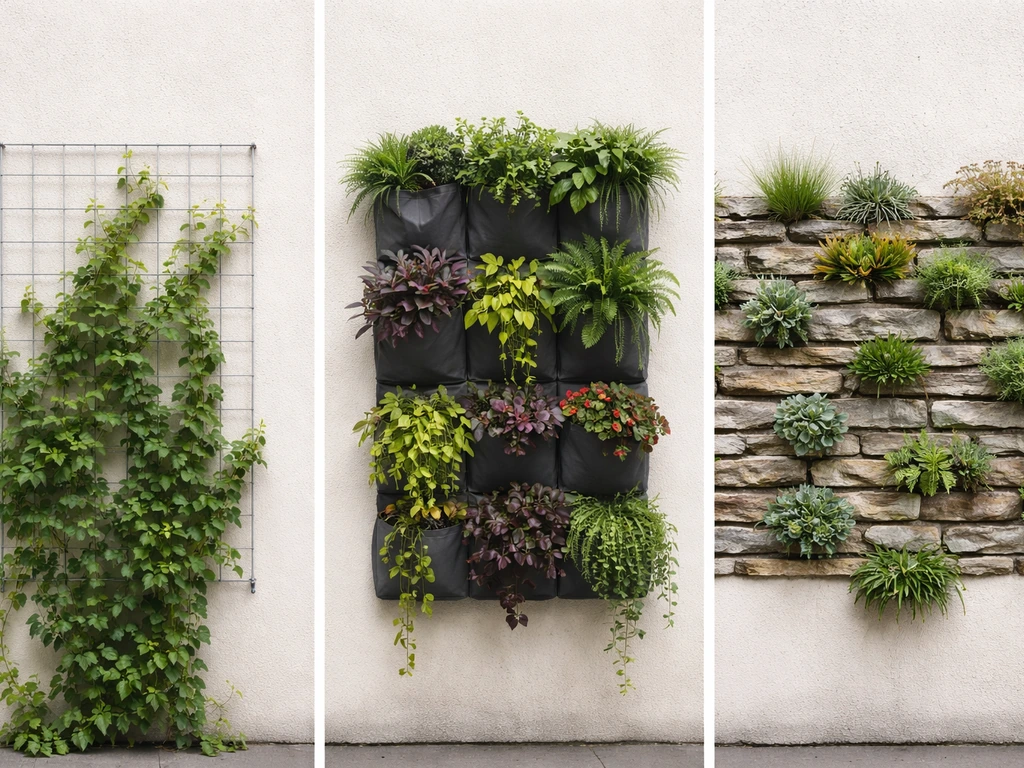
Each system suits a different situation and level of involvement. Here's an honest comparison to help you decide which approach fits your wall.
| System | Best for | Setup effort | Maintenance level | Plant variety | Cost |
|---|---|---|---|---|---|
| Trellis / wire support | Climbers and vines on any wall type | Low to medium | Low (training and pruning) | Climbers and vines only | Low |
| Self-clinging (no support) | Textured brick, stone, or rough surfaces | Very low | Low to medium (growth management) | Self-attaching species only | Very low |
| Crevice / crack planting | Stone walls, old brick with eroded joints | Low | Very low once established | Limited to drought-tolerant, compact species | Very low |
| Felt pocket system | Any wall, indoor or outdoor, flexible planting | Medium | High (frequent watering, feeding) | Very wide: herbs, succulents, ferns, annuals | Medium |
| Modular panel system | Large commercial or feature walls | High | High (irrigation usually required) | Very wide | High |
For most home gardeners, a trellis with a well-chosen climber is the lowest-effort, most reliable route to wall coverage. Pocket systems are genuinely rewarding and can look spectacular, but they require a real commitment to watering and feeding, especially outdoors in warm weather where the limited substrate volume dries out fast. Crevice planting is the lowest-maintenance of all once established, but it's limited to certain wall types and a fairly specific plant palette.
Watering, feeding, training, and keeping on top of pests
Watering
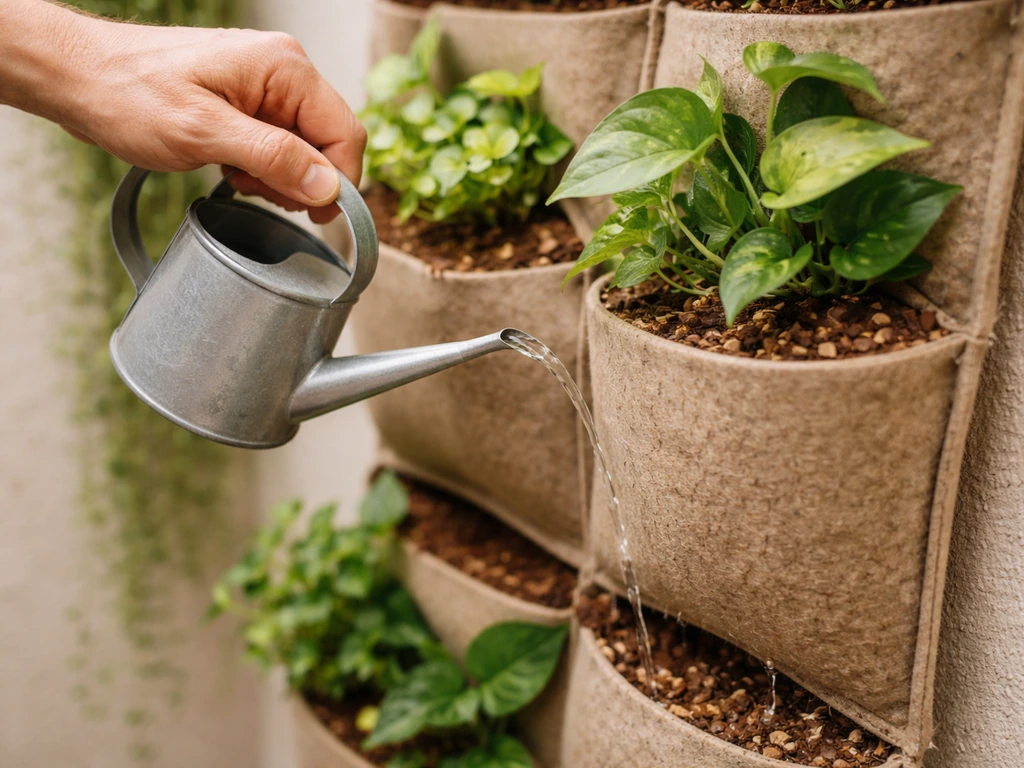
Wall plants dry out faster than open-ground plants, and pocket systems dry out faster still. If you are also growing in a terrarium, similar moisture balance and drainage control are what determine which plants thrive what plants grow in a terrarium. For climbers with roots in the ground, water deeply and infrequently during the first growing season to encourage deep rooting, then they'll largely look after themselves in temperate climates with reasonable rainfall.
In dry summers, check the base soil weekly. For pocket and modular systems, frequency depends on weather, season, and sun exposure: outdoors in warm conditions you may need to water every day or two. The top pockets in any vertical system dry out faster than the lower ones because water moves downward through the medium. If you're hand watering, give extra attention to the top row.
If you install drip irrigation along the top of the system, this evens out significantly. One published figure for outdoor modular living wall systems is around 220 liters per square meter per year, which works out to roughly 0. 6 liters per square meter per day averaged across the year, though summer demand is much higher.
Feeding
Climbers with roots in the ground can be fed with a balanced slow-release fertilizer in spring and a potassium-rich feed (such as tomato fertilizer) in summer to support flowering. Pocket systems have very limited nutrient reserves and need regular liquid feeding through the growing season, roughly every two weeks with a balanced liquid fertilizer. Crevice plants prefer low-nutrient conditions and generally should not be fed at all: rich compost and fertilizer encourage lush, soft growth that is more susceptible to cold and to the dry conditions these plants naturally handle.
Training and pruning
For trellis climbers, tie in new growth regularly during the growing season, spreading stems out horizontally rather than letting them all go straight up. Horizontal training increases flowering along the full length of the stem for many climbers including clematis and roses. Clematis pruning depends entirely on which group the variety belongs to: early-flowering types are pruned lightly after flowering, late-flowering large-flowered types are pruned hard in late winter, and vigorous species clematis can be cut back hard in early spring. Getting the pruning group right is more important than any other single clematis care decision. For self-clingers like Virginia creeper, management is mainly about keeping growth away from gutters, window frames, and roof edges.
Pests and disease
Dense wall plantings can create humid microclimates that favor fungal diseases and shelter pests. For climbers on trellis, that 5 to 10 cm gap between the trellis and the wall face is your main prevention tool: it maintains airflow and reduces humidity at the stem base. Clematis wilt is worth knowing about: it causes a sudden, complete collapse of stems and is caused by a fungal pathogen.
If it happens, cut affected stems back to ground level immediately and the plant will usually resprout from the crown. For pocket systems, overwatering raises humidity and encourages fungus gnats and root rots, while underwatering stresses plants and makes them more vulnerable to aphids and spider mites. Check plants weekly and adjust watering before problems escalate.
Why wall plants fail and how to fix it
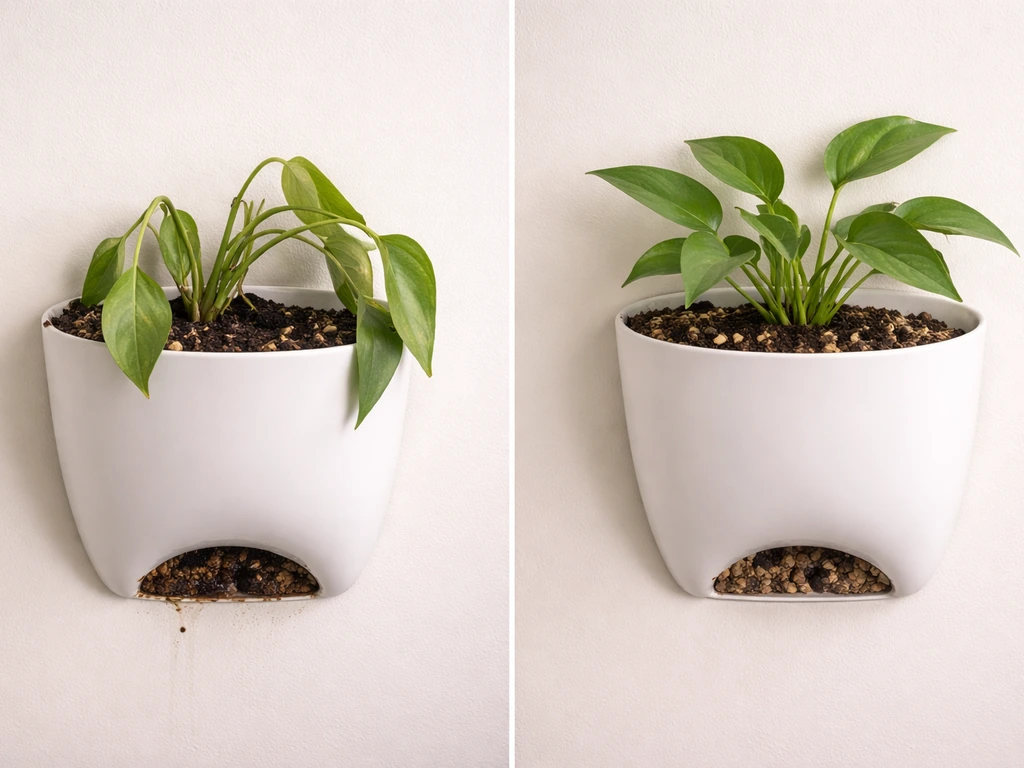
Most wall plant failures come down to a handful of predictable causes. Here's what to check first when things go wrong.
- Poor drainage in pocket or crevice systems: this is the single most common failure in both crevice planting and pocket systems. Roots sitting in saturated medium rot. For crevice plants, 'great drainage is key' is not an exaggeration. If your crevice medium stays wet for more than a day or two after rain, replace it with a grittier mix and consider whether the wall aspect gets enough sun to dry it out.
- Not enough soil depth or volume: crevice plants can cope with minimal substrate but pocket systems planted with too little medium dry out within hours in warm weather. Fill pockets fully. For modular systems, never underfill the growing cells.
- Wrong light level: clematis needs at least 6 hours of direct sun to flower reliably. Shade-grown clematis will produce vine but few or no flowers. Conversely, planting a moss or shade fern on a south-facing baked wall will kill it quickly. Measure actual light hours before planting rather than guessing from general wall orientation.
- Inadequate anchoring: a climber whose support pulls away from the wall in wind can tear stems and disrupt roots enough to set the plant back by a full season. Use appropriate fixings for your wall material and check them every spring.
- Roots too close to the wall base: the soil directly at a wall's base is often the driest spot in the garden, shielded from rain by the wall overhang. Plant climbers 30 to 45 cm out from the base and lean them in, rather than planting hard against the wall.
- Alkaline wall chemistry affecting acid-loving plants: lime mortar and concrete leach calcium carbonate, raising the local pH. This makes the immediate wall environment unsuitable for acid-preferring plants like some ferns and rhododendrons. Stick to lime-tolerant species for crevice planting in mortared walls.
- Uneven watering in pocket systems: if lower pockets are waterlogged while upper ones are dry, either your watering method is insufficient for the full height, or drainage from upper pockets is pooling somewhere. Drip irrigation from the top solves this more reliably than hand watering.
The short version: what to plant where, right now
If you have a sunny wall with a trellis or wire support and you want reliable results, plant clematis. Choose a variety rated for your hardiness zone, plant 30 to 45 cm from the wall base, mulch heavily, shade the lower stems if your summers are hot, and tie in new growth as it appears. If you have an old stone or brick wall with gaps and full sun, plant Sedum (stonecrop).
Push small plugs of gritty compost into the joints, firm in small cuttings or seedlings, and largely leave them alone. If you want flexible planting across any wall surface, install a felt pocket or modular system, plant with a lightweight free-draining mix, set up irrigation from the top, and commit to regular watering and feeding through the growing season.
Match your choice to your actual light, climate zone, wall material, and how much ongoing management you're genuinely willing to do, and you'll get a wall planting that establishes and lasts.
FAQ
Can I plant on a wall that has no cracks or gaps, and still grow wall plants?
Yes. If the wall has a smooth face, you usually need either a support for climbers (trellis, wire, lattice) or a pocket system (felt or modular panels). Crevice plants like Sedum generally need real mortar joints or pockets to root into, while self-clingers may struggle on rendered or very smooth surfaces with nothing to grip.
Will ivy or Boston ivy damage older brick or lime-mortared walls?
It can, especially on older lime mortar. The risk is not only about the plant sticking, it is about roots working into deteriorating joints and widening existing cracks over time. If you want the look but want less structural risk, consider a non-penetrating option like a true trellis climber, or keep ivy off the areas where mortar is already failing.
Is it safe to grow plants directly on walls that have been painted or sealed?
Often it is not ideal. Many sealed surfaces limit adhesion and can trap moisture, which raises fungus risk and reduces plant establishment for self-clingers. For smooth or sealed walls, use a trellis-based system or pocket planters that keep the planting medium separate from the wall surface.
How far should I plant from the wall for climbers on a trellis?
Leave a real airflow gap, commonly around 5 to 10 cm between the trellis and the wall face. This helps reduce humidity around stems and can lower the chance of stem-base fungal issues. Also plant the base at a thoughtful distance from the wall, then mulch to stabilize moisture at the root zone.
What is the easiest wall plant choice if I do not know my wall facing direction?
Start by observing sunlight and wind, but if you need a low-risk default, choose a climber that tolerates a range of conditions and plan to train it on a trellis rather than relying on crevice rooting. Clematis is a practical starting point, and you can refine choices after you see how hot and dry the wall gets in summer.
Why do plants look healthy at first on a wall but fail later?
Most often it is delayed moisture stress or a mismatch between the wall microclimate and the plant’s needs. Pocket systems in particular dry unevenly, the top pockets typically suffer first. Check weekly, and adjust watering before wilting or yellowing becomes obvious, because wall conditions can shift quickly during hot spells.
How should I water pocket or living wall systems to avoid fungus gnats and root rot?
Aim for thorough wetting without constant saturation. Overwatering keeps the medium too damp, which encourages fungus gnats and root rot, while underwatering makes plants vulnerable to aphids and spider mites. If you can, use top-of-system irrigation and then reassess after each watering to see how long the medium stays damp.
Do crevice plants need fertilizer?
Usually no. Crevice species are adapted to thin, low-nutrient pockets and often perform best without feeding. If you add compost or fertilizer regularly, you can push soft, lush growth that is more vulnerable to winter cold and drying stress.
When is the best time to plant wall climbers or pocket systems?
Spring is generally the safest for establishing climbers and crevice plants before winter. Pocket systems can usually be planted in spring or early autumn in many climates, but outdoor installations still depend on your local frosts and how quickly the system dries during summer.
How do I train climbers so they flower along the whole wall, not just at the top?
Use horizontal or fan-like training for many climbers. Instead of letting stems race straight upward, spread new growth along the trellis lines. This helps trigger more flowering along the length, which is especially useful for clematis and roses.
What should I do if my clematis suddenly collapses?
Treat it as clematis wilt. Cut the affected stems back to ground level immediately, then keep an eye on regrowth from the crown. Acting quickly helps prevent further spread and gives the plant the best chance to resprout.
How do I manage self-clingers near gutters, windows, and roof edges?
Plan physical boundaries early. Self-clingers can outgrow their intended area and become hard to remove once established. Keep growth away from gutters and rooflines where it can cause blockages or create recurring maintenance, and use regular trimming during the growing season to control spread.
Can wall plants be grown on a retaining wall or rock face, and are they the same as crevice plants?
They can be similar in practice. Rock and dry-stone environments create thin substrate, fast drainage, and temperature swings, which matches crevice gardening conditions. Plants like Sedum and low drought-tolerant species often work, but you still need to match the specific light and moisture pattern.
Do wall plants need winter protection?
Often yes, especially for pocket systems because the limited substrate volume cools and dries faster than ground soil. Mulching and choosing hardy varieties for your zone helps for trellis climbers, but in vertical beds you may need additional attention to watering around frost-free periods and to protect the root zone from extreme cold.