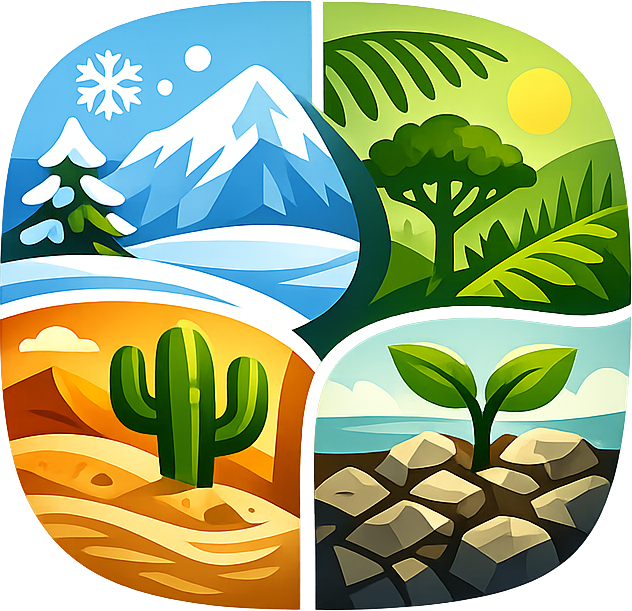
Almost every plant you can think of grows on land. Grasses, trees, shrubs, ferns, mosses, wildflowers, cacti, and crops like wheat or corn are all terrestrial plants, meaning they complete their lives rooted in soil rather than submerged in water. The broader scientific term is embryophytes, which covers everything from a tiny peat moss in a bog to a towering coast redwood. If you are trying to figure out which land plants actually suit your location, the short path is this: match your climate zone, soil type, and season to the plant groups that naturally thrive under those conditions. The rest of this guide walks you through exactly how to do that.
What Plant Grow on Land: Examples, Needs, and How to Choose
Dr. Marcus Weatherby
30 Apr 2026
How land plants differ from aquatic plants
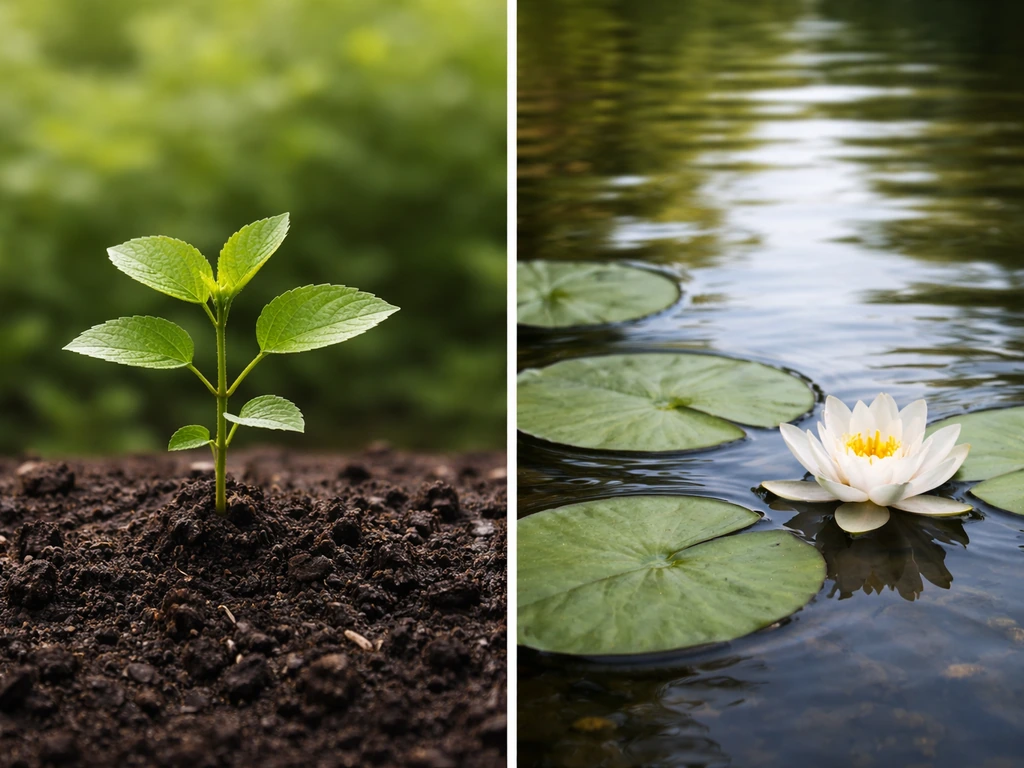
The core difference is where a plant spends its life and how it handles water stress. Aquatic plants like water lilies, pondweed, and kelp are adapted to live in or permanently on water. They often lack the structural features that land plants developed to survive in open air. Land plants, by contrast, evolved a set of terrestrial adaptations specifically to keep from drying out and to stand upright without water buoying them. These include a waxy cuticle on leaf and stem surfaces that slows moisture loss, stomata (tiny pores) that open and close to regulate gas exchange while limiting water loss, and in most species, vascular tissue (xylem and phloem) that moves water and nutrients from roots up through stems and leaves.
Aquatic plants skip most of those features because they do not need them. A submerged plant gets water through osmosis across its entire surface. A land plant would wilt and die doing the same thing. This distinction matters practically: if you plant a bog-loving species in fast-draining sandy soil, or try to grow a drought-adapted succulent in waterlogged clay, you are ignoring the very adaptations that define each group. Understanding this split also helps explain why some plants occupy the middle ground, like cattails or mangroves, which tolerate wet or flooded soil but still anchor on land.
It is worth noting that the very first plants to colonize land were ancient ancestors of today's mosses and liverworts, and that transition from water to land is one of the most studied events in plant evolution. If that evolutionary backstory interests you, it connects directly to how modern non-vascular plants like mosses still prefer damp environments today.
Common examples of land plants by major group
Land plants are enormously diverse. Rather than giving you one overwhelming list, here is a breakdown by major group, which is the most useful way to think about which plant belongs where.
Mosses and liverworts (bryophytes)
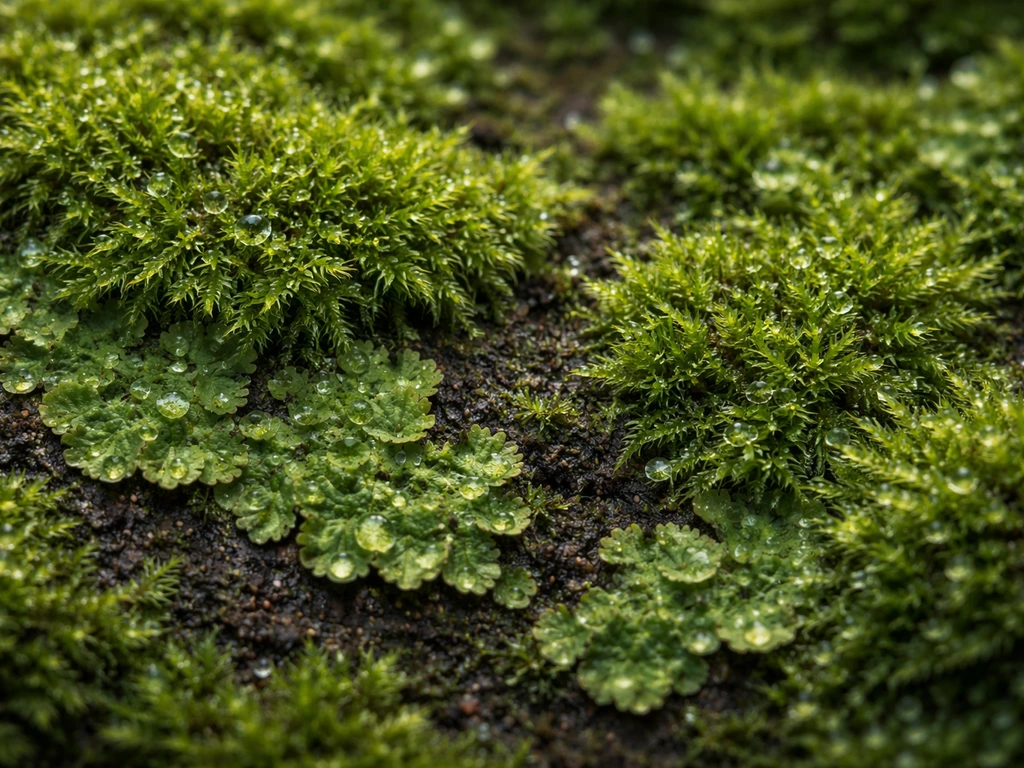
Mosses, liverworts, and hornworts are the non-vascular land plants. They have no xylem or phloem, so they stay small and close to the ground where moisture is accessible. Common examples include Sphagnum moss (the dominant plant of northern peat bogs), hair-cap moss (Polytrichum) on forest floors, and leafy liverworts on shaded stream banks. The US EPA notes that bogs are low in nutrients needed for plant growth, and are characterized by spongy peat deposits, acidic waters, and a thick carpet of sphagnum moss bogs are described as low in nutrients needed for plant growth. These are the plants that hug rocks and soil in humid, shaded spots across almost every climate from the tropics to the subarctic.
Ferns and horsetails
Ferns are vascular land plants that reproduce by spores rather than seeds. They range from the ostrich fern of northeastern North American forests to the bracken fern that colonizes open hillsides across Europe, Asia, and the Americas. Tree ferns grow up to 20 feet tall in humid subtropical and tropical zones. Horsetails like Equisetum are among the most ancient vascular plants still living, and you will find them in wet ditches, stream margins, and disturbed ground across temperate regions worldwide.
Grasses and grassland species
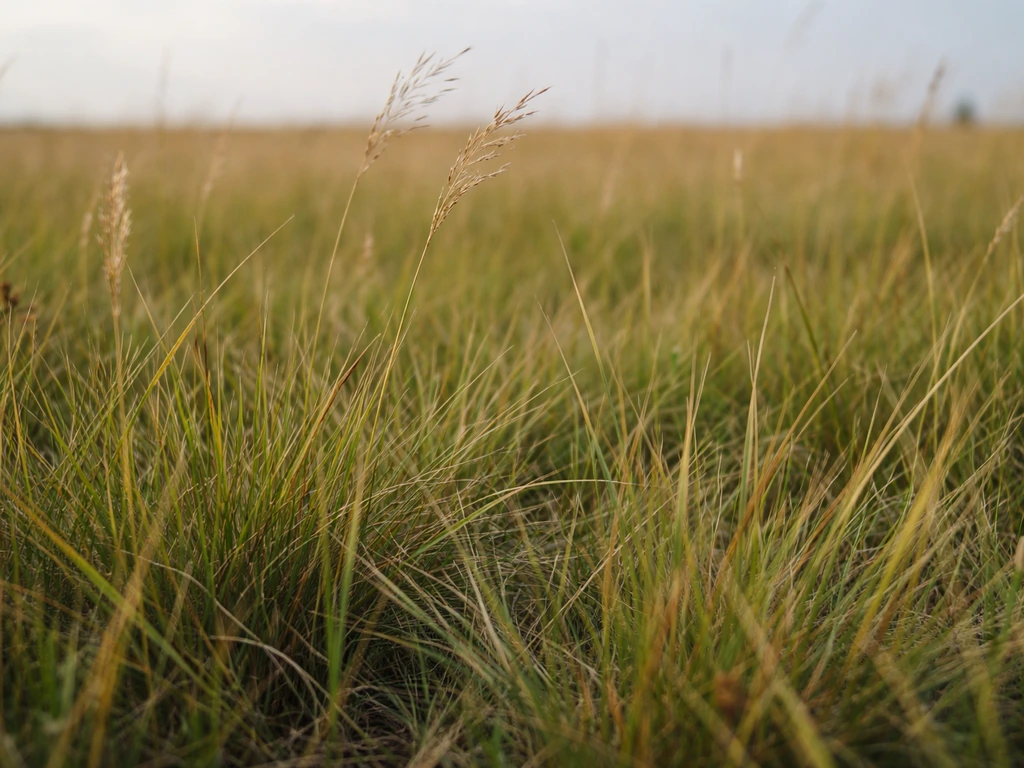
Grasses (family Poaceae) are arguably the most ecologically dominant land plants on Earth, covering roughly 40 percent of the planet's non-glaciated land surface. Big bluestem and switchgrass define North American tallgrass prairies. Buffalo grass and blue grama thrive in shortgrass plains. Marram grass stabilizes coastal sand dunes in temperate climates. In tropical savannas, elephant grass and Rhodes grass can grow taller than a person. Virtually every climate that is too dry for dense forest and too wet for desert supports some form of grass community.
Shrubs
Shrubs are woody land plants that branch from near the base and typically stay under 15 feet tall. Blueberry (Vaccinium) covers acidic forest understories and bog edges across North America and Europe. Sagebrush (Artemisia tridentata) dominates the semi-arid Great Basin of the western United States. Heather (Calluna vulgaris) carpets the moors of Scotland and Scandinavia. Manzanita species define the chaparral scrubland of California. In tropical regions, dense shrubby thickets form wherever disturbance or poor soil prevents full forest development.
Trees
Trees are the tallest land plants and anchor most of the world's forest ecosystems. Conifers like Scots pine, Douglas fir, and Siberian larch dominate cold boreal forests. Deciduous broadleaf species like oaks, maples, beeches, and hickories define temperate forests across North America, Europe, and East Asia. Tropical rainforests are home to species like kapok (Ceiba pentandra), Brazil nut (Bertholletia excelsa), and strangler figs. Arid-adapted trees like Joshua tree (Yucca brevifolia) and baobab (Adansonia) survive where others cannot.
Herbs and wildflowers
Herbaceous land plants are non-woody and die back to the ground at some point in their life cycle, though some persist as perennials through their roots or bulbs. Examples include black-eyed Susans and goldenrod in North American meadows, poppies across disturbed European soils, lavender on dry Mediterranean hillsides, and wild ginger in the shaded understory of eastern North American forests. Annual herbs like wild mustard and lamb's quarters colonize disturbed ground almost everywhere on Earth.
Succulents and cacti
These are specialized land plants with water-storing tissue adapted to hot, dry environments. Saguaro cactus (Carnegiea gigantea) is iconic in the Sonoran Desert of Arizona and Mexico. Prickly pear (Opuntia) species grow from sea level to high mountain slopes across the Americas and have naturalized on other continents. Aloe species dominate parts of the African savanna and rocky hillsides. Stonecrops (Sedum) grow on thin rocky soils and cliff faces in temperate climates worldwide.
What land plants actually need to grow
Every land plant needs four things: soil or substrate to anchor in and draw nutrients from, sunlight to drive photosynthesis, water at the right frequency and amount, and temperatures within a survivable range. Getting any one of these wrong is usually why a plant fails. Here is how each factor plays out practically.
| Factor | What most land plants need | Exceptions and extremes |
|---|---|---|
| Soil | Loamy, well-drained soil with organic matter and a pH of 6.0 to 7.0 suits the widest range of species | Cacti thrive in sandy, low-nutrient soils; bog plants need acidic, waterlogged peat; ferns tolerate rocky, thin substrates |
| Sunlight | 6 or more hours of direct sun for grasses, most shrubs, and sun-adapted trees | Forest floor ferns and mosses do well with 2 to 4 hours of dappled light; many woodland wildflowers are spring ephemerals that peak before the tree canopy closes |
| Water | Most temperate land plants need 1 inch of water per week during the growing season | Desert plants survive on 5 to 15 inches of annual rainfall; tropical rainforest plants may receive 100+ inches per year |
| Temperature | The USDA Hardiness Zone or equivalent national system defines cold-survival limits for perennial plants | Tropical species like banana or hibiscus cannot survive ground frost; arctic-alpine plants tolerate temperatures well below freezing |
Soil type is often the most overlooked factor. Clay soils hold moisture but drain poorly and compact easily, favouring willows, sedges, and moisture-tolerant shrubs. Sandy soils drain fast and stay warm, suiting lavender, thyme, and most cacti. Rocky, thin soils with low nutrients support sedums, certain pines, and alpine wildflowers. If you know your soil texture, you can immediately narrow the field of suitable plants by half.
Which land plants grow where: a climate-by-climate breakdown
Climate is the biggest organizing principle for land plant distribution. Walk from the equator toward either pole and you move through predictable plant communities tied to temperature and rainfall. Here is a practical region-by-region overview.
| Climate / Region | Dominant plant types | Representative species |
|---|---|---|
| Tropical rainforest (Amazon, Congo, SE Asia) | Tall broadleaf trees, epiphytes, ferns, mosses, woody vines | Kapok, strangler fig, tree ferns, bromeliads, orchids |
| Tropical savanna (sub-Saharan Africa, northern Australia) | Grasses, scattered drought-deciduous trees, shrubs | Elephant grass, acacia, baobab, eucalyptus |
| Mediterranean (California, Mediterranean basin, Chile, SW Australia) | Drought-adapted shrubs and herbs, some oaks | Manzanita, lavender, rockrose, cork oak, wild rosemary |
| Temperate deciduous forest (eastern North America, Europe, East Asia) | Deciduous broadleaf trees, understory shrubs, spring wildflowers | Oak, maple, beech, trillium, Virginia bluebells, ferns |
| Temperate grassland / prairie (Great Plains, Eurasian steppe) | Grasses, scattered wildflowers, few trees except in valleys | Big bluestem, switchgrass, wild indigo, purple coneflower |
| Boreal forest / taiga (Canada, Russia, Scandinavia) | Conifers, cold-hardy shrubs, mosses, lichens | Black spruce, Scots pine, Labrador tea, Sphagnum moss |
| Desert (Sahara, Atacama, Mojave, Arabian) | Succulents, drought-adapted shrubs, annual herbs after rain | Saguaro, prickly pear, creosote bush, Joshua tree |
| Arctic / alpine tundra | Low-growing cushion plants, sedges, mosses, dwarf shrubs | Arctic willow, mountain avens, cotton grass, reindeer lichen |
| Temperate rainforest (Pacific Northwest, New Zealand, Chilean coast) | Conifers, broadleaf trees, abundant mosses and ferns | Douglas fir, Sitka spruce, sword fern, bigleaf maple |
Within any of these broad climate types, local factors like elevation, aspect (which direction a slope faces), and soil type can shift the plant community considerably. A south-facing slope in a temperate forest can support plants typical of a warmer, drier climate zone, while a north-facing slope in the same forest holds mosses and ferns more at home in a boreal setting.
Seasonal patterns: what grows when
In most climates outside the tropics, land plants follow a predictable seasonal rhythm tied to day length and temperature. Understanding these windows tells you when plants are actively growing, when they are dormant, and when planting or seeding makes sense.
Spring
Spring is peak emergence time. Soil temperatures rising above 50°F (10°C) trigger germination in most temperate annuals and perennials. Spring ephemerals, woodland wildflowers like trout lily, Dutchman's breeches, and spring beauty, complete their entire above-ground life cycle in 6 to 8 weeks before the tree canopy closes and shades the forest floor. Cool-season grasses like Kentucky bluegrass and ryegrass put on their fastest growth when daytime temperatures are in the 60s°F. Ferns push new fronds as frost risk drops. This is the best window for direct seeding many annuals and transplanting most container-grown shrubs and trees.
Summer
Summer is the peak growing season for warm-season species. Tallgrass prairie grasses like big bluestem and Indian grass do most of their vertical growth between June and August. Annual wildflowers like black-eyed Susans, sunflowers, and coneflowers bloom heavily through summer heat. In arid climates, many plants slow or go semi-dormant during the hottest weeks, then resume growth when temperatures ease in late summer or after monsoon rains. Tropical and subtropical climates see continuous or near-continuous growth year-round.
Fall
Fall is seed dispersal season for many temperate land plants, which is also why it is a strong window for direct seeding natives that need cold stratification to germinate properly in spring. Cool-season grasses and wildflowers resume active growth as temperatures drop below 70°F. Deciduous trees and shrubs pull nutrients back from leaves before dropping them, then enter dormancy. Bulbs planted in fall, like wild garlic or camas, overwinter underground and are ready to sprout at the first warming in spring.
Winter
In cold climates, winter means dormancy for most above-ground vegetation. Mosses, however, are often the most visible green plants in a temperate winter landscape because they remain photosynthetically active near 32°F and do not freeze-dry the way leafy plants do. Evergreen conifers continue slow photosynthesis on warm winter days. In Mediterranean climates, winter is actually the wet, mild growing season, and annual wildflowers germinate and grow actively through what feels like a northern spring. In the tropics, the wet-dry cycle, not temperature, determines seasonal growth patterns.
How to find the right land plants for your location
The fastest way to zero in on suitable land plants for your specific spot is to work through four filters in order: climate zone, soil type, light level, and seasonal window. USDA classifies the U.S. into 13 plant hardiness zones using average annual minimum temperatures over a 30-year period, with zones differing by 10°F and subzones split into 5°F bands climate zone, which is based on average annual minimum temperatures. If you skip a filter, you end up with a species that looks right on paper but fails in your actual conditions.
- Identify your climate zone. In North America, find your USDA Plant Hardiness Zone (based on average annual minimum temperature). In Europe and elsewhere, use equivalent national systems. This immediately rules out frost-tender tropicals if you are in Zone 6 or colder, and cold-adapted alpines if you are in Zone 9 or warmer.
- Test or observe your soil. Grab a handful and squeeze it: clay soil holds its shape and feels slick, sandy soil falls apart, and loam crumbles gently. A simple home pH test kit (under $10 at any garden center) tells you whether your soil is acidic, neutral, or alkaline. This narrows your plant list dramatically.
- Assess your sunlight. Observe the planting spot at 10am, 1pm, and 4pm on a clear day. Full sun means 6 or more hours of direct light. Part shade means 3 to 6 hours. Deep shade means under 3 hours. Most plant labels and native plant databases use these exact categories.
- Match your current season. If it is April or May in a temperate zone, you are in prime planting window for spring-blooming wildflowers and cool-season grasses. If it is August, focus on warm-season species or plan fall seeding.
- Cross-reference with native plant databases. Regional native plant societies, university extension services, and botanical garden plant finders all let you search by zone, soil, and light to produce a shortlist of species that genuinely belong in your ecosystem.
One practical shortcut: look at what is already growing wild in your immediate area. The plants thriving in nearby roadsides, field edges, or forest margins without any human care are telling you exactly what your climate, soil, and light support. Identifying those species and choosing cultivated relatives or companions is the most reliable path to success.
Quick starting guide: choose and grow land plants today
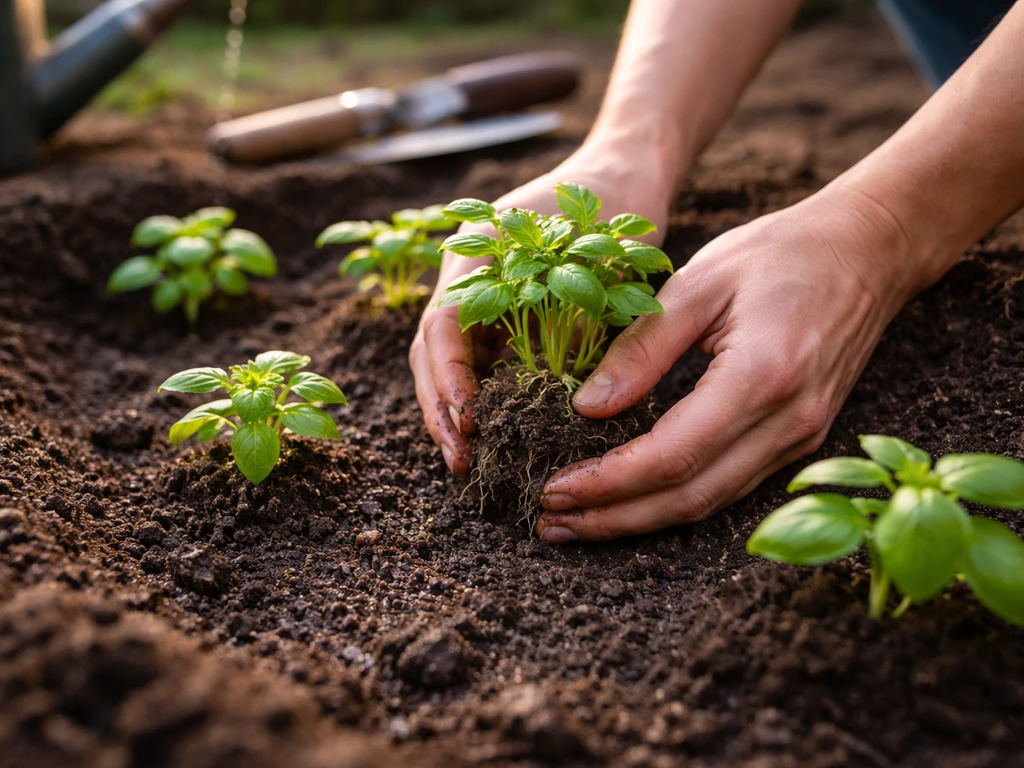
Since it is late April 2026, most of the northern hemisphere is moving into or through the best planting window of the year. Here is a practical workflow you can start today.
- Pin your hardiness zone. Go to a zone map for your country and look up your zone by zip code or postal code. Write it down; you will use it every time you buy a plant.
- Do a quick soil check. Dig 6 inches down and look at the color and texture. Dark, crumbly soil with visible organic matter is ideal. Pale, compacted, or extremely sandy or clay-heavy soil tells you to either amend or choose species that tolerate those conditions natively.
- Pick one plant group to start with based on your climate. In temperate zones right now, cool-season grasses, spring wildflowers, and deciduous shrubs are in active growth and easy to establish. In Mediterranean climates, drought-adapted herbs like lavender and thyme can go in now before summer heat peaks.
- Source plants from a native or regionally appropriate nursery. Big-box retailers carry a narrow range. Local native plant nurseries, extension program sales, and plant swaps give you species actually suited to your region.
- Plant at the right depth and give one deep watering at establishment. Most land plants fail not because of wrong species but because of shallow, frequent watering that never encourages deep root growth. Water deeply once, then let the plant tell you when it needs more.
- Observe for 30 days before intervening. Land plants, especially natives, go through a slow first-season establishment period. Wilting in the first two weeks does not always mean the plant is failing; it often means the root system is still adapting to the new soil environment.
If you are a student or researcher rather than a gardener, and you are here to understand land plant ecology more broadly, the same four-filter approach (climate, soil, light, season) is how ecologists map plant distributions at regional and global scales. The major plant groups covered above (bryophytes, ferns, grasses, shrubs, trees, succulents) each represent different evolutionary strategies for surviving on land, and each one dominates in the conditions it is best adapted to. That is why the question 'what plants grow on land' really only gets useful when you add 'in which conditions' and 'in which part of the world.' If you are curious about what grows on remains, research how decomposition changes soil chemistry and moisture so different plants can colonize late in the process what plants grow on dead bodies.
There are also interesting edge cases worth noting. Some plants grow on other plants rather than directly on soil, using trees or shrubs as a physical platform. Others can establish and spread entirely on their own without any human planting or cultivation. Plants that grow on their own are called naturalized plants. Both of those are distinct categories with their own ecological rules, and they show just how varied 'growing on land' can be across different plant strategies and habitats.
FAQ
Are all land plants “soil-rooted,” or can some grow on rock or other surfaces?
Many land plants are anchored in soil or substrate, but not all need true soil. Mosses, liverworts, lichens, many ferns, and sedums can grow on rock, walls, or tree bark by taking nutrients from moisture, dust, and decomposing material that accumulates in cracks. For wall or rock plantings, the key is creating a consistently damp microclimate (often shade plus regular misting) because these species lack deep, reliable water access.
Can I grow a typical desert succulent in a rainy climate if I control watering?
Sometimes, but matching drainage is more important than just watering less. In humid or rainy regions, many desert-adapted plants fail due to persistent moisture around roots and crowns, which promotes rot and fungal disease. Use very fast-draining soil, gritty amendments (like coarse pumice or sand), and containers with excellent drainage, and avoid planting where water pools after storms.
What’s the fastest way to tell whether a plant is suited to my yard besides climate zone?
Check light and soil simultaneously. Two sites with the same climate zone can support different plants because one has full sun while the other is shaded, or because one has loose, fast-draining soil and the other has compacted clay. If you do only one extra measurement, do a simple “soil drainage test” by digging a hole, filling it with water, and timing how quickly it drains (it should not stay wet for long periods for plants that hate waterlogging).
Do “water need” and “soil type” always match, or are there mismatches?
There can be mismatches. A plant may tolerate drought but still be sensitive to poorly aerated, waterlogged soil. Conversely, some plants handle wet feet but want sun and warmth to dry the surface between rains. Treat “wetness” as both amount of water and how long it stays accessible at the roots.
How do I choose plants if my site has extreme temperature differences (hot summers and cold winters)?
Use local microclimates, not just regional averages. Factors like wind exposure, frost pockets, near-wall heat retention, and snow cover can change survival dramatically. For cold-hardy plants in windy spots, consider windbreaks or placing plants where snow naturally accumulates, while in hot areas use afternoon shade and deep mulching to reduce root temperature swings.
Why do plants that look healthy in spring die in summer or fall?
A common cause is that they were planted into the wrong light or drainage conditions, and the stress shows up later when heat or rain patterns peak. Spring seems fine because temperatures are moderate and soil moisture is higher. Look for symptoms that point to roots (wilting with damp soil, yellowing that worsens after storms) versus leaves (scorch in full sun). Adjust placement first, then soil or watering practices.
What’s the difference between “naturalized” plants and “invasive” plants?
Naturalized plants are established without ongoing human planting, meaning they can maintain populations in a new area. Invasive plants are a subset that also spread aggressively and cause ecological or economic harm. Some naturalized plants are relatively well-behaved, but others are problematic, so you need to check local extension guidance for your region.
Can plants grow on dead material, and how does that relate to “what grows on land”?
Yes. Decomposing organic matter creates nutrients and retains moisture differently than mineral soil, which changes which land plants can colonize. Early colonizers can be mosses, annual herbs, and fast-growing grasses that tolerate low nutrient availability, while later stages shift toward species better at competing in thicker, richer soil. This is why plant communities can look very different depending on whether you start with bare ground, composted material, or late-stage organic buildup.