Pioneer Plants

Which Plants Grow First in Primary Succession by Climate
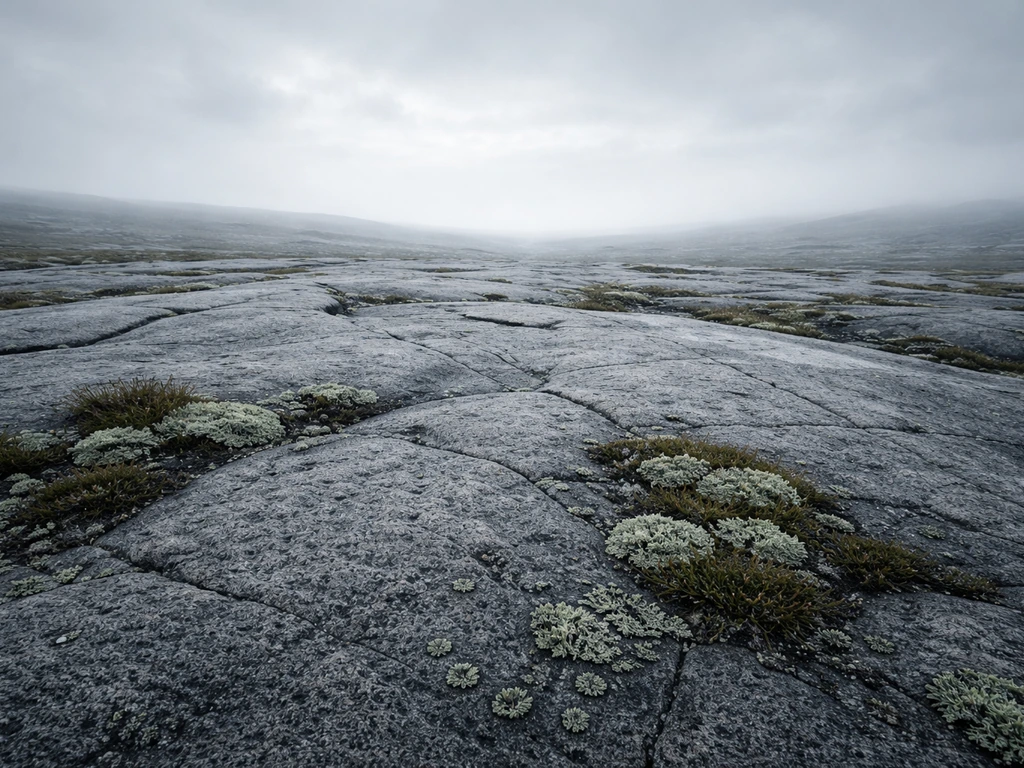
Bare rock newly exposed by a glacier, with small lichen and moss patches beginning to colonize across the surface.

The very first plants to grow during primary succession are almost always non-vascular pioneers: lichens, mosses, cyanobacteria (blue-green algae), and algae. These pioneers are often described as plants that grow naturally in succession on bare ground, and they provide the early cover the ecosystem needs The very first plants to grow. These colonize bare rock or fresh mineral substrate before any true flowering plant can get a foothold. Once they break down surface material and build even a thin organic layer, the first vascular plants move in. Depending on your climate, those tend to be hardy grasses, sedges, fireweed, dryas, willows, or coastal annuals like sea rocket. The exact lineup changes a lot based on where you are, what the substrate looks like, and what time of year it is.

What primary succession actually means and what counts as bare ground
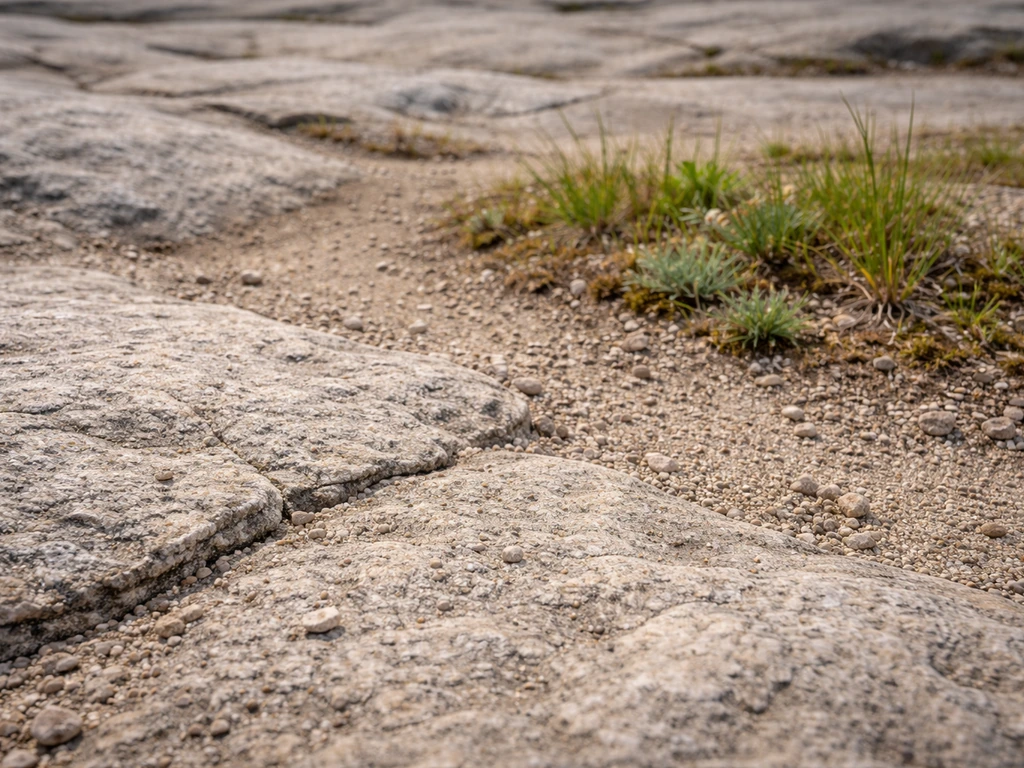
Exposed bedrock with scattered bare mineral patches next to a small recovering vegetated area.

Primary succession starts from zero. Not 'disturbed and recovering' zero, but genuinely barren substrate with no soil, no seed bank, and no organic matter. The classic examples are fresh lava flows (USGS describes new volcanic substrate as 'barren and sterile'), land exposed by a retreating glacier, newly uplifted coastal rock, and freshly deposited sand dunes or riverbars. Surtsey, the volcanic island that erupted off Iceland in 1963, is a textbook case: by May 1964, scientists were already observing the very first biological colonizers arriving on completely new rock.

This is different from secondary succession, where a wildfire, hurricane, or logging operation resets an existing plant community but leaves soil and often a seed bank behind. Secondary succession moves faster because the soil foundation is already there. If you're wondering what plants come back after a fire, that's a different process with a very different starting cast. Primary succession is the slower, harder process of building an ecosystem from scratch.

The real first colonizers: lichens, mosses, and biological soil crusts

Before any plant you'd recognize from a garden center shows up, the surface gets colonized by organisms most people overlook entirely. Lichens (a fungus-algae partnership) attach directly to bare rock and begin chemically weathering it. Mosses follow, holding moisture and trapping wind-blown mineral particles. In drier regions especially, cyanobacteria dominate what ecologists call biological soil crusts or 'biocrusts': thin photosynthetic assemblages living in the top few millimeters of the soil surface. Genera like Microcoleus, Schizothrix, and Coleofasciculus are often among the very first photosynthetic colonizers on bare mineral ground in those systems.

These early colonizers do two things that make everything else possible. First, cyanobacteria and cyanolichens fix atmospheric nitrogen, pulling it from the air and converting it into organic compounds that later plants can actually use. Second, their filamentous biomass physically binds loose soil particles together, stabilizing the surface so wind and rain don't just strip it bare again. At Glacier Bay in Alaska, the NPS describes lichens attaching to exposed rock as the first visible stage of a succession sequence that eventually leads to Sitka spruce forest. The same logic applies whether you're standing on a lava field in Hawaii, a desert pavement in Utah, or a glacial moraine in the Alps.

One thing worth knowing: biocrusts are fragile and extremely slow to recover once damaged. In very dry environments, some lichen and algal components can take several hundred years to fully recover from disturbance. That's important context if you're trying to identify or study them in the field. Stay on bare rock or established paths rather than stepping on that dark, slightly lumpy surface crust.

The first vascular plants: what shows up after the pioneers do their work
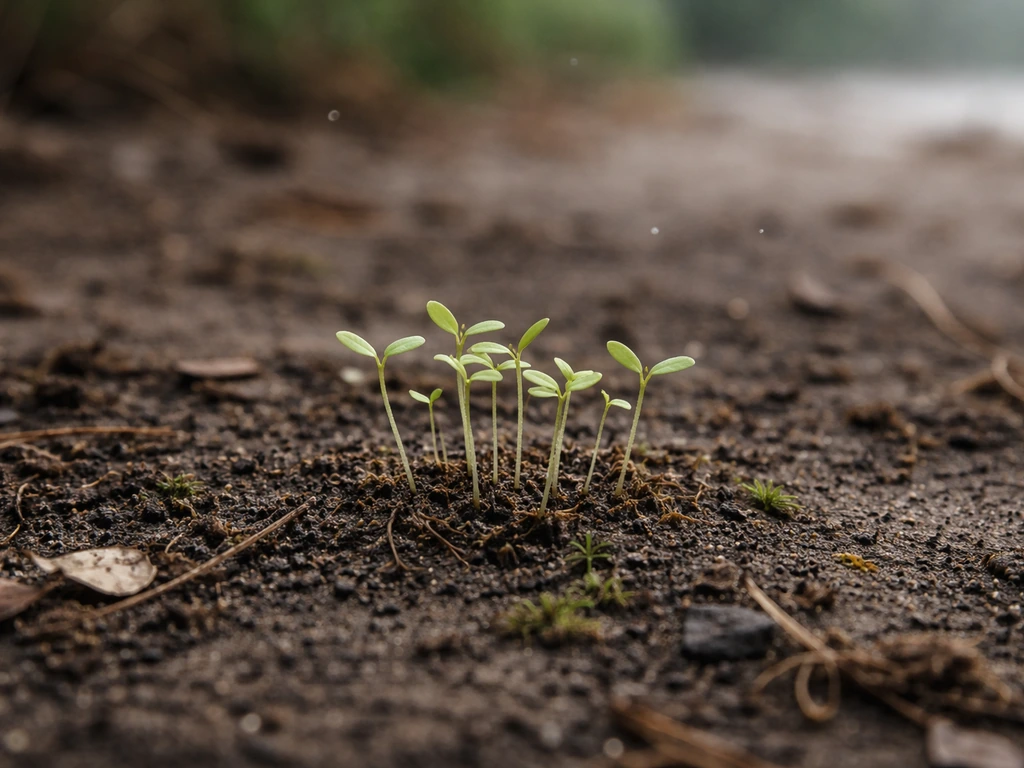
Tiny seedlings emerging from a thin organic layer of biocrust on damp ground.

Once lichens and mosses have built even a thin organic layer, vascular plants can begin establishing. These early vascular pioneers share a common profile: small, wind-dispersed seeds, tolerance for nutrient-poor and often dry or wet-extreme conditions, and root systems that can handle minimal soil depth. You'll see a handful of genera appear again and again across very different landscapes.

At Glacier Bay and Kenai Fjords, NPS records show fireweed (Chamerion angustifolium / Chamerion latifolium) appearing in thin soils shortly after the lichen-moss stage. Yellow dryas (Dryas drummondii) spreads from seed on exposed sand and silt wherever conditions allow it to catch hold. Arctic willow (Salix arctica) and feltleaf willow (Salix alaxensis) colonize newly exposed gravel, riverbars, and recently deglaciated sites. A Canadian High Arctic study on bare moraine found Epilobium latifolium and Salix arctica as the two dominant pioneer vascular species. On Surtsey Island, the first confirmed vascular plant seedlings (spotted in 1965) were sea rocket (Cakile maritima subsp. islandica), followed shortly by sand ryegrass (Leymus arenarius), oysterleaf (Mertensia maritima), and seaside sandplant (Honckenya peploides), all coastal specialists suited to the island's exposed conditions.

Nitrogen-fixing shrubs deserve a special mention here. Sitka alder (Alnus crispa) and species like Dryas fix atmospheric nitrogen through root symbioses, meaning they can push into lean soils that would starve most other plants. At Glacier Bay, studies show that alders and dryas derive most of their nitrogen from atmospheric fixation rather than soil, which explains why they appear so early in the sequence despite the nutrient-poor substrate.

How pioneer plants differ across climate zones and seasons

The general sequence (microbes/cyanobacteria, then lichens/mosses, then early vascular plants) holds across most environments. But which specific plants fill each role shifts considerably depending on where you are. Season matters too: a site exposed in late autumn in a temperate zone may sit dormant all winter before the first colonizers arrive in spring, while a tropical lava flow can see biological crusts forming within months.

Climate Zone / BiomeFirst Non-Vascular ColonizersFirst Vascular PioneersNotes on Timing
Arctic / High ArcticCyanobacteria, crustose lichens, mossesEpilobium latifolium, Salix arctica, Dryas octopetalaVery slow; meaningful succession visible over decades to centuries
Boreal / Subarctic (Alaska)Lichens, mossesFireweed (Chamerion angustifolium), feltleaf willow (Salix alaxensis), Sitka alderGlacial retreat sites; willows on riverbars can establish within years
Temperate AlpineCrustose lichens, mosses, algal filmsGrasses, sedges, early forbs (site-dependent)Moss cover and soil aeration are key predictors of when vascular plants appear
MediterraneanCyanobacteria-dominated biocrusts, lichensHemicryptophyte grasses, annual forbs on roadcuts and eroded slopesYounger disturbed sites favor grasses; composition shifts with age over 30+ years
Desert / DrylandCyanobacteria (Microcoleus dominant), cyanolichens, algaeDrought-tolerant annuals, sparse perennial grassesBiocrust recovery can take hundreds of years; vascular pioneers very sparse early
Coastal / IslandAlgae, biofilms, salt-tolerant lichensSea rocket (Cakile spp.), sand ryegrass (Leymus arenarius), sandwort (Honckenya peploides)Seeds often arrive by ocean currents; colonization can be rapid on exposed beaches

In the Arctic, an ongoing chronosequence study in the Brooks Range found that after 22 to 36 years following deglaciation, early communities typically contain just 8 to 13 vascular and nonvascular plant species, and many pioneer taxa (especially lichens) persist across even the oldest sites in the sequence. Succession here is genuinely slow, unfolding over tens of thousands of years. Mediterranean roadcuts show a faster but still directional process: younger cuts are dominated by certain hemicryptophyte grasses that progressively get replaced as the site ages. Same principle, very different timescale.

Site conditions that decide which plants arrive first

Beyond climate zone, several on-the-ground factors determine which pioneers show up and how fast succession moves. An alpine glacier-foreland study found that total ground cover, moss cover, soil aeration, temperature, and time since deglaciation were the most tightly correlated variables in predicting where and when vascular plants appeared. In practical terms, that translates into a handful of things you can actually observe and assess at a site.

  • Substrate type: bare solid rock weathers slowly and gets lichens first; sand, silt, and gravel allow moss and cyanobacteria to establish faster and vascular plants to root sooner
  • Moisture availability: a moist, sheltered crevice in rock will develop moss and fern colonizers much faster than a dry exposed face
  • Sunlight exposure: full-sun bare surfaces heat up and dry out, pushing succession toward drought-tolerant crust communities; shaded sites favor early mosses and shade-tolerant ferns
  • Nitrogen status: sites with no prior nitrogen input start slower; nitrogen-fixing pioneers (cyanobacteria, cyanolichens, alder, dryas) are the most valuable early colonizers in these situations
  • Seed source proximity: even if conditions are perfect, pioneer vascular plants can't arrive without a nearby seed source or wind/water dispersal pathway; coastal sites get sea-rocket seeds from ocean drift while inland glacial sites depend on wind
  • Disturbance history and timing: a site exposed in spring in a temperate zone will develop very differently than one exposed in late summer, because the first growing season determines which early colonizers establish

These factors interact. A moist sandy substrate near a seed source in a temperate climate can have visible vascular plant cover within a single growing season. A dry exposed slab of granite on a high-elevation ridge in the same region might take decades just to accumulate enough lichen biomass for mosses to follow. Reading those site conditions before assuming what 'should' be there is the first step toward understanding (or supporting) succession at any specific location.

How to spot pioneer plants in the field and what to do next
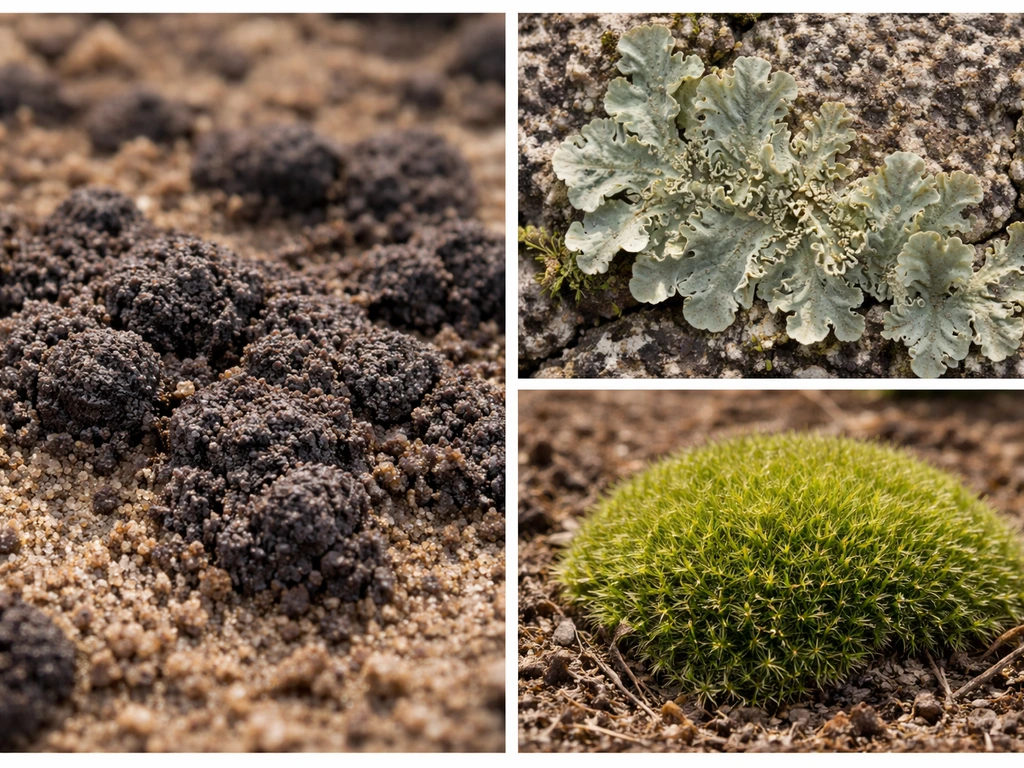
Close-ups of biocrust, lichen thallus, and moss cushions on bare ground showing texture and color.

If you're trying to observe or support primary succession, the first thing to do is get your eyes close to the surface. Biocrusts look like a dark, slightly raised or lumpy crust on bare soil or rock, sometimes with a greenish or blackish tinge. On rock faces, look for thin paint-like patches of color (crustose lichens) before you look for anything leafy. In moist crevices, look for small cushions of moss. These are your indicators that succession has begun, and they're often missed because people scan the horizon for visible plants.

For identifying likely vascular pioneers in your area, work from your climate zone and substrate type outward. In coastal temperate zones, check for Cakile (sea rocket) on exposed sand and Leymus (sand ryegrass) on established dunes. In boreal and subarctic zones, look for fireweed on disturbed mineral soil and feltleaf willow on recently exposed riverbars. In alpine and arctic zones, Dryas species, Epilobium, and early Salix are the names to know. In Mediterranean systems on disturbed slopes or roadcuts, early hemicryptophyte grasses are typically what moves in first at the vascular plant stage.

If you're trying to actively support or initiate succession on a bare site, a few practical points apply. Don't skip the crust stage: if you're working in a dryland or semi-arid context, trying to establish vascular plants before any soil structure exists will mostly fail. Focus first on conditions that allow cyanobacteria and lichen colonization (reduced foot traffic, minimal soil disturbance, patience). In wetter climates, introducing native mosses into moist crevices can accelerate the early stage significantly. For the vascular plant phase, choose species that match both your climate zone and the specific substrate: nitrogen-fixers like alder, dryas, or native legumes on nutrient-poor substrates; wind-dispersed annuals and grasses on exposed, open ground with some moisture. Avoid the temptation to jump straight to mid-successional species from a native plant nursery: those plants need the organic matter and nutrients that only the pioneers can build.

One pattern worth noting across all these systems: the plants that grow on dead and decaying organic matter become relevant just a step after the very earliest pioneers, as the first biological crusts die back and create the first pockets of organic material on what was bare rock. Plants that grow on dead and decaying matter are called detritivores or saprobes depending on how they feed. Similarly, the wind-dispersed seedlings that arrive in that thin early soil layer are technically the first new plants growing from seeds in a genuinely new habitat, which is a remarkable thing to witness up close if you get the chance. Watching that whole sequence play out, even on a small roadcut or a rock face near a receding alpine snowfield, makes the abstract idea of ecosystem assembly feel very concrete. The first plants to grow after a fire are called fire followers, and they’re adapted to the nutrient and light conditions created by burning.

FAQ

Do flowering plants ever appear first in primary succession?

Usually not. In true primary succession, the first visible colonizers are non-vascular, like lichens and mosses, because vascular plants need at least a thin organic layer. Flowering plants typically arrive after that early biological crust stabilizes the surface.

Are “first” plants the same everywhere, or does the list change by climate?

The overall order is consistent, microbes and cyanobacteria, then lichens and mosses, then early vascular pioneers. But which specific vascular species dominate can shift dramatically with temperature range, rainfall, and season length, even on similarly bare substrates.

What’s the earliest sign that primary succession has started if there are no green plants yet?

Look for thin, crust-like color patches on rock, often paint-like lichens, and for dark or greenish slightly lumpy surfaces that indicate biological soil crust. These can be present long before any leafy moss cushions or grass-like growth is obvious.

How long does it take before grasses or other vascular plants show up?

It varies widely. In some moist areas, vascular cover can appear within a single growing season once a thin organic layer forms, but in exposed, dry or high-elevation conditions it may take decades to build enough lichens and moss to support vascular seedlings.

Why do cyanobacteria and lichens matter so much at the beginning?

Beyond being early colonizers, many are nitrogen fixers, and they physically bind mineral particles together. That combination creates usable nutrients and a more stable surface that reduces erosion and lets vascular roots gain a foothold.

Can disturbance wipe out the early stage, and does it bounce back quickly?

Early biocrusts are fragile. In many dry environments, recovery after trampling or scraping can take hundreds of years, so repeated foot traffic near the crust can prevent succession from progressing to the vascular plant stage.

What if seeds are already present on the bare ground, why doesn’t vascular growth start immediately?

Seeds alone do not guarantee establishment. Early succession sites often have no soil structure, very low nutrients, and extreme moisture swings. Seedlings still need microhabitats created by crust-formers, which is why vascular pioneers tend to appear only after lichens and mosses build enough organic material.

Do nitrogen-fixing shrubs always appear early in primary succession?

They commonly show up early when conditions permit, especially on nutrient-poor substrates. However, their timing depends on the specific site factors like moisture, available microsites for rooting, and whether suitable symbiont conditions are met.

How do you distinguish primary succession from secondary succession when looking at a site?

The key cue is the substrate history. Primary succession starts on genuinely barren ground with no soil and no established seed bank, such as fresh lava or newly exposed glacial rock. Secondary succession is faster because soil and many seeds already remain, even if aboveground plants were removed.

Citations

  1. Primary ecological succession begins in barren areas with little/no soil, such as bare rock exposed by retreating glaciers.

    Britannica — Primary succession - https://www.britannica.com/science/primary-succession

  2. Primary succession occurs after formation/exposure of a totally new habitat that is devoid of soil or vegetation (e.g., lava flows or receding glaciers).

    U.S. National Park Service (Kenai Fjords NP) — Plant Succession - https://home.nps.gov/kefj/learn/nature/plant-succession.htm

  3. Secondary succession is triggered by disturbance that “resets” a plant community but leaves soil relatively intact (e.g., wildfire, hurricanes, logging).

    U.S. National Park Service (Kenai Fjords NP) — Plant Succession - https://www.nps.gov/kefj/learn/nature/plant-succession.htm

  4. Secondary succession is recovery after disturbance that sets back an existing community; primary succession starts from a much more lifeless starting point.

    Britannica — Primary succession - https://www.britannica.com/science/primary-succession

  5. New volcanic substrate is described as initially “barren and sterile,” illustrating the bare-mineral starting point of primary succession on fresh lava.

    U.S. Geological Survey (USGS) — Volcano Watch: From lava flow to forest: Primary succession - https://www.usgs.gov/news/volcano-watch-lava-flow-forest-primary-succession

  6. Scientists use “pioneer species” to describe first colonizers that convert rock into soil over time, enabling later plants (e.g., grasses) to establish.

    Britannica — Primary succession - https://www.britannica.com/science/primary-succession

  7. Biological soil crusts (“biocrusts”) are consortia that can be dominated by cyanobacteria, lichens, algae, mosses, and associated fungi/bacteria at the soil–atmosphere interface in drylands.

    Britannica — Biological soil crust - https://www.britannica.com/science/biological-soil-crust

  8. Cyanobacteria and cyanolichens in biological soil crusts can fix atmospheric nitrogen into organic compounds, helping address nitrogen limitation in deserts.

    Britannica — Biological soil crust - https://www.britannica.com/science/biological-soil-crust

  9. U.S. National Park Service notes that biological soil crusts are primarily made up of cyanobacteria (blue-green algae), lichens, fungi, mosses, and algae.

    U.S. National Park Service (El Morro NM) — Biological soil crust - https://www.nps.gov/elmo/learn/nature/biological-soil-crust.htm

  10. U.S. Geological Survey states that in most dry regions biological soil crusts are dominated by cyanobacteria, described as “one of the oldest known life forms.”

    USGS — Biological Soil Crusts: Webs of Life in the Desert (Fact Sheet 065–01) - https://pubs.usgs.gov/fs/2001/0065/

  11. U.S. National Park Service (El Morro NM) explains cyanobacteria and lichens are capable of fixing atmospheric nitrogen and making it available for other plant life.

    U.S. National Park Service (El Morro NM) — Biological soil crust - https://www.nps.gov/elmo/learn/nature/biological-soil-crust.htm

  12. U.S. National Park Service (El Morro NM) describes biological soil crust formation as a foundational groundcover that provides nutrients for other plants.

    U.S. National Park Service (El Morro NM) — Biological soil crust - https://www.nps.gov/elmo/learn/nature/biological-soil-crust.htm

  13. In early biocrust formation, bundle-forming cyanobacteria (e.g., Microcoleus, Schizothrix, Coleofasciculus) are often major photosynthetic soil colonizers responsible for initial biocrust formation.

    New Phytologist (Nature/ Wiley page) — Cyanobacterial biocrust diversity in Mediterranean ecosystems - https://nph.onlinelibrary.wiley.com/doi/10.1111/nph.15355

  14. Cyanobacteria-dominated crusts can be classified into different morphology categories; one category (flat) is associated with cyanobacteria dominance and freezing conditions.

    Britannica — Biological soil crust - https://www.britannica.com/science/biological-soil-crust

  15. In drylands, biocrust recovery can be slow; the NPS notes recovery of some algal and lichen components may take several hundred years in very dry environments.

    U.S. National Park Service (Glen Canyon NRA) — Cryptobiotic Soil Crusts - https://www.nps.gov/glca/learn/nature/soils.htm

  16. Primary succession’s first inhabitants are often lichens, mosses, fungi, or microorganisms that can survive on harsh bare substrate.

    Britannica — Primary succession - https://www.britannica.com/science/primary-succession

  17. Vascular plants tend to arrive after non-vascular pioneers such as lichens and bryophytes; vascular plants can exploit thin, increasingly soil-like mineral layers created by earlier organisms.

    Wikipedia — Pioneer species (general note on lichens/bryophytes preceding vascular plants) - https://en.wikipedia.org/wiki/Pioneer_species

  18. U.S. National Park Service describes a Kenai Fjords glacial retreat succession sequence: lichens/mosses colonize bare rock, and then pioneer vascular plants such as fireweed (Chamerion/Chamerion latifolium in common usage) begin growing on thin soil layers created by lichens.

    U.S. National Park Service (Kenai Fjords NP) — Plant Succession - https://www.nps.gov/kefj/learn/nature/plant-succession.htm

  19. U.S. National Park Service (Kenai Fjords NP) describes that sitka alder (Alnus crispa) can begin as small trees/shrubs after lichens/mosses/fireweed stages during glacial retreat succession.

    U.S. National Park Service (Kenai Fjords NP) — Plant Succession - https://www.nps.gov/kefj/learn/nature/plant-succession.htm

  20. U.S. National Park Service (Glacier Bay NP) notes yellow dryas (Dryas drummondii) spreads from seed “where seeds were able to catch hold and put down roots,” after initial rock/sand/silt exposure and lichens.

    U.S. National Park Service (Glacier Bay NP) — Plant Succession in Glacier Bay (webpage) - https://www.nps.gov/places/plant-succession-in-glacier-bay.htm

  21. U.S. National Park Service (Glacier Bay NP) says fireweed (Chamerion/Chamerion angustifolium) is part of the succession and is visible as a ‘Fireweed Succession’ image/stage during return of vegetation after deglaciation.

    U.S. National Park Service (Glacier Bay NP) — Plant Succession in Pictures - https://home.nps.gov/glba/learn/nature/succession.htm

  22. A Canadian High Arctic primary succession study (polar oasis) quantified two major pioneer vascular species as Epilobium latifolium and Salix arctica on a bare moraine.

    ScienceDirect — Non-stochastic colonization by pioneer plants after deglaciation in a polar oasis of the Canadian High Arctic - https://www.sciencedirect.com/science/article/pii/S1873965213000327

  23. Arctic/High Arctic: the ScienceDirect study reports pioneer vascular dominance by Epilobium latifolium and Salix arctica on bare moraine microhabitats.

    ScienceDirect — Non-stochastic colonization by pioneer plants after deglaciation in a polar oasis of the Canadian High Arctic - https://www.sciencedirect.com/science/article/pii/S1873965213000327

  24. US Forest Service (FEIS species review) states Salix alaxensis (feltleaf willow) is among the first to colonize newly formed gravel, sand, and silt riverbars and recently deglaciated sites.

    US Forest Service — FEIS Species Review: Salix alaxensis, feltleaf willow - https://research.fs.usda.gov/feis/species-reviews/salala

  25. US Forest Service (FEIS) describes generalized pathway in Alaskan taiga floodplain primary succession starting with stands dominated by feltleaf willow, followed by alder and other later successional trees.

    US Forest Service — FEIS species review for Salix alaxensis (context for floodplain primary succession sequence) - https://research.fs.usda.gov/feis/species-reviews/salala

  26. Surtsey Island (Iceland): a published dataset reports the first vascular plant seedlings discovered in May 1964, and a year later (3 June 1965) first vascular plant species seedlings of Cakile maritima subsp. islandica were discovered growing.

    PMC (Papers with free full text) — Vascular plant colonisation of Surtsey Island (1965-1990) (dataset paper) - https://pmc.ncbi.nlm.nih.gov/articles/PMC7360633/

  27. Britannica notes that shortly after Surtsey’s colonization began, vascular plants such as sea rocket (Cakile arctica), sand ryegrass (Leymus arenarius), oysterleaf (Mertensia maritima), and seaside sandplant (Honckenya peploides) colonized the island.

    Britannica — Primary succession - https://www.britannica.com/science/primary-succession

  28. Britannica explicitly links pioneer plant progression to soil formation that allows later simple plants (e.g., grasses) to persist.

    Britannica — Primary succession - https://www.britannica.com/science/primary-succession

  29. Glacier Bay (Alaska) is used as a long-running case of post-glacial primary succession; NPS notes it provides return of vegetation after deglaciation over ~250+ years of plant succession visible in a single visit.

    U.S. National Park Service (Glacier Bay NP) — Plant Communities / succession overview - https://www.nps.gov/glba/learn/nature/plant_categories.htm

  30. Glacier Bay: NPS provides a “plant succession” teaching page describing that after rock/sand/silt exposure, lichens attach to rocks and yellow dryas flowers spread; this is an example of timed progression from non-vascular to vascular pioneers.

    U.S. National Park Service (Glacier Bay NP) — Plant Succession in Glacier Bay (webpage) - https://www.nps.gov/places/plant-succession-in-glacier-bay.htm

  31. A plant succession study approach on Surtsey reports biocolonization observations began in May 1964; the first vascular seedlings discovery is tied to the exposed stage on the new island during ongoing eruption timeline.

    PMC — Vascular plant colonisation of Surtsey Island (1965-1990) (dataset paper) - https://pmc.ncbi.nlm.nih.gov/articles/PMC7360633/

  32. A 2023 article in Ecological Indicators (arctic/alpine) reports within 22–36 years following deglaciation, primary succession begins with small communities of 8–13 vascular and nonvascular plant species and notes persistence of many pioneer taxa (particularly lichens) across the oldest sites.

    Taylor & Francis (Tandfonline) — Plant succession on glacial moraines in the Arctic Brooks Range along a >125,000-year glacial chronosequence - https://www.tandfonline.com/doi/full/10.1080/15230430.2023.2178151

  33. The same Arctic Brooks Range article notes overall succession is directional and slow, with increasing species richness continuing for up to ~25,000 years and vegetation cover reaching >100% on oldest deposits (a coverage artifact/overlap measure).

    Taylor & Francis (Tandfonline) — Plant succession on glacial moraines in the Arctic Brooks Range along a >125,000-year glacial chronosequence - https://www.tandfonline.com/doi/full/10.1080/15230430.2023.2178151

  34. In the Kenai Fjords NP glacial retreat context, pioneer plants include fireweed and yellow dryas; the page frames timing as “next stage” after lichens/mosses begin colonizing thin soils.

    U.S. National Park Service (Kenai Fjords NP) — Plant Succession - https://www.nps.gov/kefj/learn/nature/plant-succession.htm

  35. U.S. National Park Service notes Sitka alder is actinorhizal and nitrogen-fixing via root nodules; this helps explain why nitrogen-fixing pioneer shrubs appear early once thin soil develops.

    U.S. National Park Service (Kenai Fjords NP) — Plant Succession - https://www.nps.gov/kefj/learn/nature/plant-succession.htm

  36. Glacier Bay N dynamics study (ScienceDirect abstract) reports that alders (Alnus sinuata) and Dryas drummondii derived most of their nitrogen through fixation of atmospheric nitrogen.

    ScienceDirect — Patterns in N dynamics and N isotopes during primary succession in Glacier Bay, Alaska (abstract) - https://www.sciencedirect.com/science/article/abs/pii/S0009254198000928

  37. Surtsey dataset paper specifies the first vascular plant species discovered in 1965 (Cakile maritima subsp. islandica) after May 1964 observation period, giving a concrete early-timing example for “first vascular pioneers.”

    PMC — Vascular plant colonisation of Surtsey Island (1965-1990) (dataset paper) - https://pmc.ncbi.nlm.nih.gov/articles/PMC7360633/

  38. USGS biocrust science notes that early successional communities of cyanobacteria are fundamental; they are the first soil colonizers and hold soil particles together with filamentous biomass.

    USGS — Biological soil crust (“Biocrust”) science page - https://www.usgs.gov/centers/southwest-biological-science-center/science/biological-soil-crust-biocrust-science?bundle=All&field_release_date_value=&items_per_page=6&page=8

  39. USGS biocrust science/restoration content states biological soil crust restoration aims to re-establish ecosystem function and resilience across disturbed drylands by cultivating/restoring biocrust communities.

    USGS — Biological soil crust (“Biocrust”) science page - https://www.usgs.gov/centers/southwest-biological-science-center/science/biological-soil-crust-biocrust-science?bundle=All&field_release_date_value=&items_per_page=12&page=5

  40. NPS (Glen Canyon NRA) notes cyanobacteria and some surface lichens can be nitrogen fixers; it also states recovery may take several hundred years in very dry environments.

    U.S. National Park Service (Glen Canyon NRA) — Cryptobiotic Soil Crusts - https://www.nps.gov/glca/learn/nature/soils.htm

  41. A Mediterranean-region cyanobacteria biocrust paper states that biocrusts are photosynthetic assemblages living in the top millimeters of soil and that dominant cyanobacterial genera can govern early biocrust establishment.

    New Phytologist (Nature/Wiley page) — Cyanobacterial biocrust diversity in Mediterranean ecosystems - https://nph.onlinelibrary.wiley.com/doi/10.1111/nph.15355

  42. In Mediterranean roadcut primary succession (Oxford Academic), after 30 years there were continuing changes in incidence data with age, and younger roadcuts included particular hemicryptophyte grasses while they were progressively replaced over time (example of time-dependence/timing differences even within a biome).

    Oxford Academic (Journal of Plant Ecology) — Changing assembly processes during a primary succession of plant communities on Mediterranean roadcuts - https://academic.oup.com/jpe/article/6/1/19/2928117

  43. For site-condition determinants in glacier forelands, an alpine primary succession study (MDPI) reports that several site factors were highly correlated with succession patterns: total ground cover, NaPh cover, time since deglaciation, moss cover, vascular plant species numbers, temperature, and soil aeration.

    MDPI — Common Patterns and Diverging Trajectories in Primary Succession of Plants in Eastern Alpine Glacier Forelands - https://www.mdpi.com/1424-2818/12/5/191

  44. The MDPI alpine glacier-foreland study (chronosequence) reports a suite of correlated variables (including moss cover and soil aeration) that help explain where and when vascular pioneers appear during primary succession.

    MDPI — Common Patterns and Diverging Trajectories in Primary Succession of Plants in Eastern Alpine Glacier Forelands - https://www.mdpi.com/1424-2818/12/5/191

  45. The Arctic Brooks Range study reports that many pioneer and early taxa (e.g., lichens and a dwarf shrub Salix reticulata) persist across the succession sequence, indicating that microhabitat and early establishment constraints can be long-lasting.

    Taylor & Francis (Tandfonline) — Plant succession on glacial moraines in the Arctic Brooks Range along a >125,000-year glacial chronosequence - https://www.tandfonline.com/doi/full/10.1080/15230430.2023.2178151

  46. An action-oriented dryland biocrust guide emphasis: USGS and NPS materials repeatedly frame biocrusts as foundational ecosystem components (stabilizing soils and increasing fertility/water/biogeochemical roles), implying identification and protection matter for restoration.

    USGS — Biological Soil Crusts: Webs of Life in the Desert (Fact Sheet 065–01) - https://pubs.usgs.gov/fs/2001/0065/

  47. NPS (Arches NP) describes biological soil crust physical indicators: cyanobacteria bind soil together, and emphasizes staying on established trails/bare-rock caution to avoid crushing crusts (action implication for field observation).

    U.S. National Park Service (Arches NP) — Biological Soil Crust Activity (kids/youth page) - https://www.nps.gov/arch/learn/kidsyouth/biologicalsoilcrust.htm

  48. USGS biocrust science/restoration page states that early successional communities of cyanobacteria are the first soil colonizers and are critical for building healthy biocrust function.

    USGS — Biological soil crust (“Biocrust”) science page - https://www.usgs.gov/centers/southwest-biological-science-center/science/biological-soil-crust-biocrust-science?bundle=All&field_release_date_value=&items_per_page=6&page=8

  49. A restoration/manual-type PDF for biocrusts exists from BLM/KRC (Biological Soil Crusts: Crust Manual), indicating practical identification/handling/management guidance for crusts to avoid degradation and support recovery (useful for action plan section).

    BLM/KRC — Biological Soil Crusts: Crust Manual (PDF) - https://www.ntc.blm.gov/krc/system/files?file=legacy%2Fuploads%2F2939%2FCrustManual.pdf