
Plants that grow along the ground are called creepers. More precisely in botany, a creeper is a plant with stems that spread horizontally across the soil surface, often rooting as they go, rather than climbing upward or standing erect. Plants that grow underground are called rhizomatous plants, and their underground stems can still spread beyond the main stem nodes.
Creepers: How to Identify Ground Hugging Plants

Dr. Marcus Weatherby
18 May 2026
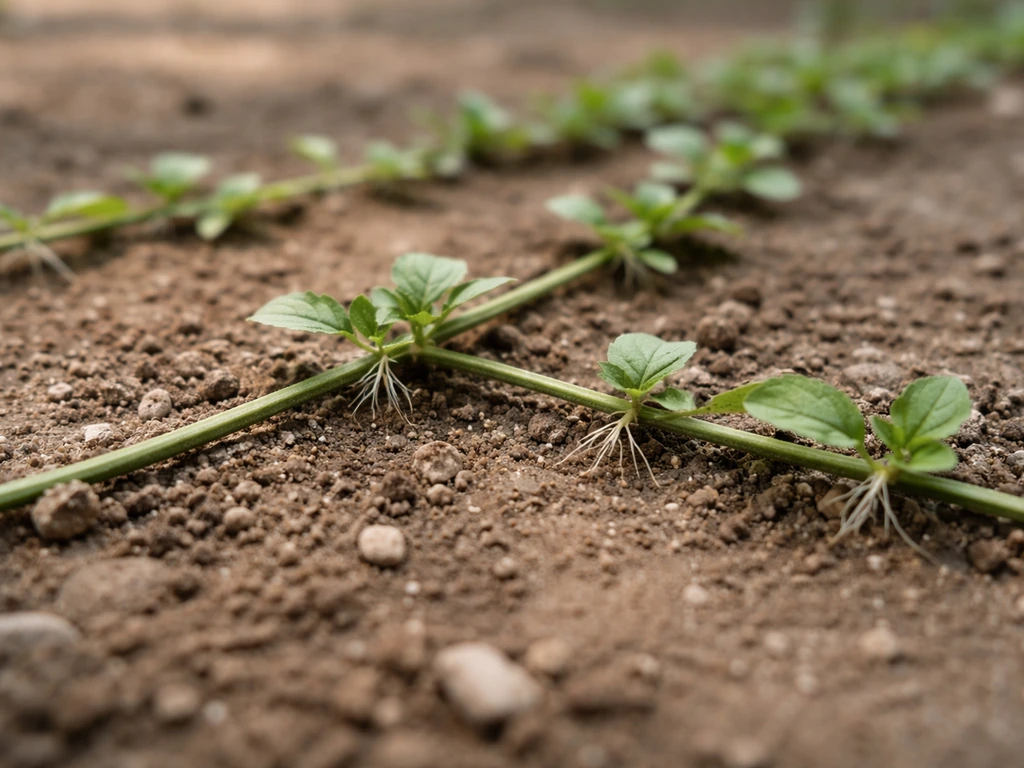
It's a useful term, but it overlaps with a handful of other plant categories you'll hear in gardening, ecology, and field botany, so knowing the difference matters when you're trying to identify what you're looking at or choose the right plant for a site. If you're wondering what plants grow in the ground, this creeping growth habit is one of the key types to learn to recognize.
Creepers vs. groundcovers, trailing vines, and prostrate plants
These terms get used interchangeably all the time, but they describe genuinely different growth behaviors. Understanding the distinctions saves a lot of confusion when you're trying to name a plant or figure out whether it belongs in your space.
| Term | How it grows | Does it root along the stem? | Typical height |
|---|---|---|---|
| Creeper | Stems run along the soil surface horizontally | Yes, often at nodes | Ground level, usually under 6 inches |
| Prostrate plant | Grows flat or nearly flat; stems lie on the ground but may not spread far | Sometimes, but not always | Flat to ground level |
| Groundcover | Any low plant that covers bare soil; can include creepers, clumping plants, or mat-formers | Depends on species | Generally under 3 feet |
| Trailing vine | Long, flexible stems that extend outward but typically need support or drape over surfaces | Occasionally at tips (tip layering) | Variable; can sprawl several feet |
A creeper is a specific kind of groundcover, but not all groundcovers are creepers. Virginia Tech Extension defines groundcovers broadly as low-growing species under about 3 feet tall that spread to form a dense layer, functioning like living mulch. That definition includes clumping ornamental grasses, spreading shrubs, and mat-forming perennials, none of which are technically creepers. A true creeper has a horizontal stem blank" rel="noopener noreferrer">(called a stolon or runner when above-ground, a rhizome when underground) that moves outward across or just below the soil and anchors itself at intervals by rooting at stem nodes.
Prostrate plants are a related but distinct category. A prostrate plant grows close to the ground, often because of wind, genetics, or sun-seeking behavior, but it doesn't necessarily spread by rooting. Think of a low-growing alpine plant pressed flat by wind shear: it looks like a creeper but doesn't send out runners. Trailing vines, meanwhile, do produce long wandering stems, but the defining habit is draping or dangling rather than ground-hugging. When a trailing vine does lie flat along the ground for a long stretch, it sometimes roots at the tip where it contacts soil (a process called tip layering), which blurs the line with creeping.
How to identify a creeper in the field
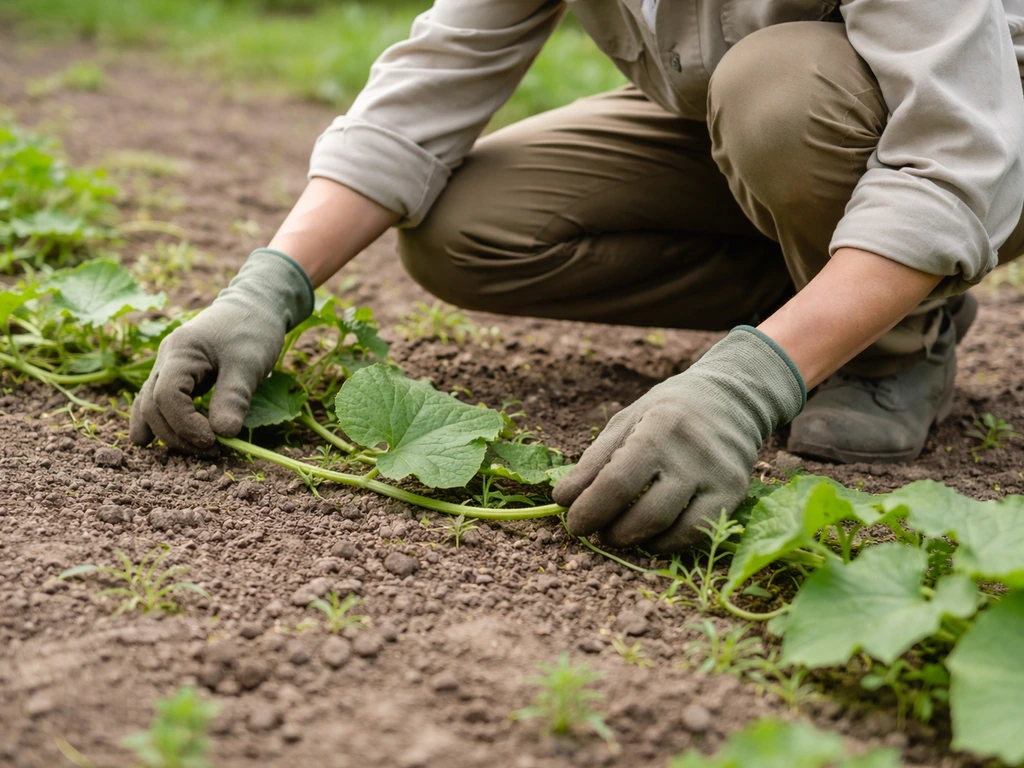
If you're standing in front of a plant and trying to decide whether it's actually a creeper, there are a few concrete things to check. You don't need a botany degree, just a willingness to get close to the ground and handle the plant a little.
Check the stem behavior
A creeper's main stems run horizontally, usually in contact with the soil. Pick up a stem and trace it back to the main plant. If it runs along the ground and you can feel small fibrous roots along its length or at intervals where leaves attach, you're looking at a creeper. Ground ivy (creeping Charlie) is a classic example: its stems are square in cross-section, run along the surface, and root readily at every node (the joints where leaves emerge).
Purdue’s turfgrass reference notes that ground ivy invades turf through aggressive stolons that creep below the canopy and that spreading stolons root aggressively at the node root readily at every node (the joints where leaves emerge). Creeping woodsorrel does the same thing from above-ground stolons.
Strawberry plants show this behavior clearly too, with runners that extend outward and produce a new plant rosette at the tip.
Look at the rooting nodes
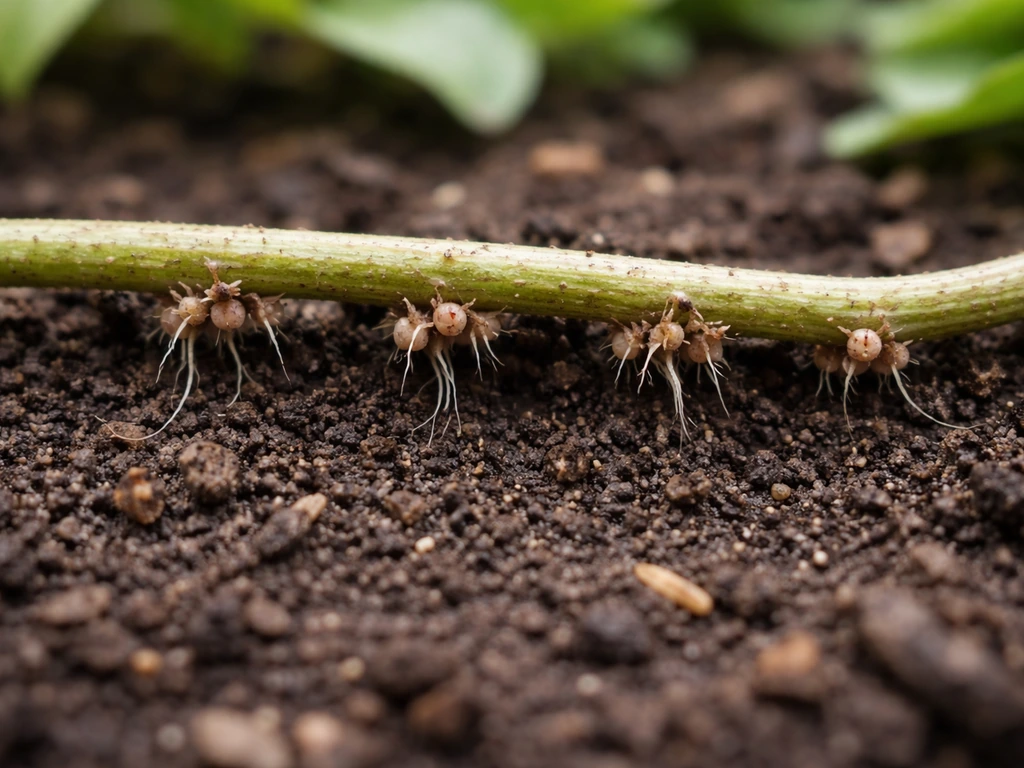
Node rooting is the defining mechanical feature of true creepers. Gently lift a horizontal stem and look at the underside where it contacts the soil. If you see tiny root clusters or whitish root stubs at the spots where leaves attach, those are rooting nodes. Prostrate spurge does this from above-ground stems; ground ivy does it from stolons; creeping bentgrass does it from both stolons and rhizomes. No node rooting usually means you're dealing with a prostrate plant or a sprawling shrub rather than a true creeper.
Observe how the plant is spreading
Step back and look at the patch as a whole. Creepers typically form a relatively uniform mat or network radiating outward from a central point, because each rooted node becomes a new growth center. Clumping groundcovers expand slowly from a central crown without that radiating network. Trailing vines tend to concentrate their mass in the direction of the longest stems rather than forming an even mat. If the ground-level plant in front of you has spread into an interconnected mat with multiple rooted anchor points, it's almost certainly a creeper.
Leaf layout and stem cross-section

Many common creepers have opposite leaves (pairs of leaves at each node rather than alternating single leaves), and some, like ground ivy, have distinctively square stems you can feel by rolling the stem between your fingers. Leaves on creeping plants often lie flat to maximize light capture along the ground surface. Scalloped or rounded leaf edges are common in woodland creepers. None of these traits are universal, but combined with node rooting and horizontal stems, they build a reliable picture.
Where creepers actually thrive: habitats and conditions
Creeping growth is an ecological strategy, not just a plant shape. It evolved in environments where vertical growth is disadvantaged: heavy shade, disturbed soils, wind-swept open ground, or seasonally wet areas where spreading laterally to find light and anchor points pays off. Understanding that helps you predict where any given creeper will do well, and where it won't.
Light
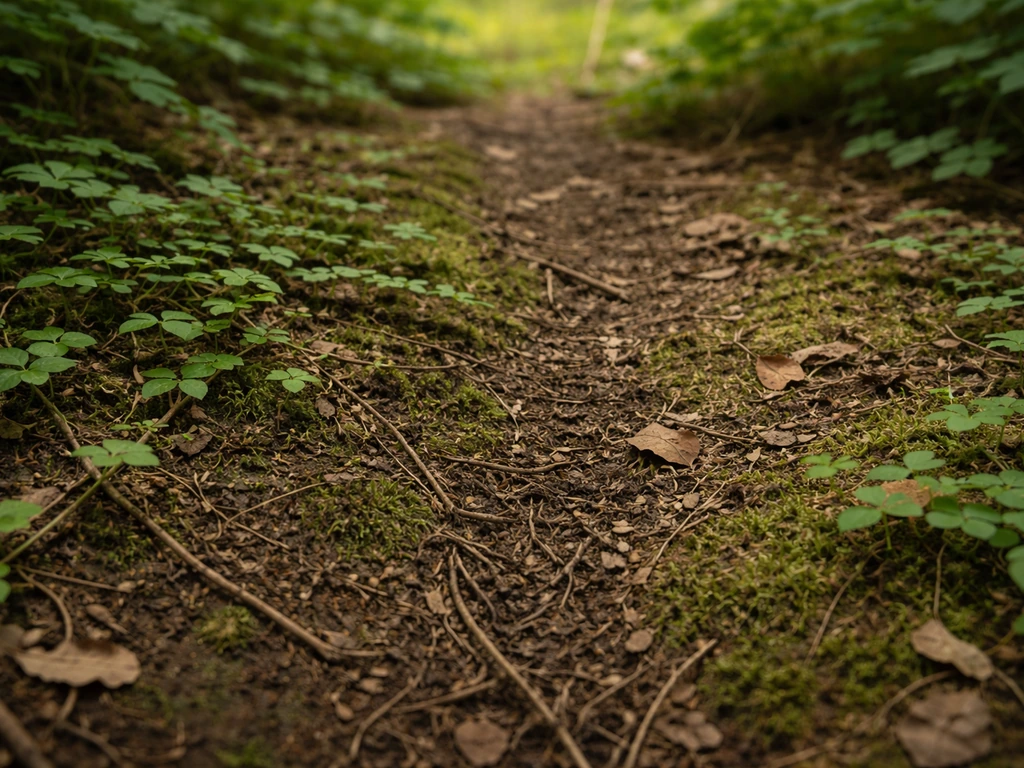
Many woodland creepers evolved specifically for low-light conditions under a forest canopy. Spreading horizontally lets them cover more ground with limited light rather than competing vertically. Open-ground creepers like creeping bentgrass and prostrate spurge, by contrast, need full sun and will thin out and struggle in shade. Knowing whether your candidate creeper comes from a shaded or open habitat is the first question to answer for your site.
Soil type and moisture
Creepers span a huge range of soil preferences, but most share a preference for consistent moisture at the soil surface, which makes sense because their roots are shallow and lateral. Sandy, dry soils favor drought-adapted creepers with deep taproots or waxy leaves. Moist woodland soils favor soft-stemmed creepers with fibrous surface roots. Wetland creepers tolerate or even require periodic waterlogging. Compacted or clay-heavy soils can limit creeping spread because new nodes have trouble penetrating dense ground, so loosening soil before planting or choosing a species that roots at the surface rather than into the soil helps.
Climate zones and seasonal timing
Creepers are found in nearly every climate zone, from tropical rainforests to arctic-adjacent tundra edges, but their active growing seasons differ significantly. In temperate zones, most creepers put on their fastest spread in spring and early fall when soil moisture is higher and temperatures are moderate. In tropical climates, spreading is more year-round. In dry or Mediterranean climates, growth concentrates in the cool, wet season and slows or stops in summer. Timing your planting or observation to match the plant's active growth phase is important, both for establishment success and for catching a creeper at its most identifiable.
Disturbance and bare soil
Many creepers are early colonizers of disturbed ground. Bare soil after construction, erosion events, or thinning of a plant canopy creates exactly the conditions creepers exploit: open space, relatively soft surface soil, and reduced competition from taller plants. University of Maryland Extension notes that exposed soil is vulnerable to erosion until a groundcover establishes, and creepers are often the fastest solution because each rooted node becomes an independent anchor point fairly quickly.
Real creeper examples by environment
Here are common creepers grouped by the habitat where they actually grow and spread naturally, not just where they've been planted ornamentally. You can also look for plants that grow along the ground examples to compare real species side by side Here are common creepers grouped by the habitat where they actually grow and spread naturally, not just where they've been planted ornamentally.. These reflect real ecological distributions and are useful reference points whether you're trying to identify a plant you've found or choose one that fits your site.
Woodland and forest floor
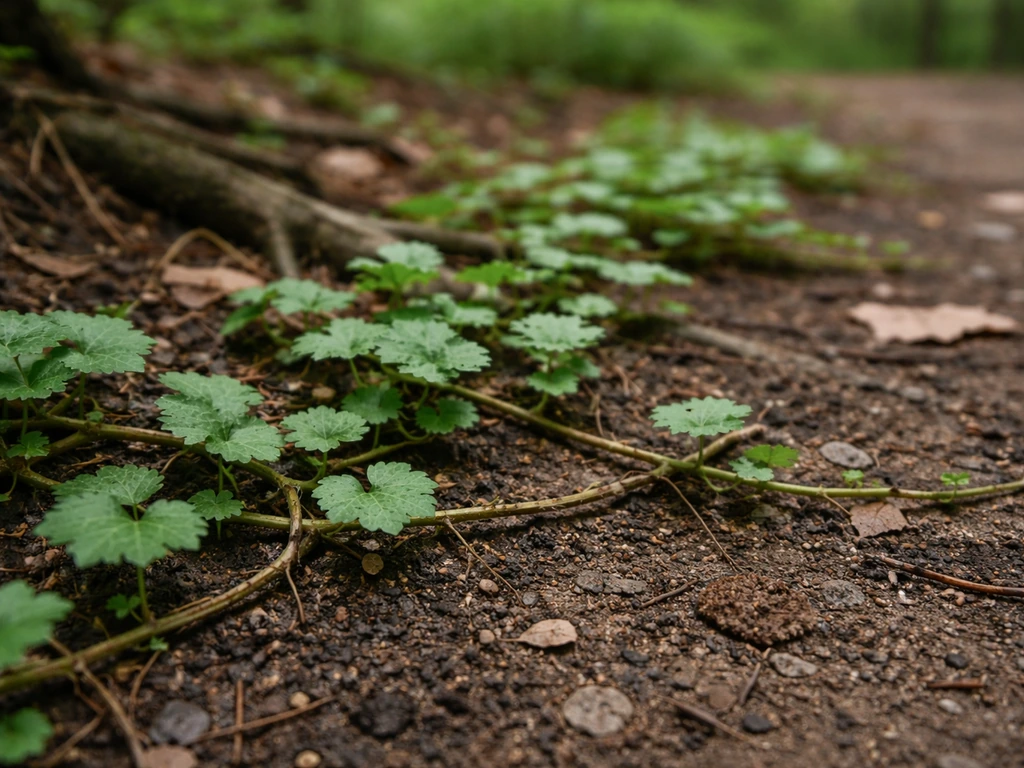
- Ground ivy (Glechoma hederacea): spreads by square-stemmed stolons rooting at nodes; thrives in moist, partially shaded woodland edges and disturbed forest margins; common across temperate North America and Europe
- Wild ginger (Asarum canadense): slow-spreading rhizomatous creeper of rich, moist deciduous forest floors; prefers deep shade and humus-rich soil
- Creeping Jenny (Lysimachia nummularia): stoloniferous spreader found naturally along stream banks and moist forest edges in Europe and naturalized widely in North America
- Partridgeberry (Mitchella repens): low, mat-forming native creeper of eastern North American woodland floors; rooting at nodes on acidic, well-drained forest soils
Grassland and open disturbed ground
- Creeping bentgrass (Agrostis stolonifera): colonizes open, moist to wet grassland and disturbed ground through both stolons and rhizomes; common in temperate regions worldwide and a frequent turf and lawn invader
- Prostrate spurge (Euphorbia prostrata): annual creeper of disturbed open ground, sidewalk cracks, and compacted soils; stems root at nodes; thrives in warm, sunny, dry-ish conditions
- White clover (Trifolium repens): stoloniferous creeper of open grasslands and lawns; roots at nodes; fixes nitrogen; widespread in temperate climates globally
Tropical and subtropical environments
- Torpedo grass (Panicum repens): aggressive stolon and rhizome spreader of tropical and subtropical open areas, particularly near water; common in Florida, Southeast Asia, and Australia
- Asiatic pennywort (Centella asiatica): creeping stoloniferous herb of moist tropical and subtropical areas; roots at nodes; common in disturbed moist ground, roadsides, and wetland edges across Asia, Africa, and the Americas
- Creeping oxeye (Sphagneticola trilobata): mat-forming tropical creeper of disturbed ground and forest margins in humid climates; spreads rapidly by stem fragmentation and node rooting
Dry and sandy habitats
- Creeping woodsorrel (Oxalis corniculata): above-ground stolons root at nodes; tolerates dry, sandy, or gravelly soils in sun to partial shade; found as a weed of gardens, paths, and open ground across temperate regions
- Sand verbena (Abronia spp.): prostrate to creeping habit on coastal dunes and desert sandy soils in western North America; adapted to drought and low-nutrient sandy substrate
- Beach morning glory (Ipomoea pes-caprae): tropical coastal sand specialist; long trailing stems cover beach sand and dune surfaces; roots at nodes; found on sandy shorelines across tropical zones worldwide
Wetlands and streambanks
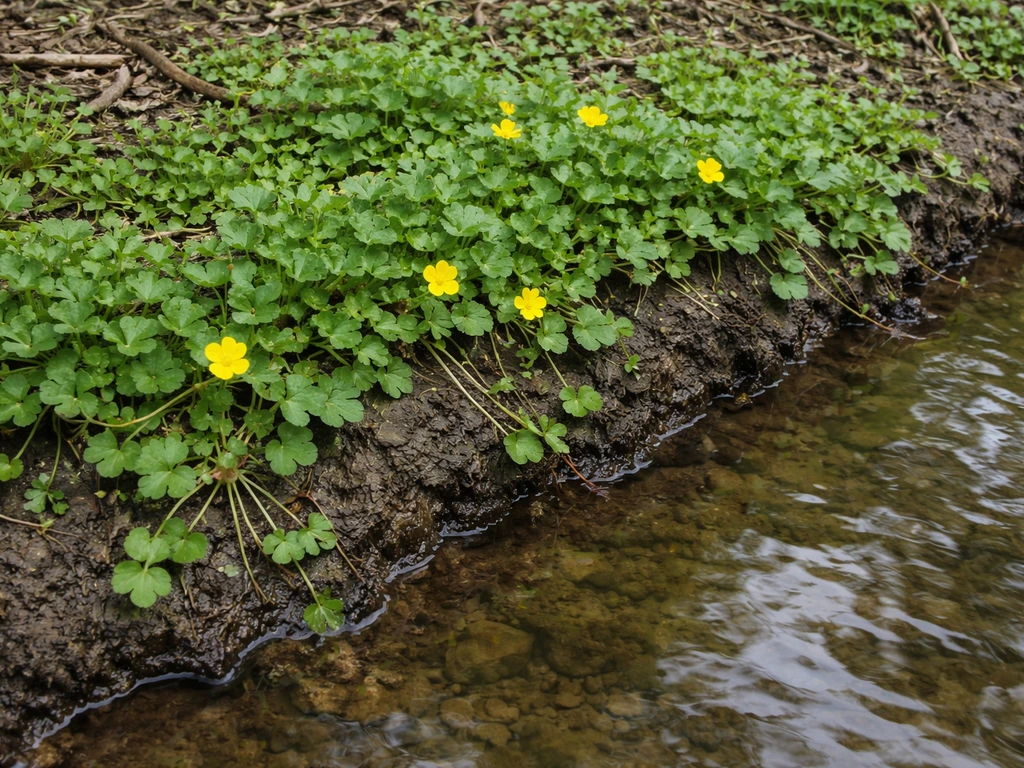
- Creeping buttercup (Ranunculus repens): spreads by stolons rooting at nodes in moist to waterlogged soils; common in wet meadows, streambanks, and poorly drained disturbed ground in temperate regions
- Water pennywort (Hydrocotyle spp.): aquatic to semi-aquatic creeper rooting at nodes; spreads across wet soil surfaces and into shallow water; common in wetland margins across temperate and tropical zones
- Marsh St. John's wort (Hypericum virginicum): low-spreading wetland plant of boggy soils and pond margins in eastern North America; less aggressive but genuinely wetland-adapted
How to figure out what creeper you have or need
Whether you're trying to identify an unknown ground-hugging plant or find the right creeper for a bare patch on your site, a few quick field observations get you most of the way there. Run through these in order.
- Observe the stem direction: are the main stems running horizontally along the ground, or are they upright and just short? True creepers stay low by horizontal stem growth, not just by being short.
- Check for node rooting: lift a stem and look for root clusters at the leaf joints where the stem contacts soil. This is the single most reliable creeper diagnostic.
- Note the moisture and light at the site: is it shaded and moist (woodland type), open and sunny (grassland/disturbed type), wet or boggy (wetland type), or dry and sandy (arid/coastal type)? Habitat narrows your candidates dramatically.
- Look at leaf arrangement: opposite leaves at each node are common in many creepers; alternate leaves point toward a different plant family. Leaf shape (scalloped, round, narrow, lobed) narrows it further.
- Check stem cross-section: roll a stem between your fingers. Square stems point toward the mint family (Lamiaceae), which includes ground ivy and many other creepers. Round stems are more common but less diagnostic.
- Estimate spread rate and patch shape: a dense, even mat spreading in all directions suggests an aggressive stolon-spreader. A more irregular sprawl with fewer anchor points suggests a trailing or prostrate type rather than a true creeper.
- Compare with underground growth: if you pull up a section and find underground horizontal stems (rhizomes) as well as surface runners, the plant spreads both above and below ground, which affects how hard it is to remove and how it should be managed.
If you're choosing a creeper for a site rather than identifying one, start with habitat match: light level, soil type, and moisture regime at your location should drive the selection before anything else. The examples grouped by environment above are a practical starting point for that matching process. Related plant groups like underground-spreading plants (those that grow primarily by rhizomes below the soil surface) are a useful comparison if your site has a species that seems to spread without visible above-ground runners.
Planting and caring for ground-hugging creepers
Getting them established
The biggest challenge with creepers is the establishment window before they can cover bare soil and self-sustain. University of Maryland Extension points out that exposed soil stays vulnerable to erosion until a groundcover matures, which means the first season is when you need to pay the most attention. Loosen the top few inches of soil before planting to give stolons and rooting nodes a soft surface to grip.
If you're starting from plugs or divisions rather than seed, space them according to how aggressively the species spreads: slow creepers may need 6 to 12 inch spacing to fill in within two to three seasons, while fast stolon-spreaders like creeping Charlie or creeping Jenny can be planted 12 to 18 inches apart and will fill gaps on their own.
Clemson Extension suggests aiming for full ground coverage by the end of the third growing season as a reasonable benchmark for most groundcover-style creepers.
Watering through the first season
Newly planted creepers need consistent moisture to establish their surface root systems and begin extending stolons. Water regularly for the first growing season. After that, Illinois Extension's guidance for groundcovers applies well: once established, water only during dry periods in summer and fall rather than on a fixed schedule. Creepers that evolved in moist habitats (woodland and wetland types) will need more supplemental water in dry summers. Those from sandy or arid habitats often establish faster on drier sites and may actually rot or thin if overwatered.
Spacing, competition, and disease risk
There's a tradeoff with spacing. Plant too close, and you get faster cover but also more competition and higher disease risk if the canopy stays wet (University of Maryland Extension raises this specifically for dense groundcover plantings). Plant too far apart, and you extend the erosion-vulnerable establishment period. The right answer depends on your site's moisture: drier, sunnier sites can tolerate closer spacing without disease problems; shaded, humid sites benefit from slightly more space to maintain airflow between plants.
Managing spread
Some creepers spread so aggressively that University of Maryland Extension flags them as potential weeds in garden or natural habitats, ground ivy being a well-documented example. Before planting any vigorous creeper near a natural area or garden bed, check whether it's documented as invasive in your region. Physical edging (metal or plastic lawn edging buried 3 to 4 inches deep) can contain stolon spread. For rhizomatous species that also spread underground, edging needs to go 6 or more inches deep to be effective. Hand-pulling works well for most creepers if done when the soil is moist, before stolons have rooted at multiple nodes.
Matching a creeper to your geography and soil
The most practical thing you can do before choosing or planting a creeper is characterize your site in three dimensions: light, soil, and moisture. These three factors together predict which creepers will thrive and which will struggle regardless of what looks appealing in a catalog.
| Site condition | Best-matched creeper type | Example species |
|---|---|---|
| Shaded, moist, woodland soil | Woodland stoloniferous creepers | Wild ginger, partridgeberry, creeping Jenny |
| Open, sunny, moist to average soil | Grassland mat-formers | White clover, creeping bentgrass, creeping buttercup |
| Open, sunny, dry or sandy soil | Drought-tolerant prostrate creepers | Creeping woodsorrel, sand verbena, beach morning glory |
| Warm, humid, tropical or subtropical | Tropical fast-spreading creepers | Asiatic pennywort, torpedo grass, creeping oxeye |
| Wet, boggy, or streambank | Wetland-adapted creepers | Water pennywort, creeping buttercup, marsh St. John's wort |
If your soil is compacted clay, any creeper that relies on stolons penetrating the surface will struggle until you amend or loosen it. Sandy soils drain fast and favor species with drought adaptations. Organic, loamy soils support the widest range of creepers and are where most woodland and grassland species perform best. For geography specifically, elevation matters too: high-elevation sites with short seasons favor compact, slow-spreading creepers that put energy into root systems rather than long runner production. Low-elevation humid sites favor fast spreaders that can make the most of a long growing window.
If you're still unsure which creeper fits your patch after working through these conditions, look at what's already growing along the ground nearby in undisturbed areas. Native creepers that have colonized wild patches near your site are almost always the most reliable choice for the same conditions on your property, because they've already proven they can handle your climate, soil, and seasonal pattern without any help.
FAQ
If I see a low plant that looks “stuck to the ground,” how can I tell whether it is a creeper or just a prostrate plant?
Check for rooting at the stem nodes. A true creeper typically sends out horizontal runners and anchors at intervals by forming small root stubs where leaves attach. A prostrate plant can stay flat without producing that node-by-node rooting pattern, so gently lifting a section of stem is usually the deciding test.
Do creepers always spread by above-ground runners?
No. Some spread mainly underground through rhizomes, so you may not see obvious runners on the surface. If a plant seems to expand without visible above-ground stolons, look for underground spread from nodes and new shoots emerging from the same creeping network.
Can a creeper be grown from seed, or is it usually from plugs and divisions?
Both are possible, but seed-based establishment is slower and less predictable for many creepers, especially those that spread primarily by stolons or rhizomes. For faster, dependable cover in the first season, plugs or divisions often work better because you start with active nodes already capable of rooting.
How fast should a creeper fill in after planting?
It varies widely by growth speed and spacing. A common practical benchmark is aiming for full ground coverage by the end of the third growing season for most groundcover-style creepers. If you are starting from wider spacing or slow-growing species, expect a longer timeline.
How do I avoid overwatering a moisture-loving creeper?
Water consistently during establishment, then switch to “during dry periods” rather than a fixed schedule. Overwatering after establishment can keep dense mats wet, raising disease pressure. Use a simple test, dig a few inches down, if soil stays moist most of the week, reduce watering even if the surface looks dry.
Will edging prevent creepers from taking over, and does it work for underground-spreading types too?
Edging can contain above-ground stolon spread if buried deep enough to intercept runners, typically 3 to 4 inches for many surface stolons. For rhizomatous plants that spread underground, edging usually needs to be deeper, 6 inches or more, because rhizomes can bypass shallow barriers.
What is the best time to remove a creeper if I accidentally planted the wrong one?
Remove when the soil is moist so you can pull intact runners and rooted nodes. Earlier removal before many nodes root usually gives the best results, since cutting stems without extracting node roots often leads to regrowth.
Why does my creeper look great at first but then thins out in shade?
Creepers differ in habitat origin. Many open-ground creepers struggle in shade because their strategy is lateral spread in full light, they may thin as taller plants reduce light. Match the creeper to the light level, and if you planted a sun-adapted type, consider pruning nearby competitors or selecting a shade-adapted creeper instead.
How can I tell whether a creeper prefers dry, wet, or seasonal waterlogged conditions?
Look at how it naturally occurs in the surrounding landscape, or choose based on soil texture and moisture at your site. Moist woodland and wetland types generally need more consistent surface moisture and may tolerate waterlogging, while drought-adapted creepers often establish better in sandier or faster-draining soils and can rot or thin if overwatered.
Is leaf shape or stem texture enough for identification, or do I need to check the rooting behavior?
Leaf shape and stem traits can help, but the fastest reliable ID step is rooting behavior at nodes. Many plants can look “low and spreading,” so confirm whether horizontal stems root at intervals by inspecting or gently lifting a section near the underside where it contacts the soil.